2491100 Search Results

PIX4617504: Star cluster IC 1590 in NGC 281 (Cassiopee) - Open cluster and Bok globules in NGC 281 - View of a detail in the center of the nebula NGC 281 in Cassiopee. The brightest stars of the open cluster IC 1590 are visible, accompanied by Bok's blood cells, dark interstellar clouds consisting of gas and dust that absorb light. Image obtained by the Hubble Space Telescope (HST). Astronomers have used the NASA/ESA Hubble Space Telescope to study the young open star cluster IC 1590, which is found within the star formation region NGC 281 - - nicknamed the Pacman Nebula due to its resemblance to the famous arcade game character. This image only shows the central part of the nebula, where the brightest stars at the core of the cluster are found, with part of the Pacman's hungry mouth visible as the dark region below. But Pacman isn't gobbling up these stars. Instead, the nebula's gas and dust are being used as raw ingredients to make new stars. However, the stars in IC 1590 are still plotting their escape from the Pacman Nebula, as open clusters are only loosely bound together and the grouping will eventually disperse within a few tens of millions of years. IC 1590 lies about ten thousand light - years from Earth in the constellation of Cassiopeia (The Queen). Through small telescopes the core of the cluster that appears at the top of this picture shows up as a triple star, but the nebula that surrounds it is much fainter and very hard to see / Bridgeman Images
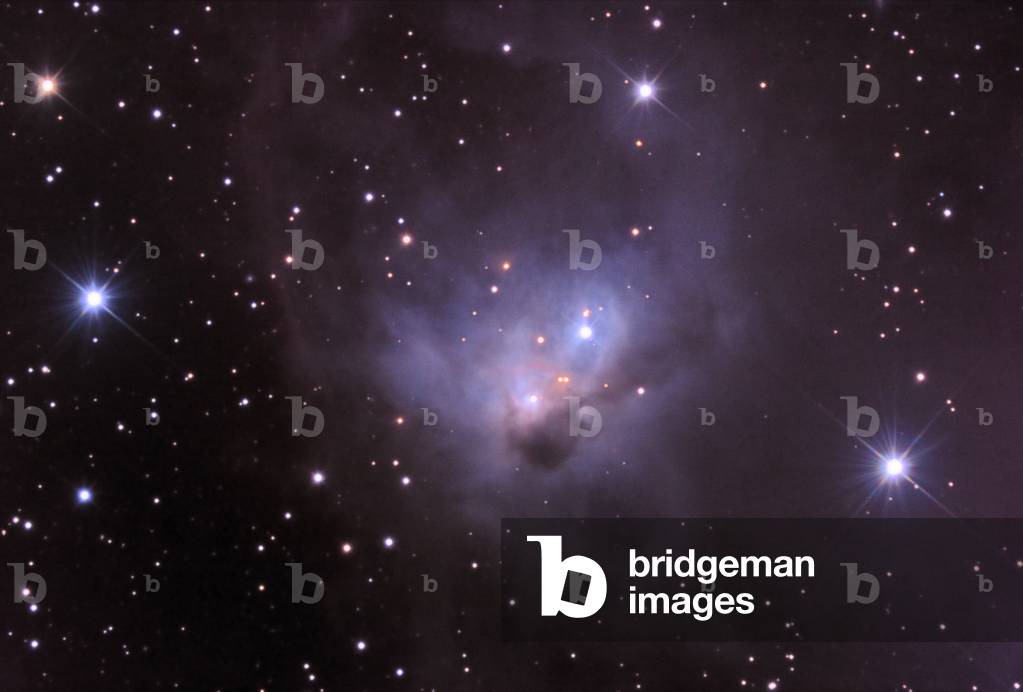
PIX4617597: Nebula NGC 1788 in Orio / Bridgeman Images

PIX4617629: Orion Nebula M42 in Orion - The Orion Nebula - Located 1500 years - light, Orion Nebula is the closest star-forming region of the Sun. Image obtained with the 1.2m Schmidt UK Telescope from Siding Spring. To the eye, the nebula appears as a misty patch around the central star of the line of three which form Orion's sword. Binoculars or a modest telescope will show that these three 'stars' are loose groups of several individuals some of which can be seen in this photograph. The central group of stars, the Trapezium cluster is hidden in the glow of the Orion Nebula in this photograph, but these stars are responsible for producing the nebula. It is the high concentration of dust and gas in this part of the sky which has resulted in the formation of the stars, so the Orion nebula is no random association of bright stars and dusty gas. At a distance of 1500 light years, the Orion nebula is the nearest star - forming region to the Sun / Bridgeman Images
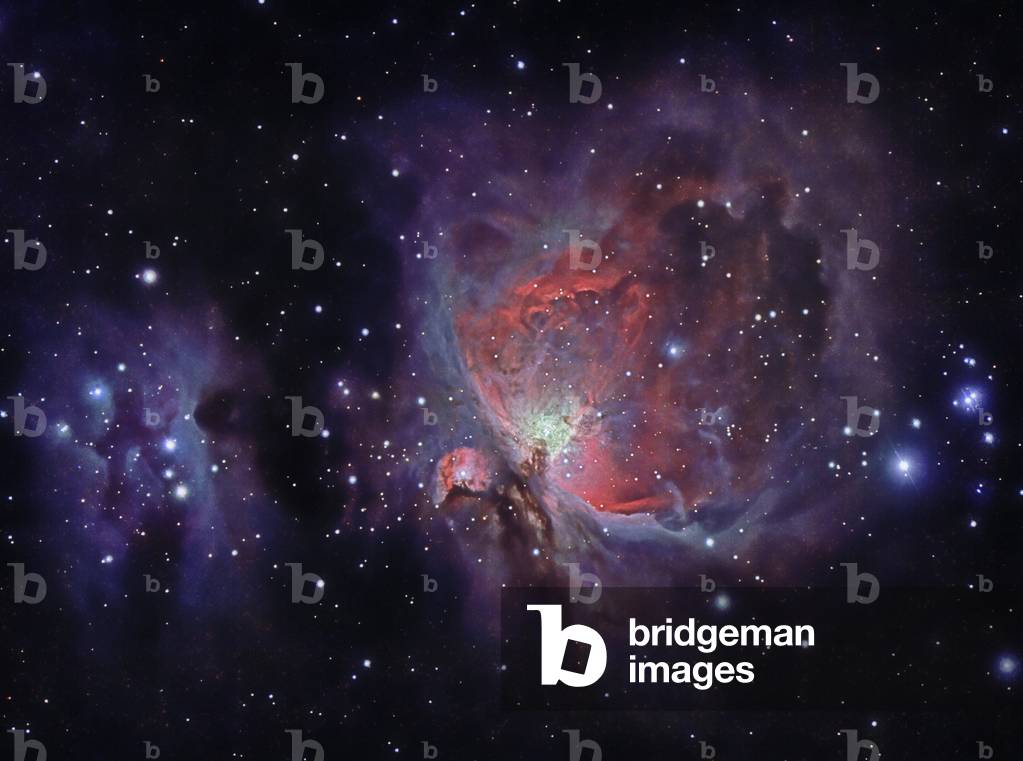
PIX4617721: Orion Nebula - The Great Nebula in Orion - Located 1500 years ago - the Orion Nebula is the closest star-forming region of the Sun. The Orion Nebula is the greatest of all HII clouds visible from our location within the Milky Way. With a gaseous repository of 10,000 suns, and illuminated by a cluster of hot young stars, the clouds of M42 glow with fantastic colors and shapes, giving us a birds eye view of one of the greatest star forming nurseries in our part of the galaxy. At a distance of 1500 light years, the Orion nebula is the nearest star - forming region to the Sun / Bridgeman Images
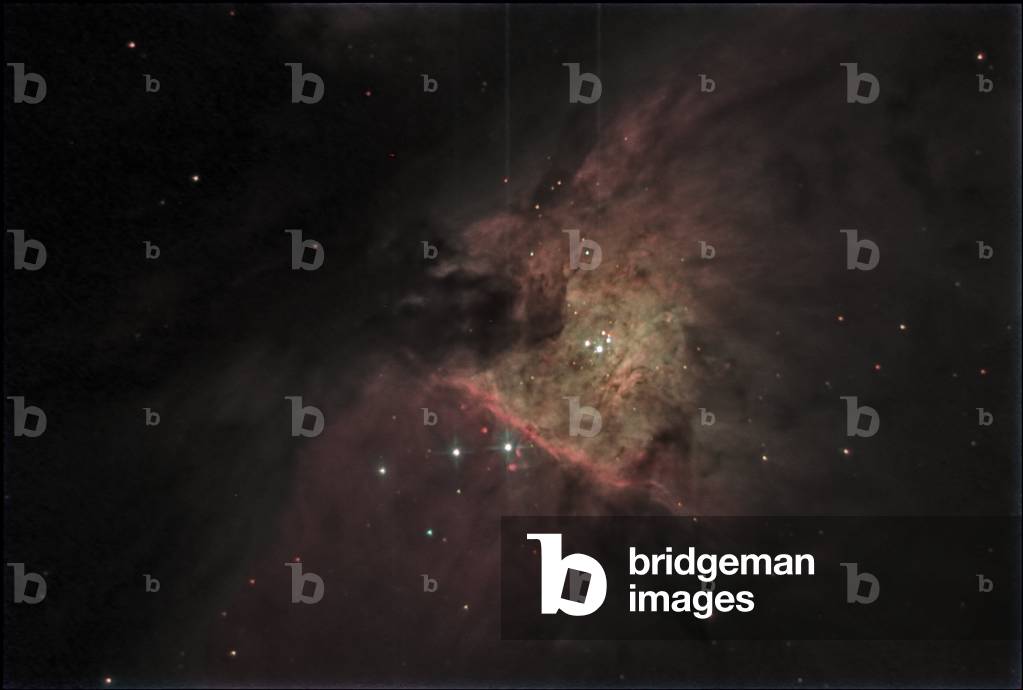
PIX4617800: Orion Nebula - the trapper / Bridgeman Images

CUB4525698: Hong Kong and Chinese flags, Hong Kong, China, Asia / Bridgeman Images
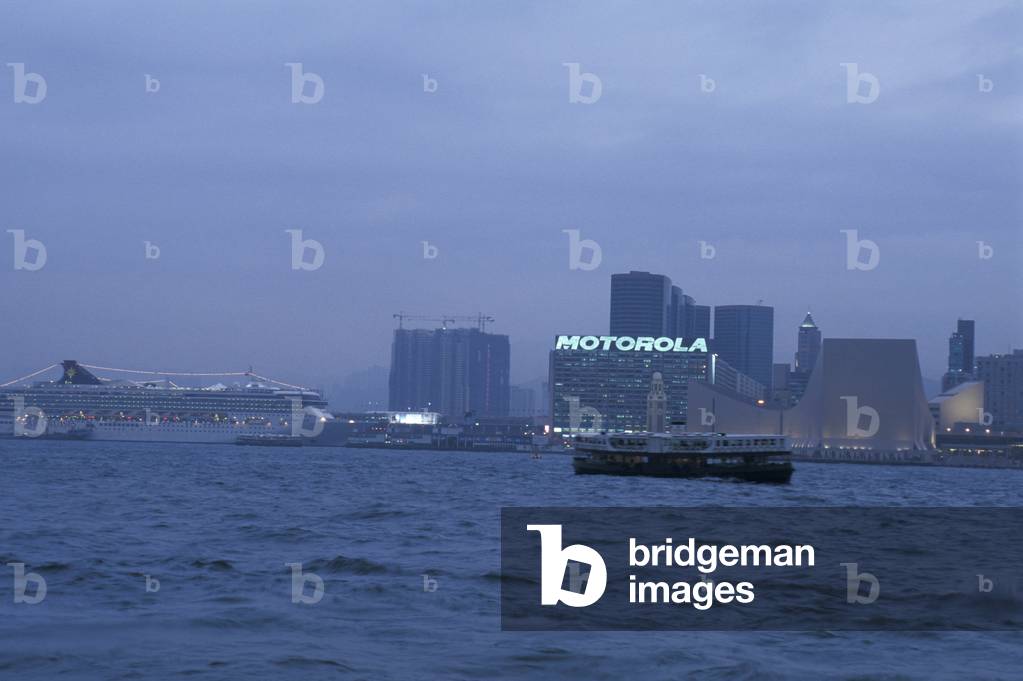
CUB4525722: Landscape on Kowloon, Hong Kong, China, Asia / Bridgeman Images

CUB4525768: Double numberplates for China admission, Hong Kong, China, Asia / Bridgeman Images

CUB4525815: Artichokes, Italy / Bridgeman Images

CUB4525822: Candies, Italy / Bridgeman Images

CUB4525862: Meringues, Italy / Bridgeman Images

CUB4525899: Cookies, Italy / Bridgeman Images

CUB4525910: Mask, Venice Carnival, Venice, Veneto, Italy / Bridgeman Images

CUB4525923: Mask, Venice Carnival, Venice, Veneto, Italy / Bridgeman Images

CUB4525961: Mask, Venice Carnival, Venice, Veneto, Italy / Bridgeman Images

CUB4526012: Carnival, Venice, Veneto, Italy / Bridgeman Images

CUB4526042: View of Strombolicchio from Stromboli, Aeolian Islands, Sicily, Italy / Bridgeman Images

CUB4526106: Fisherman, Ventimiglia, Ligury, Italy. / Bridgeman Images

CUB4526147: Dora Baltea, Val Veny, Valle d'Aosta, Italy / Bridgeman Images
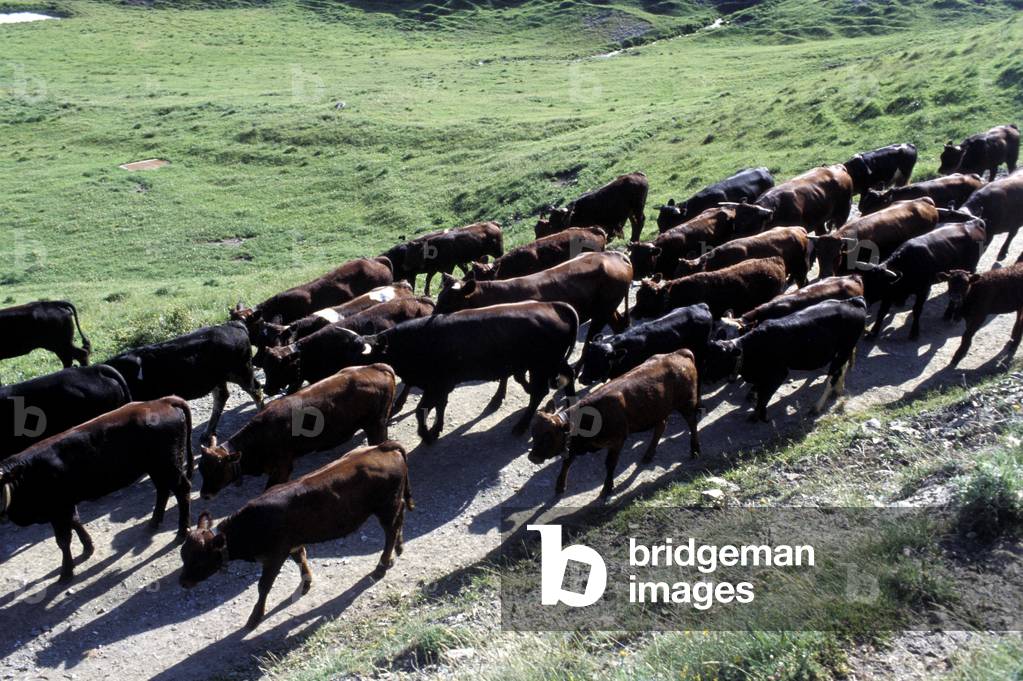
CUB4526158: Cows in mountain pasture, Valle d'Aosta, Italy / Bridgeman Images

CUB4526203: Castle, Aymavilles, Valle d'Aosta, Italy / Bridgeman Images

CUB4526206: Cityscape, Bard, Valle d'Aosta, Italy / Bridgeman Images

PIX4617856: Orion Nebula - the trapeze - The Trapezium region in M42 - Located 1500 years - light, Orion Nebula is the closest region of formation of stars of the Sun. In the center of the picture, the Trapeze of Orion. The Trapeze is among the youngest known open clusters, it is made up of 4 massive stars that make the nebula shine. Image obtained with Siding Spring's 3.9m telescope. The central 'star' of the three groups forming the asterism of Orion's sword is in reality a nebula, and is clearly nebulous to the unaided eye. At the heart of the most luminous nebulosity shimmer a handful of stars known as the Trapezium cluster, visible in binoculars. These are the brightest members of a substantial cluster of stars, most of which are still hidden in the dusty recesses of the Orion nebula against which they are seen. The stars of the Trapezium provide much of the energy which makes the brilliant Orion Nebula visible and are at a distance of about 1500 light years. This image was made at the prime focus of the Anglo - Australian Telescope / Bridgeman Images

PIX4617954: Barnard's loop and constellation Orio / Bridgeman Images

JLJ4618118: Gallic art: cups and cups of (gold and silver), Celtic / Bridgeman Images

JLJ4618296: First celebration of freedom on the occasion of the Swiss of Chateauvieux on April 15, 1792 (engraving), Prieur, Jean Louis, II (1759-95) (after) / Bridgeman Images

JLJ4618375: French Revolution: Transfer of the royal family to the Temple prison in Paris on August 13, 1792 (engraving), French School / Bridgeman Images

PIX4618405: Nebula NGC 2183 in the Unicorn - Nebula NGC 2183 in Monoceros - Nebulae NGC 2183 and NGC 2185. Image obtained with a telescope 61 cm in diameter. NGC 2183 and NGC 2185. Image taken with a 24 - inch telescope / Bridgeman Images

JLJ4618411: Austrian army bombards Lille during French Revolution (engraving), Swebach-Desfontaines, Joseph (1769-1823) (after) / Bridgeman Images

CUB4526286: Sunset from Sella refuge, Val di Cogne, Valle d'Aosta, Italy / Bridgeman Images

CUB4526307: Town Hall, Aosta, Valle d'Aosta, Italy / Bridgeman Images

CUB4526359: Cowbells, The Sant'Orso fair, Aosta, Valle d'Aosta, Italy / Bridgeman Images

CUB4526371: Wooden statue, The Sant'Orso fair, Aosta, Valle d'Aosta, Italy / Bridgeman Images

CUB4526406: Atlantica ship, Costa shipping company, Italy / Bridgeman Images

CUB4526431: A garden on the Maggiore lake, Lombardy, Italy / Bridgeman Images
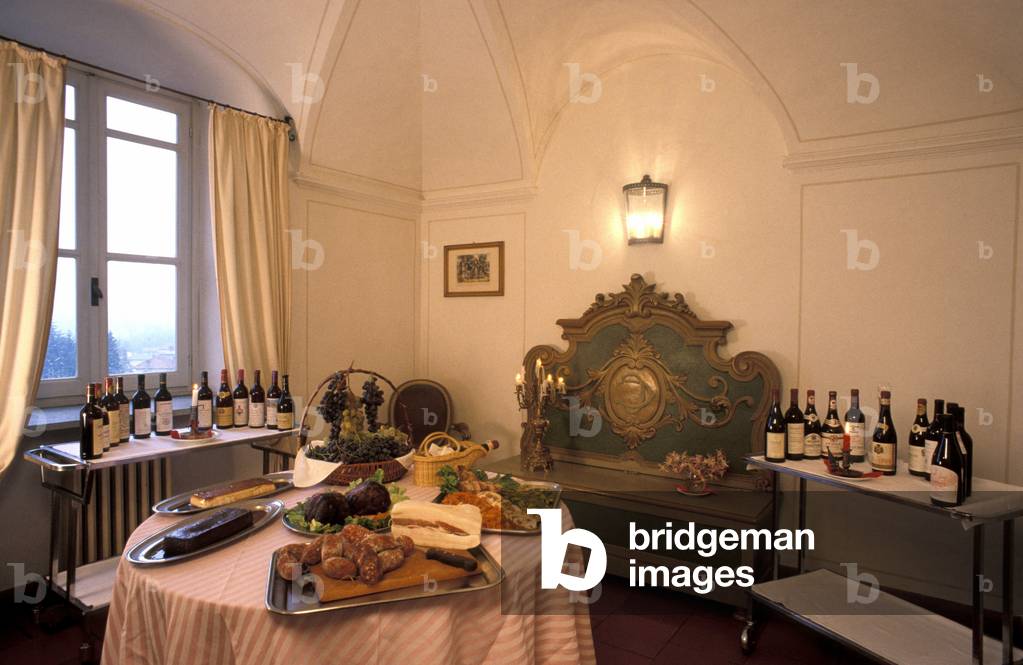
CUB4526470: Wine shop, Vignale Monferrato, Piedmont, Italy / Bridgeman Images
