Search options

Orientation
Colour

Display options

View

Print

To print search results, use print friendly version of this page.

2491422 Search Results
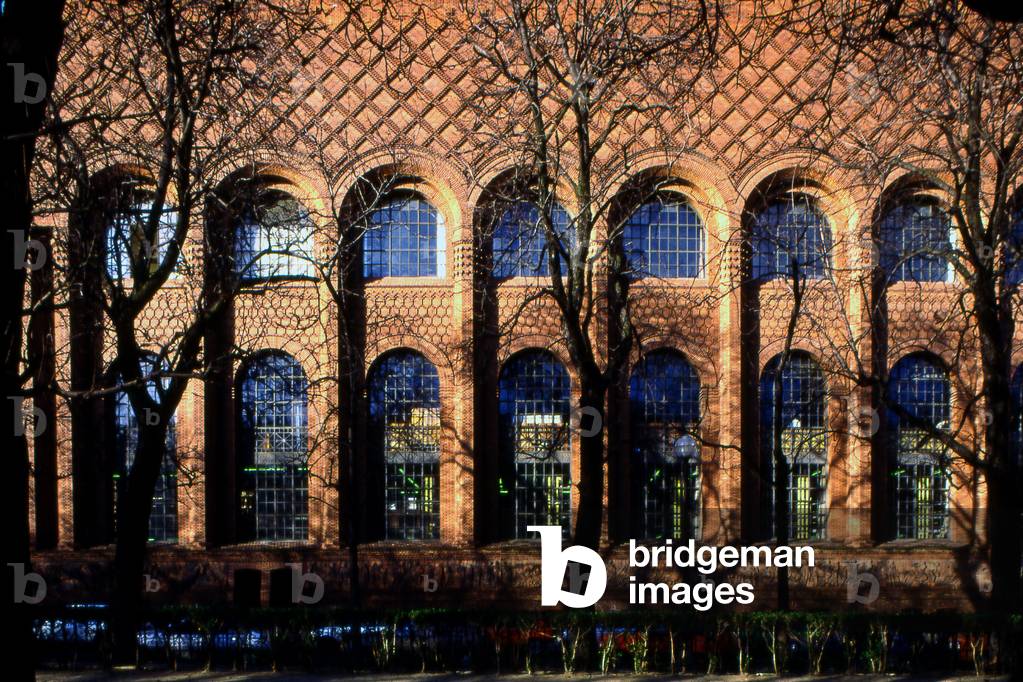
The institute of art and archeology, 3 rue Michelet, Paris 6th arrondissement, hosts the universites of Paris 1 and Paris 4, was built in 1927 by Paul Bigot (1870-1942) in Moorish style.

TEC4597521: The institute of art and archeology, 3 rue Michelet, Paris 6th arrondissement, hosts the universites of Paris 1 and Paris 4, was built in 1927 by Paul Bigot (1870-1942) in Moorish style. / Bridgeman Images

Place Beauvau, Paris 8th arrondissement. Photography 21/08/07.

TEC4596272: Place Beauvau, Paris 8th arrondissement. Photography 21/08/07. / Bridgeman Images

Apollo 9: mooring of the LEM 03/1969 - The control module mooring to the LEM, “” Spider””. 06/03/1969. The Apollo 9 Command and Service Module successfully docked with Lunar Module seen from lunar module porch. Tue 6 1969

PIX4595272: Apollo 9: mooring of the LEM 03/1969 - The control module mooring to the LEM, “” Spider””. 06/03/1969. The Apollo 9 Command and Service Module successfully docked with Lunar Module seen from lunar module porch. Tue 6 1969 / Bridgeman Images

Apollo 15: D. Scott on the Moon - Apollo 15: D. Scott on the Moon - David Scott at Station 8 (ALSEP) during the second extra vehicle exit (EVA - 2). 01/08/1971. David Scott at Station 8 (ALSEP) during EVA - 2. Aug 01 1971

PIX4597271: Apollo 15: D. Scott on the Moon - Apollo 15: D. Scott on the Moon - David Scott at Station 8 (ALSEP) during the second extra vehicle exit (EVA - 2). 01/08/1971. David Scott at Station 8 (ALSEP) during EVA - 2. Aug 01 1971 / Bridgeman Images

Apollo 17: Control Module - Apollo 17: Command Module - The control module Apollo 17 photographs since the LEM. 14/12/1972. Close view of the Command Module from the Lunar Module at rendezvous. Dec 14 1972

PIX4598283: Apollo 17: Control Module - Apollo 17: Command Module - The control module Apollo 17 photographs since the LEM. 14/12/1972. Close view of the Command Module from the Lunar Module at rendezvous. Dec 14 1972 / Bridgeman Images

Apollo 12: C. Conrad on the Moon - Apollo 12: P.Conrad exits the LM - Extravehicular release of Pete (Charles) Conrad. 19/11/1969. Pete (Charles) Conrad exits the Lunar Module. Nov 19 1969

PIX4596524: Apollo 12: C. Conrad on the Moon - Apollo 12: P.Conrad exits the LM - Extravehicular release of Pete (Charles) Conrad. 19/11/1969. Pete (Charles) Conrad exits the Lunar Module. Nov 19 1969 / Bridgeman Images

Apollo 13: Saturn V rocket on its shooting pad - Apollo 13: Saturn V on launch pad at sunset - Fusee Saturn V/Apollo 13 on its shooting pad. 04/1970

PIX4596736: Apollo 13: Saturn V rocket on its shooting pad - Apollo 13: Saturn V on launch pad at sunset - Fusee Saturn V/Apollo 13 on its shooting pad. 04/1970 / Bridgeman Images

Andromede Mission - Return of C.Haignere - Andromede mission - Claudie Haignere - The Andromede mission took place from 21 to 31 October 2001 on board the ISS (the International Space Station). Claudie Haignere was the first European woman to work on the ISS. Date of this shot: Tuesday, 31 October 2001 at 06:00 local time (Kazakhstan). From 21 to 31 October 2001 Claudie Haignere participated as first female European astronaut in a 'taxi flight' to the International Space Station as Soyuz Flight Engineer. This “” Andromede”” mission had two main purposes: to exchange the Soyuz spacecraft used as a crew escape vehicle, and to carry out a scientific and technical research programme organized by the French space agency CNES during her eight day - stay onboard the International Space Station

PIX4598514: Andromede Mission - Return of C.Haignere - Andromede mission - Claudie Haignere - The Andromede mission took place from 21 to 31 October 2001 on board the ISS (the International Space Station). Claudie Haignere was the first European woman to work on the ISS. Date of this shot: Tuesday, 31 October 2001 at 06:00 local time (Kazakhstan). From 21 to 31 October 2001 Claudie Haignere participated as first female European astronaut in a 'taxi flight' to the International Space Station as Soyuz Flight Engineer. This “” Andromede”” mission had two main purposes: to exchange the Soyuz spacecraft used as a crew escape vehicle, and to carry out a scientific and technical research programme organized by the French space agency CNES during her eight day - stay onboard the International Space Station / Bridgeman Images

Gemini 9: return of the capsule - Gemini 9 splashdown - Ditching the capsule Gemini 9 on 6 June 1966. Splashdown of Gemini 9A carrying astronauts Eugene Cernan and Thomas Stafford at 9:00 a.m., June 6, 1966

PIX4599539: Gemini 9: return of the capsule - Gemini 9 splashdown - Ditching the capsule Gemini 9 on 6 June 1966. Splashdown of Gemini 9A carrying astronauts Eugene Cernan and Thomas Stafford at 9:00 a.m., June 6, 1966 / Bridgeman Images

Apollo 11: N.Armstrong - Neil A. Armstrong checks his flight plans during the final preparations. 14/07/1969. Neil A. Armstrong reviews flight plans during final preparations. Jul 14 1969

PIX4595605: Apollo 11: N.Armstrong - Neil A. Armstrong checks his flight plans during the final preparations. 14/07/1969. Neil A. Armstrong reviews flight plans during final preparations. Jul 14 1969 / Bridgeman Images

ISS: Unity and Zarya modules 12/1998 - ISS: Unity and Zarya modules 12/1998 - Deployment of Unity and Zarya modules, first elements of the International Space Station (ISS). 15/12/1998. A 35 mm scene of the connected Zarya and Unity modules floating in space after having been released from Endeavour's cargo bay a bit earlier. Six crew members, who had earlier spent the majority of their on - duty mission time working on the tandem of space hardware, watched from Endeavour as the joined modules moved away from the shuttle. Dec 15 1998

PIX4599773: ISS: Unity and Zarya modules 12/1998 - ISS: Unity and Zarya modules 12/1998 - Deployment of Unity and Zarya modules, first elements of the International Space Station (ISS). 15/12/1998. A 35 mm scene of the connected Zarya and Unity modules floating in space after having been released from Endeavour's cargo bay a bit earlier. Six crew members, who had earlier spent the majority of their on - duty mission time working on the tandem of space hardware, watched from Endeavour as the joined modules moved away from the shuttle. Dec 15 1998 / Bridgeman Images

ISS: Unity and Zarya Modules. 05/2000 - The International Space Station (ISS) in may 2000 - Unity and Zarya modules photographs from the Atlantis shuttle. 26/05/2000 The International Space Station can be seen over Earth as the Space Shuttle Atlantis approaches it. May 26, 2000

PIX4599831: ISS: Unity and Zarya Modules. 05/2000 - The International Space Station (ISS) in may 2000 - Unity and Zarya modules photographs from the Atlantis shuttle. 26/05/2000 The International Space Station can be seen over Earth as the Space Shuttle Atlantis approaches it. May 26, 2000 / Bridgeman Images

Apollo 17: main site - Apollo 17 lunar landing site - Shadow of Cernan and view of the main site with H. Schmitt, the LEM and the lunar jeep. 11/12/1972. Apollo 17 lunar landing site with shadow of E.Cerna

PIX4598245: Apollo 17: main site - Apollo 17 lunar landing site - Shadow of Cernan and view of the main site with H. Schmitt, the LEM and the lunar jeep. 11/12/1972. Apollo 17 lunar landing site with shadow of E.Cerna / Bridgeman Images

New European Astronauts - New European Astronauts - The selection of new European astronauts poses in an International Space Station (ISS) training module at the European Astronaut Centre (EAC) in Cologne, Germany. From top to bottom Timothy Peake (United Kingdom), Andreas Mogensen (Denmark), Alexander Gerst (Germany), Luca Parmitano (Italy), Samantha Cristoforetti (Italy) and Thomas Pesquet (France). The six new recruits to the European Astronaut Corps at EAC. The new astronauts are: Timothy Peake, from Chichester, UK. Andreas Mogensen, from Copenhagen, Denmark. Alexander Gerst, from Kuenzelsau, Germany. Luca Parmitano, from Paterno, Italy. Samantha Cristoforetti, from Milan, Italy. Thomas Pesquet, from Rouen, France

PIX4598660: New European Astronauts - New European Astronauts - The selection of new European astronauts poses in an International Space Station (ISS) training module at the European Astronaut Centre (EAC) in Cologne, Germany. From top to bottom Timothy Peake (United Kingdom), Andreas Mogensen (Denmark), Alexander Gerst (Germany), Luca Parmitano (Italy), Samantha Cristoforetti (Italy) and Thomas Pesquet (France). The six new recruits to the European Astronaut Corps at EAC. The new astronauts are: Timothy Peake, from Chichester, UK. Andreas Mogensen, from Copenhagen, Denmark. Alexander Gerst, from Kuenzelsau, Germany. Luca Parmitano, from Paterno, Italy. Samantha Cristoforetti, from Milan, Italy. Thomas Pesquet, from Rouen, France / Bridgeman Images

Apollo 17: E. Cernan on the Moon - Apollo 17: E. Cernan near the US flag - Gene Cernan, Commander Apollo 17, will greet the American flag. 11/12/1972

PIX4598135: Apollo 17: E. Cernan on the Moon - Apollo 17: E. Cernan near the US flag - Gene Cernan, Commander Apollo 17, will greet the American flag. 11/12/1972 / Bridgeman Images

ISS: Unity and Zarya modules 12/1998 - ISS: Unity and Zarya modules 12/1998 - Assembly of Unity and Zarya modules, first elements of the International Space Station (ISS). 06/12/1998. The Zarya module is seen mated to the top end of Unity from the space shuttle Endeavour. December 06 1998

PIX4599691: ISS: Unity and Zarya modules 12/1998 - ISS: Unity and Zarya modules 12/1998 - Assembly of Unity and Zarya modules, first elements of the International Space Station (ISS). 06/12/1998. The Zarya module is seen mated to the top end of Unity from the space shuttle Endeavour. December 06 1998 / Bridgeman Images

Apollo 12: A. Bean and lunar soil samples - Apollo 12: A.Bean and lunar soil sample - Alan Bean holding a container filled with lunar dust. Reflecting on his visor, Conrad taking the picture. 19/11/1969. Astronaut Alan L. Bean, lunar module pilot for the Apollo 12 lunar landing mission, holds a Special Environmental Sample Container filled with lunar soil collected during the extravehicular activity (EVA) in which astronauts Charles Conrad Jr., commander, and Bean participated. Connrad, who took this picture, is reflected in the helmet visor of the lunar module pilot

PIX4596625: Apollo 12: A. Bean and lunar soil samples - Apollo 12: A.Bean and lunar soil sample - Alan Bean holding a container filled with lunar dust. Reflecting on his visor, Conrad taking the picture. 19/11/1969. Astronaut Alan L. Bean, lunar module pilot for the Apollo 12 lunar landing mission, holds a Special Environmental Sample Container filled with lunar soil collected during the extravehicular activity (EVA) in which astronauts Charles Conrad Jr., commander, and Bean participated. Connrad, who took this picture, is reflected in the helmet visor of the lunar module pilot / Bridgeman Images
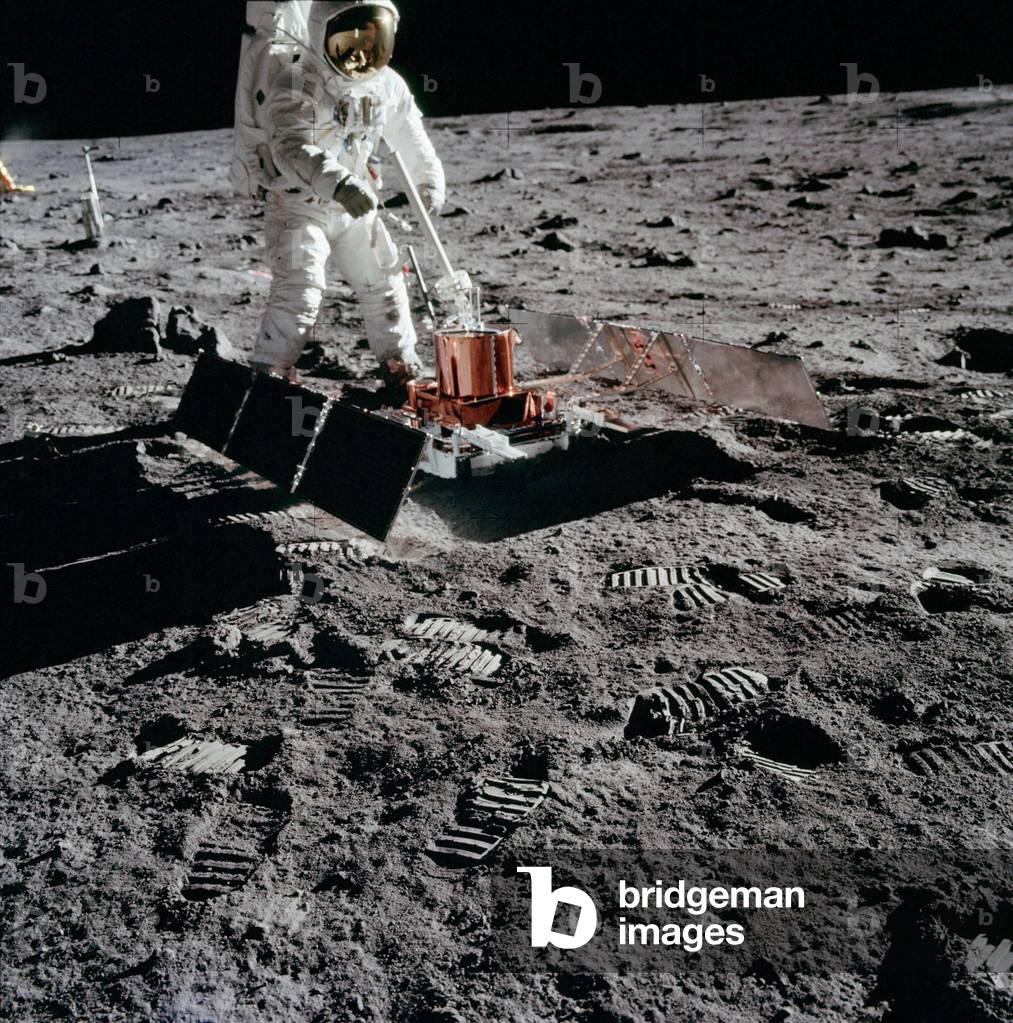
Apollo 11: E. Aldrin and the seismometer - Apollo 11: Aldrin with seismic experiment - Aldrin pres du sismometer assemble. 20/07/1969. The sensitive instrument remained on the Lunar surface to radio back information concerning moonquakes, landslides and meteorite impacts

PIX4596130: Apollo 11: E. Aldrin and the seismometer - Apollo 11: Aldrin with seismic experiment - Aldrin pres du sismometer assemble. 20/07/1969. The sensitive instrument remained on the Lunar surface to radio back information concerning moonquakes, landslides and meteorite impacts / Bridgeman Images

Apollo 11: lunar rock - Apollo 11: lunar rock - Close up of the lunar rocks contained in the second container of samples brought by astronauts from the Apollo 11 mission. 5 August 1969. A close - up view of the lunar rocks contained in the second Apollo 11 sample return container. The rock box was opened for the first time in the Vacuum Laboratory of the Manned Spacecraft Center's (MSC) Lunar Receiving Laboratory (LRL), Building 37, on Tuesday, Aug. 5, 1969. These lunar samples were collected by astronauts Neil A. Armstrong and Edwin E. Aldrin Jr., during their lunar surface extravehicular activity (EVA) on July 20, 1969. August 5, 1969

PIX4596350: Apollo 11: lunar rock - Apollo 11: lunar rock - Close up of the lunar rocks contained in the second container of samples brought by astronauts from the Apollo 11 mission. 5 August 1969. A close - up view of the lunar rocks contained in the second Apollo 11 sample return container. The rock box was opened for the first time in the Vacuum Laboratory of the Manned Spacecraft Center's (MSC) Lunar Receiving Laboratory (LRL), Building 37, on Tuesday, Aug. 5, 1969. These lunar samples were collected by astronauts Neil A. Armstrong and Edwin E. Aldrin Jr., during their lunar surface extravehicular activity (EVA) on July 20, 1969. August 5, 1969 / Bridgeman Images

Apollo 17: E. Cernan - Eugene (Gene) Cernan, Commander Apollo 17. 01/12/1971

PIX4597736: Apollo 17: E. Cernan - Eugene (Gene) Cernan, Commander Apollo 17. 01/12/1971 / Bridgeman Images

View of Iwo Jima Monument (1988 - Photography)

LRI4597998: View of Iwo Jima Monument (1988 - Photography) / Bridgeman Images

View of the tomb of Johannes Brahms, 19th century (photography)

LRI4596287: View of the tomb of Johannes Brahms, 19th century (photography) / Bridgeman Images

Nebula NGC 2170 in Unicorn - Nebula NGC 2170 in Monoceros - Nebula by reflexion located in the constellation Unicorn. This rich collection of predominantly reflection and sparse emission nebulosity exists in the western part of a vast star forming region known as the Mon R 2 association. The “” R”” designation stands for reflection and indicates an association of stars illuminating reflection nebulae. Most of the members of Mon R 2 are type B stars located along an east - west line stretching across 2 degrees of the winter sky, situated about 8 degrees east of the Orion Nebula. The Mon R 2 association resides at a distance of 830 pc and formed about 6 to 10 million years ago along the edge of the Mon R2 molecular cloud

PIX4618379: Nebula NGC 2170 in Unicorn - Nebula NGC 2170 in Monoceros - Nebula by reflexion located in the constellation Unicorn. This rich collection of predominantly reflection and sparse emission nebulosity exists in the western part of a vast star forming region known as the Mon R 2 association. The “” R”” designation stands for reflection and indicates an association of stars illuminating reflection nebulae. Most of the members of Mon R 2 are type B stars located along an east - west line stretching across 2 degrees of the winter sky, situated about 8 degrees east of the Orion Nebula. The Mon R 2 association resides at a distance of 830 pc and formed about 6 to 10 million years ago along the edge of the Mon R2 molecular cloud / Bridgeman Images

Eagle Nebula (IC 4703) and M16 star cluster in the Snake - Eagle nebula in Serpens - The Eagle Nebula is a cluster of massive young stars (M16) surrounded by clouds of gas and dust. The three columns in the center of the image were sculpted by the intense radiation emitted by these massive stars. Stars will be born in these clouds if they survive the intense radiation that erodes these pillars. Messier 16 is a cluster of young stars which formed about 2 million years ago from the gas and dust which still surrounds them. Brilliant blue stars of this type are much hotter than the Sun and can be up to thirty times more massive. The dark intrusions visible across the face of the nebula are condensations of dusty material which might one day collapse into yet more stars, should they survive the radiation from the bright stars, which is gradually etching them away. Bright red regions of photo - ionised hydrogen such as M16 are usually found in the spiral arms of galaxies and are often associated recent star formation. This example is about 6000 - 7000 light years distant

PIX4619956: Eagle Nebula (IC 4703) and M16 star cluster in the Snake - Eagle nebula in Serpens - The Eagle Nebula is a cluster of massive young stars (M16) surrounded by clouds of gas and dust. The three columns in the center of the image were sculpted by the intense radiation emitted by these massive stars. Stars will be born in these clouds if they survive the intense radiation that erodes these pillars. Messier 16 is a cluster of young stars which formed about 2 million years ago from the gas and dust which still surrounds them. Brilliant blue stars of this type are much hotter than the Sun and can be up to thirty times more massive. The dark intrusions visible across the face of the nebula are condensations of dusty material which might one day collapse into yet more stars, should they survive the radiation from the bright stars, which is gradually etching them away. Bright red regions of photo - ionised hydrogen such as M16 are usually found in the spiral arms of galaxies and are often associated recent star formation. This example is about 6000 - 7000 light years distant / Bridgeman Images

Heart of the nebula NGC 3372 in the Carene - Eta Carinae and the Keyhole Nebula - The nebula of the Carene is located about 7000 years - light from the Earth. It is home to many hot stars, including the star Eta Carinae visible in the centre left of the image. Eta Carinae is a supermassive star (100 to 150 times the mass of the Sun). Image obtained by Siding Spring's 3.9m telescope. This wonderfully complex region at the heart of the NGC 3372 nebula was first described in detail by Sir John Herschel in 1838. He saw the bright circular shell visible in the upper part of the picture extending to the south to form a keyhole - shaped nebula. This luminous outline is no longer seen and the southern extension appears only as a dark dust cloud. It seems that the curious, explosively variable star Eta Carinae has enveloped itself in a cocoon of obscuring matter in the years since Herschel's observations and light from the star is no longer able to illuminate the rim of the dust cloud. The nebula thrown off by eta Car in Herschel's time has grown to the tiny orange nebula seen to the left of the dust cloud and is known as the Homunculus nebula

PIX4618913: Heart of the nebula NGC 3372 in the Carene - Eta Carinae and the Keyhole Nebula - The nebula of the Carene is located about 7000 years - light from the Earth. It is home to many hot stars, including the star Eta Carinae visible in the centre left of the image. Eta Carinae is a supermassive star (100 to 150 times the mass of the Sun). Image obtained by Siding Spring's 3.9m telescope. This wonderfully complex region at the heart of the NGC 3372 nebula was first described in detail by Sir John Herschel in 1838. He saw the bright circular shell visible in the upper part of the picture extending to the south to form a keyhole - shaped nebula. This luminous outline is no longer seen and the southern extension appears only as a dark dust cloud. It seems that the curious, explosively variable star Eta Carinae has enveloped itself in a cocoon of obscuring matter in the years since Herschel's observations and light from the star is no longer able to illuminate the rim of the dust cloud. The nebula thrown off by eta Car in Herschel's time has grown to the tiny orange nebula seen to the left of the dust cloud and is known as the Homunculus nebula / Bridgeman Images

March - Spirit - Panorama - Husband Hill - Panorama of 360 degres consists of 243 images obtained by Spirit from November 24 to December 2, 2004. The hill in the center left of the image is Husband Hill. The Rover Spirit landed on Mars in the Gusev crater area, July 4, 2004

PIX4615615: March - Spirit - Panorama - Husband Hill - Panorama of 360 degres consists of 243 images obtained by Spirit from November 24 to December 2, 2004. The hill in the center left of the image is Husband Hill. The Rover Spirit landed on Mars in the Gusev crater area, July 4, 2004 / Bridgeman Images

Mars: Martian face in the region of Cydonia - The “face” is visible in the center of the image. Image obtained by the Mars Express probe on July 22, 2006. The resolution is 13.7m per pixel

PIX4615998: Mars: Martian face in the region of Cydonia - The “face” is visible in the center of the image. Image obtained by the Mars Express probe on July 22, 2006. The resolution is 13.7m per pixel / Bridgeman Images
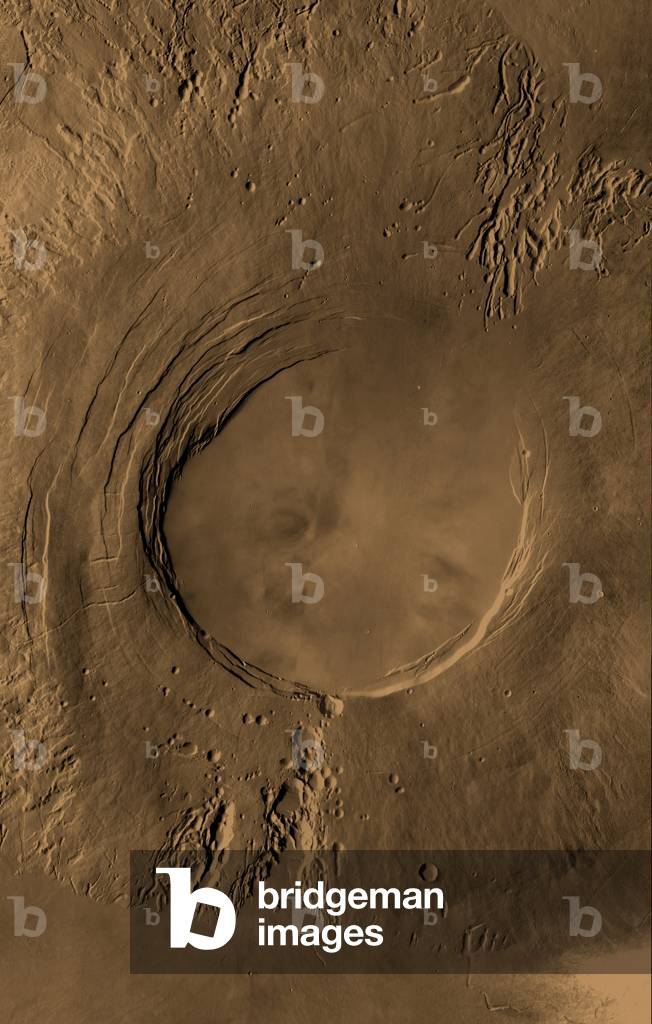
Volcano Arsia Mons - Arsia Mons volcano. - Arsia Mons is one of the largest known volcanoes. It stands more than 9 km above the surrounding plains and its caldera extends for 110 km. Mosaic of infrared images obtained by the Mars Odyssey probe. Arsia Mons is the southernmost of the Tharsis volcanoes. It is 270 miles in diameter, almost 12 miles high, and the summit caldera is 72 miles wide. For comparison, the largest volcano on Earth is Mauna Loa. From its base on the sea floor, Mauna Loa measures only 6.3 miles high and 75 miles in diameter. The image here is a mosaic of several daytime IR images taken by the Mars Odyssey spacecraft

PIX4616305: Volcano Arsia Mons - Arsia Mons volcano. - Arsia Mons is one of the largest known volcanoes. It stands more than 9 km above the surrounding plains and its caldera extends for 110 km. Mosaic of infrared images obtained by the Mars Odyssey probe. Arsia Mons is the southernmost of the Tharsis volcanoes. It is 270 miles in diameter, almost 12 miles high, and the summit caldera is 72 miles wide. For comparison, the largest volcano on Earth is Mauna Loa. From its base on the sea floor, Mauna Loa measures only 6.3 miles high and 75 miles in diameter. The image here is a mosaic of several daytime IR images taken by the Mars Odyssey spacecraft / Bridgeman Images

Mars: crater in Myers Valles - Mars: crater in Myers Valles - Mamers Valles is a valley about 1000 km long located in the region of Deuteronilus Mensae, north of Arabia Terra. The image obtained by the Mars Express probe on 5 August 2006 shows a crater at the end of this valley. This circular formation measures about thirty kilometres in diameter and is 1400 metres deep. There are traces of flow of material probably composed of water ice, similar to the relief left by the passage of glaciers on Earth. The High - Resolution Stereo Camera (HRSC) onboard the ESA spacecraft Mars Express obtained images focusing on a depression that displays a crater at the end of the long, winding valley, Mamers Valles. The data was obtained on 5 August 2006 with a ground resolution of approximately 14 m/per pixel. The image is centred at approximately 39* north and 17* east on the planet. The valley of Mamers Valles is approximately 1000 km long, running along the boundary between the northern lowlands and southern highlands in the region of Deuteronilus Mensae. This region shows numerous deep and wide labyrinth - like valleys and circular depressions which often show structures formed by flowing liquid on their even floors. The structures formed by the flows are thought to be ice - rich debris flows. They show some resemblance to block glaciers seen on Earth. The patches of rock at the centre of the depression are thought to be remnants of rock detached from the flanks of the depression and transported into its centre. The wrinkle ridges, are formed by compressive forces acting on the surface. The dark coloured material inside the crater could have formed in - situ or was transported by the wind. The depression is approximately 30 km wide and 1400 m deep

PIX4616082: Mars: crater in Myers Valles - Mars: crater in Myers Valles - Mamers Valles is a valley about 1000 km long located in the region of Deuteronilus Mensae, north of Arabia Terra. The image obtained by the Mars Express probe on 5 August 2006 shows a crater at the end of this valley. This circular formation measures about thirty kilometres in diameter and is 1400 metres deep. There are traces of flow of material probably composed of water ice, similar to the relief left by the passage of glaciers on Earth. The High - Resolution Stereo Camera (HRSC) onboard the ESA spacecraft Mars Express obtained images focusing on a depression that displays a crater at the end of the long, winding valley, Mamers Valles. The data was obtained on 5 August 2006 with a ground resolution of approximately 14 m/per pixel. The image is centred at approximately 39* north and 17* east on the planet. The valley of Mamers Valles is approximately 1000 km long, running along the boundary between the northern lowlands and southern highlands in the region of Deuteronilus Mensae. This region shows numerous deep and wide labyrinth - like valleys and circular depressions which often show structures formed by flowing liquid on their even floors. The structures formed by the flows are thought to be ice - rich debris flows. They show some resemblance to block glaciers seen on Earth. The patches of rock at the centre of the depression are thought to be remnants of rock detached from the flanks of the depression and transported into its centre. The wrinkle ridges, are formed by compressive forces acting on the surface. The dark coloured material inside the crater could have formed in - situ or was transported by the wind. The depression is approximately 30 km wide and 1400 m deep / Bridgeman Images

Nebulae NGC 2264 and IC 2169 in the Unicorn - The Cone nebula, on the left, is an H II region located about 2600 light years from Earth. The bright star above is S Monocerotis, a star with a magnitude 4.7. Towards the center of the image, an open cluster of stars, Trumpler 5. Below, to the left, the Hubble nebula. On the right, the reflexion nebula IC 2169

PIX4618784: Nebulae NGC 2264 and IC 2169 in the Unicorn - The Cone nebula, on the left, is an H II region located about 2600 light years from Earth. The bright star above is S Monocerotis, a star with a magnitude 4.7. Towards the center of the image, an open cluster of stars, Trumpler 5. Below, to the left, the Hubble nebula. On the right, the reflexion nebula IC 2169 / Bridgeman Images
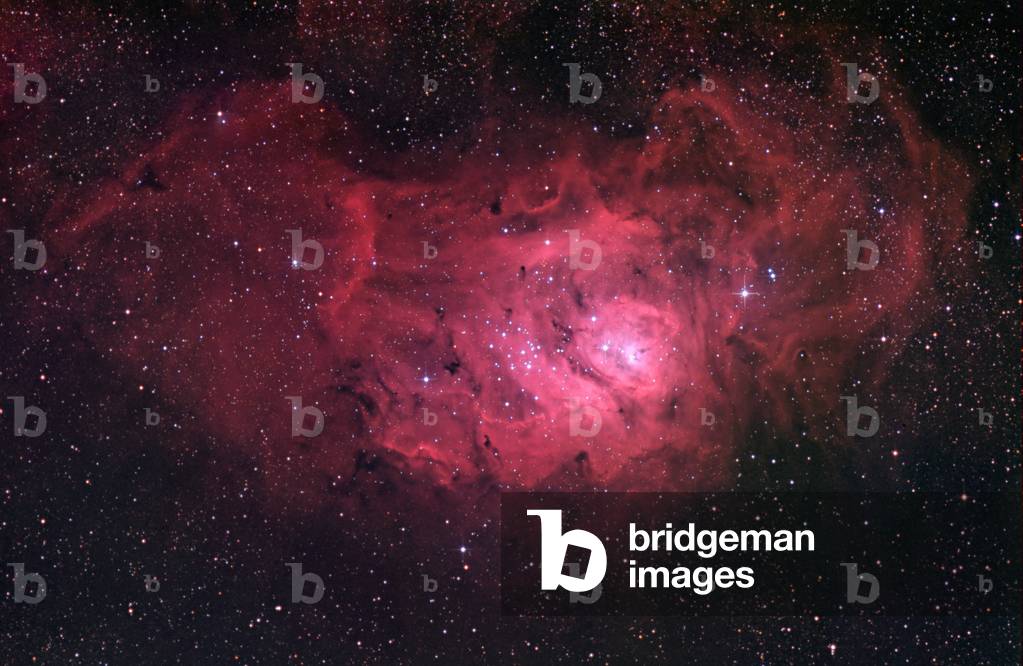
Lagoon Nebula (M8) in Sagittarius - This is a hydrogen alpha color composite taken with the STL11000, AP155 and FSQ106. Total exposure time was ha/red: G: B+70/60:60:60 minute

PIX4619597: Lagoon Nebula (M8) in Sagittarius - This is a hydrogen alpha color composite taken with the STL11000, AP155 and FSQ106. Total exposure time was ha/red: G: B+70/60:60:60 minute / Bridgeman Images

March: Panorama Santa Anita - Panorama obtained by Spirit on 21, 25 and 26 May 2004. The rover was about 600m from the Columbia Hills and had crossed 3/4 of the distance between the Bonneville crater and the hills. The Rover Spirit landed on Mars in the Gusev crater area, July 4, 2004

PIX4615606: March: Panorama Santa Anita - Panorama obtained by Spirit on 21, 25 and 26 May 2004. The rover was about 600m from the Columbia Hills and had crossed 3/4 of the distance between the Bonneville crater and the hills. The Rover Spirit landed on Mars in the Gusev crater area, July 4, 2004 / Bridgeman Images

Hubble Nebula (NGC 2261) in Unicorn - NGC 2261, Hubble's variable nebula - The Hubble Nebula is a weak nebulosite that surrounds the star R Monocerotis (R Mon), the bright star at the bottom of the nebula. The mass of the star R Mon is about 10 times that of the sun. It is approximately 2600 light years away and is only 300,000 years old. Image obtained by Siding Spring's 3.9m telescope. Hubble's variable nebula is in Monoceros and was the first object to be photographed with the famous 200 inch Hale Telescope at Palomar in 1948. This curious object is a reflection nebula in which is embedded the star R Monocerotis. Variations in the appearance of the nebula were noted by the American astronomer Edwin Hubble in 1916. They are probably caused by opaque clouds of dust passing between the hidden star and the outskirts of the nebula we see, the moving shadows changing the apparent form of the glowing dust in an irregular way. This picture was made from three AAT plates taken over several years and subtle colour changes around the edge of the nebula are indications of the variability

PIX4618577: Hubble Nebula (NGC 2261) in Unicorn - NGC 2261, Hubble's variable nebula - The Hubble Nebula is a weak nebulosite that surrounds the star R Monocerotis (R Mon), the bright star at the bottom of the nebula. The mass of the star R Mon is about 10 times that of the sun. It is approximately 2600 light years away and is only 300,000 years old. Image obtained by Siding Spring's 3.9m telescope. Hubble's variable nebula is in Monoceros and was the first object to be photographed with the famous 200 inch Hale Telescope at Palomar in 1948. This curious object is a reflection nebula in which is embedded the star R Monocerotis. Variations in the appearance of the nebula were noted by the American astronomer Edwin Hubble in 1916. They are probably caused by opaque clouds of dust passing between the hidden star and the outskirts of the nebula we see, the moving shadows changing the apparent form of the glowing dust in an irregular way. This picture was made from three AAT plates taken over several years and subtle colour changes around the edge of the nebula are indications of the variability / Bridgeman Images

Nebula of the Lagoon (M8) in Sagittarius - The Lagoon nebula (M8) in Sagittarius - View of the Nebula of the Lagoon (M8/NGC 6523). Located in Sagittarius, at a distance of 5800 years - light, it is visible to the naked eye in good conditions. It is a star-forming region illuminated by several large O-type stars that belong to the open cluster NGC 6530 visible in the center of the image. The brightest part of the nebula is called the hourglass nebula whose gases are excited mainly by two massive supergeant stars Herschel 36 and 9 Sagittarii. M8 has at least 60 Giant B stars, 3 to 4 times more than the Orion Nebula. The Lagoon nebula (M8), can be visible to the unaided eye as a small bright patch above the large Sagittarius star cloud in the Milky Way. The Lagoon nebula is a star - forming region about 5800 light years from us. The nebula is illuminated by several O - type giants within the open cluster NGC 6530 near the center of the nebula. The brightest part of the nebula is known as the “hourglass nebula”” and its gases are excited primarily by two massive O - type supergiants designated Herschel 36 and 9 Sagittarii. These two stars lie to the west of NGC 6530 and are separated from it by a dark lane dividing the nebula like a black lagoon, giving it its name. Twisted funnel shaped clouds are visible close to the illuminating stars, especially Herschel 36. They are due to shear forces between the hot excited gases at the surface and the cold interior of the clouds. At least 60 B - type giants are embedded in the nebula which make M8 3 to 4 times richer in massive stars than the Orion nebula

PIX4619726: Nebula of the Lagoon (M8) in Sagittarius - The Lagoon nebula (M8) in Sagittarius - View of the Nebula of the Lagoon (M8/NGC 6523). Located in Sagittarius, at a distance of 5800 years - light, it is visible to the naked eye in good conditions. It is a star-forming region illuminated by several large O-type stars that belong to the open cluster NGC 6530 visible in the center of the image. The brightest part of the nebula is called the hourglass nebula whose gases are excited mainly by two massive supergeant stars Herschel 36 and 9 Sagittarii. M8 has at least 60 Giant B stars, 3 to 4 times more than the Orion Nebula. The Lagoon nebula (M8), can be visible to the unaided eye as a small bright patch above the large Sagittarius star cloud in the Milky Way. The Lagoon nebula is a star - forming region about 5800 light years from us. The nebula is illuminated by several O - type giants within the open cluster NGC 6530 near the center of the nebula. The brightest part of the nebula is known as the “hourglass nebula”” and its gases are excited primarily by two massive O - type supergiants designated Herschel 36 and 9 Sagittarii. These two stars lie to the west of NGC 6530 and are separated from it by a dark lane dividing the nebula like a black lagoon, giving it its name. Twisted funnel shaped clouds are visible close to the illuminating stars, especially Herschel 36. They are due to shear forces between the hot excited gases at the surface and the cold interior of the clouds. At least 60 B - type giants are embedded in the nebula which make M8 3 to 4 times richer in massive stars than the Orion nebula / Bridgeman Images

Detail of the nebula NGC 3324 in the Carene - Detail of nebula NGC 3324 in Carina - Detail of the nebula NGC 3324 obtained by the Hubble space telescope. This nebula is located in the southern hemisphere, close to the great Carene nebula about 7200 light years from Earth. The image obtained by the Hubble Space Telescope shows a gas wall at the edge of a cavite created by the radiation and stellar winds blown by young warm stars. Hubble space telescope image shows the edge of a giant gaseous cavity within the star - forming region called NGC 3324. The glowing nebula has been carved out by intense ultraviolet radiation and stellar winds from several hot, young stars. A cluster of extremely massive stars, located well outside this image in the center of the nebula, is responsible for the ionization of the nebula and excavation of the cavity. The image also reveals dramatic dark towers of cool gas and dust that rise above the glowing wall of gas. The dense gas at the top resists the blistering ultraviolet radiation from the central stars, and creates a tower that points in the direction of the energy flow. The high - energy radiation blazing out from the hot, young stars in NGC 3324 is sculpting the wall of the nebula by slowly eroding it away. Located in the Southern Hemisphere, NGC 3324 is at the northwest corner of the Carina Nebula (NGC 3372), home of the Keyhole Nebula and the active, outbursting star Eta Carinae. The entire Carina Nebula complex is located at a distance of roughly 7,200 light - years, and lies in the constellation Carina. This image is a composite of data taken with two of Hubble's science instruments. Data taken with the Advanced Camera for Surveys (ACS) in 2006 isolated light emitted by hydrogen. More recent data, taken in 2008 with the Wide Field Planetary Camera 2 (WFPC2), isolated light emitted by sulfur and oxygen gas. To create a color composite, the data from the sulfur filter are represented by re

PIX4618883: Detail of the nebula NGC 3324 in the Carene - Detail of nebula NGC 3324 in Carina - Detail of the nebula NGC 3324 obtained by the Hubble space telescope. This nebula is located in the southern hemisphere, close to the great Carene nebula about 7200 light years from Earth. The image obtained by the Hubble Space Telescope shows a gas wall at the edge of a cavite created by the radiation and stellar winds blown by young warm stars. Hubble space telescope image shows the edge of a giant gaseous cavity within the star - forming region called NGC 3324. The glowing nebula has been carved out by intense ultraviolet radiation and stellar winds from several hot, young stars. A cluster of extremely massive stars, located well outside this image in the center of the nebula, is responsible for the ionization of the nebula and excavation of the cavity. The image also reveals dramatic dark towers of cool gas and dust that rise above the glowing wall of gas. The dense gas at the top resists the blistering ultraviolet radiation from the central stars, and creates a tower that points in the direction of the energy flow. The high - energy radiation blazing out from the hot, young stars in NGC 3324 is sculpting the wall of the nebula by slowly eroding it away. Located in the Southern Hemisphere, NGC 3324 is at the northwest corner of the Carina Nebula (NGC 3372), home of the Keyhole Nebula and the active, outbursting star Eta Carinae. The entire Carina Nebula complex is located at a distance of roughly 7,200 light - years, and lies in the constellation Carina. This image is a composite of data taken with two of Hubble's science instruments. Data taken with the Advanced Camera for Surveys (ACS) in 2006 isolated light emitted by hydrogen. More recent data, taken in 2008 with the Wide Field Planetary Camera 2 (WFPC2), isolated light emitted by sulfur and oxygen gas. To create a color composite, the data from the sulfur filter are represented by re / Bridgeman Images

March -View of the south pole - Mars South Pole: Image of the southern polar cap of Mars obtained by the Mars Express probe on December 17, 2012. The bright white region of this image shows the icy cap that covers Mars' south pole, composed of frozen water and carbon dioxide. The southern cap reaches some 3 km thick in places, and is around 350 km in diameter. This icy region is permanent; in the martian winter another, thinner ice cap forms over the top of it, stretching further out across the planet and disappearing again when the weather warms up. Mars Express imaged this area of March on 17 December 2012, in infrared, green and blue light, using its High Resolution Stereo Camera.

PIX4616213: March -View of the south pole - Mars South Pole: Image of the southern polar cap of Mars obtained by the Mars Express probe on December 17, 2012. The bright white region of this image shows the icy cap that covers Mars' south pole, composed of frozen water and carbon dioxide. The southern cap reaches some 3 km thick in places, and is around 350 km in diameter. This icy region is permanent; in the martian winter another, thinner ice cap forms over the top of it, stretching further out across the planet and disappearing again when the weather warms up. Mars Express imaged this area of March on 17 December 2012, in infrared, green and blue light, using its High Resolution Stereo Camera. / Bridgeman Images


Back to top