2491125 Search Results

CHT249402: Menu from the Empire Club, 17th March 1884 (colour litho), English School, (19th century) / Bridgeman Images

STC249557: The Bridge of Love, plate 67 from 'le Bon Genre', c.1810 (colour engraving), French School, (19th century) / Bridgeman Images

STC249565: The love of flowers, plate 78 from 'le Bon Genre', c.1810 (colour engraving), French School, (19th century) / Bridgeman Images

CH249870: Portrait of Beilby Richard Lawley (1818-80) 2nd Baron Wenlock (oil on canvas), English School, (19th century) / Bridgeman Images

IL250647: The Song of the Sou'Wester, illustration from 'Drake's Drum and Other Songs of the Sea' by Henry Newbolt (1862-1938) (colour litho), McCormick, Arthur David (1860-1943) / Bridgeman Images

STC161823: A Falloden Stall with Huzzarehs carrying snow etc. to market, from 'Characters and Costumes of Afghuanistan' written by Captain Lockyer Willis Hart, published 1843 (colour litho), Hague, Louis (fl.1843) / Bridgeman Images

MFI162425: Our Saviour Falls while Carrying the Cross, from the chapel, c.1520 (wood), Flemish School, (16th century) / Bridgeman Images

MFI162449: Cabinet given to Mary Queen of Scots (1542-87) and Francis II (1544-60) Dauphin of France as a wedding gift (wood inlaid with ivory and mother of pearl) (see 162450 for detail), Italian School, (16th century) / Bridgeman Images

XYC162471: Ground plan and elevation for a villa, 1763 (graphite, pen and ink and wash on paper), Riou, Stephen (1720-80) / Bridgeman Images

MOU162535: Queen Henrietta Maria (1609-69) (oil on canvas), Dyck, Anthony van (1599-1641) (circle of) / Bridgeman Images

CHT202862: L-R: Jean Schneider (d.1944) Eugene Schneider (1868-1942) Henri-Paul Schneider (d.1918) 1914 (photo), French Photographer, (20th century) / Bridgeman Images

STC203642: Cover illustration for the Automobile Number, Collier's Magazine, January 17th 1903 (colour litho), Penfield, Edward (1866-1925) / Bridgeman Images

CH203845: Skating Pond at Morristown, New Jersey (oil on canvas), Gignoux, Regis Francis (1816-82) / Bridgeman Images

CH204283: Late Afternoon, Port Ben, Ulster County, 1894, Henry, Edward Lamson (1841-1919) / Bridgeman Images

SKD250668: Christ at the Column, 1515 (oil on panel), Cranach, Lucas the Elder (1472-1553) / Bridgeman Images
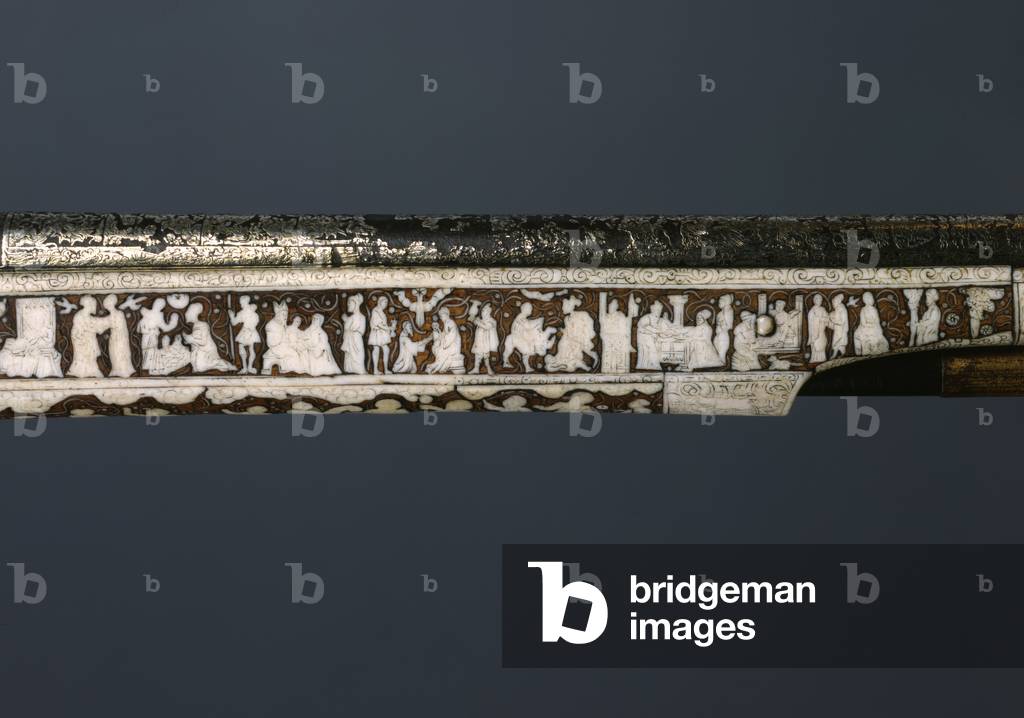
SKD250689: Barrel of a Pistol, c.1550 (wood with ivory inlay) (see also 250685-250688, and 250690-250692), German School, (16th century) / Bridgeman Images

STF250835: Half-timbered house in the Old Town (photo), German School / Bridgeman Images

STF250852: View of the quadriga of the Brandenburg Gate, 1789-91 (photo), Langhans, Carl Gotthard (1732-1808) / Bridgeman Images

STF250891: View of the Schloss Glucksburg, built by Nicolaus Karies of Flensburg, 1582-87 (photo), German School, (16th century) / Bridgeman Images

STC251080: 'Puffing Billy', c.1905 (b/w photo), English Photographer, (20th century) / Bridgeman Images

XAB162817: The Sheremetyev Palace in Ostankino, built 1770s (photo), Russian School, (18th century) / Bridgeman Images

CHT163000: Great Submarine Battle, late 19th century (w/c), Robida, Albert (1848-1926) / Bridgeman Images

CHT163164: Caricature of Frederick Lemaitre (1800-76) (colour litho), Mailly, Hippolyte (1829-63) / Bridgeman Images
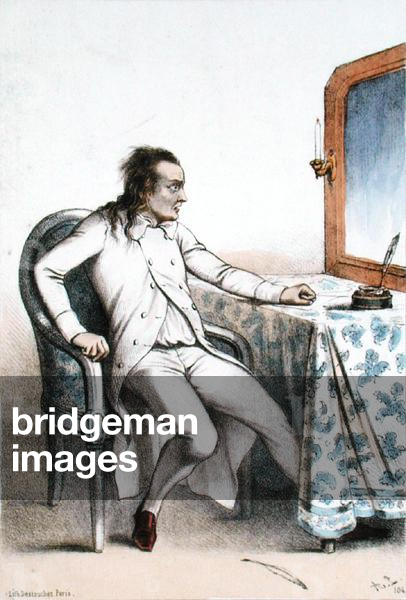
CHT163167: Frederick Lemaitre (1800-76) in the role of Georges Maurice from 'La Dame de Saint-Tropez' at the theatre de la Porte Saint-Martin (colour litho), French School, (19th century) / Bridgeman Images

CHT163205: Thermae and Nymphaeum of Nimes, 1838 (wash on paper), Questel (19th century) / Bridgeman Images

CHT163229: Billingsgate Market, London, published 1st March 1808 (aquatint), Rowlandson, T.(1756-1827) & Pugin, A.C.(1762-1832) / Bridgeman Images

JB142002: View of the Casino del Bel Respiro, built by Alessandro Algardi (1602-54) and Giovanni Francesco Grimaldi (1606-80) in 1644-52, Villa Doria Pamphilj, Rome, Italy(photo), Bethell, John / Bridgeman Images
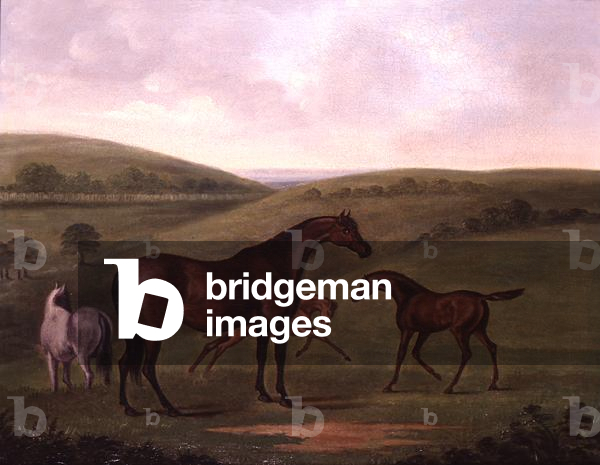
BNM142039: Mare with Foals in a Landscape (oil on canvas), Sartorius, John Nost (1759-1828) / Bridgeman Images
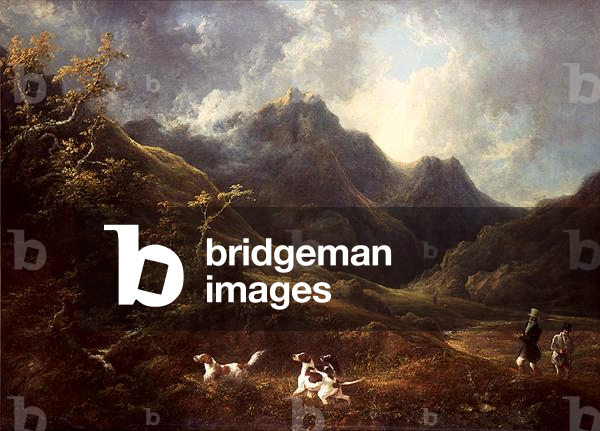
BNM142042: Shooting over Dogs (oil on canvas), Schwanfelder, Charles Henry (1774-1837) / Bridgeman Images

KW142056: Lion's head from the fountain in the Court of the Lions (photo) (detail) / Bridgeman Images

ILN142078: One of the royal beds being lifted into a box for removal from the Tomb of Tutankhamun (b/w photo) / Bridgeman Images

ILN142300: View of Christ Church College, Oxford (b/w photo), English School, (19th century) / Bridgeman Images
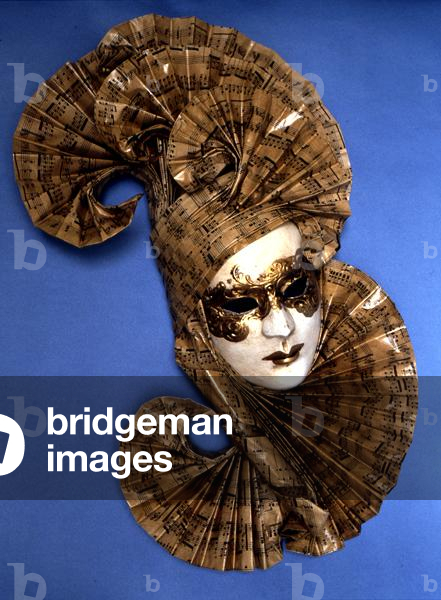
ZEN142485: Venetian Mask (photo) / Bridgeman Images

NYH142572: Allegorical Landscape Showing New York University, Washington Square, New York, 1836 (oil on canvas), Morse, Samuel Finley Breese (1791-1872) / Bridgeman Images

KWE232414: King Francois I (1494-1547) (engraving), French School, (16th century) (after) / Bridgeman Images

KWE232417: Francoise d'Aubigne (1635-1719) Madame de Maintenon (litho), French School, (18th century) (after) / Bridgeman Images
