2490020 Search Results

LRI4691972: Christ among St Paul, St Cecilia, St Pascal, St Peter, St Valeriano and St Agata (mosaic, 821), Unknown Artist, (9th century) / Bridgeman Images

JLJ4692022: A photo album of an infantry lieutenant during the first months of the First World War, 1914-1918 (photo) / Bridgeman Images
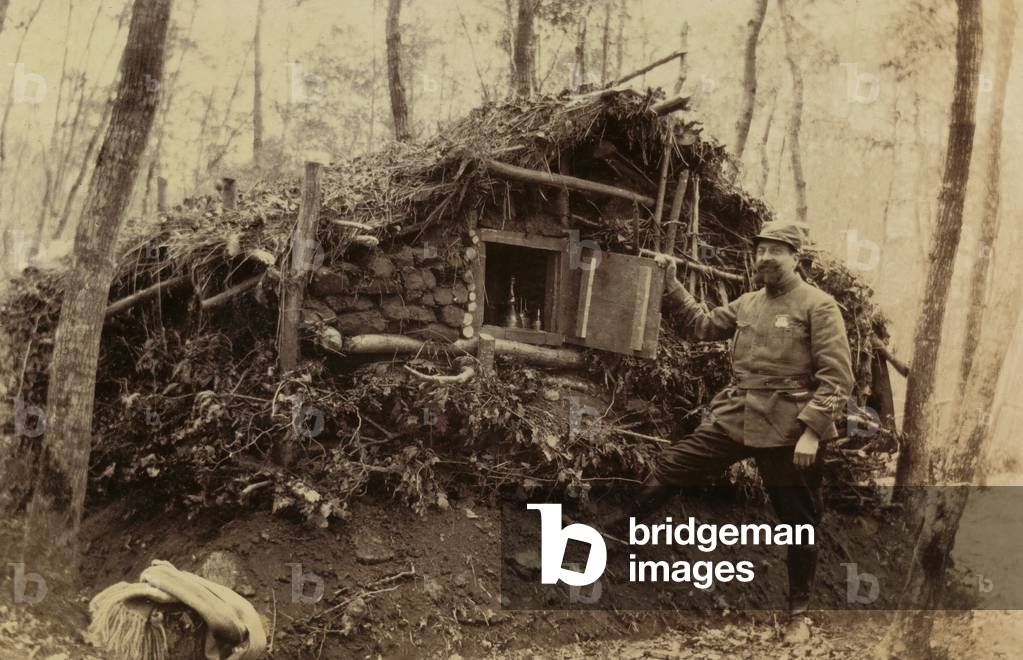
JLJ4692034: A photo album of an infantry lieutenant during the first months of the First World War, 1914-1918 (photo) / Bridgeman Images

GIA4692483: Allegory of socialism with workers' symbols (anvil and hammer)., Unknown Artist, (19th century) / Bridgeman Images

GIA4692509: Battle of the Pyramids, 1798. 19th century (Epinal print), French School, (19th century) / Bridgeman Images

GIA4765701: Jeanne Hervillier de Verberie near Compiègne is presented to the demon by her mother at the age of twelve. She was accused of witchcraft, and her trial took place in 1578., Unknown Artist / Bridgeman Images
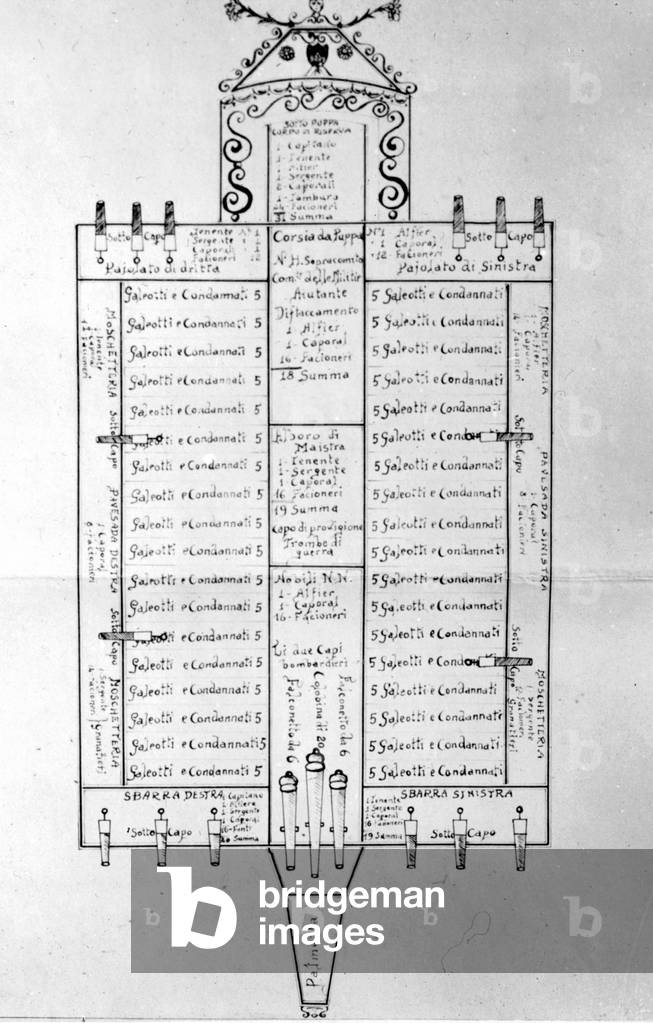
GIA4765951: Schèma representing the layout of galerians on the galley according to their status., Unknown Artist, (19th century) / Bridgeman Images

GIA4766083: ntinople. Mosquee of Saint Sophia (Hagia Sophia). Engraving from the end of the 19th century, Unknown Artist, (19th century) / Bridgeman Images

GIA4766446: Frontispice of the novel by Eugene Sue: The Wandering Jew, 1844 - 1845., Unknown Artist, (19th century) / Bridgeman Images

GIA4766488: Portrait of Richard Delalande, superintendent of the Music of the King; b. 15 Dec. 1657 in Paris; d. 18 Jan. 1726., Unknown Artist, (19th century) / Bridgeman Images

GIA4766633: The attack in Lisbon: The King of Portugal (Carlos I) (Charles I) and the Crown Prince (Louis Philippe) are assassinated on 01/02/1908. Ill. d'A. Beltrame. "La Domenica del corriere". 02/1908., Beltrame, Achille (1871-1945) / Bridgeman Images

GIA4766974: In Borumieda, the Ras Mangacha, governor of the Tigrai province (Tigray) in Abyssinia makes an act of submission to Negus Menelik II (1844 - 1913) with the stone around his neck. 1899. Ill. de Silhouette for the press., Unknown Artist, (19th century) / Bridgeman Images

GIA4692661: Charles Emmanuel II (1634 - 1675), Duke of Savoy., Unknown Artist, (19th century) / Bridgeman Images

LRI4692835: Landscape of nature, undergrowth and stream with waterfall Painting by Domenico Cambiaso (1811-1894) circa 1865 Dim 43,5x37 cm Genes, Galleria d'Arte Moderna, inv 113, Cambiaso, Domenico (1811-1894) / Bridgeman Images

GIA4693206: Enamel plate, Qing period (17th century) Genes, Museo Chiossone, Chinese School, Qing Dynasty (1644-1912) / Bridgeman Images

LRI4693228: Saint Jerome Polyptych Panel from the Church of San Gerolamo della Cervara - Painting by Gerard David (ca. 1460-1523) 1506 Dim 65x150 cm Genes Musei di Strada Nuova (ex Palazzo Bianco) Italy, David, Gerard (c.1460-1523) / Bridgeman Images

LRI4693330: “Visit the sick people” Painting by Cornelis De Wael (1592-1667) (ec flam) after 1625 Dim 100x150 cm Genes, Musei di Strada Nuova (ex Palazzo Bianco), Wael, Cornelis de (1592-1667) / Bridgeman Images

LRI4693351: Bivouac de soldats (the bivouac of soldiers) Painting by Cornelis De Wael (1592-1667) 17th century Dim 50x75 cm Genes, Musei di Strada Nuova (ex Palazzo Bianco), Wael, Cornelis de (1592-1667) / Bridgeman Images

LRI4661604: The prophete Muhammad (Mohammed or Muhammad) (570-632) listens to the weeping of a Miniature doe from a Turkish manuscript written by Erzeni, illustrated by Seyyid Suleiman Pasha, recounting the life of Muhammad 18th century. Istanbul, Turkish-Islamic Art Museum, Turkish School, (18th century) / Bridgeman Images

PIX4661665: Dimetrodons by a lake - Dimetrodon lakeside - View of an artist of dimetrodons in a Permian landscape. Dimetrodon is a mammalian reptile (Therapside), carnivore living in Permian. A pair of carnivorous Dimetrodon explores an Early Permian landscape. The tree on the left is a Corodite, an ancient ancestor of today's conifers, and on the far right is a Glossopteris, a seed plant that came to dominate this period with over 70 different species / Bridgeman Images

JLJ4661715: Romantic fashion: Chateau toilet. Two women with extravagant hairstyles on a canape. Engraving of the 19th century (engraving), French School, (19th century) / Bridgeman Images

PIX4661737: Lycaenops - Lycaenops is a genus of Gorgonopsian, that is, a therapside (mammalian reptile) that lived 270 million years ago, during the second part of Permian. Its name comes from the Greek and means “wolf face”. It was about 1 metre long. A three-foot-long, 35 pound carnivorous therapsid (mammal-like reptile) of the genus Lycaenops wanders a mountainous Mid-Permian landscape 270 million years ago in what is today South Africa. Vegetation includes various ferns forming ground cover and a large cycad. While reptilian in origin, Lycaenops more resembled a modern wolf with a long and slender skull, wolf-like fangs, and long legs held close to its body which probably enabled it to out-run the small reptiles and dicynodonts it dined on / Bridgeman Images

GIA4767305: Satirical vignette against Jansenism., Unknown Artist, (17th century) / Bridgeman Images

GIA4767335: Satirical vignette against Jansenism., Unknown Artist, (17th century) / Bridgeman Images

GIA4767620: View of an ice factory in 1860. (Customs installation), Unknown Artist, (19th century) / Bridgeman Images

GIA4768012: Portrait of Raymond V, Count of Toulouse (approximately 1134 - 1194)., Unknown Artist, (19th century) / Bridgeman Images

GIA4768067: Portrait of a papal palace of the Vatican State. 19th century engraving., Unknown Artist, (19th century) / Bridgeman Images

GIA4768225: Portrait of Wolfang Amadeus Mozart (1756 - 1791)., Unknown Artist, (19th century) / Bridgeman Images

GIA4768443: English cartoon depicting Emperor Napoleon I in exile on Elba Island: sitting on his new trone in the shape of a chamber pot, a demon gives him a pistol if he has the courage to use it. May 1814., English School, (19th century) / Bridgeman Images

GIA4768575: Young fashionable people in 1906., Unknown Artist, (20th century) / Bridgeman Images

GIA4693563: Illustration depicting Casanova and a naked woman - in “History of my life”” by Casanova. Brussels 1872., Unknown Artist, (19th century) / Bridgeman Images

GIA4693615: 15th century choir with a miniaturated “P”” lettrine representing the nativity by Cristoforo Cortese. Early 15th century., Cortese, Cristoforo (c.1350-1445) / Bridgeman Images

LRI4693641: Portrait of Frederic Henri de Nassau Prince of Orange (1584-1647) Captain and Admiral General of the United Provinces Painting by Antonie Van Dyck (1599-1641) 1628-1629 Sun. 121x103 cm Genes, Galleria di Palazzo Rosso, Dyck, Anthony van (1599-1641) / Bridgeman Images

GIA4693713: OSANNA manuscript of the “Messes of Mantua” by Giovanni Pierluigi da Palestrina (1525 - 1594), Italian composer., Palestrina, Giovanni Pierluigi da (1525/6-1594) (after) / Bridgeman Images

GIA4693760: Carte de l'Amerique du Sud. Portulan de Bartolomeo Velhio, 1561.Museo Navale de La Spezia, Velho, Bartolomeu (d.1568) / Bridgeman Images

GIA4694103: The Trojans of Hector Berlioz. 19th century chromolithography., Unknown Artist, (19th century) / Bridgeman Images
