Search options

Orientation
Colour

Display options

View

Print

To print search results, use print friendly version of this page.

2491383 Search Results

The mansion of Maison Baccarat, 11 place des États-Unis, Paris 16, France. Architecture by Philippe Starck, 2003. The Baccarat crystallerie has taken over the old mansion that lives from 1920 to 1970 by Marie-Laure de Noailles in Paris. The Baccarat House left carte blanche to Philippe Starck to invest the 3000 square meters of this building built in 1895 by architect Sanson. Photography 10/01/04

LBY4555622: The mansion of Maison Baccarat, 11 place des États-Unis, Paris 16, France. Architecture by Philippe Starck, 2003. The Baccarat crystallerie has taken over the old mansion that lives from 1920 to 1970 by Marie-Laure de Noailles in Paris. The Baccarat House left carte blanche to Philippe Starck to invest the 3000 square meters of this building built in 1895 by architect Sanson. Photography 10/01/04, Starck, Philippe (b.1949) / Bridgeman Images

The Musee de la Maison Baccarat, 11 place des États-Unis, Paris 16, France. Architecture by Philippe Starck, 2003. The Baccarat crystallerie has taken over the old mansion that lives from 1920 to 1970 by Marie-Laure de Noailles in Paris. The Baccarat House left carte blanche to Philippe Starck to invest the 3000 square meters of this building built in 1895 by architect Sanson. Photography 10/01/04

LBY4555640: The Musee de la Maison Baccarat, 11 place des États-Unis, Paris 16, France. Architecture by Philippe Starck, 2003. The Baccarat crystallerie has taken over the old mansion that lives from 1920 to 1970 by Marie-Laure de Noailles in Paris. The Baccarat House left carte blanche to Philippe Starck to invest the 3000 square meters of this building built in 1895 by architect Sanson. Photography 10/01/04, Starck, Philippe (b.1949) / Bridgeman Images

Entrée de la Maison Baccarat, 11 place des États-Unis, Paris 16, France. Architecture by Philippe Starck, 2003. The Baccarat crystallerie has taken over the old mansion that lives from 1920 to 1970 by Marie-Laure de Noailles in Paris. The Baccarat House left carte blanche to Philippe Starck to invest the 3000 square meters of this building built in 1895 by architect Sanson. Photography 10/01/04

LBY4555649: Entrée de la Maison Baccarat, 11 place des États-Unis, Paris 16, France. Architecture by Philippe Starck, 2003. The Baccarat crystallerie has taken over the old mansion that lives from 1920 to 1970 by Marie-Laure de Noailles in Paris. The Baccarat House left carte blanche to Philippe Starck to invest the 3000 square meters of this building built in 1895 by architect Sanson. Photography 10/01/04, Starck, Philippe (b.1949) / Bridgeman Images
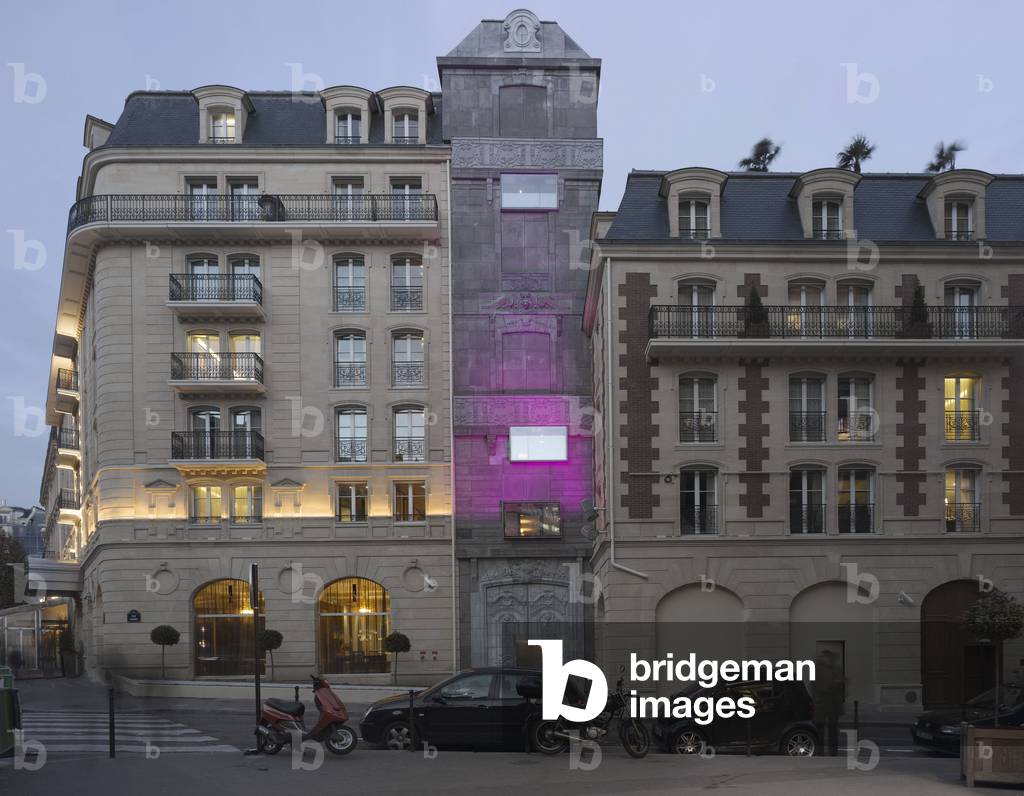
Le Fouquet's Barriere, 46 avenue George V, Paris 8. Architectyre of Edouard Francois, 2003-2006. Photography 13/01/07.

LBY4555658: Le Fouquet's Barriere, 46 avenue George V, Paris 8. Architectyre of Edouard Francois, 2003-2006. Photography 13/01/07., François, Édouard (b.1958) / Bridgeman Images
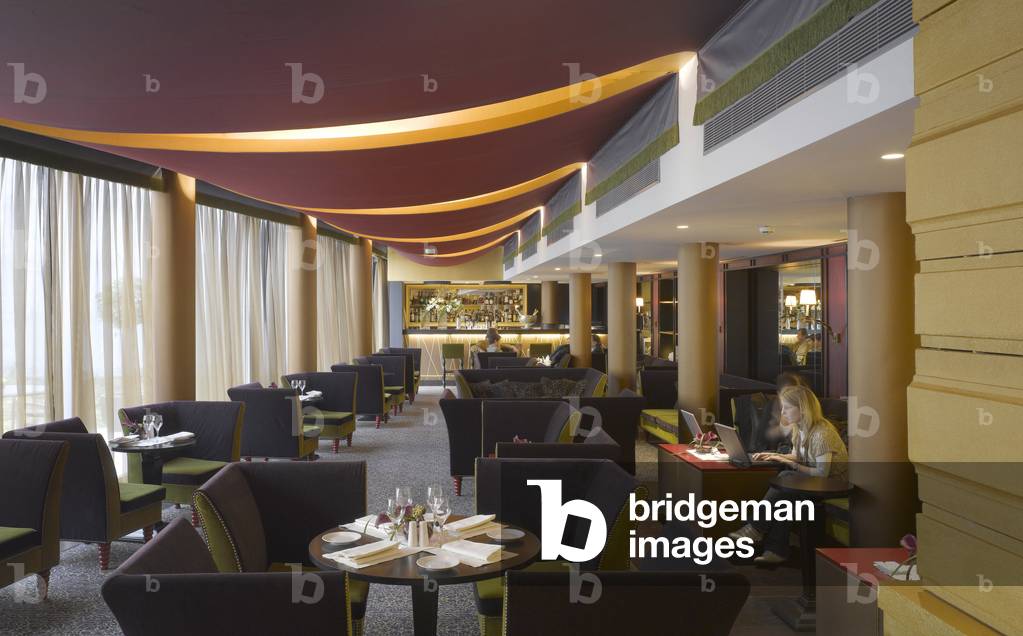
Le Fouquet's Barriere, 46 avenue George V, Paris 8. Internal architecture by Jacques Garcia, 2003-2006. Photography 13/01/07.

LBY4555664: Le Fouquet's Barriere, 46 avenue George V, Paris 8. Internal architecture by Jacques Garcia, 2003-2006. Photography 13/01/07., Garcia, Jacques (b.1947) / Bridgeman Images
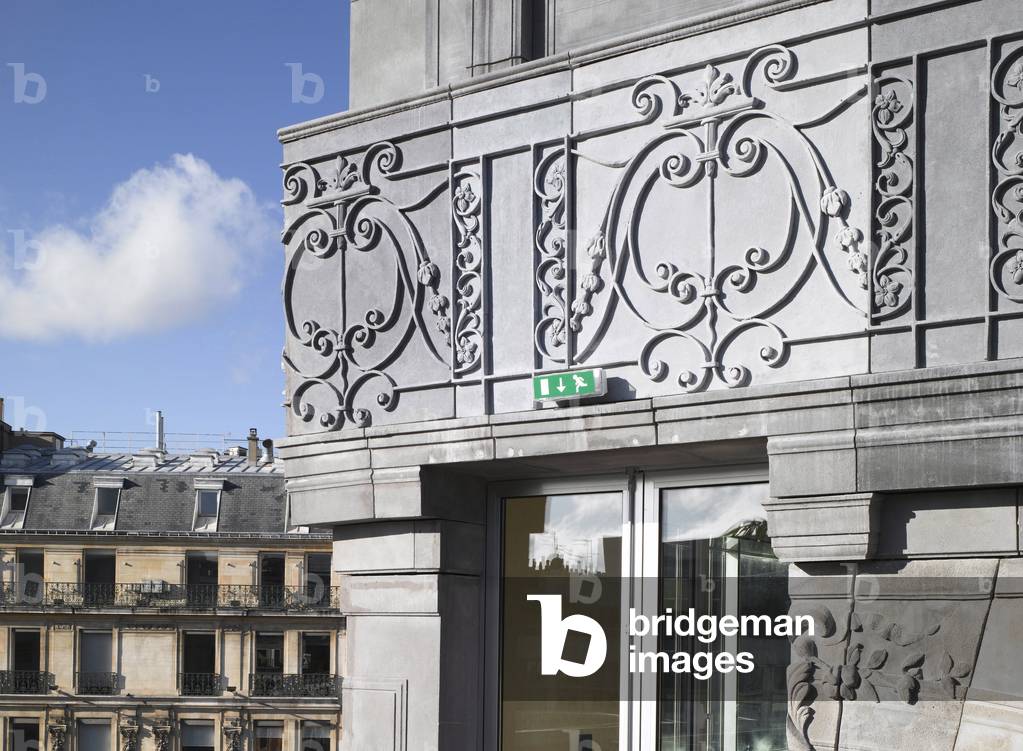
Le Fouquet's Barriere, 46 avenue George V, Paris 8. Architectyre of Edouard Francois, 2003-2006. Photography 13/01/07.

LBY4555682: Le Fouquet's Barriere, 46 avenue George V, Paris 8. Architectyre of Edouard Francois, 2003-2006. Photography 13/01/07., François, Édouard (b.1958) / Bridgeman Images
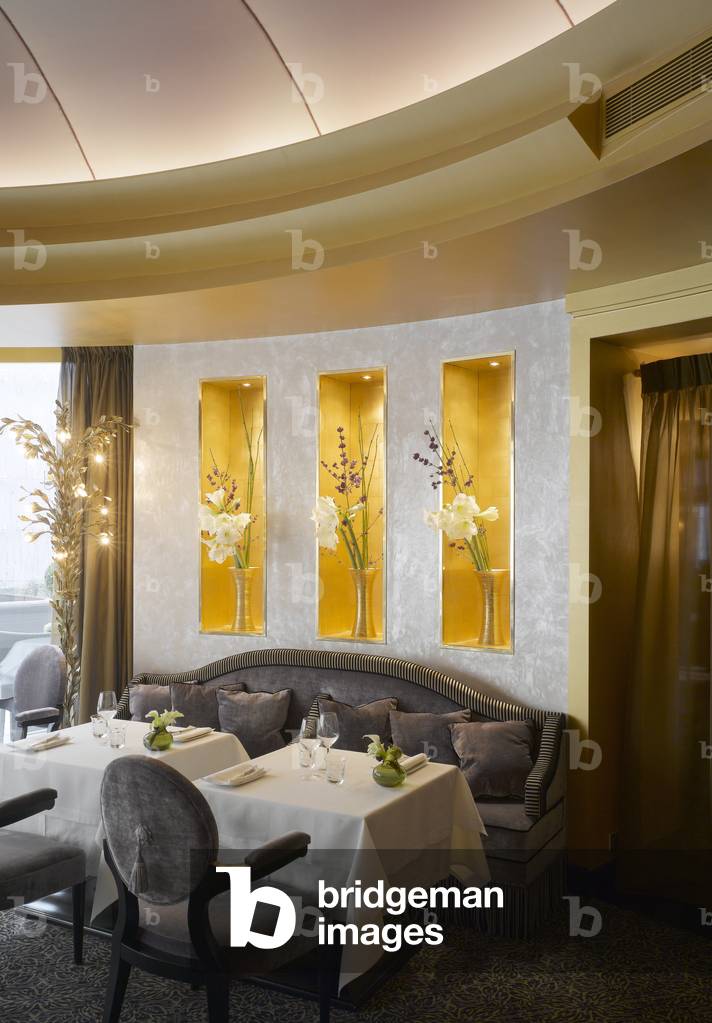
Le Fouquet's Barriere, 46 avenue George V, Paris 8. Internal architecture by Jacques Garcia, 2003-2006. Photography 13/01/07.

LBY4555706: Le Fouquet's Barriere, 46 avenue George V, Paris 8. Internal architecture by Jacques Garcia, 2003-2006. Photography 13/01/07., Garcia, Jacques (b.1947) / Bridgeman Images
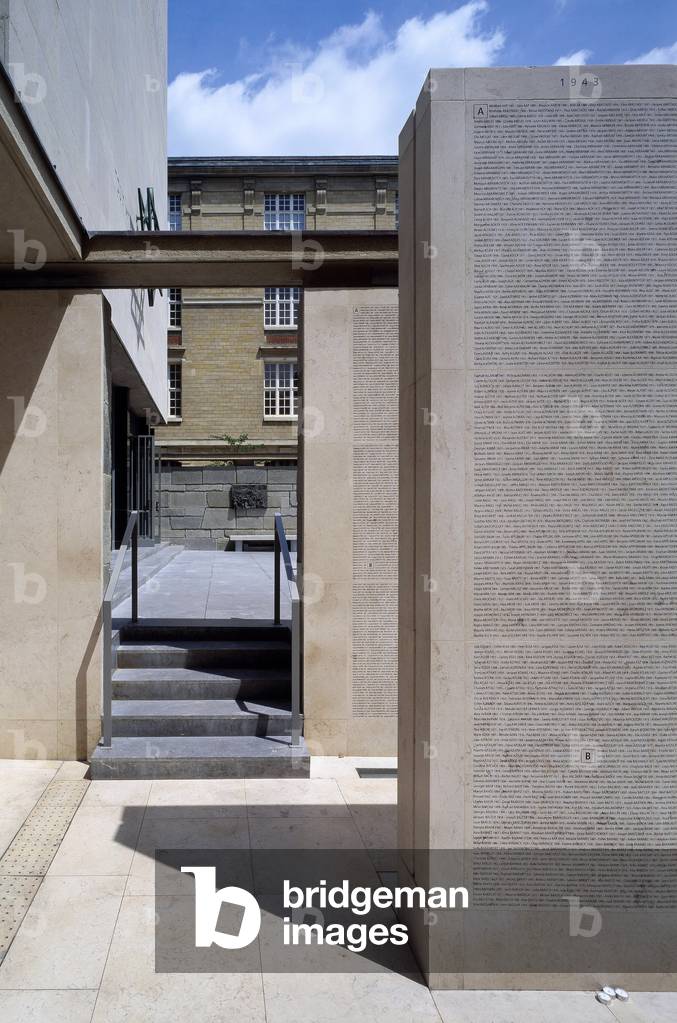
Le mur des Names au Memorial de la Shoah, 17 rue Geoffroy l'Asnier, Paris 4. Architect Antoine Jouve, Simon Vignaud, 2005

LBY4553090: Le mur des Names au Memorial de la Shoah, 17 rue Geoffroy l'Asnier, Paris 4. Architect Antoine Jouve, Simon Vignaud, 2005, Boegly, Luc / Bridgeman Images

The German military cemetery at Fort de Malmaison, the Chemin des Dames.

LBY4553111: The German military cemetery at Fort de Malmaison, the Chemin des Dames. / Bridgeman Images
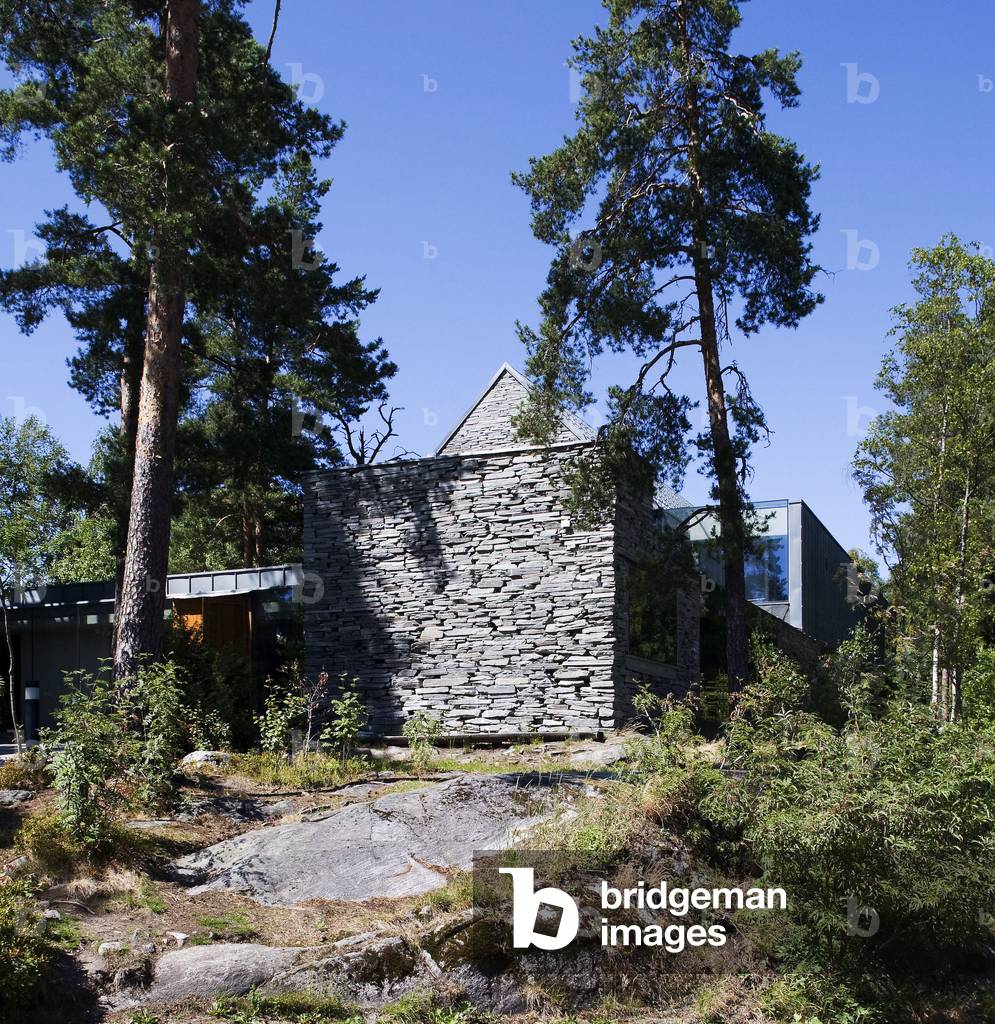
Mortensrud Church in Oslo (Norway). Architect Jensen/Skodvin Architecs, 2002.

LBY4553136: Mortensrud Church in Oslo (Norway). Architect Jensen/Skodvin Architecs, 2002., Jensen/Skodvin Architects / Bridgeman Images

Portal of the Virgin of the Cathedrale Notre Dame de Paris, Paris 4. Construction from 1160, rehabilitation by Viollet Le Duc, 19th century.

DCR4553313: Portal of the Virgin of the Cathedrale Notre Dame de Paris, Paris 4. Construction from 1160, rehabilitation by Viollet Le Duc, 19th century., Ducros, Mathieu / Bridgeman Images
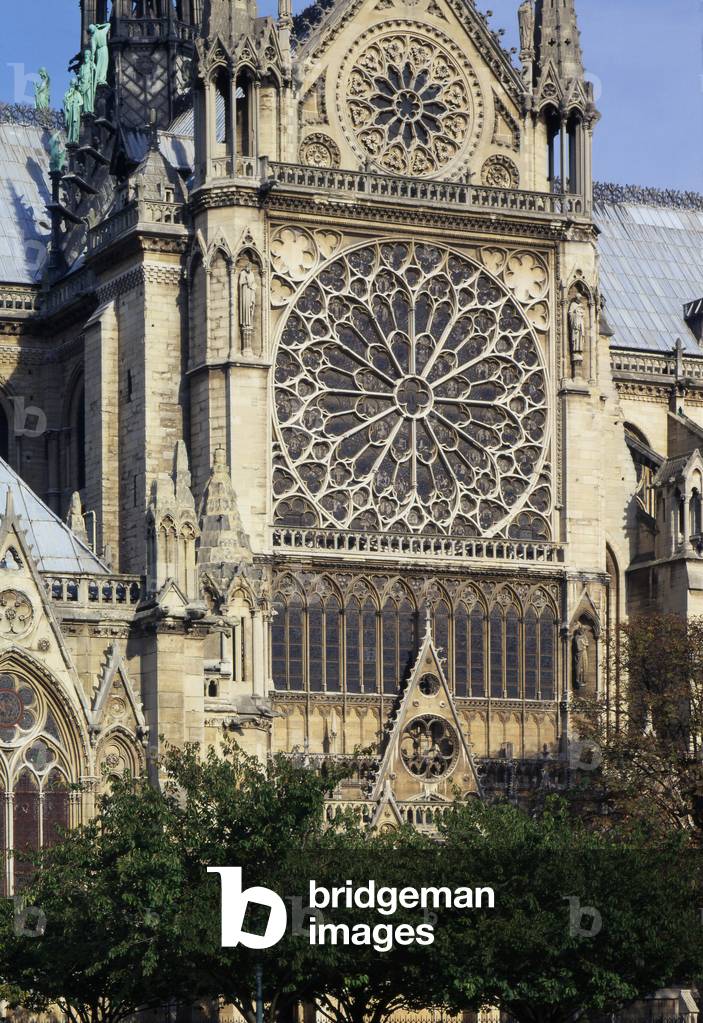
La cathedrale Notre Dame de Paris, Paris 4. Construction from 1160, rehabilitation by Viollet Le Duc, 19th century.

DCR4553355: La cathedrale Notre Dame de Paris, Paris 4. Construction from 1160, rehabilitation by Viollet Le Duc, 19th century., Ducros, Mathieu / Bridgeman Images
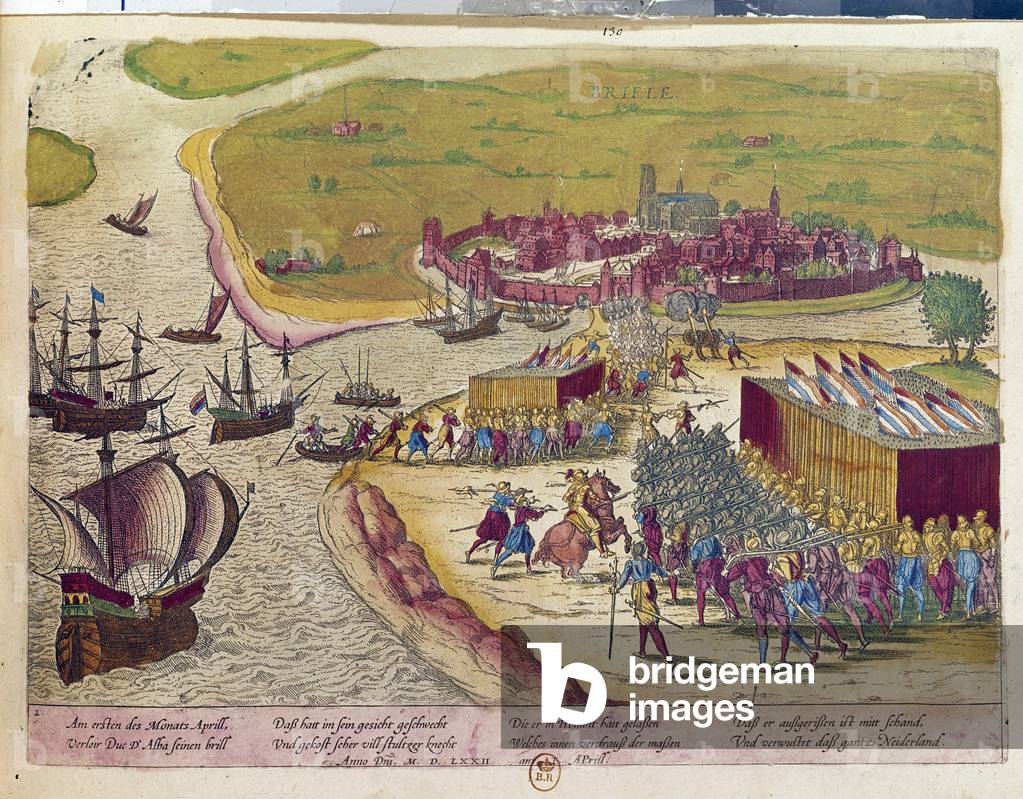
Capture of the fort of Brielle in 1572 Hollande, 17th century (engraving)

JLJ4564030: Capture of the fort of Brielle in 1572 Hollande, 17th century (engraving), Unknown Artist, (17th century) / Bridgeman Images
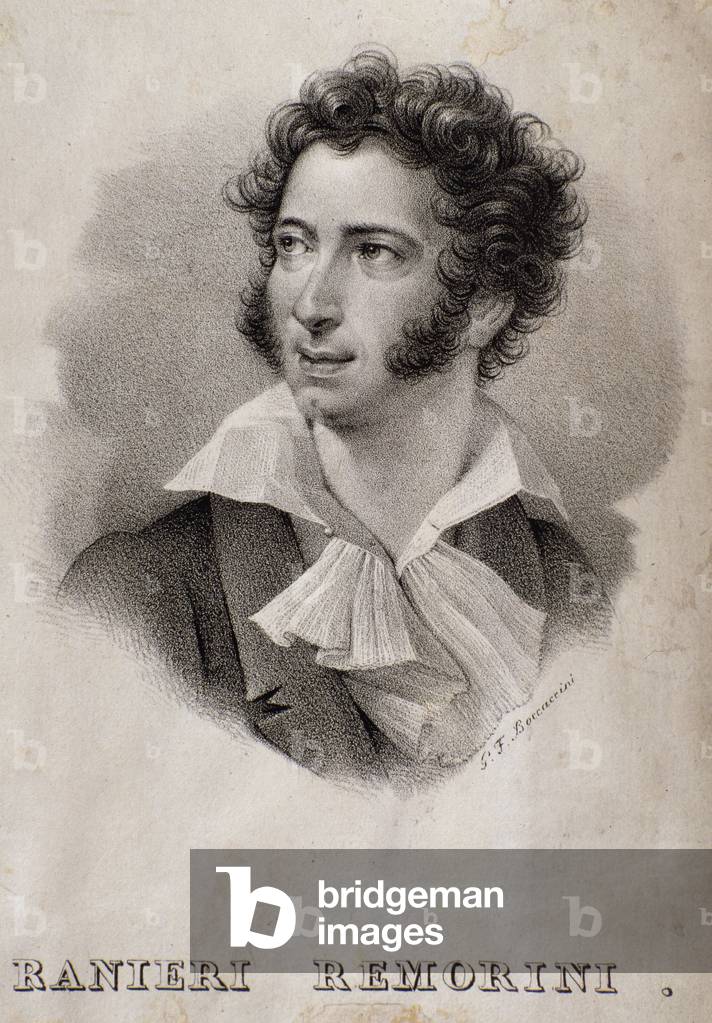
Portrait of Ranieri Remorini (engraving)

LRI4564924: Portrait of Ranieri Remorini (engraving), Unknown Artist, (19th century) / Bridgeman Images
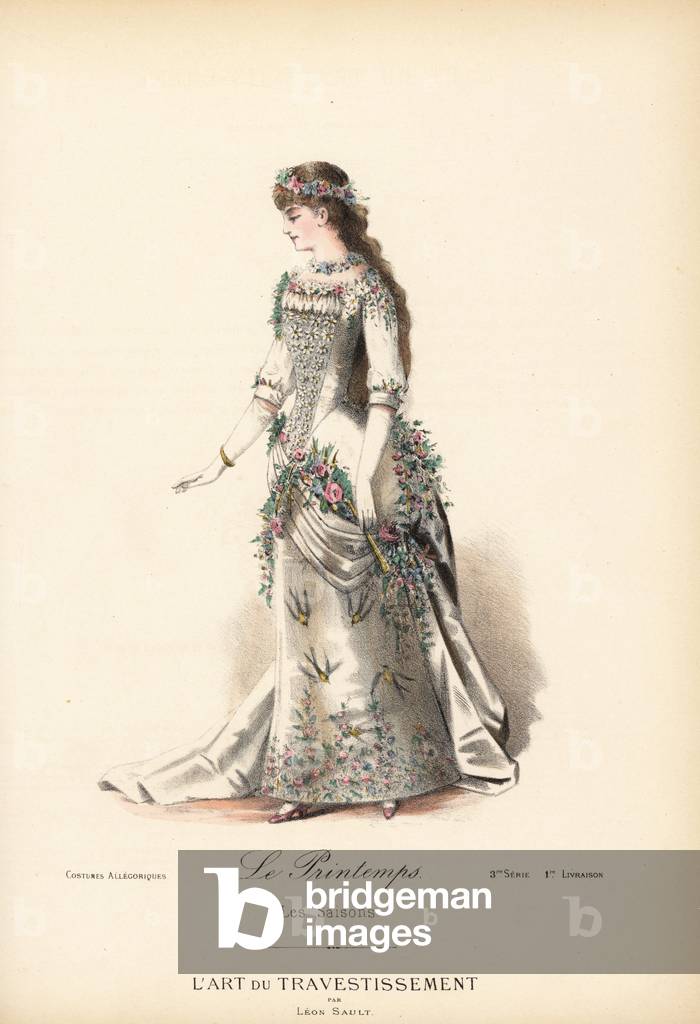
Fancy dress costume for Spring, with embroidered silk dress of flowers and swallows. Handcoloured lithograph after a design by Leon Sault from “” L'Art du Travestissement” (The Art of Fancy Dress), Paris, c.1880. Sault was a theatre and opera designer and luxury fashion magazine publisher.

FLO4564942: Fancy dress costume for Spring, with embroidered silk dress of flowers and swallows. Handcoloured lithograph after a design by Leon Sault from “” L'Art du Travestissement” (The Art of Fancy Dress), Paris, c.1880. Sault was a theatre and opera designer and luxury fashion magazine publisher. / Bridgeman Images
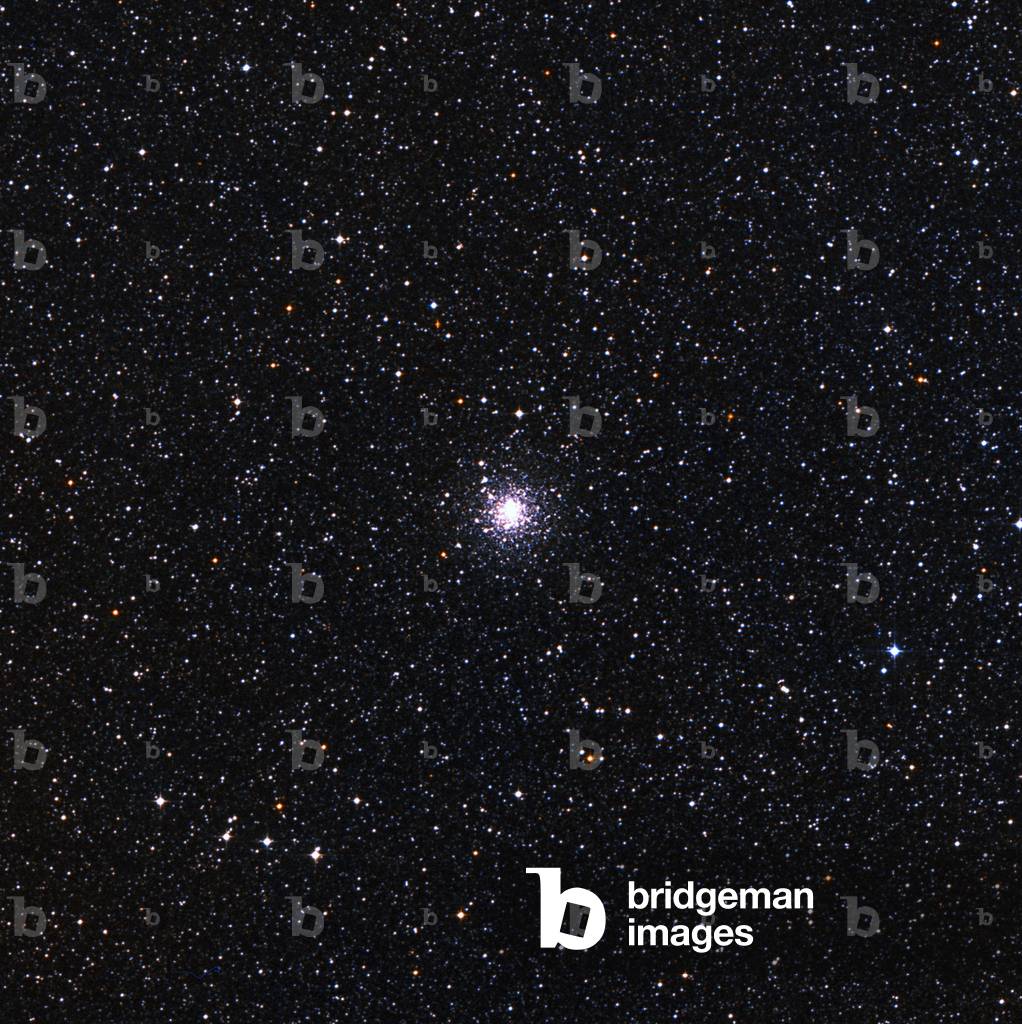
Globular cluster M70 in Sagittarius - Globular cluster M70 in Sagittarius - Star cluster located about 29,300 years - light from Earth. Star cluster located at about 29,000 light years away

PIX4564945: Globular cluster M70 in Sagittarius - Globular cluster M70 in Sagittarius - Star cluster located about 29,300 years - light from Earth. Star cluster located at about 29,000 light years away / Bridgeman Images

Globular cluster M54 in Sagittarius - Globular cluster M54 in Sagittarius - The globular cluster M54 photographed by the Hubble space telescope (HST). M54 resides about 90,000 light years from Earth, in the dwarf galaxy of Sagittarius. The object shown in this beautiful Hubble image, dubbed Messier 54, could be just another globular cluster, but this dense and faint group of stars was in fact the first globular cluster found that is outside our galaxy. Discovered by the famous astronomer Charles Messier in 1778, Messier 54 belongs to a satellite of the Milky Way called the Sagittarius Dwarf Elliptical Galaxy. Messier had no idea of the significance of his discovery at the time, and it wasn't until over two centuries later, in 1994, that astronomers found Messier 54 to be part of the miniature galaxy and not our own. Current estimates indicate that the Sagittarius dwarf, and hence the cluster, is situated almost 90 000 light - years away - - more than three times as far from the centre of our galaxy than the Solar System. Ironically, even though this globular cluster is now understood to lie outside the Milky Way, it will actually become part of it in the future. The strong gravitational pull of our galaxy is slowly engulfing the Sagittarius dwarf, which will eventually merge with the Milky Way creating one much larger galaxy. This picture is a composite created by combining images taken with the Wide Field Channel of Hubble's Advanced Camera for Surveys. Light that passed through a yellow - orange (F606W) was colored blue and light passing through a near - infrared filter (F814W) was colored red. The total exposure times were 3460 s and 3560 s, respectively and the field of view is approximately 3.4 by 3.4 arcminutes

PIX4565011: Globular cluster M54 in Sagittarius - Globular cluster M54 in Sagittarius - The globular cluster M54 photographed by the Hubble space telescope (HST). M54 resides about 90,000 light years from Earth, in the dwarf galaxy of Sagittarius. The object shown in this beautiful Hubble image, dubbed Messier 54, could be just another globular cluster, but this dense and faint group of stars was in fact the first globular cluster found that is outside our galaxy. Discovered by the famous astronomer Charles Messier in 1778, Messier 54 belongs to a satellite of the Milky Way called the Sagittarius Dwarf Elliptical Galaxy. Messier had no idea of the significance of his discovery at the time, and it wasn't until over two centuries later, in 1994, that astronomers found Messier 54 to be part of the miniature galaxy and not our own. Current estimates indicate that the Sagittarius dwarf, and hence the cluster, is situated almost 90 000 light - years away - - more than three times as far from the centre of our galaxy than the Solar System. Ironically, even though this globular cluster is now understood to lie outside the Milky Way, it will actually become part of it in the future. The strong gravitational pull of our galaxy is slowly engulfing the Sagittarius dwarf, which will eventually merge with the Milky Way creating one much larger galaxy. This picture is a composite created by combining images taken with the Wide Field Channel of Hubble's Advanced Camera for Surveys. Light that passed through a yellow - orange (F606W) was colored blue and light passing through a near - infrared filter (F814W) was colored red. The total exposure times were 3460 s and 3560 s, respectively and the field of view is approximately 3.4 by 3.4 arcminutes / Bridgeman Images

Globular cluster M71 in the Fleche - Globular cluster M71 in Sagitta - M71 is located about 12,000 light years away from Earth. Image of the central region of the cluster obtained by the Hubble space telescope. This NASA/ESA Hubble Space Telescope image shows a bright scattering of stars in the small constellation of Sagitta (the Arrow). This is the centre of the globular cluster Messier 71, a great ball of ancient stars on the edge of our galaxy around 13,000 light - years from Earth. M71 is around 27 light - years across. Globular clusters are like galactic suburbs, pockets of stars that exist on the edge of major galaxies. These clusters are tightly bound together by their gravitational attraction, hence their spherical shape and their name: globulus means little sphere”” in Latin. Around 150 such globular clusters are known to exist around our Milky Way, each one of them containing several hundred thousand stars. Despite being a familiar object, Messier 71's precise nature was disputed until recently. Was it simply an open cluster, a loosely bound group of stars? This was for many years the dominant view. But in the 1970s, astronomers came to the view that it is in fact a relatively sparse globular cluster. The stars in Messier 71, as is usual in such clusters, are relatively old, at around 9 to 10 billion years, and consequently are low in elements other than hydrogen and helium.

PIX4565068: Globular cluster M71 in the Fleche - Globular cluster M71 in Sagitta - M71 is located about 12,000 light years away from Earth. Image of the central region of the cluster obtained by the Hubble space telescope. This NASA/ESA Hubble Space Telescope image shows a bright scattering of stars in the small constellation of Sagitta (the Arrow). This is the centre of the globular cluster Messier 71, a great ball of ancient stars on the edge of our galaxy around 13,000 light - years from Earth. M71 is around 27 light - years across. Globular clusters are like galactic suburbs, pockets of stars that exist on the edge of major galaxies. These clusters are tightly bound together by their gravitational attraction, hence their spherical shape and their name: globulus means little sphere”” in Latin. Around 150 such globular clusters are known to exist around our Milky Way, each one of them containing several hundred thousand stars. Despite being a familiar object, Messier 71's precise nature was disputed until recently. Was it simply an open cluster, a loosely bound group of stars? This was for many years the dominant view. But in the 1970s, astronomers came to the view that it is in fact a relatively sparse globular cluster. The stars in Messier 71, as is usual in such clusters, are relatively old, at around 9 to 10 billion years, and consequently are low in elements other than hydrogen and helium. / Bridgeman Images

Fancy dress costume for the element Air, with dress embroidered with windmill, bodice with zephyr brooch, girdle with horn and bellows, headdress of weather vane. Handcoloured lithograph after a design by Leon Sault from “” L'Art du Travestissement” (The Art of Fancy Dress), Paris, c.1880. Sault was a theatre and opera designer and luxury fashion magazine publisher.

FLO4565074: Fancy dress costume for the element Air, with dress embroidered with windmill, bodice with zephyr brooch, girdle with horn and bellows, headdress of weather vane. Handcoloured lithograph after a design by Leon Sault from “” L'Art du Travestissement” (The Art of Fancy Dress), Paris, c.1880. Sault was a theatre and opera designer and luxury fashion magazine publisher. / Bridgeman Images

Globular cluster M30 in Capricornus - Globular cluster M30 in Capricornus - The globular cluster M30 (NGC 7099) is located about 26,000 light years away from Earth. The globular cluster M30 (NGC 7099) is located about 26 000 light year awa

PIX4565146: Globular cluster M30 in Capricornus - Globular cluster M30 in Capricornus - The globular cluster M30 (NGC 7099) is located about 26,000 light years away from Earth. The globular cluster M30 (NGC 7099) is located about 26 000 light year awa / Bridgeman Images

Globular cluster M30 in Capricornus - Globular cluster M30 in Capricornus - The globular cluster M30 (NGC 7099) is located about 28,000 light years away from Earth. Globular clusters are generally peoples of very old stars, but here the Hubble space telescope has identified some young stars, blue stragglers. Messier 30 formed 13 billion years ago and was discovered in 1764 by Charles Messier. Located about 28 000 light - years away from Earth, this globular cluster - - a dense swarm of several hundred thousand stars - - is about 90 light - years across. Although globular clusters such as this one are mainly populated by old stars, the crowded field of stars leads to some old stars apparently reclaiming their youth in the form of blue stragglers. Researchers using data from Hubble's now - retired Wide Field Planetary Camera 2 (WFPC2) have identified two types of blue stragglers in Messier 30: those that form in near head - on collisions with one another and those that are in twin (or binary) systems where the less massive star siphons “” life - giving”” hydrogen from its more massive companion. This image of Messier 30 (M30) was taken by Hubble's Advanced Camera for Surveys (ACS)

PIX4565155: Globular cluster M30 in Capricornus - Globular cluster M30 in Capricornus - The globular cluster M30 (NGC 7099) is located about 28,000 light years away from Earth. Globular clusters are generally peoples of very old stars, but here the Hubble space telescope has identified some young stars, blue stragglers. Messier 30 formed 13 billion years ago and was discovered in 1764 by Charles Messier. Located about 28 000 light - years away from Earth, this globular cluster - - a dense swarm of several hundred thousand stars - - is about 90 light - years across. Although globular clusters such as this one are mainly populated by old stars, the crowded field of stars leads to some old stars apparently reclaiming their youth in the form of blue stragglers. Researchers using data from Hubble's now - retired Wide Field Planetary Camera 2 (WFPC2) have identified two types of blue stragglers in Messier 30: those that form in near head - on collisions with one another and those that are in twin (or binary) systems where the less massive star siphons “” life - giving”” hydrogen from its more massive companion. This image of Messier 30 (M30) was taken by Hubble's Advanced Camera for Surveys (ACS) / Bridgeman Images

Portrait of Antonio Salieri (engraving)

LRI4565176: Portrait of Antonio Salieri (engraving), Unknown Artist, (19th century) / Bridgeman Images

The former funicular of the Lower Meudon (Hauts de Seine).

TEC4565230: The former funicular of the Lower Meudon (Hauts de Seine). / Bridgeman Images

L'avenue Le Corbeiller in Meudon (Hauts de Seine).

TEC4565266: L'avenue Le Corbeiller in Meudon (Hauts de Seine). / Bridgeman Images

Bust of a Sassanid king (bronze)

JLJ4565284: Bust of a Sassanid king (bronze), Sasanian School, (7th century) / Bridgeman Images

Galaxy cluster Abell 2151 - Hercules cluster - Abell 2151 the Hercules cluster - Galaxy cluster consists of about one hundred galaxies located 365 million light years ago in the constellation Hercules. Abell 2151, the Hercules cluster, is a small, irregular cluster, with a core membership of fewer than 100 galaxies, with none strongly dominant central galaxy. It is more than 360 million light - years away

PIX4565299: Galaxy cluster Abell 2151 - Hercules cluster - Abell 2151 the Hercules cluster - Galaxy cluster consists of about one hundred galaxies located 365 million light years ago in the constellation Hercules. Abell 2151, the Hercules cluster, is a small, irregular cluster, with a core membership of fewer than 100 galaxies, with none strongly dominant central galaxy. It is more than 360 million light - years away / Bridgeman Images

Terrace of Meudon (Hauts de Seine).

TEC4565302: Terrace of Meudon (Hauts de Seine). / Bridgeman Images
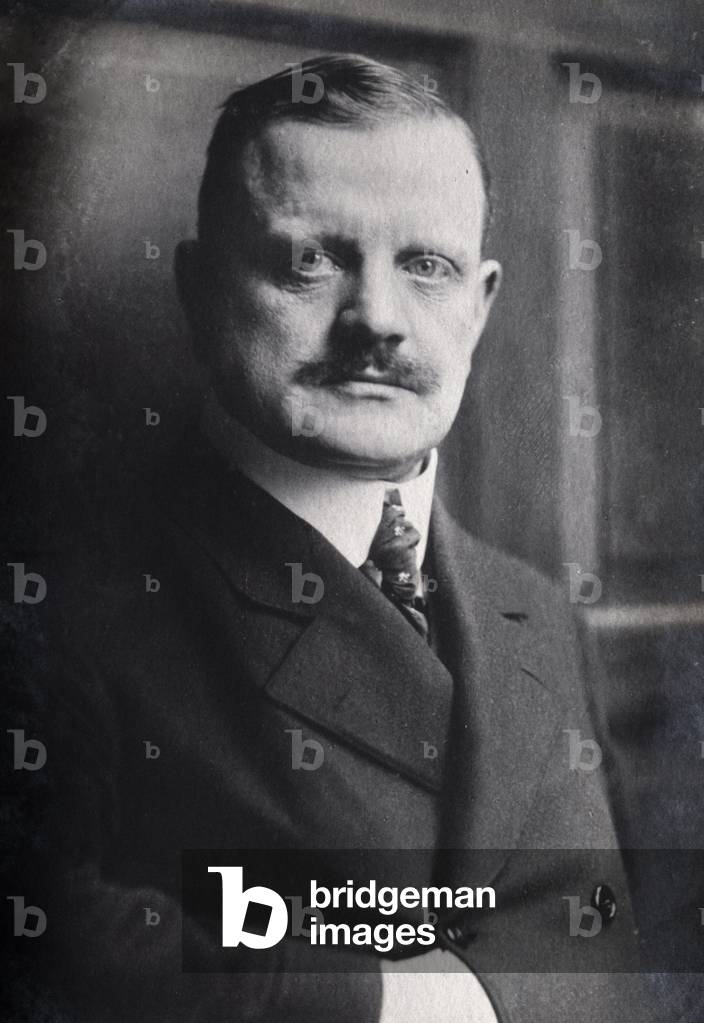
Portrait of Jean Sibelius (b/w photo)

LRI4565335: Portrait of Jean Sibelius (b/w photo), Unknown photographer, (20th century) / Bridgeman Images

Representation of St, Catherine of Alexandria, holding the wheel instrument of her torment, Polychrome wooden statue, 15th century (object)

JLJ4565362: Representation of St, Catherine of Alexandria, holding the wheel instrument of her torment, Polychrome wooden statue, 15th century (object), Unknown Artist, (15th century) / Bridgeman Images

Sepoy, sipahee or native soldier, in winter uniform of red jacket and grey trousers, holding a musket. Handcoloured copperplate engraving by an unknown artist from “” Asiatic Costumes,”” Ackermann, London, 1828.

FLO4565422: Sepoy, sipahee or native soldier, in winter uniform of red jacket and grey trousers, holding a musket. Handcoloured copperplate engraving by an unknown artist from “” Asiatic Costumes,”” Ackermann, London, 1828. / Bridgeman Images

Central part of the Virgo cluster - Central part of the Virgo cluster - The Virgin cluster contains several thousand galaxies. It is located about 70 million light years from Earth. To the right are the galaxies M84 (NGC 4374) and M86 (NGC 4406) (to the left) dominate the image. Lower left is the elliptical galaxy M87. Located about 70 million light years away, the Virgo cluster is a gigantic collection of several thousand galaxies that dominate our local part of the universe. Markarian's Chain of galaxies is in the center, including giant elliptical galaxies M86 and M84. M87 is another giant elliptical galaxy at lower left in the photo

PIX4565461: Central part of the Virgo cluster - Central part of the Virgo cluster - The Virgin cluster contains several thousand galaxies. It is located about 70 million light years from Earth. To the right are the galaxies M84 (NGC 4374) and M86 (NGC 4406) (to the left) dominate the image. Lower left is the elliptical galaxy M87. Located about 70 million light years away, the Virgo cluster is a gigantic collection of several thousand galaxies that dominate our local part of the universe. Markarian's Chain of galaxies is in the center, including giant elliptical galaxies M86 and M84. M87 is another giant elliptical galaxy at lower left in the photo / Bridgeman Images

Group of Galaxies: Stephan Quintet in Pegase - This group of 5 galaxies is located about 260 million light years away from Earth. These galaxies are interacting, however the NGC 7320 galaxy (down in the middle) would be 8 times closer to us. This group of galaxies is located about 260 million light - years away in Pegasus constellation. They are gravitationally interacting with the exception of the interloper NGC 7320 (bottom center) which is a foreground galaxy. Image made with a 32 inches telescope

PIX4565503: Group of Galaxies: Stephan Quintet in Pegase - This group of 5 galaxies is located about 260 million light years away from Earth. These galaxies are interacting, however the NGC 7320 galaxy (down in the middle) would be 8 times closer to us. This group of galaxies is located about 260 million light - years away in Pegasus constellation. They are gravitationally interacting with the exception of the interloper NGC 7320 (bottom center) which is a foreground galaxy. Image made with a 32 inches telescope / Bridgeman Images

Barburdar or Indian steward, in turban, muslin kupra or loincloth, cotton vest, and kumerbund or sash, carrying keys. Handcoloured copperplate engraving by an unknown artist from “” Asiatic Costumes,”” Ackermann, London, 1828.

FLO4565533: Barburdar or Indian steward, in turban, muslin kupra or loincloth, cotton vest, and kumerbund or sash, carrying keys. Handcoloured copperplate engraving by an unknown artist from “” Asiatic Costumes,”” Ackermann, London, 1828. / Bridgeman Images

Group of galaxies HCG 87 in Capricorn - Hickson Compact Group 87 in Capricornus - Group of galaxies in interaction situated 400 million years ago - light from Earth. The largest of these galaxies (HCG 87a) is a spiral galaxy seen by the slice; it and its neighbor the elliptical galaxy HCG 87b probably have a central black hole. The third member of this group, the spiral galaxy HCG 87c appears to be in an active phase of star formation. Group of interacting galaxies located at about 400 million light - years. The largest galaxy member (HCG 87a), which is actually disk - shaped, but tilted so that we see it nearly edge - on and its elliptically shaped nearest neighbor (87b) have active galactic nuclei which are believed to harbor black holes that are consuming gas. A third group member, the nearby spiral galaxy 87c, may be undergoing a burst of active star formation. These three galaxies are so close to each other that gravitational forces disrupt their structure and alter their evolution

PIX4565539: Group of galaxies HCG 87 in Capricorn - Hickson Compact Group 87 in Capricornus - Group of galaxies in interaction situated 400 million years ago - light from Earth. The largest of these galaxies (HCG 87a) is a spiral galaxy seen by the slice; it and its neighbor the elliptical galaxy HCG 87b probably have a central black hole. The third member of this group, the spiral galaxy HCG 87c appears to be in an active phase of star formation. Group of interacting galaxies located at about 400 million light - years. The largest galaxy member (HCG 87a), which is actually disk - shaped, but tilted so that we see it nearly edge - on and its elliptically shaped nearest neighbor (87b) have active galactic nuclei which are believed to harbor black holes that are consuming gas. A third group member, the nearby spiral galaxy 87c, may be undergoing a burst of active star formation. These three galaxies are so close to each other that gravitational forces disrupt their structure and alter their evolution / Bridgeman Images

Fringed gentian with blue, purple and white flowers, Gentiana crinita. Illustration by Clarissa Badger (nee Munger, 1806-1889), lithography published in “Wildflowers, dessinees et mises en couleur par la nature”, New York (USA), 1859.

FLO4565602: Fringed gentian with blue, purple and white flowers, Gentiana crinita. Illustration by Clarissa Badger (nee Munger, 1806-1889), lithography published in “Wildflowers, dessinees et mises en couleur par la nature”, New York (USA), 1859. / Bridgeman Images
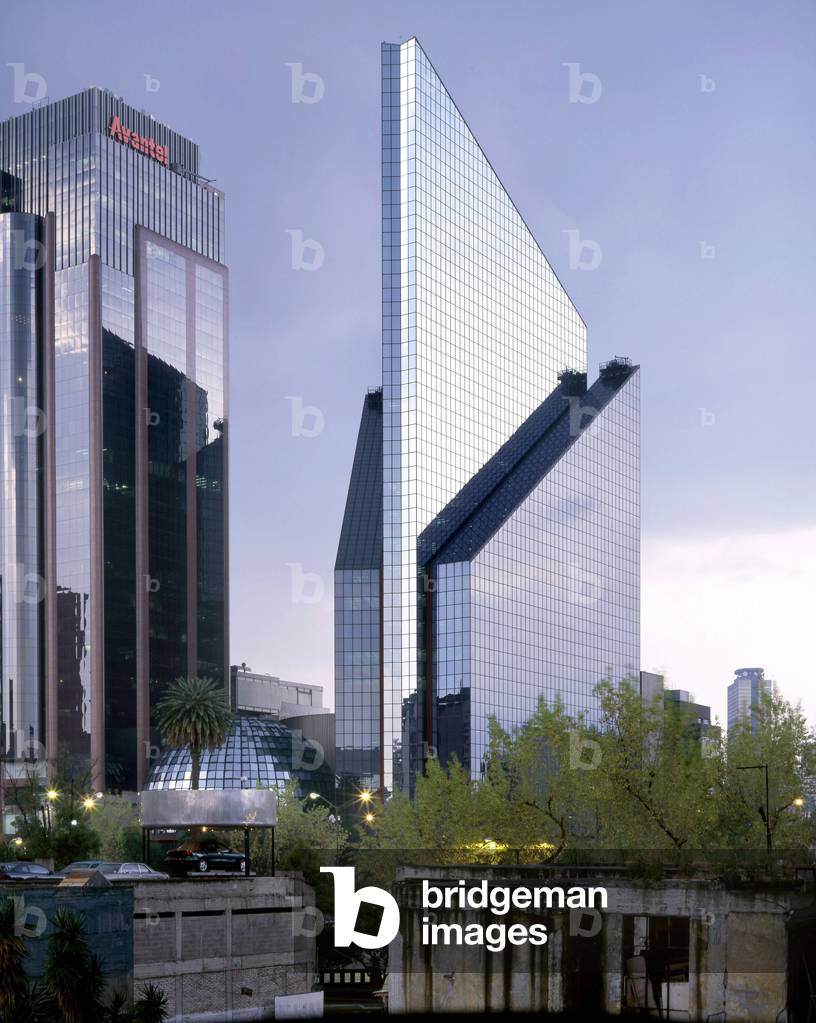
The stock exchange (Zona Rossa) in Mexico City, Mexico.

MDA4565608: The stock exchange (Zona Rossa) in Mexico City, Mexico., Denance, Michel / Bridgeman Images


Back to top