Search options

Orientation
Colour

Display options

View

Print

To print search results, use print friendly version of this page.

2490904 Search Results

Etruscan civilization: “” gun offering figure”” Bronze sculpture, 625-600 BC Dim 12 cm (Etruscan art, offering figure, bronze sculpture, 625-600 BC, Dim 12 cm) Florence, Museo Archeologico

LRI4593400: Etruscan civilization: “” gun offering figure”” Bronze sculpture, 625-600 BC Dim 12 cm (Etruscan art, offering figure, bronze sculpture, 625-600 BC, Dim 12 cm) Florence, Museo Archeologico, Etruscan, (7th century BC) / Bridgeman Images

The Stanhope or iron printing press, invented by Earl Charles Stanhope, 18th century. Copperplate engraving by Wilson Lowry after an illustration by J. Farey from Abraham Rees' “” Cyclopedia or Universal Dictionary,” London, 1815.

FLO4593427: The Stanhope or iron printing press, invented by Earl Charles Stanhope, 18th century. Copperplate engraving by Wilson Lowry after an illustration by J. Farey from Abraham Rees' “” Cyclopedia or Universal Dictionary,” London, 1815. / Bridgeman Images
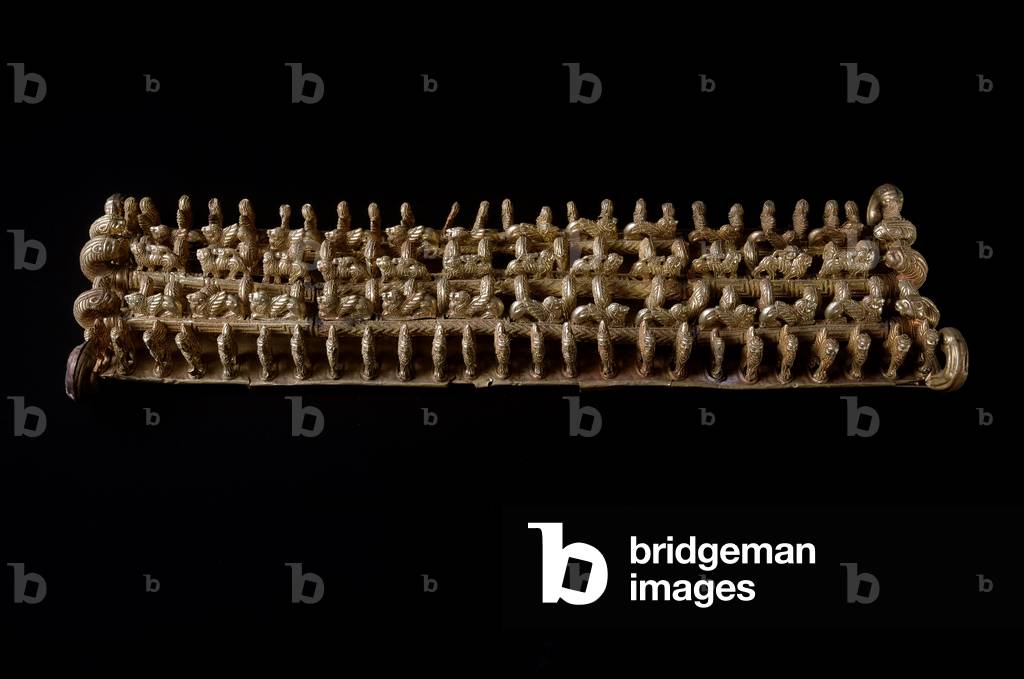
Golden plate, 675-650 BC

LRI4593206: Golden plate, 675-650 BC, Etruscan, (7th century BC) / Bridgeman Images
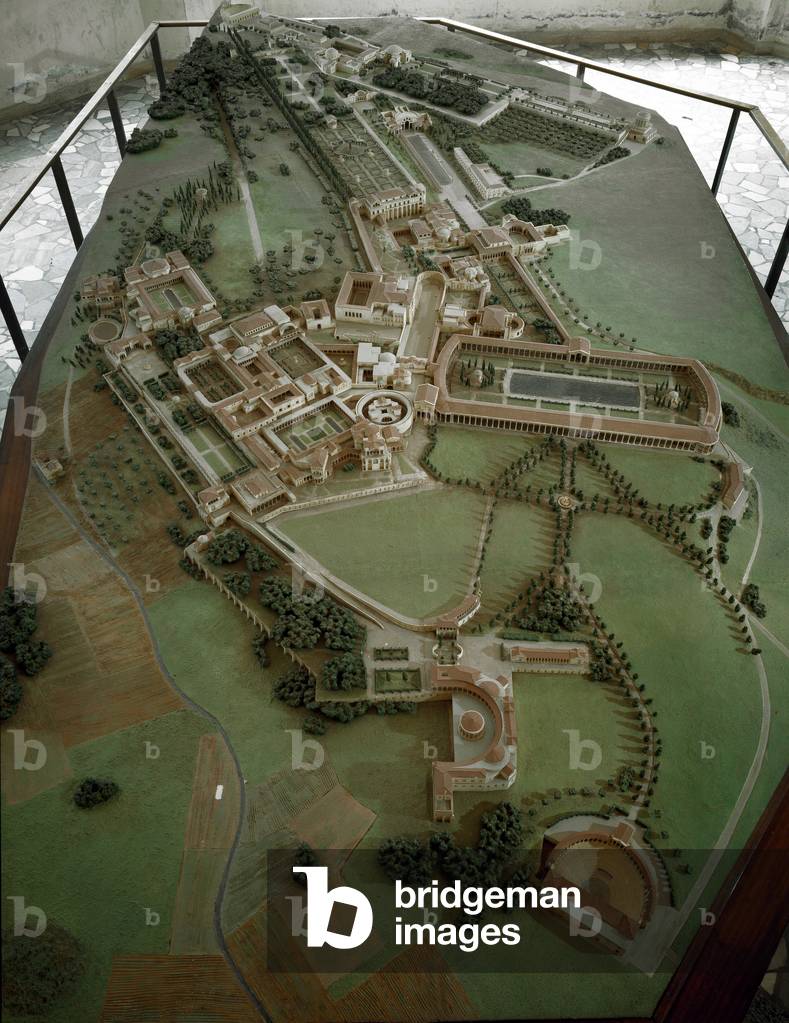
Reduced model of Villa Adriana (Hadrian), 118-134 (photography)

LRI4593244: Reduced model of Villa Adriana (Hadrian), 118-134 (photography), Anonymous / Bridgeman Images

High-pressure steam engine used with the dredging machine on the River Thames, elevations, 19th century. Copperplate engraving by Wilson Lowry after an Illustration by J. Farey Jr. from Abraham Rees' “” Cyclopedia or Universal Dictionary,” London, 1818.

FLO4593295: High-pressure steam engine used with the dredging machine on the River Thames, elevations, 19th century. Copperplate engraving by Wilson Lowry after an Illustration by J. Farey Jr. from Abraham Rees' “” Cyclopedia or Universal Dictionary,” London, 1818. / Bridgeman Images

Etruscan civilization: “” The magistrate of Perugia Aulus Metellus says the Speaker or the Arringatore”” Bronze sculpture, 1st century BC From Pila, Italy Dim 179 cm - Florence, Museo Archeologico - Aule Metele (Aulus Metellus), also known as The Orator (L'Arringatore) (detail) - Bronze sculpture (H.179 cm), from Pila, from Pila, from Pila, from Pila, from Pila, Italy, 1st century BC, Etruscan art - Archeological Museum, Naples, Italy

LRI4593318: Etruscan civilization: “” The magistrate of Perugia Aulus Metellus says the Speaker or the Arringatore”” Bronze sculpture, 1st century BC From Pila, Italy Dim 179 cm - Florence, Museo Archeologico - Aule Metele (Aulus Metellus), also known as The Orator (L'Arringatore) (detail) - Bronze sculpture (H.179 cm), from Pila, from Pila, from Pila, from Pila, from Pila, Italy, 1st century BC, Etruscan art - Archeological Museum, Naples, Italy, Etruscan, (1st century BC) / Bridgeman Images

Terracotta krater representing a god and Eros, 350 BC

LRI4593452: Terracotta krater representing a god and Eros, 350 BC, Etruscan, (4th century BC) / Bridgeman Images

Ruellie lilac - Lilac-flowered ruellia, Ruellia lilacina. Handcoloured copperplate engraving by George Barclay after an illustration by Miss Sarah Drake from Edwards' Botanical Register, edited by John Lindley, London: Ridgeway, 1846.

FLO4588893: Ruellie lilac - Lilac-flowered ruellia, Ruellia lilacina. Handcoloured copperplate engraving by George Barclay after an illustration by Miss Sarah Drake from Edwards' Botanical Register, edited by John Lindley, London: Ridgeway, 1846. / Bridgeman Images

Offering man, bronze sculpture, 500 BC

LRI4589377: Offering man, bronze sculpture, 500 BC, Etruscan, (6th century BC) / Bridgeman Images

Etruscan civilization: “” offeror figure”” bronze sculpture, 480 BC, Dim 27 cm from Isola di Fano, Italy (Etruscan art, offering man, bronze sculpture, from Isola di Fano, Italy, 480 BC, Dim 27 cm) Florence, Museo Archeologico

LRI4589002: Etruscan civilization: “” offeror figure”” bronze sculpture, 480 BC, Dim 27 cm from Isola di Fano, Italy (Etruscan art, offering man, bronze sculpture, from Isola di Fano, Italy, 480 BC, Dim 27 cm) Florence, Museo Archeologico, Etruscan, (5th century BC) / Bridgeman Images
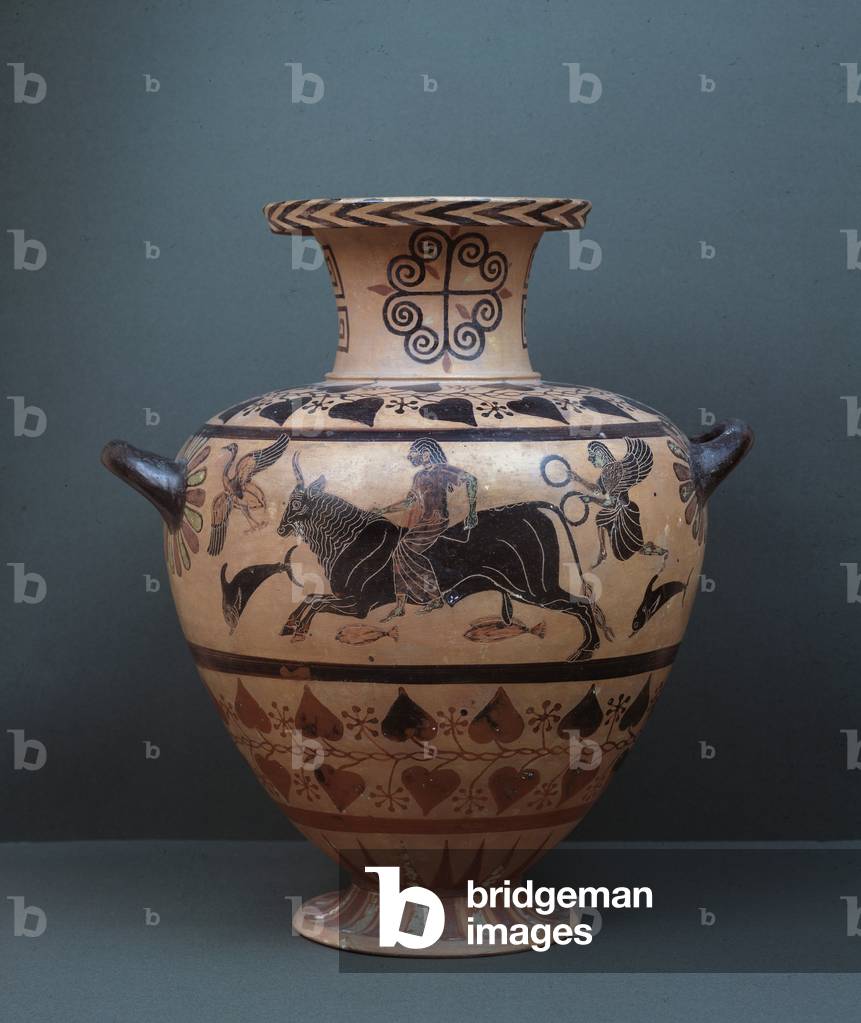
Hydria with representation of Zeus kidnapping Europa, terracotta, 550-500 BC

LRI4589539: Hydria with representation of Zeus kidnapping Europa, terracotta, 550-500 BC, Etruscan, (6th century BC) / Bridgeman Images

Encycloa plicata orchid (Paited-lipped epidendrum, Epidendrum plicatum). Handcoloured copperplate engraving by George Barclay after an illustration by Miss Sarah Drake from Edwards' Botanical Register, edited by John Lindley, London: Ridgeway, 1847.

FLO4589648: Encycloa plicata orchid (Paited-lipped epidendrum, Epidendrum plicatum). Handcoloured copperplate engraving by George Barclay after an illustration by Miss Sarah Drake from Edwards' Botanical Register, edited by John Lindley, London: Ridgeway, 1847. / Bridgeman Images
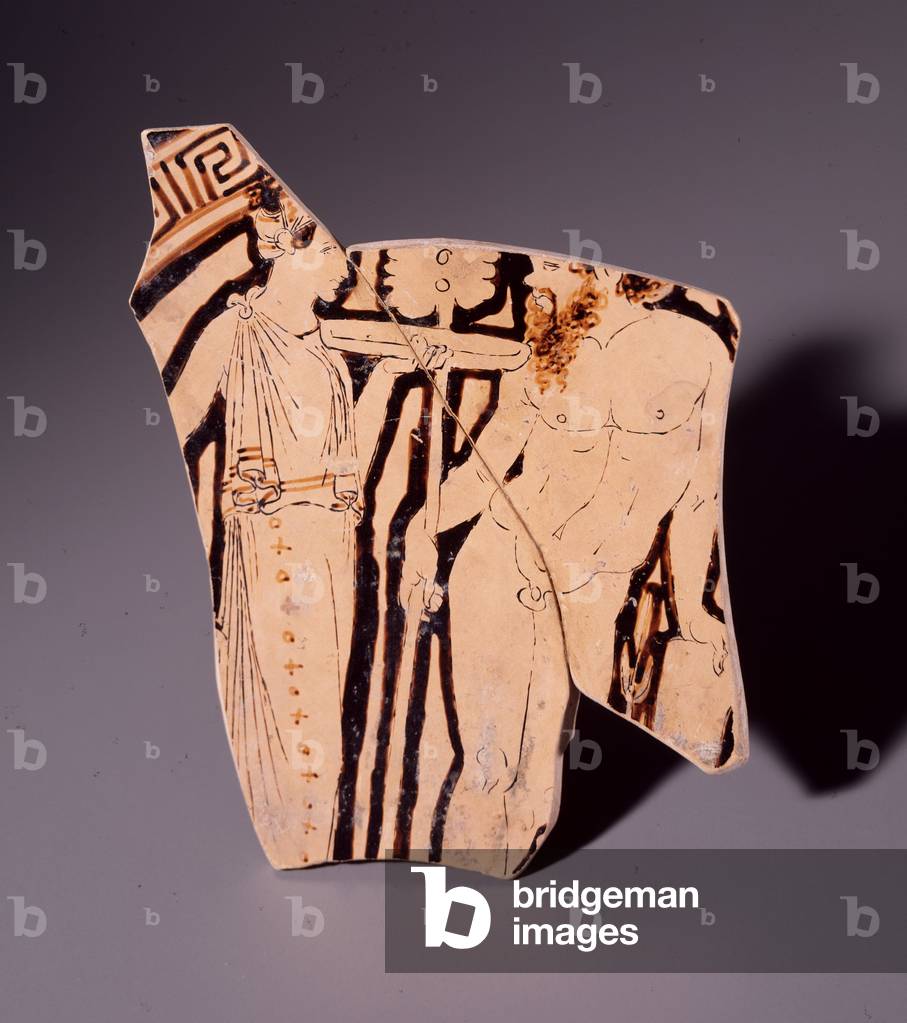
Terracotta fragment of kylix representing a maenad and a satyr, 350 BC

LRI4589813: Terracotta fragment of kylix representing a maenad and a satyr, 350 BC, Etruscan, (4th century BC) / Bridgeman Images

Many-flowered chaenostome, Chaenostoma polyanthum. Handcoloured copperplate engraving by George Barclay after an illustration by Miss Sarah Drake from Edwards' Botanical Register, edited by John Lindley, London: Ridgeway, 1847.

FLO4589627: Many-flowered chaenostome, Chaenostoma polyanthum. Handcoloured copperplate engraving by George Barclay after an illustration by Miss Sarah Drake from Edwards' Botanical Register, edited by John Lindley, London: Ridgeway, 1847. / Bridgeman Images

Shopfront to Martin's caterers, 50 rue St. Jacques de la Boucherie, Paris, circa 1800.Handcoloured lithograph from Hector-Martin Lefuel's “” Boutiques Parisiennes du Premier Empire,”” (Parisian Stores of the First Empire), Paris, Albert Morance, 1925. The lithographs were reproduced from watercolors by the French architect Hector-Martin Lefuel (1810-1880), famous for his work on the completion of the Louvre and Fontainebleau.

FLO4589865: Shopfront to Martin's caterers, 50 rue St. Jacques de la Boucherie, Paris, circa 1800.Handcoloured lithograph from Hector-Martin Lefuel's “” Boutiques Parisiennes du Premier Empire,”” (Parisian Stores of the First Empire), Paris, Albert Morance, 1925. The lithographs were reproduced from watercolors by the French architect Hector-Martin Lefuel (1810-1880), famous for his work on the completion of the Louvre and Fontainebleau. / Bridgeman Images

Shopfront of Cafe Tesse, 1 Quai Voltaire, Paris, circa 1800. Handcoloured lithograph from Hector-Martin Lefuel's “” Boutiques Parisiennes du Premier Empire,”” (Parisian Stores of the First Empire), Paris: Albert Morance, 1925. The lithographs were reproduced from watercolors by the French architect Hector-Martin Lefuel (1810-1880), famous for his work on the completion of the Louvre and Fontainebleau.

FLO4589916: Shopfront of Cafe Tesse, 1 Quai Voltaire, Paris, circa 1800. Handcoloured lithograph from Hector-Martin Lefuel's “” Boutiques Parisiennes du Premier Empire,”” (Parisian Stores of the First Empire), Paris: Albert Morance, 1925. The lithographs were reproduced from watercolors by the French architect Hector-Martin Lefuel (1810-1880), famous for his work on the completion of the Louvre and Fontainebleau. / Bridgeman Images

Head of woman shaped terracotta vase, 550-530 BC

LRI4589807: Head of woman shaped terracotta vase, 550-530 BC, Etruscan, (6th century BC) / Bridgeman Images
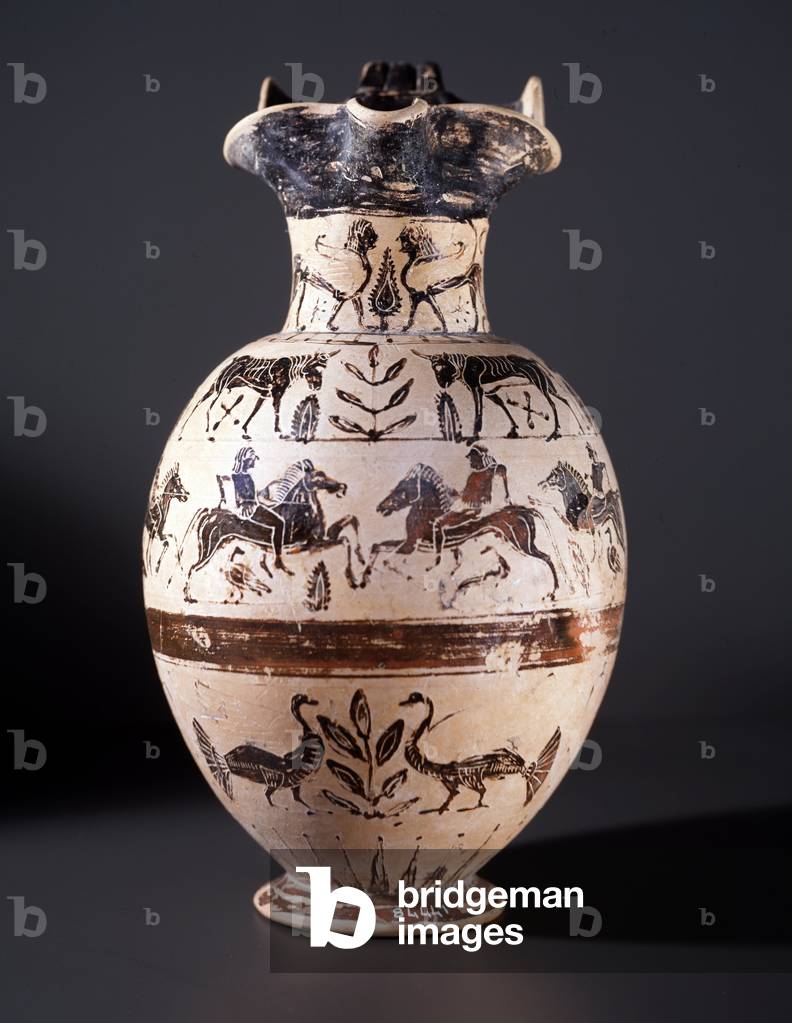
Terracotta oenochoe (oinochoe) representing sphinxes, bulls, riders, birds and tree, 520 BC

LRI4589821: Terracotta oenochoe (oinochoe) representing sphinxes, bulls, riders, birds and tree, 520 BC, Etruscan, (6th century BC) / Bridgeman Images

Shopfront to Lescot's pharmacy on the rue de Grammont, Paris, early 1800s. Handcoloured lithograph from Hector-Martin Lefuel's “” Boutiques Parisiennes du Premier Empire,”” (Parisian Stores of the First Empire), Paris: Albert Morance, 1925. The lithographs were reproduced from watercolors by the French architect Hector-Martin Lefuel (1810-1880), famous for his work on the completion of the Louvre and Fontainebleau.

FLO4589858: Shopfront to Lescot's pharmacy on the rue de Grammont, Paris, early 1800s. Handcoloured lithograph from Hector-Martin Lefuel's “” Boutiques Parisiennes du Premier Empire,”” (Parisian Stores of the First Empire), Paris: Albert Morance, 1925. The lithographs were reproduced from watercolors by the French architect Hector-Martin Lefuel (1810-1880), famous for his work on the completion of the Louvre and Fontainebleau. / Bridgeman Images

Shopfront of Monsieur Taillebosq's fabric store, 38 rue St. Denis, Paris, circa 1800. Handcoloured lithograph from Hector-Martin Lefuel's “” Boutiques Parisiennes du Premier Empire,”” (Parisian Stores of the First Empire), Paris: Albert Morance, 1925. The lithographs were reproduced from watercolors by the French architect Hector-Martin Lefuel (1810-1880), famous for his work on the completion of the Louvre and Fontainebleau.

FLO4589930: Shopfront of Monsieur Taillebosq's fabric store, 38 rue St. Denis, Paris, circa 1800. Handcoloured lithograph from Hector-Martin Lefuel's “” Boutiques Parisiennes du Premier Empire,”” (Parisian Stores of the First Empire), Paris: Albert Morance, 1925. The lithographs were reproduced from watercolors by the French architect Hector-Martin Lefuel (1810-1880), famous for his work on the completion of the Louvre and Fontainebleau. / Bridgeman Images

Shopfront of Monsieur Bertin's fashion boutique, 26 rue de la Roi, Paris, circa 1800. Handcoloured lithograph from Hector-Martin Lefuel's “” Boutiques Parisiennes du Premier Empire,”” (Parisian Stores of the First Empire), Paris: Albert Morance, 1925. The lithographs were reproduced from watercolors by the French architect Hector-Martin Lefuel (1810-1880), famous for his work on the completion of the Louvre and Fontainebleau.

FLO4590058: Shopfront of Monsieur Bertin's fashion boutique, 26 rue de la Roi, Paris, circa 1800. Handcoloured lithograph from Hector-Martin Lefuel's “” Boutiques Parisiennes du Premier Empire,”” (Parisian Stores of the First Empire), Paris: Albert Morance, 1925. The lithographs were reproduced from watercolors by the French architect Hector-Martin Lefuel (1810-1880), famous for his work on the completion of the Louvre and Fontainebleau. / Bridgeman Images

Detail of a kylix representing a maenad and a satyr, 330-300 BC

LRI4590092: Detail of a kylix representing a maenad and a satyr, 330-300 BC, Etruscan, (4th century BC) / Bridgeman Images

Etruscan civilization: representation of an Etruscan house, reduced funeral model, italy (Etruscan art, model of an etruscan house, funerary miniature, Italy) Florence, Archaeological Museum

LRI4590112: Etruscan civilization: representation of an Etruscan house, reduced funeral model, italy (Etruscan art, model of an etruscan house, funerary miniature, Italy) Florence, Archaeological Museum, Etruscan / Bridgeman Images

Amphora,  590-580 BC (terracotta)

LRI4590119: Amphora, 590-580 BC (terracotta), Etruscan, (6th century BC) / Bridgeman Images

Terracotta oinochoe (oenochoe) representing plant motifs and animals, 700-675 BC

LRI4590274: Terracotta oinochoe (oenochoe) representing plant motifs and animals, 700-675 BC, Etruscan, (7th century BC) / Bridgeman Images

Tartar woman riding on a one-wheel barrow drawn by servants. Handcoloured copperplate engraving by Andrea Freschi after Antoine Cardon from Henri-Leonard-Jean-Baptiste Bertin and Jean Baptiste Joseph Breton's China, Its Costumes, Arts, Manufactures, etc., Howlett and Brimmer, London, 1824.

FLO4590144: Tartar woman riding on a one-wheel barrow drawn by servants. Handcoloured copperplate engraving by Andrea Freschi after Antoine Cardon from Henri-Leonard-Jean-Baptiste Bertin and Jean Baptiste Joseph Breton's China, Its Costumes, Arts, Manufactures, etc., Howlett and Brimmer, London, 1824. / Bridgeman Images

Chinese paper making: young bamboo shoots are stripped of their bark, beaten and soaked in river water for a fortnight. Handcoloured copperplate engraving by Andrea Freschi after Antoine Cardon from Henri-Leonard-Jean-Baptiste Bertin and Jean Baptiste Joseph Breton's China, Its Costumes, Arts, Manufactures, etc., Howlett and Brimmer, London, 1824.

FLO4590195: Chinese paper making: young bamboo shoots are stripped of their bark, beaten and soaked in river water for a fortnight. Handcoloured copperplate engraving by Andrea Freschi after Antoine Cardon from Henri-Leonard-Jean-Baptiste Bertin and Jean Baptiste Joseph Breton's China, Its Costumes, Arts, Manufactures, etc., Howlett and Brimmer, London, 1824. / Bridgeman Images

Male and female Mandarins (magistrates) in summer dress, imperial court of China. Embroidered square on their tunic reveals their rank and type: bird for civil, animal for military. Handcoloured copperplate engraving by Andrea Freschi after Antoine Cardon from Henri-Leonard-Jean-Baptiste Bertin and Jean Baptiste Joseph Breton's China, Its Costumes, Arts, Manufactures, etc., Howlett and Brimmer, London, 1824.

FLO4590223: Male and female Mandarins (magistrates) in summer dress, imperial court of China. Embroidered square on their tunic reveals their rank and type: bird for civil, animal for military. Handcoloured copperplate engraving by Andrea Freschi after Antoine Cardon from Henri-Leonard-Jean-Baptiste Bertin and Jean Baptiste Joseph Breton's China, Its Costumes, Arts, Manufactures, etc., Howlett and Brimmer, London, 1824. / Bridgeman Images

Terracotta krater representing sphinxes,  580-560 BC

LRI4590291: Terracotta krater representing sphinxes, 580-560 BC, Etruscan, (6th century BC) / Bridgeman Images

Chinese distiller making Cho-Chou or brandy in a vat on a furnace. Handcoloured copperplate engraving by Andrea Freschi after Antoine Cardon from Henri-Leonard-Jean-Baptiste Bertin and Jean Baptiste Joseph Breton's China, Its Costumes, Arts, Manufactures, etc., Howlett and Brimmer, London, 1824.

FLO4590345: Chinese distiller making Cho-Chou or brandy in a vat on a furnace. Handcoloured copperplate engraving by Andrea Freschi after Antoine Cardon from Henri-Leonard-Jean-Baptiste Bertin and Jean Baptiste Joseph Breton's China, Its Costumes, Arts, Manufactures, etc., Howlett and Brimmer, London, 1824. / Bridgeman Images

Chinese mountebank riding a boat on land accompanied by a musician playing a recorder, Qing Dynasty. Handcoloured copperplate engraving by Andrea Freschi after Antoine Cardon from Henri-Leonard-Jean-Baptiste Bertin and Jean Baptiste Joseph Breton's China, Its Costumes, Arts, Manufactures, etc., Howlett and Brimmer, London, 1824.

FLO4590485: Chinese mountebank riding a boat on land accompanied by a musician playing a recorder, Qing Dynasty. Handcoloured copperplate engraving by Andrea Freschi after Antoine Cardon from Henri-Leonard-Jean-Baptiste Bertin and Jean Baptiste Joseph Breton's China, Its Costumes, Arts, Manufactures, etc., Howlett and Brimmer, London, 1824. / Bridgeman Images

Shopfront of Monsieur Fargeon's perfumery to the Empress Josephine, Paris, circa 1800. Handcoloured lithograph from Hector-Martin Lefuel's “” Boutiques Parisiennes du Premier Empire,”” (Parisian Stores of the First Empire), Paris: Albert Morance, 1925. The lithographs were reproduced from watercolors by the French architect Hector-Martin Lefuel (1810-1880), famous for his work on the completion of the Louvre and Fontainebleau. Â

FLO4589945: Shopfront of Monsieur Fargeon's perfumery to the Empress Josephine, Paris, circa 1800. Handcoloured lithograph from Hector-Martin Lefuel's “” Boutiques Parisiennes du Premier Empire,”” (Parisian Stores of the First Empire), Paris: Albert Morance, 1925. The lithographs were reproduced from watercolors by the French architect Hector-Martin Lefuel (1810-1880), famous for his work on the completion of the Louvre and Fontainebleau. Â / Bridgeman Images

Kien Long (Qianlong) Emperor of China, sixth emperor in the Qing Dynasty (1711-1799). Handcoloured copperplate engraving by Andrea Freschi after Antoine Cardon from Henri-Leonard-Jean-Baptiste Bertin and Jean Baptiste Joseph Breton's China, Its Costumes, Arts, Manufactures, etc., Howlett and Brimmer, London, 1824.

FLO4590163: Kien Long (Qianlong) Emperor of China, sixth emperor in the Qing Dynasty (1711-1799). Handcoloured copperplate engraving by Andrea Freschi after Antoine Cardon from Henri-Leonard-Jean-Baptiste Bertin and Jean Baptiste Joseph Breton's China, Its Costumes, Arts, Manufactures, etc., Howlett and Brimmer, London, 1824. / Bridgeman Images

Amphora with geometric figures, c.700 BC (terracotta)

LRI4590259: Amphora with geometric figures, c.700 BC (terracotta), Etruscan, (8th century BC) / Bridgeman Images

Various jugs, cups and vases. 320-280 BC (terracotta)

LRI4590364: Various jugs, cups and vases. 320-280 BC (terracotta), Etruscan (3rd century BC) / Bridgeman Images

Criminal being punished with the Bastinado, or whipping acoss the thighs with a whip or bamboo cane. Qing Dynasty. Handcoloured copperplate engraving by Andrea Freschi after Antoine Cardon from Henri-Leonard-Jean-Baptiste Bertin and Jean Baptiste Joseph Breton's China, Its Costumes, Arts, Manufactures, etc., Howlett and Brimmer, London, 1824.

FLO4590602: Criminal being punished with the Bastinado, or whipping acoss the thighs with a whip or bamboo cane. Qing Dynasty. Handcoloured copperplate engraving by Andrea Freschi after Antoine Cardon from Henri-Leonard-Jean-Baptiste Bertin and Jean Baptiste Joseph Breton's China, Its Costumes, Arts, Manufactures, etc., Howlett and Brimmer, London, 1824. / Bridgeman Images


Back to top