2490904 Search Results

FLO4689205: Vase with reliefs of Achilles (L), vase with Hercules in the garden of the Hesperides (C), and vase with reliefs designed by Lady Templeton (R). Chromolithograph by W. Griggs from Frederick Rathone's Old Wedgwood, the Decorative or Artistic Ceramic Work Produced by Josiah Wedgwood, Quaritch, London, 1898. / Bridgeman Images

LRI4689215: Etruscan civilization: Symposium accessory in silver ceramic from a tomb of Poggio Sala, Italy 4th century BC Dim 23 cm (accessory for the symposium) 4th century BC Florence, Museo Archeologico, inv 77651, Etruscan, (4th century BC) / Bridgeman Images

FLO4689224: Prince of Wales Vase in jasper. With figure of Britannia and a lion, medallion of George, crown and feathers, with lion and horse at base. Chromolithograph by W. Griggs from Frederick Rathone's Old Wedgwood, the Decorative or Artistic Ceramic Work Produced by Josiah Wedgwood, Quaritch, London, 1898. / Bridgeman Images

LRI4689313: Etruscan civilization: “” Bronze patere of Beazley VI style”” From the necropolis of San Cerbone, tomb 13, Populonia, Italy - 5th century BC (Etruscan art: bronze patera 5th century BC) Florence Museo Archeologico, inv 11815, Etruscan, (5th century BC) / Bridgeman Images

FLO4689457: Aromatic gums and fragrant woods were burned in the incense houses of ancient Egypt - Engraving by Gabry, from The Book of Perfumes by Eugene Rimmel (1820-1887), England, 1865 - Aromatic gums and woods were burnt in censers (incense burners) in an Egyptian temple - Woodcut engraving from Eugene Rimmelell's The Book of Perfumes, London, Chapman and Hall, 1865 / Bridgeman Images

FLO4689623: Yellow brain mushroom Tremella mesenterica, Tremellodon gelatinosum, black itch's butter Exidia glandulosa, and apricot jelly Guepinia rufa. Chromolithograph drawn by Bessin for Leon Rolland's “Atlas of Mushrooms”” 1911. / Bridgeman Images

FLO4689555: War makeup of the Indians of America, Sioux warriors and Pawnee (or Paneassa, Pari, Pariki) with a body painted with feather headdresses - Chromolithography extracted from Le Livre des Parfums by Eugene Rimmel (1820-1887), France, 1870 - The warpaint of the Native Americans, Souix or Pawnee men in full body paint with fethoather headdresses - Chromolithoather headdresses - Chromolithoather Graph from Eugene Rimmel's Le Livre des Parfums, Paris, 1870 / Bridgeman Images
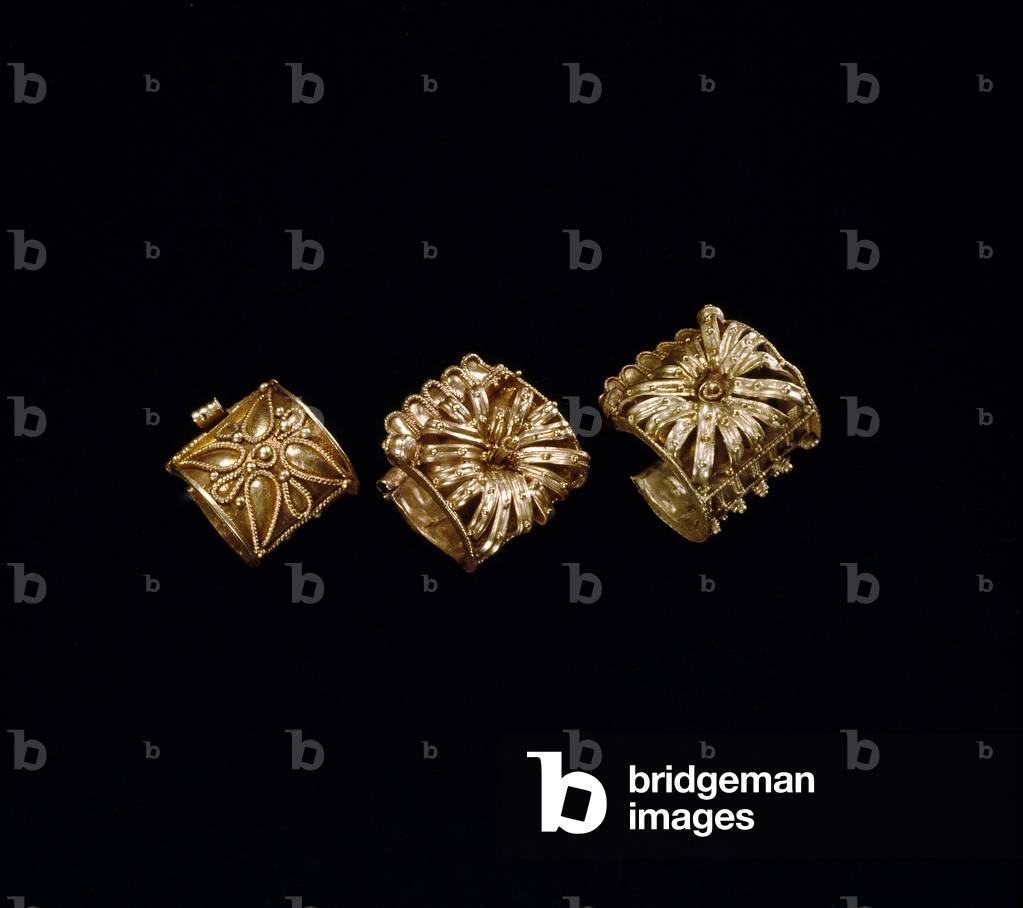
LRI4689653: Etruscan civilization: “” gold earrings”” From the tomb of the Flabelli, Populonia, Italy - 6th century BC Florence, Museo Archeologico, Etruscan, (6th century BC) / Bridgeman Images
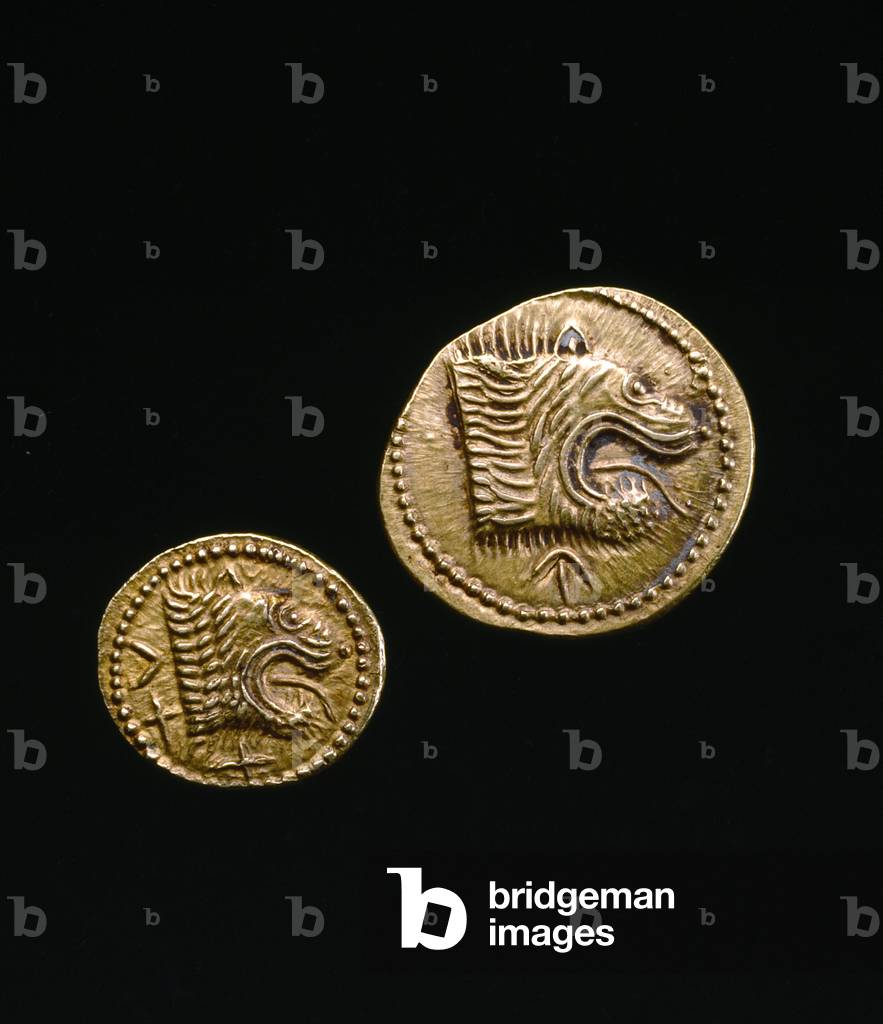
LRI4689688: Etruscan civilization: “” two pieces aureus””” 5th century BC Provenance unknown Florence, Museo Archeologico, inv 36246 - Etruscan civilization: two aureus coins, 5th century BC. Unknown provenance. Museum of Archaeology, inv 36246, Florence, Italy, Etruscan, (5th century BC) / Bridgeman Images

LRI4689613: Etruscan civilization: bronze plate - 520 BC Dim 27.5 cm Florence, Museo Archeologico, inv 710, Etruscan, (6th century BC) / Bridgeman Images

LRI4689632: Etruscan civilization: earthenware hydroe - 6th century BC Dim 55 cm Florence, Museo Archeologico, inv 3389, Etruscan, (6th century BC) / Bridgeman Images
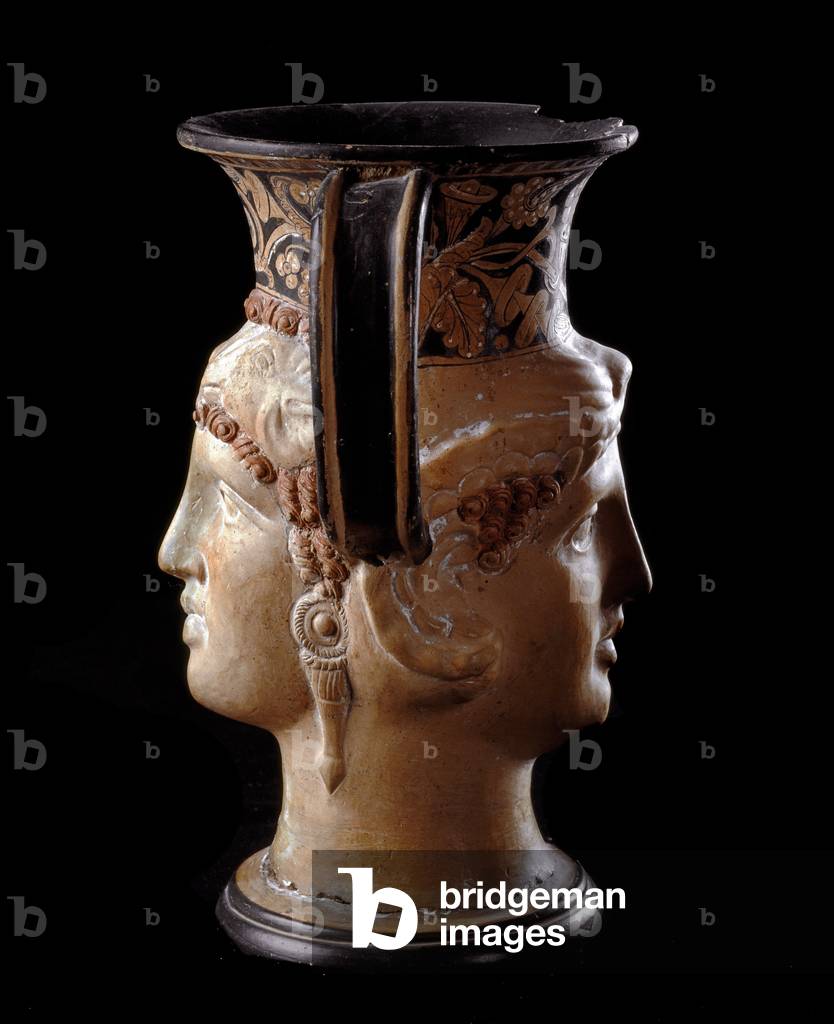
LRI4689766: Double head kantharos, Heracles and Omphale. From Cerveteri. 320 BC, Etruscan, (4th century BC) / Bridgeman Images

FLO4689786: Rufous or red milkcap, Lactarius rufus, weeping milkcap, Lactifluus volemus, Lactarius volemus, mild milkcap, Lactarius subdulcis and candy cap or curry milkcap, Lactarius camphoratus. Chromolithograph by Lassus after an illustration by A. Bessin from Leon Rolland's Guide to Mushrooms from France, Switzerland and Belgium, Atlas des Mushrooms, Paul Klincksieck, Paris, 1910. / Bridgeman Images

LRI4689832: Small bucchero amphora decorated with spirals from the Tomb 2 of Casaletti di Ceri. 675-650 BC, Etruscan, (7th century BC) / Bridgeman Images

LRI4689830: Chalice of brown paste from the tomb of the bronze tank, 680-670 BC, Etruscan, (7th century BC) / Bridgeman Images

FLO4689950: Edible mushrooms: salt-loving agaricus, Psalliota bernardii, and horse mushroom Psalliota arvensis. Chromolithograph drawn by Bessin for Leon Rolland's “Atlas of Mushrooms”” 1911. / Bridgeman Images

FLO4689999: Edible mushrooms: Dryad's saddle, Polyporus squamosus, Polyporus pes caprae. Chromolithograph drawn by Bessin for Leon Rolland's “Atlas of Mushrooms”” 1911. / Bridgeman Images

FLO4690171: The skeleton of Death boxes with a bareknuckle prize fighter while another boxer lies on the ground and the crowd flees in terror. Handcoloured copperplate drawn and engraved by Thomas Rowlandson from The English Dance of Death, Ackermann, London, 1816., Rowlandson, Thomas (1756-1827) / Bridgeman Images

FLO4690202: The skeleton of Death with dart and hourglass comes for the glutton as he feasts at dinner. Handcoloured copperplate drawn and engraved by Thomas Rowlandson from The English Dance of Death, Ackermann, London, 1816., Rowlandson, Thomas (1756-1827) / Bridgeman Images

FLO4690319: The skeleton of Death leads greedy children to the trunk of gold of a miser, who lies dead on a bed clutching a will and bag of money. Handcoloured copperplate drawn and engraved by Thomas Rowlandson from The English Dance of Death, Ackermann, London, 1816., Rowlandson, Thomas (1756-1827) / Bridgeman Images

FLO4690387: The skeleton of Death comes for the Fortune Teller in his room decorated with planetary globes, astrology books, and crocodile. Two lady clients watch in terror. Handcoloured copperplate drawn and engraved by Thomas Rowlandson from The English Dance of Death, Ackermann, London, 1816., Rowlandson, Thomas (1756-1827) / Bridgeman Images

FLO4690398: The skeleton of Death frees a prisoner from debtor's gaol in front of his distraught family. Handcoloured copperplate drawn and engraved by Thomas Rowlandson from The English Dance of Death, Ackermann, London, 1816., Rowlandson, Thomas (1756-1827) / Bridgeman Images

LRI4690283: The miracle of Saint Placidus: Saint Benedict of Nursie saves the young Placidus caught in the stream of a lake. 13th century (fresco), Consolo (Magister Conxolus) (13th century) / Bridgeman Images

FLO4690317: The skeleton of Death holds the rudder on a rowboat escaping a shipwreck, as its desparate crew row for the shore and passengers drown in the waves. Handcoloured copperplate drawn and engraved by Thomas Rowlandson from The English Dance of Death, Ackermann, London, 1816., Rowlandson, Thomas (1756-1827) / Bridgeman Images

FLO4690480: The skeleton of Death comes for Tom Higgins, a bricklayer's lad who has expired waiting for a dish outside an inn. Handcoloured copperplate drawn and engraved by Thomas Rowlandson from The English Dance of Death, Ackermann, London, 1816., Rowlandson, Thomas (1756-1827) / Bridgeman Images

FLO4690198: The skeleton of Death fights with gentlemen gamblers in the Chance room at a London gaming club. Handcoloured copperplate drawn and engraved by Thomas Rowlandson from The English Dance of Death, Ackermann, London, 1816., Rowlandson, Thomas (1756-1827) / Bridgeman Images

MME4703784: American tennis player John McEnroe in the 1980s., Mencarini, Marcello / Bridgeman Images

MEP4703830: Pair of snake-shaped bracelets, 2nd-1st century BC / Bridgeman Images

FLO4703552: Woman loading wheat, melons and vegetables onto a Roman two-wheeled farm cart Plaustrum drawn by oxen. Handcolored copperplate engraving from Robert von Spalart's “” Historical Picture of the Costumes of the Principal People of Antiquity and of the Middle Ages”” (1798). / Bridgeman Images

MME4703614: Blues musician John Mayall on stage in 1988., Mencarini, Marcello / Bridgeman Images

MME4703702: Portrait of blues musician John Mayall in 1988., Mencarini, Marcello / Bridgeman Images

FLO4703738: Juno, Roman goddess of marriage, with bride, groom and mother of the bride. Handcolored copperplate engraving from Robert von Spalart's “” Historical Picture of the Costumes of the Principal People of Antiquity and of the Middle Ages”” (1796). / Bridgeman Images

FLO4703835: Sacred bull ready for sacrifice. Handcolored copperplate engraving from Robert von Spalart's “” Historical Picture of the Costumes of the Principal People of Antiquity and of the Middle Ages”” (1796). / Bridgeman Images

MME4703514: Blues musician John Mayall on stage in 1988., Mencarini, Marcello / Bridgeman Images

FLO4703811: King Pyrrhus in Greek armour and a Greek warrior with chariot, harness and lance. Handcolored copperplate engraving from Robert von Spalart's “” Historical Picture of the Costumes of the Principal People of Antiquity and of the Middle Ages”” (1796). / Bridgeman Images

FLO4704055: Ceremony at a German tribal meeting. Men wearing wreaths, animal skins and antlers. Handcolored copperplate engraving from Robert von Spalart's “” Historical Picture of the Costumes of the Principal People of Antiquity and of the Middle Ages”” (1797). / Bridgeman Images
