2491557 Search Results

FLO4609103: Plectranthus forskohlii. (Plectranthus barbatus, Coleus forskohlii, Forskohlii, Indian coleus,) Handcoloured copperplate engraving from Samuel Curtis' Botanical Magazine, London, 1818. / Bridgeman Images

FLO4609080: Chinese honeysuckle or Rangoon creeper, Combretum indicum (Quisqualis indica). Handcoloured copperplate engraving from Samuel Curtis' Botanical Magazine, London, 1818. / Bridgeman Images

FLO4609174: Malabar catmint, Anisomeles malabarica. Handcoloured copperplate engraving from Samuel Curtis' Botanical Magazine, London, 1819. / Bridgeman Images

FLO4609286: Jussie, aquatic plant. Copper engraving, painted by John Curtis and grave by Weddell, published in the “Curtis Botanical Magazine”, 1819, by Samuel Curtis, London, England. / Bridgeman Images

FLO4609450: Flowering cynoglosses. Copper engraving, painted by John Curtis and grave by Weddell, published in the “Curtis Botanical Magazine”, 1820, by Samuel Curtis, London, England. / Bridgeman Images

LRI4609508: The Last Supper, detail of the polyptic of Santa Chiara (oil on wood, circa 1350), Veneziano, Paolo (fl.1333-62) / Bridgeman Images

FLO4609516: Psoralier stinks. Copper engraving, painted by John Curtis and grave by Weddell, published in the “Curtis Botanical Magazine”, 1820, by Samuel Curtis, London, England. / Bridgeman Images

LRI4609695: Portrait of Don Baldassarre di Antonio di Angelo, monk of the Abbey of Vallombrosa Profile of a monk of the monastery of Vallombreuse. Painting by Pietro Vannucci dit il Perugino (The Perugin, 1446 - 1523) 1499 approx. Sun. 26x27 cm Florence, galleria degli Uffizi (Offices), Perugino, Pietro (c.1445-1523) / Bridgeman Images

FLO4609724: Heart-leaved poison, Gastrolobium bilobum. Handcoloured copperplate engraving by Weddell after an illustration by John Curtis from Samuel Curtis' Botanical Magazine, London, 1821. / Bridgeman Images

FLO4609611: Fabagelle has sessile leaves. Copper engraving, painted by John Curtis and grave by Weddell, published in the “Curtis Botanical Magazine”, 1820, by Samuel Curtis, London, England. / Bridgeman Images

FLO4609697: Gomesa orchid, Gomesa flexuosa (Oncidium flexuosus). Handcoloured copperplate engraving by Weddell after an illustration by John Curtis from Samuel Curtis' Botanical Magazine, London, 1821. / Bridgeman Images

FLO4609725: Bigleaf magnolia, Magnolia macrophylla. Handcoloured copperplate engraving by Weddell after an illustration by John Curtis from Samuel Curtis' Botanical Magazine, London, 1821. / Bridgeman Images

FLO4609747: Pink striped trumpet lily, Crinum latifolium (Crinum speciosum). Handcoloured copperplate engraving by Weddell after an illustration by William Herbert from Samuel Curtis' Botanical Magazine, London, 1822. / Bridgeman Images

FLO4609952: Diptere: black fly with short wings and spring gentian. Lithograph by John Curtis (1791-1862) published in “British Entomology”, a collection of 770 illustrations and descriptions of insects from Great Britain, London, England, 1824 to 1839. / Bridgeman Images

FLO4609863: Sperch (Spercheus emarginatus), hydrophilic coleoptere variete. Lithograph by John Curtis (1791-1862) published in “British Entomology”, a collection of 770 illustrations and descriptions of British insects, London, England, 1824 to 1839. / Bridgeman Images

FLO4609884: Caterpillar and butterfly (Adscita statice) and common sorrel. Lithograph by John Curtis (1791-1862) published in “British Entomology”, a collection of 770 illustrations and descriptions of British insects, London, England, 1824 to 1839. / Bridgeman Images

LRI4609926: Virgin and Child on the throne surrounded by saints, detail (oil and tempera on panel, circa 1493), Cosimo, Piero di (c.1462-1521) / Bridgeman Images

FLO4610197: Insect: double-stained coleoptere variete and bird nest neottie plant Lithograph by John Curtis (1791-1862) published in “British Entomology”, collection of 770 illustrations and descriptions of insects from Great Britain, London, England, 1824-1839. Tritoma bipustulatum, Tritoma bipustulata, Double-spotted Tritoma beetle, with bird's nest orchis, Epipactis nidus reviews. Handcoloured copperplate by John Curtis (1791-1862) for his own “” British Entomology, 770 Illustrations and Descriptions of the Genera of Insects found in Great Britain and Ireland,” London, from 1824 to 1839. / Bridgeman Images

FLO4610226: Insect: Heriade guepe variete with a campanule plant. Lithograph by John Curtis (1791-1862) published in “British Entomology”, a collection of 770 illustrations and descriptions of British insects, London, England, 1824 to 1839. Heriades truncorum, Larger Heriades wasp, with corn bell-flower, Campanula hybrida. Handcoloured copperplate by John Curtis (1791-1862) for his own “” British Entomology, 770 Illustrations and Descriptions of the Genera of Insects found in Great Britain and Ireland,” London, from 1824 to 1839. / Bridgeman Images

FLO4610237: Insect: variete of coleoptere staphylinus with a fragrant fuzzy plant or fragrant quackgrass Lithograph by John Curtis (1791-1862) published in “” British Entomology”, collection of 770 illustrations and descriptions of insects from Great Britain, London, England, 1824-1839. Homalota dimidiata, Hygronoma dimidiata, Ochre-banded Staphylinus beetle, with spring grass, Anthoxanthum odoratum. Handcoloured copperplate by John Curtis (1791-1862) for his own “” British Entomology, 770 Illustrations and Descriptions of the Genera of Insects found in Great Britain and Ireland,” London, from 1824 to 1839. / Bridgeman Images

FLO4610316: Flowers of aconite, ancholia, galanthus, hellebore and weeping willow, with details of pistils and etamines). Nectarium of the aconite Aconitum (1,3), columbine Aquilegia (2,4), snowdrop Galanthus (5), hellebore Helleborus (6) and willow Salix (7). Handcoloured copperplate engraving of a botanical illustration by Sydenham Edwards for William Curtis's “” Lectures on Botany, as delivered in the Botanic Garden at Lambeth,”” 1805. Edwards (1768-1819) was the artist of thousands of botanical plates for Curtis' “” Botanical Magazine”” and his own “” Botanical Register.””, Edwards, Sydenham Teast (c.1768-1819) / Bridgeman Images

FLO4610375: The veronica little oak or false germandree. Coloured copper engraving, illustration by Sydenham Edwards (1768-1819) for Conferences of Botanical, Botanical Garden of Lambeth (England), 1805, by William Curtis (1746-1799). Germander speedwell, Veronica chamaedrys. Handcoloured copperplate engraving of a botanical illustration by Sydenham Edwards for William Curtis's “” Lectures on Botany, as delivered in the Botanic Garden at Lambeth,”” 1805. Edwards (1768-1819) was the artist of thousands of botanical plates for Curtis' “” Botanical Magazine”” and his own “” Botanical Register.””, Edwards, Sydenham Teast (c.1768-1819) / Bridgeman Images

FLO4610401: Hyssop or officinal hyssop. Coloured copper engraving, illustration by Sydenham Edwards (1768-1819) for Conferences of Botanical, Botanical Garden of Lambeth (England), 1805, by William Curtis (1746-1799). Hyssop, Hyssopus officinalis. Handcoloured copperplate engraving of a botanical illustration by Sydenham Edwards for William Curtis's “” Lectures on Botany, as delivered in the Botanic Garden at Lambeth,”” 1805. Edwards (1768-1819) was the artist of thousands of botanical plates for Curtis' “” Botanical Magazine”” and his own “” Botanical Register.””, Edwards, Sydenham Teast (c.1768-1819) / Bridgeman Images

FLO4610422: Auricle or bear ear. Coloured copper engraving, illustration by Sydenham Edwards (1768-1819) for Conferences of Botanical, Botanical Garden of Lambeth (England), 1805, by William Curtis (1746-1799). Auricula, Primula auricula. Handcoloured copperplate engraving of a botanical illustration by Sydenham Edwards for William Curtis's “” Lectures on Botany, as delivered in the Botanic Garden at Lambeth,”” 1805. Edwards (1768-1819) was the artist of thousands of botanical plates for Curtis' “” Botanical Magazine”” and his own “” Botanical Register.””, Edwards, Sydenham Teast (c.1768-1819) / Bridgeman Images

FLO4610280: Fibrous roots of common senecon and large plantain (or plantain of birds). Coloured copper engraving, illustration by Sydenham Edwards (1768-1819) for Conferences of Botanical, Botanical Garden of Lambeth (England), 1805, by William Curtis (1746-1799). Plant roots: fibrous root of groundsel Senecio vulgaris and plantain Plantago major. Handcoloured copperplate engraving of a botanical illustration by Sydenham Edwards for William Curtis's “” Lectures on Botany, as delivered in the Botanic Garden at Lambeth,”” 1805. Edwards (1768-1819) was the artist of thousands of botanical plates for Curtis' “” Botanical Magazine”” and his own “” Botanical Register.””, Edwards, Sydenham Teast (c.1768-1819) / Bridgeman Images

FLO4610288: Vegetable roots: carrot and turnip. Coloured copper engraving, illustration by Sydenham Edwards (1768-1819) for Conferences of Botanical, Botanical Garden of Lambeth (England), 1805, by William Curtis (1746-1799). Root vegetables, carrot Daucus carota and turnip Brassica rapa. Handcoloured copperplate engraving of a botanical illustration by Sydenham Edwards for William Curtis's “” Lectures on Botany, as delivered in the Botanic Garden at Lambeth,”” 1805. Edwards (1768-1819) was the artist of thousands of botanical plates for Curtis' “” Botanical Magazine”” and his own “” Botanical Register.””, Edwards, Sydenham Teast (c.1768-1819) / Bridgeman Images

FLO4610349: Root and bulb of lilies. Coloured copper engraving, illustration by Sydenham Edwards (1768-1819) for Conferences of Botanical, Botanical Garden of Lambeth (England), 1805, by William Curtis (1746-1799). Root and bulb of the lily Lilium. Handcoloured copperplate engraving of a botanical illustration by Sydenham Edwards for William Curtis's “” Lectures on Botany, as delivered in the Botanic Garden at Lambeth,”” 1805. Edwards (1768-1819) was the artist of thousands of botanical plates for Curtis' “” Botanical Magazine”” and his own “” Botanical Register.””, Edwards, Sydenham Teast (c.1768-1819) / Bridgeman Images

FLO4610365: Passionflower, bud and flower. Coloured copper engraving, illustration by Sydenham Edwards (1768-1819) for Conferences of Botanical, Botanical Garden of Lambeth (England), 1805, by William Curtis (1746-1799). Passionflower, Passiflora. Handcoloured copperplate engraving of a botanical illustration by Sydenham Edwards for William Curtis's “” Lectures on Botany, as delivered in the Botanic Garden at Lambeth,”” 1805. Edwards (1768-1819) was the artist of thousands of botanical plates for Curtis' “” Botanical Magazine”” and his own “” Botanical Register.””, Edwards, Sydenham Teast (c.1768-1819) / Bridgeman Images

FLO4610339: Floral leaves and violet bouquet of terminal bractees of green sage (or hormine sage) and linden trees. Coloured copper engraving, illustration by Sydenham Edwards (1768-1819) for Conferences of Botanical, Botanical Garden of Lambeth (England), 1805, by William Curtis (1746-1799). Floral leaves bractea of the purple top'd clary Salvia viridis and lime Tilia tomentosa. Handcoloured copperplate engraving of a botanical illustration by Sydenham Edwards for William Curtis's “” Lectures on Botany, as delivered in the Botanic Garden at Lambeth,”” 1805. Edwards (1768-1819) was the artist of thousands of botanical plates for Curtis' “” Botanical Magazine”” and his own “” Botanical Register.””, Edwards, Sydenham Teast (c.1768-1819) / Bridgeman Images
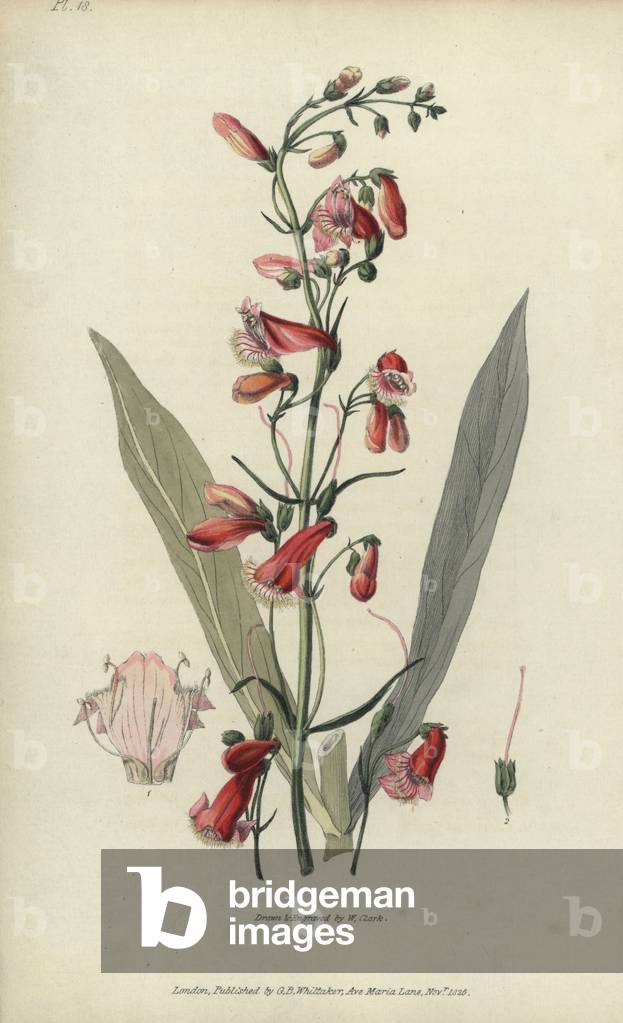
FLO4607224: Scarlet bugler, Penstemon barbatus. Handcoloured botanical illustration drawn and engraved by William Clark from Richard Morris's “Flora Conspicua” London, Longman, Rees, 1826. William Clark was former draughtsman to the London Horticultural Society and illustrated many botanical books in the 1820s and 1830s. / Bridgeman Images
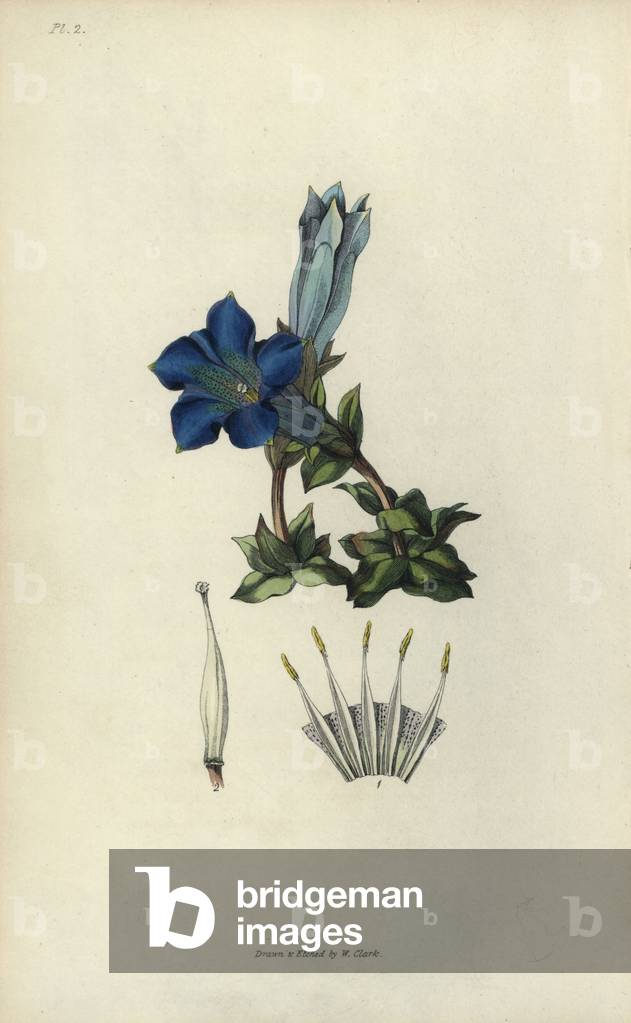
FLO4607237: Stemless gentian, Gentiana acaulis. Handcoloured botanical illustration drawn and engraved by William Clark from Richard Morris's “Flora Conspicua” London, Longman, Rees, 1826. William Clark was former draughtsman to the London Horticultural Society and illustrated many botanical books in the 1820s and 1830s. / Bridgeman Images

PIX4607221: Recuperation of samples from the Stardust probe - Stardust sample return capsule - Artwork - The Stardust probe was launched on February 7, 1999 with the primary objective of studying comet Wild 2 and taking samples during a passage through the comet's hair. Stardust was the first probe to collect and bring back to Earth interstellar and cometary dust. The return capsule landed on Earth on 15 January 2006 with the samples. Artist's view. Stardust is an interplanetary spacecraft, whose primary purpose was to investigate the makeup of the comet Wild 2 and its coma. It was launched on February 07 1999 and returned to Earth on January 15 2006. It is the first sample return mission to collect cosmic dust and return the sample to Earth; the capsule contains cometary and interstellar samples gathered by the Stardust spacecraft / Bridgeman Images

PIX4607001: Giotto probe meets Halley's comet - Giotto probe meets Halley's comet - Artist's view, Dixon, Don (b.1951) / Bridgeman Images

FLO4607408: Spring bittervetch, Lathyrus vernus. Handcoloured botanical illustration drawn and engraved by William Clark from Richard Morris's “Flora Conspicua” London, Longman, Rees, 1826. William Clark was former draughtsman to the London Horticultural Society and illustrated many botanical books in the 1820s and 1830s. / Bridgeman Images

PIX4607428: A probe explores Europe's underground ocean - Illustration - Europa Submersible Probe - Illustration - Artist's view of a space probe exploring Europe's underground ocean. Ice covers the surface of this Jupiter satellite; it is believed that under the tens of km thick of this ice, water in the liquid state could exist. A remote - controlled submersible probe pokes around beneath the icy mantle of Europa. The probe is designed to fit down a narrow hole, with the lights mounted on deployable rods, and small motorized wheels mounted on the fairings (hard to see here). Antennae trail behind. Power and warmth are provided by a SNAP generator near the rear. Stereo cameras are in front. Water intakes for chemical analysis are behind the front fairing. Attitude control is provided by small thrusters. Main propulsion comes from a small propellor equipped with a Kort nozzle. The oceans of Europa and the other Galilean moons could prove to be the most surprising environments in the solar system, Bergeron, Joe / Bridgeman Images

LRI4607528: Lucrece's death (Detrempe on wood, 1452-1453), Lippi, Filippino (c.1457-1504) / Bridgeman Images
