2491632 Search Results

MPX5124181: Picturesque Worcester, looking past one of the handsome lamp standards on the New Road bridge to the tree-lined South Quay and the Cathedral reflected in the winter-high waters of the River Severn, 1970 (b/w photo) / Bridgeman Images
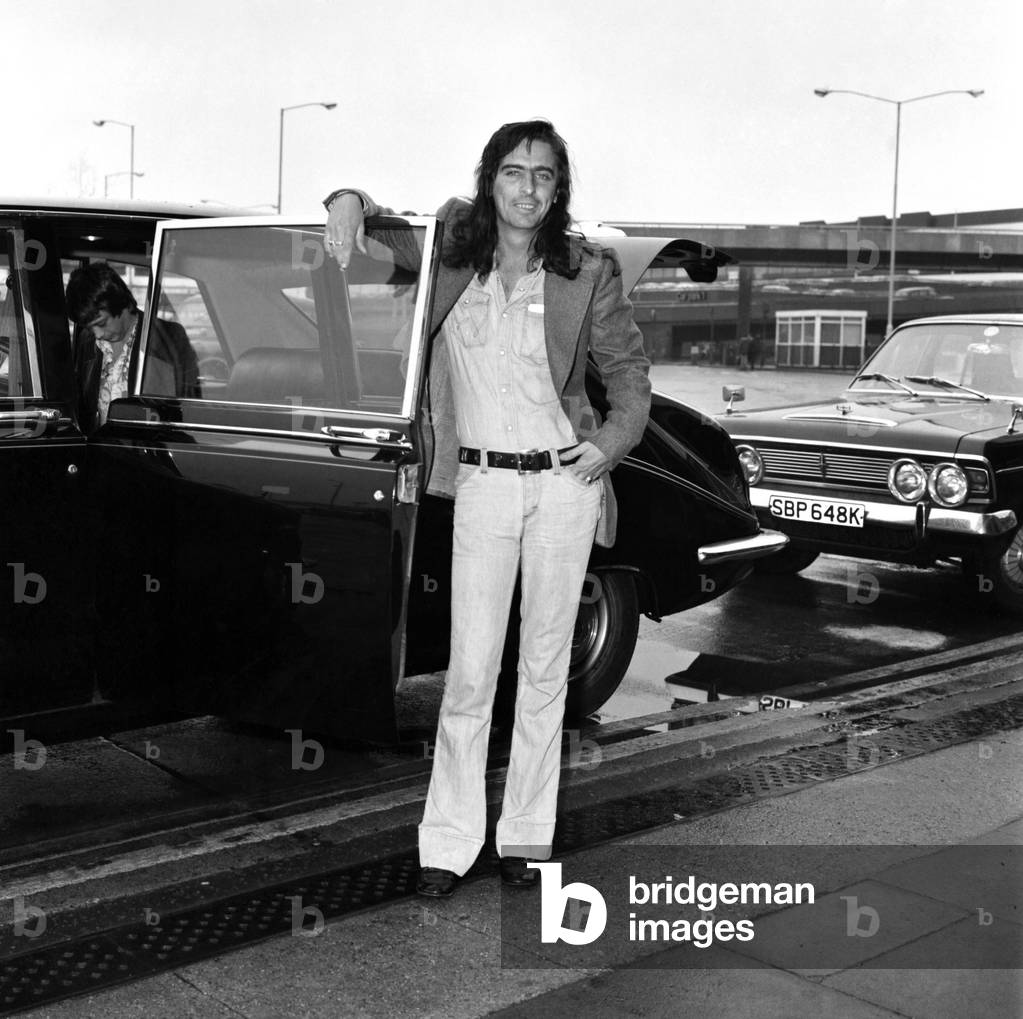
MPX5124305: American rock singer Alice Cooper arrives in London ahead of his tour, 15th March 1974 (b/w photo) / Bridgeman Images
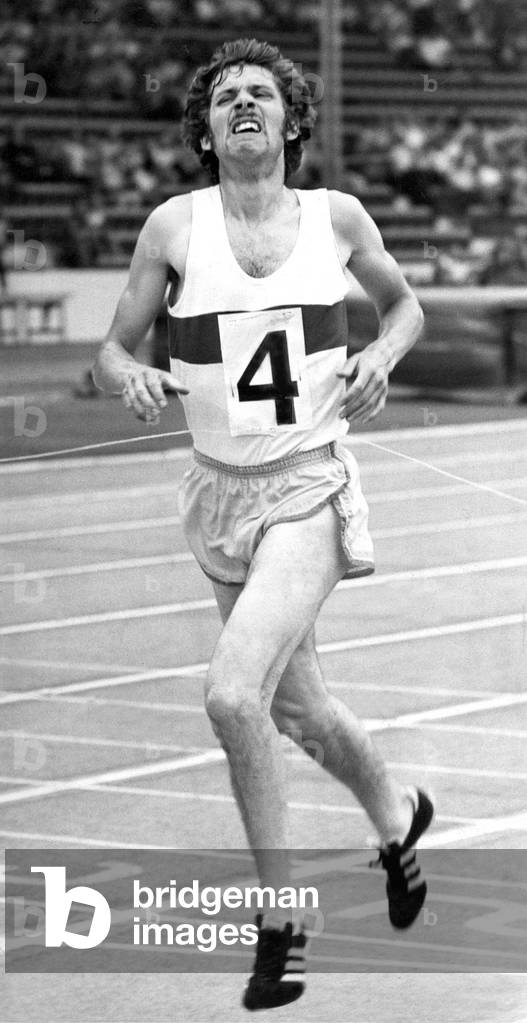
MPX5124306: Brendan Foster at Crystal Palace during the Great Britain and Hungary meet in August 1973 27/08/1973 (b/w photo) / Bridgeman Images
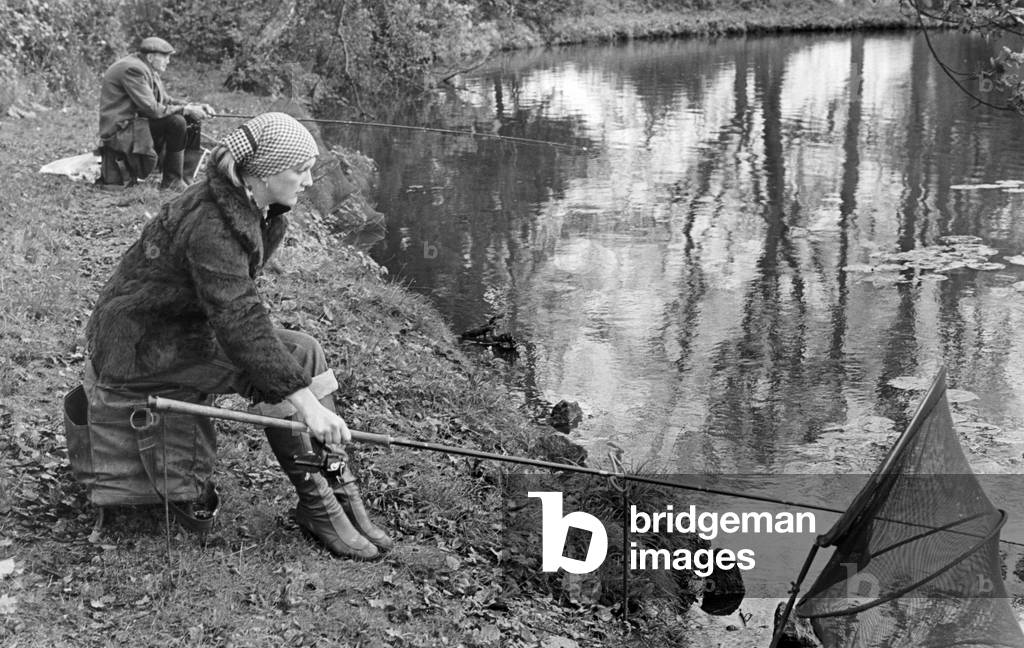
MPX5124318: Woman angler seen here on the banks of the River Trent, 22nd November 1977 (b/w photo) / Bridgeman Images

MPX5124277: Wolf Mankowitz handing a petition to No.10 Downing Street asking for assistance for Israel in the Middle East conflict, 5th June 1967 (b/w photo) / Bridgeman Images

MPX5124475: Soldiers seen here patrolling the streets of London in their Vickers Medium tanks, on the 10th day of the General Strike. The national dispute came about after negotiations between the miners and mine owners failed over wages and the strike began on 3 May 1926. Millions obeyed the strike call, bringing transport systems to a halt while newspapers were not printed. The government responding by using volunteers to run trains and buses and sent in troops to move supplies from the London docks. There were clashes between police and crowds in many areas and at least 4000 strikers were arrested. There were attacks on buses and trains, including the derailing of the Flying Scotsman. The strike was called off unilaterally by the TUC on 12 May with no guarantees of fair treatment for the miners who fought on to bitter defeat in October. 12th May 1926 (b/w photo) / Bridgeman Images

MPX5124505: Louis Armstrong seen here giving a press conference at the Mayfair Hotel, shortly before leaving for a tour of Africa accompanied by his wife Lucille. 12th October 1960 (b/w photo) / Bridgeman Images

MPX5124416: Brigitta Samuelson is the Queen of Light for the traditional festival of St. Lucia in 1975 (b/w photo) / Bridgeman Images

MPX5124517: Music fans at The Isle of Wight Festival, 30th August 1969 (b/w photo) / Bridgeman Images

MPX5124446: Mounted special constables seen here on parade in Hyde Park before patrolling the streets of London, on the 9th day of the General Strike. The national dispute came about after negotiations between the miners and mine owners failed over wages and the strike began on 3 May 1926. Millions obeyed the strike call, bringing transport systems to a halt while newspapers were not printed. The government responding by using volunteers to run trains and buses and sent in troops to move supplies from the London docks. There were clashes between police and crowds in many areas and at least 4000 strikers were arrested. There were attacks on buses and trains, including the derailing of the Flying Scotsman. The strike was called off unilaterally by the TUC on 12 May with no guarantees of fair treatment for the miners who fought on to bitter defeat in October. 11th May 1926 (b/w photo) / Bridgeman Images

MPX5124535: Aerial View of crowds of fans at The Isle of Wight Pop Festival 30th August 1969 (b/w photo) / Bridgeman Images

MPX5124538: Zany comedian Marty Feldman seen here on the set of his new television series, "The Comedy Machine" at Elstree Studios, Marty's arm is in plaster after he fell 20ft from some curtains whilst filming. The fall resulted in Marty breaking his arm in two places, 6th October 1971 (b/w photo) / Bridgeman Images
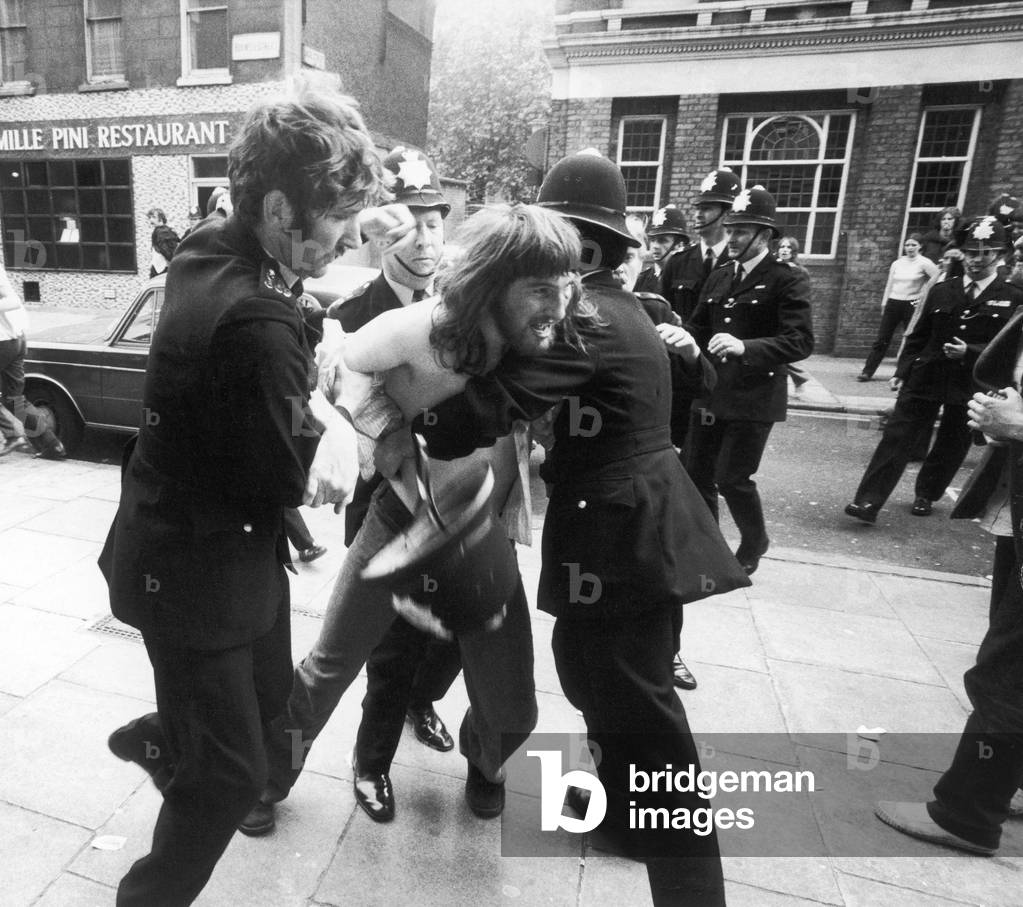
MPX5124586: The Battle of Red Lion Square. Police try to keep opposing demonstrators apart. Trouble flared up when members of the National Front clashed with supporters of various left wing groups who had gathered in the square following Roy Jenkins the Home Secretary decision to grant amnesty to a number of illegal immigrants. One demonstrator died in the clashes. 16th June 1974 (b/w photo) / Bridgeman Images

MPX5124375: Queen Elizabeth II and Prince Philip on the North East Leg of The Jubilee Tour, 1977 (b/w photo) / Bridgeman Images
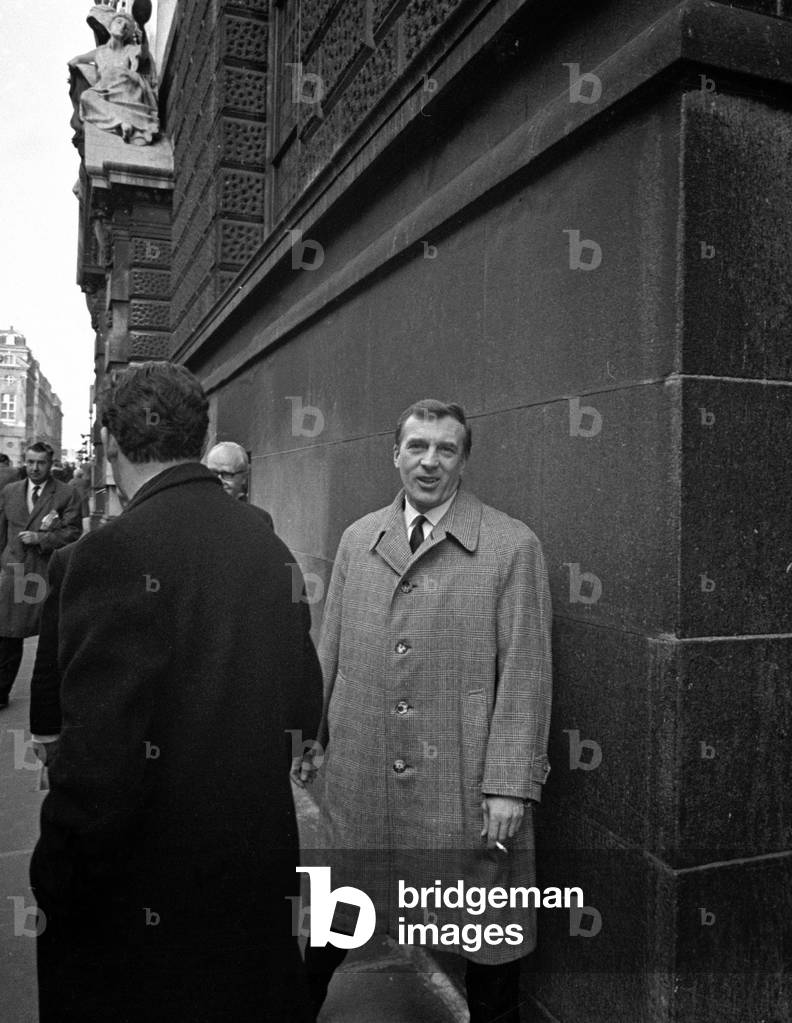
MPX5124592: The Krays trial at The Old Bailey. Charlie Kray. 15th April 1965 (b/w photo) / Bridgeman Images

MPX5124554: Zany comedian Marty Feldman seen here on the set of his new television series, "The Comedy Machine" at Elstree Studios, Marty's arm is in plaster after he fell 20ft from some curtains whilst filming. The fall resulted in Marty breaking his arm in two places, 6th October 1971 (b/w photo) / Bridgeman Images
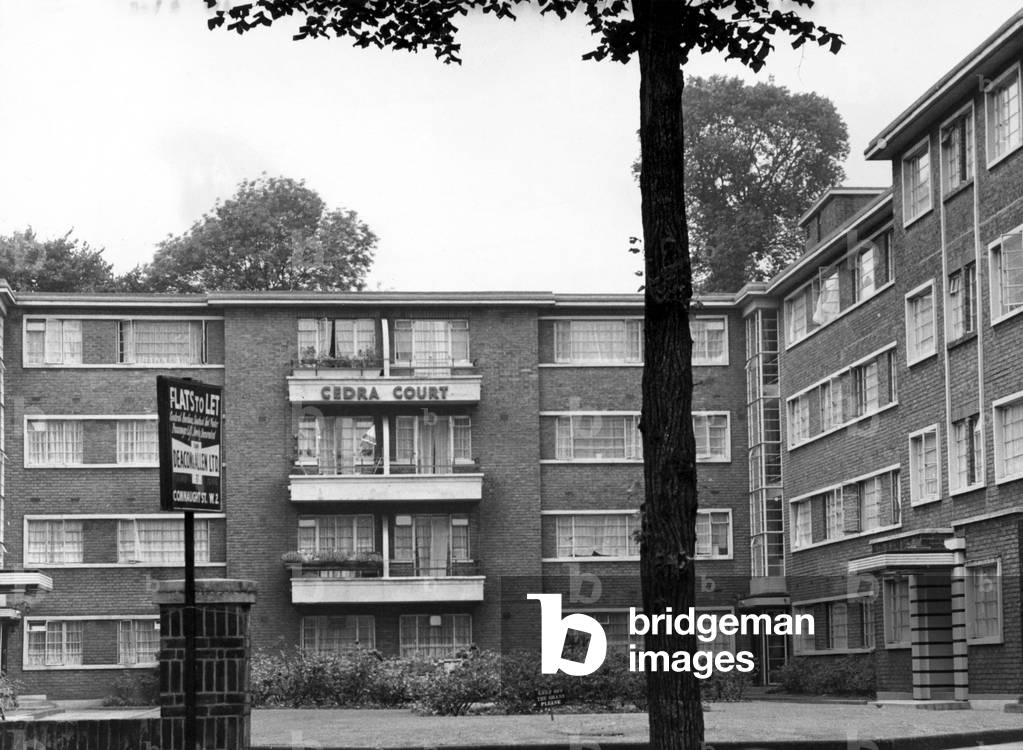
MPX5124595: Kray brothers case, Club investigations. Cedra Court, Caszenove Road, N16, 22nd July 1964 (b/w photo) / Bridgeman Images
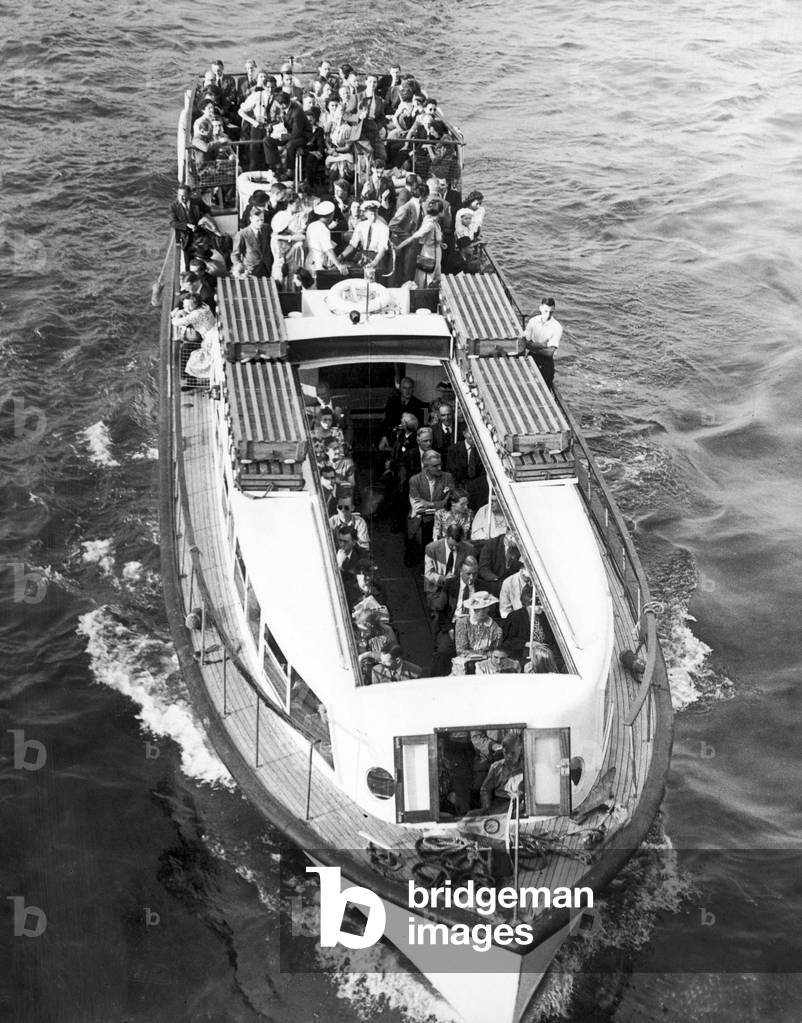
MPX5124605: Passengers aboard the new Thames Water Bus at Charing Cross on the 12 mile daily trip between Putney and Limehouse, 27th July 1948 (b/w photo) / Bridgeman Images
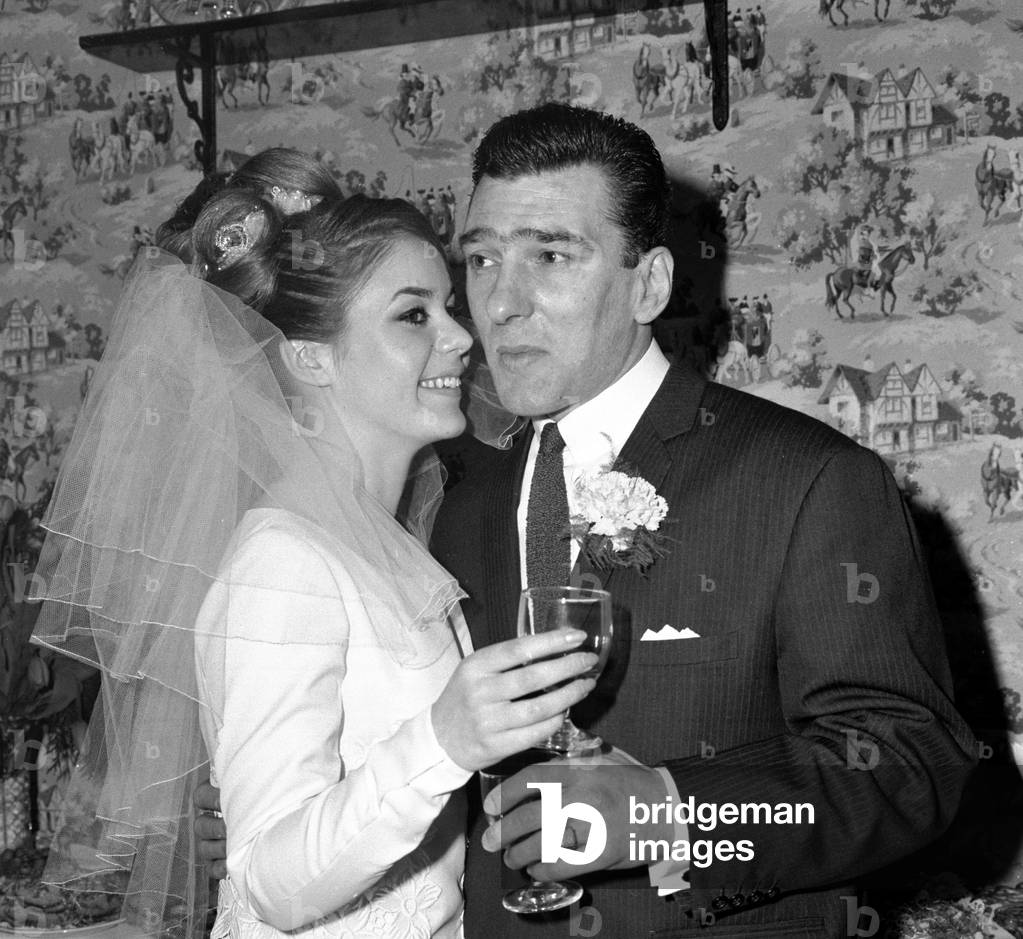
MPX5124604: Reggie Kray and Frances Shea drinking a toast at their wedding. 19th April 1965 (b/w photo) / Bridgeman Images

MPX5124423: Actor Kenneth More as King Arthur and John Le Mesurier as Sir Gawain at Alnwick Castle in Northumberland with director Russ Mayberry in 1978 (b/w photo) / Bridgeman Images

MPX5124435: Queen Elizabeth II visits Tynemouth, the crowds used Evening Chronicle and The Journal posters to welcome the Queen, 1950 (b/w photo) / Bridgeman Images
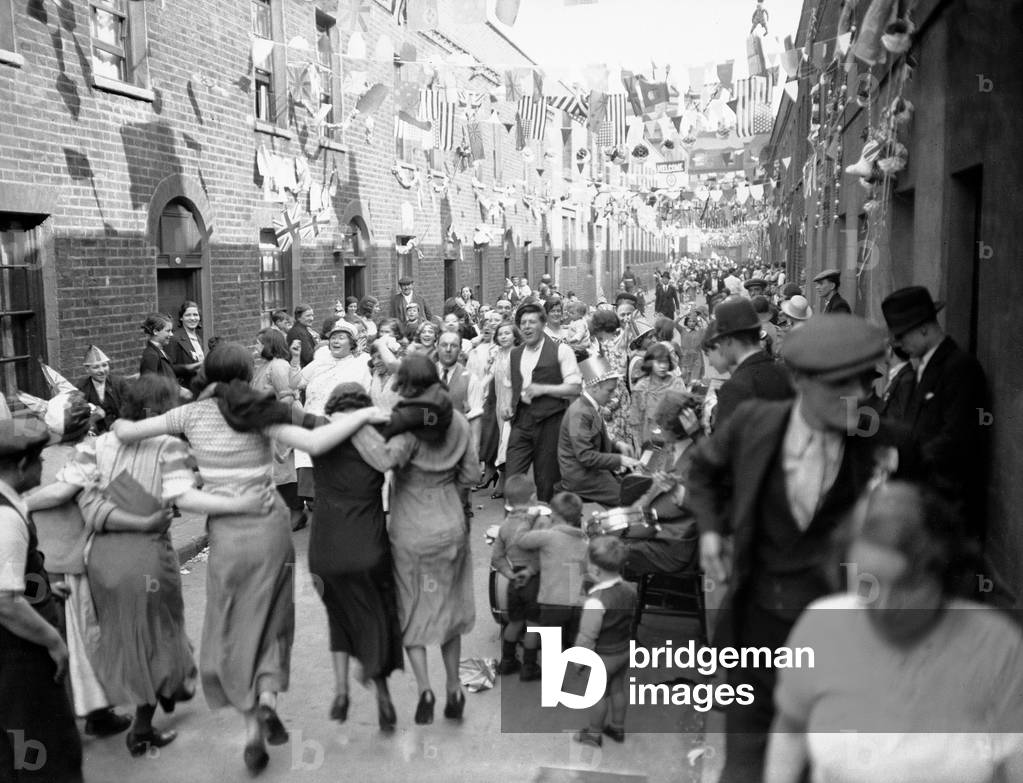
MPX5124634: Street Party in London's East End in celebration of King George V Silver Jubilee, 3rd May 1935 (b/w photo) / Bridgeman Images

MPX5124453: Scene at Hammersmith Broadway on the 10th day of the General Strike; showing a man being escorted to the police station after making a disturbance. The national dispute came about after negotiations between the miners and mine owners failed over wages and the strike began on 3 May 1926. Millions obeyed the strike call, bringing transport systems to a halt while newspapers were not printed. The government responding by using volunteers to run trains and buses and sent in troops to move supplies from the London docks. There were clashes between police and crowds in many areas and at least 4000 strikers were arrested. There were attacks on buses and trains, including the derailing of the Flying Scotsman. The strike was called off unilaterally by the TUC on 12 May with no guarantees of fair treatment for the miners who fought on to bitter defeat in October. 12th May 1926 (b/w photo) / Bridgeman Images

MPX5124459: Music fan with telescope at The Isle of Wight Festival, 30th August 1970 (b/w photo) / Bridgeman Images
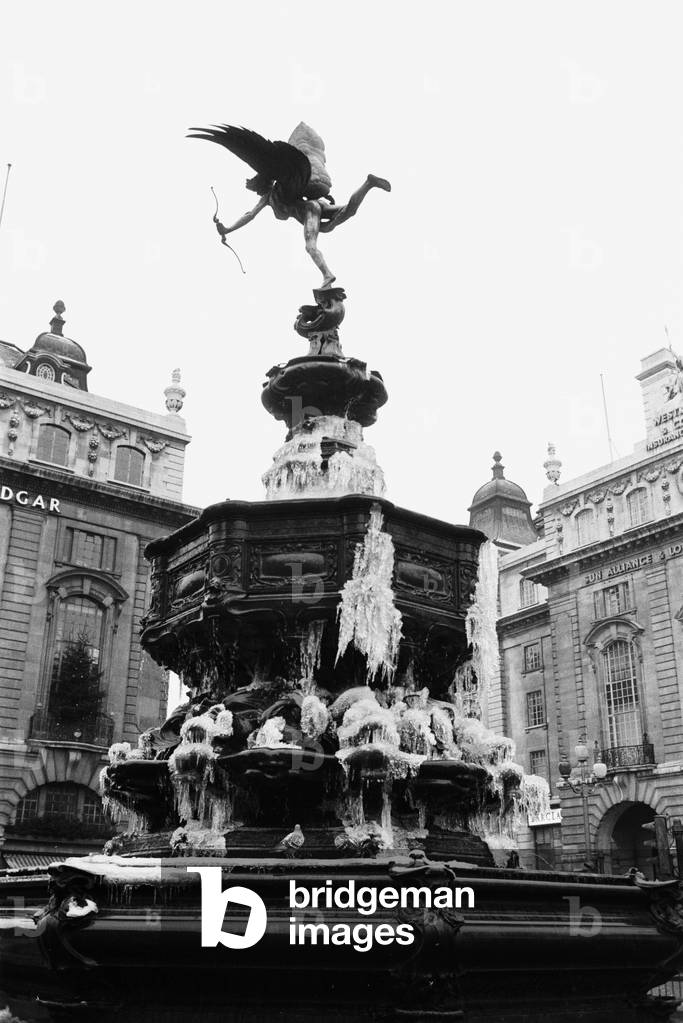
MPX5124662: The statue of Eros in Piccadilly Circus covered in ice after a chilly Christmas, 28th December 1970 (b/w photo) / Bridgeman Images
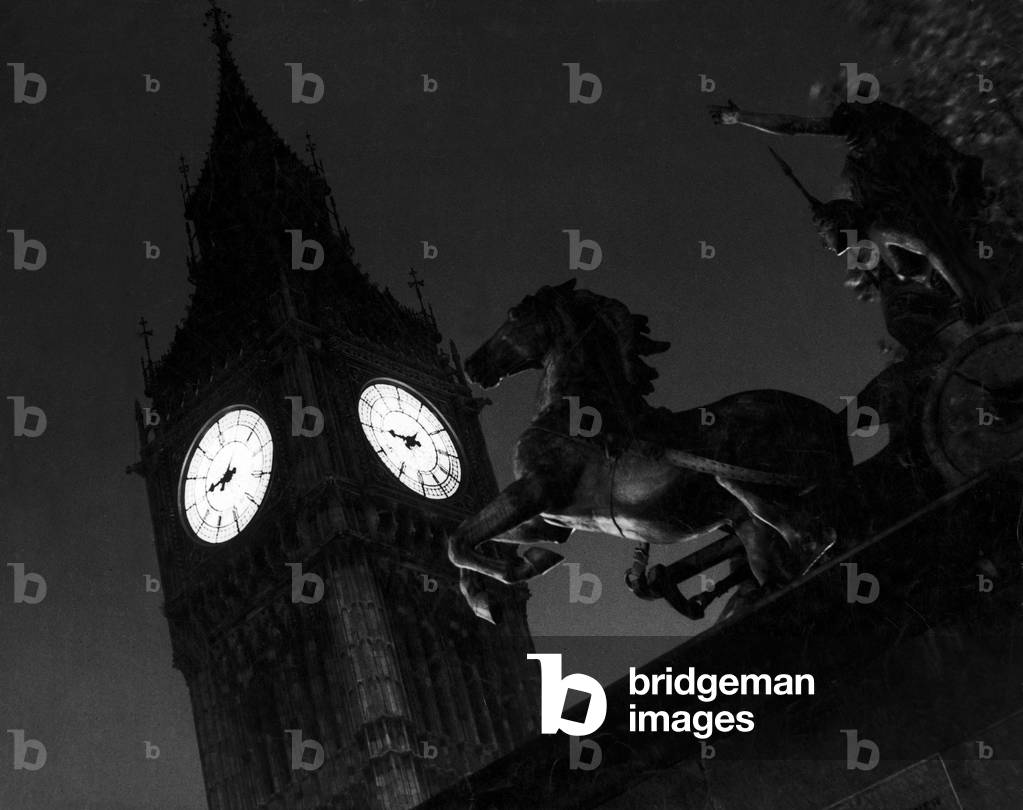
MPX5124657: The statue of Boudicca (Boadicea) Queen of the Iceni, driving a chariot by Thomas Thorneycroft and positioned at the end of the Victoria Embankment in 1902. Boudicca led a revolt against the Romans in 61 AD. In the background is the clock tower of the Houses of Parliament which houses the clock and 13-ton bell known as Big Ben. The clock, designed by Sir Edmund Beckett, and bell is named after Sir Benjamin Hall, who was Commissioner of Works at the time of their installation in 1859. 16th November 1938 (b/w photo) / Bridgeman Images
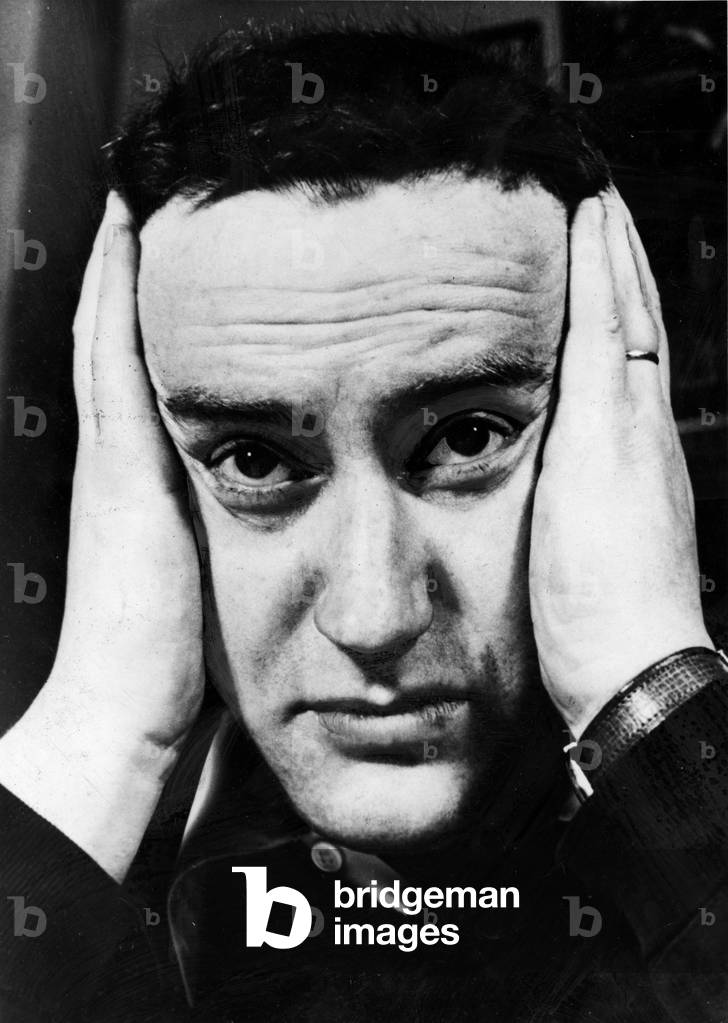
MPX5124681: Playwright and author Wolf Mankowitz. 10th January 1956 (b/w photo) / Bridgeman Images

MPX5124684: Funeral of Earl Mountbatten September 1979 Bearer party from HMS Mercury with coffin on gun carriage pass through Parliament Square. The police lining the route faced the crowd and missed the occasion, 5th September 1979 (b/w photo) / Bridgeman Images

MPX5124717: 25 year old actress Alexandra Bastedo who starred in the television series ' The Champions ' seen here in her West End Flat, 3rd January 1969 (b/w photo) / Bridgeman Images
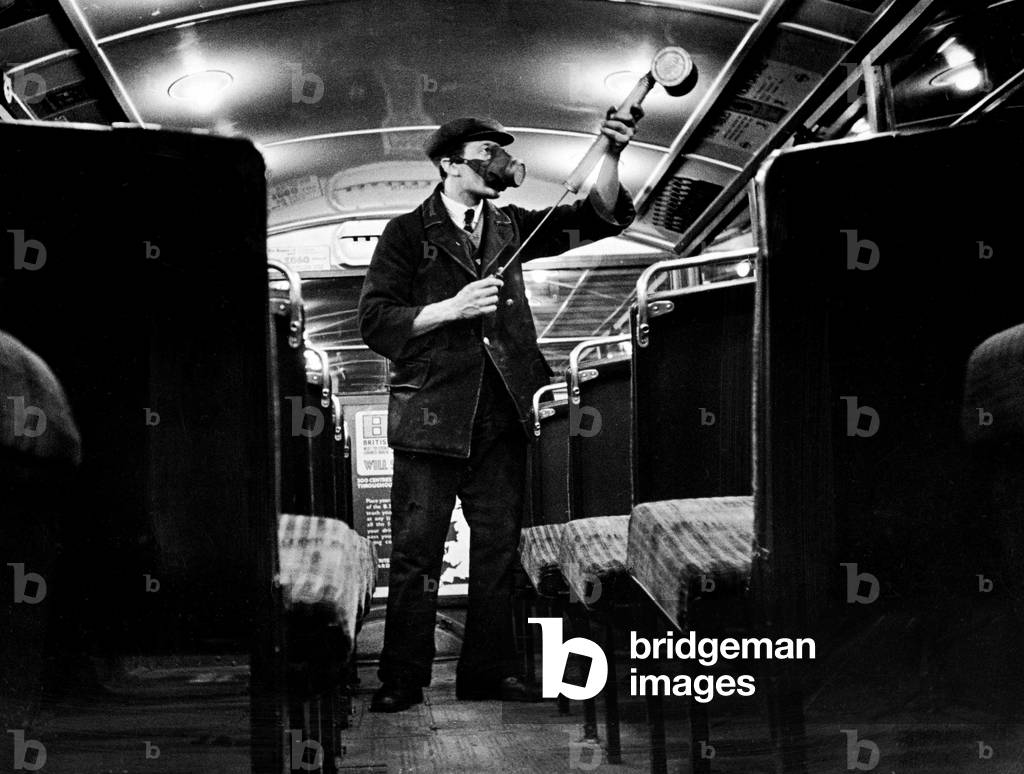
MPX5124661: A cleaner seen here spraying a pesticide to kill germs during a routine cleansing of the bus at a London Transport garage, 30th May 1935 (b/w photo) / Bridgeman Images

MPX5124735: Miss World Competition at the Royal Albert Hall, 20th November 1970 (b/w photo) / Bridgeman Images
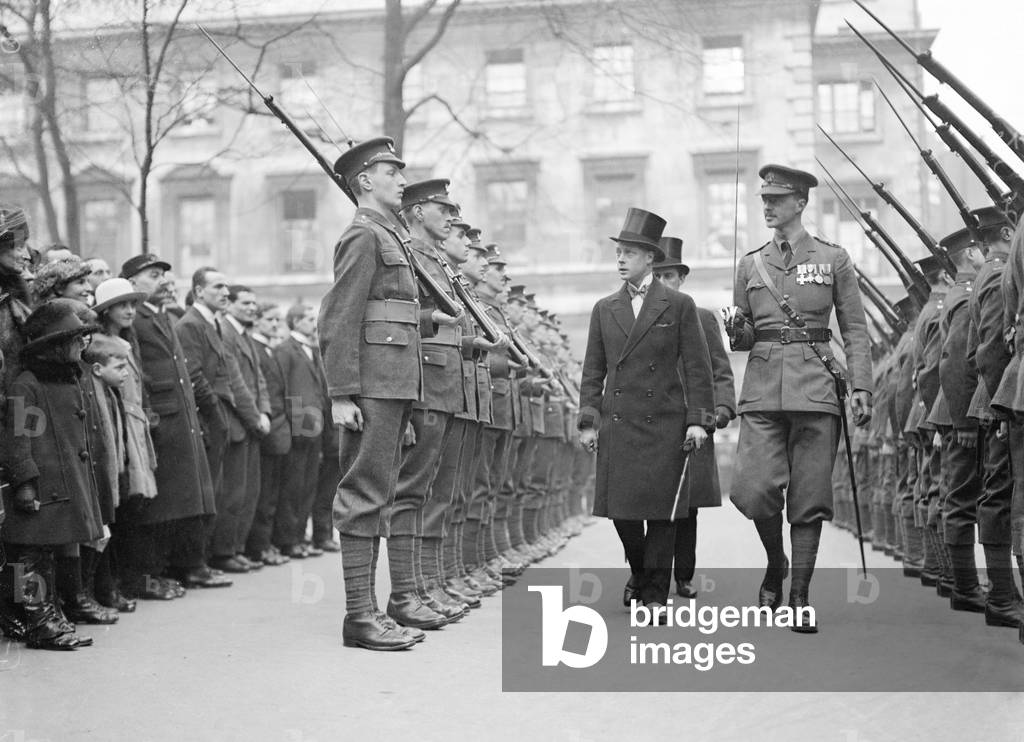
MPX5124673: Prince of Wales (later King Edward VIII) inspecting Honourable Artillery Company Guard of Honour. 18th February 1921 (b/w photo) / Bridgeman Images
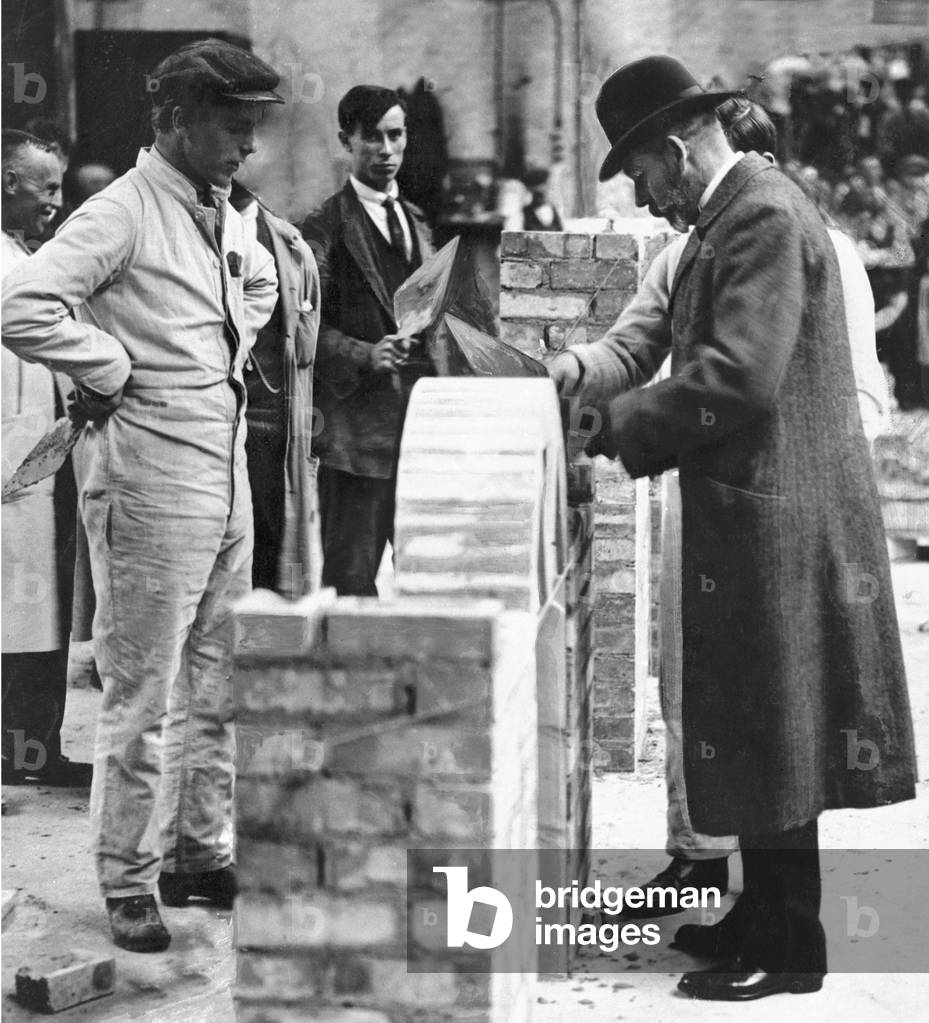
MPX5124679: King George V tries his hand at brick laying during a visit to the Government Instructional Factory for ex-servicemen in Cricklewood 7th June 1920 (b/w photo) / Bridgeman Images

MPX5124747: Adam Faith modelling a Canary Yellow pullover and Suede jacket. 13th December 1963 (b/w photo) / Bridgeman Images

MPX5124685: For A Few Dollars More directed by Sergio Leone, 1965 / Bridgeman Images
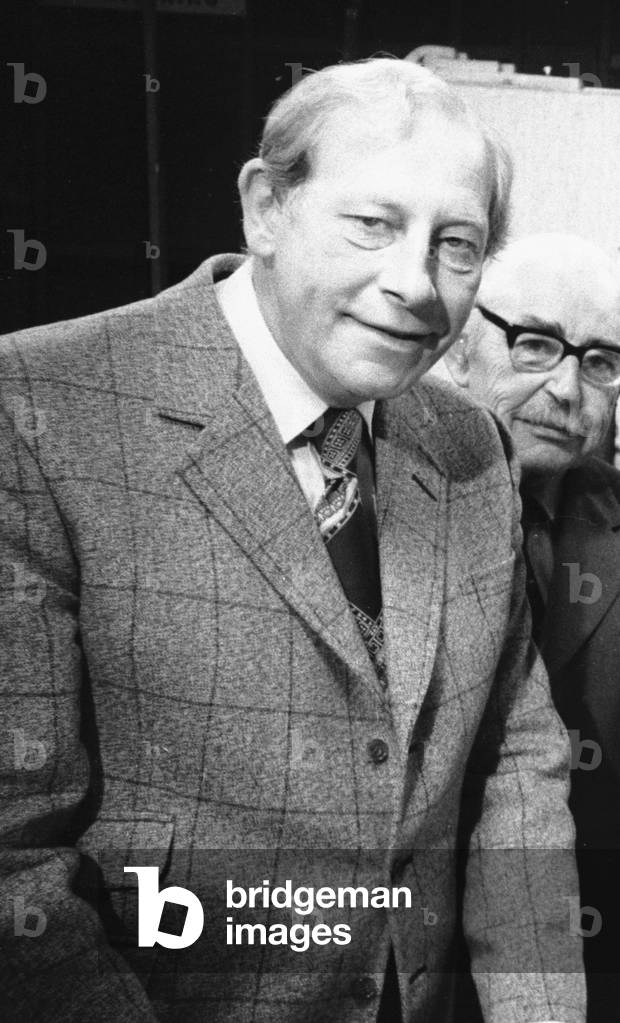
MPX5124771: Veteran BBC Newscaster Peter Woods seen here at celebrations to mark the 25 anniversary of the BBC Television News Service at BBC TV Centre in White City, 25th June 1979 (b/w photo) / Bridgeman Images
