2491514 Search Results
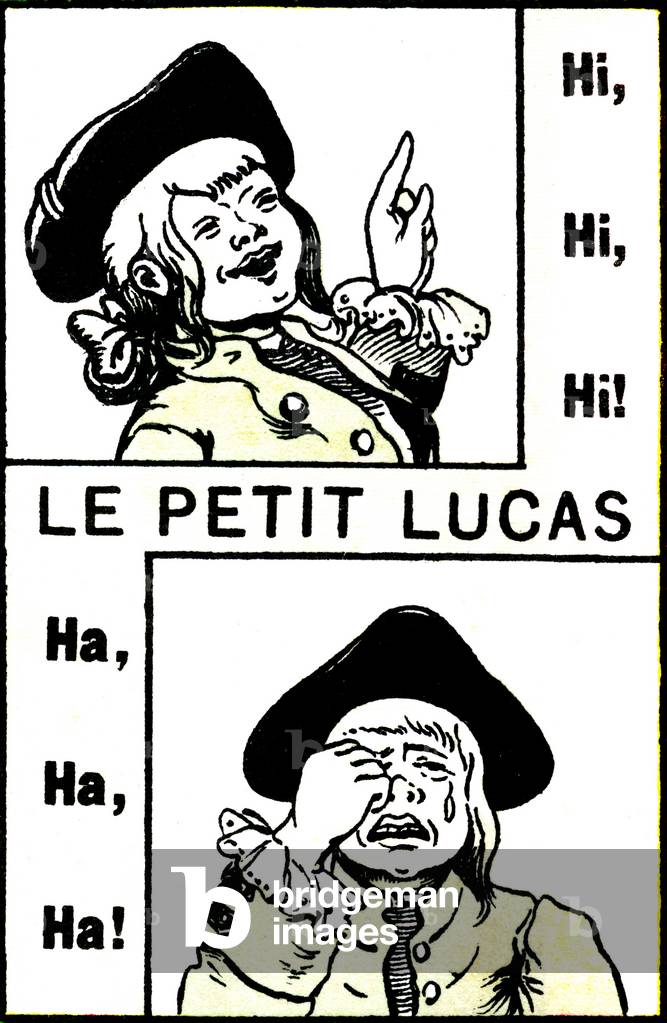
PCT4273097: Song “Little Lucas”- image of Epinal (Imaging Pelerin), Cartier, Patrice / Bridgeman Images

PCT4273518: La Poste: rural mailman. In uniform and hewn with a kepi, the postman leaves on the roads to deliver letters (mail) to the inhabitants of isolated houses (farms) in the countryside. Illustration by Louis Maitrejean (1895-1947) for a school book of 1930., Maitrejean, Louis (1895-1947) / Bridgeman Images
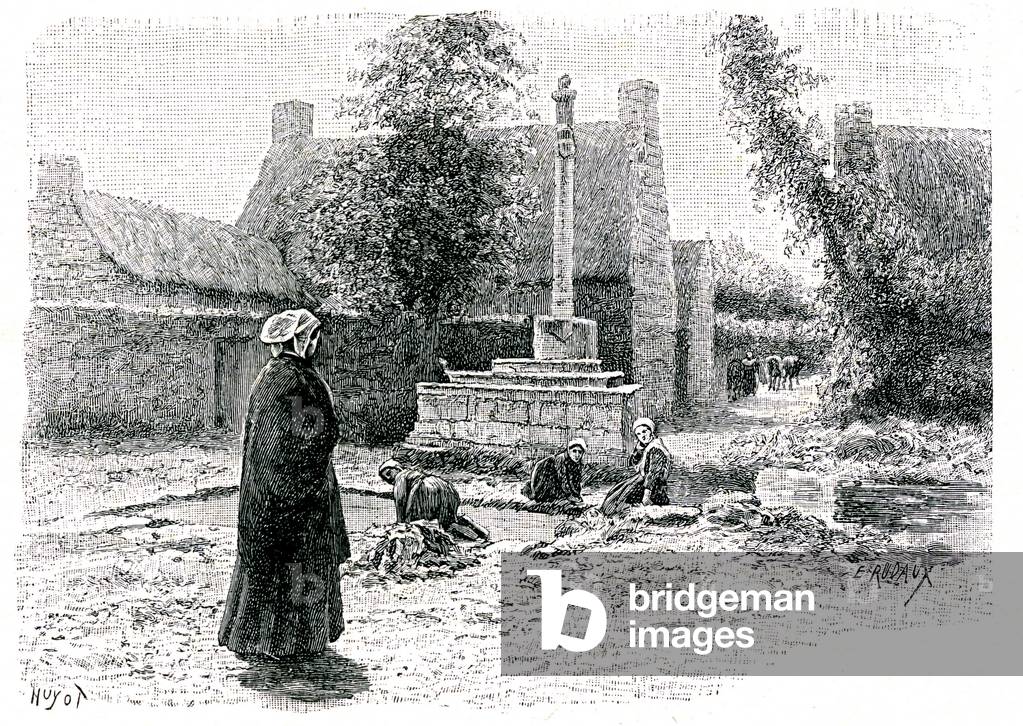
PCT4271752: Icelandic fisherman, novel by Pierre Loti. “” Nouvelle Collection Illustree”, Calmann-Levy, 1924 edition. Illustration by Henri Edmond Rudaux (1865-1927). Typical scene of Brittany: laundry. The villagers wash their clothes in the pool, near the calvary., Cartier, Patrice / Bridgeman Images
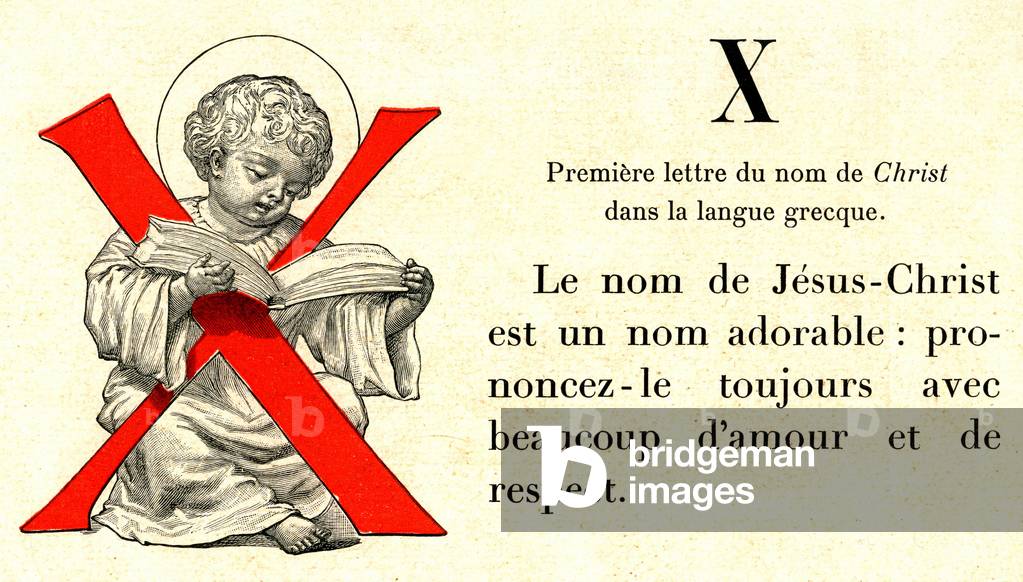
PCT4272482: Excerpt from the Alphabet of the Child Jesus, edition Alfred Mame a Tours, 1929. Each page offers two large decorative lettrines, with their Christian entry (letter A as love, B as goodness... up to Z as zele). X: first letter of the name of Christ in the Greek language (cf. Xmas in English). / Bridgeman Images

PCT4270068: Beziers (Herault, Languedoc, Cathar country). Church of the Madeleine where the inhabitants of the city were massacred on 21 July 1209. “Kill them all, God will recognize his own! “” Photo by Patrice Cartier, Cartier, Patrice / Bridgeman Images

PCT4271480: The Roman bridge (via domitia) of Saint Thibery (Saint-Thibery, Herault, Languedoc-Roussillon) on the Herault River, mid-May 1999. Photo Patrice Cartier (see same site during a flood)., Cartier, Patrice / Bridgeman Images

PCT4270489: Postcard 1920-1930. Couple of lovers: kiss in the neck. Colour black and white photo., Unknown photographer, (20th century) / Bridgeman Images

PCT4273894: Philip II (Philip Augustus 1165 - 1223) instituting the first laws of public hygiene, noted on parchment by a copist monk. Under the rule of this king of France, the main roads of Paris were pavees, and the French capital was called “Paris sans pairs” (without equals). Detail of an advertising chromolitography (chromo) of Chocolat d'Annecy, early 20th century. / Bridgeman Images
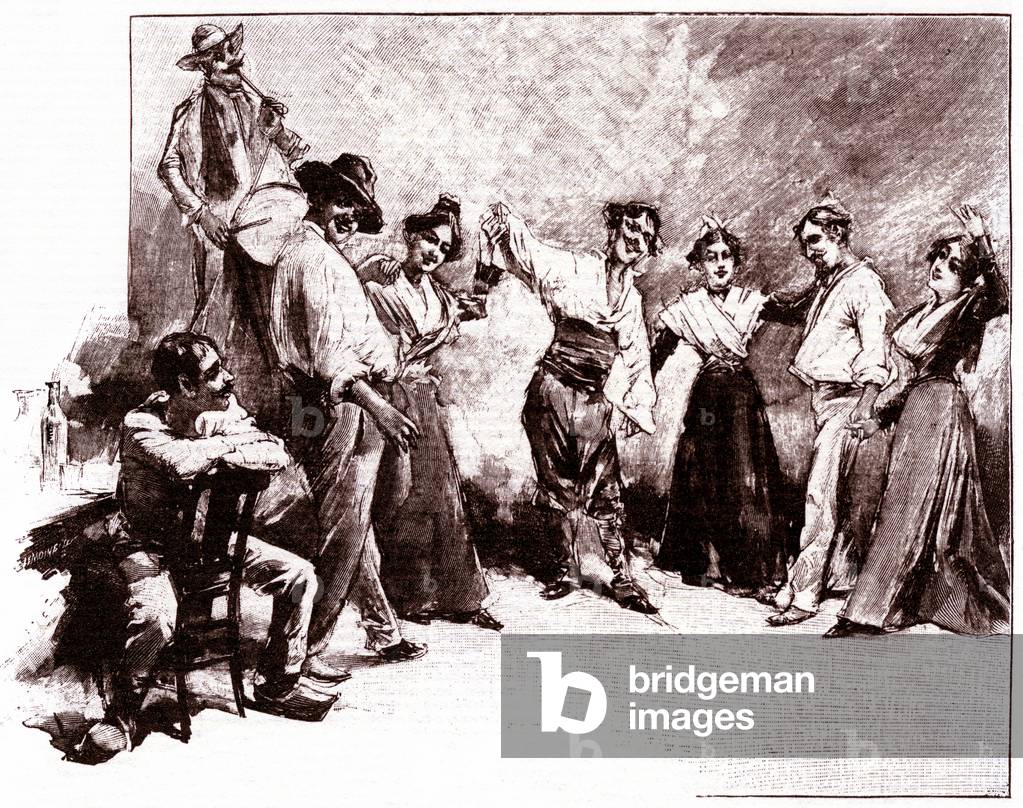
PCT4271122: Fete de Saint Eloi, patron of the menagers, near Arles in Provence. The villagers dance farandole to the sound of the fife and the drum, cheeks by the drummer. Illustration for a Flammarion 1904 edition. of the “Lettres de mon moulin” by Alphonse Daudet (L'Arlesienne). / Bridgeman Images
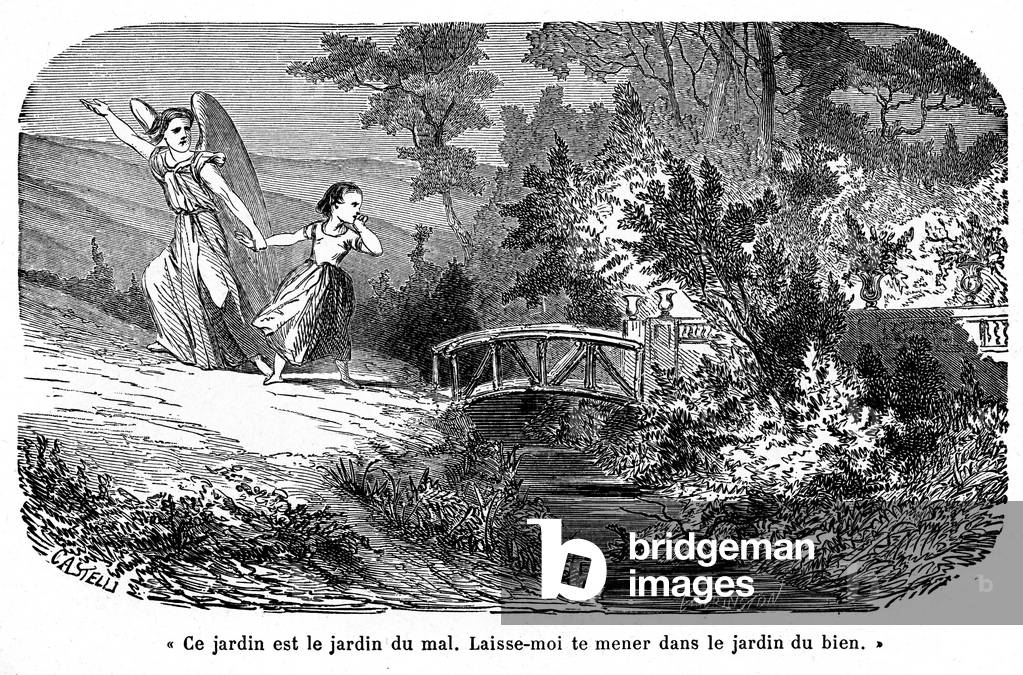
PCT4270266: Illustration for "Les Malheurs de Sophie" written by Countess of Segur, 1851 (engraving), Castelli, Horace (1825-1889) / Bridgeman Images

PCT4273394: Entertainment and festivities in the Middle Ages (Middle Ages): great knighthood tournament in Rome (Italy) for the coronation of an emperor. Advertising chromolithography (chromo - claim) of Liebig meat extract, late 19th, early 20th century. / Bridgeman Images

PCT4272151: Captured by pirates, taken to Turkey and employed in the kitchens of a Turkish Pasha, Panurge revolts and kills the Pasha by piercing it with a pin. Illustration of Robida for the Gargantua de Rabelais - Librairie Armand Colin debut 20th century., Robida, Albert (1848-1926) / Bridgeman Images

PCT4272230: Photograph taken from the magazine 'Le nu ideal' 1905 (print) / Bridgeman Images

PCT4273401: Entertainment and celebrations in the Middle Ages (Middle Ages): the winner of a crossbow shooting competition in Switzerland. Advertising chromolithography (chromo - claim) of Liebig meat extract, late 19th, early 20th century. / Bridgeman Images

PCT4272576: Claim for Planter's Chocolate, early 20th century. Cocoa plantation. The colonial owner (landlord) and the indigenous black worker. / Bridgeman Images

PCT4273395: Entertainment and celebrations in the Middle Ages: great regattas in Venice in the presence of the Doge. Advertising chromolithography (chromo - claim) of Liebig meat extract, late 19th, early 20th century. / Bridgeman Images

VAG4253550: San Francisco, California / Bridgeman Images

VAG4253393: Four Points by Sheraton, Ventura, California / Bridgeman Images

VAG4252657: Mancos Canyon, Colorado / Bridgeman Images

VAG4253282: National Trails Highway, Oro Grande, California / Bridgeman Images

VAG4253574: North Beach, San Francisco, California / Bridgeman Images

FBU4250379: The Giali Tzami Mosques (Mosques of the sea side) also known as the Kioutsouk (little) Hassan, is a bright example of the Islamic art of the Renaissance. Work of an armenian architect, This Mosques is the only preverved Mosques of the city of Chania that was built during the second half of the 17th Century. Chania, Crete. / Bridgeman Images
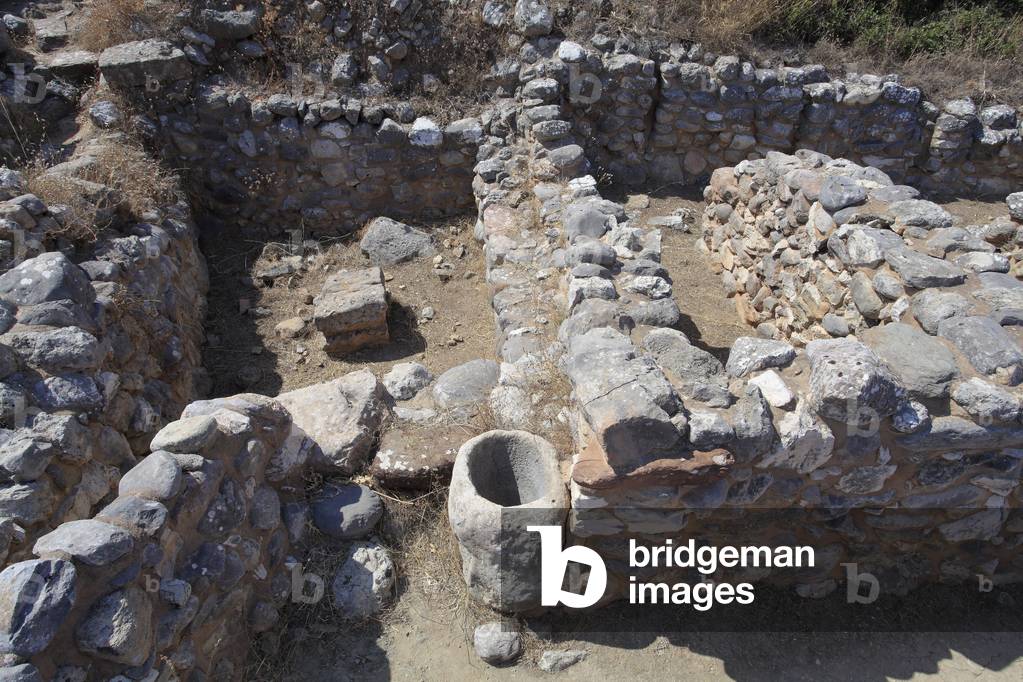
FBU4250599: Archaeological site of Gournia. Work and storage houses of the palace in the north west aera. Gournia is the best preserved of all Minoan cities, and has been characterized as the “” Pompei Minoan Crete””. The cities has been found as it is now and has never been rebuilt. Gournia offers a picture of the daily life of the Minoan, who were engaged in agricultural, animal husbandry, fishing and vase-making as shown by the tools discovered in the settlement. Crete / Bridgeman Images

FBU4250290: Minoan archeological site of Phaistos. General view of the west wing shrines along the central court from the north wing. There were two types of shrine: “Bench shrine” and “Lutral Basin””. The “” bench Shrine”” was a small and rectangular room with low benches running round the walls to support cult objects and figurine of the deity. On some of them were found female figurine, ritual vessels, and “” offering tables”” (small altar). The “” Lustral Basin”” type was a room lower than the founding structures, with a few steps leading down into them. It was used for purification rituals., Minoan / Bridgeman Images

FBU4250023: Oriental part of the palace of the King Minos at Knossos between the queen megaron and the central court. Crete. 1600-1450 BC, Minoan / Bridgeman Images

LOR4251085: France, Champagne-Ardenne, Marne (51), Fismes - Details of the bridge on the Vesle river which became a bridge-memorial to the american army. Photography Florent Lamontagne / Bridgeman Images

LOR4252012: Dalida House (1933-1987), famous french singer and actress. Her house in Paris in Montmartre, rue d'Orchampt. Photography Florent Lamontagne / Bridgeman Images

LOR4251273: France, Champagne-Ardenne, Marne (51), Sainte Marie a Py (Sainte-Marie-A-Py) - Memorial de Navarin (indoor) monument and ossuary to the soldiers of the First World War (First World War 1914-1918 or 14-18). Photography Florent Lamontagne / Bridgeman Images

VAG4253458: Morro Bay, California / Bridgeman Images

VAG4252873: Trail of the ancients, Utah / Bridgeman Images

VAG4252234: Pueblo del Arroyo, Chaco Culture National Historical Park, New Mexico / Bridgeman Images

VAG4252400: Las Cruces, New Mexico / Bridgeman Images

LOR4251393: France, Champagne-Ardenne, Marne (51), Sommepy-Tahure (Sommepy Tahure) - Franco-American Museum of the First World War (First World War 1914-1918 or 14-18). Photography Florent Lamontagne / Bridgeman Images

LOR4251059: France, Champagne-Ardenne, Marne (51), Fismes - Historical board remembering the stay of Napoleon 1st (Napoleon I Bonaparte) in 1804 in town. Photography Florent Lamontagne / Bridgeman Images

LOR4251022: France, Champagne-Ardenne, Marne (51), Chambrecy. English cemetery of soldiers from the First World War (First World War 1914-1918 or 14-18). Photography Florent Lamontagne / Bridgeman Images

VAG4253005: Mexican Hat, Utah / Bridgeman Images
