2491551 Search Results

NAM5924110: Black pawn, chess piece, India, 1820 circa (ivory), Indian School, (19th century) / Bridgeman Images
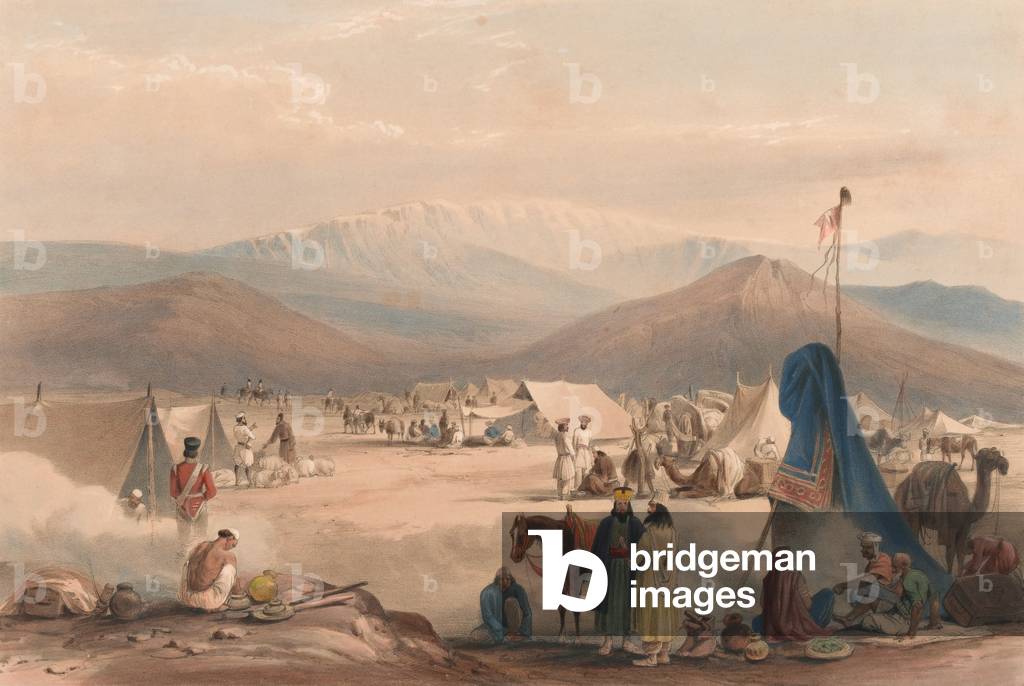
NAM5929472: The Encampment at Dadur, with the Entrance to the Bolan Pass, 1839 (lithograph, tinted), Atkinson, James (1780-1852) (after) / Bridgeman Images

NAM5929517: Princess Mary tobacco box owned by Captain C A Ogden, The Bedfordshire Regiment, 1914 (box, tobacco), British School, (20th century) / Bridgeman Images

NAM5929523: The sinking of the Birkenhead, 25 February 1852 (photolithograph), Calkin, Lance (1859-1936) / Bridgeman Images

NAM5929536: 72nd Duke of Albany's Own Highlanders advancing at Peiwar Kotal, 1879 (w/c), Simkin, Richard (1840-1926) / Bridgeman Images
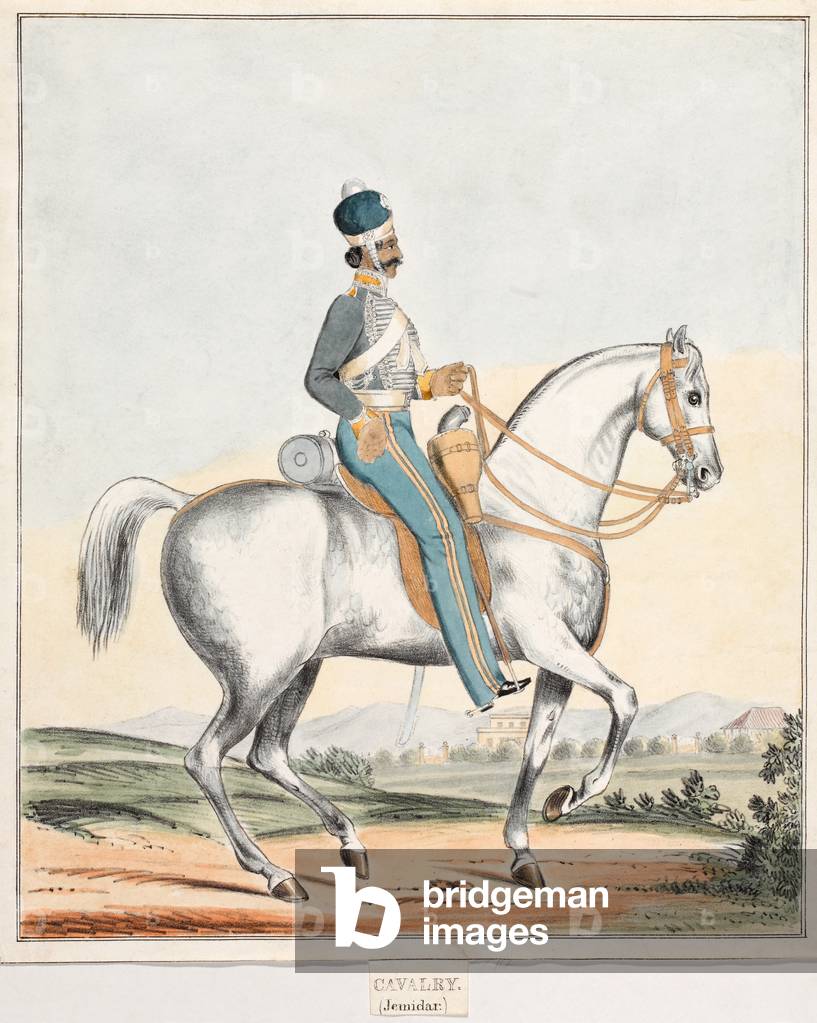
NAM5929539: (Light) Cavalry (Jemadar), Madras Army, 1841 (lithlithograph, coloured), Hunsley, William (fl.1830-43) / Bridgeman Images
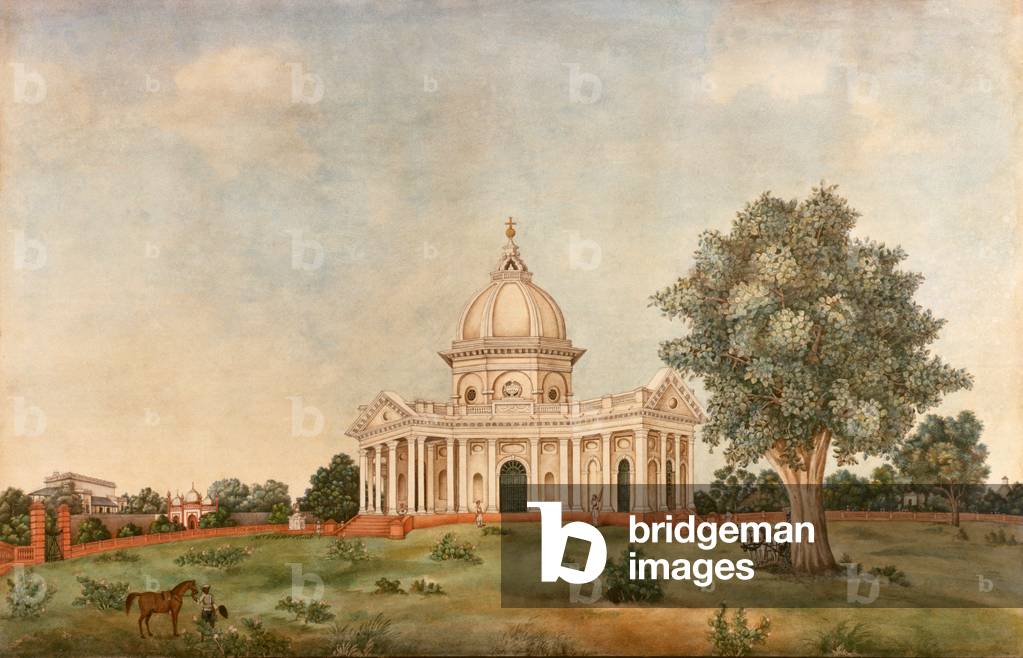
NAM5929542: Exterior view of St Jamess Church, Delhi, c.1836 (w/c), Khan, Mazhar Ali (fl.c.1836) / Bridgeman Images
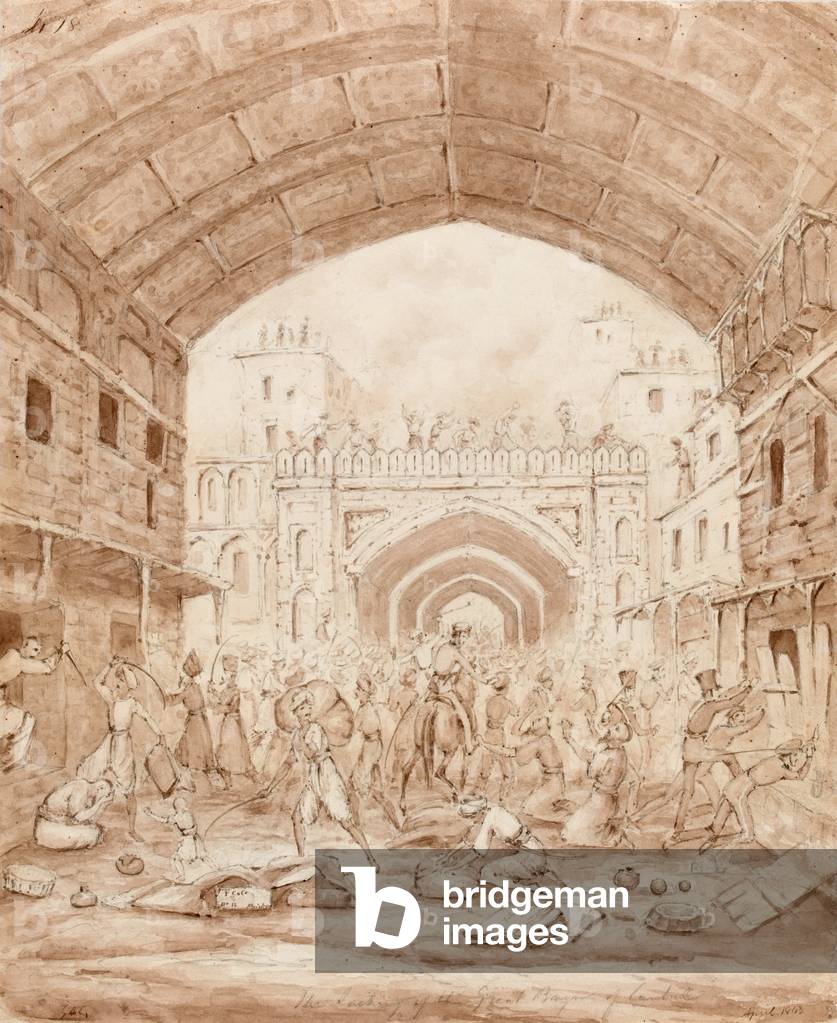
NAM5929620: The Sacking of the Great Bazar of Caubul, 1842 (pencil and wash), Croly, George Alfred (d.1845) / Bridgeman Images
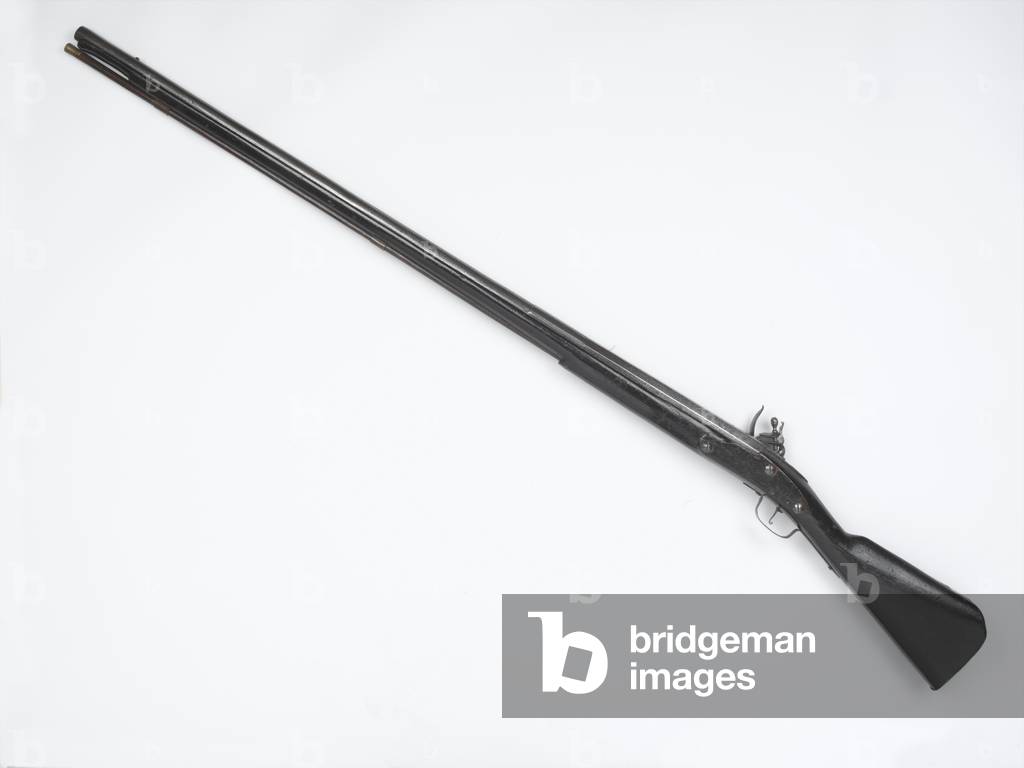
NAM5929639: Flintlock musket, 1689-1702 (musket, flintlock), British School, (17th century) / Bridgeman Images
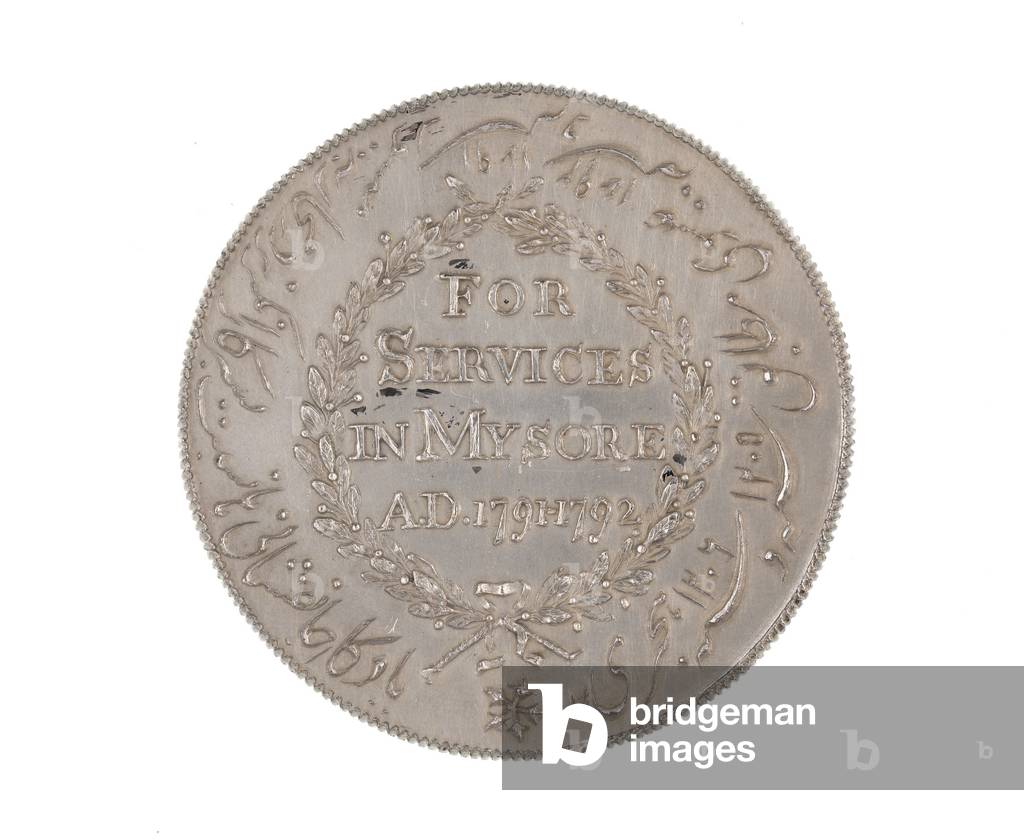
NAM5929648: Mysore Campaign Medal, 1790-92 (Mysore Campaign Medal 1790-92), British School, (18th Century) / Bridgeman Images
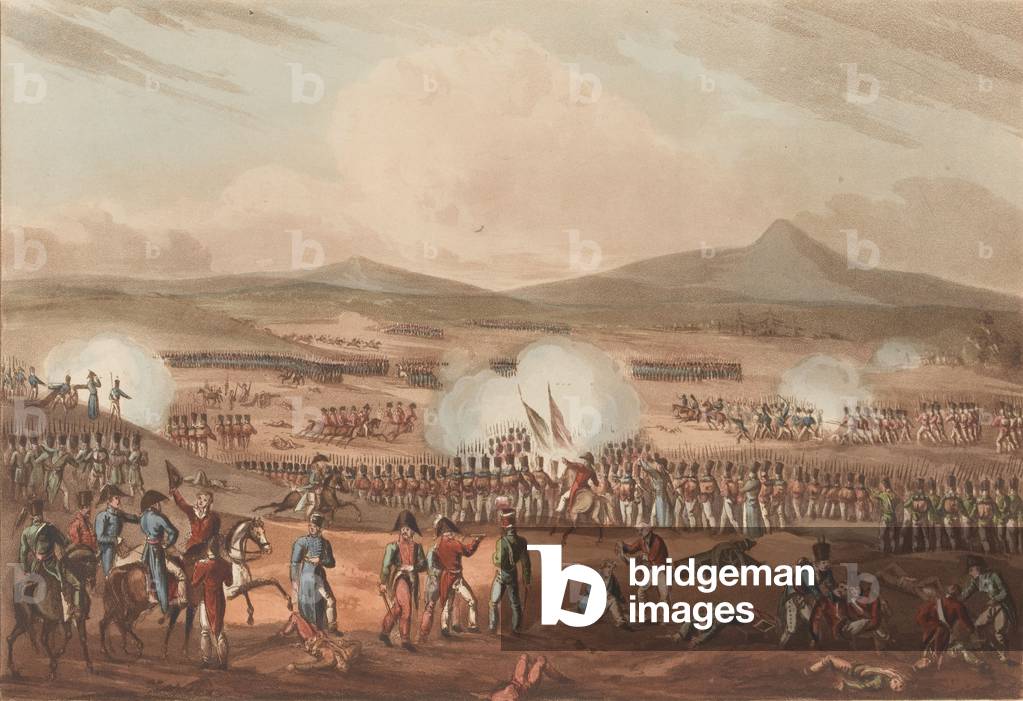
NAM5929657: Battle of Fuentes DOnoro, 5 May 1811 (aquatint, coloured), Heath, William (1795-1840) (after) / Bridgeman Images
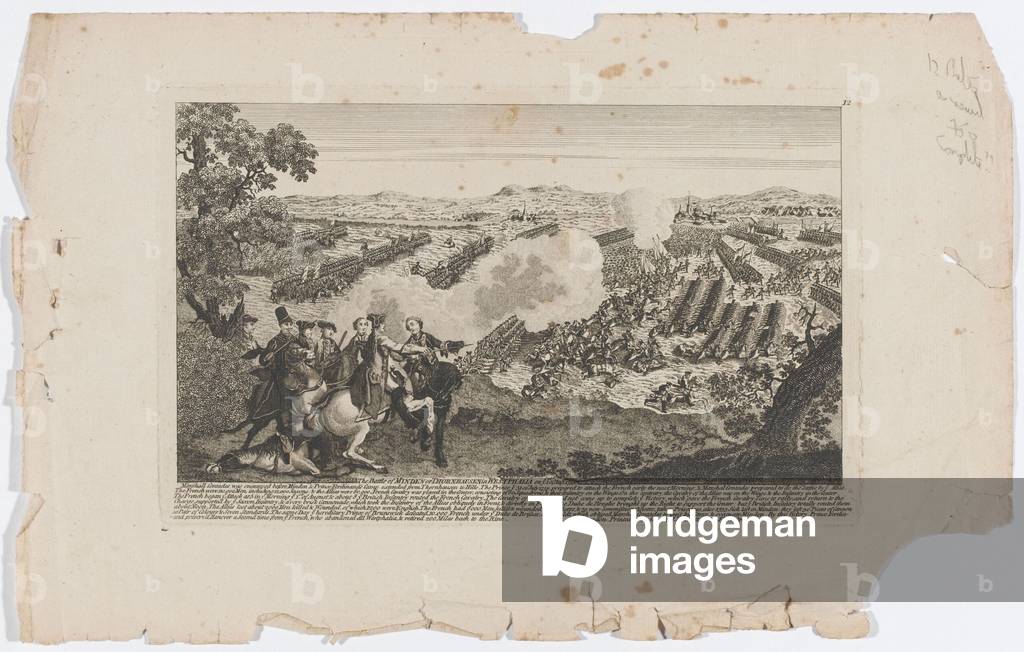
NAM5929660: The Battle of Minden or Thornhausen in Westphalia on 1st of Aug 1759 (line engraving), English School, (18th century) / Bridgeman Images
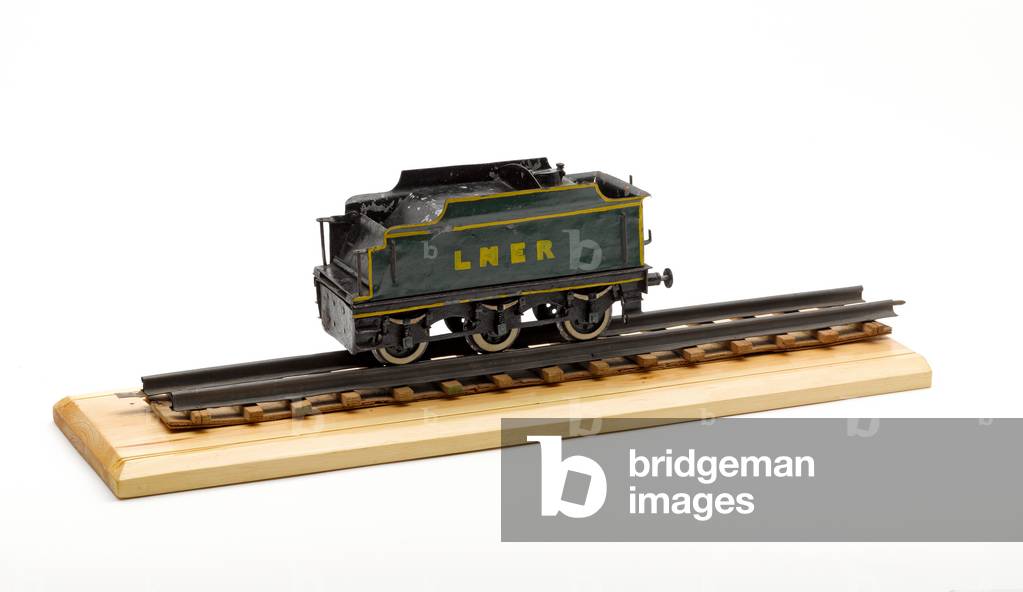
NAM5929756: Model London and North Eastern Railway (LNER) railway tender, c.1941 (railway tender, model), English School, (20th century) / Bridgeman Images
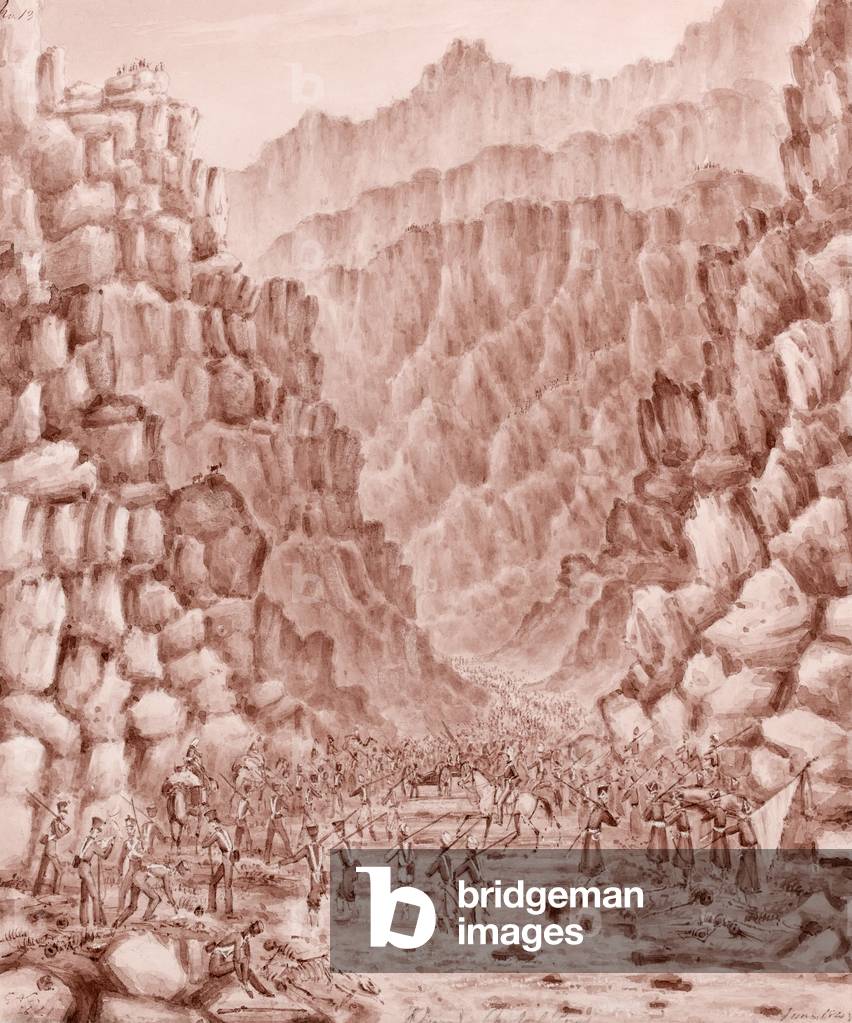
NAM5929769: Khoord Caubel Pass, 1842 (pencil and wash), Croly, George Alfred (d.1845) / Bridgeman Images
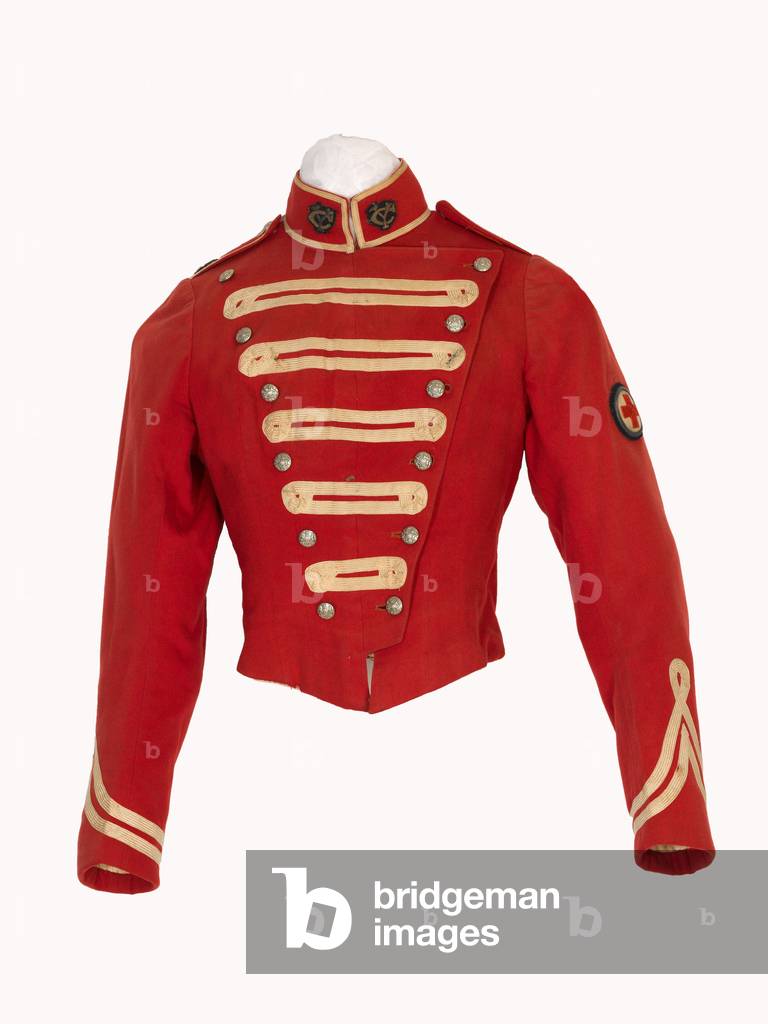
NAM5929792: Short frogged dress jacket worn by Miss Lillian A M Franklin, First Aid Nursing Yeomanry, c.1909 (jacket, short frogged), British School, (20th century) / Bridgeman Images
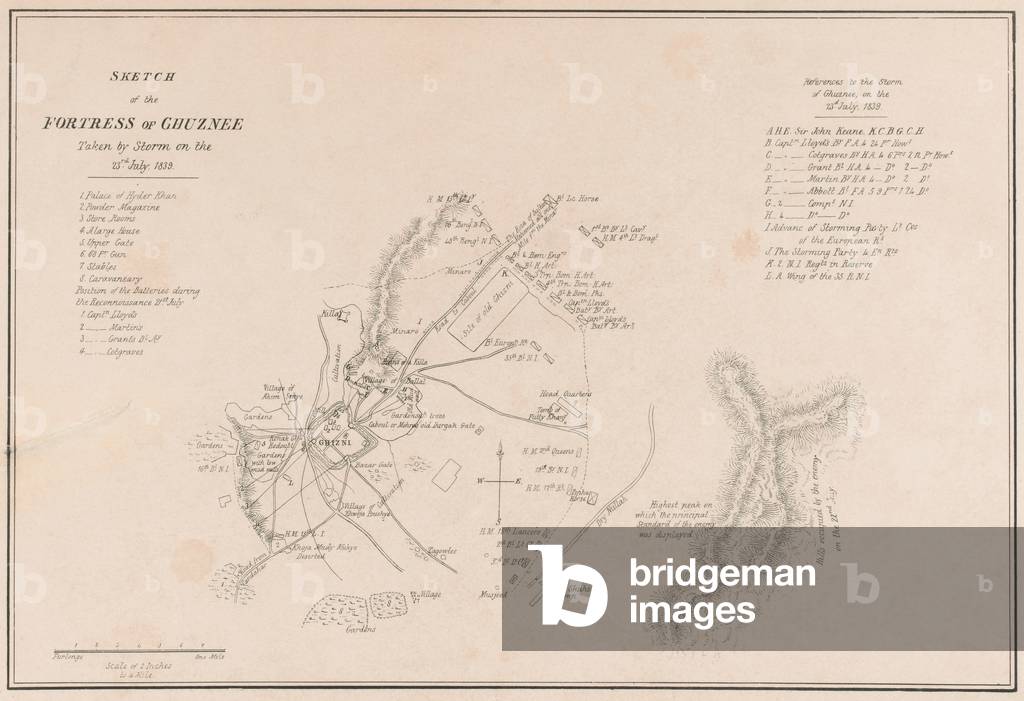
NAM5924148: Sketch of the Fortress of Ghuznee. Taken by Storm on the 23rd July 1839 (litho), Wingate, Lieutenant Thomas (fl.1833-42) (after) / Bridgeman Images
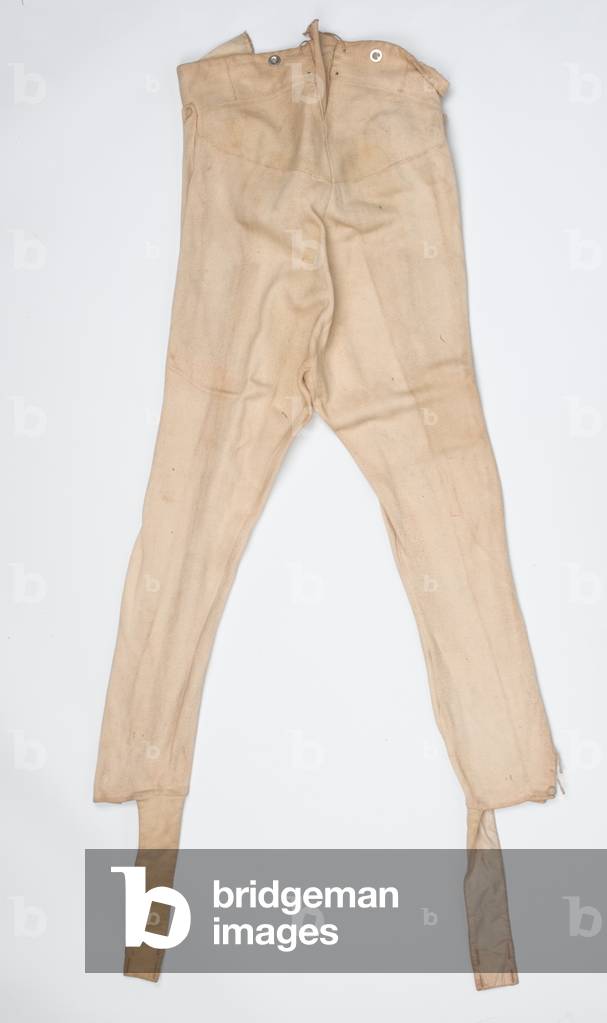
NAM5924160: Pantaloons, Surgeon John Smet, 8th (Kings Royal Irish) Light Dragoons, 1823 circa (fabric), British School, (19th century) / Bridgeman Images
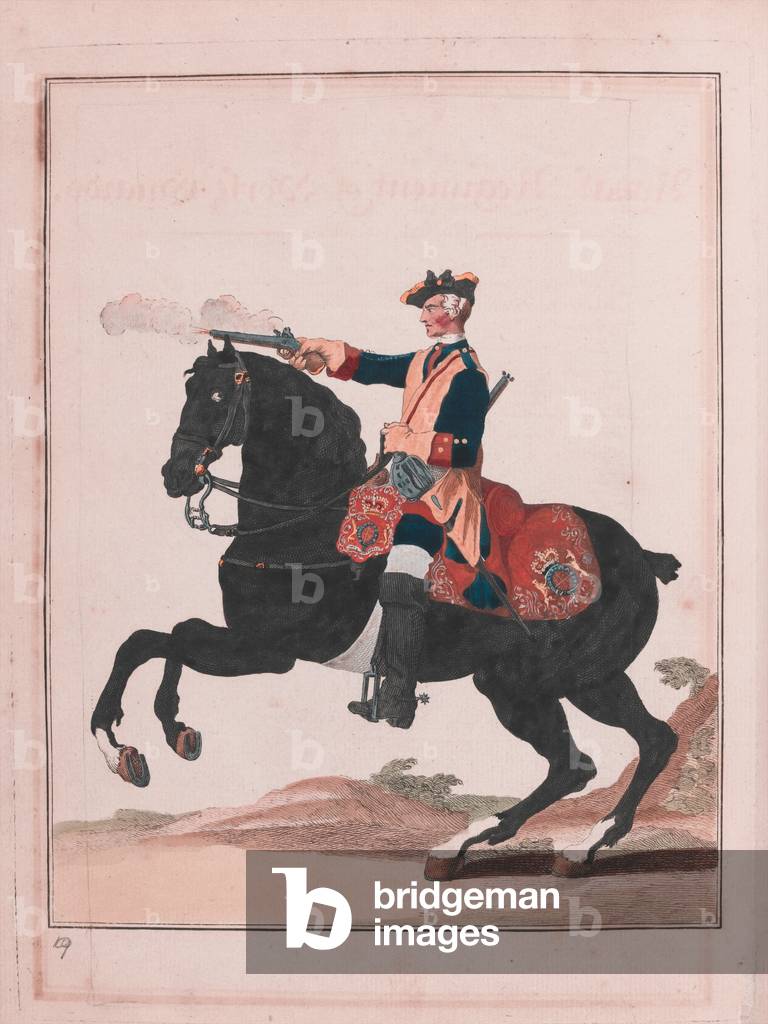
NAM5924216: Royal Regiment of Horse Guards (engraving), Unknown artist, (18th century) / Bridgeman Images
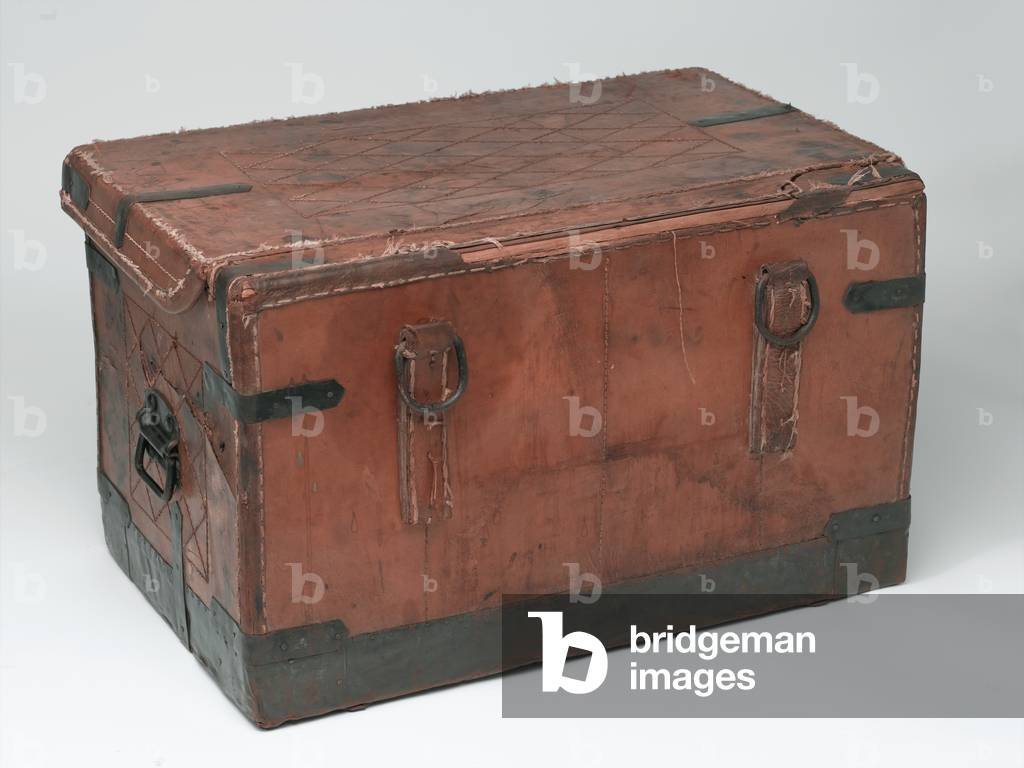
NAM5924222: Pack animal trunk, 2nd Afghan War, 1879 circa (wood and leather), English School, (19th century) / Bridgeman Images
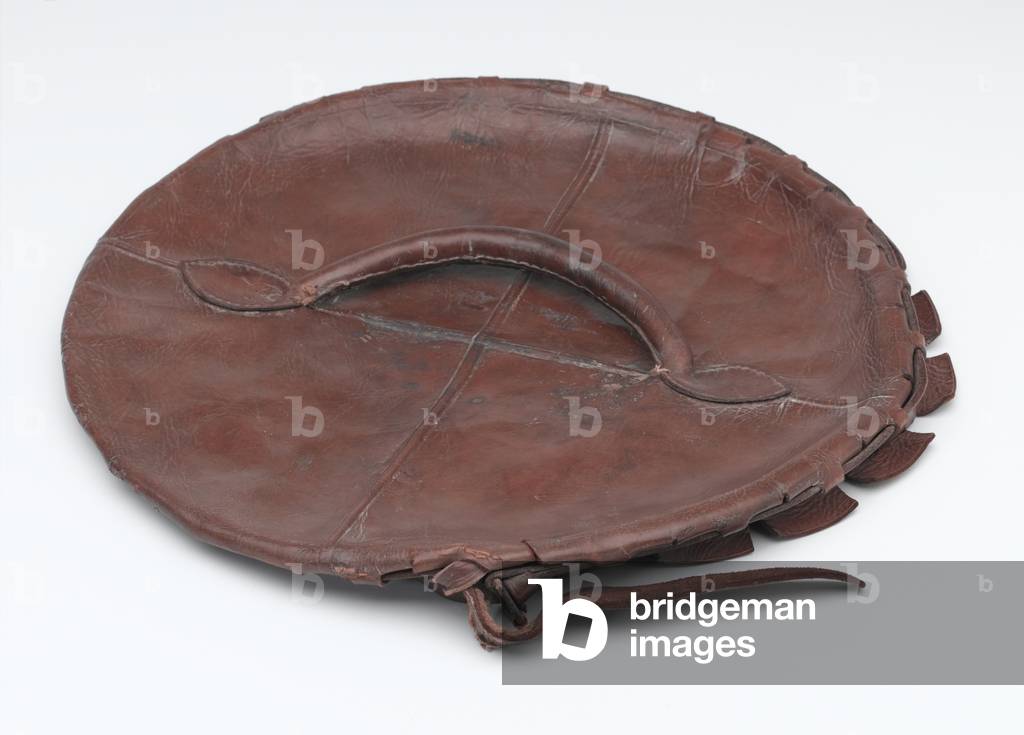
NAM5924231: Chalmuchie used by Second-Lieutenant Jack Selwyn Jenkins, 58th Vaughns Rifles (Frontier Force), 1921 circa (leather), Indian School, (20th century) / Bridgeman Images

NAM5924247: Solar topi worn by Sir Robert Sandeman, Indian Political Service, the Agent to the Governor-General in Baluchistan, 1880 circa (cloth over pith), British School, (19th century) / Bridgeman Images

NAM5924265: Soldiers from 7th Battalion The Buffs (East Kent Regiment), 1916 circa (b/w photo), Unknown photographer, (20th century) / Bridgeman Images

NAM5924284: Colonel Guy Hamilton Russell filling in his game book while on a hunting expedition, 1930 circa (b/w photo), Unknown photographer, (20th century) / Bridgeman Images

NAM5924297: Convalescent soldiers at Felthorpe, 1917 (b/w photo), Unknown photographer, (20th century) / Bridgeman Images

NAM5924309: Stock, Surgeon John Smet, 8th (Kings Royal Irish) Light Dragoons, 1812 circa (silk), British School, (19th century) / Bridgeman Images

NAM5924315: Major generals full dress coatee, Army Staff, 1799 circa (fabric), British School, (18th Century) / Bridgeman Images

NAM5924327: Off at the gallop to help stem the Hun onslaught at Ploegsteert during the dogged defence of Ypres, 1915 (b/w photo), Unknown photographer, (20th century) / Bridgeman Images

NAM5924330: Haughty Prussians with machine guns captured by 'Old Contemptibles' in our advance at Pozieres', 1916 (b/w photo), Unknown photographer, (20th century) / Bridgeman Images

NAM5924372: Sunset over the Mediterranean sea, taken from a beach in Palestine, 1917 (b/w photo), Unknown photographer, (20th century) / Bridgeman Images

NAM5924402: A burnt out ship on the Suez Canal at Port Said, Egypt, 1916 (b/w photo), Unknown photographer, (20th century) / Bridgeman Images

NAM5924423: A tram pulled by mules, Port Said, 1916 (b/w photo), Unknown photographer, (20th century) / Bridgeman Images

NAM5924426: Fountains in a garden in Egypt, 1916 (b/w photo), Unknown photographer, (20th century) / Bridgeman Images

NAM5924432: Egyptians working with an irrigation system, 1916 (b/w photo), Unknown photographer, (20th century) / Bridgeman Images

FIT5938127: Sir Charles Walston, before 1937 (oil on canvas), Laszlo, Philip Alexius de (1869-1937) / Bridgeman Images

FIT5938161: Sea-piece, a breeze near a Dutch port, c.1640 (oil on panel), Vlieger, Simon Jacobsz. (c.1600-53) / Bridgeman Images

FIT5938184: Leaf from a Book of Hours: The Mass of St Gregory, c.1485-94 (parchment), Bourdichon, Jean (1457-1521) / Bridgeman Images
