2491100 Search Results

JLJ4579930: Santiago de la Marche and two donors kneeling, 15th century (oil on wood), Crivelli, Carlo (c.1430/35-1495) / Bridgeman Images

JLJ4579941: Portrait of Berthe Juliette Dubois child, 19th century (oil on canvas), Boilly, Louis Leopold (1761-1845) / Bridgeman Images

PIX4579978: Artist's view of an asteroid or meteorite impact on the Moon. 2 - 3 - Impac / Bridgeman Images

LRI4580111: Angelica and the Hermit. From Orlando Furioso (Painting, 1616), Rubens, Peter Paul (1577-1640) / Bridgeman Images

PIX4580116: Star observation and light pollution - Light Pollution - Light pollution makes the stars disappear from our nights. Light pollution hides the night sky from populated places and it becomes more and more of a problem / Bridgeman Images
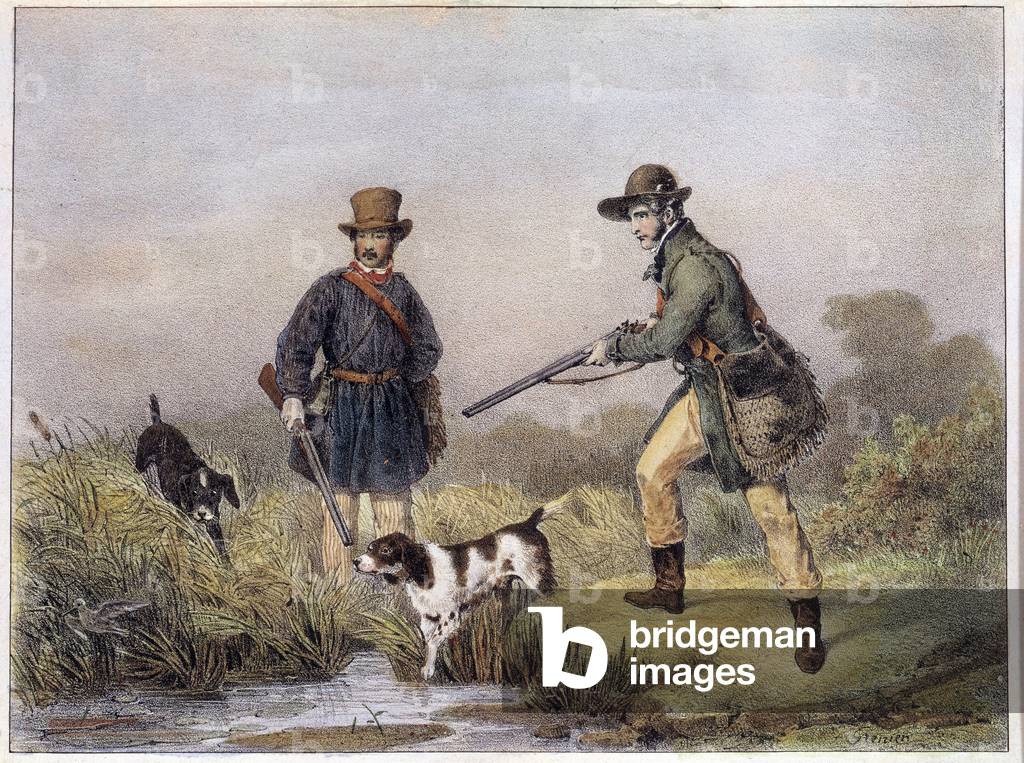
JLJ4580122: Hunters in the marshes Prints of 19th century (engraving), Unknown Artist, (19th century) / Bridgeman Images

PIX4580152: Cluster of stars NGC 299 in Toucan - Open cluster NGC 299 in Tucana: NGC 299 is an open cluster located in the galaxy of the Little Magellan Cloud. Image obtained by the Hubble Space Telescope (HST). NGC 299 is an open star cluster located within the Small Magellanic Cloud just under 200 000 light-years away. Open clusters such as this are collections of stars weakly bound by the shackles of gravity, all of which formed from the same massive molecular cloud of gas and dust. Because of this, all the stars have the same age and composition, but vary in their mass because they formed at different positions within the cloud. This unique property not only ensures a spectacular sight when viewed through a sophisticated instrument attached to a telescope such as Hubble's Advanced Camera for Surveys, but gives astronomers a cosmic laboratory in which to study the formation and evolution of stars - a process that is thought to depend strongly on a star's mass / Bridgeman Images

PIX4580210: Circumpolar - Star trails around north celestial pole - Photographic pose around the polar star. Organ Pipe National Monument, Aizona, USA. The setting for this star trails photo is the pristine desert landscape of the Organ Pipe National Monument in Southern Arizona. The cactus in the foreground is a 25 foot tall Seguaro. Star trails are made by the combination of: the spinning of the Earth, the use of a stationary mount or tripod and a long exposure of the film. As the Earth spins, the stars begin to make concentric circles on the photograph. The closer stars are to Polaris, our North pole star, the smaller their circles. Thar farther away they are, the larger their circles / Bridgeman Images

JLJ4580359: Egyptian antiquite: Salt head, Old Empire, c.2700-2200 BC (limestone), Egyptian School / Bridgeman Images

LRI4580512: Caius Mucius Scaevola in front of Porsenna Caius Mucius Scaevola, plunges his hand into the fire. (Painting, 1545), Tintoretto, Jacopo Robusti (1518-94) / Bridgeman Images

PIX4647158: Impact on the shuttle Endeavour 09/1994 - Thermal tile damage on Endeavour space shuttle - 09/1994 - View of a damaged thermal tile on the starboard side of the shuttle. 30/09/1994. View of thermal tile damage on one of the pods (located on the starboard side of the orbiter) protecting the Space Shuttle Endeavour's Orbital Maneuvering System (WHO). Sep 30 1994 / Bridgeman Images

LRI4647169: Symbol of the masons (Corporation table, 17th century), Unknown Artist, (17th century) / Bridgeman Images

LRI4647185: Status of masons (Corporation table, 17th century), Unknown Artist, (17th century) / Bridgeman Images

PIX4647294: Shuttle Columbia (STS-80) 19/11/1996 - Launch of Shuttle Columbia. Nov 19 1996 - Launch of STS - 80 Shuttle Columbia from Pad 39B. Nov 19 1996 / Bridgeman Images

PIX4647402: Data verification in Discovery 08/1997 - Data checking in space shuttle Discovery. 08/1997 - Astronaut Curtis Brown checks 50 pages of data sent by flight controllers. 08/1997. At the Space Shuttle Discovery's Thermal Imaging Printing System (TIPS) station, Curtis Brown checks some 50 pages of data sent up by flight controllers. Aug 1997 / Bridgeman Images

PIX4647447: Sergei Krikalev - Mission STS-88 - Portrait of cosmonaut Sergei Krikalev in training before his flight to the International Space Station in December 1998 / Bridgeman Images

PIX4647478: Extra exit - vehicle J.Ross STS - 88 12/1998 - Astronaut Jerry L. Ross EVA - 12/1998 - Jerry L. Ross, during one of his three extra-vehicle outings. In the foreground part of the international space station. December 1998. Astronaut Jerry L. Ross, mission specialist, pictured during one of three space walks which were conducted on the twelve - day mission. The solar array panel for the Russian - built Zarya module can be seen along right edge. Dec 1998 / Bridgeman Images

PIX4647521: Crew in the shuttle Columbia STS - 93 07/1999 - STS - 93 astronauts on Columbia's middeck - Portrait of the crew of the mission STS - 93 Front: Eileen M. Collins and Michel Tognini (CNES); behind (left - d.): Steven A. Hawley, Jeffrey S. Ashby, Catherine G. (Cady) Coleman. Portrait of the five STS - 93 astronauts on Columbia's middeck. Front row: Eileen M. Collins, mission commander, and Michel Tognini, mission specialist representing France's Centre National d'Etudes Spatiales (CNES); back row (l. - r.): Steven A. Hawley, mission specialist; Jeffrey S. Ashby, pilot; and Catherine G. (Cady) Coleman, mission specialist. Jul 1999 / Bridgeman Images

PIX4611595: Spiral galaxy of the Sombrero M104 infrared view - Sombrero galaxy seen in infrared - Infrared image of the spiral galaxy M104 (Sombrero galaxy), located about 28 million years ago - light, obtained with the Spitzer space telescope in 2004 and January 2005. Infrared radiation shows the dust of the disc visible throughout the circumference. A high emission also comes from the center of the galaxy where a supermassive black hole is thought to reside there. This spiral galaxy is located some 28 million light - years away. The infrared image obtained by Spitzer space telescope in 2004 and 2005 pierces through the obscuring dust, along with the bulge of stars. It shows that the disk is warped, which is often the result of a gravitational encounter with another galaxy; clumpy areas spotted in the far edges of the ring indicate young star - forming regions. Spitzer detected infrared emission not only from the ring, but from the center of the galaxy too, where there is a huge black hole, believed to be a billion times more massive than our Sun / Bridgeman Images

LRI4647611: The envious Philistines fill the hollow wells by Isaac Miniature from the codex 212 (or padovano codice or Bible of Padua) 1390-1400 Rovigo, Accademia dei Concordi, Unknown Artist, (14th century) / Bridgeman Images

PIX4611656: Spiral galaxy of Sombrero M104 in the Virgin - The Sombrero galaxy (M104) in Virgo - Image of the spiral galaxy M104 or NGC 4594 (Sombrero galaxy), located between 28 and 40 million years - light. Image obtained with a telescope 61 cm in diameter, 3h40 laying. The Sombrero, named after the broad - brimmed Mexican hat it superficially resembles, is probably the most famous galaxy in the sky. The spiral galaxy is between 28 to 40 million light years distant. Image taken with a 24 - inch telescope, total exposure time: 3 hours 40 minutes / Bridgeman Images

JLJ4611736: French revolution: mahogany buffet cabinet with revolutionary symbols. 18th century (object), French School, (18th century) / Bridgeman Images

PIX4611764: Galaxies NGC 4631 and NGC 4656 - 57 in Hunting Dogs - Galaxies NGC 4631 and NGC 4656 - 57 - The spiral galaxy NGC 4631 (upper right) is a galaxy seen by the slice that is located at a distance of 30 million years - light. His small companion, the elliptical galaxy NGC 4627, is visible just above it. Below the irregular galaxies NGC 4656 and NGC 4657. Galaxies NGC 4631 (top right) and NGC 4656 (bottom left) are two unusual galaxies in Canes Venatici. A small companion galaxy, NGC 4627, can be seen next to NGC 4631. The galaxies, which are located about 30 million lights years away, get their unusual shapes from gravitational interactions with each other. NGC 6431 and NGC 4627 are also listed in ARP's Atlas of Peculiar Galaxies as Arp 281 / Bridgeman Images

PIX4611880: Spiral Galaxy NGC 4725 in Berenice's Hair - Spiral galaxy NGC 4725 in Coma Berenice / Bridgeman Images

PIX4611934: Spiral Galaxy M94 in Hunting Dogs - Spiral galaxy M94 in Canes Venatici - The spiral galaxy M94 (NGC 4736) is located about 15 million years ago - light from Earth. The M94 spiral galaxy was classified as Sab because of the extreme luminosite of its central region. This galaxy has several ring zones of star formation, one of which is very active. Image obtained with a 50 cm telescope, composite of several poses. M94 is a spiral galaxy located 15 million light - year away. Several active regions of star formation have been identified there / Bridgeman Images

PIX4612005: Spiral Galaxy NGC 4911 - Galaxy Spiral NGC 4911 - The NGC 4911 galaxy photographed here by the Hubble Space Telescope (HST) is located in the Coma galaxy cluster (Abell 1656) about 320 million light years ago. Image obtained from different cliches obtained from 2006 to 2009, 28 hours of installation in total. A long - exposure Hubble Space Telescope image shows a majestic face - on spiral galaxy located deep within the Coma Cluster of galaxies, which lies 320 million light - years away in the northern constellation Coma Berenices. The galaxy, known as NGC 4911, contains rich lanes of dust and gas near its center. These are silhouetted against glowing newborn star clusters and iridescent pink clouds of hydrogen, the existence of which indicates ongoing star formation. Hubble has also captured the outer spiral arms of NGC 4911, along with thousands of other galaxies of varying sizes. This natural - color Hubble image, which combines data obtained in 2006, 2007, and 2009 from the Wide Field Planetary Camera 2 and the Advanced Camera for Surveys, required 28 hours of exposure time / Bridgeman Images

PIX4647762: Marsha Ivins' hair in weightlessness - Marsha Ivins' hair in the space shuttle Atlantis: Astronaut Marsha Ivins weightless in space shuttle Atlantis. February 2001. Mission Specialist Marsha Ivins, her hair loose and free floating in microgravity, smiles for the camera on Atlantis' Aft Flight Deck / Bridgeman Images

PIX4647808: Shuttle Endeavour STS - 100 view of ISS 04/2001 - Shuttle Endeavour seen from ISS. April 2001 - Endeavour approaching the International Space Station. April 21, 2001. Endeavour approaches the International Space Station (ISS) for a docking. Apr 21 2001 / Bridgeman Images
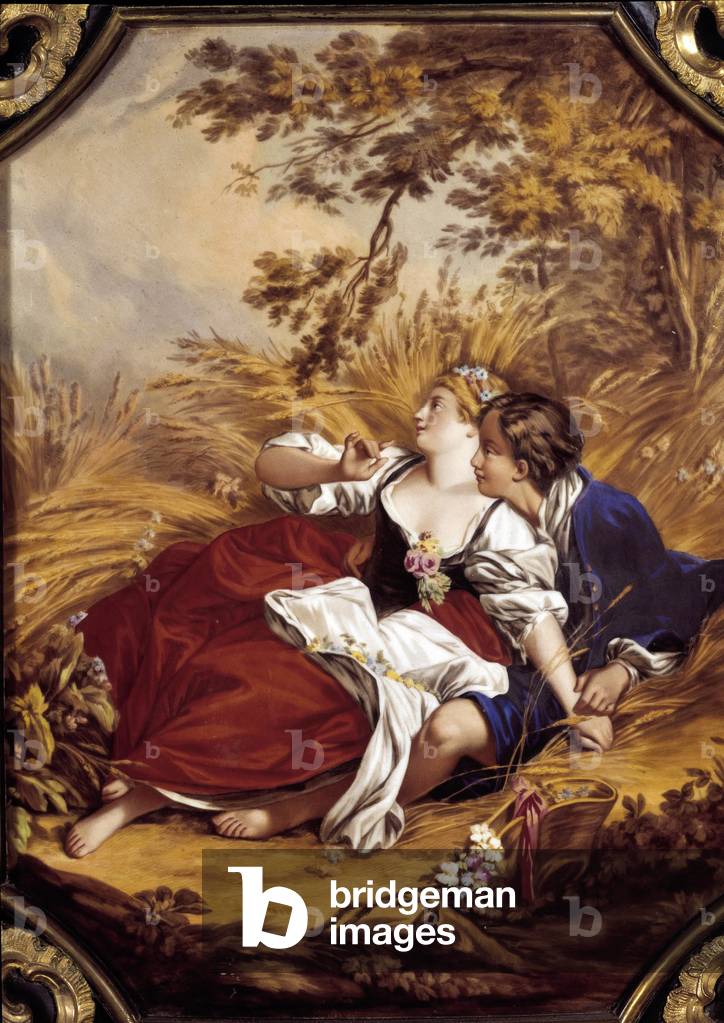
JLJ4647822: Secretaire greenhouse jewelery: detail of paintings of porcelain plates of sevres representing a scene of badinage, c.1859 (oil on canvas), Mayer, Moritz (19th century) / Bridgeman Images

LRI4647903: Miniature pentecote from a gradual antiphonary (tropair) (ms. 65) 12th century Plaisance, Biblioteca Capitolare, Unknown Artist, (12th century) / Bridgeman Images

JLJ4647927: Les pelerins en voyage dans le livre d'heures de Marie Adelaide de Savoy, duchesse de Bourgogne (1686-1712), 1450 (miniature), Unknown Artist, (15th century) / Bridgeman Images

PIX4648047: Launch of the shuttle Atlantis STS - 106 09/2000 - Launch of STS - 106 Atlantis - 09/2000 - Launch of STS - 106 Atlantis. The crew will perform support tasks on orbit, transfer supplies and prepare the living quarters in the newly arrived Zvezda Service Module. Sep 09 2000 / Bridgeman Images

PIX4648080: Depart of astronauts STS - 107 01/2003 - STS - 107 crew is going to launch pad - 16/01/2003. The crew of the STS-107 mission joins firing pad 39A for decolving. Front, from left to right, Ilan Ramon, Kalpana Chawla and William “” Willie”” McCool; behind them, from left to right, Michael Anderson, David Brown, Laurel Clark, and Rick Husband. The STS - 107 crew heads for the Astrovan and a ride to Launch Pad 39A for liftoff. From left to right are Payload Commander Michael Anderson, Mission Specialist David Brown, Payload Specialist Ilan Ramon, Mission Specialists Laurel Clark and Kalpana Chawla, Mission Commandaer Rick Husband and Pilot William “” Willie””” McCool. Ramon is the first astronaut from Israel to fly on a Shuttle. The 16 - day mission is devoted to research and will include more than 80 experiments that will study Earth and space science, advanced technology development, and astronaut health and safety. The payload on Space Shuttle Columbia includes FREESTAR (Fast Reaction Experiments Enabling Science, Technology, Applications and Research) and the SHI Research Double Module (SHI/RDM), known as SPACEHAB. Experiments on the module range from material sciences to life sciences. Liftoff is scheduled for 10:39 a.m. EST / Bridgeman Images

PIX4648206: Extra exit - vehicle of M. Massimino STS - 109 03/2002 - M.Massimino during extravehicular activity. 03/2002 - Astronaut Michael J. Massimino, STS - 109 mission specialist, peers into Columbia's crew cabin during a brief break in work on the Hubble Space Telescope (HST), latched down just a few feet behind in Columbia's cargo bay. Astronauts Massimino and James H. Newman were making their second extravehicular activity (EVA) of the mission. Tue 06 2002 / Bridgeman Images

PIX4648259: Atlantis STS - 110 04/2002 - Space shuttle Atlantis is landing in Florida. 04/2002 - STS110 Atlantis near touchdown on the runway 3 - 3 at the KSC landing facility. Apr 19 2002 / Bridgeman Images

LRI4568991: Illustrations for Don carlo opera by Giuseppe Verdi, 1857, Anonymous / Bridgeman Images
