2490870 Search Results

PIX4657555: Very Large Telescope (VLT) from ESO - Paranal observatory. Very Large Telescope (VLT). - The Cerro Paranal Observatory in Chile has been hosting the European VLT (Very Large Telescope) network since 1998. The European Southern Observatory (ESO) here uses four telescopes measuring 8.2 m in diameter, as well as telescopes measuring 1.8 m to 4 m in diameter: it is the largest observatory in the world. Cerro Paranal is located at 2500 m above sea level, in the Atacama.View of one of the 4 8.2m telescopes of the VLT, Very Large Telescope. The european southern observatory accomodates the Very Large Telescope (VLT) since 1998. Four 8.2m telescopes are used besides several other telescopes from 1.8m to 4m. Cerro Paranal is 2500 meters in altitude in Atacama desert. Wide - angle view of the structure of one of the 8.2 - m VLT Unit Telescope / Bridgeman Images

JLJ4657610: Maria, 1784 (oil on canvas), Wright of Derby, Joseph (1734-97) / Bridgeman Images

LRI4657629: Temple of Hatshepsut (18th Dynasty, 1490-1468 BC), Egyptian / Bridgeman Images

LRI4657642: Temple of Hatshepsut (18th Dynasty, 1490-1468 BC), Egyptian / Bridgeman Images

JLJ4657854: Islam: view of the Kaaba cubic building located in the center of the Great Mosque in Mecca. Persian miniature, 15th century (miniature), Persian School, (15th century) / Bridgeman Images

JLJ4622521: The story of Alsace tells the children: Louis XIV in Alsace (print), Waltz, Jean-Jacques (Hansi) (1873-1951) / Bridgeman Images

JLJ4622593: The story of Alsace tells the children: German Tourists in Alsace (print), Waltz, Jean-Jacques (Hansi) (1873-1951) / Bridgeman Images

PIX4622594: Nebulae IC 2948 and 2944 in Centaur - The Running Chicken Nebula - Nebula IC 2948 is a vast nebula located about 6000 light years from Earth in the southern constellation of Centaur. It is associated with the cluster of stars IC 2944 near which Bok's blood cells are visible. A Bok's blood cell is a dark interstellar cloud of gases and dust that absorb light. If it condenses enough, it gives birth to new stars. This image from the Wide Field Imager on the MPG/ESO 2.2 - metre telescope shows the Running Chicken Nebula, a cloud of gas and newborn stars that lies around 6500 light - years away from us in the constellation of Centaurus (The Centaur). Officially called IC 2944, or the Lambda Centauri Nebula, its strange nickname comes from the bird - like shape of its brightest region. The star Lambda Centauri itself lies just outside the field of view / Bridgeman Images

JLJ4622621: The story of Alsace tells the children: War of Revolution (print), Waltz, Jean-Jacques (Hansi) (1873-1951) / Bridgeman Images

JLJ4622691: The tricolor paradise: The Place du Marche in Thann, 1918 (print), Waltz, Jean-Jacques (Hansi) (1873-1951) / Bridgeman Images

PIX4622777: Planetary nebula NGC 246 in the Whale - Planetary nebula NGC 246 in Constellation Cetu / Bridgeman Images

JLJ4622936: Theophile Malo Corret de La Tour of Auvergne (1743-1800) back in France c.1789, for the book "The Tour d'Auvergne", c.1902 (etching), Job, pseudonym for Onfray de Breville, Jacques (1858-1931) / Bridgeman Images

JLJ4590997: War of 1870: 'Les tirailleurs de la Seine au combat de Rueil Malmaison on 21 October 1870' skirmish during the defense of Paris, 1875 (oil on canvas), Berne-Bellecour, Etienne Prosper (1838-1910) / Bridgeman Images
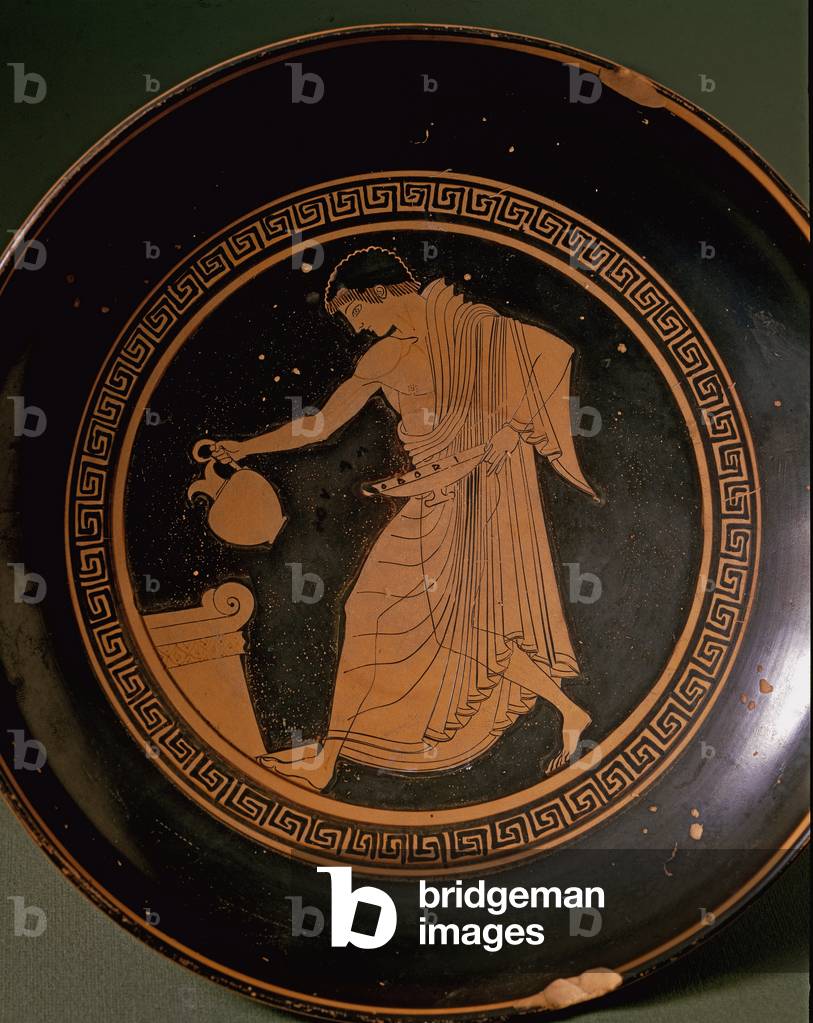
LRI4591082: Kylix by Douris depicting a young man near an altar. 500 BC. (terracotta), Greek school, (6th century BC) / Bridgeman Images

JLJ4591084: War of 1870, 1871: 'Attack of the lime oven at the Platriere de Champigny on December 2, 1870' Episode of the defense of Paris, 1881 (oil on canvas), Neuville, Alphonse Marie de (1835-85) / Bridgeman Images

JLJ4591283: Republican wedding, 18th century (engraving), French School, (18th century) / Bridgeman Images

JLJ4591338: Mountain landscape bathes by the sea, the rainbow, 19th century (oil on canvas), Valenciennes, Pierre Henri de (1750-1819) / Bridgeman Images
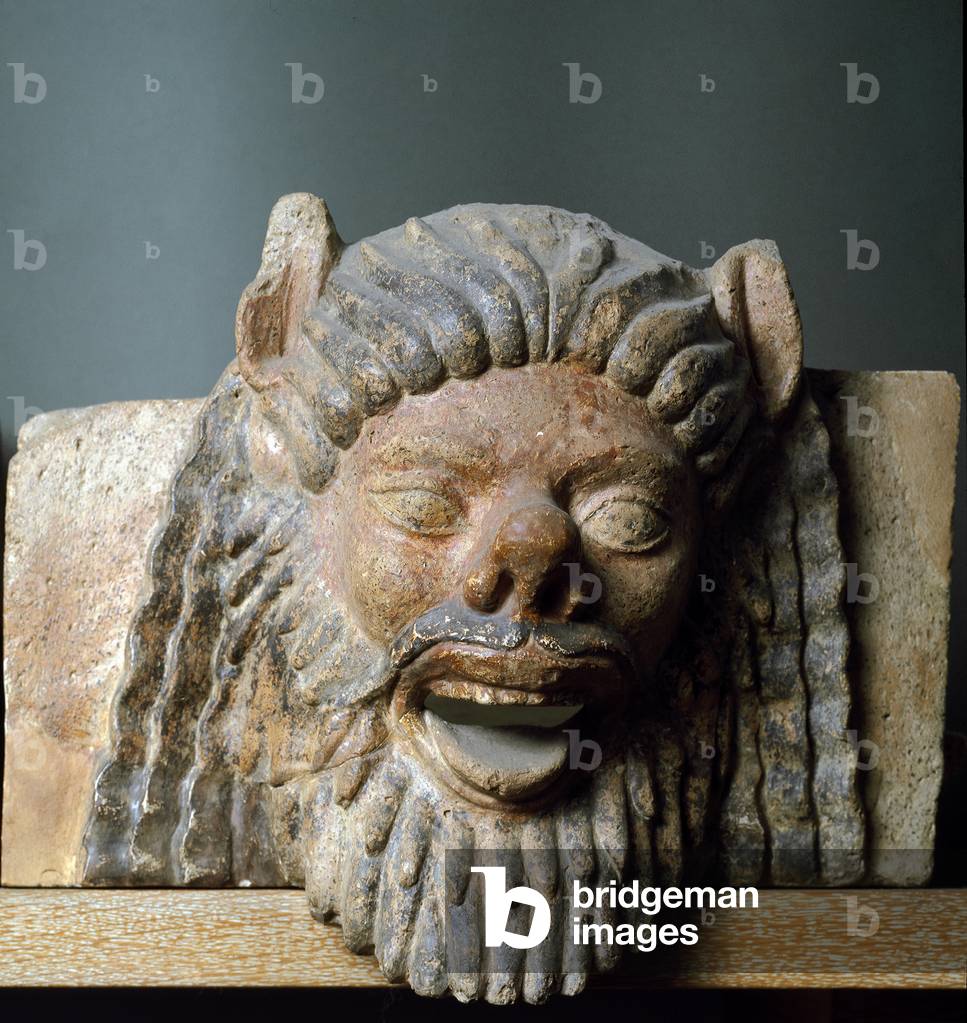
LRI4591381: A satyr. 550 BC. (terracotta), Greek school, (6th century BC) / Bridgeman Images

JLJ4591399: View of the Chateau de Chinon, 1699 (w/c), French School, (19th century) / Bridgeman Images

LRI4623004: The Madonna has Quail Detrempe on wood of Pisanello (Antonio Pisano) (ca. 1380-1455). 1420 approx. Dim. 50x33 cm Verone, Museo di Castevecchio - Madonna with a Quail, by Antonio Pisano a.k.a Pisanello (1380-c.1455)., Tempera on wood, 50x33 cm, 1420. Museo di Castevecchio, Verona, Italy, Pisanello, Antonio (1395-1455) / Bridgeman Images

PIX4623006: Owl Planetary Nebula - M97 in the Great Bear / Bridgeman Images

LRI4623041: Eugene Rose de Beauharnais called Prince Eugene vice king of Italy then Duke of Leuchtenberg (1781-1824), adoptive son of Napoleon I Marble Sculpture by Joseph Chinard (1756-1813) 1806 Versailles, castle museum, Chinard, Joseph (1756-1813) / Bridgeman Images

PIX4623044: The Triton satellite seen by Voyager 2 - Faux-colored image of Triton, the largest satellite of Neptune, obtained by the Voyager 2 probe on August 24, 1989, has a distance of 530,000 km from the satellite / Bridgeman Images

JLJ4623252: Steam pot by Denis Papin (1647-1714) invented in 1681. It's the ancestor of the minute cocote, 1681 (metal), French School, (17th century) / Bridgeman Images

JLJ4623326: The Happy Adventure (engraving), Boilly, Louis Leopold (1761-1845) / Bridgeman Images

PIX4623359: Planetary nebula M57 (NGC 6720) in Lyra - M57 (NGC 6720) planetary nebula in Lyra - The planetary nebula of Lyra (M57) is located about 2000 years - light from Earth. With a magnitude of 9.0, this nebula is easily observed with a small telescope. A planetary nebula is a gas shell from a small late-life star whose heart collapsed to become a white dwarf and expelled the outer layers of its matter. Composite image obtained by different telescopes. The Ring Nebula, M57, is the most famous example of a planetary nebula. Located about 2,000 light years away, it has an apparent diameter of 1 arc minute and a real diameter of about one light year. At magnitude 9.0 its high surface brightness makes it an easy object, even from the city and even with small telescopes. Planetary nebula are shells of gas shed by stars late in their life cycles after using up all of their nuclear fuel. The star then ejects a significant portion of its mass in a gaseous shell, which is illuminated by its extremely hot central star, which is just the core left from the original star. The star at the center of the Ring nebula has a surface temperature of 216,000 degrees Farenheit or 120,000 degrees Celsius. Our own star, the Sun, is expected to undergo the same process in a couple of billion years. Planetary nebulae do not last long at all in cosmic terms, the shell of gas expands and diffuse, becoming invisible, and the star turns into a white dwarf. Composite image from three data sources: HST, LBT, Subaru / Bridgeman Images

JLJ4623481: Jesse's tree. Miniature manuscript “Lectiaire de Citeaux", 1109 (miniature), Unknown Artist, (12th century) / Bridgeman Images
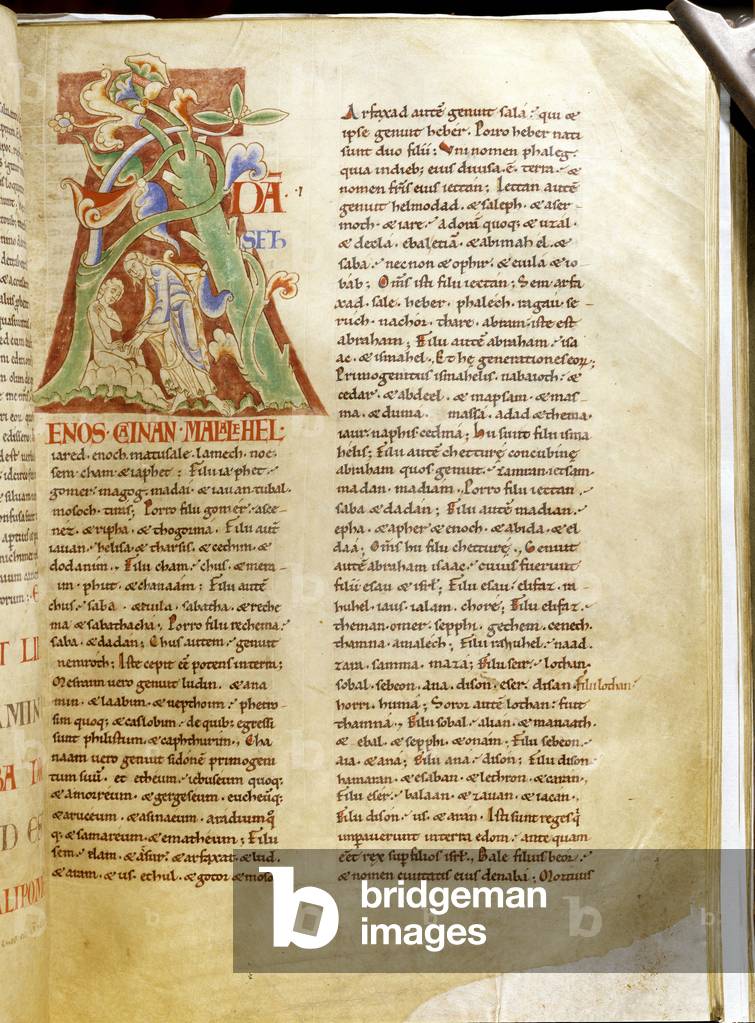
JLJ4623503: Lettrine: letter "A" representing the creation of Adam, 12th century (miniature), Unknown Artist, (12th century) / Bridgeman Images

PIX4623521: Planetary nebula NGC 7008 in the Cygn / Bridgeman Images

PIX4623544: Planetary nebula NGC 7008 in Swan - Planetary nebula NGC 7008 in Cygnu / Bridgeman Images

PIX4623552: Planetary nebula NGC 7027 in the Swan/HST - This NASA Hubble Space Telescope image of planetary nebula NGC 7027 shows remarkable new details of the process by which a star like the Sun dies. New features include: faint, blue, concentric shells surrounding the nebula; an extensive network of red dust clouds throughout the bright inner region; and the hot central white dwarf, visible as a white dot at the center. The nebula is a record of the star's final death throes. Initially the ejection of the star's outer layers, when it was at its red giant stage of evolution, occurred at a low rate and was spherical. The Hubble photo reveals that the initial ejections occurred episodically to produce the concentric shells. This culminated in a vigorous ejection of all of the remaining outer layers, which produced the bright inner regions. At this later stage the ejection was non - spherical, and dense clouds of dust condensed from the ejected material. NGC 7027 is located about 3,000 light - years from Earth in the direction of the summer constellation Cygnus. When a star like the Sun nears the end of its life, it expands to more than 50 times its original diameter, becoming a red giant star. Then its outer layers are ejected into space, exposing the small, extremely hot core of the star, which cools off to become a white dwarf. Although stars like the Sun can live for up to 10 billion years before becoming a red giant and ejecting a nebula, the actual ejection process takes only a few thousand years. The NGC 7027 photograph is a composite of two Hubble images, taken in visible and infrared light, and is shown in “” pseudo - color. / Bridgeman Images

PIX4623669: Planetary nebula Helix (NGC 7293) in Aquarius - Planetary nebula Helix (NGC 7293) - The planetary nebula of Helice, located in Aquarius, is one of the closest to Earth (about 690 years - light) and is also one of the most extended; its apparent diameter is about half of the full moon. Image made with the 1.5m Danish telescope of La Silla in Chile in 2009. Helix is our closest planetary nebula at about 690 light years distance. Image taken with the ESO/Danish 1.5m telescope at La Silla observatory in Chile / Bridgeman Images

PIX4658170: Santa Claus in Lapland - Santa Claus in Lapland - Santa Claus in Lapland. Levitunturi Summit, Kittila, Finland. Father Christmas in Lapland. Top of fell Levitunturi in Kittila, Finland / Bridgeman Images

PIX4658187: Santa Claus in Lapland - Santa Claus in Lapland - Santa Claus in Lapland. Kittila, Finland. Father Christmas in Lapland. Kittila, Finland / Bridgeman Images

PIX4658343: Algerian desert seen by ISS 08 - 2006 - Algerian desert seen by ISS 08 - 2006 - Algerian desert seen by the international space station on 08/08/2006 / Bridgeman Images

PIX4658362: Algerian desert seen by shuttle 12/99 - Le Sahara, Algeria, seen by shuttle STS - 103 on 12/24/1999. Part of the shuttle window is visible in the lower left corner of the image / Bridgeman Images
