Search options

Orientation
Colour

Display options

View

Print

To print search results, use print friendly version of this page.

2490926 Search Results

Humpback Whale - Humpback Whale - Humpback Whale (Megaptera novaeangliae). Puerto Lopez, Ecuador. Humpback Whale breaching. Puerto Lopez, Ecuador

PIX4638494: Humpback Whale - Humpback Whale - Humpback Whale (Megaptera novaeangliae). Puerto Lopez, Ecuador. Humpback Whale breaching. Puerto Lopez, Ecuador / Bridgeman Images

Faux de Verzy - Marne - Dwarf Beech - Faux de Verzy - France - Hetres tortillards (Fagus Sylvatica var Tortuosa). These remarkable trees are a variety of rare beech trees with contorted branches and trunks, whose origin remains unknown. The Faux site has been classified nationally since 1932. It became a State Biological Reserve in 1981. Dwarf Beech (Fagus sylvatica Tortuosa Group). Marne, Champagne-Ardenne, France

PIX4638549: Faux de Verzy - Marne - Dwarf Beech - Faux de Verzy - France - Hetres tortillards (Fagus Sylvatica var Tortuosa). These remarkable trees are a variety of rare beech trees with contorted branches and trunks, whose origin remains unknown. The Faux site has been classified nationally since 1932. It became a State Biological Reserve in 1981. Dwarf Beech (Fagus sylvatica Tortuosa Group). Marne, Champagne-Ardenne, France / Bridgeman Images

Faux de Verzy - Marne - Dwarf Beech - Faux de Verzy - France - Tortuosa (Fagus Sylvatica var Tortuosa). This remarkable tree is a rare beech variety with contorted branches and trunk, the origin of which remains unknown. The Faux site has been classified nationally since 1932. It became a State Biological Reserve in 1981. Dwarf Beech (Fagus sylvatica Tortuosa Group). Marne, Champagne-Ardenne, France

PIX4638626: Faux de Verzy - Marne - Dwarf Beech - Faux de Verzy - France - Tortuosa (Fagus Sylvatica var Tortuosa). This remarkable tree is a rare beech variety with contorted branches and trunk, the origin of which remains unknown. The Faux site has been classified nationally since 1932. It became a State Biological Reserve in 1981. Dwarf Beech (Fagus sylvatica Tortuosa Group). Marne, Champagne-Ardenne, France / Bridgeman Images

Apollo 11: lunar rock - Apollo 11: lunar rock: basaltic lunar rock brought back by astronauts from the Apollo 11 mission. Sample 10057 dcoup for analysis. Lunar basalt sample. The sample number is 10057, Split 30. This rock was among the samples collected by astronauts Neil A. Armstrong and Edwin E. Aldrin Jr. during their lunar surface extravehicular activity on July 20, 1969.

PIX4638710: Apollo 11: lunar rock - Apollo 11: lunar rock: basaltic lunar rock brought back by astronauts from the Apollo 11 mission. Sample 10057 dcoup for analysis. Lunar basalt sample. The sample number is 10057, Split 30. This rock was among the samples collected by astronauts Neil A. Armstrong and Edwin E. Aldrin Jr. during their lunar surface extravehicular activity on July 20, 1969. / Bridgeman Images

Oxygen plant on the Moon-Artist view - Lunar oxygen factory - Artist view - Artist view of a plant on the Moon providing oxygen from the lunar basement

PIX4638779: Oxygen plant on the Moon-Artist view - Lunar oxygen factory - Artist view - Artist view of a plant on the Moon providing oxygen from the lunar basement / Bridgeman Images

Ancient Greece: view of the starting line of the Stadium of Delphi. 3rd century BC. Greece

LRI4638910: Ancient Greece: view of the starting line of the Stadium of Delphi. 3rd century BC. Greece, Greek school, (3rd century BC) / Bridgeman Images

View of the Byzantine Tower of the Monastery of Our Lady of Philerimos on Mount Philerimos in Rhodes, Greece

LRI4638954: View of the Byzantine Tower of the Monastery of Our Lady of Philerimos on Mount Philerimos in Rhodes, Greece, Byzantine / Bridgeman Images

View of the bastions of the Byzantine fortress (Heptapyrgion or Yedi Kule), 4th century (photography)

LRI4639006: View of the bastions of the Byzantine fortress (Heptapyrgion or Yedi Kule), 4th century (photography), Byzantine, (4th century) / Bridgeman Images
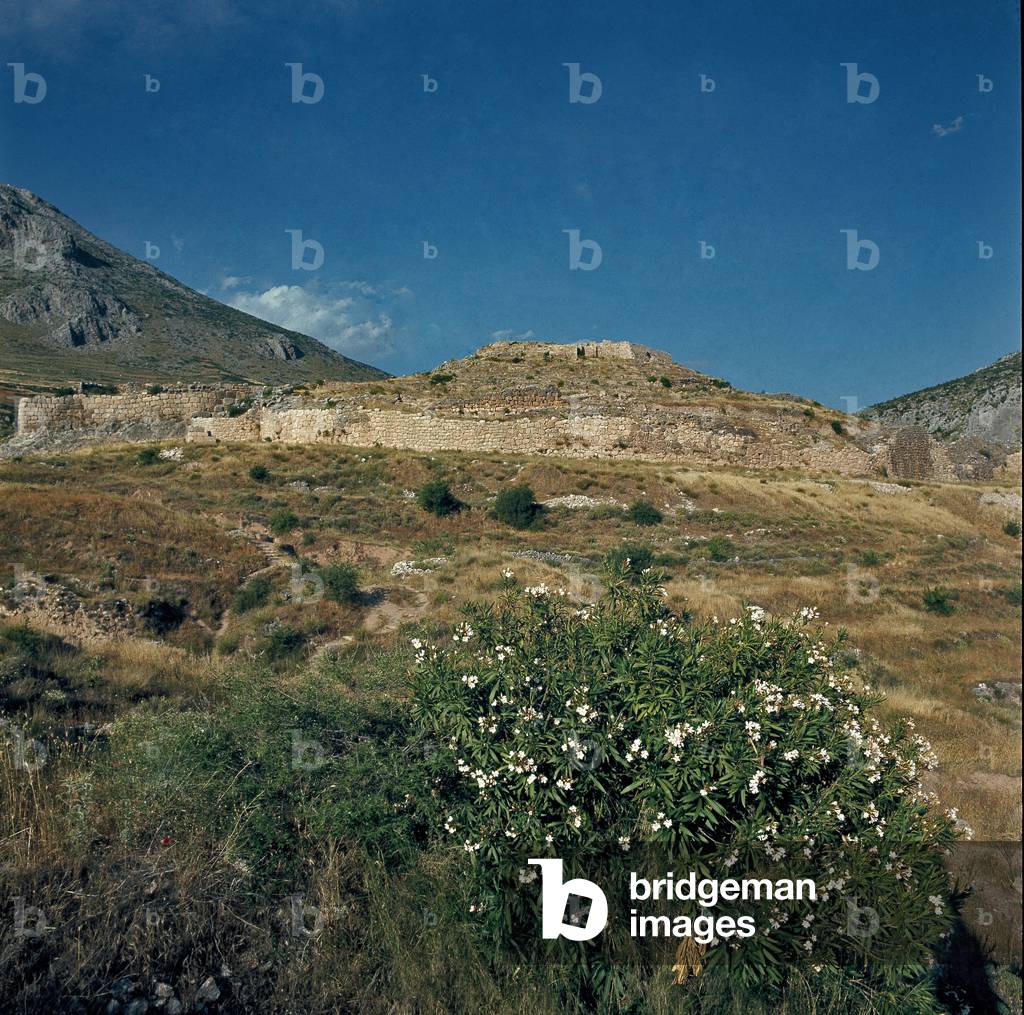
View of the site of the ancient town of Mycenes, 1500-1100 BC (photography)

LRI4639011: View of the site of the ancient town of Mycenes, 1500-1100 BC (photography), Mycenaean, Late Helladic Period (c.1600-1100 BC) / Bridgeman Images

Elamite civilization: bronze statue of Queen Napir Asu with elamite inscription, 1250 BC (bronze)

JLJ4669457: Elamite civilization: bronze statue of Queen Napir Asu with elamite inscription, 1250 BC (bronze), Middle Elamite Period, (c.1500-1000 BC) / Bridgeman Images

Portrait of the Swiss philosopher Jean Jacques Rousseau (1712-1778) in Armenian costume, 18th century (drawing)

JLJ4669554: Portrait of the Swiss philosopher Jean Jacques Rousseau (1712-1778) in Armenian costume, 18th century (drawing), Ramsay, Allan (1713-84) (after) / Bridgeman Images

Antoine-Henri Becquerel, French physicist (Engraving)

LRI4669573: Antoine-Henri Becquerel, French physicist (Engraving), Unknown Artist, (19th century) / Bridgeman Images

The Carpet Bazaar In The Khan-Khabil In Cairo In 1866, 1866 (oil on canvas)

JLJ4669664: The Carpet Bazaar In The Khan-Khabil In Cairo In 1866, 1866 (oil on canvas), Mouchot, Louis Claude (1830-91) / Bridgeman Images

Southern Aurora observed from the Space Station - Aurora australis seen from the International Space Station - Southern Aurora observed from the International Space Station (ISS) on August 19, 2017. Aurora australis seen from the International Space Station (ISS) on August 19, 2017. The ISS was located over the Southern Indian Ocean

PIX4669758: Southern Aurora observed from the Space Station - Aurora australis seen from the International Space Station - Southern Aurora observed from the International Space Station (ISS) on August 19, 2017. Aurora australis seen from the International Space Station (ISS) on August 19, 2017. The ISS was located over the Southern Indian Ocean / Bridgeman Images

Entrance of the tomb of Agamemnon, called Treasury of Atreus, 1500-1100 BC (photography)

LRI4639070: Entrance of the tomb of Agamemnon, called Treasury of Atreus, 1500-1100 BC (photography), Mycenaean, Late Helladic Period (c.1600-1100 BC) / Bridgeman Images

Houses built in the fortifications of the city, around 1200 BC (photography)

LRI4639094: Houses built in the fortifications of the city, around 1200 BC (photography), Mycenaean, (13th century BC) / Bridgeman Images

Illustration from the book

JLJ4639109: Illustration from the book "Les epees de France" : Imperiale escort accompanying Napoleon (engraving), Job, pseudonym for Onfray de Breville, Jacques (1858-1931) / Bridgeman Images

Space exploration: Soyuz spacecraft - Artist's view - Soyuz deep space explorer over the Moon - A spaceship inhabits Soyuz TMA-M increases by a housing module for three astronauts and a rocket top floor, joins the Moon. A manned Soyuz TMA-M spacecraft docked with a three-person extended stay module soars over the Moon with the aid of a Russian-made upper stage booster rocket. The upper stage booster is on the left with the Soyuz spacecraft on the right and the extended stay module in the middle of the assembly

PIX4639123: Space exploration: Soyuz spacecraft - Artist's view - Soyuz deep space explorer over the Moon - A spaceship inhabits Soyuz TMA-M increases by a housing module for three astronauts and a rocket top floor, joins the Moon. A manned Soyuz TMA-M spacecraft docked with a three-person extended stay module soars over the Moon with the aid of a Russian-made upper stage booster rocket. The upper stage booster is on the left with the Soyuz spacecraft on the right and the extended stay module in the middle of the assembly / Bridgeman Images

Roman Forum: view of the Curia (curia) meeting place of the Senate. 1st century BC. Rome

LRI4639142: Roman Forum: view of the Curia (curia) meeting place of the Senate. 1st century BC. Rome, Roman, (1st century BC) / Bridgeman Images

Lunar Vehicle Prototype - Crew Mobility Chassis Prototype - Crew Mobility Chassis Prototype as part of the constellation program that is expected to take men to the Moon around 2020. The Crew Mobility Chassis Prototype is Nasa's new concept for a lunar truck. Researchers are trying it out at Moses Lake, Wash., as part of a series of tests of lunar surface concepts. One feature is its high mobility. Each set of wheels can pivot individually in any direction, giving the vehicle the ability to drive sideways, forward, backward and any direction in between - important if the truck becomes mired in lunar dust, needs to zigzag down a steep crater wall or parallel park at its docking station. NASA currently is building the spacecraft and systems to return to the moon by 2020

PIX4639206: Lunar Vehicle Prototype - Crew Mobility Chassis Prototype - Crew Mobility Chassis Prototype as part of the constellation program that is expected to take men to the Moon around 2020. The Crew Mobility Chassis Prototype is Nasa's new concept for a lunar truck. Researchers are trying it out at Moses Lake, Wash., as part of a series of tests of lunar surface concepts. One feature is its high mobility. Each set of wheels can pivot individually in any direction, giving the vehicle the ability to drive sideways, forward, backward and any direction in between - important if the truck becomes mired in lunar dust, needs to zigzag down a steep crater wall or parallel park at its docking station. NASA currently is building the spacecraft and systems to return to the moon by 2020 / Bridgeman Images

Lunar vehicle test. Program constellation - Lunar vehicle test. Constellation program - Lunar vehicle test as part of the Nasa constellation program that is expected to take men to the Moon around 2020. Here, a prototype of a pressurized vehicle (Lunar Electric Rover) that would allow future astronauts to travel long distances. For three days, astronaut Michael Gernhardt and geologist Brent Garry lived independently in the real conditions of exit to the Moon. Brent Garry gets out of the vehicle by putting on a pressurized suit. October 2008, Arizona, USA. During tests conducted for NASA's Desert Research and Technology Studies (RATS) at Black Point Lava Flow in Arizona, engineers, geologists and astronauts gathered to test two configurations of NASA's newest lunar rover prototype. The pressurized version, seen here and called the Lunar Electric Rover, includes a suitport that would allow crew members to climb in and out of spacesuits quickly for moonwalks. Here, Smithsonian Institution geologist Brent Garry donates his suit

PIX4639287: Lunar vehicle test. Program constellation - Lunar vehicle test. Constellation program - Lunar vehicle test as part of the Nasa constellation program that is expected to take men to the Moon around 2020. Here, a prototype of a pressurized vehicle (Lunar Electric Rover) that would allow future astronauts to travel long distances. For three days, astronaut Michael Gernhardt and geologist Brent Garry lived independently in the real conditions of exit to the Moon. Brent Garry gets out of the vehicle by putting on a pressurized suit. October 2008, Arizona, USA. During tests conducted for NASA's Desert Research and Technology Studies (RATS) at Black Point Lava Flow in Arizona, engineers, geologists and astronauts gathered to test two configurations of NASA's newest lunar rover prototype. The pressurized version, seen here and called the Lunar Electric Rover, includes a suitport that would allow crew members to climb in and out of spacesuits quickly for moonwalks. Here, Smithsonian Institution geologist Brent Garry donates his suit / Bridgeman Images

Robonaut2, the Next Generation Dexterous Robonaut 2, designed by Nasa and General Motors, is a humanoid robot designed to assist humans on Earth and in space. Robonaut2 - or R2 for short - is the next generation dexterous robot, developed through a Space Act Agreement by NASA and General Motors. It is faster, more dexterous and more technologically advanced than its predecessors and able to use its hands to do work beyond the scope of previously introduced humanoid robots. Robonauts are designed to use the same tools as humans, which allows them to work safely side-by-side humans on Earth and in space

PIX4639339: Robonaut2, the Next Generation Dexterous Robonaut 2, designed by Nasa and General Motors, is a humanoid robot designed to assist humans on Earth and in space. Robonaut2 - or R2 for short - is the next generation dexterous robot, developed through a Space Act Agreement by NASA and General Motors. It is faster, more dexterous and more technologically advanced than its predecessors and able to use its hands to do work beyond the scope of previously introduced humanoid robots. Robonauts are designed to use the same tools as humans, which allows them to work safely side-by-side humans on Earth and in space / Bridgeman Images

Permanent station between the Earth and the Moon - Artist view - Lunar cycler at apogee - Artist view - Lunar Cycler is a space station placed in orbit between the Earth and the Moon whose trajectory would alternate between the Moon and the Earth. Once positioned in orbit, this gravitational assistance vessel would use very little fuel. This project would make a permanent link between the two stars. A lunar cycler has reached its furthest orbital point from the Earth - the apogee - and is rounding the far side of the Moon to begin its fall back towards Earth. At apogee the lunar cycler is about 300 thousand miles from the Earth and 50 thousand miles beyond the orbit of the Moon (further from Earth than any human has ventured yet). If frequent manned trips to the Moon become a reality, the earlier “” throw-away”” technologies of the Apollo lunar missions will be impractical for the long term. More efficient and reusable systems will need to be developed in order to minimize the labor and resources required for these extraordinary voyages. A journey to the Moon can be broken down into three basic tasks: transfer between the Earth's surface and Earth orbit, transfer between Earth orbit and lunar orbit, and transfer between lunar orbit and the Moon's surface. While the simplest solution may be a single vehicle that could do all three, no technology today or in the foreseeable future can meet all these needs. One solution would be to dedicate separate vehicles for each the three tasks. A reusable space shuttle would lift explorers off the Earth's surface, a dedicated and reusable lunar shuttle would deliver explorers to the Moon's surface and back, and in between there would be a kind of orbital way station. One such way station is known as an orbital cycler. An orbital cycler is a vehicle that's in a permanent orbit around two celestial masses. In the case of a lunar cycler, the orbit would include both the Eart

PIX4639391: Permanent station between the Earth and the Moon - Artist view - Lunar cycler at apogee - Artist view - Lunar Cycler is a space station placed in orbit between the Earth and the Moon whose trajectory would alternate between the Moon and the Earth. Once positioned in orbit, this gravitational assistance vessel would use very little fuel. This project would make a permanent link between the two stars. A lunar cycler has reached its furthest orbital point from the Earth - the apogee - and is rounding the far side of the Moon to begin its fall back towards Earth. At apogee the lunar cycler is about 300 thousand miles from the Earth and 50 thousand miles beyond the orbit of the Moon (further from Earth than any human has ventured yet). If frequent manned trips to the Moon become a reality, the earlier “” throw-away”” technologies of the Apollo lunar missions will be impractical for the long term. More efficient and reusable systems will need to be developed in order to minimize the labor and resources required for these extraordinary voyages. A journey to the Moon can be broken down into three basic tasks: transfer between the Earth's surface and Earth orbit, transfer between Earth orbit and lunar orbit, and transfer between lunar orbit and the Moon's surface. While the simplest solution may be a single vehicle that could do all three, no technology today or in the foreseeable future can meet all these needs. One solution would be to dedicate separate vehicles for each the three tasks. A reusable space shuttle would lift explorers off the Earth's surface, a dedicated and reusable lunar shuttle would deliver explorers to the Moon's surface and back, and in between there would be a kind of orbital way station. One such way station is known as an orbital cycler. An orbital cycler is a vehicle that's in a permanent orbit around two celestial masses. In the case of a lunar cycler, the orbit would include both the Eart / Bridgeman Images

Cats: Domestic and Angora; Cuvier and Linnaean classification (engraving)

JLJ4639396: Cats: Domestic and Angora; Cuvier and Linnaean classification (engraving), Unknown artist, (18th century) / Bridgeman Images

Fashion under the Directoire: boat hat redingote with long waist, 1798 (engraving)

JLJ4639496: Fashion under the Directoire: boat hat redingote with long waist, 1798 (engraving), French School, (18th century) / Bridgeman Images

Astronauts inspect a ship before it departs for Mars - Mars lander pre-departure inspection - Artist view - Astronauts perform an extravehicular outing to inspect a ship mooring to the Mars Cycler before it leaves for the red planet. Mars Cycler is a space station placed in orbit between Mars and Earth whose trajectory would alternate between Mars and Earth. Once positioned in orbit, this gravitational assistance vessel would use very little fuel. This project would make a permanent link between the two planets. A pair of astronauts in MMUS perform a final inspection of a manned Mars lander/return vehicle before disembarking for the surface of Mars. A Mars cycler is a permanently orbiting vehicle with a path that alternately brings it near Earth and Mars. Once a cycler has been accelerated into orbit it continues on its own momentum, going back and forth between the two planets, only requiring propellant for occasional course adjustments. A one-way trip between Earth and Mars involves six to eight months of space travel, therefore a large and well-equipped Mars cycler would offer space explorers, and possibly even space tourists, better accommodations for these long journeys. Smaller spacecraft would ferry travelers between the planets and the cycle

PIX4639559: Astronauts inspect a ship before it departs for Mars - Mars lander pre-departure inspection - Artist view - Astronauts perform an extravehicular outing to inspect a ship mooring to the Mars Cycler before it leaves for the red planet. Mars Cycler is a space station placed in orbit between Mars and Earth whose trajectory would alternate between Mars and Earth. Once positioned in orbit, this gravitational assistance vessel would use very little fuel. This project would make a permanent link between the two planets. A pair of astronauts in MMUS perform a final inspection of a manned Mars lander/return vehicle before disembarking for the surface of Mars. A Mars cycler is a permanently orbiting vehicle with a path that alternately brings it near Earth and Mars. Once a cycler has been accelerated into orbit it continues on its own momentum, going back and forth between the two planets, only requiring propellant for occasional course adjustments. A one-way trip between Earth and Mars involves six to eight months of space travel, therefore a large and well-equipped Mars cycler would offer space explorers, and possibly even space tourists, better accommodations for these long journeys. Smaller spacecraft would ferry travelers between the planets and the cycle / Bridgeman Images

Illustration from the book

JLJ4639609: Illustration from the book "Complete Works of Buffon": Les Quadrupedes: Le lion (engraving), Unknown artist, (18th century) / Bridgeman Images

Illustration from the book

JLJ4639635: Illustration from the book "Complete Works of Buffon": Les Quadrupedes: L'ounce (engraving), Unknown artist, (18th century) / Bridgeman Images

Portrait of the King of England George IV, detail, 1844 (oil on canvas)

LRI4670000: Portrait of the King of England George IV, detail, 1844 (oil on canvas), Lawrence, Thomas (1769-1830) (after) / Bridgeman Images

Aurora boreale en Norway - Aurora in Norway - Aurora boreale observed in Norway. 1 December 2011. Aurora borealis seen in Sollia, Norway on december 1st 2011

PIX4670112: Aurora boreale en Norway - Aurora in Norway - Aurora boreale observed in Norway. 1 December 2011. Aurora borealis seen in Sollia, Norway on december 1st 2011 / Bridgeman Images

Portrait of Marie Therese of Austria, Empress and queen of Hungary and Boheme (oil on canvas, 18th century)

LRI4670156: Portrait of Marie Therese of Austria, Empress and queen of Hungary and Boheme (oil on canvas, 18th century), Ducreux, Joseph (1735-1802) / Bridgeman Images

Aurora boreale - Finland - 10/2003 - Aurora borealis in Finland 10/2003 - Aurora boreale observed in Lapland, Kittilae (Finland), October 2003. Aurora borealis seen in Lapland, in Kittilae (Finland). October 2003

PIX4670274: Aurora boreale - Finland - 10/2003 - Aurora borealis in Finland 10/2003 - Aurora boreale observed in Lapland, Kittilae (Finland), October 2003. Aurora borealis seen in Lapland, in Kittilae (Finland). October 2003 / Bridgeman Images

Bust of Serapis (or Sarapis), god of Death (marble sculpture)

LRI4670353: Bust of Serapis (or Sarapis), god of Death (marble sculpture), Greco-Roman / Bridgeman Images

Mozarabic Art: “” the temple of Jerusalem, Aaron is represented as a high priest before an altar.”” Miniature from a Mozarabic Bible. 10th century. Leon. Library of the Royal Collegiale of Saint Isidore. Spain

LRI4670490: Mozarabic Art: “” the temple of Jerusalem, Aaron is represented as a high priest before an altar.”” Miniature from a Mozarabic Bible. 10th century. Leon. Library of the Royal Collegiale of Saint Isidore. Spain, Spanish School, (10th century) / Bridgeman Images

Furniture of Marie Antoinette (1755-1793), 1784 (amaranth, rosewood, bronze and oak)

JLJ4670630: Furniture of Marie Antoinette (1755-1793), 1784 (amaranth, rosewood, bronze and oak), Riesener, Jean-Henri (1734-1806) / Bridgeman Images

The two donors (miniature, 1236)

LRI4670640: The two donors (miniature, 1236), Armenian School, (13th century) / Bridgeman Images


Back to top