Print Friendly Version Page

2497532 Search Results

Astronomical Observatory in New Delhi, India.

TEC4607000: Astronomical Observatory in New Delhi, India. / Bridgeman Images

Astronomical Observatory in New Delhi, India.

TEC4607015: Astronomical Observatory in New Delhi, India. / Bridgeman Images

The Rosetta probe near the Earth - Rosetta spacecraft over Earth - Artist's view of the passage of the Rosetta probe near the Earth. The purpose of this passage is to use the gravity of the planet to modify the velocity and trajectory of the probe. The Rosetta probe was launched on 2 March 2004 to study comet 67P/Churyumov - Gerasimenko, which it should meet around May 2014. She will put a lander on her surface. Artist's impression of Rosetta spacecraft over Earth. The aim of the transit is to use the planet's gravity to modify the speed and the trajectory of the probe. The European Space Agency spacecraft was launched on March 02 2004 and intended to study the comet 67P/Churyumov - Gerasimenko. Rosetta is expected to enter in orbit around the comet for releasing a lander in May 2014

PIX4607029: The Rosetta probe near the Earth - Rosetta spacecraft over Earth - Artist's view of the passage of the Rosetta probe near the Earth. The purpose of this passage is to use the gravity of the planet to modify the velocity and trajectory of the probe. The Rosetta probe was launched on 2 March 2004 to study comet 67P/Churyumov - Gerasimenko, which it should meet around May 2014. She will put a lander on her surface. Artist's impression of Rosetta spacecraft over Earth. The aim of the transit is to use the planet's gravity to modify the speed and the trajectory of the probe. The European Space Agency spacecraft was launched on March 02 2004 and intended to study the comet 67P/Churyumov - Gerasimenko. Rosetta is expected to enter in orbit around the comet for releasing a lander in May 2014 / Bridgeman Images

Actor Dominique Pitrot as Don Mendoze in La Parisienne en Espagne by Marc-Antoine Desaugiers, Theatre du Vaudeville, 1822. Handcoloured lithograph by F. Noel after an illustration by Alexandre-Marie Colin from Portraits d'Acteurs et d'Actrices dans different roles, F. Noel, Paris, 1825.

FLO4607033: Actor Dominique Pitrot as Don Mendoze in La Parisienne en Espagne by Marc-Antoine Desaugiers, Theatre du Vaudeville, 1822. Handcoloured lithograph by F. Noel after an illustration by Alexandre-Marie Colin from Portraits d'Acteurs et d'Actrices dans different roles, F. Noel, Paris, 1825. / Bridgeman Images

New Delhi, India. Photography 20/01/06.

TEC4607108: New Delhi, India. Photography 20/01/06. / Bridgeman Images
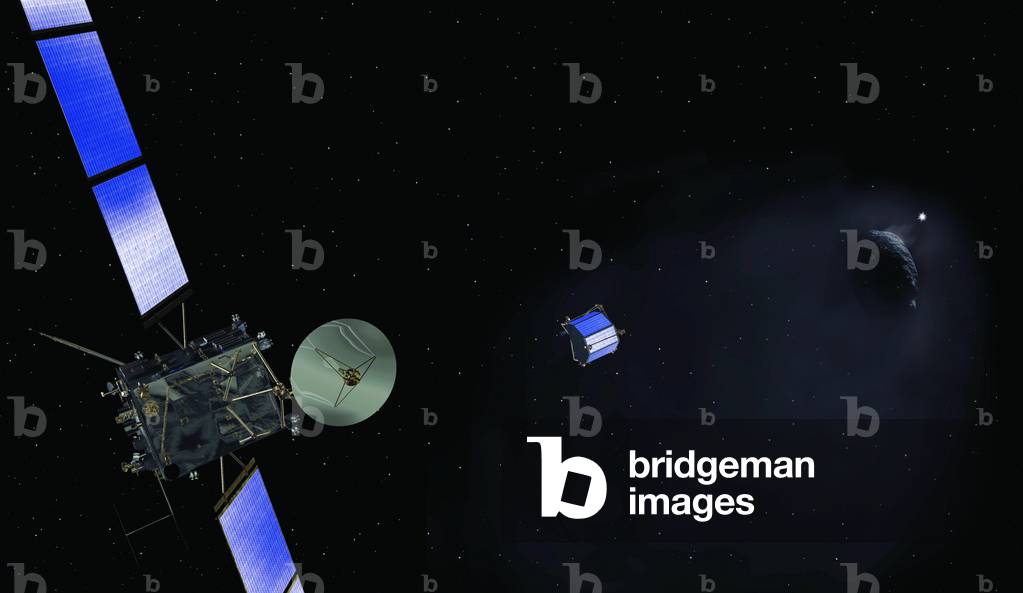
Philae lander en route to comet nucleus - The Rosetta probe was launched on 2 March 2004 to study comet 67P/Churyumov - Gerasimenko that it should meet around May 2014. It will place on its surface a lander, Philae, which will analyze the composition of the nucleus of the comet

PIX4607111: Philae lander en route to comet nucleus - The Rosetta probe was launched on 2 March 2004 to study comet 67P/Churyumov - Gerasimenko that it should meet around May 2014. It will place on its surface a lander, Philae, which will analyze the composition of the nucleus of the comet / Bridgeman Images
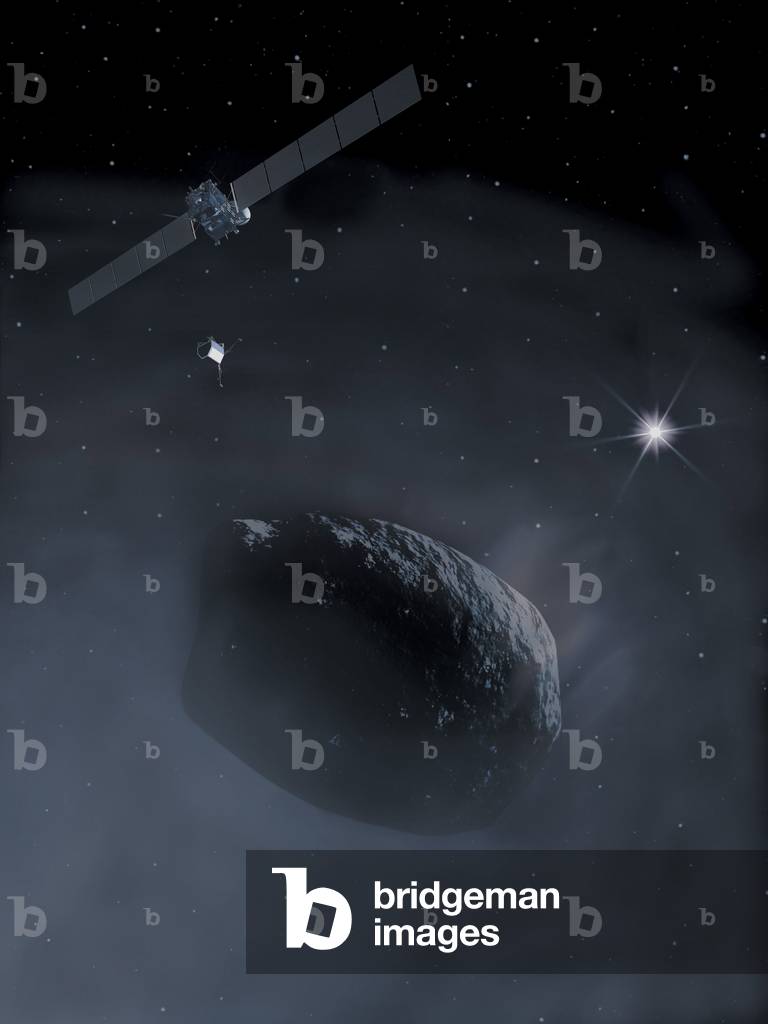
Rosetta probe: the lander is dropped on the nucleus of the comet - The Rosetta probe was launched on 2 March 2004 to study comet 67P/Churyumov - Gerasimenko, which it should meet around May 2014. It will place on its surface a lander that will analyze the composition of the nucleus of the comet

PIX4607120: Rosetta probe: the lander is dropped on the nucleus of the comet - The Rosetta probe was launched on 2 March 2004 to study comet 67P/Churyumov - Gerasimenko, which it should meet around May 2014. It will place on its surface a lander that will analyze the composition of the nucleus of the comet / Bridgeman Images

Double red peony, Paeonia officinalis rubra plena. Handcoloured botanical illustration drawn and engraved by William Clark from Richard Morris's “Flora Conspicua” London, Longman, Rees, 1826. William Clark was former draughtsman to the London Horticultural Society and illustrated many botanical books in the 1820s and 1830s.

FLO4607168: Double red peony, Paeonia officinalis rubra plena. Handcoloured botanical illustration drawn and engraved by William Clark from Richard Morris's “Flora Conspicua” London, Longman, Rees, 1826. William Clark was former draughtsman to the London Horticultural Society and illustrated many botanical books in the 1820s and 1830s. / Bridgeman Images

Mausolee housing the remains of Isa Khan (1529-1599), one of the faithful of Sher Shah (1486-1545), on the site of Emperor Humayun's tomb (1508-1556) in Delhi, India. Photography 20/01/06.

TEC4607270: Mausolee housing the remains of Isa Khan (1529-1599), one of the faithful of Sher Shah (1486-1545), on the site of Emperor Humayun's tomb (1508-1556) in Delhi, India. Photography 20/01/06. / Bridgeman Images

Artist's view of the New Horizons probe near Pluto - The New Horizons spacecraft near Pluto - Artist's view of the New Horizons probe near Pluto and its largest satellite Charon. The New Horizons probe was launched on 19 January 2006 to Jupiter, then Pluto and Charon, which it will reach in 2015 and Kuiper's objects in 2020. Artist's concept of the New Horizons spacecraft as it approaches Pluto and its largest moon, Charon, in July 2015. The craft's miniature cameras, radio science experiment, ultraviolet and infrared spectrometers and space plasma experiments will characterize the global geology and geomorphology of Pluto and Charon, map their surface compositions and temperatures, and examine Pluto's atmosphere in detail. The spacecraft's most prominent design feature is a nearly 7 - foot (2.1 - meter) dish antenna, through which it will communicate with Earth from as far as 4.7 billion miles (7.5 billion kilometers) away

PIX4607277: Artist's view of the New Horizons probe near Pluto - The New Horizons spacecraft near Pluto - Artist's view of the New Horizons probe near Pluto and its largest satellite Charon. The New Horizons probe was launched on 19 January 2006 to Jupiter, then Pluto and Charon, which it will reach in 2015 and Kuiper's objects in 2020. Artist's concept of the New Horizons spacecraft as it approaches Pluto and its largest moon, Charon, in July 2015. The craft's miniature cameras, radio science experiment, ultraviolet and infrared spectrometers and space plasma experiments will characterize the global geology and geomorphology of Pluto and Charon, map their surface compositions and temperatures, and examine Pluto's atmosphere in detail. The spacecraft's most prominent design feature is a nearly 7 - foot (2.1 - meter) dish antenna, through which it will communicate with Earth from as far as 4.7 billion miles (7.5 billion kilometers) away / Bridgeman Images

Fringed bleeding heart, Dicentra eximia. Handcoloured botanical illustration drawn and engraved by William Clark from Richard Morris's “Flora Conspicua” London, Longman, Rees, 1826. William Clark was former draughtsman to the London Horticultural Society and illustrated many botanical books in the 1820s and 1830s.

FLO4607309: Fringed bleeding heart, Dicentra eximia. Handcoloured botanical illustration drawn and engraved by William Clark from Richard Morris's “Flora Conspicua” London, Longman, Rees, 1826. William Clark was former draughtsman to the London Horticultural Society and illustrated many botanical books in the 1820s and 1830s. / Bridgeman Images

The New Horizons probe - The New Horizons spacecraft - The New Horizons probe at Nasa's Kennedy Space Center in September 2005. The New Horizons probe was launched on 19 January 2006 to Jupiter, then Pluto and Charon, which it reached in 2015 and Kuiper's objects in 2020. In NASA Kennedy Space Center's Payload Hazardous Servicing Facility, the New Horizons spacecraft is moved toward a work stand (behind it) for a checkout. New Horizons will make the first recognition of Pluto and Charon - a “double planet”” and the last planet in our solar system to be visited by spacecraft. The mission will then visit one or more objects in the Kuiper Belt region beyond Neptune. New Horizons is scheduled to launch in January 2006, swing past Jupiter for a gravity boost and scientific studies in February or March 2007, and reach Pluto and its moon, Charon, in July 2015

PIX4607343: The New Horizons probe - The New Horizons spacecraft - The New Horizons probe at Nasa's Kennedy Space Center in September 2005. The New Horizons probe was launched on 19 January 2006 to Jupiter, then Pluto and Charon, which it reached in 2015 and Kuiper's objects in 2020. In NASA Kennedy Space Center's Payload Hazardous Servicing Facility, the New Horizons spacecraft is moved toward a work stand (behind it) for a checkout. New Horizons will make the first recognition of Pluto and Charon - a “double planet”” and the last planet in our solar system to be visited by spacecraft. The mission will then visit one or more objects in the Kuiper Belt region beyond Neptune. New Horizons is scheduled to launch in January 2006, swing past Jupiter for a gravity boost and scientific studies in February or March 2007, and reach Pluto and its moon, Charon, in July 2015 / Bridgeman Images

The Ulysses probe - View of the Ulysses probe in preparation at the Kennedy Space Center prior to launch by the shuttle Discovery. The Ulysses probe was launched on 6 October 1990 to study the Sun

PIX4607356: The Ulysses probe - View of the Ulysses probe in preparation at the Kennedy Space Center prior to launch by the shuttle Discovery. The Ulysses probe was launched on 6 October 1990 to study the Sun / Bridgeman Images

Giotto probe meets Halley's comet - Artist's view

PIX4607008: Giotto probe meets Halley's comet - Artist's view / Bridgeman Images

Astronomical Observatory in New Delhi, India.

TEC4607038: Astronomical Observatory in New Delhi, India. / Bridgeman Images

Tenor singer Lafeuillade as Montfort in La Bergere Chatelaine by Daniel Auber, Theatre Royal de l'Opera Comique, 1820. Handcoloured lithograph by F. Noel after an illustration by Lavigne Marin from Portraits d'Acteurs et d'Actrices dans different roles, F. Noel, Paris, 1825.

FLO4607050: Tenor singer Lafeuillade as Montfort in La Bergere Chatelaine by Daniel Auber, Theatre Royal de l'Opera Comique, 1820. Handcoloured lithograph by F. Noel after an illustration by Lavigne Marin from Portraits d'Acteurs et d'Actrices dans different roles, F. Noel, Paris, 1825. / Bridgeman Images

Superb corn flag, Gladiolus cardinalis. Handcoloured botanical illustration drawn and engraved by William Clark from Richard Morris's “Flora Conspicua” London, Longman, Rees, 1826. William Clark was former draughtsman to the London Horticultural Society and illustrated many botanical books in the 1820s and 1830s.

FLO4607196: Superb corn flag, Gladiolus cardinalis. Handcoloured botanical illustration drawn and engraved by William Clark from Richard Morris's “Flora Conspicua” London, Longman, Rees, 1826. William Clark was former draughtsman to the London Horticultural Society and illustrated many botanical books in the 1820s and 1830s. / Bridgeman Images
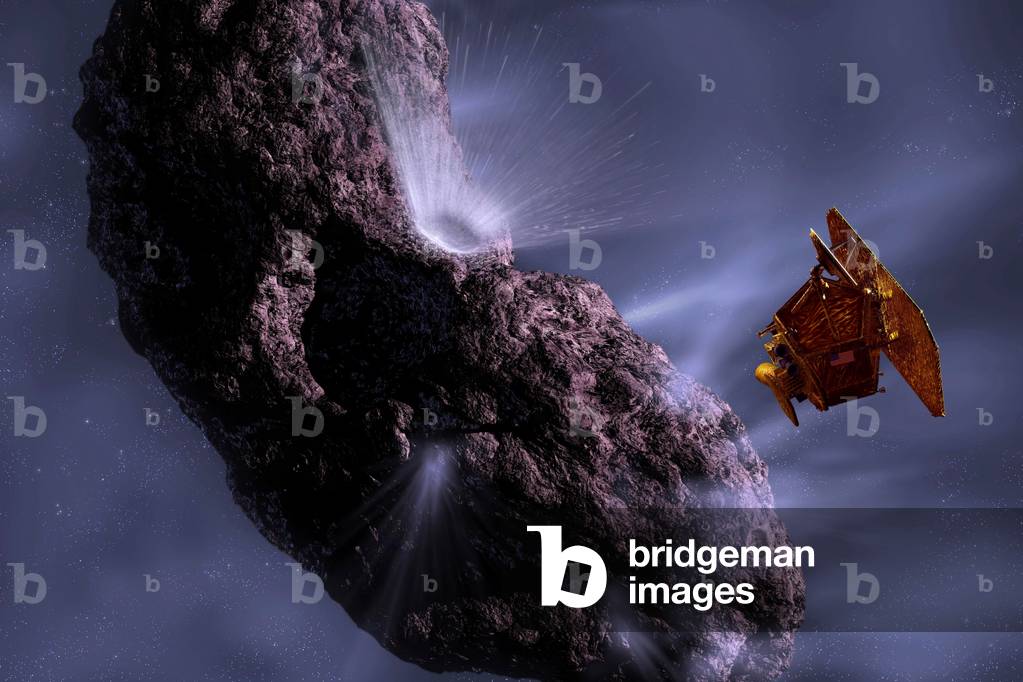
Deep impact probe and Tempel 1 comet - Artist's view - The Deep impact probe was launched on 12 January 2005 with the objective of studying the internal composition of the comet Tempel 1

PIX4607218: Deep impact probe and Tempel 1 comet - Artist's view - The Deep impact probe was launched on 12 January 2005 with the objective of studying the internal composition of the comet Tempel 1 / Bridgeman Images

The tomb of Emperor Humayun (1508-1556) in Delhi, India.

TEC4607284: The tomb of Emperor Humayun (1508-1556) in Delhi, India. / Bridgeman Images
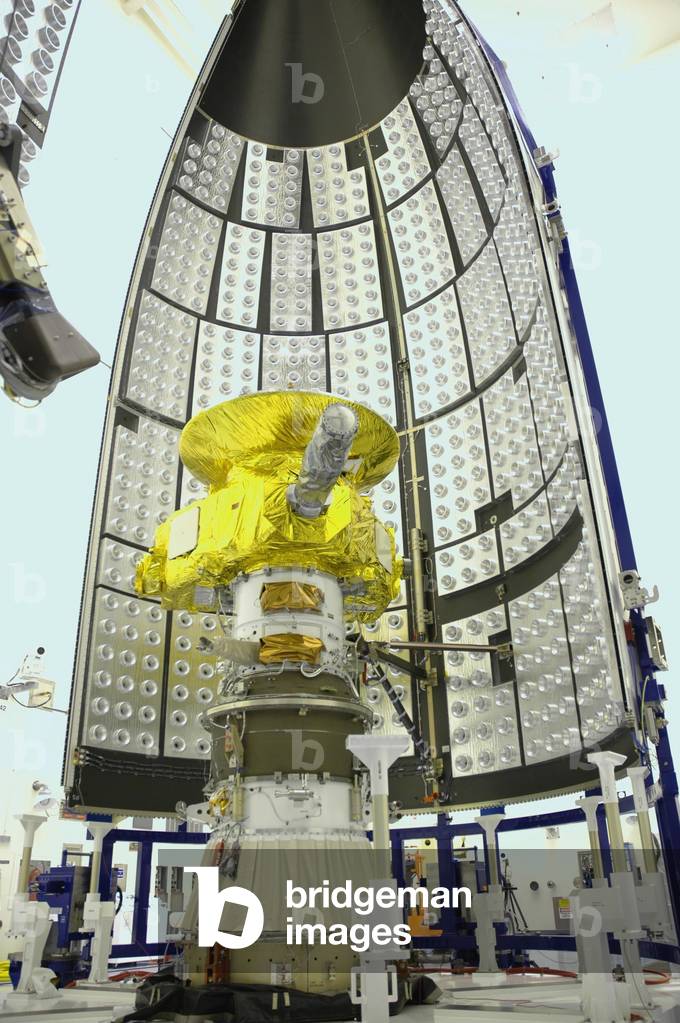
The New Horizons probe - The New Horizons spacecraft - The New Horizons probe at Nasa's Kennedy Space Center in December 2005. The New Horizons probe was launched on 19 January 2006 to Jupiter, then Pluto and Charon, which it reached in 2015 and Kuiper's objects in 2020. In the Payload Hazardous Servicing Facility, the New Horizons spacecraft waits for encapsulation within the fairing sections waiting nearby. The fairing protects the spacecraft during launch and flight through the atmosphere. Once out of the atmosphere, the fairing is jettisoned. The compact 1,060 - pound New Horizons probe carries seven scientific instruments that will characterize the global geology and geomorphology of Pluto and its moon Charon, map their surface compositions and temperatures, and examine Pluto's complex atmosphere. After that, flybys of Kuiper Belt objects from even farther in the solar system may be undertaken in an extended mission. New Horizons is the first mission in Nasa's New Frontiers program of medium - class planetary missions. The spacecraft, designed for NASA by the Johns Hopkins University Applied Physics Laboratory in Laurel, Md., will fly by Pluto and Charon as early as summer 2015

PIX4607348: The New Horizons probe - The New Horizons spacecraft - The New Horizons probe at Nasa's Kennedy Space Center in December 2005. The New Horizons probe was launched on 19 January 2006 to Jupiter, then Pluto and Charon, which it reached in 2015 and Kuiper's objects in 2020. In the Payload Hazardous Servicing Facility, the New Horizons spacecraft waits for encapsulation within the fairing sections waiting nearby. The fairing protects the spacecraft during launch and flight through the atmosphere. Once out of the atmosphere, the fairing is jettisoned. The compact 1,060 - pound New Horizons probe carries seven scientific instruments that will characterize the global geology and geomorphology of Pluto and its moon Charon, map their surface compositions and temperatures, and examine Pluto's complex atmosphere. After that, flybys of Kuiper Belt objects from even farther in the solar system may be undertaken in an extended mission. New Horizons is the first mission in Nasa's New Frontiers program of medium - class planetary missions. The spacecraft, designed for NASA by the Johns Hopkins University Applied Physics Laboratory in Laurel, Md., will fly by Pluto and Charon as early as summer 2015 / Bridgeman Images

Bristly locust tree, Robinia hispida. Handcoloured botanical illustration drawn and engraved by William Clark from Richard Morris's “Flora Conspicua” London, Longman, Rees, 1826. William Clark was former draughtsman to the London Horticultural Society and illustrated many botanical books in the 1820s and 1830s.

FLO4607383: Bristly locust tree, Robinia hispida. Handcoloured botanical illustration drawn and engraved by William Clark from Richard Morris's “Flora Conspicua” London, Longman, Rees, 1826. William Clark was former draughtsman to the London Horticultural Society and illustrated many botanical books in the 1820s and 1830s. / Bridgeman Images

Butterfly weed, Asclepias tuberosa. Handcoloured botanical illustration drawn and engraved by William Clark from Richard Morris's “Flora Conspicua” London, Longman, Rees, 1826. William Clark was former draughtsman to the London Horticultural Society and illustrated many botanical books in the 1820s and 1830s.

FLO4607397: Butterfly weed, Asclepias tuberosa. Handcoloured botanical illustration drawn and engraved by William Clark from Richard Morris's “Flora Conspicua” London, Longman, Rees, 1826. William Clark was former draughtsman to the London Horticultural Society and illustrated many botanical books in the 1820s and 1830s. / Bridgeman Images

Artist's view of the Daedalus project - Artist's view of the Daedalus project - Daedalus was a space probe project designed in the 1970s. The aim was to make a probe capable of examining the Barnard star system in order to study possible planets.

PIX4607467: Artist's view of the Daedalus project - Artist's view of the Daedalus project - Daedalus was a space probe project designed in the 1970s. The aim was to make a probe capable of examining the Barnard star system in order to study possible planets., Dixon, Don (b.1951) / Bridgeman Images
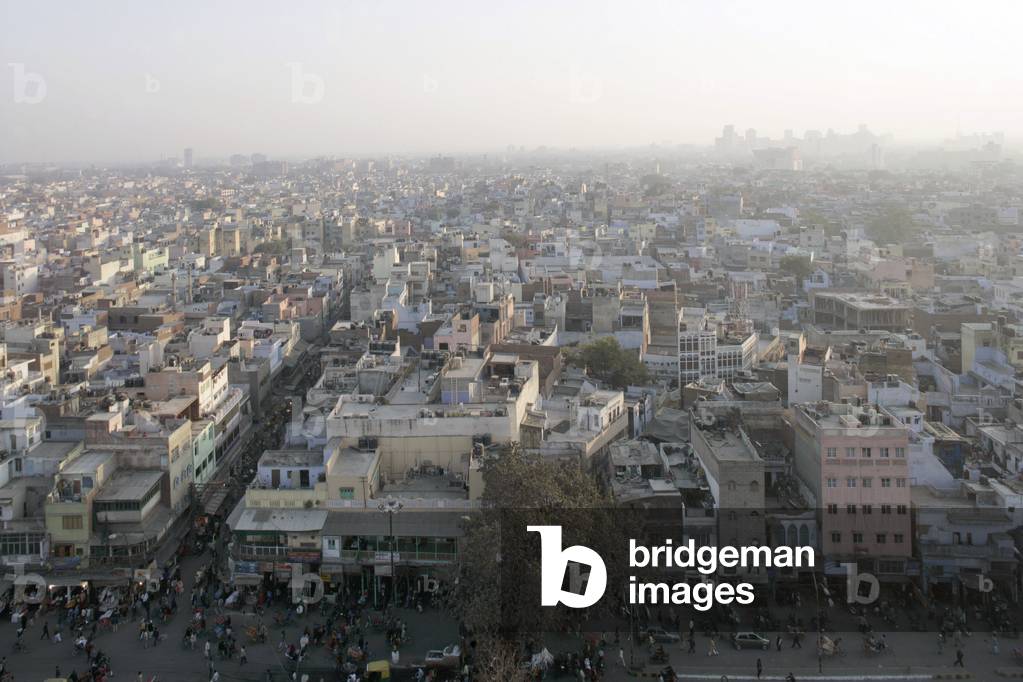
Old Delhi from a minaret of the Jama Masjid mosque in India.

TEC4607484: Old Delhi from a minaret of the Jama Masjid mosque in India. / Bridgeman Images

James Webb Space Telescope (JWST) - JWST Set for Testing in Space Simulation Chamber: The James Webb Space Telescope (JWST) in front of the empty chamber door of Nasa's Johnson Space Center. He'll be locked up for a series of tests. The JWST will replace the Hubble Space Telescope in 2018. Equipped with a 6.5 m mirror, he will observe the universe mainly in infrared. 25 May 2017. Nasa's James Webb Space Telescope sits in front of the door to Chamber A, a giant thermal vacuum chamber located at Nasa's Johnson Space Center. The telescope will soon be moved into the chamber, where it will spend a hot Houston summer undergoing tests at sub-freezing cryogenic temperatures. The telescope will operate at an extremely cold 39 K (-234* C or -389* F) in space, so NASA is simulating those conditions on the ground, ensuring the optics and instruments will perform perfectly after launch. May 25 2017.

PIX4607506: James Webb Space Telescope (JWST) - JWST Set for Testing in Space Simulation Chamber: The James Webb Space Telescope (JWST) in front of the empty chamber door of Nasa's Johnson Space Center. He'll be locked up for a series of tests. The JWST will replace the Hubble Space Telescope in 2018. Equipped with a 6.5 m mirror, he will observe the universe mainly in infrared. 25 May 2017. Nasa's James Webb Space Telescope sits in front of the door to Chamber A, a giant thermal vacuum chamber located at Nasa's Johnson Space Center. The telescope will soon be moved into the chamber, where it will spend a hot Houston summer undergoing tests at sub-freezing cryogenic temperatures. The telescope will operate at an extremely cold 39 K (-234* C or -389* F) in space, so NASA is simulating those conditions on the ground, ensuring the optics and instruments will perform perfectly after launch. May 25 2017. / Bridgeman Images

The Retiro district in Buenos Aires (Argentina).

OMG4607601: The Retiro district in Buenos Aires (Argentina). / Bridgeman Images

Evergreen swamp magnolia, Magnolia glauca sempervirens. Handcoloured botanical illustration drawn and engraved by William Clark from Richard Morris's “Flora Conspicua” London, Longman, Rees, 1826. William Clark was former draughtsman to the London Horticultural Society and illustrated many botanical books in the 1820s and 1830s.

FLO4607633: Evergreen swamp magnolia, Magnolia glauca sempervirens. Handcoloured botanical illustration drawn and engraved by William Clark from Richard Morris's “Flora Conspicua” London, Longman, Rees, 1826. William Clark was former draughtsman to the London Horticultural Society and illustrated many botanical books in the 1820s and 1830s. / Bridgeman Images

Leucothoe seduced by Apollo - Leucothoe, charmed with the beauty of Apollo, yields without resistance. Copperplate engraving by W. Walker after an illustration by C. Monnet from The Copper Plate Magazine or Monthly Treasure, G. Kearsley, London, 1778.

FLO4607679: Leucothoe seduced by Apollo - Leucothoe, charmed with the beauty of Apollo, yields without resistance. Copperplate engraving by W. Walker after an illustration by C. Monnet from The Copper Plate Magazine or Monthly Treasure, G. Kearsley, London, 1778. / Bridgeman Images

Puerto Madero district in Buenos Aires (Argentina).

OMG4607727: Puerto Madero district in Buenos Aires (Argentina). / Bridgeman Images

Allegory of Fortune (oil on wood, end 16th century)

LRI4607516: Allegory of Fortune (oil on wood, end 16th century), Ligozzi, Jacopo (1547-1626) / Bridgeman Images

Congreso district of Buenos Aires (Argentina).

OMG4607566: Congreso district of Buenos Aires (Argentina). / Bridgeman Images
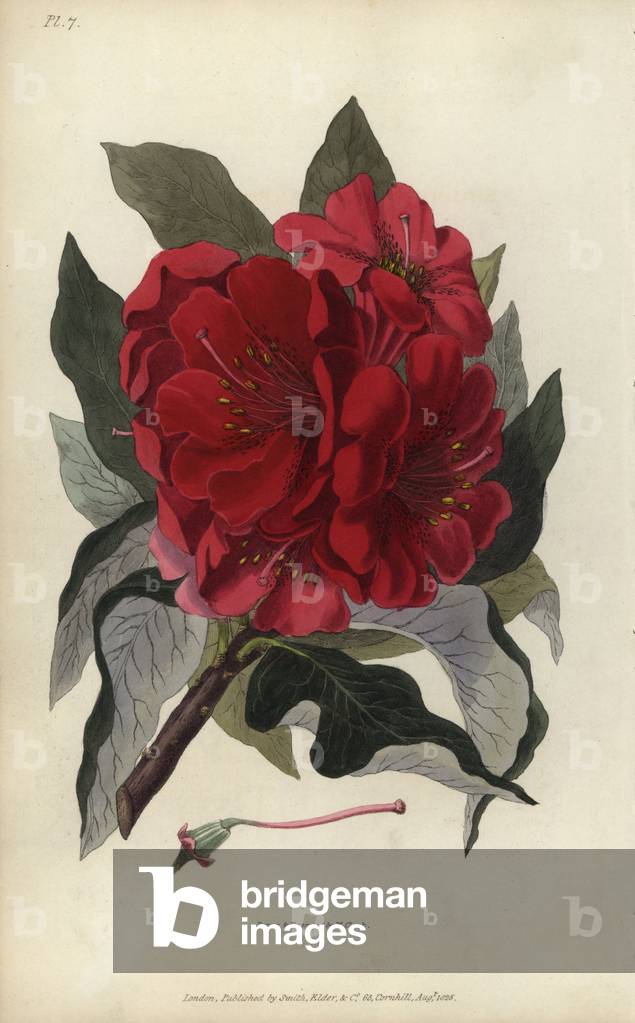
Indian tree rosebay, Rhododendron arboreum. Handcoloured botanical illustration drawn and engraved by William Clark from Richard Morris's “Flora Conspicua” London, Longman, Rees, 1826. William Clark was former draughtsman to the London Horticultural Society and illustrated many botanical books in the 1820s and 1830s.

FLO4607617: Indian tree rosebay, Rhododendron arboreum. Handcoloured botanical illustration drawn and engraved by William Clark from Richard Morris's “Flora Conspicua” London, Longman, Rees, 1826. William Clark was former draughtsman to the London Horticultural Society and illustrated many botanical books in the 1820s and 1830s. / Bridgeman Images

The bourgeois of Calais take hostage to Edward of England (1312-1377), during the siege of Calais (1346) - Surrender of Calais to King Edward III, 1346. Copperplate engraving by J. Hall after an illustration by Edwards from The Copper Plate Magazine or Monthly Treasure, G. Kearsley, London, 1778.

FLO4607638: The bourgeois of Calais take hostage to Edward of England (1312-1377), during the siege of Calais (1346) - Surrender of Calais to King Edward III, 1346. Copperplate engraving by J. Hall after an illustration by Edwards from The Copper Plate Magazine or Monthly Treasure, G. Kearsley, London, 1778. / Bridgeman Images

The centre of Brno, Moravia, Czech Republic.

OMG4607869: The centre of Brno, Moravia, Czech Republic. / Bridgeman Images
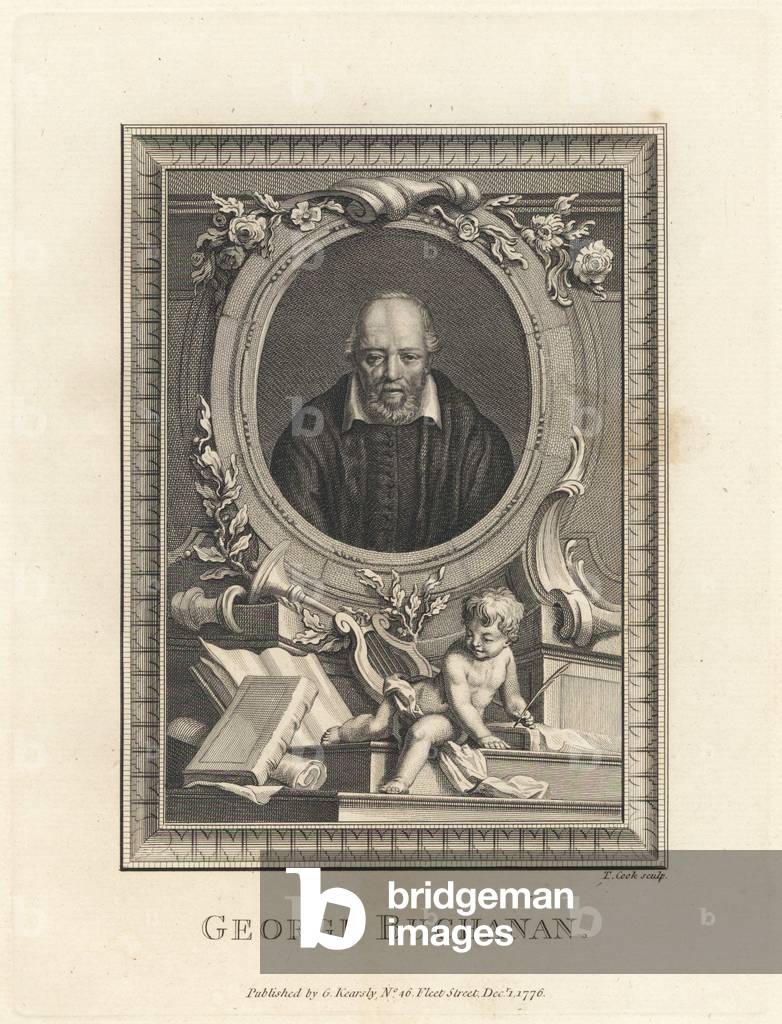
Portrait of George Buchanan, Scottish historian and humanist scholar, 1505-1582. In an oval decorated with foliage, horn, lyre, books and putto with quill. Copperplate engraving by Thomas Cook from The Copper Plate Magazine or Monthly Treasure, G. Kearsley, London, 1778.

FLO4607910: Portrait of George Buchanan, Scottish historian and humanist scholar, 1505-1582. In an oval decorated with foliage, horn, lyre, books and putto with quill. Copperplate engraving by Thomas Cook from The Copper Plate Magazine or Monthly Treasure, G. Kearsley, London, 1778. / Bridgeman Images
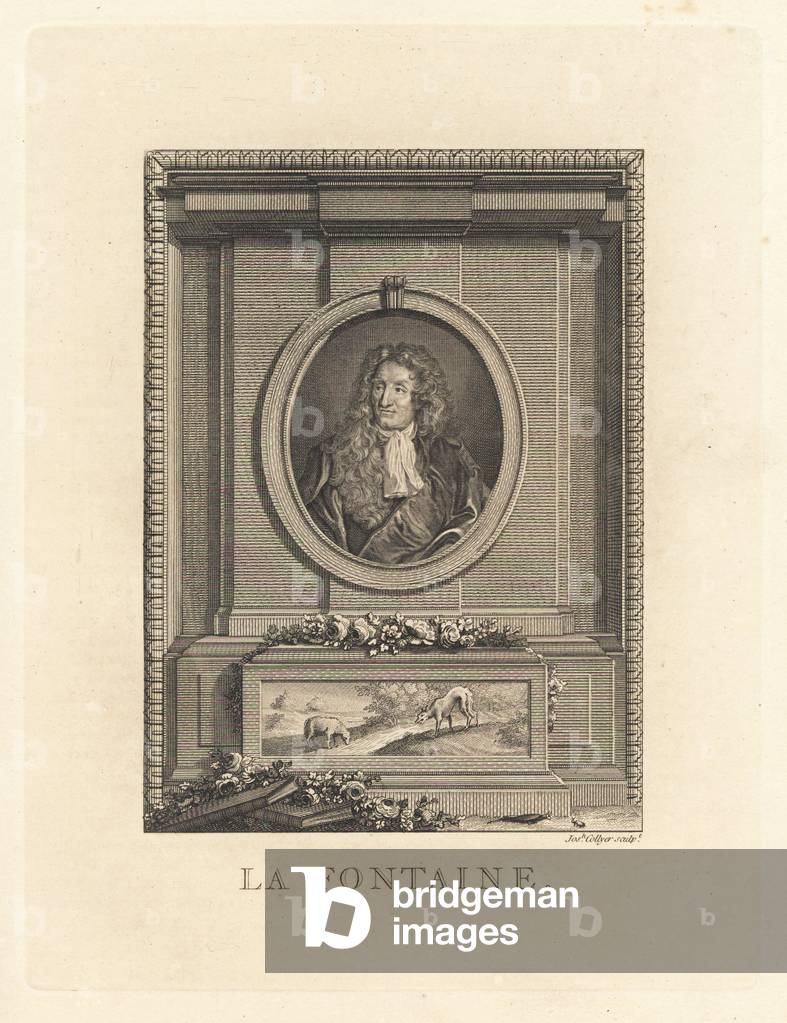
Jean de la Fontaine, French poet and fabulist, 1621-1695, within oval above a vignette of a fable. Copperplate engraving by Joshua Collyer from The Copper Plate Magazine or Monthly Treasure, G. Kearsley, London, 1778.

FLO4608015: Jean de la Fontaine, French poet and fabulist, 1621-1695, within oval above a vignette of a fable. Copperplate engraving by Joshua Collyer from The Copper Plate Magazine or Monthly Treasure, G. Kearsley, London, 1778. / Bridgeman Images


Back to top