
Print this page or go back to standard view.
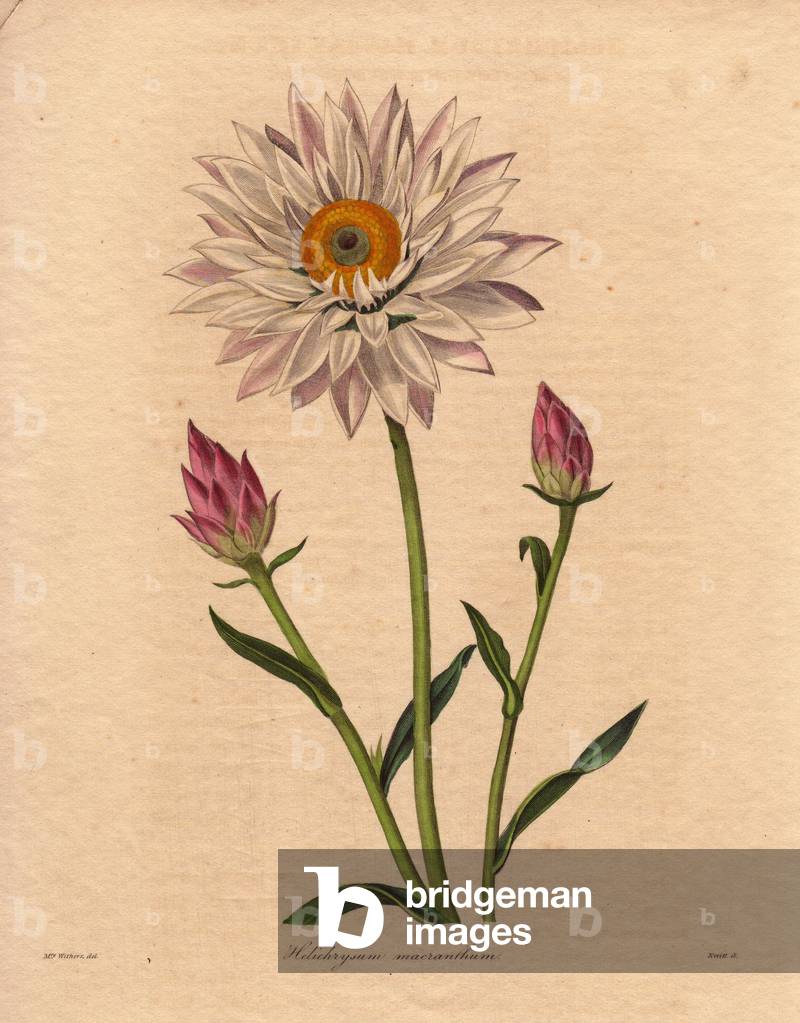
FLO4675018: Variete of immortelle (Helichrysum macranthum), a large white flower slightly tinged with rose. Illustration by Augusta Innes Withers (1793-1877), in The Botanist, series by Benjamin Maund in five volumes, published between 1836 and 1842. This work is renowned for its finely detailed engravings. / Bridgeman Images

FLO4675182: Apple Pitmaston golden curnne. Lithograph by Benjamin Maund (1790-1863) published in The Fruitist, London, England, 1850. Pitmaston Golden Wreath apple, Malus domestica, within a Della Robbia ornamental frame with text below. Handcoloured glyphograph from Benjamin Maund's “” The Fruitist,”” London, 1850, Groombridge and Sons. / Bridgeman Images

FLO4675212: Apple Taunton golden pippin. Lithograph by Benjamin Maund (1790-1863) published in The Fruitist, London, England, 1850. Taunton Golden Pippin apple, Malus domestica, within a Della Robbia ornamental frame with text below. Handcoloured woodblock engraving from Benjamin Maund's “” The Fruitist,”” London, 1850, Groombridge and Sons. / Bridgeman Images

FLO4673112: Section through the brain. Lithograph by Davesne, based on a drawing by Leveille, in Petity Atlas complet d'Anatomie descriptive du Corps Humain, by Dr. Joseph Nicolas Masse, published by Mequignon Marvis, Paris (France), 1864. / Bridgeman Images

FLO4673204: Brain sections. Lithograph by Davesne, based on a drawing by Leveille, in Petity Atlas complet d'Anatomie descriptive du Corps Humain, by Dr. Joseph Nicolas Masse, published by Mequignon Marvis, Paris (France), 1864. / Bridgeman Images

JLJ4673288: Potato Pickers, 1956 (oil on canvas), Rohner, Georges (1913-2000) / Bridgeman Images

FLO4673300: English noble couple hunting with falcons, 13th century. He wears a crown, long green robe, gauntlets and long cracows or foals. She wears her hair tied with pearls, green hood and red robe, and holds a falcon on her gauntlet. Handcoloured copperplate drawn and engraved by Leopold Massard from “” French Costumes from KingClovis to Our Days,”” Massard, Mifliez, Paris, 1834., Massard, Leopold (1812-1889) / Bridgeman Images

FLO4673324: Philip III, Count of Evreux and King of Navarre, 1306-1343. He wears a crown, chainmail hauberk, tunic with coat of arms, spurs, and holds a sword. Handcoloured copperplate drawn and engraved by Leopold Massard from “” French Costumes from KingClovis to Our Days,”” Massard, Mifliez, Paris, 1834., Massard, Leopold (1812-1889) / Bridgeman Images

JLJ4673377: Portrait of Pablo Picasso, 1956 (oil on canvas), Mac-Avoy, Edouard Georges (1905-91) / Bridgeman Images

FLO4672926: The circulatory system of the intestines. Lithograph of Anneshower, based on a drawing by Leveille, in Petity Atlas complet d'Anatomie descriptive du Corps Humain, by Dr. Joseph Nicolas Masse, published by Mequignon Marvis, Paris (France), 1864. / Bridgeman Images

FLO4672981: Circulatory system of the leg and foot. Lithograph of Choubard, based on a drawing by Leveille, in Petity Atlas complet d'Anatomie descriptive du Corps Humain, by Dr. Joseph Nicolas Masse, published by Mequignon Marvis, Paris (France), 1864. / Bridgeman Images

FLO4672987: Arm and hand circulatory system. Lithograph of Corbie, based on a drawing by Leveille, in Petity Atlas complet d'Anatomie descriptive du Corps Humain, by Dr. Joseph Nicolas Masse, published by Mequignon Marvis, Paris (France), 1864. / Bridgeman Images

FLO4673005: Veins of the legs and foot. Lithograph of Corbie, based on a drawing by Leveille, in Petity Atlas complet d'Anatomie descriptive du Corps Humain, by Dr. Joseph Nicolas Masse, published by Mequignon Marvis, Paris (France), 1864. / Bridgeman Images

FLO4673246: Ultragotha (Ultragothe), Queen of the Franks, wife to Childebert I, 6th century. She wears a crown over her long hair, a tunic with sleeves, a type of chlamys cape tied at the shoulder with laces, and wears an escarcelle (purse) hanging from her belt. Handcoloured copperplate drawn and engraved by Leopold Massard from “” French Costumes from KingClovis to Our Days,”” Massard, Mifliez, Paris, 1834., Massard, Leopold (1812-1889) / Bridgeman Images

FLO4673087: Different sections of the skull. Lithograph of Corbie, based on a drawing by Leveille, in Petity Atlas complet d'Anatomie descriptive du Corps Humain, by Dr. Joseph Nicolas Masse, published by Mequignon Marvis, Paris (France), 1864. / Bridgeman Images

FLO4673298: Philip, Count of Artois (Philippe d'Artois), died of his wounds after the Battle of Furnes, 1265-1298. He wears a hooded chainmail hauberk, sleeveless tunic, and carries the escutcheon with his coat of arms: gold fleurs de liys on a blue field, red label with three gold castles on each point. Handcoloured copperplate drawn and engraved by Leopold Massard from “” French Costumes from KingClovis to Our Days,”” Massard, Mifliez, Paris, 1834., Massard, Leopold (1812-1889) / Bridgeman Images
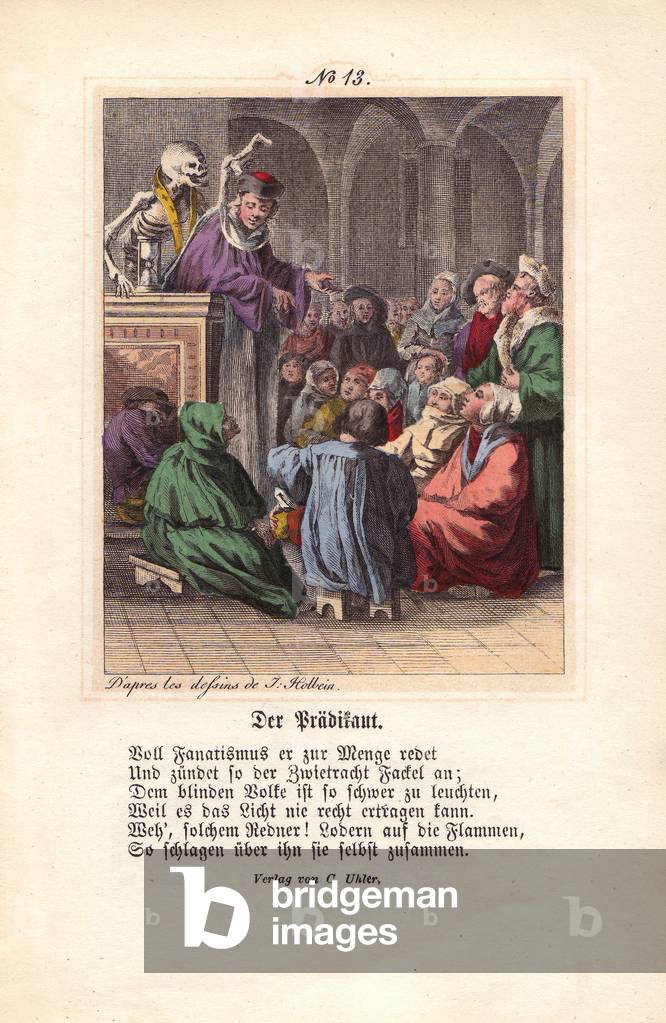
FLO4675530: The Predicator. Death with a stole around his neck stands behind the predicator, holding a jaw above his head, possibly meaning that he is the best predictor of both. Plate 13. Hand-coloured engraving by Christian Von Mechel (or Chretien de Mechel, 1737-1817) in “The Triumph of Death”” based on original drawings by Hans Holbein the Young (1497-1543), 1860. / Bridgeman Images
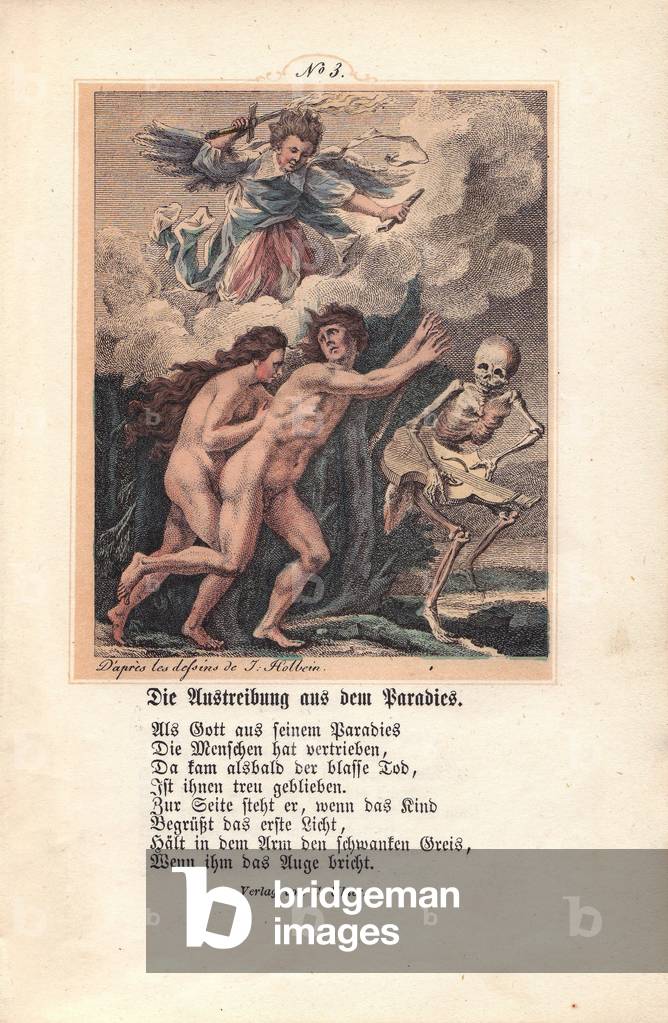
FLO4675675: Expulsion from heaven. Adam and Eve are preceded by death, which plays on an old man, or a beggar's lyre, as if she wanted to show her joy in the victory he obtained over man. Hand-coloured engraving by Christian Von Mechel (or Chretien de Mechel, 1737-1817) in “The Triumph of Death”” based on original drawings by Hans Holbein the Young (1497-1543), 1860. / Bridgeman Images

FLO4675580: The emperor. Sitting on a throne, in the presence of his courtiers, the emperor seems to be listening, or doing justice, to a poor man who is kneeling before him and complains against his rich oppressor, whom the emperor, holding the sword of justice, seems to consider with an angry face. Behind him, death puts his hand on his crown. Hand-coloured engraving by Christian Von Mechel (or Chretien de Mechel, 1737-1817) in “The Triumph of Death”” based on original drawings by Hans Holbein the Young (1497-1543), 1860. / Bridgeman Images
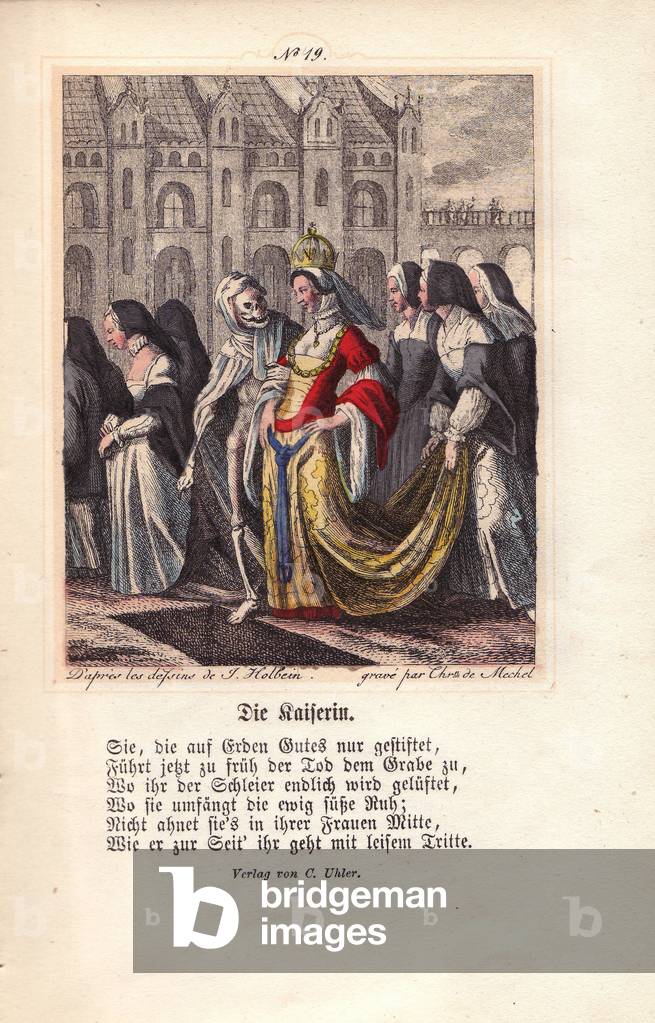
FLO4675614: The imperress. Sumptuously clothed and accompanied by her bridesmaids, the Impress is intercepted in her march by Death incarnated in the character of an old ratatinee, who shows an open tomb, and seems to say, “For this you will end up going there”. Hand-coloured engraving by Christian Von Mechel (or Chretien de Mechel, 1737-1817) in “The Triumph of Death”” based on original drawings by Hans Holbein the Young (1497-1543), 1860. / Bridgeman Images

FLO4675633: The young couple. She is accompanied by her husband, who seeks to depart her attention from Death, who dances insidiously in front of them while playing the drum. Hand-coloured engraving by Christian Von Mechel (or Chretien de Mechel, 1737-1817) in “The Triumph of Death”” based on original drawings by Hans Holbein the Young (1497-1543), 1860. / Bridgeman Images

FLO4675694: The merchant. After escaping from the perils of the sea, he reached the shore on which his goods were waiting. The merchant, while contemplating his wealth, is finally surprised by death. One of his companions raised his hands of despair. Hand-coloured engraving by Christian Von Mechel (or Chretien de Mechel, 1737-1817) in “The Triumph of Death”” based on original drawings by Hans Holbein the Young (1497-1543), 1860. / Bridgeman Images

FLO4675836: Design for a dagger sheath designed by Holbein. The characters are a king, a queen and a warrior, involuntarily accompany Death in the dance. The king's despair, the downfall of the queen accompanied by her little dog, the terror of the soldier who hears the drum of death, are portrayed with veracity and spirit of equality. Hand-coloured engraving by Christian Von Mechel (or Chretien de Mechel, 1737-1817) in “The Triumph of Death”” based on original drawings by Hans Holbein the Young (1497-1543), 1860. / Bridgeman Images

FLO4675216: Auch's pear. Lithograph by Benjamin Maund (1790-1863) published in The Fruitist, London, England, 1850. Pear d'Auch pear, Pyrus communis, within a Della Robbia ornamental frame with text below. Handcoloured glyphograph from Benjamin Maund's “” The Fruitist,”” London, 1850, Groombridge and Sons. / Bridgeman Images

FLO4675386: Apple elford pippin. Lithograph by Benjamin Maund (1790-1863) published in The Fruitist, London, England, 1850. Elford Pippin apple, Malus domestica, within a Della Robbia ornamental frame with text below. Handcoloured glyphograph from Benjamin Maund's “” The Fruitist,”” London, 1850, Groombridge and Sons. / Bridgeman Images

FLO4675401: Apple king of pippins. Lithograph by Benjamin Maund (1790-1863) published in The Fruitist, London, England, 1850. King of Pippins apple, Malus domestica, within a Della Robbia ornamental frame with text below. Handcoloured glyphograph from Benjamin Maund's “” The Fruitist,”” London, 1850, Groombridge and Sons. / Bridgeman Images

FLO4675453: Common plum, nectarine variete. Lithograph by Benjamin Maund (1790-1863) published in The Fruitist, London, England, 1850. Nectarine plum, Prunus domestica. Handcoloured glyphograph from Benjamin Maund's “” The Fruitist,”” London, 1850, Groombridge and Sons. / Bridgeman Images
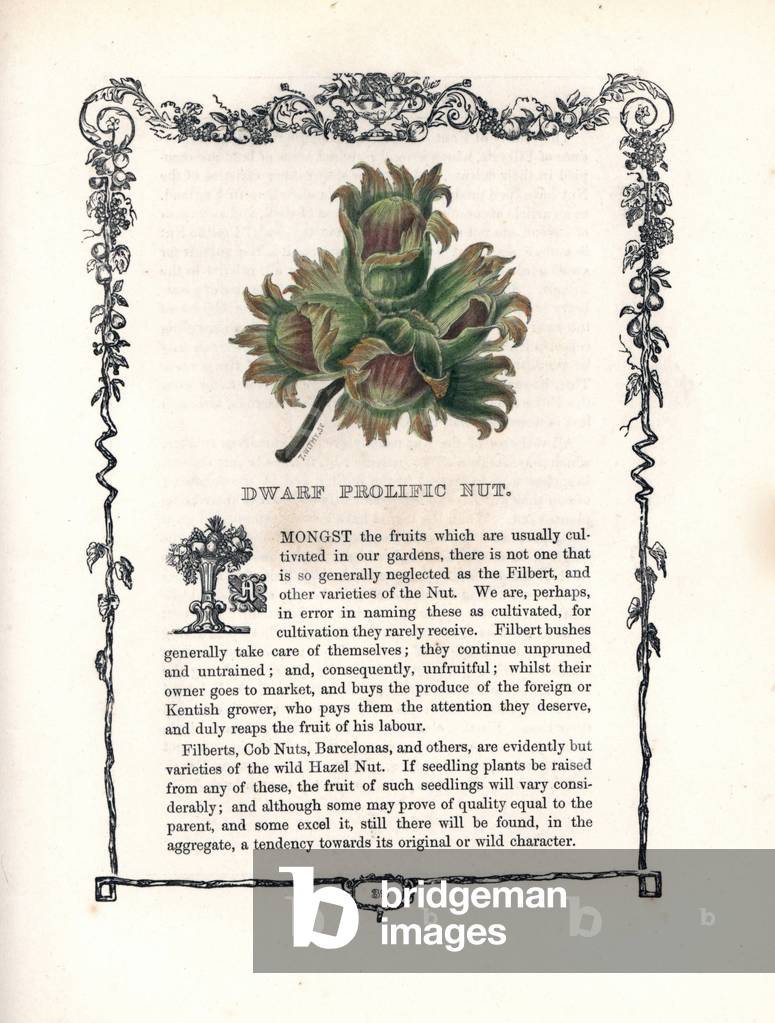
FLO4675481: Dwarf prolific hazelnut. Lithograph by Benjamin Maund (1790-1863) published in The Fruitist, London, England, 1850. Dwarf Prolific Nut, Corylus avellana, within a Della Robbia ornamental frame with text below. Handcoloured glyphograph engraved by T. Withy from Benjamin Maund's “” The Fruitist,”” London, 1850, Groombridge and Sons. / Bridgeman Images
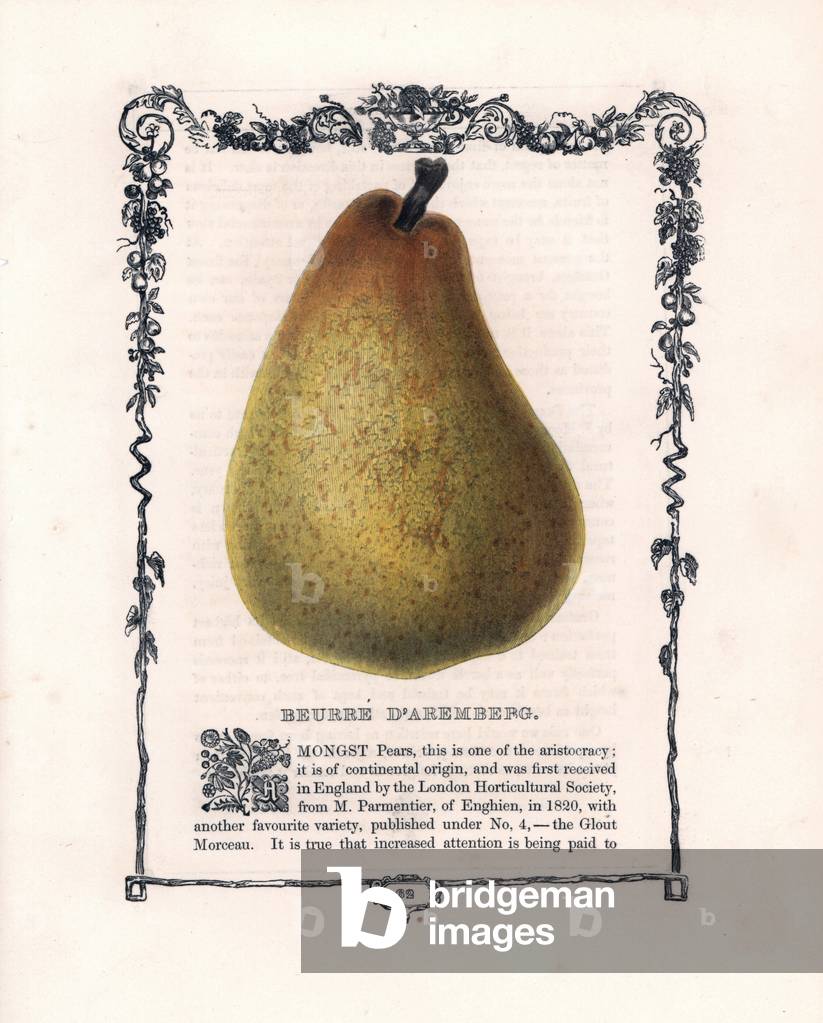
FLO4675487: Common pear, Aremberg butter variete. Lithograph by Benjamin Maund (1790-1863) published in The Fruitist, London, England, 1850. Aremberg pear butter, Pyrus communis. Handcoloured glyphograph from Benjamin Maund's “” The Fruitist,”” London, 1850, Groombridge and Sons. / Bridgeman Images
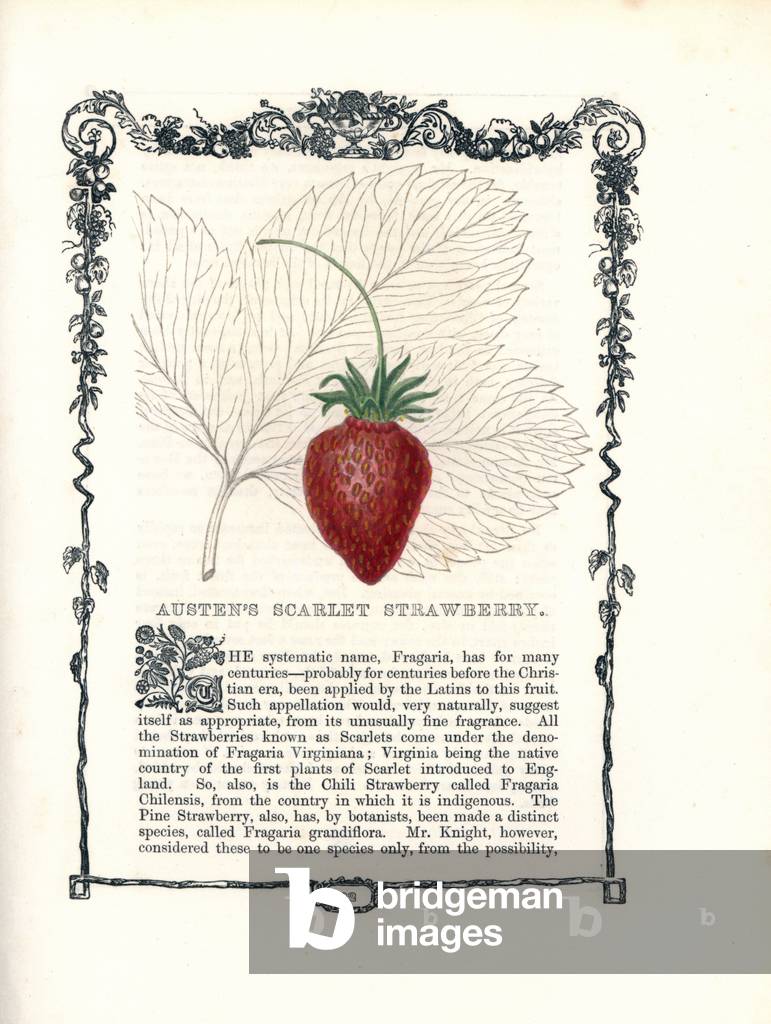
FLO4675217: Strawberry Austen Scarlate. Lithograph by Benjamin Maund (1790-1863) published in The Fruitist, London, England, 1850. Austen's Scarlet strawberry, Fragaria virginiana, within a Della Robbia ornamental frame with text below. Handcoloured glyphograph from Benjamin Maund's “” The Fruitist,”” London, 1850, Groombridge and Sons. / Bridgeman Images

FLO4675522: Pear, variety Susette de Bavay. Lithograph by Benjamin Maund (1790-1863) published in The Fruitist, London, England, 1850. Susette de Bavay pear, Pyrus communis. Handcoloured glyphograph from Benjamin Maund's “” The Fruitist,”” London, 1850, Groombridge and Sons. / Bridgeman Images

FLO4675806: The blind. Death grabs the stick of the Blind and drains it with it. Hand-coloured engraving by Christian Von Mechel (or Chretien de Mechel, 1737-1817) in “The Triumph of Death”” based on original drawings by Hans Holbein the Young (1497-1543), 1860. / Bridgeman Images

FLO4674774: Rhexia mariana. Native to the United States and Cuba, this plant has purple flowers that contrast with its orange stamens. Endangered species. Illustration by Miss R. Mills (active 1836-1842), in The Botanist, series by Benjamin Maund in five volumes, published between 1836 and 1842. This work is renowned for its finely detailed engravings. / Bridgeman Images

FLO4675098: Pear variete nec plus die. Lithograph by Benjamin Maund (1790-1863) published in The Fruitist, London, England, 1850. Ne Plus Meuris pear, Pyrus communis, within a Della Robbia ornamental frame with text below. Handcoloured glyphograph from Benjamin Maund's “” The Fruitist,”” London, 1850, Groombridge and Sons. / Bridgeman Images
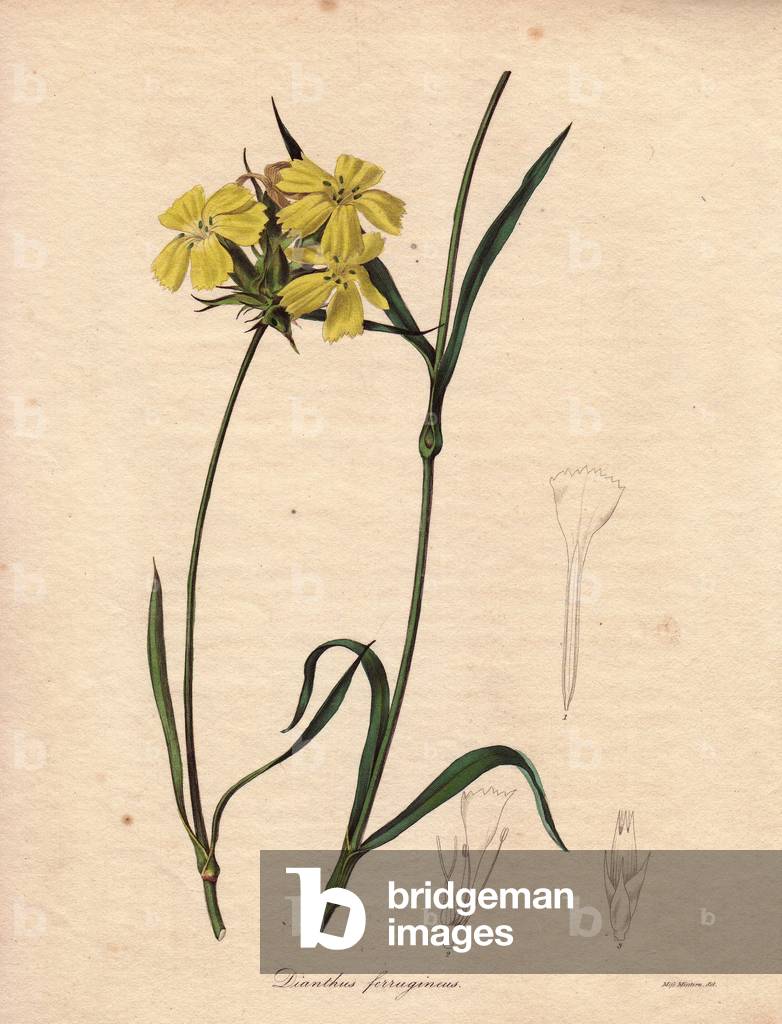
FLO4674869: Variety of true carnation (Dianthus Ferruginus), yellow in colour. / Bridgeman Images

FLO4673640: Jean de Bourbon, Lord of Rochefort, c.1325-1375. Baszard son of Peter I. He wears a white soutine with quarter blazon (azure, gold fleurs de liys, red band) over a red velvet hooded robe. From a book of homages to the Count of Clermont, folio 57. Handcoloured copperplate drawn and engraved by Leopold Massard from “” French Costumes from KingClovis to Our Days,”” Massard, Mifliez, Paris, 1834., Massard, Leopold (1812-1889) / Bridgeman Images