Print Friendly Version Page

2497527 Search Results

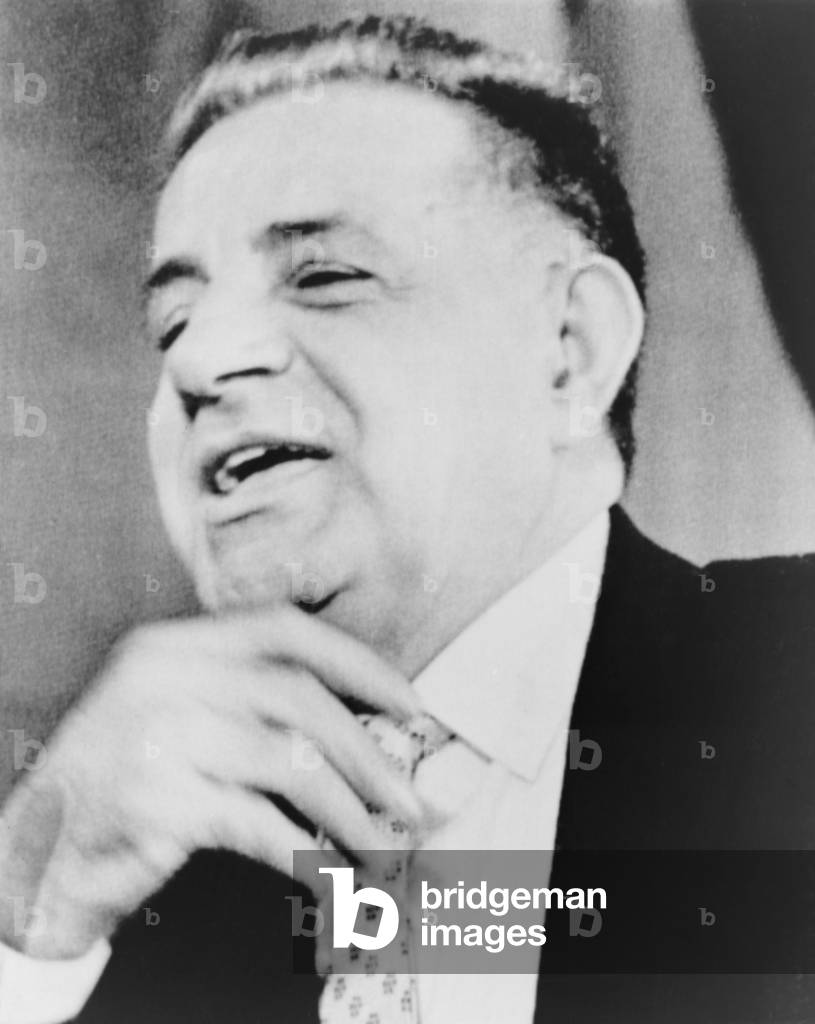
Joseph Valachi, 'singing' during appearance before Senate Investigations subcommittee in 1963. Valachi, a lifelong Mafia insider, provided detailed testimony on Mafia organization, culture, and leaders. Charles Bronson portrayed the gangster in the 1972 movie, THE VALACHI PAPERS

EVB2937068: Joseph Valachi, 'singing' during appearance before Senate Investigations subcommittee in 1963. Valachi, a lifelong Mafia insider, provided detailed testimony on Mafia organization, culture, and leaders. Charles Bronson portrayed the gangster in the 1972 movie, THE VALACHI PAPERS / Bridgeman Images

Dancers in evening attire, 1915 (drawing)

EVB2936199: Dancers in evening attire, 1915 (drawing), Held, John (Junior) (1889-1958) / Bridgeman Images
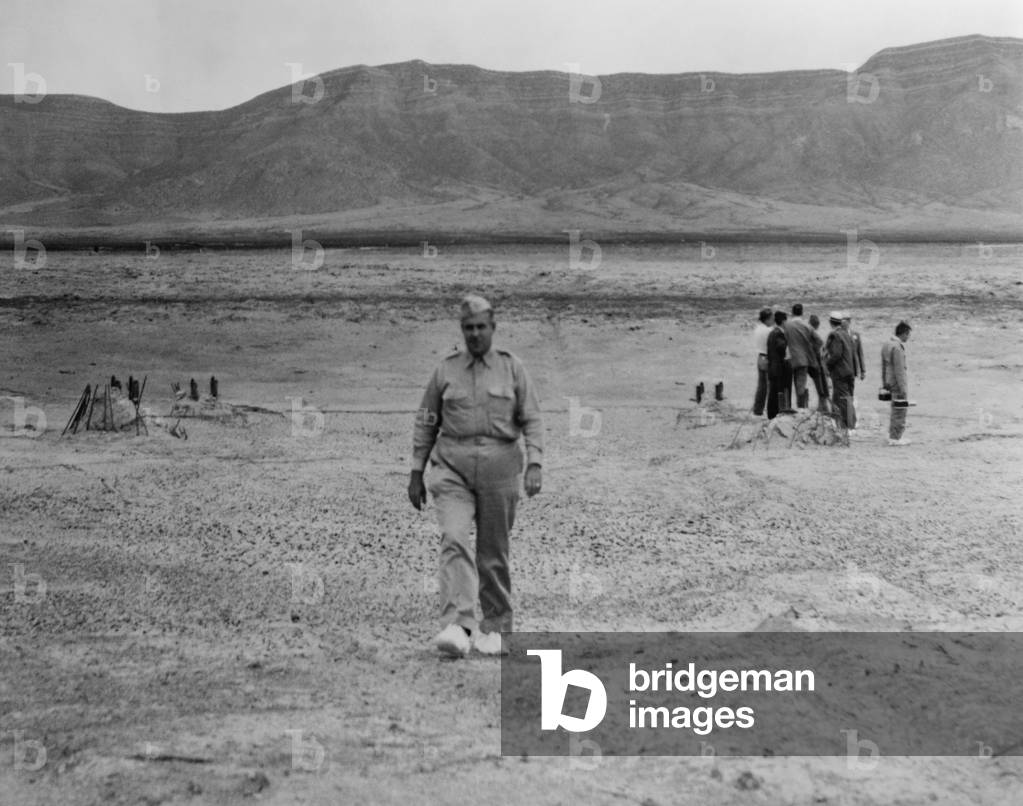
General Leslie Groves (1896-1970), walking across the site of the first atomic bomb blast site at Alamogordo, N.M. in July 1945. Groves was the military leader of the Manhattan Project to develop the Atomic Bomb. He was played by Paul Newman in the 1989 movie, FAT MAN AND LITTLE BOY

EVB2936233: General Leslie Groves (1896-1970), walking across the site of the first atomic bomb blast site at Alamogordo, N.M. in July 1945. Groves was the military leader of the Manhattan Project to develop the Atomic Bomb. He was played by Paul Newman in the 1989 movie, FAT MAN AND LITTLE BOY / Bridgeman Images
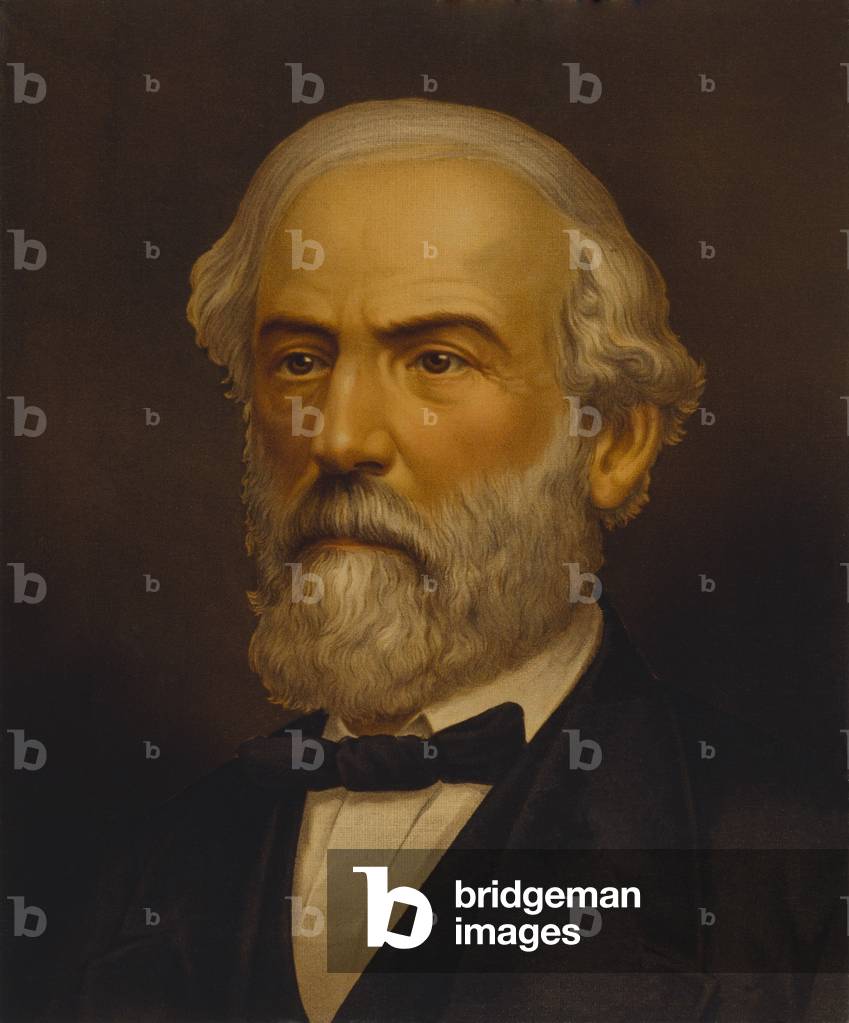
Robert Edward Lee (1807-1870), Commander of the armies of the Confederate States of Americ. Lithograph c. 1880

EVB2936235: Robert Edward Lee (1807-1870), Commander of the armies of the Confederate States of Americ. Lithograph c. 1880 / Bridgeman Images
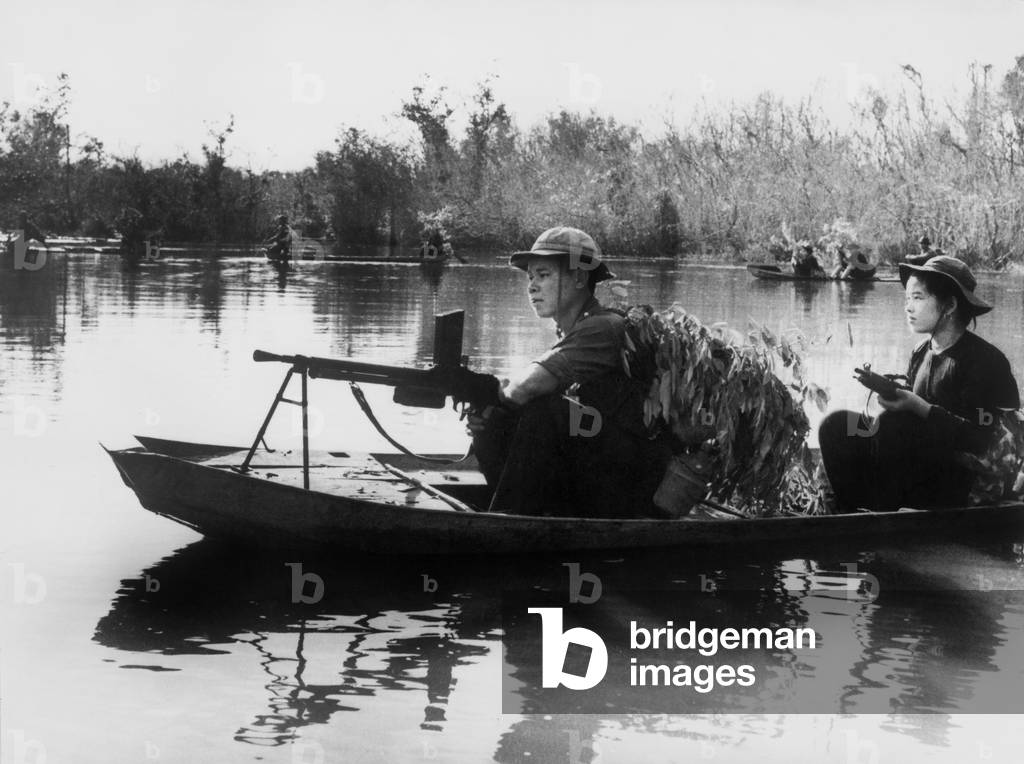
Viet Cong guerrillas in small boats patrol the Saigon River in South Vietnam in photo taken by communist forces

EVB2936246: Viet Cong guerrillas in small boats patrol the Saigon River in South Vietnam in photo taken by communist forces / Bridgeman Images
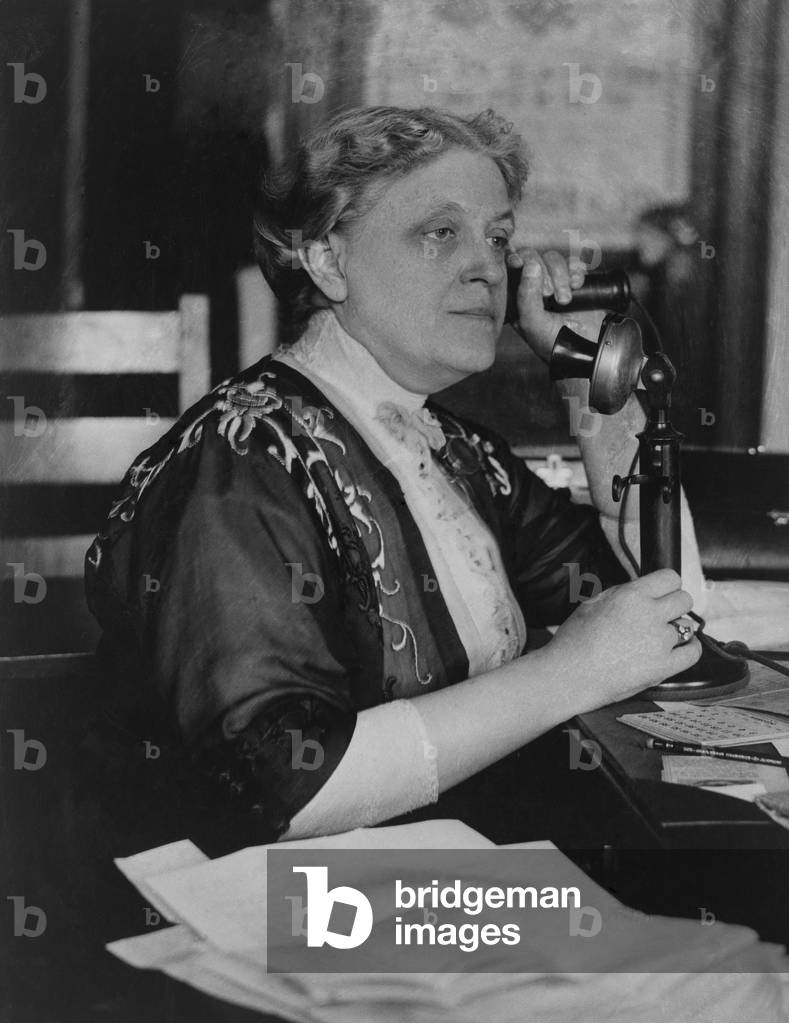
Carrie Chapman Catt, ( 1859-1947), was president of the National American Woman Suffrage Association when the Nineteenth Amendment grant women the right to vote was adopted in 1920

EVB2936281: Carrie Chapman Catt, ( 1859-1947), was president of the National American Woman Suffrage Association when the Nineteenth Amendment grant women the right to vote was adopted in 1920 / Bridgeman Images
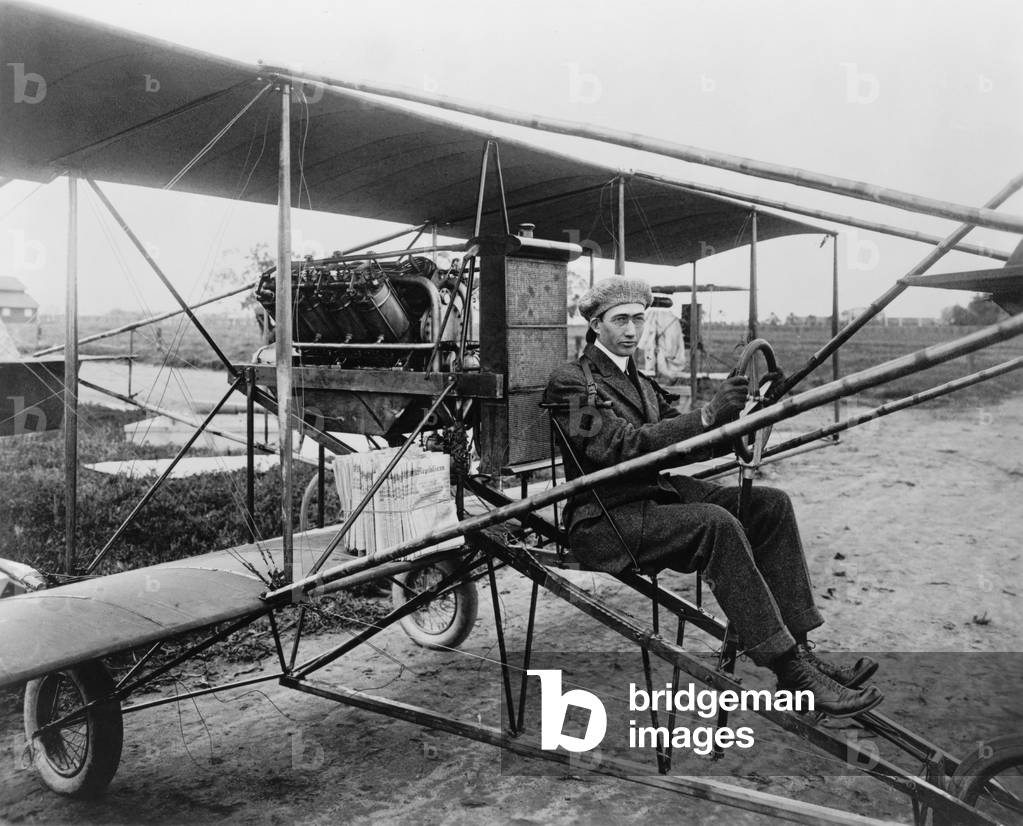
Glenn Martin (1886-1955), delivering newspapers in his airplane. He built his first airplane in 1909, and his first airplane factory in 1912 in Los Angeles, California. He successfully promoted his airplanes by stunt flying, and other attention getting gimmicks. c. 1911

EVB2936324: Glenn Martin (1886-1955), delivering newspapers in his airplane. He built his first airplane in 1909, and his first airplane factory in 1912 in Los Angeles, California. He successfully promoted his airplanes by stunt flying, and other attention getting gimmicks. c. 1911 / Bridgeman Images
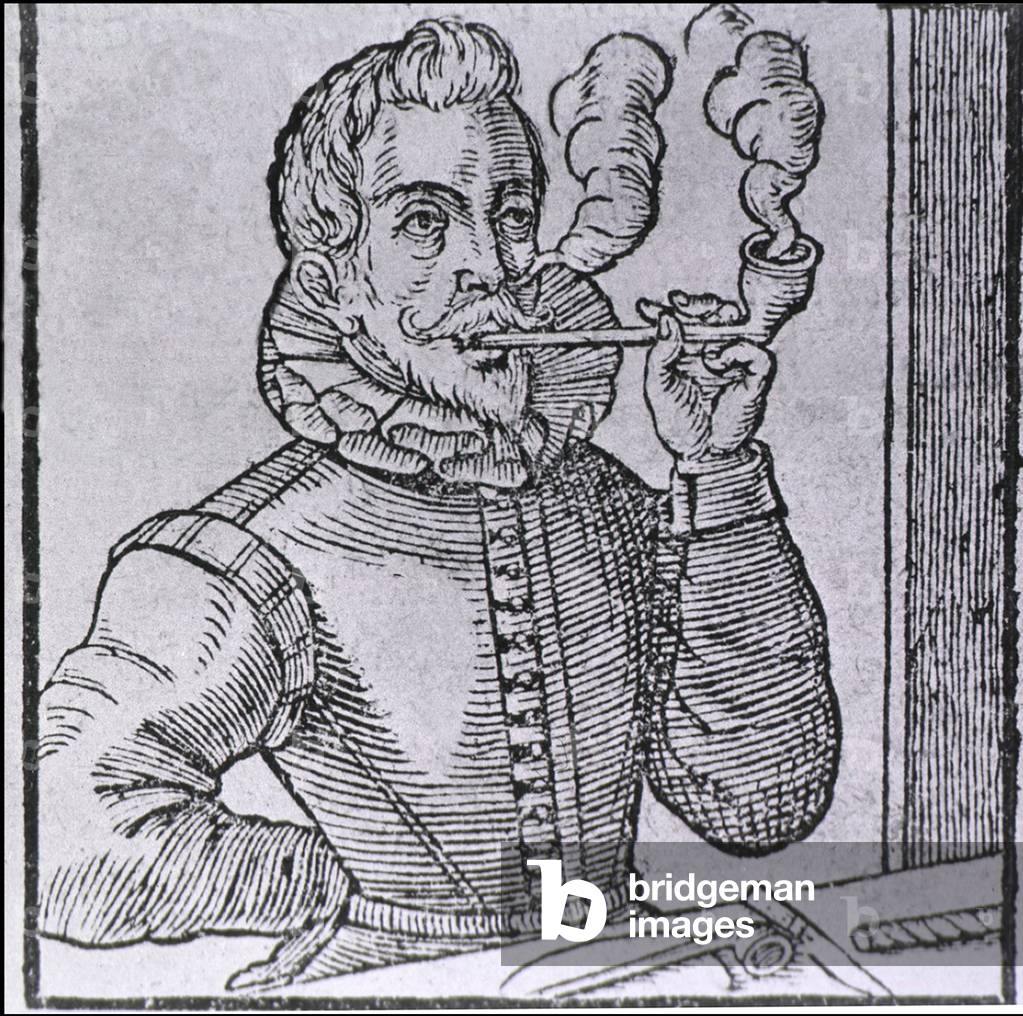
16th century Dutchman smoking a long-stemmed pipe, with another pipe and roll of tobacco on the table. Pipe smoking was introduced to Europe in the 16th century by sailors returning from the New World. 1595 wood engraving

EVB2936344: 16th century Dutchman smoking a long-stemmed pipe, with another pipe and roll of tobacco on the table. Pipe smoking was introduced to Europe in the 16th century by sailors returning from the New World. 1595 wood engraving / Bridgeman Images
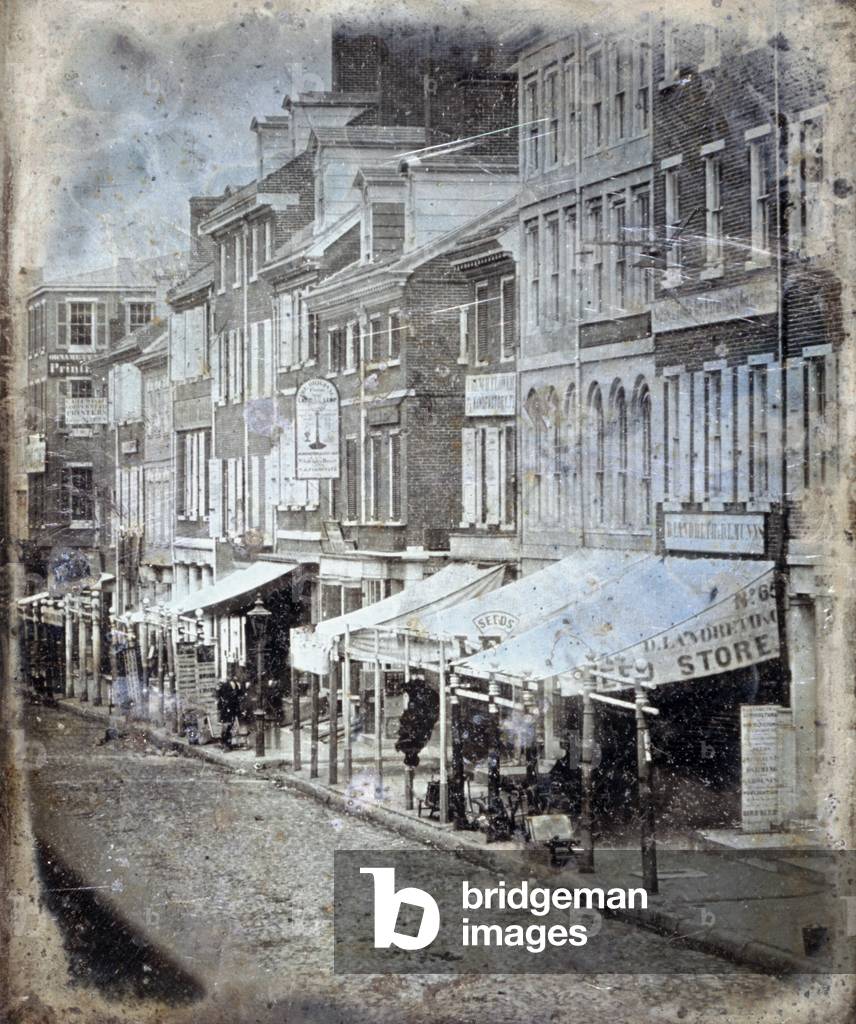
Daguerreotype of the north side of Chestnut Street, between 2nd Street and 3rd Street, Philadelphia, Pennsylvania 1843

EVB2936368: Daguerreotype of the north side of Chestnut Street, between 2nd Street and 3rd Street, Philadelphia, Pennsylvania 1843 / Bridgeman Images
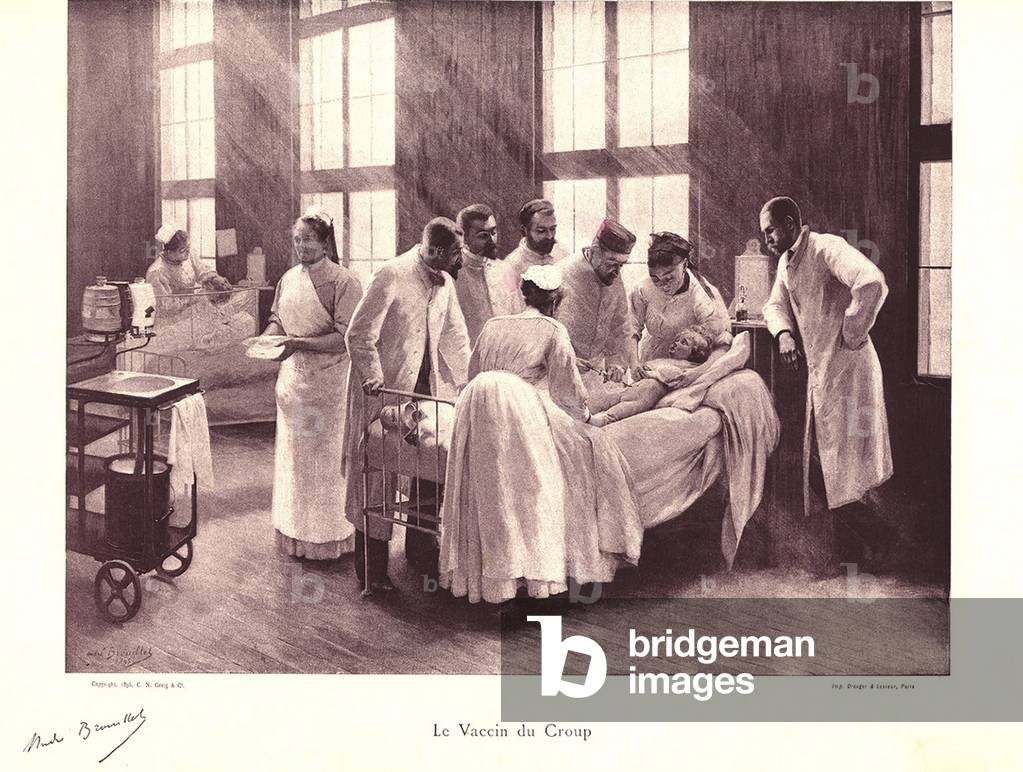
Croup vaccination. Doctor administers a croup vaccination into the abdomen of little girl as a group of doctors and nurses observe

EVB2936376: Croup vaccination. Doctor administers a croup vaccination into the abdomen of little girl as a group of doctors and nurses observe / Bridgeman Images
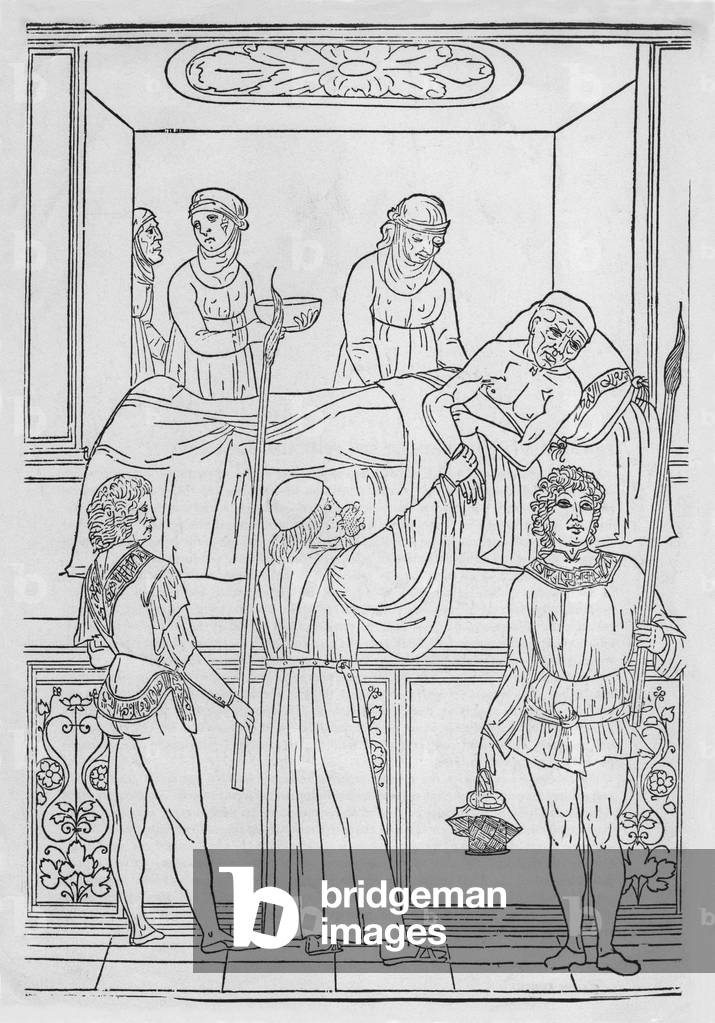
Plague patient. A physician (center front) is taking the pulse of a patient while he breaths through sponge soaked in herbs to protect against evil emanations from the victim. Two men with torches provide light. Three women attend to the patient. From Joannes de Ketham's FASCICULO DE MEDICINA, 1493. Ketham was a German physician living in Italy at the end of the fifteenth century

EVB2936404: Plague patient. A physician (center front) is taking the pulse of a patient while he breaths through sponge soaked in herbs to protect against evil emanations from the victim. Two men with torches provide light. Three women attend to the patient. From Joannes de Ketham's FASCICULO DE MEDICINA, 1493. Ketham was a German physician living in Italy at the end of the fifteenth century / Bridgeman Images
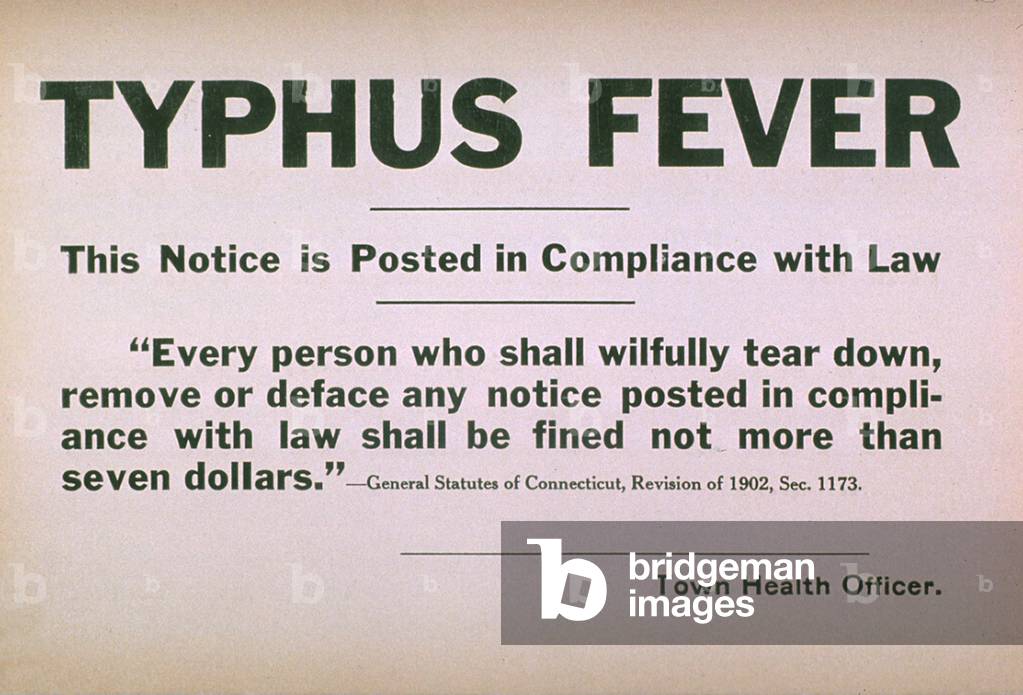
Early 20th century quarantine sign for the contagious disease typhus fever

EVB2936417: Early 20th century quarantine sign for the contagious disease typhus fever / Bridgeman Images

The Out-patient's Room in University College Hospital 1872, in London. Some patients stand in the crowded waiting room. In the background is a dispensary. From THE GRAPHIC, Jan 6, 1872,

EVB2936425: The Out-patient's Room in University College Hospital 1872, in London. Some patients stand in the crowded waiting room. In the background is a dispensary. From THE GRAPHIC, Jan 6, 1872, / Bridgeman Images
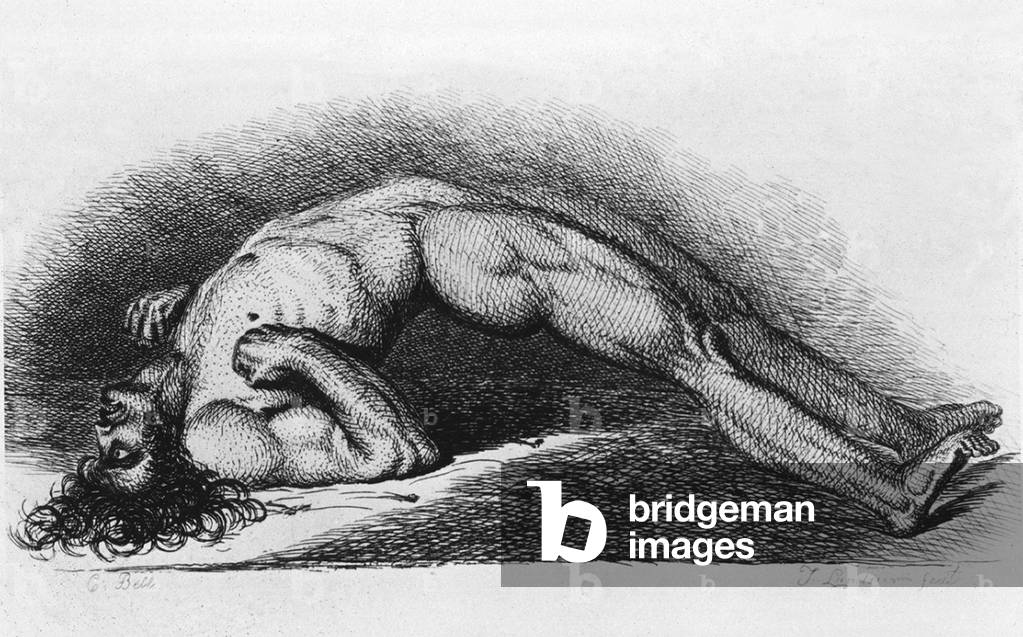
Tetanus (Lockjaw) victim. The contracted body of soldier suffering from tetanus. Engraving from painting by Charles Bell, 1809

EVB2936444: Tetanus (Lockjaw) victim. The contracted body of soldier suffering from tetanus. Engraving from painting by Charles Bell, 1809 / Bridgeman Images

Operating room amphitheater of the Massachusetts General Hospital, Boston. A patient is receiving ether anesthesia as doctors and students observe. 1888

EVB2936471: Operating room amphitheater of the Massachusetts General Hospital, Boston. A patient is receiving ether anesthesia as doctors and students observe. 1888 / Bridgeman Images
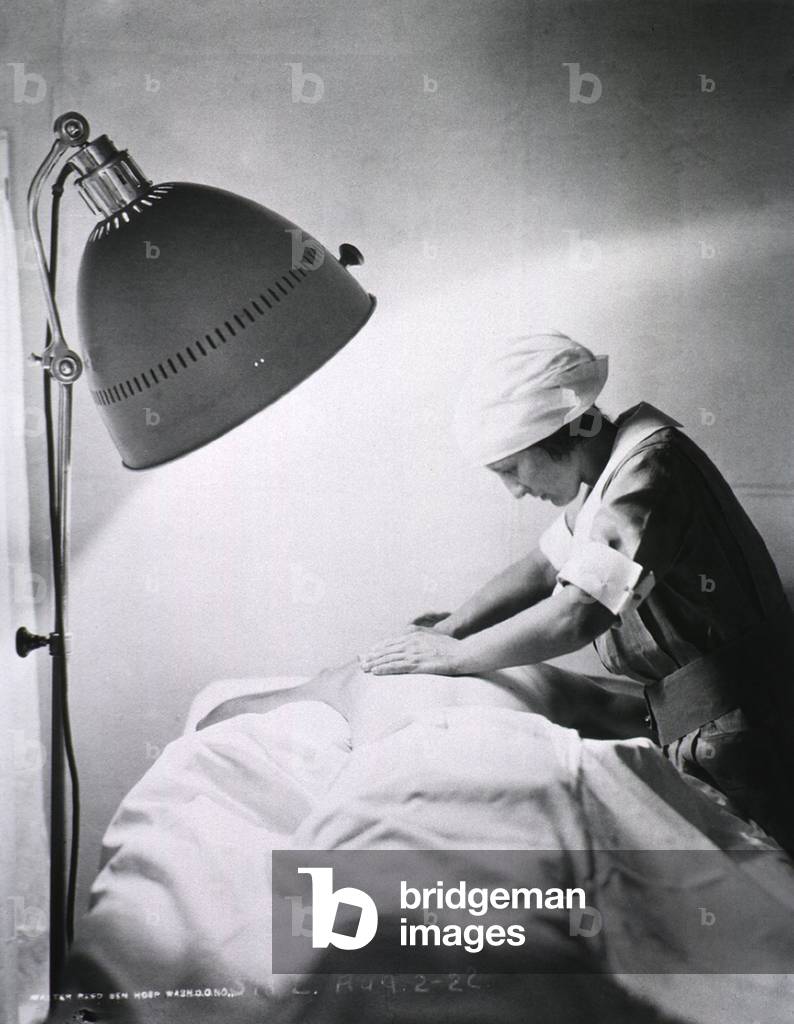
Nurse giving back rub to a patient in Walter Reed General Hospital. 1922

EVB2936478: Nurse giving back rub to a patient in Walter Reed General Hospital. 1922 / Bridgeman Images

European portrait of Abu Bakr Muhammad Ibn Zakariy Razi (known in Europe as Rhazes or Rasis),(865-925). The Persian scholar and physician is considered one of the greatest physicians of the Islamic world. He holds his KITAB AL-HAWI, (Comprehensive Book), which synthesized his the medical knowledge of the Greeks, Syrians, Arabs, and Indians. 1493 German woodcut

EVB2936485: European portrait of Abu Bakr Muhammad Ibn Zakariy Razi (known in Europe as Rhazes or Rasis),(865-925). The Persian scholar and physician is considered one of the greatest physicians of the Islamic world. He holds his KITAB AL-HAWI, (Comprehensive Book), which synthesized his the medical knowledge of the Greeks, Syrians, Arabs, and Indians. 1493 German woodcut / Bridgeman Images
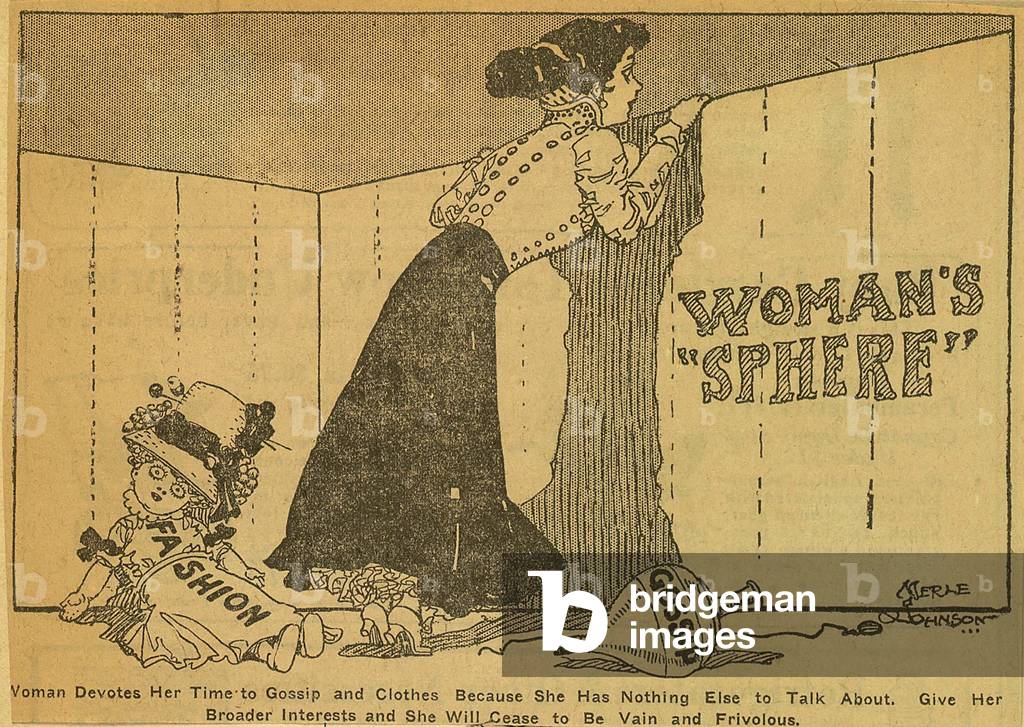
Political cartoon shows woman peering over a fence labeled 'Woman's Sphere' while her toys 'Fashion' and 'gossip' lay abandoned. By Merle De Vore Johnson, 1909

EVB2937117: Political cartoon shows woman peering over a fence labeled 'Woman's Sphere' while her toys 'Fashion' and 'gossip' lay abandoned. By Merle De Vore Johnson, 1909 / Bridgeman Images
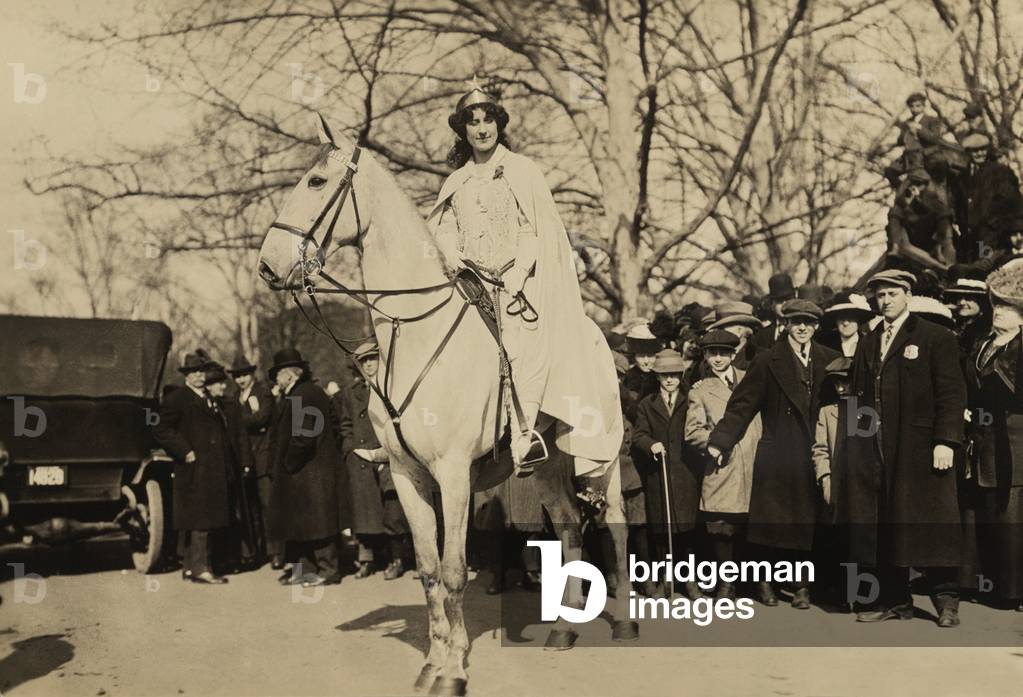
Inez Milholland, wearing white robes and a crown riding a white horse as the 'Herald' in the Women's Suffrage parade of March 3, 1913, the day prior to Woodrow Wilson's inauguration. It was the last major suffrage demonstration to use such theatrical costumes

EVB2937136: Inez Milholland, wearing white robes and a crown riding a white horse as the 'Herald' in the Women's Suffrage parade of March 3, 1913, the day prior to Woodrow Wilson's inauguration. It was the last major suffrage demonstration to use such theatrical costumes / Bridgeman Images
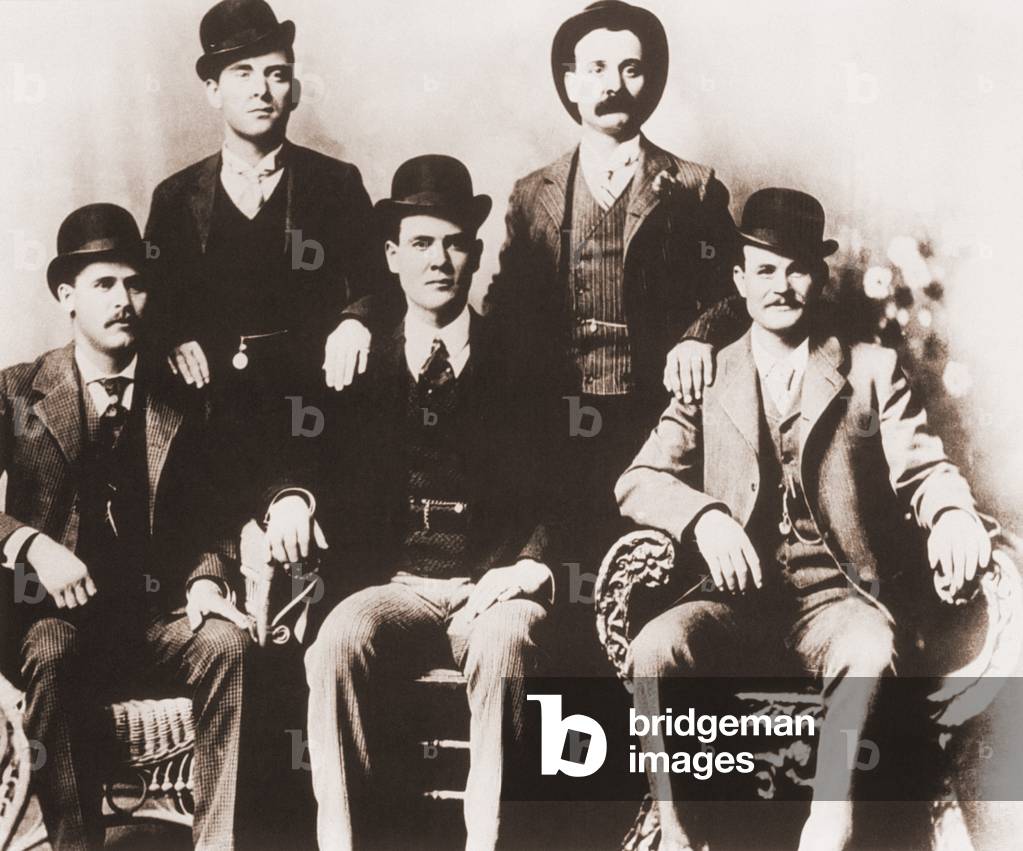
Butch Cassidy's Wild Bunch gang of train robbers in portrait taken in Fort Worth, Texas in 1901. Left to right, seated: Harry A. Longabaugh, alias the Sundance Kid, Ben Kilpatrick, alias the Tall Texan, Robert Leroy Parker, alias Butch Cassidy. Standing- Will Carver, alias News Carver and Harvey Logan, alias Kid Curry. Paul Neuman and Robert Redford starred in the 1967 film, BUTCH CASSIDY AND THE SUNDANCE KID

EVB2937180: Butch Cassidy's Wild Bunch gang of train robbers in portrait taken in Fort Worth, Texas in 1901. Left to right, seated: Harry A. Longabaugh, alias the Sundance Kid, Ben Kilpatrick, alias the Tall Texan, Robert Leroy Parker, alias Butch Cassidy. Standing- Will Carver, alias News Carver and Harvey Logan, alias Kid Curry. Paul Neuman and Robert Redford starred in the 1967 film, BUTCH CASSIDY AND THE SUNDANCE KID / Bridgeman Images
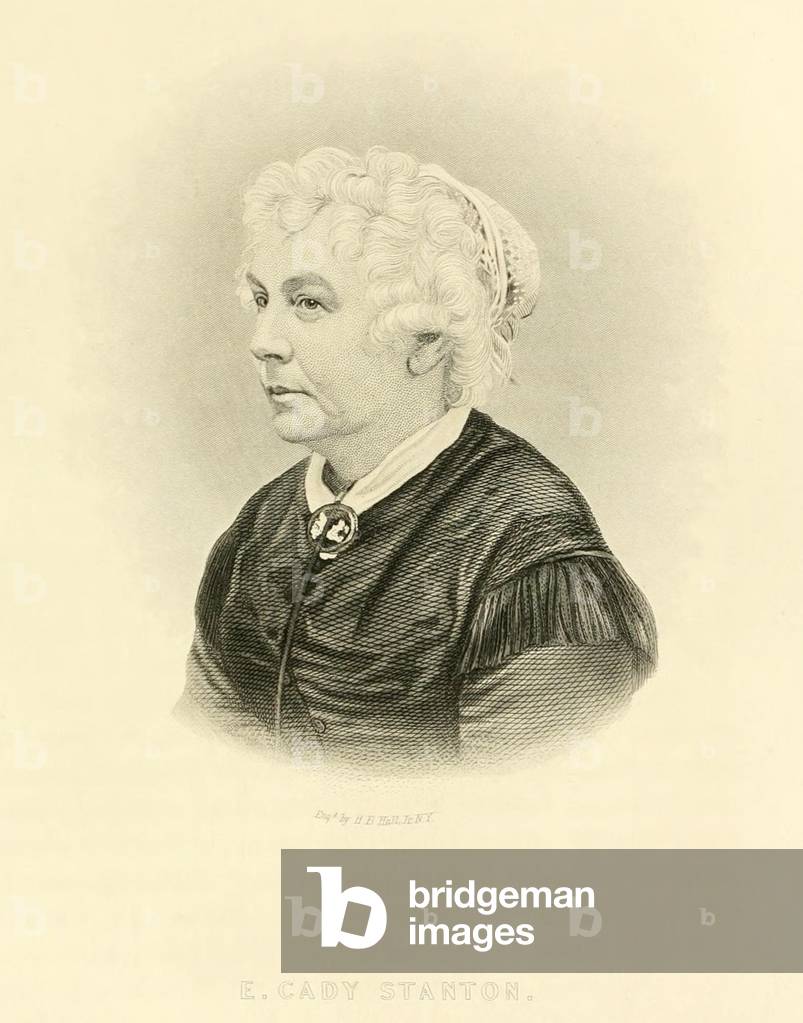
Elizabeth Cady Stanton (1815-1902), American women's rights leader. Engraving c. 1865

EVB2937150: Elizabeth Cady Stanton (1815-1902), American women's rights leader. Engraving c. 1865 / Bridgeman Images
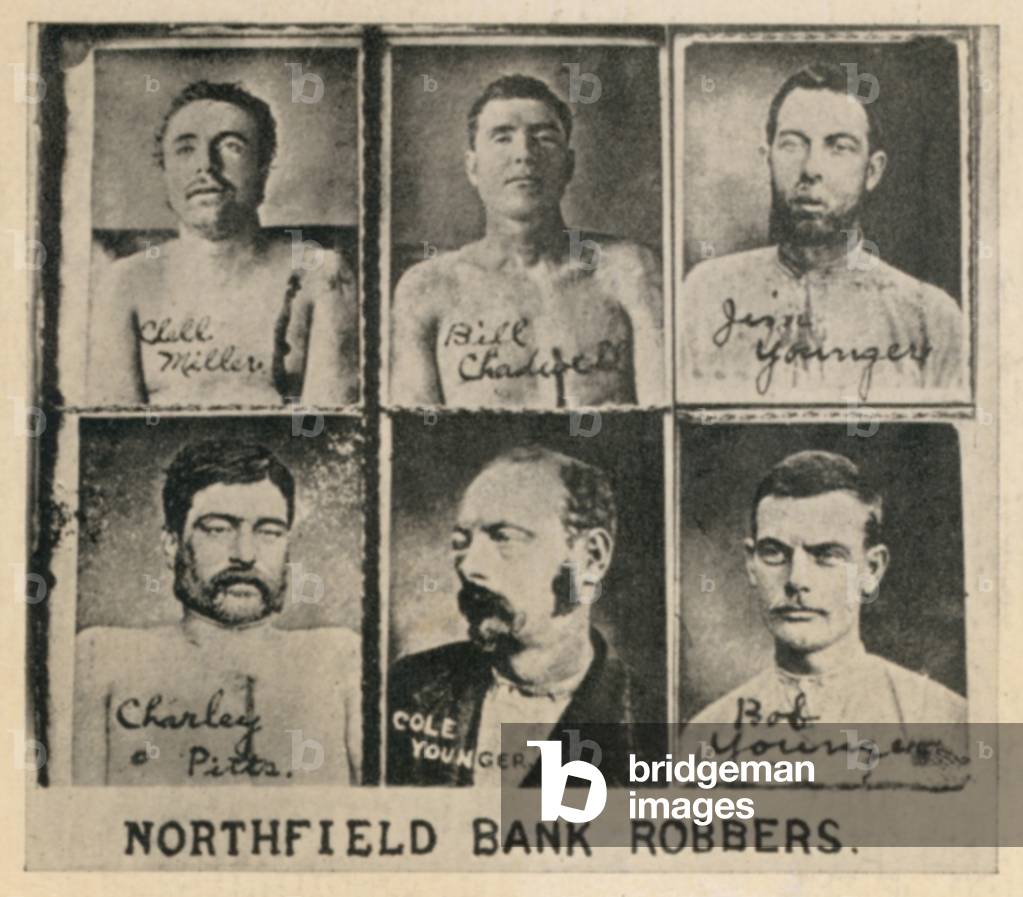
Six members of the James-Younger Gang members killed or captured in the disastrous Northfield, Minnesota bank robbery of Sept. 7, 1876. Bill Chadwell and Clell Miller were killed in the street in front of the bank. While the Younger Brothers were captured, the James Brothers, Jesse and Frank escaped capture and evaded the law for another five years

EVB2937181: Six members of the James-Younger Gang members killed or captured in the disastrous Northfield, Minnesota bank robbery of Sept. 7, 1876. Bill Chadwell and Clell Miller were killed in the street in front of the bank. While the Younger Brothers were captured, the James Brothers, Jesse and Frank escaped capture and evaded the law for another five years / Bridgeman Images
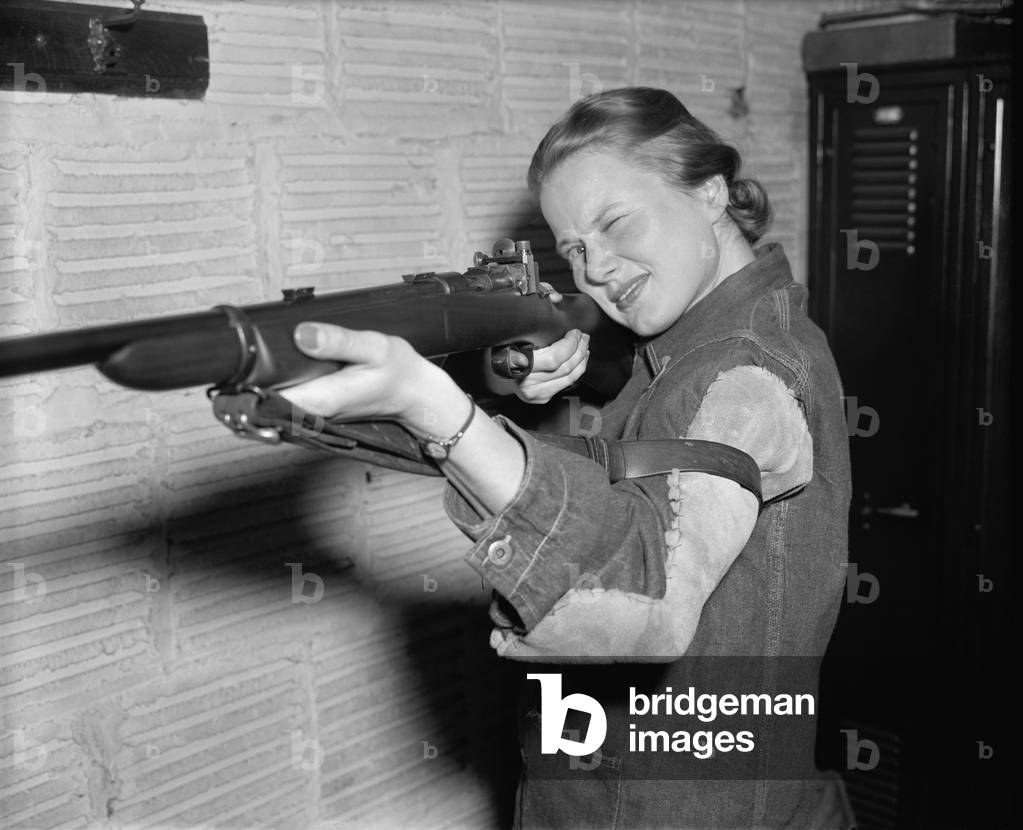
National Rifle Association's queen of rifle shooters in 1939 was Jean Yocum, George Washington University co-ed, who won the Women's Individual Intercollegiate Rifle Championship

EVB2937289: National Rifle Association's queen of rifle shooters in 1939 was Jean Yocum, George Washington University co-ed, who won the Women's Individual Intercollegiate Rifle Championship / Bridgeman Images
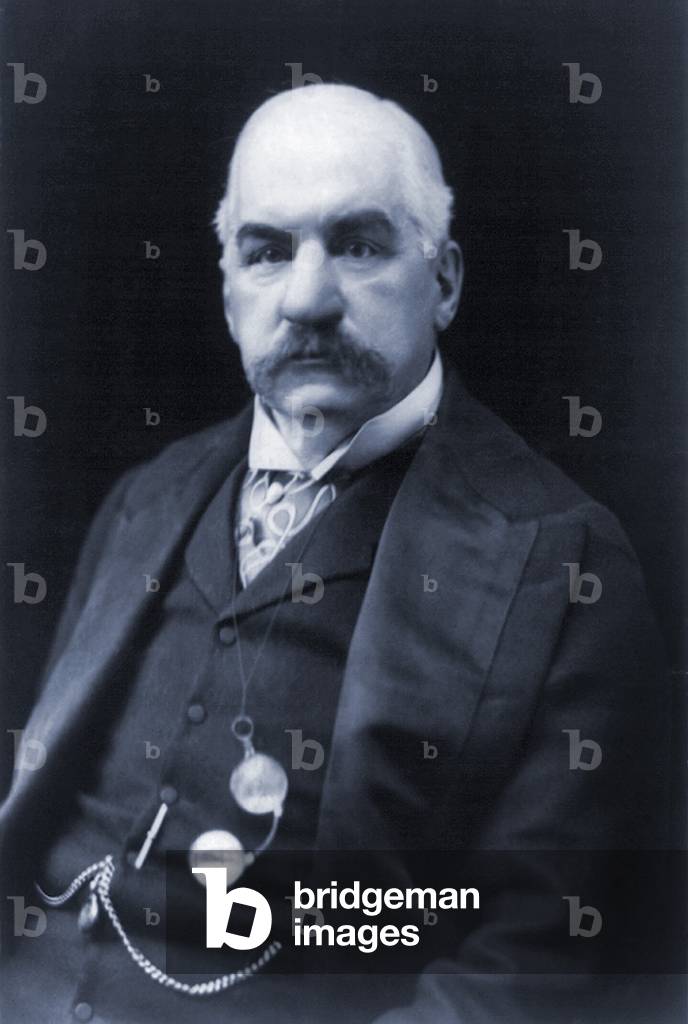
J.P. Morgan (1837-1913) American banker and financier. He provided capital to the steel and electric industries and acted as U.S. central banker during the Panic of 1907

EVB2937318: J.P. Morgan (1837-1913) American banker and financier. He provided capital to the steel and electric industries and acted as U.S. central banker during the Panic of 1907 / Bridgeman Images
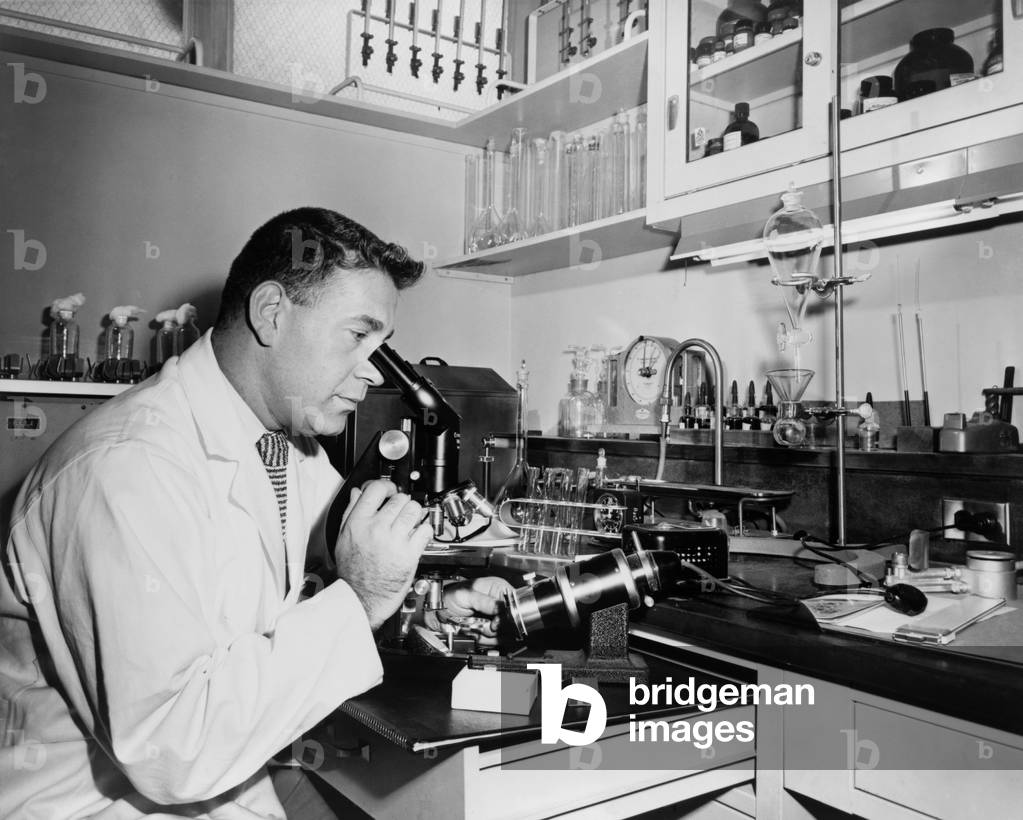
Henry Isenberg, chief microbiologist, examines a specimen of sperm at the Long Island Jewish Hospital Infertility Clinic in 1956

EVB2937340: Henry Isenberg, chief microbiologist, examines a specimen of sperm at the Long Island Jewish Hospital Infertility Clinic in 1956 / Bridgeman Images
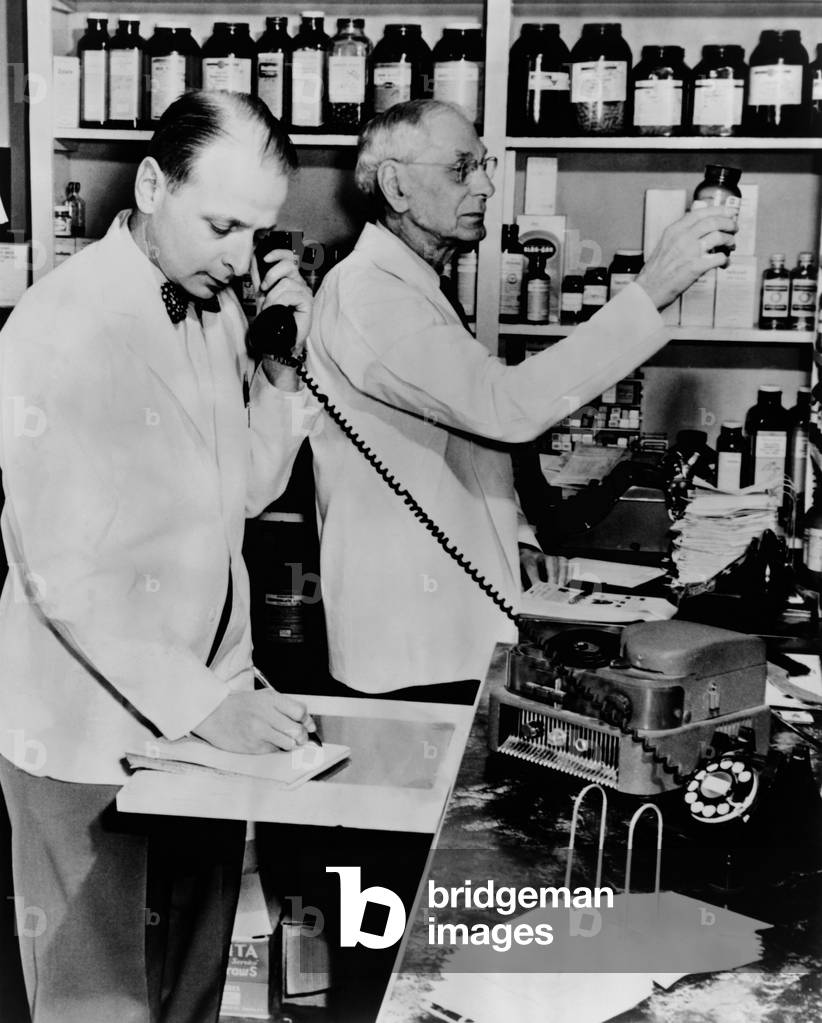
A pharmacist demonstrates the use of an early phone answering machine, a telephone disc prescription recorder, as another fills a prescription. 1952

EVB2937341: A pharmacist demonstrates the use of an early phone answering machine, a telephone disc prescription recorder, as another fills a prescription. 1952 / Bridgeman Images
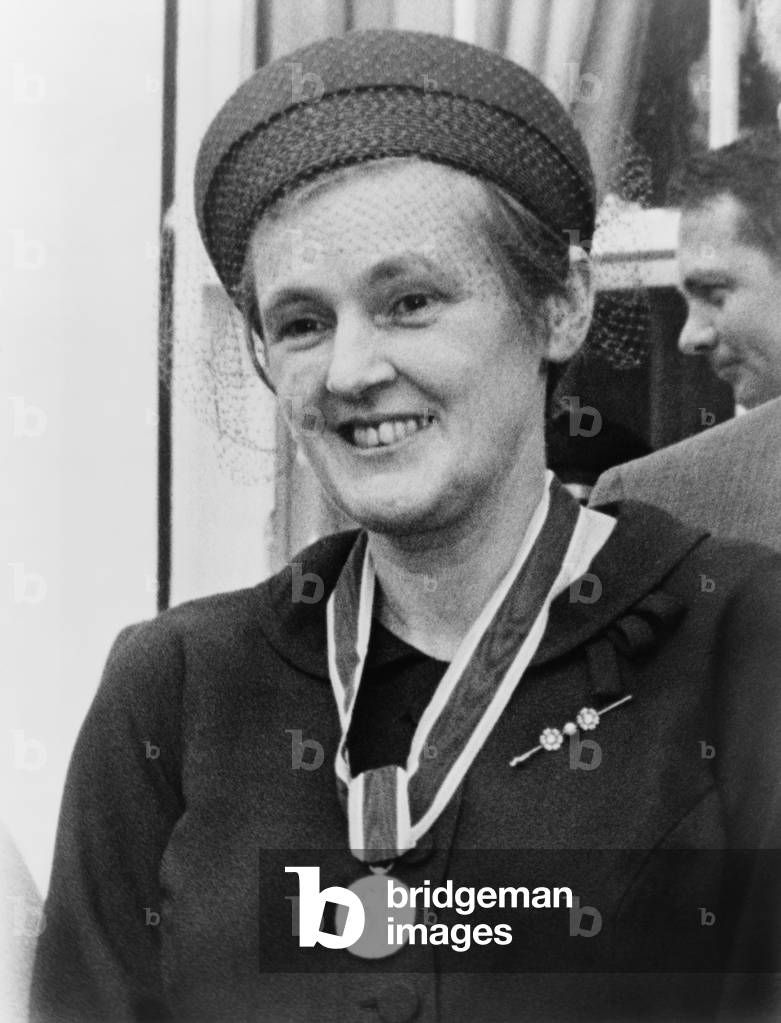
Dr. Frances O. Kelsey, wearing the Distinguished Federal Civilian Service medal awarded to her for preventing U.S. distribution of the sedative Thalidomide, which caused thousands of severe birth defects in Europe. August 8, 1962

EVB2937363: Dr. Frances O. Kelsey, wearing the Distinguished Federal Civilian Service medal awarded to her for preventing U.S. distribution of the sedative Thalidomide, which caused thousands of severe birth defects in Europe. August 8, 1962 / Bridgeman Images
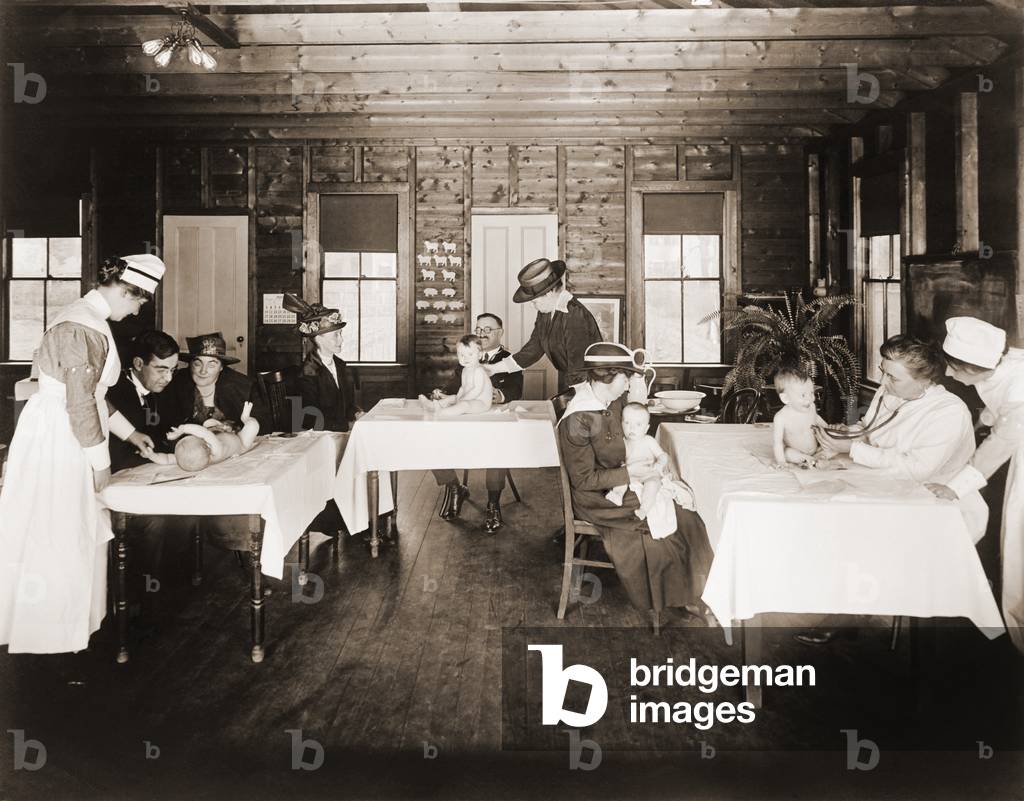
A well baby clinic in Framingham, Massachusetts, provided medical examinations to babies. c. 1920

EVB2937356: A well baby clinic in Framingham, Massachusetts, provided medical examinations to babies. c. 1920 / Bridgeman Images
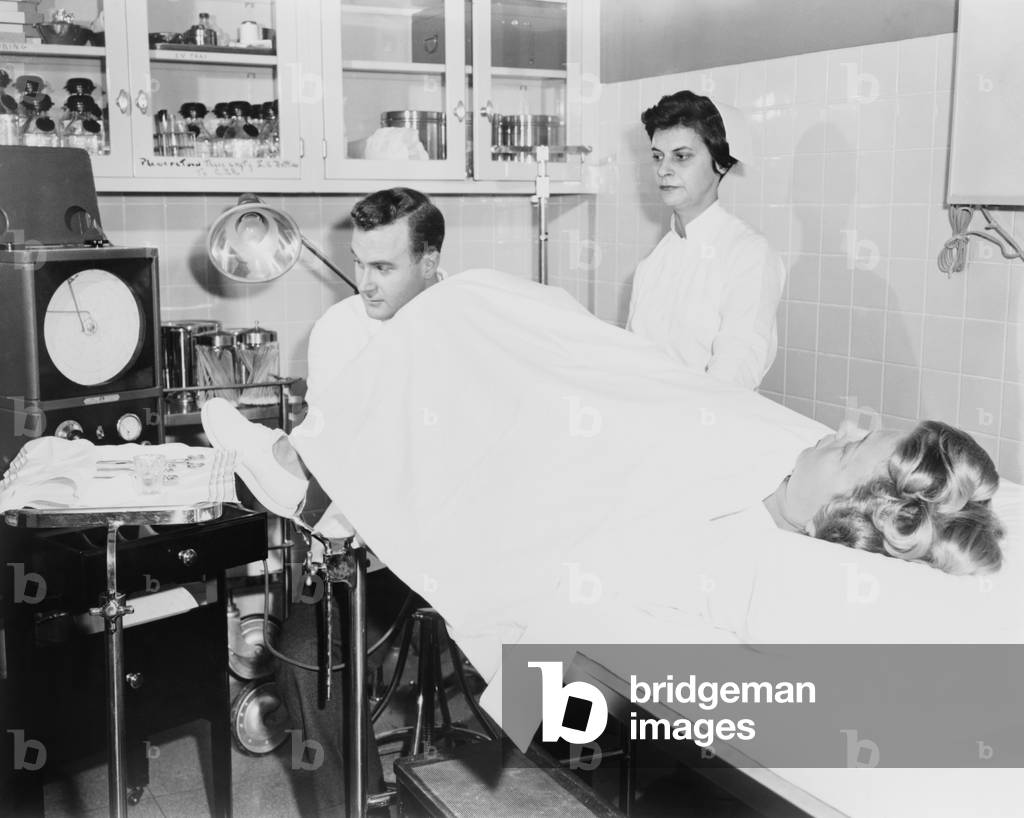
Doctor performs a Rubin test, at the infertility clinic at Long Island Jewish Hospital. The test detected fallopian tube blockages and is now replaced by laparoscopy. 1956

EVB2937370: Doctor performs a Rubin test, at the infertility clinic at Long Island Jewish Hospital. The test detected fallopian tube blockages and is now replaced by laparoscopy. 1956 / Bridgeman Images
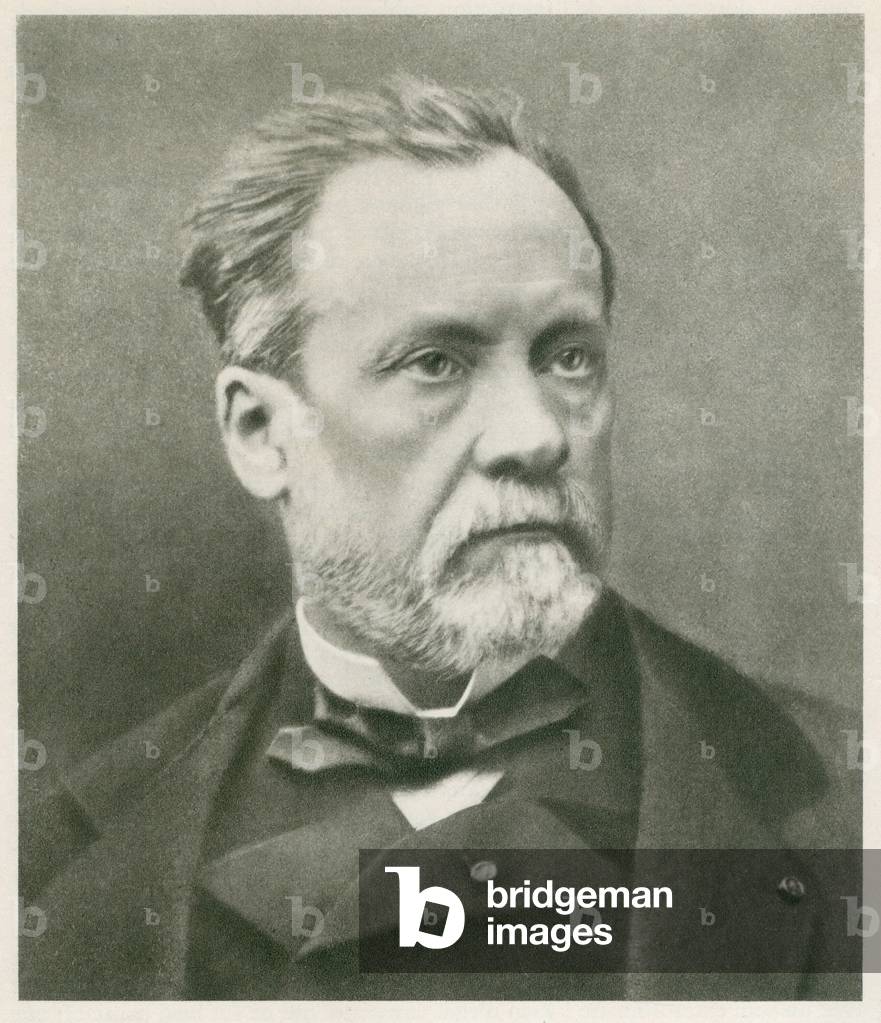
Louis Pasteur (1822-1895), French chemist and microbiologist. c. 1870

EVB2936503: Louis Pasteur (1822-1895), French chemist and microbiologist. c. 1870 / Bridgeman Images
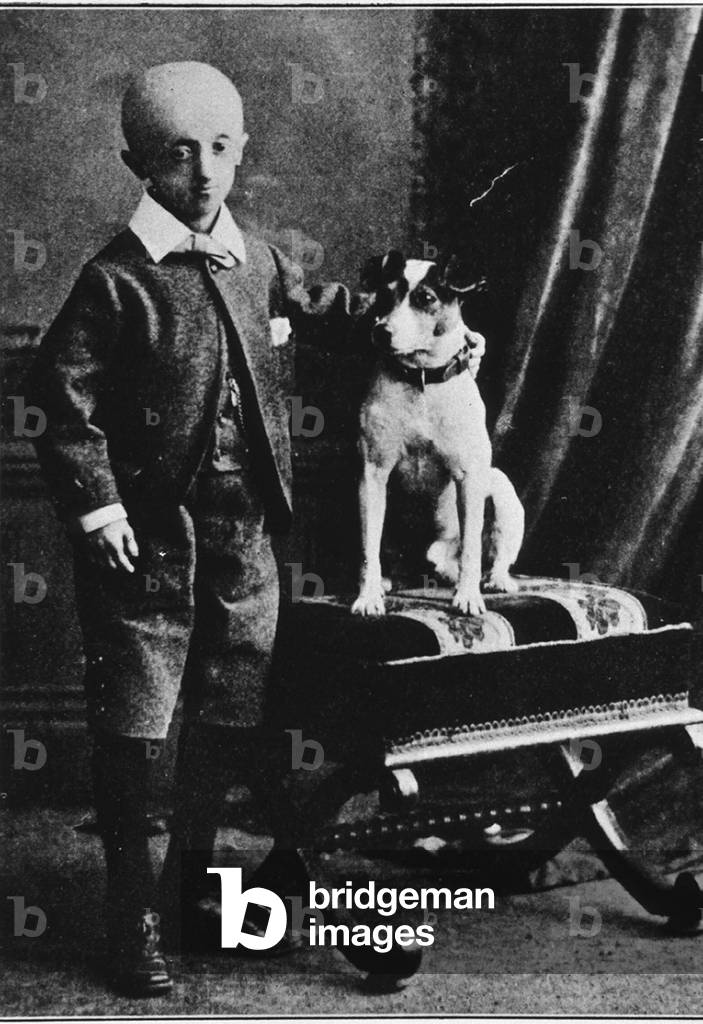
15 year old boy with Progeria, a rare children's disease that accelerates the rate of aging. The 15 year old posed with his dog in 1911

EVB2936517: 15 year old boy with Progeria, a rare children's disease that accelerates the rate of aging. The 15 year old posed with his dog in 1911 / Bridgeman Images
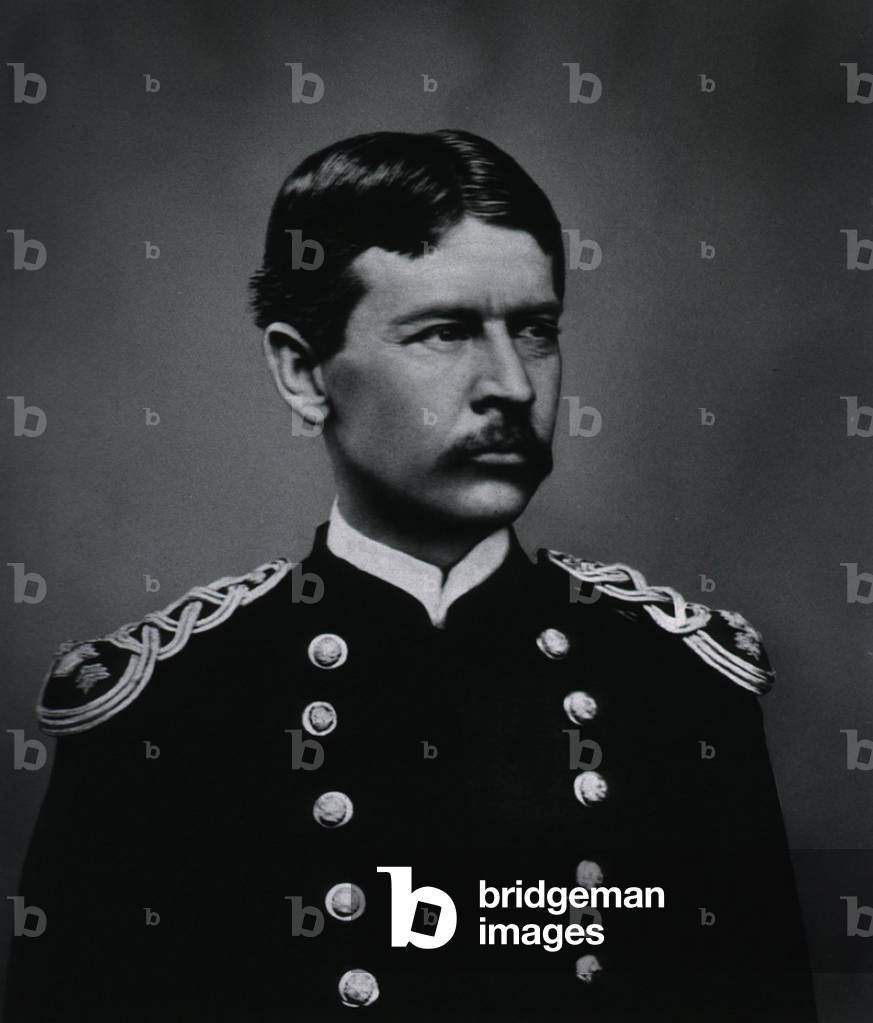
Walter Reed (1851-1902), U.S. Army physician who proved Cuban epidemiologist Carlos Juan Finlay's theory of insect transmission of yellow fever. Reed used human volunteers, including a bacteriologist, Jesse W. Lazear who died of his yellow fever infection. c. 1890

EVB2936553: Walter Reed (1851-1902), U.S. Army physician who proved Cuban epidemiologist Carlos Juan Finlay's theory of insect transmission of yellow fever. Reed used human volunteers, including a bacteriologist, Jesse W. Lazear who died of his yellow fever infection. c. 1890 / Bridgeman Images
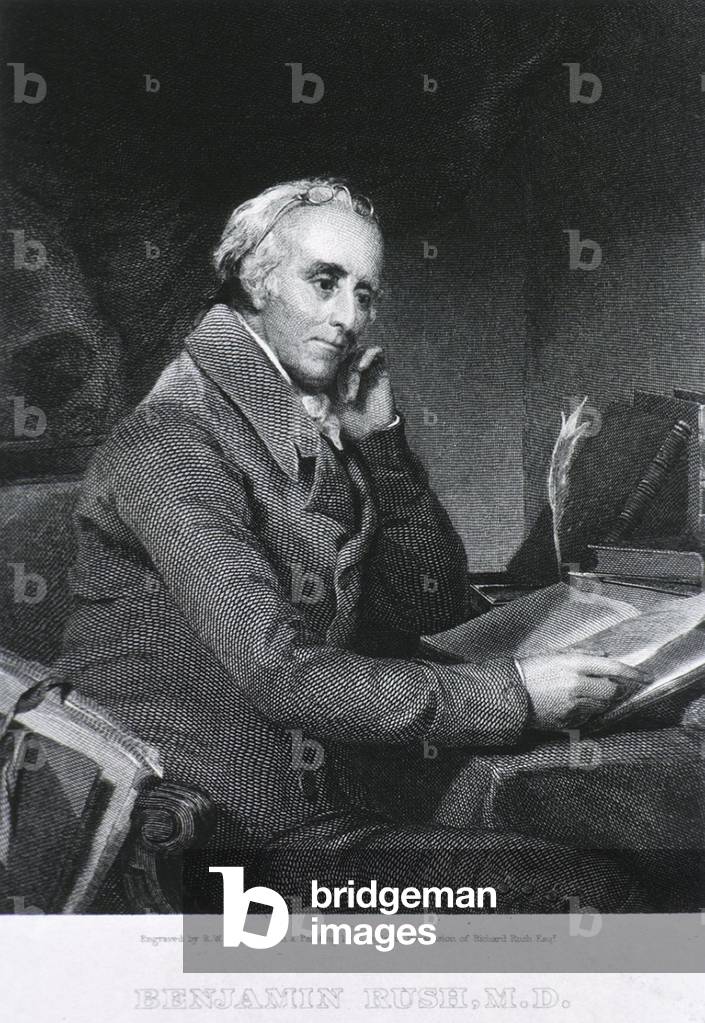
Benjamin Rush (1745-1813), eminent American doctor and politician. While he practiced primitive treatments such as aggressive bloodletting, his book on psychology, DISEASES OF THE MIND, was advanced for its time. Portrait engraving after Thomas Sully. c. 1810

EVB2936556: Benjamin Rush (1745-1813), eminent American doctor and politician. While he practiced primitive treatments such as aggressive bloodletting, his book on psychology, DISEASES OF THE MIND, was advanced for its time. Portrait engraving after Thomas Sully. c. 1810 / Bridgeman Images
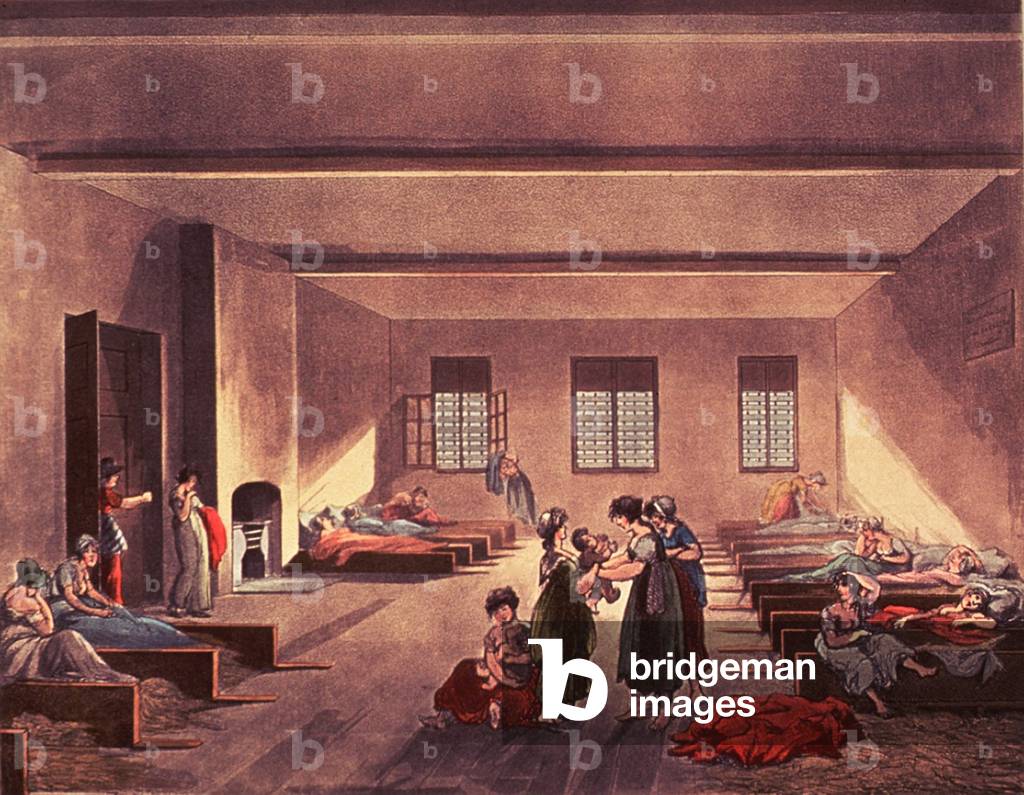
Detention room in London's Bridewell Hospital, for homeless, impoverished, and probably single or unwed mothers. British Poor Law required paupers be returned to their rural parishes, who were responsible for the local care of the poor. Before return, the women paupers and their children were detained in low stalls with hay for bedding. Drawing by Thomas Rowlandson and Augustus Pugin, c. 1808

EVB2936583: Detention room in London's Bridewell Hospital, for homeless, impoverished, and probably single or unwed mothers. British Poor Law required paupers be returned to their rural parishes, who were responsible for the local care of the poor. Before return, the women paupers and their children were detained in low stalls with hay for bedding. Drawing by Thomas Rowlandson and Augustus Pugin, c. 1808 / Bridgeman Images
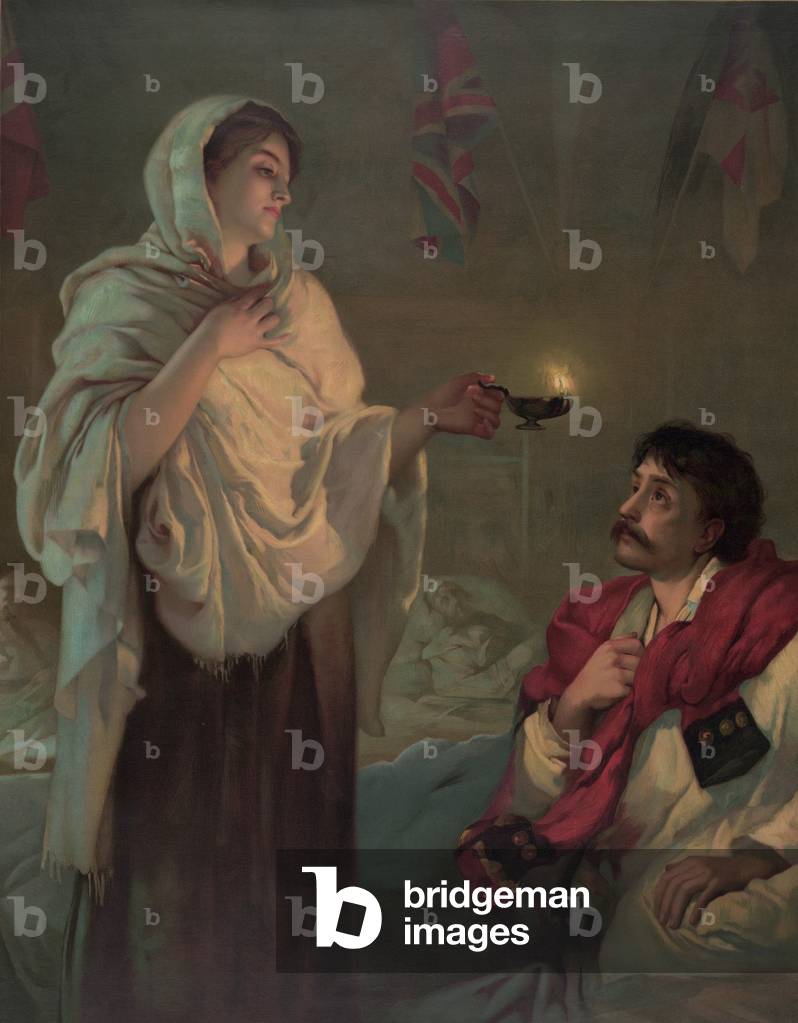
Florence Nightingale (1820-1910), in a romanticized portrait as the LADY WITH THE LAMP, at the Crimean War hospital for British soldiers at Scutari, Turkey, in 1854. British chromolithograph of 1891

EVB2936587: Florence Nightingale (1820-1910), in a romanticized portrait as the LADY WITH THE LAMP, at the Crimean War hospital for British soldiers at Scutari, Turkey, in 1854. British chromolithograph of 1891 / Bridgeman Images
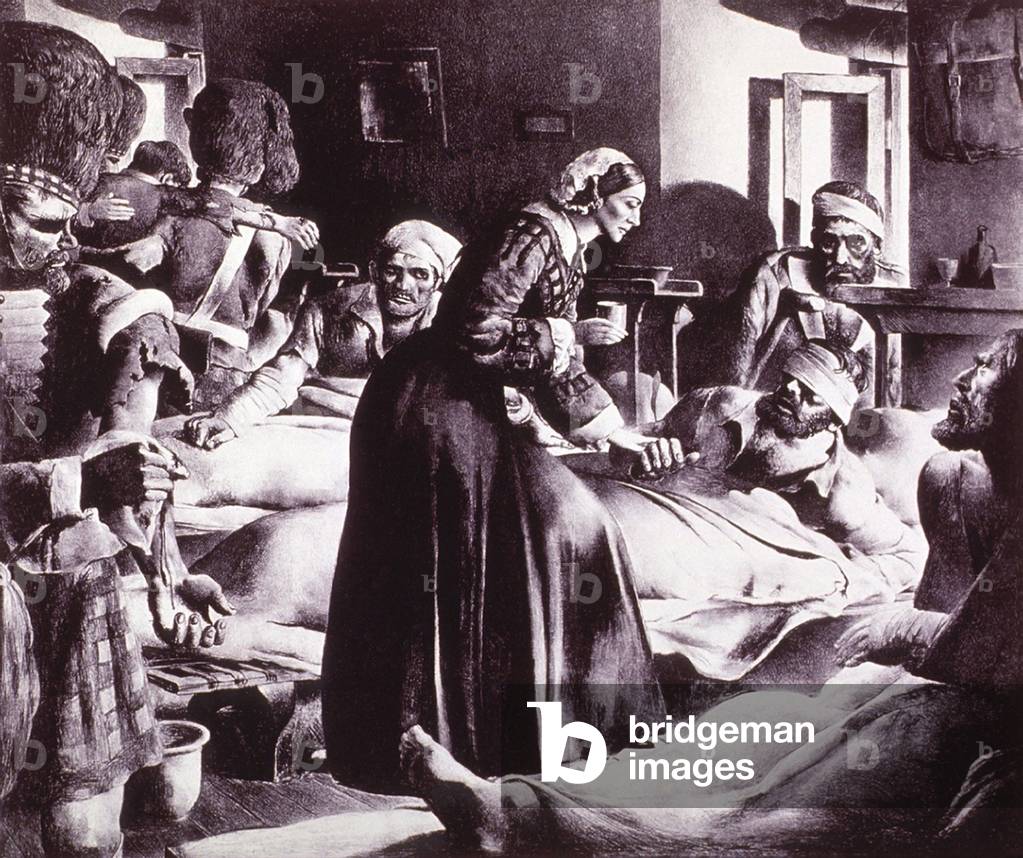
Florence Nightingale (1820-1910), ministering to soldiers at Scutari, a suburb of Istanbul (across the Bosporus from Istanbul) during the Crimean War. She defied her wealthy family by adopting the lower class profession of nursing. With her education and social position, she reformed the profession and British treatment of sick and wounded soldiers. 1854. Lithograph by Robert Riggs, c. 1930 with modern watercolor

EVB2936588: Florence Nightingale (1820-1910), ministering to soldiers at Scutari, a suburb of Istanbul (across the Bosporus from Istanbul) during the Crimean War. She defied her wealthy family by adopting the lower class profession of nursing. With her education and social position, she reformed the profession and British treatment of sick and wounded soldiers. 1854. Lithograph by Robert Riggs, c. 1930 with modern watercolor / Bridgeman Images


Back to top