Print Friendly Version Page

2501742 Search Results

Saint John the Baptist, His Executioner and Salome (Detail of Florence baptistery) - Sculpture, 1571

LRI4582939: Saint John the Baptist, His Executioner and Salome (Detail of Florence baptistery) - Sculpture, 1571, Danti, Vincenzo (1530-76) / Bridgeman Images

Exterior view of the Baptistere St John the Baptist (Florence Baptistry), 1059-1128

LRI4582985: Exterior view of the Baptistere St John the Baptist (Florence Baptistry), 1059-1128, Romanesque, (12th century) / Bridgeman Images

Remains of the Crab Supernova (M1) in the Taurus - M1, the Crab Nebula, is the rest of a supernova that exploded in July or August 1054. It is located about 7000 light years from Earth in the constellation Taurus. At the heart of this nebula is a pulsar. Image obtained from photo plates made at the 5m telescope of Mount Palomar in February 1956

PIX4583033: Remains of the Crab Supernova (M1) in the Taurus - M1, the Crab Nebula, is the rest of a supernova that exploded in July or August 1054. It is located about 7000 light years from Earth in the constellation Taurus. At the heart of this nebula is a pulsar. Image obtained from photo plates made at the 5m telescope of Mount Palomar in February 1956 / Bridgeman Images

Remains of Supernova Semeis 147 (Sh2 - 240) in the Taurea

PIX4582914: Remains of Supernova Semeis 147 (Sh2 - 240) in the Taurea / Bridgeman Images

Remains of Supernova 1E0102.2 - 7219 - The Hubble Space Telescope photographed the remains of a supernova, a massive late-life star that exploded. Located 210,000 years of light from Earth, in the galaxy of the Little Magellan Cloud, 1E0102.2 - 7219 is now dissipated into blue filaments visible in the center of the image. At 50 years - light from the, top right, stars are born in a large gas cloud, the star-forming region N76 (Henize 1956). Composite images obtained in October 2003 and July 1995 with the ACS camera and the large field planetary camera

PIX4582989: Remains of Supernova 1E0102.2 - 7219 - The Hubble Space Telescope photographed the remains of a supernova, a massive late-life star that exploded. Located 210,000 years of light from Earth, in the galaxy of the Little Magellan Cloud, 1E0102.2 - 7219 is now dissipated into blue filaments visible in the center of the image. At 50 years - light from the, top right, stars are born in a large gas cloud, the star-forming region N76 (Henize 1956). Composite images obtained in October 2003 and July 1995 with the ACS camera and the large field planetary camera / Bridgeman Images

The tram in Krakow, Poland.

MDA4583017: The tram in Krakow, Poland. / Bridgeman Images

The Christ Judge, 1230-1330 (mosaic)

LRI4582976: The Christ Judge, 1230-1330 (mosaic), Romanesque, (13th century) / Bridgeman Images

Mosaics of the vault of the Scarsella, after 1202

LRI4583018: Mosaics of the vault of the Scarsella, after 1202, Italian School, (13th century) / Bridgeman Images

Roman sarcophagus used for bishop Giovanni da Velletri, 11th-13th century

LRI4583107: Roman sarcophagus used for bishop Giovanni da Velletri, 11th-13th century, Italian School, (12th century) / Bridgeman Images

Residential buildings in Ajaccio, South Corsica. Photography 17/08/07.

TEC4582947: Residential buildings in Ajaccio, South Corsica. Photography 17/08/07. / Bridgeman Images

Remains of the Crab Supernova (M1) in the Taurus - This image of the well - known Crab Nebula was taken using Ektachrome film at the prime focus of the Kitt Peak 4 - meter telescope on October 1st 1973. This is unusual because most astronomical pictures are coloured by combining three different exposures taken through red, green and blue filters. In this relatively short exposure, the pulsar is clearly visible (slightly below and to the right of the central star, which is actually a projected foreground object). North is up with east to the left

PIX4583005: Remains of the Crab Supernova (M1) in the Taurus - This image of the well - known Crab Nebula was taken using Ektachrome film at the prime focus of the Kitt Peak 4 - meter telescope on October 1st 1973. This is unusual because most astronomical pictures are coloured by combining three different exposures taken through red, green and blue filters. In this relatively short exposure, the pulsar is clearly visible (slightly below and to the right of the central star, which is actually a projected foreground object). North is up with east to the left / Bridgeman Images

Chateau de Chambord (Loir et Cher). From 1519 and for more than thirty years, 1800 workers worked in the construction of Chambord. If the shadow of Leonard de Vinci (Leonardo di ser Piero da Vinci, 1452-1519) friend of the king and official architect hovers on the surprising double-revolution staircase, the author of this strange, yet uninhabitable residence is unknown.

LBY4583656: Chateau de Chambord (Loir et Cher). From 1519 and for more than thirty years, 1800 workers worked in the construction of Chambord. If the shadow of Leonard de Vinci (Leonardo di ser Piero da Vinci, 1452-1519) friend of the king and official architect hovers on the surprising double-revolution staircase, the author of this strange, yet uninhabitable residence is unknown., Boegly, Luc / Bridgeman Images

Silver Altar of Saint James the Major. Detail of the antependium with stories of new testament, The benissant christ and the crucifixion, 1287-1456

LRI4585127: Silver Altar of Saint James the Major. Detail of the antependium with stories of new testament, The benissant christ and the crucifixion, 1287-1456, Ognabene, Andrea di Jacopo d' (14th century) / Bridgeman Images

Church Saint Sulpice, Paris. Meridienne - Church Saint - Sulpice, Paris. The meridian line and the obelisk - 1743 - View of the grave pedestal of the obelisk and the meridian

PIX4585079: Church Saint Sulpice, Paris. Meridienne - Church Saint - Sulpice, Paris. The meridian line and the obelisk - 1743 - View of the grave pedestal of the obelisk and the meridian / Bridgeman Images

Silver Altar of Saint James the Major. Detail of the antependium with stories of new testament, 1287-1456

LRI4585087: Silver Altar of Saint James the Major. Detail of the antependium with stories of new testament, 1287-1456, Ognabene, Andrea di Jacopo d' (14th century) / Bridgeman Images
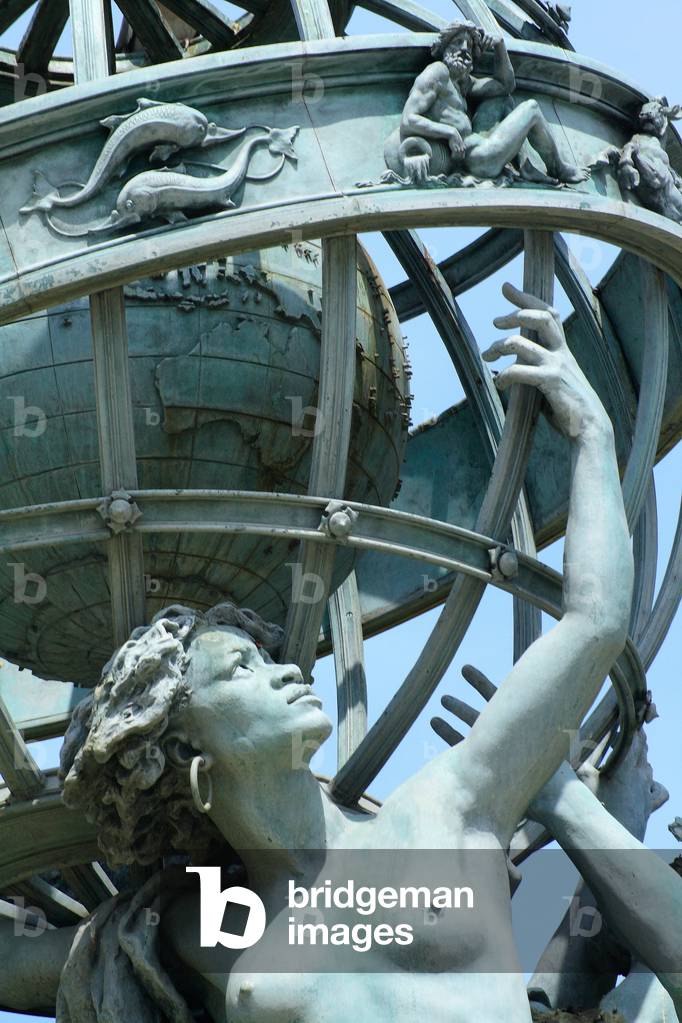
Fontaine des Quatre parts du monde (Paris 6eme) - Fontaine de l'Observatoire - Detail of the fountain located on the meridien of Paris, in the Marco Polo garden, close to the Observatory. Designed by architect Gabriel Davioud, it represents four young women symbolizing the four main continents, lifting a sphere centred on Earth and girded by the zodiac. The Fontaine de l'Observatoire is a monumental fountain located south of the Jardin du Luxembourg in the 6th arrondissement of Paris, with sculpture by Jean - Baptiste Carpeaux. It was dedicated in 1874. It is also known as the Fontaine des Quatre - Parts - du - Monde, for the four parts of the world embodied by its female figures

PIX4585129: Fontaine des Quatre parts du monde (Paris 6eme) - Fontaine de l'Observatoire - Detail of the fountain located on the meridien of Paris, in the Marco Polo garden, close to the Observatory. Designed by architect Gabriel Davioud, it represents four young women symbolizing the four main continents, lifting a sphere centred on Earth and girded by the zodiac. The Fontaine de l'Observatoire is a monumental fountain located south of the Jardin du Luxembourg in the 6th arrondissement of Paris, with sculpture by Jean - Baptiste Carpeaux. It was dedicated in 1874. It is also known as the Fontaine des Quatre - Parts - du - Monde, for the four parts of the world embodied by its female figures / Bridgeman Images

The mother of st James and st John entrusts her sons to Jesus, detail of the lateral antependium,  Altar of Saint James the Major, 1364 (silver)

LRI4585235: The mother of st James and st John entrusts her sons to Jesus, detail of the lateral antependium, Altar of Saint James the Major, 1364 (silver), Ognabene, Andrea di Jacopo d' (14th century) / Bridgeman Images
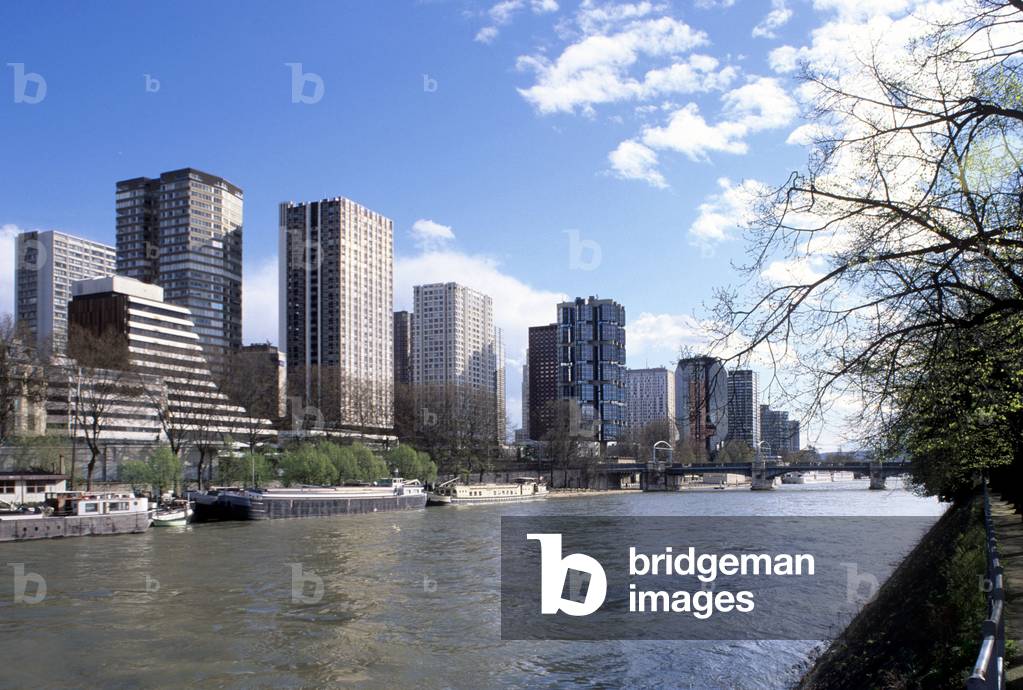
Front de Seine Paris 15th arrondissement.

LBY4585332: Front de Seine Paris 15th arrondissement. / Bridgeman Images

View of the Chapel Castellani (or Sacrament) decoree of frescoes by Agnolo Gaddi (1350-1396), episodes of the life of Saint Anthony the Great, (view of the frescoes in Castellani Chapel and chancel by Agnolo Gaddi) 1390 Basilica santa croce, Florence Italy

LRI4585350: View of the Chapel Castellani (or Sacrament) decoree of frescoes by Agnolo Gaddi (1350-1396), episodes of the life of Saint Anthony the Great, (view of the frescoes in Castellani Chapel and chancel by Agnolo Gaddi) 1390 Basilica santa croce, Florence Italy, Gaddi, Agnolo (c.1350-96) / Bridgeman Images

The predication of St James, detail of the lateral antependium,  Altar of Saint James the Major, 1364 (silver)

LRI4585251: The predication of St James, detail of the lateral antependium, Altar of Saint James the Major, 1364 (silver), Ser Giovanni, Leonardo di (active c.1358-1371) & Niccolo, Francesco di (active 1361-1371) / Bridgeman Images
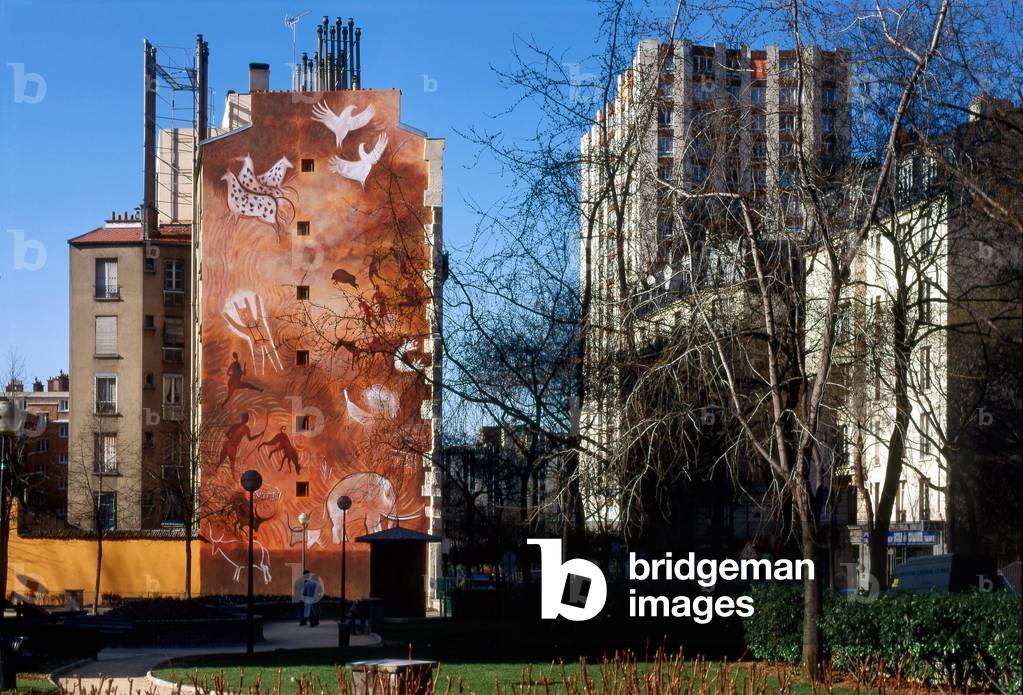
Wall painted Paris 15th arrondissement.

LBY4585283: Wall painted Paris 15th arrondissement. / Bridgeman Images

Sundial of the Palais de Justice - Paris - Sundial on Palais de Justice in Paris - Sundial located on the southern facade (Quai des Orfevres) of the Palais de Justice in Paris. This dial of 1.70m by 1.20m consists of two sculptures: on the left, Time raises its fake, while on the right, Justice carries a balance and a swords. Dial motto: Hora fugit stat jus (The hour flees, justice remains)

PIX4585383: Sundial of the Palais de Justice - Paris - Sundial on Palais de Justice in Paris - Sundial located on the southern facade (Quai des Orfevres) of the Palais de Justice in Paris. This dial of 1.70m by 1.20m consists of two sculptures: on the left, Time raises its fake, while on the right, Justice carries a balance and a swords. Dial motto: Hora fugit stat jus (The hour flees, justice remains) / Bridgeman Images

The Mosaic Annunciation of the apse of Pietro Cavallini (active around 1273-1330) late 13th century (Annunciation, mosaic from the apse by Pietro Cavallini, end of 13th century) Rome, Church Santa Maria in Trastevere Italy

LRI4585604: The Mosaic Annunciation of the apse of Pietro Cavallini (active around 1273-1330) late 13th century (Annunciation, mosaic from the apse by Pietro Cavallini, end of 13th century) Rome, Church Santa Maria in Trastevere Italy, Cavallini, Pietro (c.1250-c.1330) / Bridgeman Images
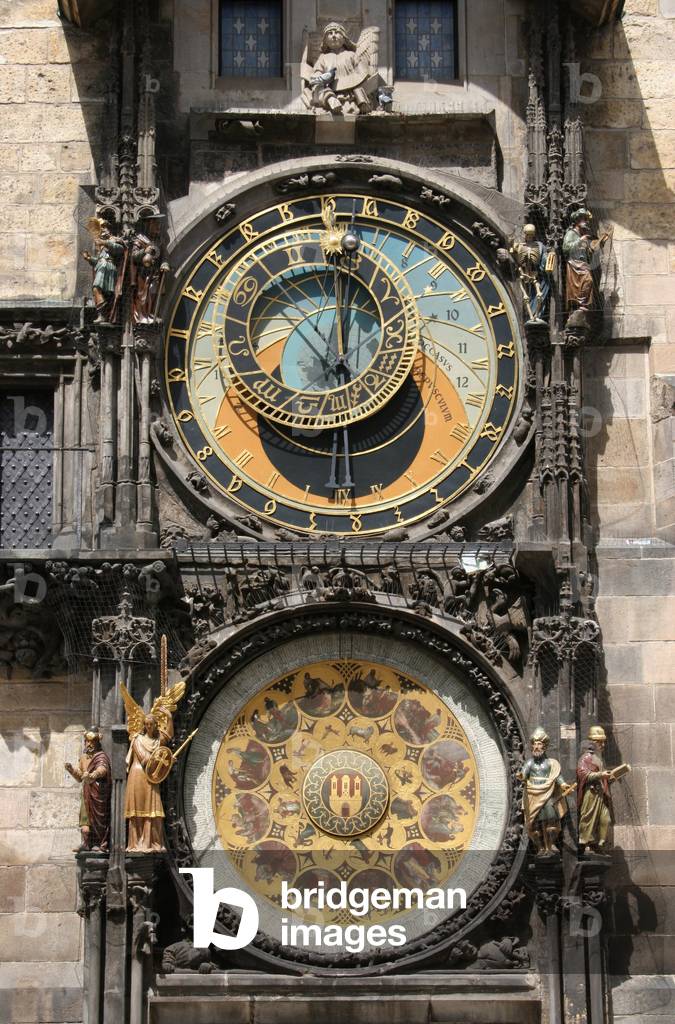
Prague Astronomical Clock - 15th century - The Prague Astronomical Clock - 15th century - The Prague Astronomical Clock - 15th century - The Prague City Hall Astronomical Clock, built by Nicholas of Kadau in 1410, and redesigned by Master Hanus de la Rose (Jan Ruze) around 1490. May 2007. (clock and calendar). Prague astronomical clock was made by clockmaker Mikulas of Kadan in 1410 and rearranged in 1490. May 2007

PIX4585671: Prague Astronomical Clock - 15th century - The Prague Astronomical Clock - 15th century - The Prague Astronomical Clock - 15th century - The Prague City Hall Astronomical Clock, built by Nicholas of Kadau in 1410, and redesigned by Master Hanus de la Rose (Jan Ruze) around 1490. May 2007. (clock and calendar). Prague astronomical clock was made by clockmaker Mikulas of Kadan in 1410 and rearranged in 1490. May 2007 / Bridgeman Images

Le jardin du musee Bourdelle, 18 rue Antoine Bourdelle, Paris 75015. Built in 1961 by Henri Gautruche, this museum is dedicated to the work of Emile-Antoine Bourdelle. Extension of the museum by Christian de Portzamparc, 1992. Photography 27/10/10

ITR4585686: Le jardin du musee Bourdelle, 18 rue Antoine Bourdelle, Paris 75015. Built in 1961 by Henri Gautruche, this museum is dedicated to the work of Emile-Antoine Bourdelle. Extension of the museum by Christian de Portzamparc, 1992. Photography 27/10/10, Portzamparc, de Christian (b.1944) / Bridgeman Images

Graphic effect of a tower of the Front de Seine on the Beaugrenelle slab Paris 15th arrondissement. Photography 10/09/08.

LBY4585501: Graphic effect of a tower of the Front de Seine on the Beaugrenelle slab Paris 15th arrondissement. Photography 10/09/08. / Bridgeman Images

Le jardin sur rue du musee Bourdelle, 18 rue Antoine Bourdelle, Paris 75015. Built in 1961 by Henri Gautruche, this museum is dedicated to the work of Emile-Antoine Bourdelle. Extension of the museum by Christian de Portzamparc, 1992. Photography 27/10/10

ITR4585547: Le jardin sur rue du musee Bourdelle, 18 rue Antoine Bourdelle, Paris 75015. Built in 1961 by Henri Gautruche, this museum is dedicated to the work of Emile-Antoine Bourdelle. Extension of the museum by Christian de Portzamparc, 1992. Photography 27/10/10, Portzamparc, de Christian (b.1944) / Bridgeman Images

The Musee Bourdelle in Paris Musee Bourdelle, 18 rue Antoine Bourdelle, Paris 75015. Built in 1961 by Henri Gautruche, this museum is dedicated to the work of Emile-Antoine Bourdelle. Extension of the museum by Christian de Portzamparc, 1992. Photography 27/10/10

ITR4585576: The Musee Bourdelle in Paris Musee Bourdelle, 18 rue Antoine Bourdelle, Paris 75015. Built in 1961 by Henri Gautruche, this museum is dedicated to the work of Emile-Antoine Bourdelle. Extension of the museum by Christian de Portzamparc, 1992. Photography 27/10/10, Portzamparc, de Christian (b.1944) / Bridgeman Images

The Grand Hall of the Bourdelle Museum, 18 rue Antoine Bourdelle, Paris 75015

ITR4585595: The Grand Hall of the Bourdelle Museum, 18 rue Antoine Bourdelle, Paris 75015, Portzamparc, de Christian (b.1944) / Bridgeman Images

Sarcophagus of the Portuguese Cardinal Antonio Martino de Chavez realized by Isaia da Pisa (active around 1447-1464), 1447 right nave of the Basilica of St. John Lateran (Basilica of St. John Lateran or San Giovanni in Laterano) Rome (Monument of Portuguese Cardinal Antonio Martino de Chavez by Isaia of Pisa, 1447 Archbasilica of St John Lateran Rome,)

LRI4585596: Sarcophagus of the Portuguese Cardinal Antonio Martino de Chavez realized by Isaia da Pisa (active around 1447-1464), 1447 right nave of the Basilica of St. John Lateran (Basilica of St. John Lateran or San Giovanni in Laterano) Rome (Monument of Portuguese Cardinal Antonio Martino de Chavez by Isaia of Pisa, 1447 Archbasilica of St John Lateran Rome,), Isaia da Pisa (15th Century) / Bridgeman Images

Prague Astronomical Clock - 15th century - The Prague Astronomical Clock - 15th century - The Prague Astronomical Clock and the Church of Our Lady of T n. The Prague astronomical clock and a portion of The Church of Our Lady in front of Tyn, Prague. May 2007

PIX4585640: Prague Astronomical Clock - 15th century - The Prague Astronomical Clock - 15th century - The Prague Astronomical Clock and the Church of Our Lady of T n. The Prague astronomical clock and a portion of The Church of Our Lady in front of Tyn, Prague. May 2007 / Bridgeman Images

Le jardin du musee Bourdelle, 18 rue Antoine Bourdelle, Paris 75015. Built in 1961 by Henri Gautruche, this museum is dedicated to the work of Emile-Antoine Bourdelle. Extension of the museum by Christian de Portzamparc, 1992. Photography 27/10/10

ITR4585675: Le jardin du musee Bourdelle, 18 rue Antoine Bourdelle, Paris 75015. Built in 1961 by Henri Gautruche, this museum is dedicated to the work of Emile-Antoine Bourdelle. Extension of the museum by Christian de Portzamparc, 1992. Photography 27/10/10, Portzamparc, de Christian (b.1944) / Bridgeman Images

Pekin, China. Photograph 01/10/02.

TEC4583976: Pekin, China. Photograph 01/10/02. / Bridgeman Images

Inhabited mission to an asteroid - Artist's view - MMV begins descent to asteroid surface - Two MMV (Manned Maneuvering Vehicles), pilots by astronauts, explore the surface of an asteroid. Two Manned Maneuvering Vehicles (MMVs) explores the airless, microgravity environment of a small asteroid. Given the almost total lack of gravity the MMVs are free to navigate the environment like one-man submersibles at the bottom of an ocean

PIX4583992: Inhabited mission to an asteroid - Artist's view - MMV begins descent to asteroid surface - Two MMV (Manned Maneuvering Vehicles), pilots by astronauts, explore the surface of an asteroid. Two Manned Maneuvering Vehicles (MMVs) explores the airless, microgravity environment of a small asteroid. Given the almost total lack of gravity the MMVs are free to navigate the environment like one-man submersibles at the bottom of an ocean / Bridgeman Images

Inhabited mission to an asteroid - Artist's view - Asteroid Lander prepares for touchdown - A living spaceship lands on the surface of an asteroid. A manned Asteroid Lander descends towards the rugged and cratered surface of an ancient asteroid. Orbiting the asteroid on the upper left is a Deep Space Vehicle (DSV) and Extended Stay Module (ESM)

PIX4584017: Inhabited mission to an asteroid - Artist's view - Asteroid Lander prepares for touchdown - A living spaceship lands on the surface of an asteroid. A manned Asteroid Lander descends towards the rugged and cratered surface of an ancient asteroid. Orbiting the asteroid on the upper left is a Deep Space Vehicle (DSV) and Extended Stay Module (ESM) / Bridgeman Images

Pekin, China. Photograph 01/10/02.

TEC4584111: Pekin, China. Photograph 01/10/02. / Bridgeman Images


Back to top