Print Friendly Version Page

2497570 Search Results

Detail of a building in the neighborhood of Chelsea in New York (New York), United States (United States). Photography 26/09/10

TEC4612326: Detail of a building in the neighborhood of Chelsea in New York (New York), United States (United States). Photography 26/09/10 / Bridgeman Images

Spiral Galaxy M51 in Hunting Dogs - Spiral galaxy M51 in Canes Venatici - The spiral galaxy M51 (NGC 5194) is located about 31 million years ago - light from Earth. This galaxy is double; two galaxies interact: the largest, NGC 5194, the smallest NGC 5195. M51 (NGC 5194) is located 31 million light - years away in the constellation Canes Venatici (the Hunting Dogs). It was one of the first discoveries made by Charles Messier in 1773, and it was the first galaxy where spiral structure was observed, by Lord Rosse in 1845. A faint companion galaxy, NGC 5195, seen here to the left of M51, is interacting with M51

PIX4612374: Spiral Galaxy M51 in Hunting Dogs - Spiral galaxy M51 in Canes Venatici - The spiral galaxy M51 (NGC 5194) is located about 31 million years ago - light from Earth. This galaxy is double; two galaxies interact: the largest, NGC 5194, the smallest NGC 5195. M51 (NGC 5194) is located 31 million light - years away in the constellation Canes Venatici (the Hunting Dogs). It was one of the first discoveries made by Charles Messier in 1773, and it was the first galaxy where spiral structure was observed, by Lord Rosse in 1845. A faint companion galaxy, NGC 5195, seen here to the left of M51, is interacting with M51 / Bridgeman Images

Spiral Galaxy M83 in Hydra - Spiral galaxy M83 in Hydra - The galaxy M83 (NGC 5236) is located about 15 million years away from Earth. This galaxy is intermediate between a classic spiral and a barree spiral. M83 (NGC 5236) is an intermediate spiral galaxy at approximately 15 million light - years away in the constellation Hydra

PIX4612435: Spiral Galaxy M83 in Hydra - Spiral galaxy M83 in Hydra - The galaxy M83 (NGC 5236) is located about 15 million years away from Earth. This galaxy is intermediate between a classic spiral and a barree spiral. M83 (NGC 5236) is an intermediate spiral galaxy at approximately 15 million light - years away in the constellation Hydra / Bridgeman Images

Spiral Galaxy M83 in Hydra - Spiral galaxy M83 in Hydra - The galaxy M83 (NGC 5236) is located about 15 million years away from Earth. This galaxy is intermediate between a classical spiral and a barree spiral Image obtained by the ANTU telescope of the VLT in Chile in March 1999. M83 (NGC 5236) is located in the southern constellation Hydra at 15 million light years from the sun. It is classified as intermediate between normal and barred spiral galaxies. Image obtained with ANTU telescope (VLT) in March 1999

PIX4612441: Spiral Galaxy M83 in Hydra - Spiral galaxy M83 in Hydra - The galaxy M83 (NGC 5236) is located about 15 million years away from Earth. This galaxy is intermediate between a classical spiral and a barree spiral Image obtained by the ANTU telescope of the VLT in Chile in March 1999. M83 (NGC 5236) is located in the southern constellation Hydra at 15 million light years from the sun. It is classified as intermediate between normal and barred spiral galaxies. Image obtained with ANTU telescope (VLT) in March 1999 / Bridgeman Images

Spiral Galaxy M83 in Hydra - Spiral galaxy M83 in Hydra - The galaxy M83 (NGC 5236) is located about 15 million years away from Earth. This galaxy is intermediate between a classic spiral and a barree spiral. Image obtained from the 3.9m telescope of Siding Spring, Australia. M83 is thought to be very like our own Galaxy, the Milky Way, but seen from above one of its poles and at a distance of about 15 million light years. Composed of billions of stars and huge clouds of dust and gas, this object is one of the finest examples of a spiral galaxy and shows a concentration of older, yellow stars in its central nucleus with younger, blue stars and patchy red clouds of glowing gas and dark dust lanes in the trailing spiral arms. The massive blue stars occasionally explode as supernovae; at least eight have been seen in Messier 83 in the last 70 years

PIX4612481: Spiral Galaxy M83 in Hydra - Spiral galaxy M83 in Hydra - The galaxy M83 (NGC 5236) is located about 15 million years away from Earth. This galaxy is intermediate between a classic spiral and a barree spiral. Image obtained from the 3.9m telescope of Siding Spring, Australia. M83 is thought to be very like our own Galaxy, the Milky Way, but seen from above one of its poles and at a distance of about 15 million light years. Composed of billions of stars and huge clouds of dust and gas, this object is one of the finest examples of a spiral galaxy and shows a concentration of older, yellow stars in its central nucleus with younger, blue stars and patchy red clouds of glowing gas and dark dust lanes in the trailing spiral arms. The massive blue stars occasionally explode as supernovae; at least eight have been seen in Messier 83 in the last 70 years / Bridgeman Images
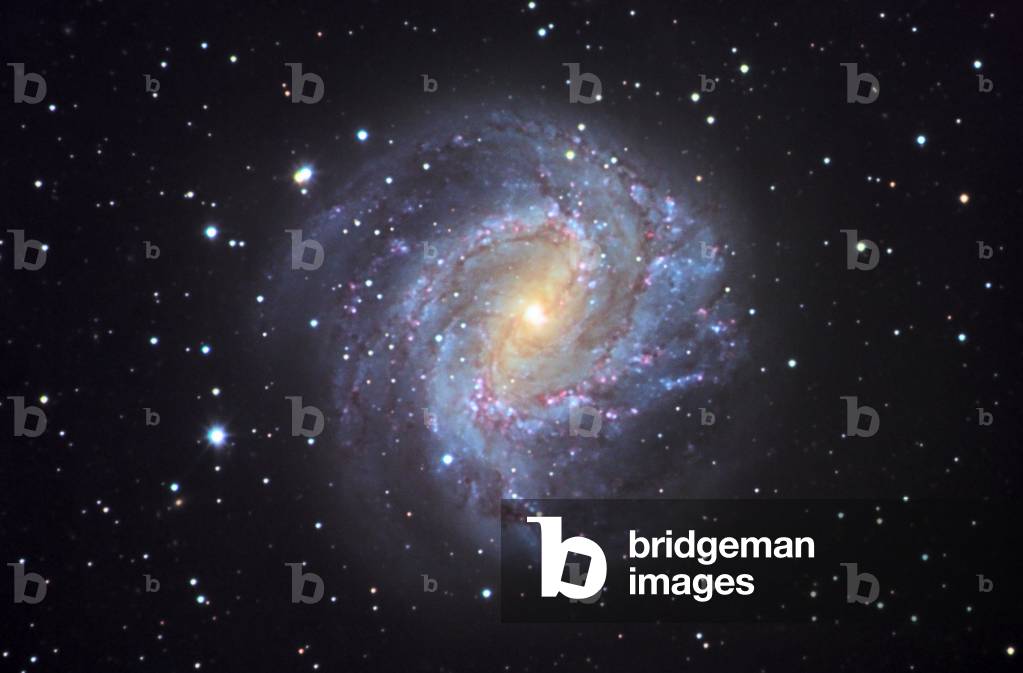
Spiral Galaxy M83 in Hydra - Spiral galaxy M83 in Hydra - The galaxy M83 (NGC 5236) is located about 15 million years away from Earth. This galaxy is intermediate between a classic spiral and a barree spiral. M83 (NGC 5236) is located in the southern constellation Hydra at 15 million light years from the sun. It is classified as intermediate between normal and barred spiral galaxies

PIX4612509: Spiral Galaxy M83 in Hydra - Spiral galaxy M83 in Hydra - The galaxy M83 (NGC 5236) is located about 15 million years away from Earth. This galaxy is intermediate between a classic spiral and a barree spiral. M83 (NGC 5236) is located in the southern constellation Hydra at 15 million light years from the sun. It is classified as intermediate between normal and barred spiral galaxies / Bridgeman Images

Spiral Galaxy M83 in Hydra - Spiral galaxy M83 in Hydra - The galaxy M83 (NGC 5236) is located about 15 million years away from Earth. This galaxy is intermediate between a classic spiral and a barree spiral. Image obtained by the 2.2m ESO/MPG telescope of La Silla in Chile. M83 (NGC 5236) is located in the southern constellation Hydra at 15 million light years from the sun. It is classified as intermediate between normal and barred spiral galaxies. Colour - composite image made using data from the Wide Field Imager on the ESO/MPG 2.2 - m telescope at La Silla. The WFI stared at M83 for four periods of 25 minutes through different filters (B, V, R, Halpha)

PIX4612524: Spiral Galaxy M83 in Hydra - Spiral galaxy M83 in Hydra - The galaxy M83 (NGC 5236) is located about 15 million years away from Earth. This galaxy is intermediate between a classic spiral and a barree spiral. Image obtained by the 2.2m ESO/MPG telescope of La Silla in Chile. M83 (NGC 5236) is located in the southern constellation Hydra at 15 million light years from the sun. It is classified as intermediate between normal and barred spiral galaxies. Colour - composite image made using data from the Wide Field Imager on the ESO/MPG 2.2 - m telescope at La Silla. The WFI stared at M83 for four periods of 25 minutes through different filters (B, V, R, Halpha) / Bridgeman Images
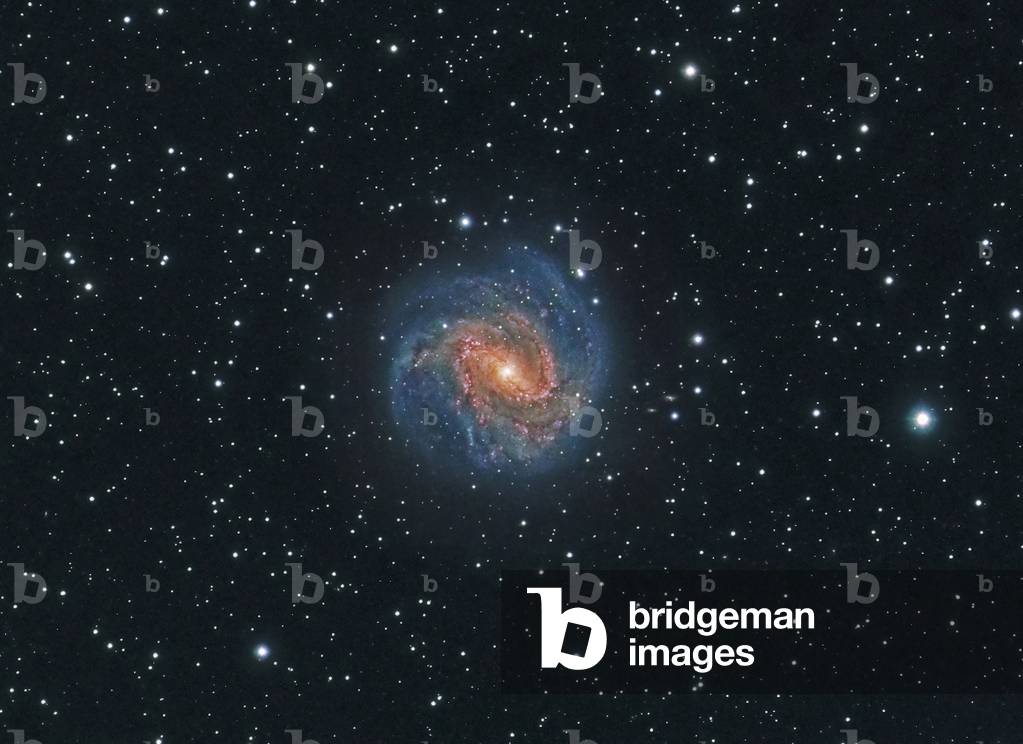
Spiral Galaxy M83 in Hydra - Spiral galaxy M83 in Hydra - The galaxy M83 (NGC 5236) is located about 15 million light years away from Earth in the constellation Hydra. This galaxy is intermediate between a classic spiral and a barree spiral. M83 (NGC 5236) is located in the southern constellation Hydra at 15 million light years from the sun. It is classified as intermediate between normal and barred spiral galaxies

PIX4612535: Spiral Galaxy M83 in Hydra - Spiral galaxy M83 in Hydra - The galaxy M83 (NGC 5236) is located about 15 million light years away from Earth in the constellation Hydra. This galaxy is intermediate between a classic spiral and a barree spiral. M83 (NGC 5236) is located in the southern constellation Hydra at 15 million light years from the sun. It is classified as intermediate between normal and barred spiral galaxies / Bridgeman Images

Galaxy M83 in Hydra - Galaxy M83 in Hydra - The galaxy M83 (NGC 5236) is about 15 million years away from Earth. This galaxy is a barred spiral. Image obtained by the Hubble Space Telescope (HST). M83 (NGC 5236) is located in the southern constellation Hydra at 15 million light years from the sun. It is classified as intermediate between normal and barred spiral galaxies. The vibrant magentas and blues reveal the galaxy is ablaze with star formation. This photograph captures thousands of star clusters, hundreds of thousands of individual stars, and “” ghosts”” of dead stars called supernova remnants. The galactic panorama unveils a tapestry of the drama of stellar birth and death spread across 50,000 light - years.Image taken with the Hubble space telescope (HST)

PIX4612543: Galaxy M83 in Hydra - Galaxy M83 in Hydra - The galaxy M83 (NGC 5236) is about 15 million years away from Earth. This galaxy is a barred spiral. Image obtained by the Hubble Space Telescope (HST). M83 (NGC 5236) is located in the southern constellation Hydra at 15 million light years from the sun. It is classified as intermediate between normal and barred spiral galaxies. The vibrant magentas and blues reveal the galaxy is ablaze with star formation. This photograph captures thousands of star clusters, hundreds of thousands of individual stars, and “” ghosts”” of dead stars called supernova remnants. The galactic panorama unveils a tapestry of the drama of stellar birth and death spread across 50,000 light - years.Image taken with the Hubble space telescope (HST) / Bridgeman Images

Spiral galaxy NGC 5371 in Hunting Dogs - Spiral galaxy NGC 5371 in Canes Venatici - Spiral galaxy located about 100 million years ago - light from Earth. Image obtained with a telescope 61 cm diameter, 3h20 minutes of installation. Spiral galaxy 100 million light years distant. Image taken with a 24 - inch telescope, total exposure time: 3 hours 20 minutes

PIX4612609: Spiral galaxy NGC 5371 in Hunting Dogs - Spiral galaxy NGC 5371 in Canes Venatici - Spiral galaxy located about 100 million years ago - light from Earth. Image obtained with a telescope 61 cm diameter, 3h20 minutes of installation. Spiral galaxy 100 million light years distant. Image taken with a 24 - inch telescope, total exposure time: 3 hours 20 minutes / Bridgeman Images
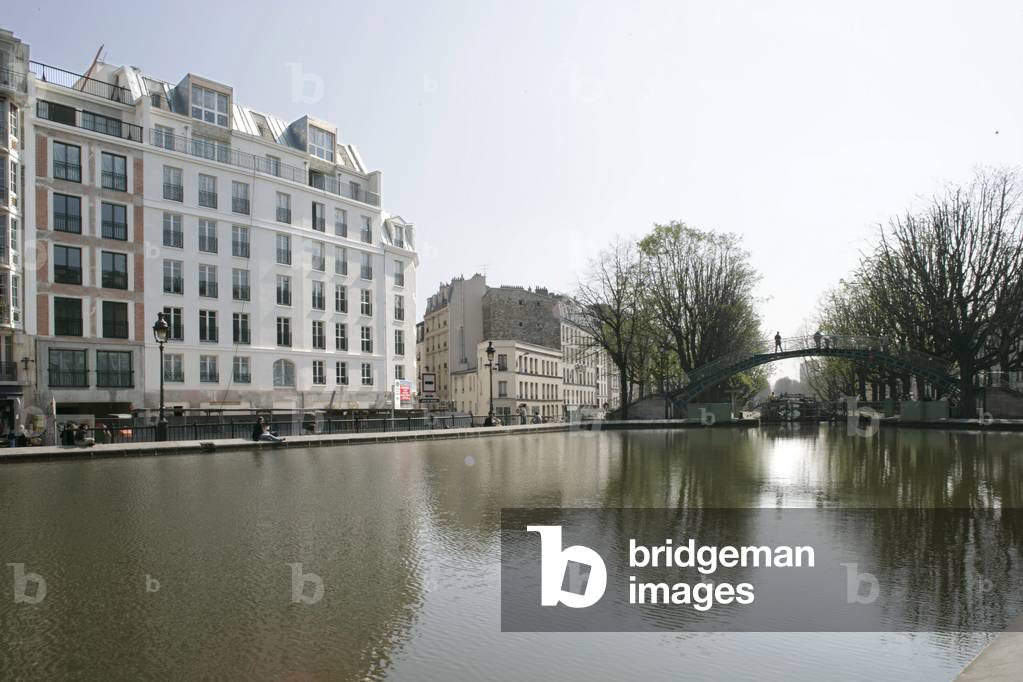
The Canal Saint Martin in Paris 10th. Inaugurated in 1825, the Saint-Martinae Canal connects the Villette basin to the Seine. It has 9 locks and 2 turntables. Photography 2005.

TEC4615495: The Canal Saint Martin in Paris 10th. Inaugurated in 1825, the Saint-Martinae Canal connects the Villette basin to the Seine. It has 9 locks and 2 turntables. Photography 2005. / Bridgeman Images
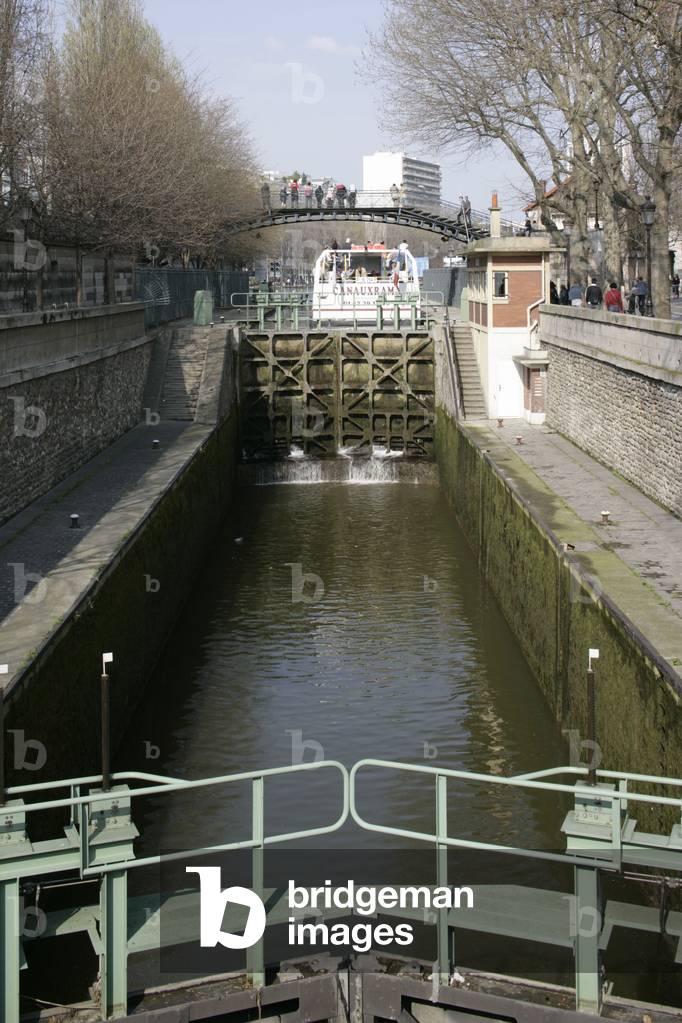
Canal Saint Martin, Paris 10th. Inaugurated in 1825, the cananl connects the basin of the Villette to the Seine. It has 9 locks and 2 turntables. Photography 2005.

TEC4615614: Canal Saint Martin, Paris 10th. Inaugurated in 1825, the cananl connects the basin of the Villette to the Seine. It has 9 locks and 2 turntables. Photography 2005. / Bridgeman Images
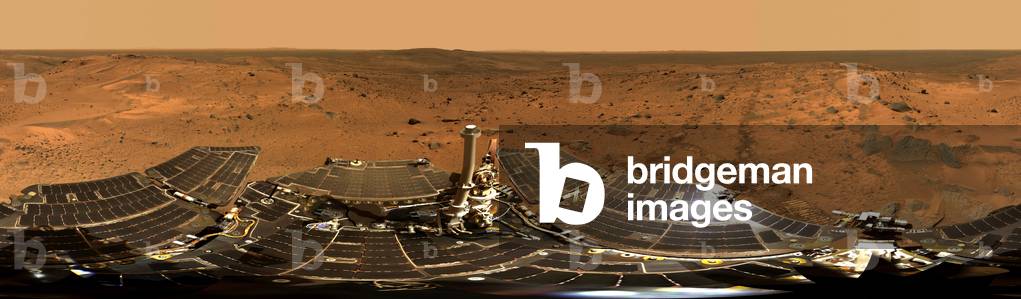
March - Spirit - View from the top of Husband Hill - Panorama of 360 degrees obtained by Spirit from 24 to 27 August 2005. The Rover Spirit landed on Mars in the Gusev crater area on July 4, 2004. Mosaic of 653 images

PIX4615688: March - Spirit - View from the top of Husband Hill - Panorama of 360 degrees obtained by Spirit from 24 to 27 August 2005. The Rover Spirit landed on Mars in the Gusev crater area on July 4, 2004. Mosaic of 653 images / Bridgeman Images
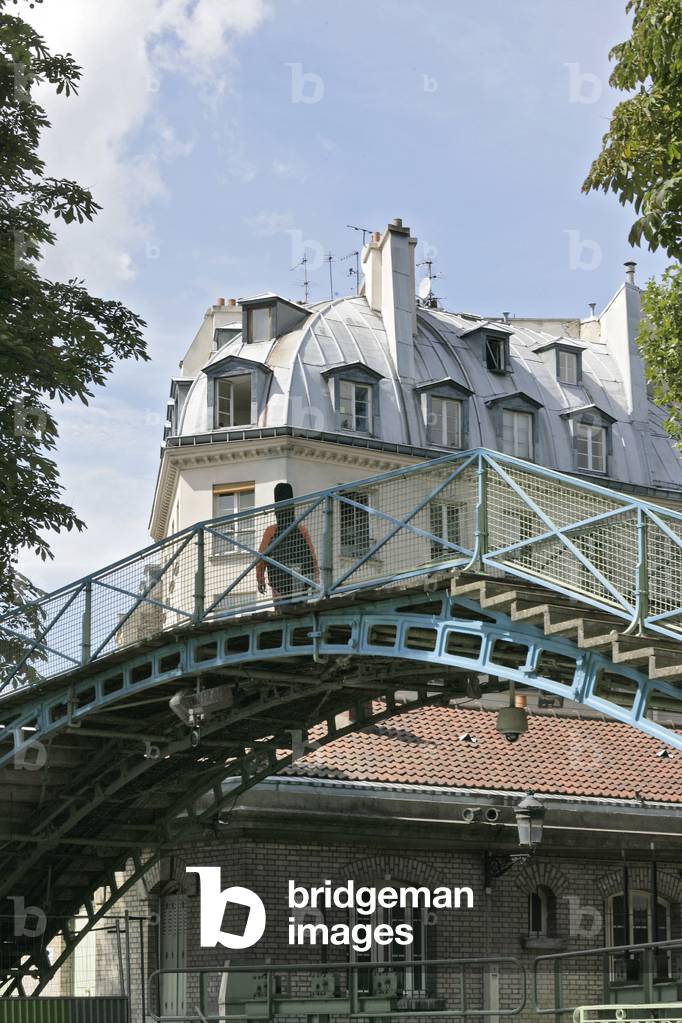
Pont sur le quai Valmy in Paris 10th.

TEC4615779: Pont sur le quai Valmy in Paris 10th. / Bridgeman Images
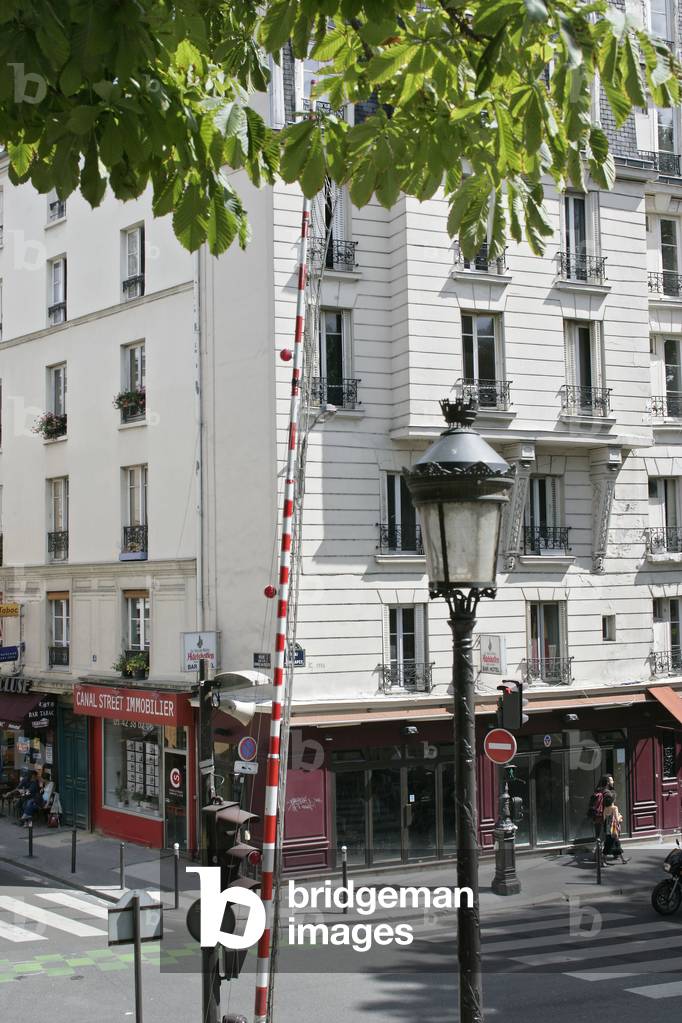
Le quai de Jemmapes in Paris 10th.

TEC4615829: Le quai de Jemmapes in Paris 10th. / Bridgeman Images

March - Opportunity - Cratere Victoria 09 - 2006 - March: Victoria crater seen from rover Opportunity - Panorama obtained by the rover Opportunity on 28 and 29 September 2006. The Rover Opportunity landed on Mars in the Meridiani Planum region on January 25, 2004. Opportunity reached the Victoria crater on September 27, 2006 after travelling more than 9 km on the surface of Mars. The Victoria crater is about 800 metres wide and its south face on the left is about 6 metres above ground. This image taken by the panoramic camera on the Mars Exploration Rover Opportunity shows the view of Victoria Crater from Duck Bay. Opportunity reached Victoria Crater on Sol 951 (September 27, 2006) after traversing 9.28 kilometers (5.77 miles) since her landing site at Eagle Crater. Victoria Crater is roughly 800 meters (one - half mile) wide - - about five times wider than Endurance Crater, and 40 times as wide as Eagle crater. The south face of the 6 meter (20 foot) tall layered Cape Verde promontory can be seen in the left side of the inner crater wall, about 50 meters (about 165 feet) away from the rover at the time of the imaging. The north face of the 15 meter (50 foot) tall stack of layered rocks called Cabo Frio can be seen on the right side of the inner crater wall. This mosaic was taken on Sols 952 and 953 (September 28 and 29, 2006). There are 30 separate pointings through 6 different filters at each pointing

PIX4615845: March - Opportunity - Cratere Victoria 09 - 2006 - March: Victoria crater seen from rover Opportunity - Panorama obtained by the rover Opportunity on 28 and 29 September 2006. The Rover Opportunity landed on Mars in the Meridiani Planum region on January 25, 2004. Opportunity reached the Victoria crater on September 27, 2006 after travelling more than 9 km on the surface of Mars. The Victoria crater is about 800 metres wide and its south face on the left is about 6 metres above ground. This image taken by the panoramic camera on the Mars Exploration Rover Opportunity shows the view of Victoria Crater from Duck Bay. Opportunity reached Victoria Crater on Sol 951 (September 27, 2006) after traversing 9.28 kilometers (5.77 miles) since her landing site at Eagle Crater. Victoria Crater is roughly 800 meters (one - half mile) wide - - about five times wider than Endurance Crater, and 40 times as wide as Eagle crater. The south face of the 6 meter (20 foot) tall layered Cape Verde promontory can be seen in the left side of the inner crater wall, about 50 meters (about 165 feet) away from the rover at the time of the imaging. The north face of the 15 meter (50 foot) tall stack of layered rocks called Cabo Frio can be seen on the right side of the inner crater wall. This mosaic was taken on Sols 952 and 953 (September 28 and 29, 2006). There are 30 separate pointings through 6 different filters at each pointing / Bridgeman Images

March: Volcano Olympus Mons - False colors - Mars: volcano Olympus Mons - Altimetric data obtained by the Mars Express probe. The Olympus Mons volcano is 600 km in diameter and 26 km above the plains. This is a mosaic of Olympus Mons, the highest volcano on Mars, which towers 26 km above the surrounding plains. The image covers an area of approximately 600,000 sq km and is color - coded according to height

PIX4615892: March: Volcano Olympus Mons - False colors - Mars: volcano Olympus Mons - Altimetric data obtained by the Mars Express probe. The Olympus Mons volcano is 600 km in diameter and 26 km above the plains. This is a mosaic of Olympus Mons, the highest volcano on Mars, which towers 26 km above the surrounding plains. The image covers an area of approximately 600,000 sq km and is color - coded according to height / Bridgeman Images

March: Caldera of the volcano Apollinaris Patera - This Martian volcano is 180 to 280 km from its base and rises at about 5000 m altitude. Its caldera seen here by the Mars Express probe on October 26, 2004 measures 80 km in diameter and a depth of 1 km. Faux Color Image

PIX4615989: March: Caldera of the volcano Apollinaris Patera - This Martian volcano is 180 to 280 km from its base and rises at about 5000 m altitude. Its caldera seen here by the Mars Express probe on October 26, 2004 measures 80 km in diameter and a depth of 1 km. Faux Color Image / Bridgeman Images

March: Hebes Chasma - Mars: Hebes Chasma - Hebes Chasma is a basin of almost 8000 m deep located in the northern part of Valles Marineris, the great Martian canyon. At the centre of this depression is a stratified plateau that constitutes sedimentary deposits. Perspective image obtained by the Mars Express probe in 2005. Perspective view of Hebes Chasma obtained by the High Resolution Stereo Camera (HRSC) on ESA's Mars Express spacecraft. Hebes Chasma is an enclosed trough, almost 8000 m deep, in Valles Marineris, the Grand Canyon of Mars, where water is believed to have flowed. Hebes Chasma is located at approximately 1* south and 282* east. The HRSC obtained image data on 16 September 2005 with a ground resolution of approximately 15 m/pixel

PIX4616055: March: Hebes Chasma - Mars: Hebes Chasma - Hebes Chasma is a basin of almost 8000 m deep located in the northern part of Valles Marineris, the great Martian canyon. At the centre of this depression is a stratified plateau that constitutes sedimentary deposits. Perspective image obtained by the Mars Express probe in 2005. Perspective view of Hebes Chasma obtained by the High Resolution Stereo Camera (HRSC) on ESA's Mars Express spacecraft. Hebes Chasma is an enclosed trough, almost 8000 m deep, in Valles Marineris, the Grand Canyon of Mars, where water is believed to have flowed. Hebes Chasma is located at approximately 1* south and 282* east. The HRSC obtained image data on 16 September 2005 with a ground resolution of approximately 15 m/pixel / Bridgeman Images

March: Hebes Chasma - Mars: Hebes Chasma - Hebes Chasma is a basin of almost 8000 m deep located in the northern part of Valles Marineris, the great Martian canyon. At the centre of this depression is a stratified plateau that constitutes sedimentary deposits. Image obtained by the Mars Express probe in 2005. View of Hebes Chasma obtained by the High Resolution Stereo Camera (HRSC) on ESA's Mars Express spacecraft. Hebes Chasma is an enclosed trough, almost 8000 m deep, in Valles Marineris, the Grand Canyon of Mars. A mesa - like mountain is located in the center of Hebes Chasma. It reaches 8000 meters above the graben floor and extends almost to the top of the surrounding plain. The mountain is made up by numerous stacked rock layers. The layering may consists of remnants of the older plateau, lake sediments, wind blown sediments or volcanic rock. The rock layers were exposed by erosional processes. Newest data acquired by the OMEGA spectrometer on - board Mars Express revealed hydratized (water - bearing) minerals like gypsum in some areas of Hebes Chasma. What ever kind of processes led to the formation of the Interior Layered Deposits: at least some water once existed in Hebes Chasma. Hebes Chasma is located at approximately 1* south and 282* east. The HRSC obtained image data on 16 September 2005 with a ground resolution of approximately 15 m/pixel

PIX4616152: March: Hebes Chasma - Mars: Hebes Chasma - Hebes Chasma is a basin of almost 8000 m deep located in the northern part of Valles Marineris, the great Martian canyon. At the centre of this depression is a stratified plateau that constitutes sedimentary deposits. Image obtained by the Mars Express probe in 2005. View of Hebes Chasma obtained by the High Resolution Stereo Camera (HRSC) on ESA's Mars Express spacecraft. Hebes Chasma is an enclosed trough, almost 8000 m deep, in Valles Marineris, the Grand Canyon of Mars. A mesa - like mountain is located in the center of Hebes Chasma. It reaches 8000 meters above the graben floor and extends almost to the top of the surrounding plain. The mountain is made up by numerous stacked rock layers. The layering may consists of remnants of the older plateau, lake sediments, wind blown sediments or volcanic rock. The rock layers were exposed by erosional processes. Newest data acquired by the OMEGA spectrometer on - board Mars Express revealed hydratized (water - bearing) minerals like gypsum in some areas of Hebes Chasma. What ever kind of processes led to the formation of the Interior Layered Deposits: at least some water once existed in Hebes Chasma. Hebes Chasma is located at approximately 1* south and 282* east. The HRSC obtained image data on 16 September 2005 with a ground resolution of approximately 15 m/pixel / Bridgeman Images

Mars: craters and channels in Hephaestus Fossae - Mars: craters and channels in Hephaestus Fossae - Impact crateres and channel system in Hephaestus Fossae, a region on Mars located on the western flank of Elysium Mons. The large impact crater on the left of the image measures 20 km in diameter. The image covering an area of about 150 square km was obtained by the Mars Express probe on 28 December 2007. This image of Hephaestus Fossae was obtained by Esa's Mars Express orbiter on 28 December 2007. The region is dotted with craters and channel systems and lies at about 21* North and 126* East on the Red Planet. Named after the Greek god of fire, Hephaestus Fossae extends for more than 600 km on the western flank of Elysium Mons in the Utopia Planitia region. The surface is mostly smooth, and is covered by several small impact craters measuring 800 to 2800 m in diameter. Smaller craters are scattered across the entire region. The left side of the image shows a large impact crater measuring 20 km in diameter. Covering an area of approximately 150 sq km, a crater of this size on Earth could harbour cities such as Bonn or Kiel. In contrast to the smaller craters, it shows a blanket of ejecta with flow forms surrounding the rim

PIX4616156: Mars: craters and channels in Hephaestus Fossae - Mars: craters and channels in Hephaestus Fossae - Impact crateres and channel system in Hephaestus Fossae, a region on Mars located on the western flank of Elysium Mons. The large impact crater on the left of the image measures 20 km in diameter. The image covering an area of about 150 square km was obtained by the Mars Express probe on 28 December 2007. This image of Hephaestus Fossae was obtained by Esa's Mars Express orbiter on 28 December 2007. The region is dotted with craters and channel systems and lies at about 21* North and 126* East on the Red Planet. Named after the Greek god of fire, Hephaestus Fossae extends for more than 600 km on the western flank of Elysium Mons in the Utopia Planitia region. The surface is mostly smooth, and is covered by several small impact craters measuring 800 to 2800 m in diameter. Smaller craters are scattered across the entire region. The left side of the image shows a large impact crater measuring 20 km in diameter. Covering an area of approximately 150 sq km, a crater of this size on Earth could harbour cities such as Bonn or Kiel. In contrast to the smaller craters, it shows a blanket of ejecta with flow forms surrounding the rim / Bridgeman Images

Walk on the Bund, Puxi to Shanghai, China. Photography 21/04/05.

OMG4591357: Walk on the Bund, Puxi to Shanghai, China. Photography 21/04/05. / Bridgeman Images

Old town district, Puxi, Shanghai, China.

OMG4591390: Old town district, Puxi, Shanghai, China. / Bridgeman Images

Nanjing Long Lu Street, Puxia Shanghai neighborhood, China.

OMG4591578: Nanjing Long Lu Street, Puxia Shanghai neighborhood, China. / Bridgeman Images

Brick building in Shanghai, China.

OMG4591609: Brick building in Shanghai, China. / Bridgeman Images

Constellation of the Great Bear - Constellation of Ursa Major - Plate extracted from the Mirror of Urania by Jehoshaphat Aspin - 1825 Urania's Mirror, by Jehoshaphat Aspin, 1825

PIX4591614: Constellation of the Great Bear - Constellation of Ursa Major - Plate extracted from the Mirror of Urania by Jehoshaphat Aspin - 1825 Urania's Mirror, by Jehoshaphat Aspin, 1825 / Bridgeman Images

Constellation of the Great Bear - Constellation of Ursa Major - The constellation of the Great Bear with its mythological form, extracted from the Uranographia of Hevelius. Map showing the constellation of the Big Dipper with its mythological form from “Uranographia”” star atlas by Hevelius (1690) added

PIX4591634: Constellation of the Great Bear - Constellation of Ursa Major - The constellation of the Great Bear with its mythological form, extracted from the Uranographia of Hevelius. Map showing the constellation of the Big Dipper with its mythological form from “Uranographia”” star atlas by Hevelius (1690) added / Bridgeman Images

Constellation of Hercules and light pollution - Constellation of Hercules and light pollution - The constellation of Hercules above the lights of the Brennilis nuclear power plant. Constellation of Hercules above the lights from the nuclear plant of Brennilis

PIX4591714: Constellation of Hercules and light pollution - Constellation of Hercules and light pollution - The constellation of Hercules above the lights of the Brennilis nuclear power plant. Constellation of Hercules above the lights from the nuclear plant of Brennilis / Bridgeman Images

Lane in Luwan district (Puxi) in Shanghai, China.

OMG4591723: Lane in Luwan district (Puxi) in Shanghai, China. / Bridgeman Images

Huangpu (Puxi) district in Shanghai, China.

OMG4591831: Huangpu (Puxi) district in Shanghai, China. / Bridgeman Images

Huangpu (Puxi) district in Shanghai, China.

OMG4591843: Huangpu (Puxi) district in Shanghai, China. / Bridgeman Images
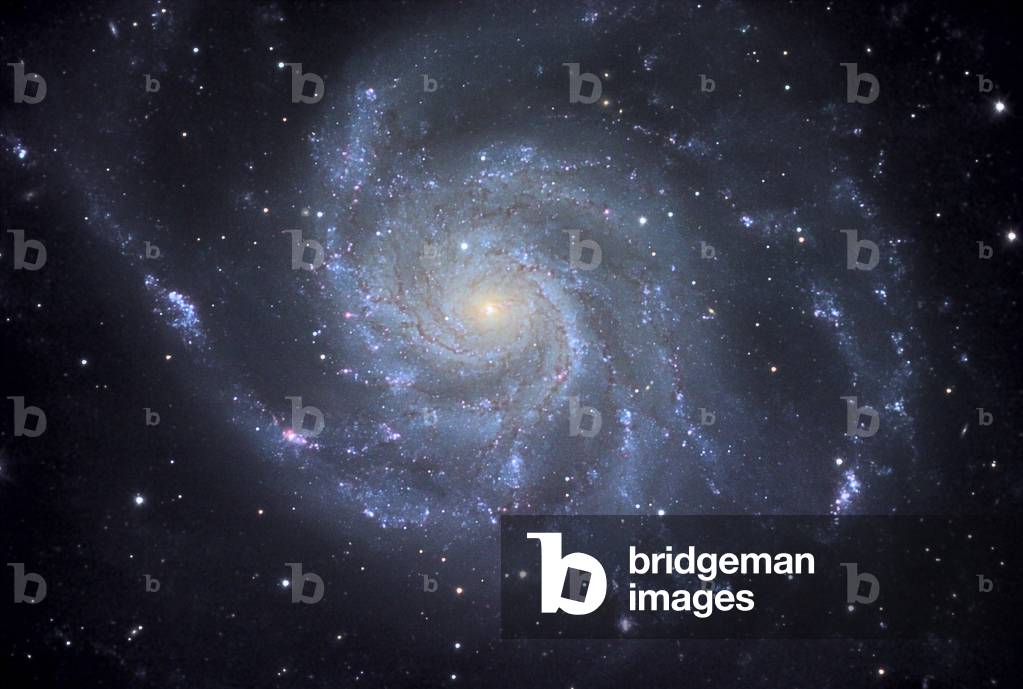
Spiral galaxy M101 in the Great Bear - Spiral galaxy M101 in constellation Ursa Major - The galaxy M101 (NGC 5457) is located about 27 million years ago - light from Earth. Spiral galaxy M101 is a beautiful, large, face - on spiral galaxy located about 27 million light - year away in the constellation Ursa Major

PIX4612702: Spiral galaxy M101 in the Great Bear - Spiral galaxy M101 in constellation Ursa Major - The galaxy M101 (NGC 5457) is located about 27 million years ago - light from Earth. Spiral galaxy M101 is a beautiful, large, face - on spiral galaxy located about 27 million light - year away in the constellation Ursa Major / Bridgeman Images

Galaxies NGC 5560, NGC 5566 and NGC 5569 in the Virgin - Galaxies NGC 5560, NGC 5566 and NGC 5569 in Virgo - This group of galaxies also called Arp 286 is located about 80 million years ago - light from Earth in the constellation of the Virgin. At the top is the galaxy NGC 5560, below, in the center, the galaxy NGC 5566, with the galaxy NGC 5569 on the left. This galaxy group is about 80 million light years from Earth in the contellation of Virgo. To the top of the image, the galaxy NGC 5560; below, in center, galaxy NGC 5566 with NGC 5569 to the left

PIX4612765: Galaxies NGC 5560, NGC 5566 and NGC 5569 in the Virgin - Galaxies NGC 5560, NGC 5566 and NGC 5569 in Virgo - This group of galaxies also called Arp 286 is located about 80 million years ago - light from Earth in the constellation of the Virgin. At the top is the galaxy NGC 5560, below, in the center, the galaxy NGC 5566, with the galaxy NGC 5569 on the left. This galaxy group is about 80 million light years from Earth in the contellation of Virgo. To the top of the image, the galaxy NGC 5560; below, in center, galaxy NGC 5566 with NGC 5569 to the left / Bridgeman Images

Spiral galaxy NGC 5850 in Virgo - Spiral galaxy NGC 5850 in Virgo - Barree spiral galaxy NGC 5850 with right, elliptical galaxy NGC 5846. Barred spiral galaxy NGC 5850 with at right the elliptical galaxy NGC 5846

PIX4612792: Spiral galaxy NGC 5850 in Virgo - Spiral galaxy NGC 5850 in Virgo - Barree spiral galaxy NGC 5850 with right, elliptical galaxy NGC 5846. Barred spiral galaxy NGC 5850 with at right the elliptical galaxy NGC 5846 / Bridgeman Images

Spiral galaxy NGC 5907 in the Dragon - Spiral galaxy NGC 5907 in Draco - The galaxy NGC 5907 is about 35 million years away - light from Earth. Image obtained in 2006 in several cumulative long poses, with a large amateur instrument, a 50 cm telescope. Edge - on spiral galaxy located at 35 million light years away

PIX4612832: Spiral galaxy NGC 5907 in the Dragon - Spiral galaxy NGC 5907 in Draco - The galaxy NGC 5907 is about 35 million years away - light from Earth. Image obtained in 2006 in several cumulative long poses, with a large amateur instrument, a 50 cm telescope. Edge - on spiral galaxy located at 35 million light years away / Bridgeman Images

Interacting galaxies Arp 81 - Interacting galaxies Arp 81 - Arp 81 is located about 300 million light years away from Earth in the constellation Dragon. This pair of interacting galaxies is composed of NGC 6621 on the left and NGC 6622 on the right. NGC 6621 is the largest of the two galaxies. The collision, seen here about 100 million years later, caused intense star flames. Image obtained by the Hubble Space Telescope on 15 March 1999. NGC 6621/2 (VV 247, Arp 81) is a strongly interacting pair of galaxies, seen about 100 million years after their closest approach. It consists of NGC 6621 (to the left) and NGC 6622 (to the right). NGC 6621 is the larger of the two, and is a very disturbed spiral galaxy. The encounter has pulled a long tail out of NGC 6621 that has now wrapped behind its body. The collision has also triggered extensive star formation between the two galaxies. Scientists believe that Arp 81 has a richer collection of young massive star clusters than the notable Antennae galaxies (which are much closer than Arp 81). The pair is located in the constellation of Draco, approximately 300 million light - years away from Earth. Arp 81 is the 81st galaxy in ARP's Atlas of Peculiar Galaxies. Image taken by the Hubble space telescope on March 15, 1999

PIX4612937: Interacting galaxies Arp 81 - Interacting galaxies Arp 81 - Arp 81 is located about 300 million light years away from Earth in the constellation Dragon. This pair of interacting galaxies is composed of NGC 6621 on the left and NGC 6622 on the right. NGC 6621 is the largest of the two galaxies. The collision, seen here about 100 million years later, caused intense star flames. Image obtained by the Hubble Space Telescope on 15 March 1999. NGC 6621/2 (VV 247, Arp 81) is a strongly interacting pair of galaxies, seen about 100 million years after their closest approach. It consists of NGC 6621 (to the left) and NGC 6622 (to the right). NGC 6621 is the larger of the two, and is a very disturbed spiral galaxy. The encounter has pulled a long tail out of NGC 6621 that has now wrapped behind its body. The collision has also triggered extensive star formation between the two galaxies. Scientists believe that Arp 81 has a richer collection of young massive star clusters than the notable Antennae galaxies (which are much closer than Arp 81). The pair is located in the constellation of Draco, approximately 300 million light - years away from Earth. Arp 81 is the 81st galaxy in ARP's Atlas of Peculiar Galaxies. Image taken by the Hubble space telescope on March 15, 1999 / Bridgeman Images


Back to top