
Print this page or go back to standard view.

FLO4564176: Black mustard, Brassica nigra. Handcoloured copperplate engraving from Dr. Willibald Artus' Hand-Atlas sammtlicher mediinisch-pharmaceutischer Gewachse, (Handbook of all medical-pharmaceutical plants), Jena, 1876. / Bridgeman Images

FLO4564281: Lovage, Levistium officinale. Handcoloured copperplate engraving from Dr. Willibald Artus' Hand-Atlas sammtlicher mediinisch-pharmaceutischer Gewachse, (Handbook of all medical-pharmaceutical plants), Jena, 1876. / Bridgeman Images

FLO4564343: Ground-ivy, Glechoma hederacea (Glechoma hederaceum). Handcoloured copperplate engraving from Dr. Willibald Artus' Hand-Atlas sammtlicher mediinisch-pharmaceutischer Gewachse, (Handbook of all medical-pharmaceutical plants), Jena, 1876. / Bridgeman Images

FLO4564279: Maidenhair fern, Adiantum capillus-veneris. Handcoloured copperplate engraving from Dr. Willibald Artus' Hand-Atlas sammtlicher mediinisch-pharmaceutischer Gewachse, (Handbook of all medical-pharmaceutical plants), Jena, 1876. / Bridgeman Images

FLO4564456: Rubber tree, Hevea guianensis (Siphonia elastica). Handcoloured copperplate engraving from Dr. Willibald Artus' Hand-Atlas sammtlicher mediinisch-pharmaceutischer Gewachse, (Handbook of all medical-pharmaceutical plants), Jena, 1876. / Bridgeman Images

FLO4564606: European wild ginger or hazelwort, Asarum europaeum. Handcoloured copperplate engraving from Dr. Willibald Artus' Hand-Atlas sammtlicher mediinisch-pharmaceutischer Gewachse, (Handbook of all medical-pharmaceutical plants), Jena, 1876. / Bridgeman Images
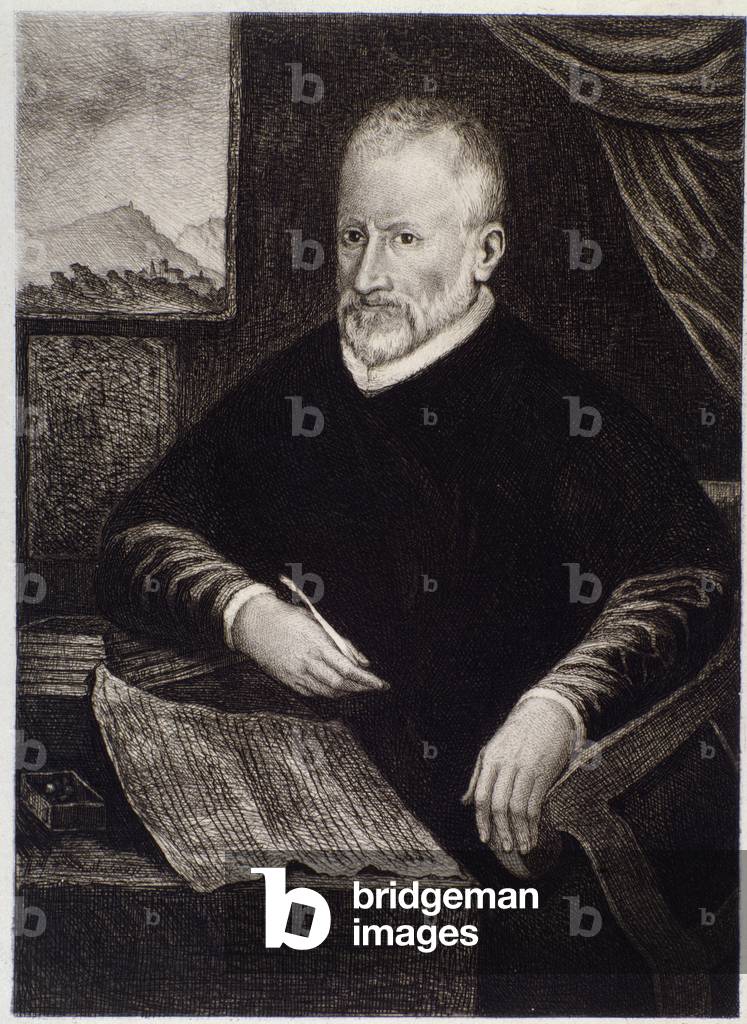
LRI4564685: Portrait of Giovanni Pierluigi da Palestrina (engraving) / Bridgeman Images

FLO4564717: Meadow saffron, Colchicum autumnal. Handcoloured copperplate engraving from Dr. Willibald Artus' Hand-Atlas sammtlicher mediinisch-pharmaceutischer Gewachse, (Handbook of all medical-pharmaceutical plants), Jena, 1876. / Bridgeman Images

FLO4564760: Turmeric, Turmeric longa. Handcoloured copperplate engraving by F. Kirchner from Dr. Willibald Artus' Hand-Atlas sammtlicher mediinisch-pharmaceutischer Gewachse, (Handbook of all medical-pharmaceutical plants), Jena, 1876. / Bridgeman Images

FLO4564868: Woman of Bohemia, Germany, 19th century. Handcoloured lithograph after a design by Leon Sault from “” L'Art du Travestissement” (The Art of Fancy Dress), Paris, c.1880. Sault was a theatre and opera designer and luxury fashion magazine publisher. / Bridgeman Images

FLO4564919: Costume of a Norwegian woman, 19th century. Handcoloured lithograph after a design by Leon Sault from “” L'Art du Travestissement” (The Art of Fancy Dress), Paris, c.1880. Sault was a theatre and opera designer and luxury fashion magazine publisher. / Bridgeman Images
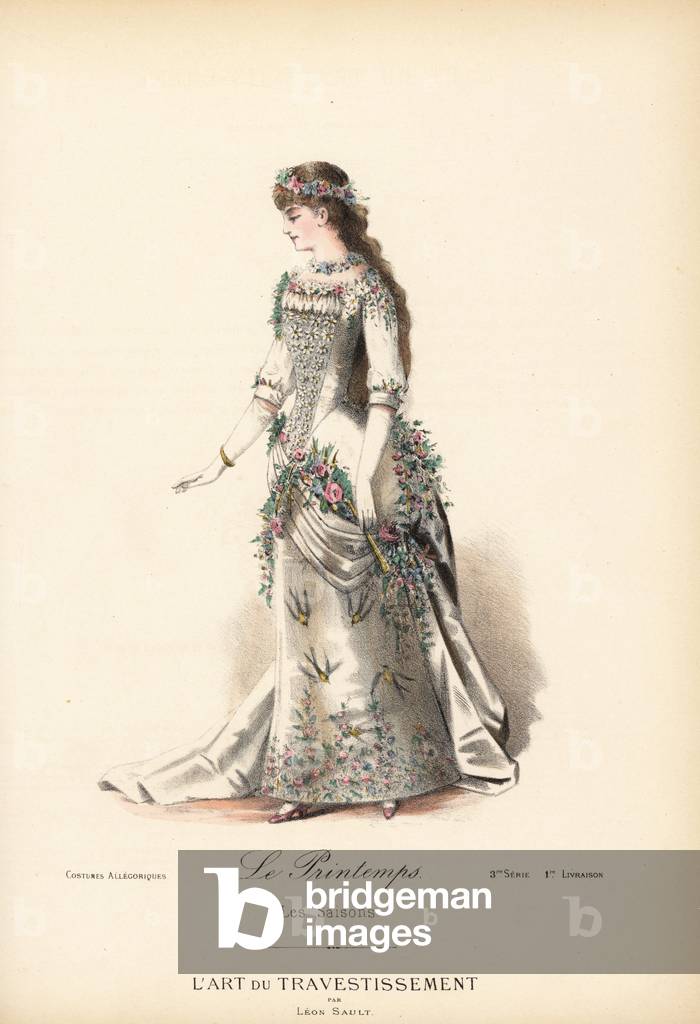
FLO4564942: Fancy dress costume for Spring, with embroidered silk dress of flowers and swallows. Handcoloured lithograph after a design by Leon Sault from “” L'Art du Travestissement” (The Art of Fancy Dress), Paris, c.1880. Sault was a theatre and opera designer and luxury fashion magazine publisher. / Bridgeman Images
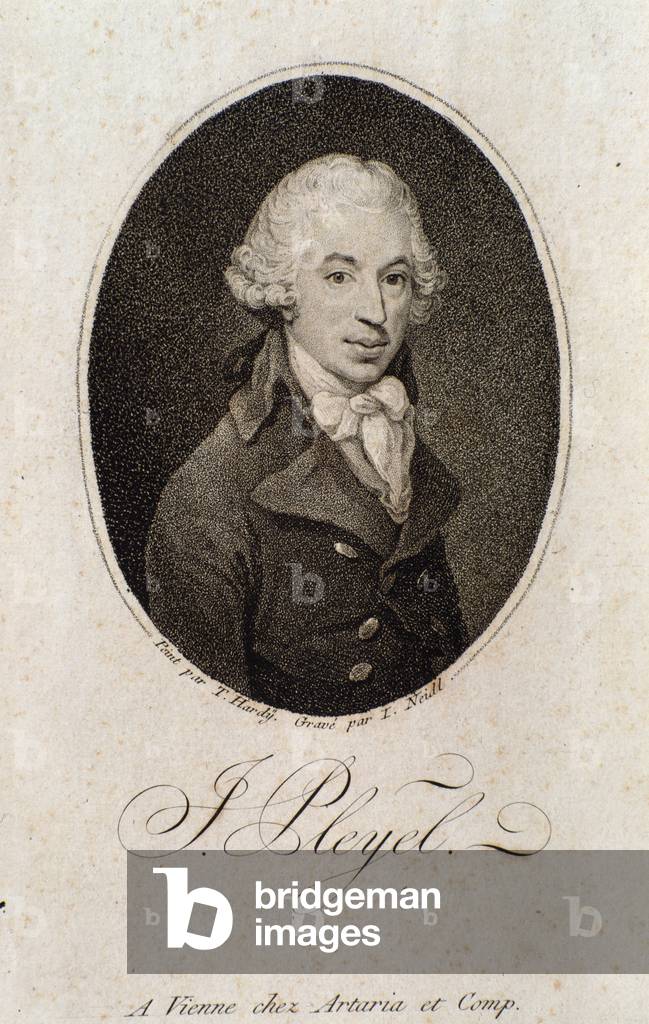
LRI4564794: Portrait of Ignace Joseph Pleyel (engraving) / Bridgeman Images

FLO4564807: Barley, Hordeum vulgare. Handcoloured copperplate engraving from Dr. Willibald Artus' Hand-Atlas sammtlicher mediinisch-pharmaceutischer Gewachse, (Handbook of all medical-pharmaceutical plants), Jena, 1876. / Bridgeman Images

FLO4564986: Fancy dress costume for the game of chess, with dress of chessboard pattern, crown, bodice decorated with chess pieces. Handcoloured lithograph after a design by Leon Sault from “” L'Art du Travestissement” (The Art of Fancy Dress), Paris, c.1880. Sault was a theatre and opera designer and luxury fashion magazine publisher. / Bridgeman Images

JLJ4566086: L'olivier Peinture d'Andre Lhote, 20th century, (oil on canvas), Lhote, Andre (1885-1962) / Bridgeman Images

FLO4565667: Creeping epigee or mayflower with pink flowers, Epigaea repens. Illustration by Clarissa Badger (nee Munger, 1806-1889), lithography published in “Wildflowers, dessinees et mises en couleur par la nature”, New York (USA), 1859. / Bridgeman Images

FLO4566105: Yellow glauciere. Coloured copper engraving from a drawing by Isaac Russell from William Baxter's book “English Botanical Phenomenes””, 1834. William Baxter (1788-1871) was the curator of the Oxford Botanical Garden from 1813 to 1854. Yellow horned poppy, Glaucium luteum. Handcoloured copperplate engraving of a drawing by Isaac Russell from William Baxter's “” British Phaenogamous Botany”” 1835. Scotsman William Baxter (1788-1871) was the curator of the Oxford Botanic Garden from 1813 to 1854. / Bridgeman Images

FLO4569046: Convent of the Friars Minor Capuchin, in the Sintra mountains near Lisbon, Portugal, and the Abbey of Mount Cornillon, near Liege, Belgium. Handcoloured copperplate engraving by Theodore Goetz from Friedrich Johann Bertuch's Bilderbuch fur Kinder (Picture Book for Children), Weimar, 1823. / Bridgeman Images

FLO4569313: Pink millefolia rose, Rosa millefolia rubra, and alpine rose, Rosa pendulina inermis. Handcoloured copperplate engraving from an illustration drawn from nature by Stark from Bertuch's “” Bilderbuch fur Kinder”” (Picture Book for Children), Weimar, 1790-1830. Friedrich Johann Bertuch (1747-1822) was a German publisher and man of arts most famous for his 12-volume encyclopedia for children illustrated with 1,200 engraved plates on natural history, science, costume, mythology, etc. / Bridgeman Images
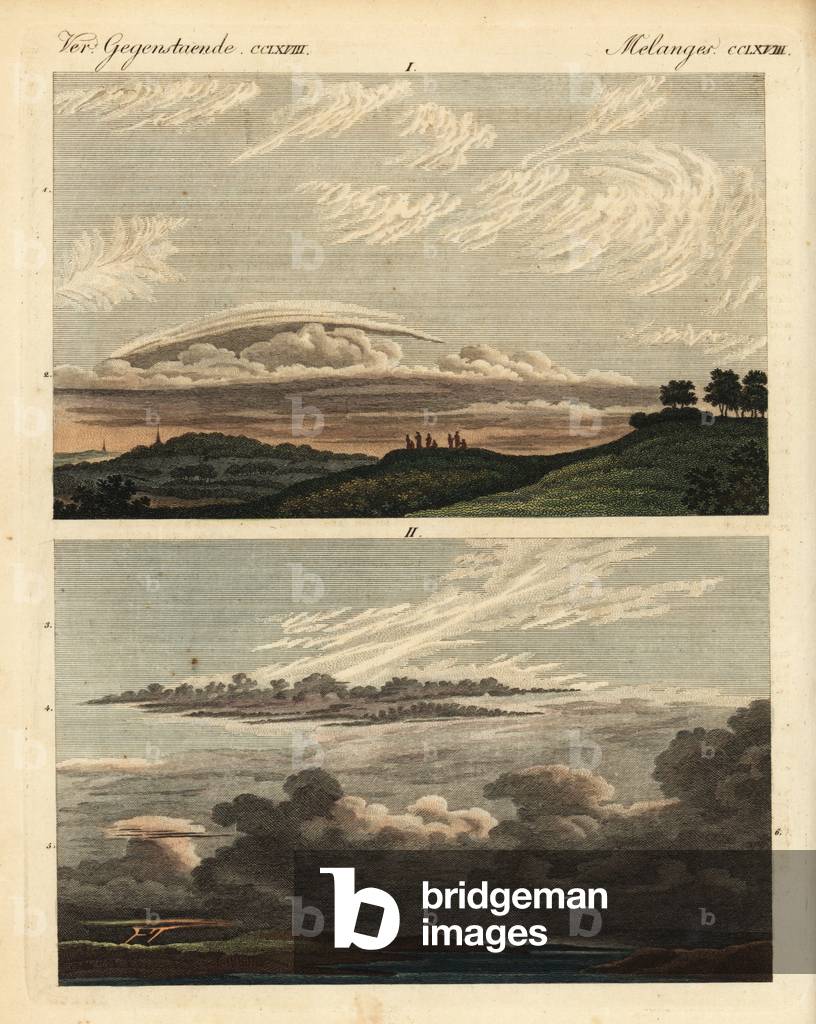
FLO4569060: Natural history of clouds: cirrus, cirrostratus, cirrocumulus, nimbus, etc. Handcoloured copperplate engraving from Friedrich Johann Bertuch's Bilderbuch fur Kinder (Picture Book for Children), Weimar, 1823. / Bridgeman Images

FLO4569381: Large flowered Damask pink, Rosa damascena grandiflora. Handcoloured copperplate engraving from an illustration drawn from nature by Horned from Bertuch's “” Bilderbuch fur Kinder”” (Picture Book for Children), Weimar, 1790-1830. Friedrich Johann Bertuch (1747-1822) was a German publisher and man of arts most famous for his 12-volume encyclopedia for children illustrated with 1,200 engraved plates on natural history, science, costume, mythology, etc. / Bridgeman Images

LRI4569415: Page of musical score of violin in concerto V in Il cimento dell'armonia e dell'inventione by Antonio Vivaldi, 1725, Unknown artist, (18th century) / Bridgeman Images

FLO4569260: Dutchman's pipe, Aristolochia macrophylla 1 and asarabacca, Asarum europaeum 2. Handcoloured copperplate engraving from Friedrich Johann Bertuch's Bilderbuch fur Kinder (Picture Book for Children), Weimar, 1823. / Bridgeman Images

FLO4569363: Purple or violet rose, Rosa holoserica purpurea flora semi-pleno. Handcoloured copperplate engraving from an illustration drawn from nature by Stark from Bertuch's “” Bilderbuch fur Kinder”” (Picture Book for Children), Weimar, 1790-1830. Friedrich Johann Bertuch (1747-1822) was a German publisher and man of arts most famous for his 12-volume encyclopedia for children illustrated with 1,200 engraved plates on natural history, science, costume, mythology, etc. / Bridgeman Images

FLO4569390: Queen rose, Rosa regina rubicans, and moss rose, Rosa muscosa major. Handcoloured copperplate engraving from an illustration drawn from nature by Stark from Bertuch's “” Bilderbuch fur Kinder”” (Picture Book for Children), Weimar, 1790-1830. Friedrich Johann Bertuch (1747-1822) was a German publisher and man of arts most famous for his 12-volume encyclopedia for children illustrated with 1,200 engraved plates on natural history, science, costume, mythology, etc. / Bridgeman Images

FLO4569414: Cyrtanthus angustifolius, amaryllis native to South Africa. Handcoloured stipple copperplate engraving by Barrois from a botanical illustration by Pancrace Bessa from Mordant de Launay's “Herbier General de l'Amateur,”” Audot, Paris, 1820. The Herbier was published from 1810 to 1827 and edited by Mordant de Launay and Loiseleur-Deslongchamps. Bessa (1772-1830s), along with Redoute and Turpin, is considered one of the greatest English botanical artists of the 19th century. / Bridgeman Images

FLO4569658: Indigofera juncea. Handcoloured stipple engraving on copper by Barrois from a botanical illustration by Pancrace Bessa from Mordant de Launay's “Herbier General de l'Amateur,” Audot, Paris, 1820. The Herbier was published from 1810 to 1827 and edited by Mordant de Launay and Loiseleur-Deslongchamps. Bessa (1772-1830s), along with Redoute and Turpin, is considered one of the greatest English botanical artists of the 19th century. / Bridgeman Images

FLO4569739: Franklin tree, Franklinia alatamaha, native to America, extinct in the wild. Handcoloured stipple engraving on copper by Barrois from a botanical illustration by Pancrace Bessa from Mordant de Launay's “Herbier General de l'Amateur,” Audot, Paris, 1820. The Herbier was published from 1810 to 1827 and edited by Mordant de Launay and Loiseleur-Deslongchamps. Bessa (1772-1830s), along with Redoute and Turpin, is considered one of the greatest English botanical artists of the 19th century. / Bridgeman Images

FLO4569756: Canary madrone or strawberry tree, Arbutus canariensis, native to the Canary Islands, vulnerable. Handcoloured stipple engraving on copper by Barrois from a botanical illustration by Pancrace Bessa from Mordant de Launay's “Herbier General de l'Amateur,” Audot, Paris, 1820. The Herbier was published from 1810 to 1827 and edited by Mordant de Launay and Loiseleur-Deslongchamps. Bessa (1772-1830s), along with Redoute and Turpin, is considered one of the greatest English botanical artists of the 19th century. / Bridgeman Images

FLO4570009: Coral tree, Erythrina americana, native to the American tropics. Handcoloured stipple engraving on copper by Goulet from a botanical illustration by Pancrace Bessa from Mordant de Launay's “Herbier General de l'Amateur,” Audot, Paris, 1820. The Herbier was published from 1810 to 1827 and edited by Mordant de Launay and Loiseleur-Deslongchamps. Bessa (1772-1830s), along with Redoute and Turpin, is considered one of the greatest English botanical artists of the 19th century. / Bridgeman Images

FLO4570289: Knights of the Order of the Golden Shield, knights of the order of the ecu d'or, founded by Louis II Duke of Bourbon in 1369. The ceremonial robes have gold shields on the chest. Handcoloured lithograph by Leopold Massard after a miniature in a manuscript book of Hommages du Comte de Clermont from Le Bibliophile Jacob aka Paul Lacroix's Costumes Historique de la France (Historical Costumes of France), Administration de Librairie, Paris, 1852., Massard, Leopold (1812-1889) / Bridgeman Images

FLO4570322: Scene from the Battle of Roosebeke (Rosbecq), Flanders, 1382, between the French and Flemish armies. Knights in suits of armour fight with swords and lances over cannon and the dead and wounded. Handcoloured lithograph by Leopold Massard after a manuscript by Jean Froissart from Le Bibliophile Jacob aka Paul Lacroix's Costumes Historique de la France (Historical Costumes of France), Administration de Librairie, Paris, 1852., Massard, Leopold (1812-1889) / Bridgeman Images

FLO4579913: Striped squill (Squil-like puschkinia), Puschkinia scilloides. Handcoloured copperplate engraving by Weddell after a drawing by John Curtis for Samuel Curtis' continuation of William Curtis' Botanical Magazine, London, 1821. / Bridgeman Images

JLJ4579982: Virgin and Child, detail, Triptych of Saint Prosecutor. The Madonna wears a veil and a ring on the finger of her hand (tempera on wood), Lorenzetti, Ambrogio (1285-c.1348) / Bridgeman Images

FLO4580351: Arbutus tree (or strawberry tree) - Strawberry tree or cane apple, Arbutus unedo var. integerrima. Handcoloured copperplate engraving by Weddell after an illustration by John Curtis from Samuel Curtis's “” Botanical Magazine,”” London, 1822. / Bridgeman Images