
Print this page or go back to standard view.
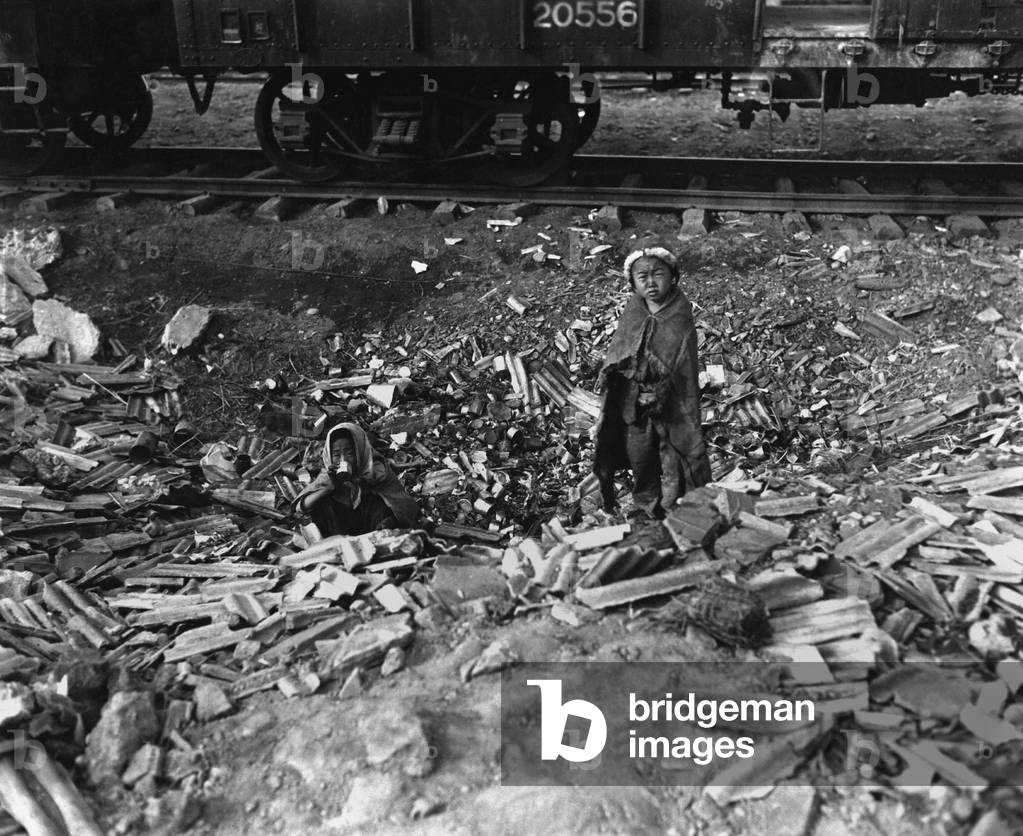
EVB2946257: Homeless, possibly orphaned, brother and sister search empty cans for food. Seoul, Korea, railroad yards. November 17, 1950. Korean War, 1950-53 / Bridgeman Images
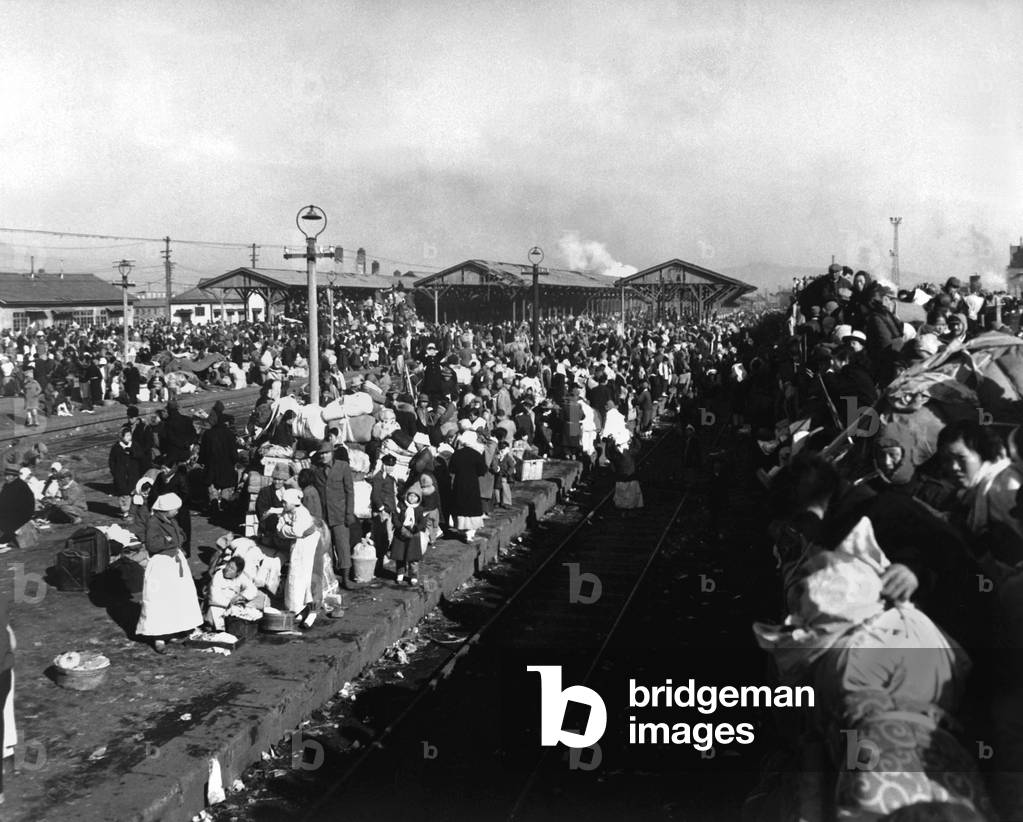
EVB2946263: Refugees crowd railway depot at Inchon, Korea, Jan. 3, 1951. They are fleeing the advancing North Korean/Chinese troops after the failure of the UN invasion (Nov.-Dec.-1950) above the 38th parallel. Nearby Seoul fell to the Communists on Jan. 7, 1951. Korean War, 1950-53 / Bridgeman Images

EVB2946284: 'Why are you shivering and freezing?' Propaganda leaflet distributed by Communists during the Korean War, 1950-53 (print) / Bridgeman Images
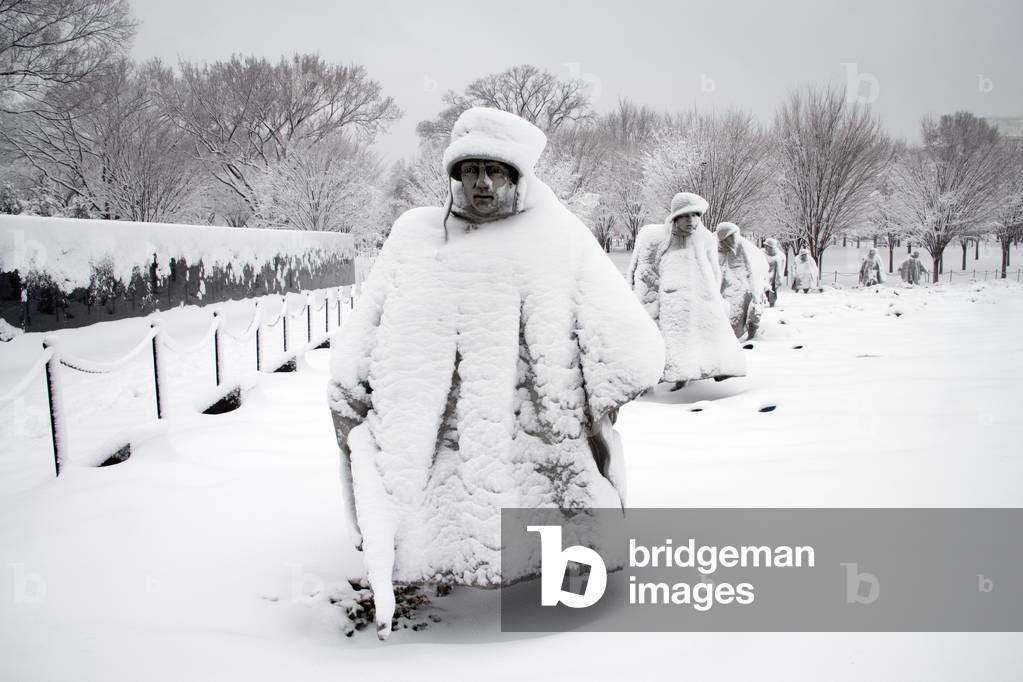
EVB2946296: Korean War Veterans Memorial, Washington, D.C. (photo) / Bridgeman Images
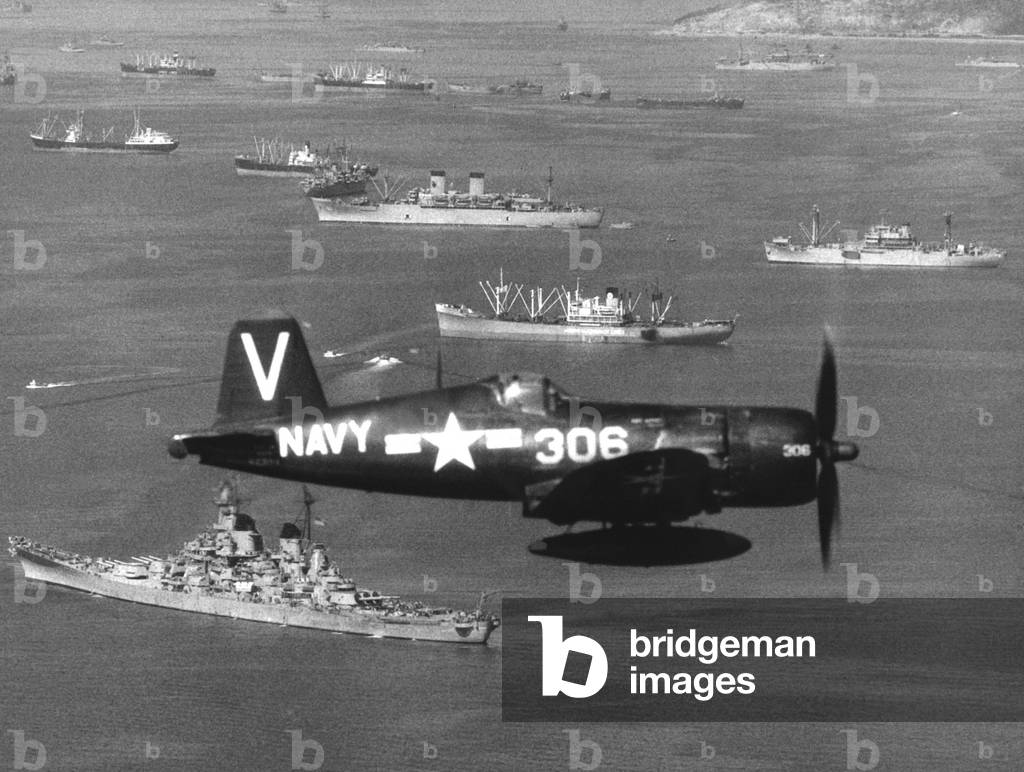
EVB2946305: The UN assault Force in Inchon Harbor, Sept. 15, 1950. 70,000 troops would invade 150 miles behind North Korean lines and advance to Seoul. Below the Vought F4U-4B Corsair fighter is the battleship USS Missouri. Korean War, 1950-53 / Bridgeman Images
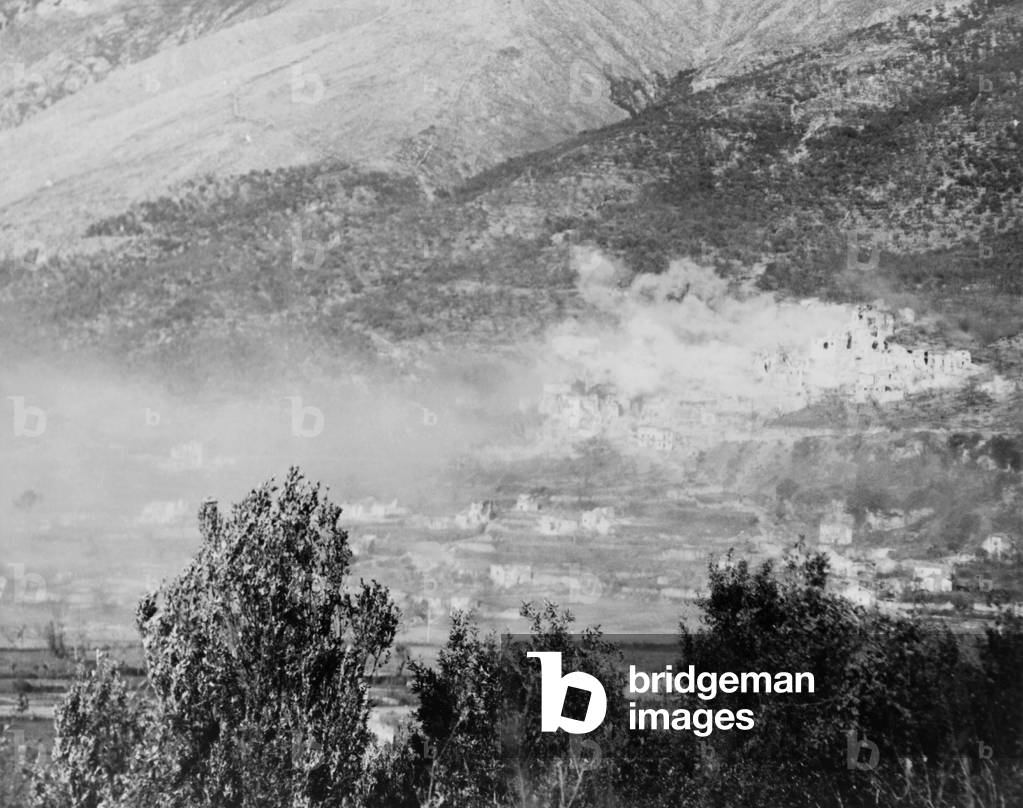
EVB2946030: Thick clouds of smoke rising over the town of San Pietro on the German Reinhard Line. After intensive fighting from Dec. 8-17, the town fell to US Army. World War 2 / Bridgeman Images

EVB2946084: F.F.I. (French Forces of the Interior) partisan carried on stretcher, possibly in Paris. Other men carrying pistols walk alongside. c. July-Aug. 1944 (b/w photo) / Bridgeman Images
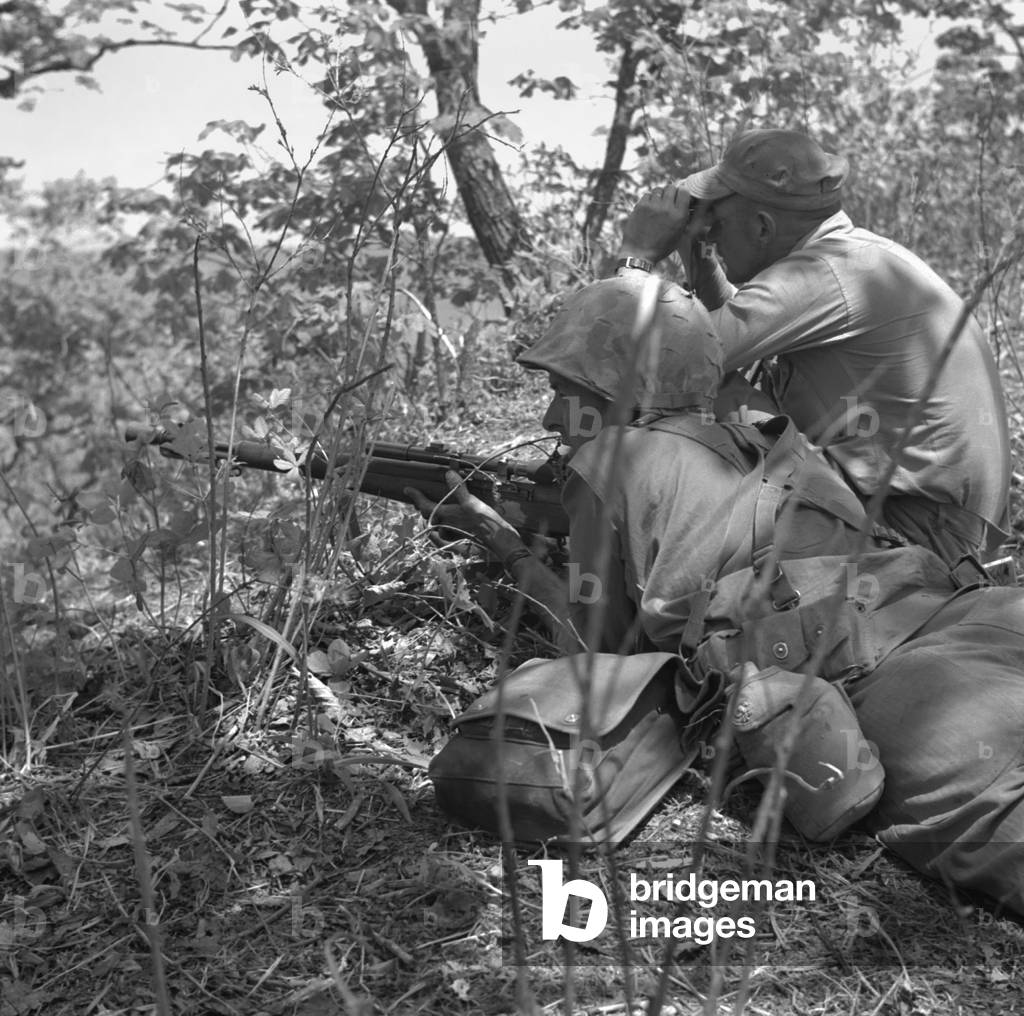
EVB2946132: U.S. Marine sniper and spotter work together in picking off the enemy in Korea. Korean War, 1950-53. Exact date/location unknown / Bridgeman Images
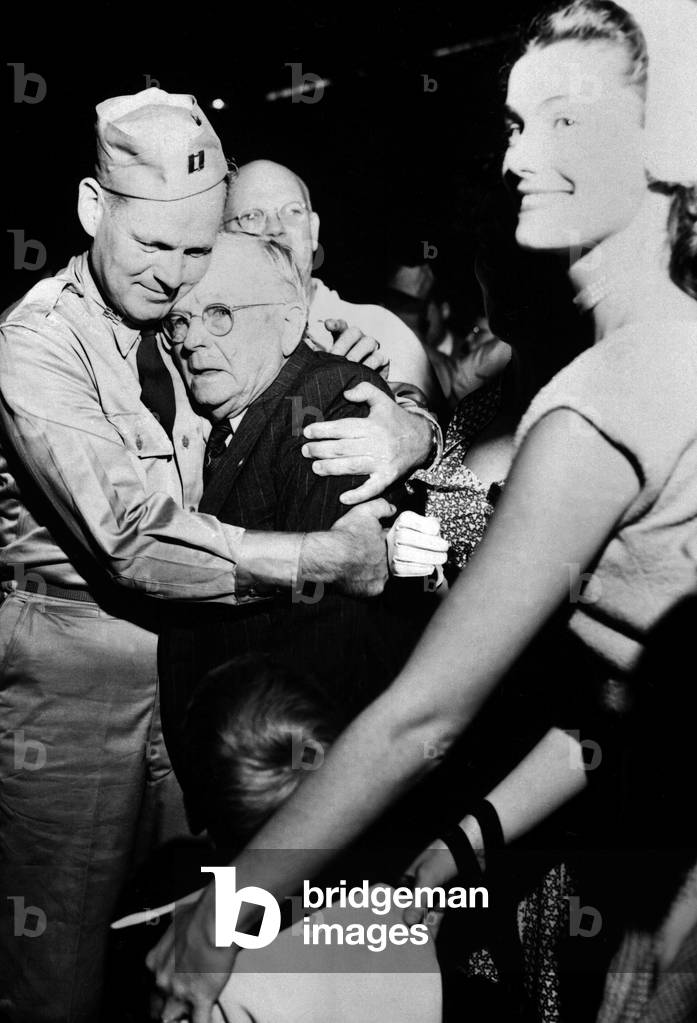
EVB2946192: Repatriated POW Capt. Frederick Smith is greeted by his father on Sept. 14, 1953. Sept. 14, 1953. Fort Mason, California. Korean War, 1950-53 / Bridgeman Images
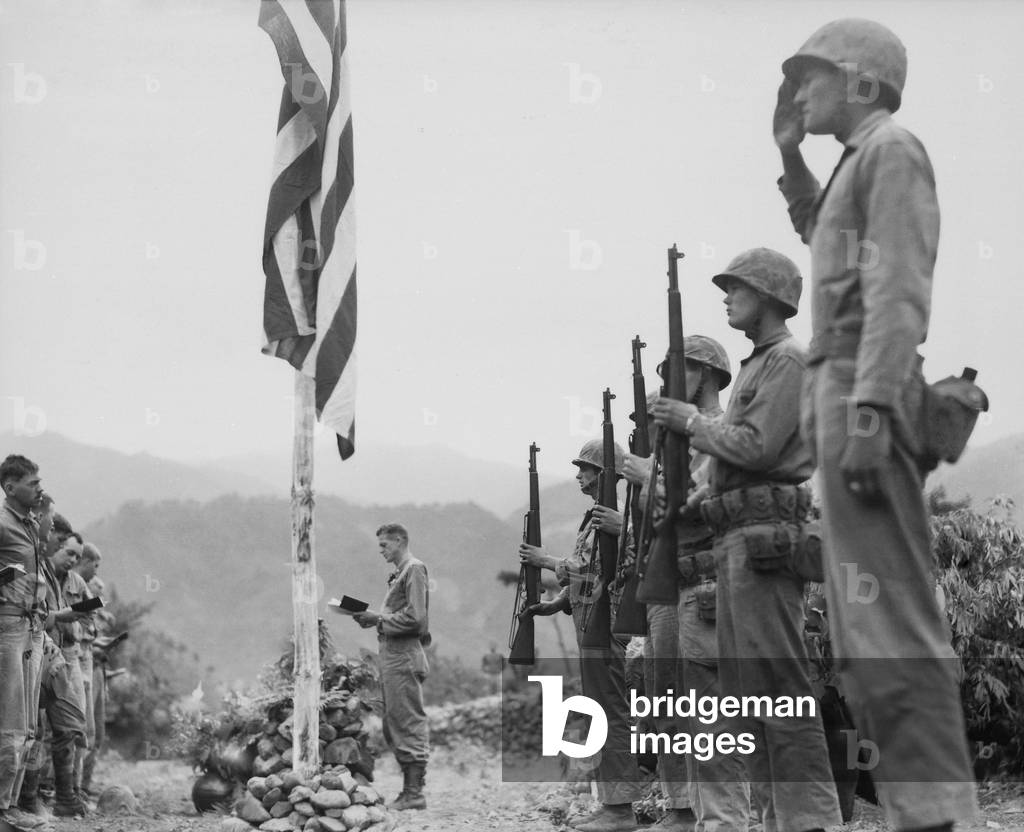
EVB2946219: Fifth Marine Regiment, Memorial Services held in the field during the Korean War. June 21, 1951 / Bridgeman Images
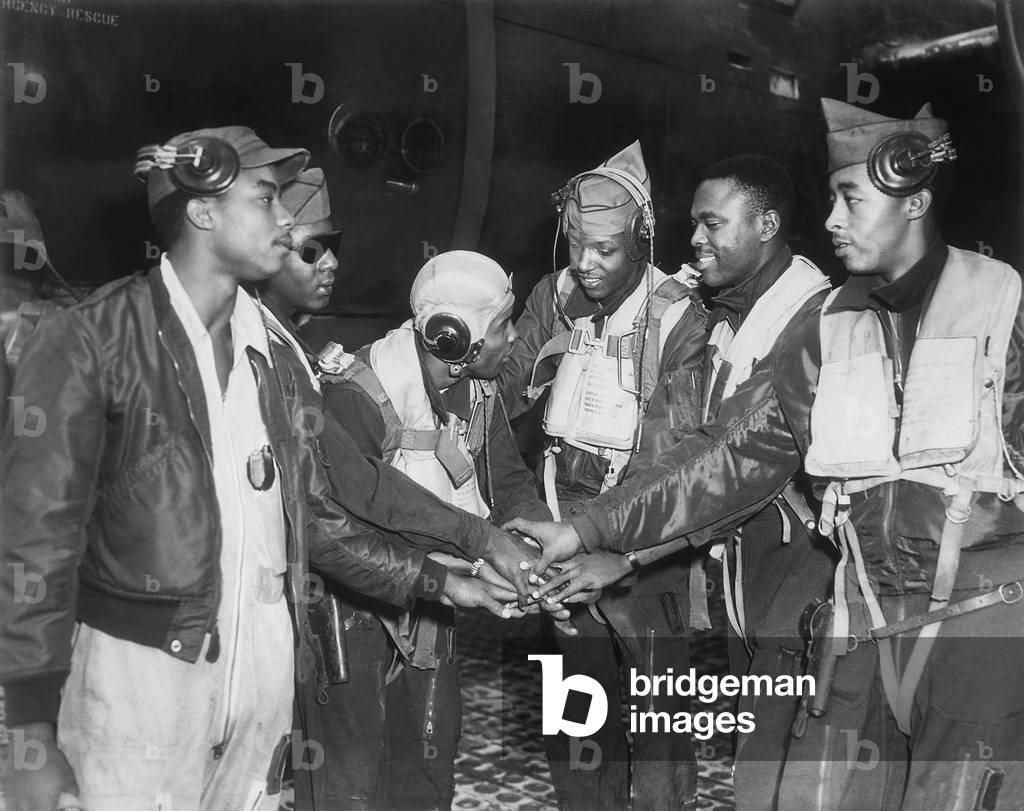
EVB2946222: Six African American Air Force gunners join hands. They are part of 17th Bomb Wing night interdiction teams in Korea. Air interdiction attacked ground targets not close to friendly ground forces. Korean War, 1950-53 / Bridgeman Images
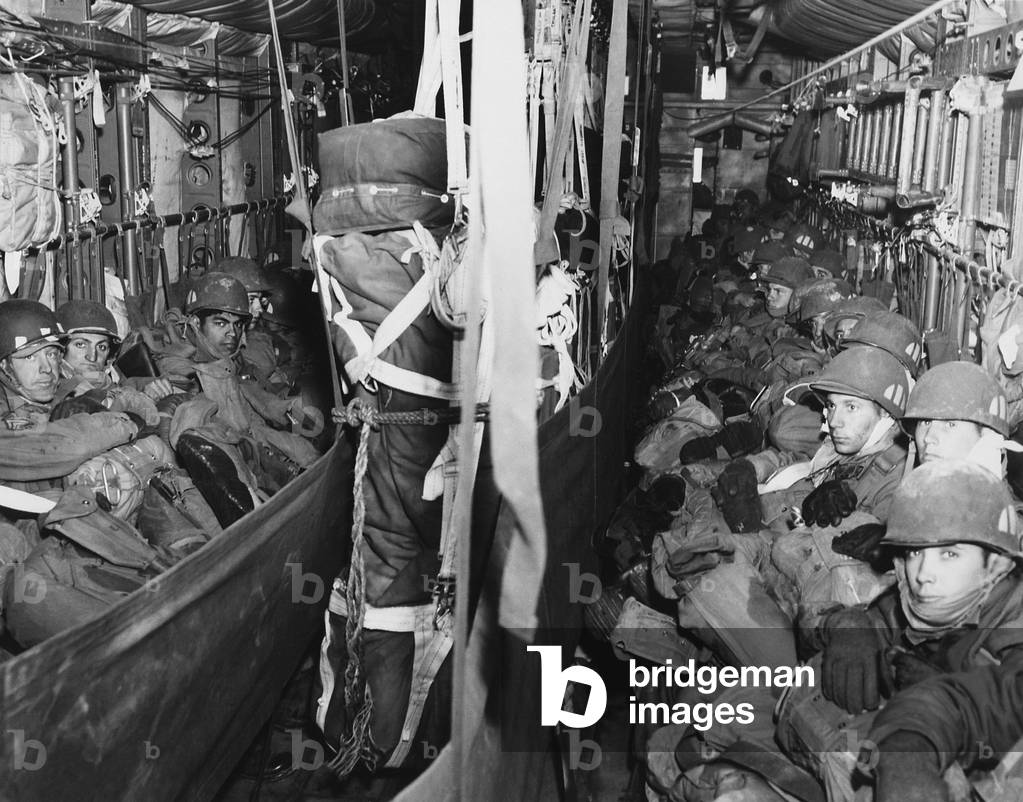
EVB2946231: U.S. Airborne combat team en route to a drop zone at Munsan-ni, Korea, on March, 22, 1951. Packed into a C-119 Flying Boxcar, they jumped on the south bank of the Imjin River, 20 miles behind front line. Their mission to trap Communist forces retreating from Seoul was only partially successful because the enemy had already left. Korean War, 1950-53 / Bridgeman Images
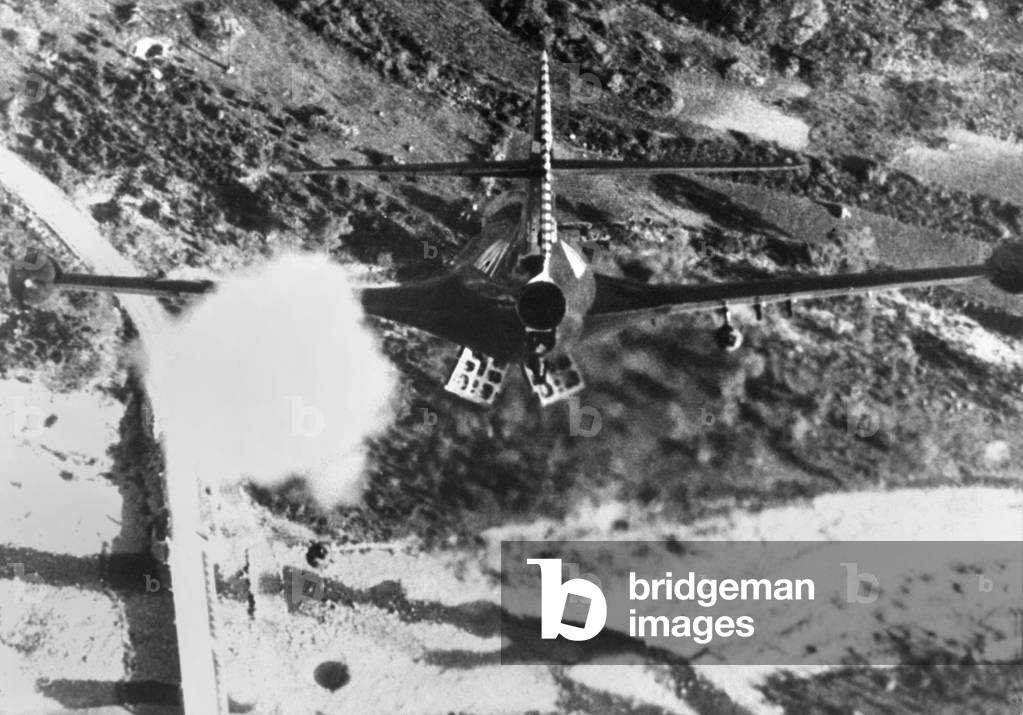
EVB2946246: F-84 Thunderjet from the USS Bon Homme Richard, is shown rocketing and bombing Korean bridge. Nov. 11, 1952 during the Korean War / Bridgeman Images
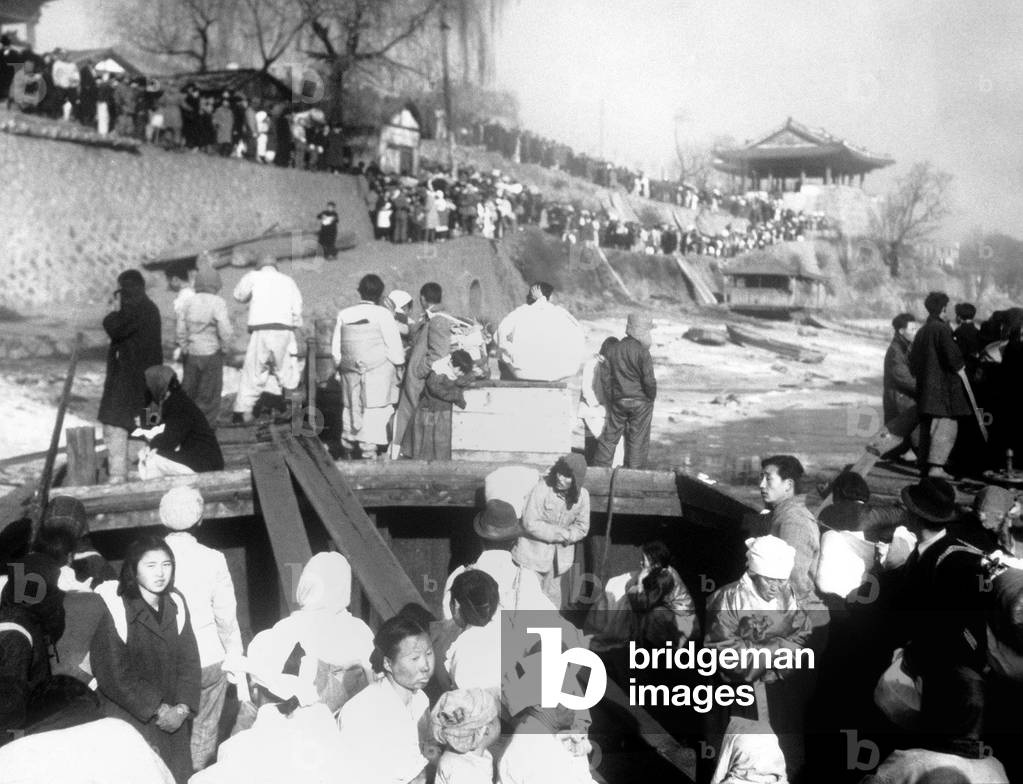
EVB2946261: North Korean refugees are evacuated by ferry boats on the Taedong River at Pyongyang, Korea. They are fleeing the North Korean/Chinese troops approaching as the UN troops withdraw to South Korea. Korean War, 1950-53 / Bridgeman Images
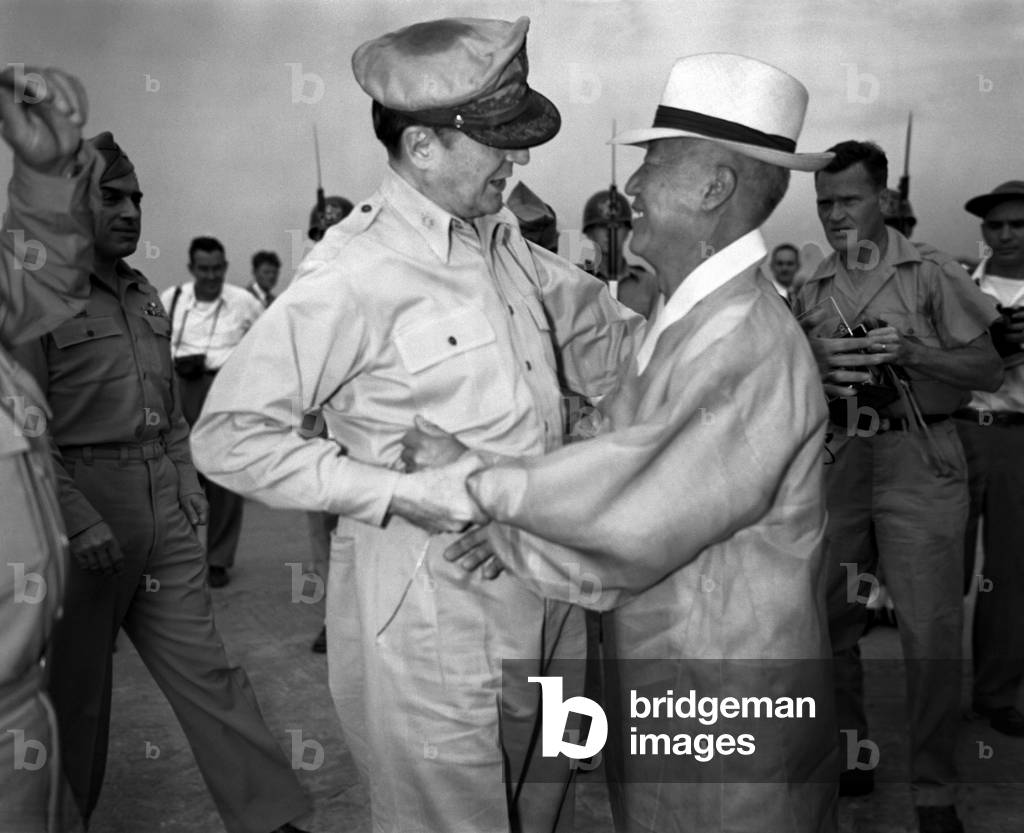
EVB2946270: General Army Douglas MacArthur is welcomed by Dr. Syngman Rhee at Kimpo Air Force Base. MacArthur accepted Rhee's invitation to attend his Inauguration as Korea's first President on August 15, 1948 / Bridgeman Images
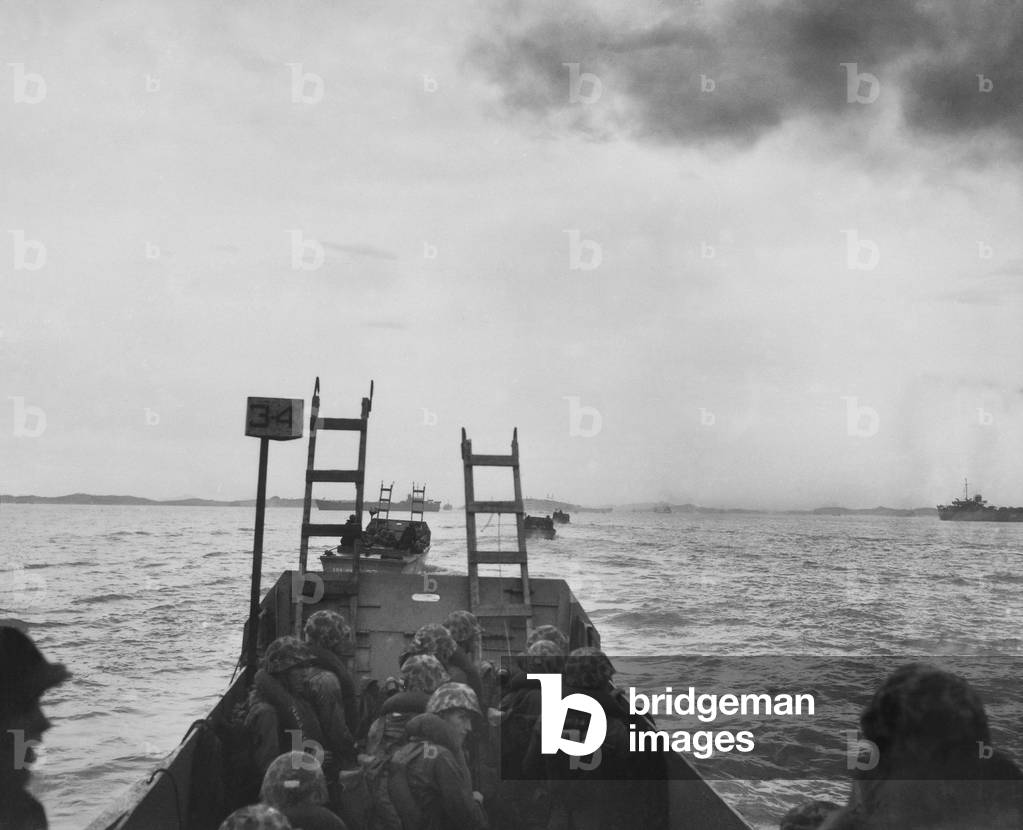
EVB2946309: Landing craft loaded with U.S. Marines heads for the seawall at Inchon. They carry scaling ladders to climb over the 8 foot high seawall in their landing zone, Red Beach. Sept. 15, 1950. Korean War, 1950-53 / Bridgeman Images

EVB2947817: Commemoration ceremony at the National September 11 Memorial in New York City. President Barack and Michelle Obama, with former President George W. and Laura Bush, list to a speaker on the 10th anniversary of the 9/11 attacks / Bridgeman Images

EVB2947921: President George W. Bush waves an American flag after addressing recovery workers in NYC. Sept. 14, 2001. With Bush is retired New York City firefighter Bob Beckwith / Bridgeman Images
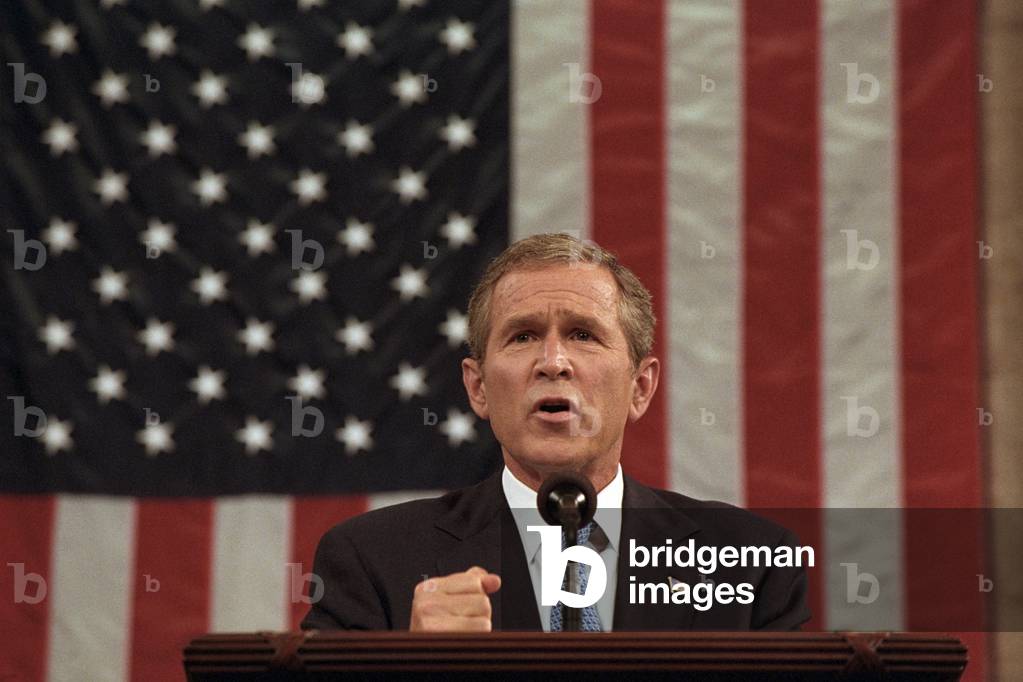
EVB2947934: President George W. Bush announced that 'Our war on terror begins with Al Qaeda, but it does not end there. It will not end until every terrorist group of global reach has been found, stopped and defeated.' On Sept. 20, 2001, to a Joint Session of Congress, 9 days after the 9-11 Terrorist Attacks / Bridgeman Images
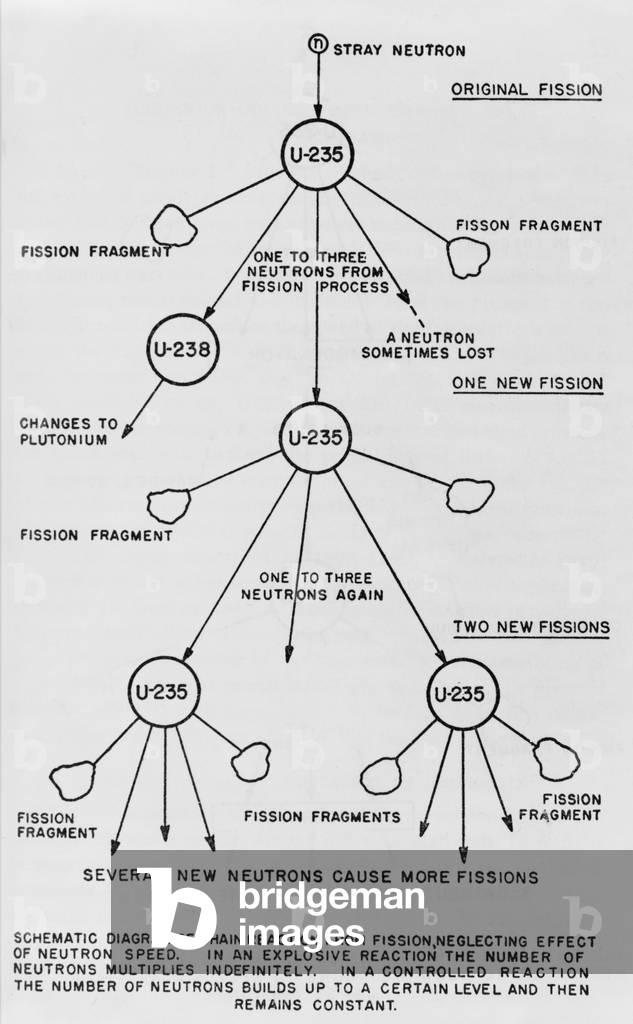
EVB2947960: Schematic diagram of chain reaction from fission of uranium 235. From a U.S. government publication by Henry DeWolf Smyth, c. 1940-45 / Bridgeman Images
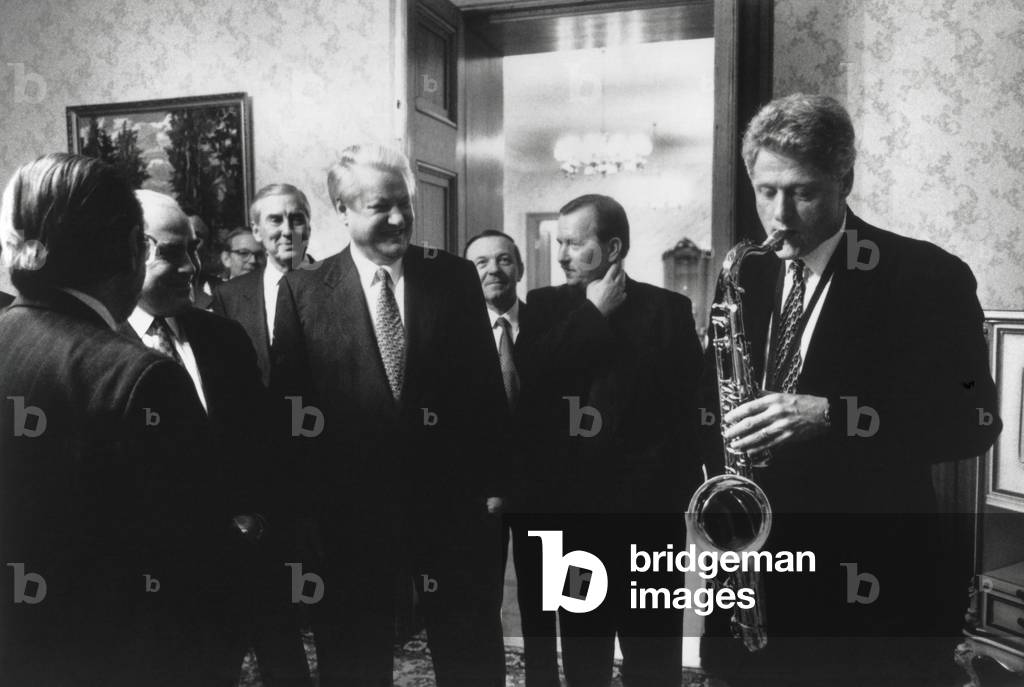
EVB2947963: President Bill Clinton plays the saxophone presented to him by Russian President Boris Yeltsin. Yeltsin hosted a private dinner at Novoya Ogarova Dacha, Russia. Jan. 13, 1994 / Bridgeman Images

EVB2948030: Supreme Court Justice Felix Frankfurter administers oath of office to Secretary of Navy, Col. Frank Knox. As World War 2 began in Europe, President Franklin Roosevelt organized a bi-partisan 'War Cabinet' including Republicans such as Knox in critical posts. July 11, 1940 / Bridgeman Images

EVB2948033: Woman collective farmer with newly harvested wheat. c. 1935-40. Near Krasnodar, USSR, / Bridgeman Images

EVB2948005: First nuclear reactor at the University of Chicago achieved the first self-sustaining chain reaction. December 2, 1942. Chicago Pile-1 (CP-1) was built under the direction of physicist Enrico Fermi, in collaboration with Leo Szilard. In 1943 it was dismantled and reassembled at the Palos Park unit of the Argonne National Laboratory. The drawing is by Melvin A. Miller of the Argonne National Laboratory / Bridgeman Images

EVB2948081: Tree cluttered with debris in front of World Financial Center 3 (WFC 3) site following 9-11 terrorist attack. Seen through the smoke at right is WFC 2. Both buildings were damaged by fallen debris and closed for repairs until May 2002. New York City, Sept. 11, 2001 / Bridgeman Images

EVB2948023: President Franklin Roosevelt, looking behind him, waving from his campaign train in Milwaukee. 1936 / Bridgeman Images

EVB2948035: Planting cotton on the Navai collective farm, near Tashkent, Uzbekistan, USSR. c. 1935-40 / Bridgeman Images

EVB2948038: Manhattan Project facility at Oak Ridge, Tennessee, c. 1950. Then called the 'Energy Research and Development Administration', but still using the World War 2 Gaseous Diffusion Plant and supporting facilities / Bridgeman Images

EVB2948041: Conscientious objectors from the War Resisters League picketing near the United Nations in New York City. In front of biblical quotation inscribed behind them, they hold anti-conscription and anti-war signs. Dec. 1,1959 / Bridgeman Images

EVB2948053: Movie still from a U.S. Army film about a hypothetical attack using an atomic bomb, Nov. 1948. Scene of Army generals in a nuclear war room / Bridgeman Images

EVB2948065: Fire fighters amid debris following September 11th terrorist attack on World Trade Center. In the background are damaged buildings of the World Financial Center, New York City, Sept. 12, 2001 / Bridgeman Images

EVB2948110: Smoke rises from the World Trade Center's collapsed North Tower. On the left are the remains of a lower structure, WTC 6. A large flag is secured to a beam in the foreground. New York City, Sept. 16, 2001 / Bridgeman Images

EVB2947824: President Barack Obama confers with top advisors prior to the announcement of the New START Treaty / Bridgeman Images

EVB2947857: Dianne Reeves performs at the White House during the National Governors Association Dinner. Feb. 26, 2012 / Bridgeman Images

EVB2947866: Aerial view of World Trade Center from the southwest, Sept. 27, 2001. Orange reinforcing plastic covers the street facades of severely damaged buildings on Church Street. New York City, after September 11, 2001 terrorist attacks / Bridgeman Images

EVB2947869: Actors Susan Sarandon and Tim Robbins serving meals at feeding stations for workers at Ground Zero. Sept. 27, 2001. World Trade Center, New York City, after September 11, 2001 terrorist attacks / Bridgeman Images