
Print this page or go back to standard view.

MDA4572939: Facades of residential building, corner of Boulevard Brune and Boulevard du General Leclerc in Paris., Denance, Michel / Bridgeman Images
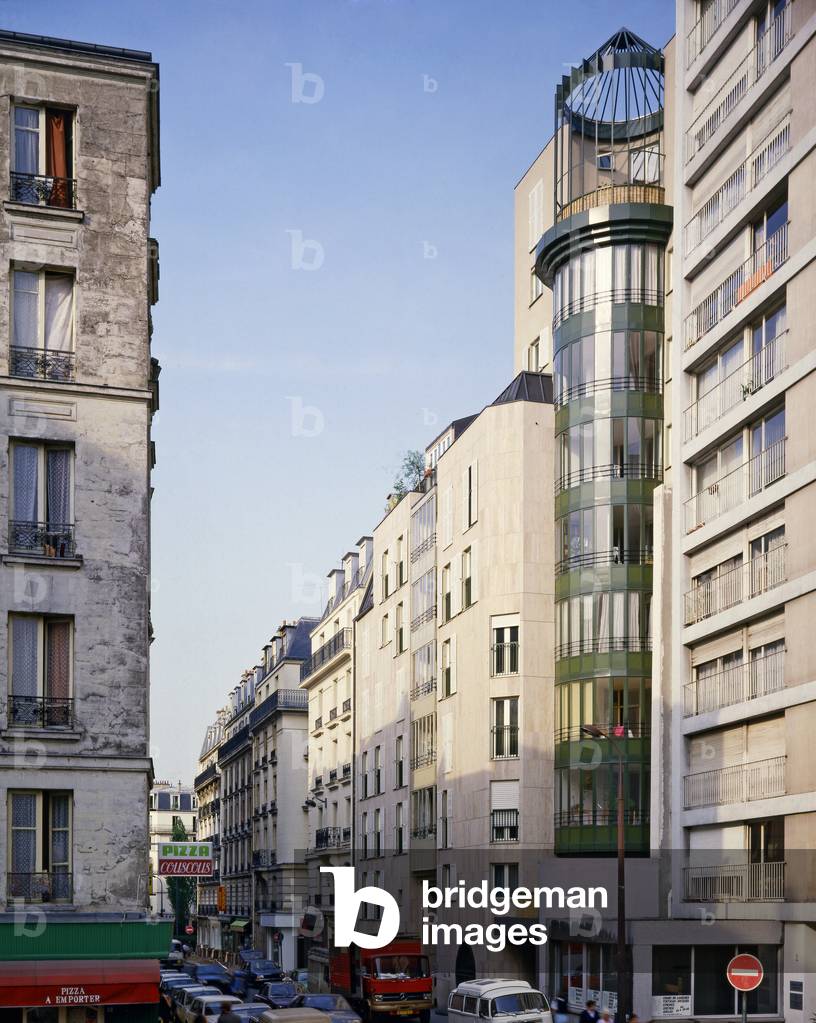
MDA4572962: Accommodation rue des plantes in Paris 14th arrondissement., Denance, Michel / Bridgeman Images

JLJ4573604: Portrait of Charles d'Amboise, 16th century (oil on canvas), Solario, Andrea (c.1466-1524) / Bridgeman Images

JLJ4573709: Campaign of Italy (1796-1797): 'The outside of a military hospital or the French in Italy' (oil on canvas), Taunay, Nicolas Antoine (1755-1830) / Bridgeman Images

JLJ4573755: Representation of an inspector of weights and measures (engraving), French School, (19th century) / Bridgeman Images

PIX4573836: Artist's view of the exoplanet OGLE - 05 - 390L b. - Artist's view of the exoplanet OGLE - 05 - 390L b, the first extrasolar planet of earth type discovered. Located in the constellation of Scorpio, this planet, made of rock and ice, is outside the habitable zone of its star, a red dwarf star / Bridgeman Images

PIX4573851: Life forms on the surface of Gliese 581 c - Flying fauna over Gliese 581 c - Artist's view of the exoplanet Gliese 581c housing an alien life form. Gliese 581c, with a radius of 1.5 times that of the Earth, is the first exoplanet gathering the necessary elements to imagine the existence of a possible extra-terrestrial life. From its surface, its star, about 100 times less bright than our Sun, must be large in the sky because of its proximity to the planet. Gliese 581 b, another planet in this system, passes past this star. Flying life forms grace the crimson skies of the potentially earth - like extrasolar planet Gliese 581 v. The red dwarf star Gliese 581 rests on the horizon, presiding over a liquid water sea. Eclipsing the red dwarf is Gliese 581 b, a sister planet in the same system with a mass 17 times that of the Earth. While the existence of all three bodies has been confirmed, it is not known if Gliese 581 c has all the necessary ingredients to support life as we know it / Bridgeman Images

PIX4573941: Surface of an uninhabitable exoplanet - Exoplanet too hot for life. Artwork - Artist's view of the surface of a planet where extreme temperatures make life impossible. There are likely earthlike planets that miss being hospitable to life because they are a little too close to their host sun (s) / Bridgeman Images

LRI4573653: The couple Odorado and Gildippe - Fresco, 19th century, Overbeck, Friedrich (1789-1869) / Bridgeman Images

LRI4573714: Genesis, creation of the animals and creation of adam - Fresco, 1430, Uccello, Paolo (1397-1475) / Bridgeman Images

PIX4573814: Planetary system around a double star.Artist view. - Artwork of extrasolar planets around a binary system / Bridgeman Images

PIX4573841: Artist's view of an exoplanet near a giant red star - Artist's view of an exoplanet close to a giant red star, a star at the end of life, which before becoming a white dwarf, will inflate and burn the planets around it. Artwork of a planet too close from a red giant star, heated by a sun - like star in final evolution stage expanding dramatically / Bridgeman Images

PIX4573201: Planetary system around the star HD 69830 - Planetary System Around HD 69830 - Artist's view of three planets orbiting around the star HD 69830. This planetary system is the first detects around a star similar to the Sun that contains several planets whose mass is less than that of Jupiter. It seems that this system also has an asteroid belt. Using the ultra - precise HARPS spectrograph on Eso's 3.6 - m telescope at La Silla (Chile), a team of European astronomers have discovered that a nearby star is host to three Neptune - mass planets. The innermost planet is most likely rocky, while the outermost is the first known Neptune - mass planet to reside in the habitable zone. This unique system is likely further enriched by an asteroid belt. This view portaits a point of view inside the asteroid belt, which is assumed here to lie between the two outermost planets / Bridgeman Images

TEC4573233: View of the court of the Defense (Hauts de Seine). / Bridgeman Images

JLJ4573239: Venus and Adonis, 17th century (oil on canvas), Cornelisz. van Haarlem, Cornelis (1562-1638) / Bridgeman Images

TEC4573297: La Defense (Hauts de Seine). / Bridgeman Images

TEC4573339: Graphic effect Mirror effect, has the Defense (Hauts de Seine). / Bridgeman Images

TEC4573469: La fontaine Agam a La defense (Hauts de Seine). / Bridgeman Images

PIX4574126: Kepler - 186f, the first Earth - size Planet in the Habitable Zone - Kepler - 186f is the first Earth-sized planet in the habitable zone of its star to be discovered. It orbits Kepler - 186, a red dwarf located in the constellation of Swan, between 490 and 500 years of light from the Earth. The artist's concept depicts Kepler - 186f, the first validated Earth - size planet to orbit a distant star in the habitable zone - - a range of distance from a star where liquid water might pool on the planet's surface. The discovery of Kepler - 186f confirms that Earth - size planets exist in the habitable zones of other stars and signals a significant step closer to finding a world similar to Earth. The size of Kepler - 186f is known to be less than ten percent larger than Earth, but its mass, composition and density are not known. Previous research suggests that a planet the size of Kepler - 186f is likely to be rocky. Prior to this discovery, the “” record holder”” for the most “” Earth - like”” planet went to Kepler - 62f, which is 40 percent larger than the size of Earth and orbits in its star's habitable zone. Kepler - 186f orbits its star once every 130 days and receives one - third the energy that Earth does from the sun, placing it near the outer edge of the habitable zone. If you could stand on the surface of Kepler - 186f, the brightness of its star at high noon would appear as bright as our sun is about an hour before sunset on Earth. Kepler - 186f resides in the Kepler - 186 system about 500 light - years from Earth in the constellation Cygnus. The system is also home to four inner planets, seen lined up in orbit around a host star that is half the size and mass of the sun. The artistic concept of Kepler - 186f is the result of scientists and artists collaborating to imagine the appearance of these distant worlds / Bridgeman Images

LRI4574422: The three graces (oil on canvas, 17th century), Rubens, Peter Paul (1577-1640) / Bridgeman Images

LRI4571840: Passion: the deposition. Maesta altarpiece (tempera and gold on wood, 1308-1311), Duccio di Buoninsegna (1255-1319) / Bridgeman Images

PIX4571865: Alpha Centauri - Alpha Centauri - Alpha Centauri is a double star (Alpha Centauri A and B) near the Sun, 4.36 years - light. These two stars are relatively similar to the Sun. Alpha Centauri is a binary star (Alpha Centauri A and B) located at a distance of 4.36 light - years, or 41 million km, in the direction of the southern constellation Centaurus (The Centaur). Alpha Centauri A and Alpha Centauri B, are rather similar to the Sun; their stellar spectral types are “” G2V”” and “” K1V””, respectively. Alpha Centauri A and B orbit each other at a distance of about 3600 million km, or somewhat more than the distance of planet Uranus from the Sun. The orbital period is almost exactly 80 years / Bridgeman Images

LRI4571897: The Temptation at the Temple, detail. Maesta altarpiece (tempera and gold on wood, 1308-1311), Duccio di Buoninsegna (1255-1319) / Bridgeman Images

LRI4572119: Musician Angels (fresco, 16th century), Ferrari, Gaudenzio (1474/80-1546) / Bridgeman Images

JLJ4571996: Plate representing the different uniforms of the French Navy from the Premiere Republique until 1914, 20th century (engraving), French School, (20th century) / Bridgeman Images

PIX4572025: Polaris System - Polaris is a triple system consisting of a supergiant star and two dwarf stars. It is a pulsating variable star, cepheide of low amplitude. This montage shows the polar star and constellations of the Little Bear and the Big Bear (left), Polaris A and his companion Polaris B seen by the Hubble Space Telescope (top right), and Polaris Ab photographed for the first time by the Hubble Space Telescope (bottom right). This sequence of images shows that the North Star, Polaris is really a triple star system. For the first time, the close companion of Polaris has been seen directly. The left frame shows Polaris's location very close to the position of Earth's north celestial pole in Ursa Minor (the Small Bear). The upper right image shows Polaris A and its distant companion Polaris B, as viewed by Hubble. They are separated by approximately 240 billion miles. Polaris B, the wide companion, is visible in small telescopes, and was first noticed by William Herschel in 1780. The close companion, Polaris Ab was known to exist from its gravitational tug on Polaris A, but has only been seen directly now using Hubble (lower right image). The companion is only 2 trillion miles from Polaris A. The triple system is 430 light - years away / Bridgeman Images

JLJ4572031: The sweet confession A man courting a woman in the 18th century, 19th century (chromolithograph), Unknown Artist, (19th century) / Bridgeman Images

TEC4572042: Villa Adrienne, 19 avenue du General Leclerc in Paris. Set up in 1780, this villa was originally intended to receive military and ecclesiastic. / Bridgeman Images

PIX4572123: Hypergeante Star HR 5171 - Illustration: This artist view shows the yellow hypergeant star HR 5171. It is a very rare star of which only a dozen people our galaxy. Its dimensions are more than 1300 times greater than those of the Sun, making it one of the ten largest stars discovered to date. Observations have shown that it is actually a double star, whose companion is in direct contact with the main star. This artist's impression shows the yellow hypergiant star HR 5171. This is a very rare type of star with only a dozen known in our galaxy. Its size is over 1300 times that of our Sun - one of the largest ten stars found so far. Observations with Eso's Very Large Telescope Interferometer have shown that it is actually a double star, with the companion in contact with the main star / Bridgeman Images

TEC4572185: Studio house of the painter Pierre Bertrand (1884-1975) in Villa Seurat in Paris. Construction 1925, architect Andre Lurcat (1894-1970). Impasse privee lotie dans les annees vingt pour recevoir des villas d'artistes close to Montparnasse.Photography 10/05/88. / Bridgeman Images
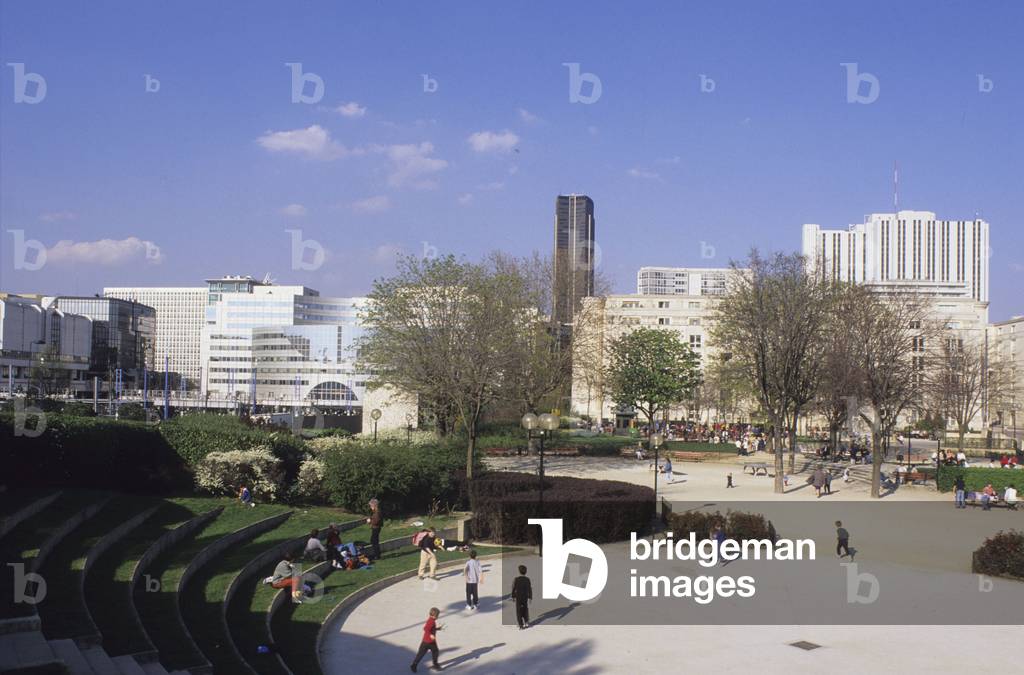
TEC4572214: Square Cardinal Wyszynski in Paris 14th arrondissement. / Bridgeman Images

PIX4571099: Comet Lulin (C2007/N3) - View of Comet Lulin (C2007/N3), February 21, 2009. Comet Lulin (C/2007 N3) on February 21, 2009 from 05:41 UT to 06:20 UT. The faint blue ion tail is seen to the upper right, and the anti - tail stretches to the lower left. Composite of 19 two - minute exposures that has been enhanced in Photoshop to bring out faint details in the tails / Bridgeman Images

PIX4571213: La comete Lovejoy - December 2011 - Comet Lovejoy - December 2011 - La comete Lovejoy above Cirque de Mafate - Ile de la Reunion. 24 December 2011. Comet Lovejoy seen above Cirque de Mafate, Reunion on Dec. 24, 2011 / Bridgeman Images

LRI4571243: The Last Judgment: Christ trumping. Detail. (Fresco, 1293), Cavallini, Pietro (c.1250-c.1330) / Bridgeman Images

TEC4571271: The passage of the Panoramas (1800) in Paris 2nd arrondissement. / Bridgeman Images

PIX4571284: La comete Siding Spring - september 2014 - Comet Siding Spring - september 2014 - La comete C/2013 A1 Siding Spring near the globular cluster 47 Toucan, seen September 1, 2014. Comet Siding Spring C/2013 A1 passing 47 Tucanae seen on september 1st 2014 / Bridgeman Images