Print Friendly Version Page

2501809 Search Results

'The Symbolical Head, Illustrating All the Phrenological Developments of the Human Head,' was created by the leading American phrenologists, brothers Niles Fowler (1811-1896) and Orson Squire Fowler (1809-1887)

EVB2936611: 'The Symbolical Head, Illustrating All the Phrenological Developments of the Human Head,' was created by the leading American phrenologists, brothers Niles Fowler (1811-1896) and Orson Squire Fowler (1809-1887) / Bridgeman Images

Human head and shoulders with heart and brain shown; some of the senses and their corresponding body parts, as well as particular sections of the brain, are identified. From anatomy text by Matthias Qualle, 1513

EVB2936638: Human head and shoulders with heart and brain shown; some of the senses and their corresponding body parts, as well as particular sections of the brain, are identified. From anatomy text by Matthias Qualle, 1513 / Bridgeman Images

Circulation of the blood from William Harvey's ON THE MOTIONS OF THE HEART AND BLOOD, 1628. Illustrations of a tourniqueted human forearms with pronounced superficial blood veins to indicate circulation. Fig. 3: Blood flow is blocked at two points, O and H. At O, the blood pools in a valve and does not flow toward the hand, but flows toward the heart. Fig. 4: Blood flow is blocked at two points, M and N, with no valve within section

EVB2936644: Circulation of the blood from William Harvey's ON THE MOTIONS OF THE HEART AND BLOOD, 1628. Illustrations of a tourniqueted human forearms with pronounced superficial blood veins to indicate circulation. Fig. 3: Blood flow is blocked at two points, O and H. At O, the blood pools in a valve and does not flow toward the hand, but flows toward the heart. Fig. 4: Blood flow is blocked at two points, M and N, with no valve within section / Bridgeman Images

Front and back view of an idealized, fully proportioned nude woman, 1586 (engraving)

EVB2936659: Front and back view of an idealized, fully proportioned nude woman, 1586 (engraving), della Porta, Giambattista (c.1535-1615) / Bridgeman Images

Lillian Wald (1867-1940), American nurse and social worker. She worked as a visiting nurse in poor neighborhoods in New York City, founded the Henry Street Settlement, and greatly influenced public health and social work

EVB2936704: Lillian Wald (1867-1940), American nurse and social worker. She worked as a visiting nurse in poor neighborhoods in New York City, founded the Henry Street Settlement, and greatly influenced public health and social work / Bridgeman Images

Barefoot women immigrants at Ellis Island are from the Caribbean. c. 1910

EVB2936776: Barefoot women immigrants at Ellis Island are from the Caribbean. c. 1910, Bain, George Grantham - Bain News Service (1865-1944) / Bridgeman Images
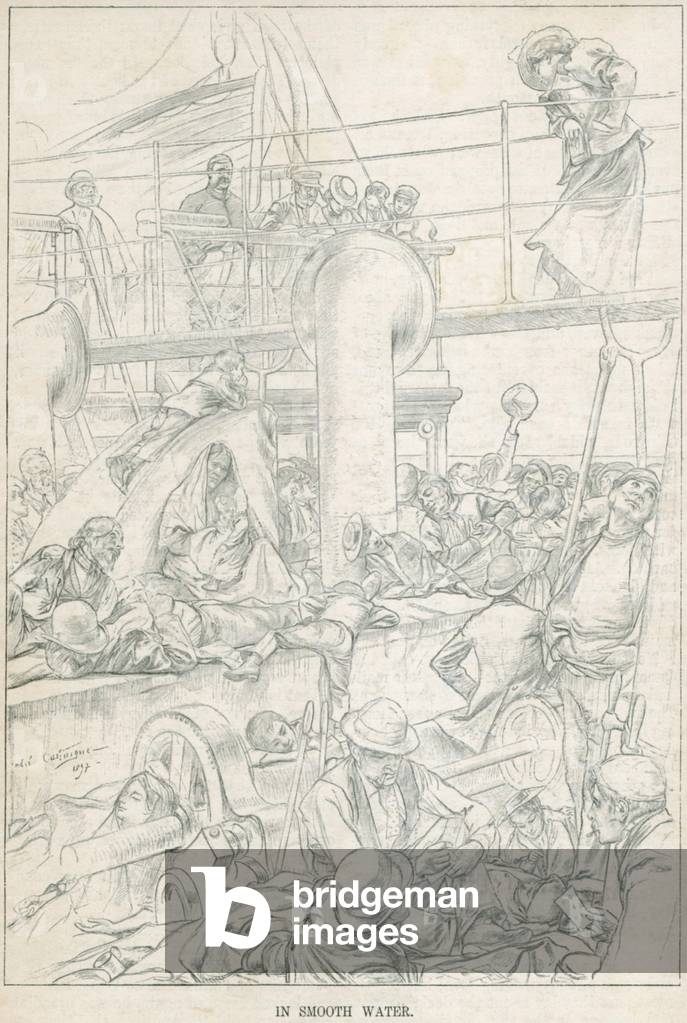
Steerage passengers relaxing on the open desk of an immigrant ship in smooth water

EVB2936830: Steerage passengers relaxing on the open desk of an immigrant ship in smooth water / Bridgeman Images

Hahnemann College in Philadelphia, Pennsylvania was originally founded in 1848 as the Homeopathic College of Pennsylvania, following the medical theories of German physician, Samuel Hahnemann (1755-1843). Postcard, c. 1900

EVB2936580: Hahnemann College in Philadelphia, Pennsylvania was originally founded in 1848 as the Homeopathic College of Pennsylvania, following the medical theories of German physician, Samuel Hahnemann (1755-1843). Postcard, c. 1900 / Bridgeman Images

Whirling bed and chair used to tranquilize patients inmates in mental hospitals in 19th century Belgium, by pioneering physician Joseph Guislain (1797-1860). As head of the mental hospitals of Ghent, he developed a humane therapeutic environment for the insane. c. 1835

EVB2936604: Whirling bed and chair used to tranquilize patients inmates in mental hospitals in 19th century Belgium, by pioneering physician Joseph Guislain (1797-1860). As head of the mental hospitals of Ghent, he developed a humane therapeutic environment for the insane. c. 1835 / Bridgeman Images

Woodcut of a hand with palmist markings to aid the interpretation of lines and undulations on the palm of the hand in fortune telling. From Magnus Hundt's ANTROPOLOGIUM, 1501, an anatomical text that interpreted anatomy physiologically, philosophically, and religiously

EVB2936646: Woodcut of a hand with palmist markings to aid the interpretation of lines and undulations on the palm of the hand in fortune telling. From Magnus Hundt's ANTROPOLOGIUM, 1501, an anatomical text that interpreted anatomy physiologically, philosophically, and religiously / Bridgeman Images

Frederick Banting (1891-1941), Canadian physician who, with Charles H. Best, was the first to extract (1921) the hormone insulin from the pancreas

EVB2936664: Frederick Banting (1891-1941), Canadian physician who, with Charles H. Best, was the first to extract (1921) the hormone insulin from the pancreas / Bridgeman Images

Physicists Pierre and Marie in their Paris laboratory, 1904, shortly after they were awarded the 1903 Nobel Prize for their study of radioactivity. From LE PETIT PARISIEN, January 1904

EVB2936694: Physicists Pierre and Marie in their Paris laboratory, 1904, shortly after they were awarded the 1903 Nobel Prize for their study of radioactivity. From LE PETIT PARISIEN, January 1904 / Bridgeman Images

Mexican-American workers on strike in California in 1933. Between 1933 and 1939, agricultural strikes would occur throughout California led by large numbers of Filipino and Mexican workers

EVB2936718: Mexican-American workers on strike in California in 1933. Between 1933 and 1939, agricultural strikes would occur throughout California led by large numbers of Filipino and Mexican workers / Bridgeman Images

Judah P. Benjamin was the first professing Jew elected to the U.S. Senate, c.1850 (photo)

EVB2936730: Judah P. Benjamin was the first professing Jew elected to the U.S. Senate, c.1850 (photo), Unknown photographer, (19th century) / Bridgeman Images

Seven Ashkenazi Jewish men, 1876 (photo)

EVB2936736: Seven Ashkenazi Jewish men, 1876 (photo), Unknown photographer, (19th century) / Bridgeman Images

Immigrants leaving a sternwheeler at New York City's Castle Garden in 1884 under police supervision. They may have waited at anchor in the New York harbor for a few days while immigration officials inspected ships and gathered passenger information

EVB2936751: Immigrants leaving a sternwheeler at New York City's Castle Garden in 1884 under police supervision. They may have waited at anchor in the New York harbor for a few days while immigration officials inspected ships and gathered passenger information / Bridgeman Images

THE EMIGRANTS' FAREWELL. A European family with their belongings in are rowed to the anchored sail ship as they start their journey to new land. 1871 print by Aldine Schlesinger

EVB2936796: THE EMIGRANTS' FAREWELL. A European family with their belongings in are rowed to the anchored sail ship as they start their journey to new land. 1871 print by Aldine Schlesinger / Bridgeman Images
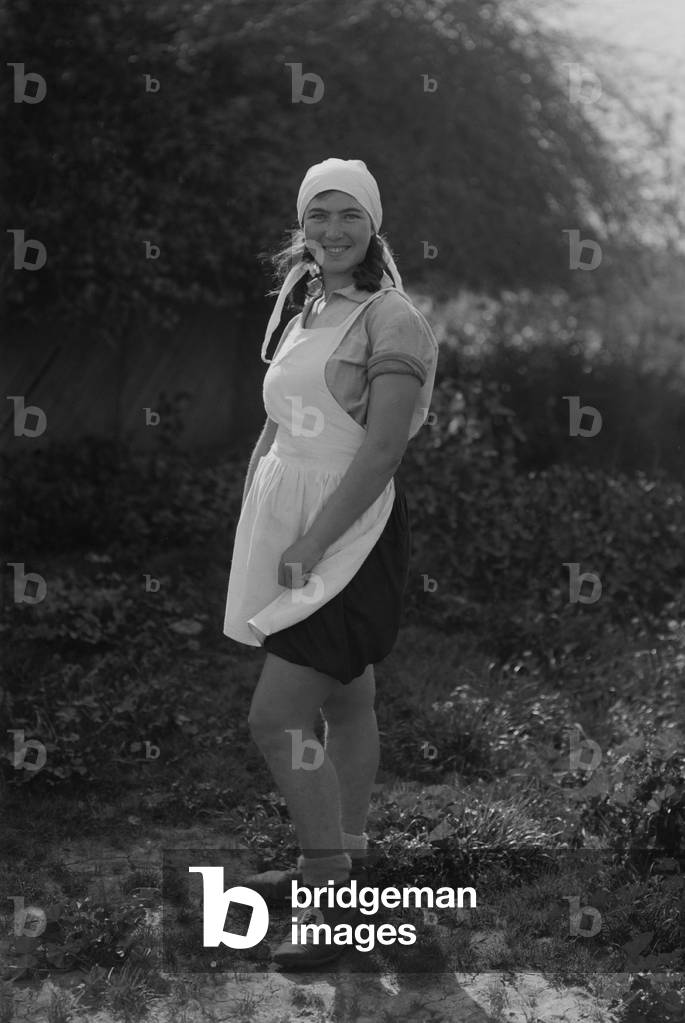
Davora Rushkin, immigrant from Poland in a girls' kibbutz at Borochov, Palestine, named after one of the founders of Zionist socialism, Ber Borochov (1881-1917). c. 1920s

EVB2936817: Davora Rushkin, immigrant from Poland in a girls' kibbutz at Borochov, Palestine, named after one of the founders of Zionist socialism, Ber Borochov (1881-1917). c. 1920s / Bridgeman Images
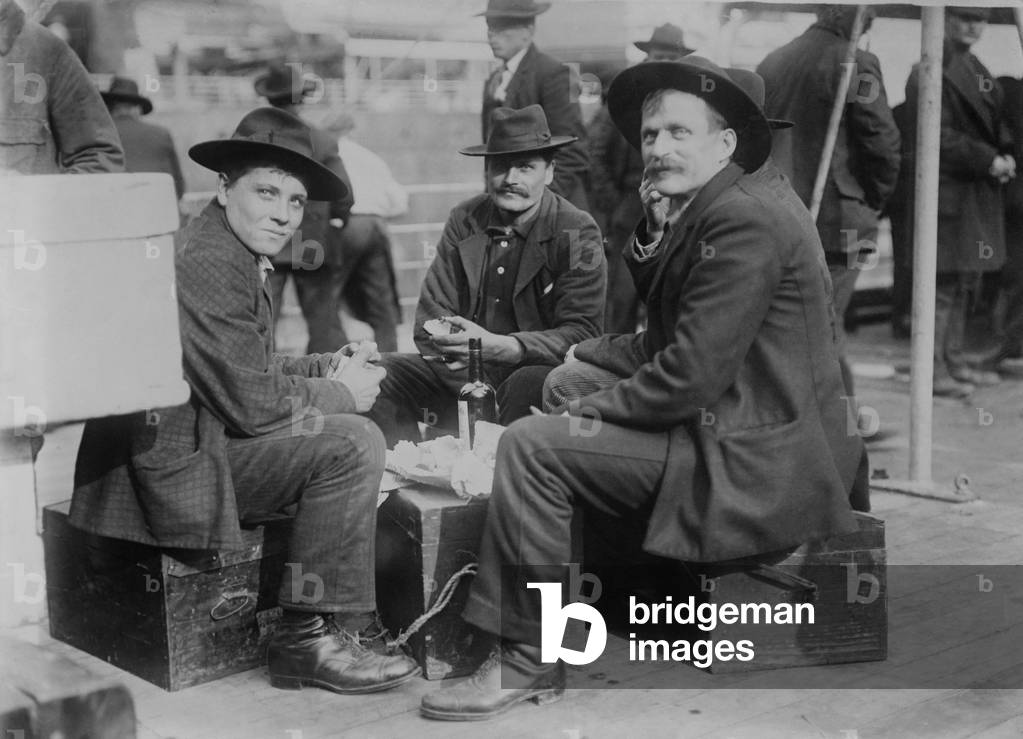
Three cheerful men (probably Germans), share a meal and a bottle on the immigrant ship the PRESIDENT GRANT of the Hamburg American Line at the end of its voyage in New York Harbor. c. 1910

EVB2936837: Three cheerful men (probably Germans), share a meal and a bottle on the immigrant ship the PRESIDENT GRANT of the Hamburg American Line at the end of its voyage in New York Harbor. c. 1910 / Bridgeman Images

Syrian-Lebanese American children working as Cranberry pickers in East Wareham, Massachusetts. September 1911 photograph by Lewis Hine

EVB2936843: Syrian-Lebanese American children working as Cranberry pickers in East Wareham, Massachusetts. September 1911 photograph by Lewis Hine, Hine, Lewis Wickes (1874-1940) / Bridgeman Images
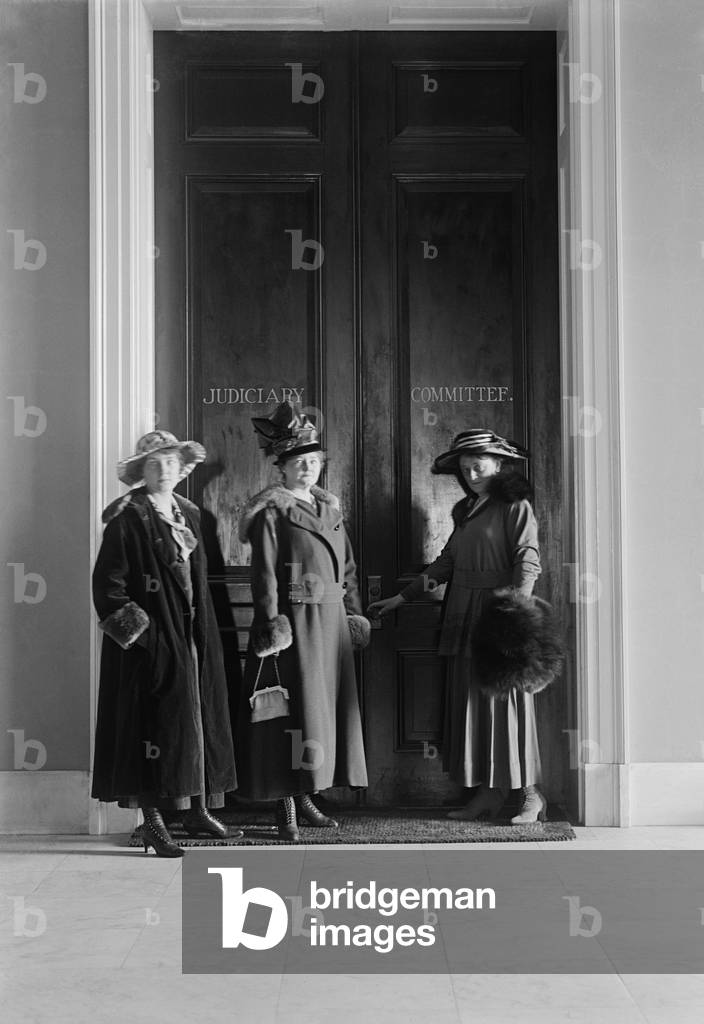
Women suffragists at the doors of the House Judiciary Committee in the House Office Building. 1916

EVB2936902: Women suffragists at the doors of the House Judiciary Committee in the House Office Building. 1916 / Bridgeman Images
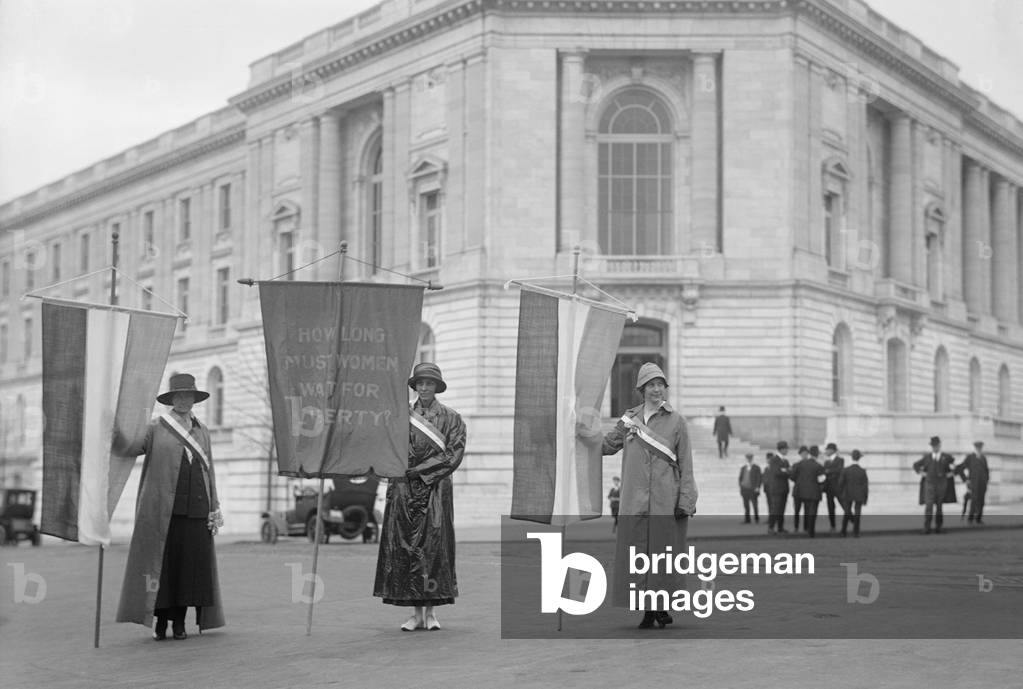
Suffragettes picketing the Senate Office Building in Washington in 1918. Left to right: Mildred Gilbert, Pauline Floyd, Vivian Pierce. They display a banner, 'How Long Must Women Wait for Liberty?'

EVB2936903: Suffragettes picketing the Senate Office Building in Washington in 1918. Left to right: Mildred Gilbert, Pauline Floyd, Vivian Pierce. They display a banner, 'How Long Must Women Wait for Liberty?' / Bridgeman Images
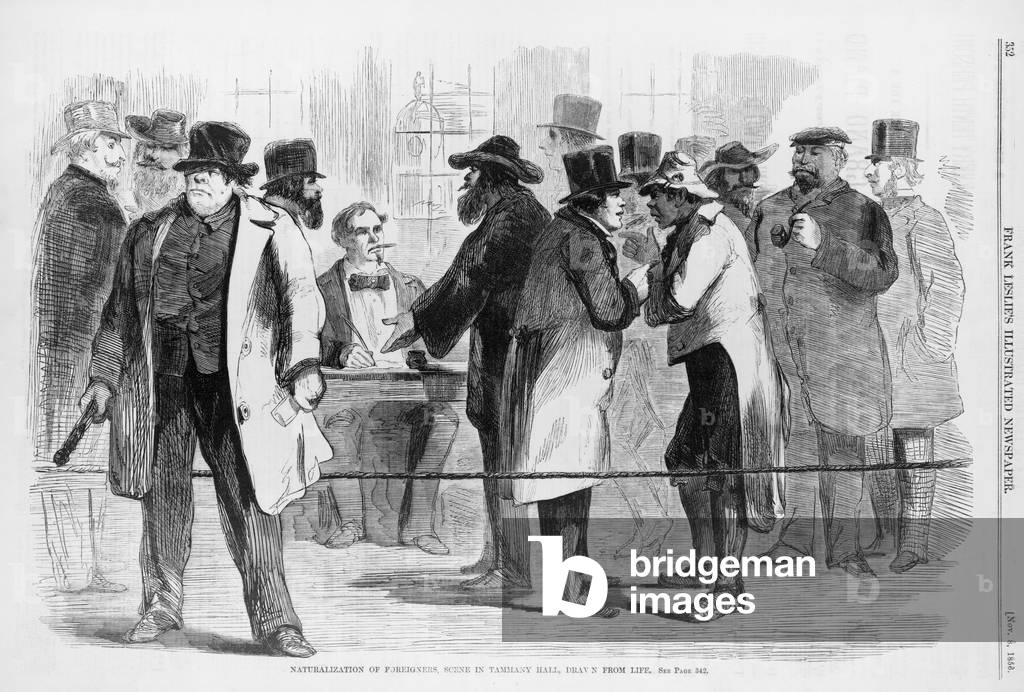
Naturalization of foreigners, scene in Tammany Hall, in New York City before the 1856 elections. In left foreground, a rough looking man with a club in his hand, indicates this was not a completely innocent process. New York City politicians courted immigrants, often issuing fraudulent naturalization certificates in exchange for votes. Wood engraving from Frank Leslie's Illustrated Newspaper, Novemebr 8, 1856

EVB2936927: Naturalization of foreigners, scene in Tammany Hall, in New York City before the 1856 elections. In left foreground, a rough looking man with a club in his hand, indicates this was not a completely innocent process. New York City politicians courted immigrants, often issuing fraudulent naturalization certificates in exchange for votes. Wood engraving from Frank Leslie's Illustrated Newspaper, Novemebr 8, 1856 / Bridgeman Images

Woman Suffrage Headquarters in Cleveland, Ohio. Miss Belle Sherwin, President, National League of Women Voters is at extreme left (labeled A); Judge Florence E. Allen is holding the flag; and Mrs. Malcolm McBride (labeled C). 1912

EVB2937001: Woman Suffrage Headquarters in Cleveland, Ohio. Miss Belle Sherwin, President, National League of Women Voters is at extreme left (labeled A); Judge Florence E. Allen is holding the flag; and Mrs. Malcolm McBride (labeled C). 1912 / Bridgeman Images
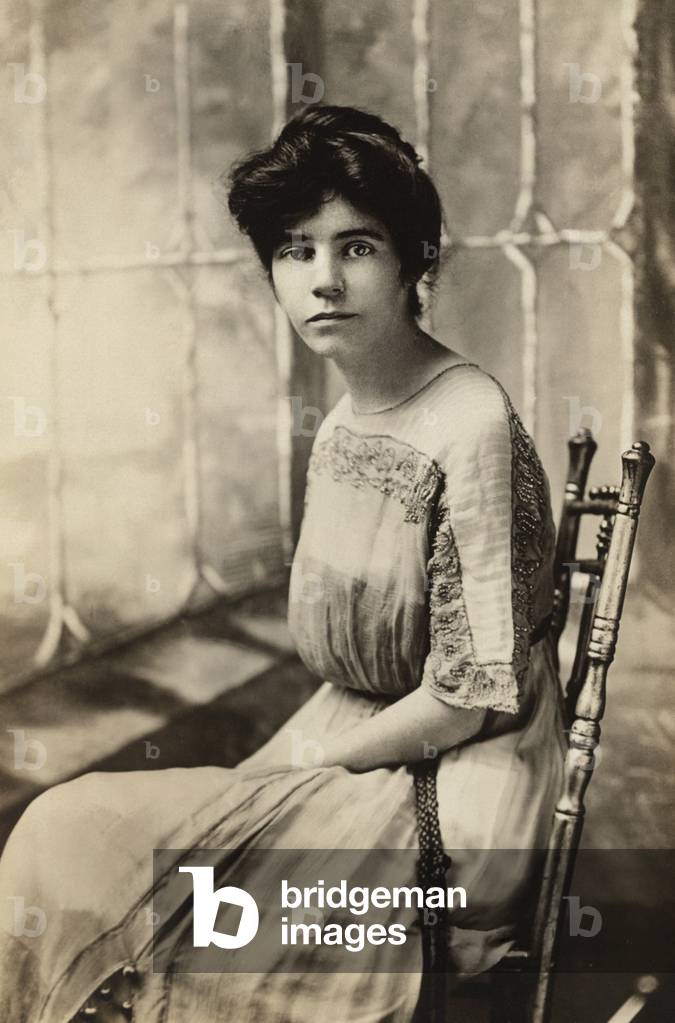
Alice Paul (1885-1977), protested with British women's suffrage advocates before becoming chairman of the Congressional Committee of the militant National American Woman Suffrage Association in 1913. In 1917 it merged with the Woman’s Party to form the National Woman’s Party

EVB2936972: Alice Paul (1885-1977), protested with British women's suffrage advocates before becoming chairman of the Congressional Committee of the militant National American Woman Suffrage Association in 1913. In 1917 it merged with the Woman’s Party to form the National Woman’s Party / Bridgeman Images

Jesse James rides for his life through Shieldsville, Minnesota, after the disastrous Northfield Minnesota bank robbery, which netted nothing, left two bank employees murdered, two robbers killed, and Jim Younger wounded. The three Younger brothers were captured but Frank and Jesse escaped. September 7, 1876

EVB2937025: Jesse James rides for his life through Shieldsville, Minnesota, after the disastrous Northfield Minnesota bank robbery, which netted nothing, left two bank employees murdered, two robbers killed, and Jim Younger wounded. The three Younger brothers were captured but Frank and Jesse escaped. September 7, 1876 / Bridgeman Images
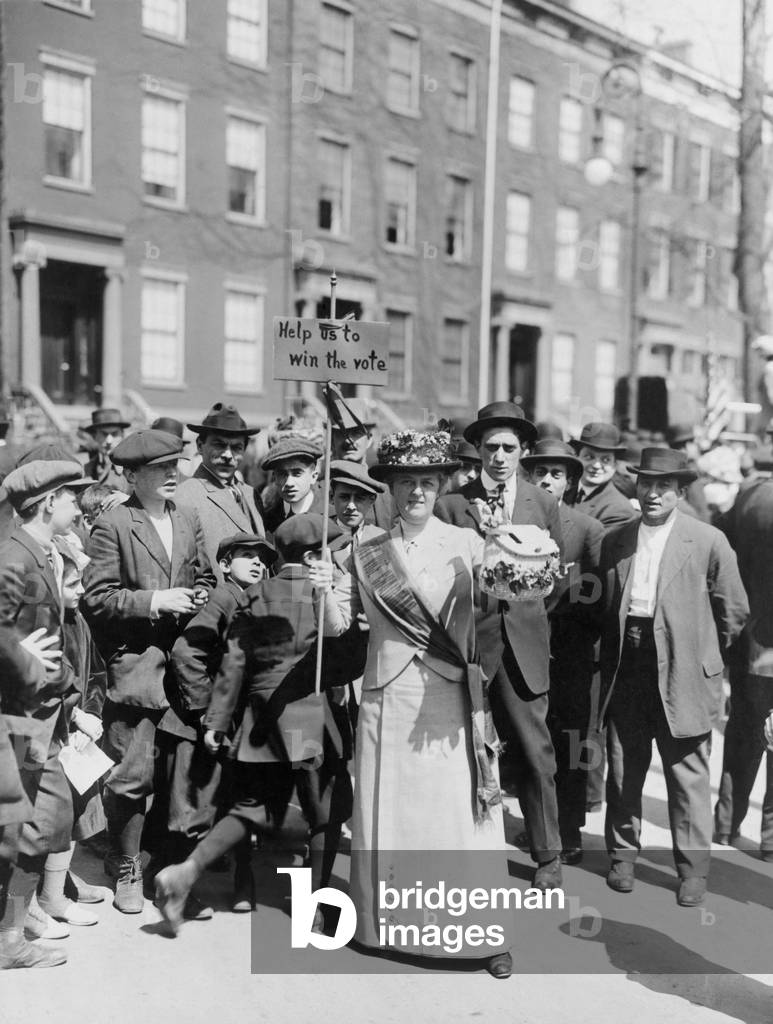
Women identified as Mrs. Suffern, is surrounded by a crowd of men and boys, while she holds a home-made banner in women suffragist parade 'Help us to win the vote.' 1914

EVB2936999: Women identified as Mrs. Suffern, is surrounded by a crowd of men and boys, while she holds a home-made banner in women suffragist parade 'Help us to win the vote.' 1914 / Bridgeman Images
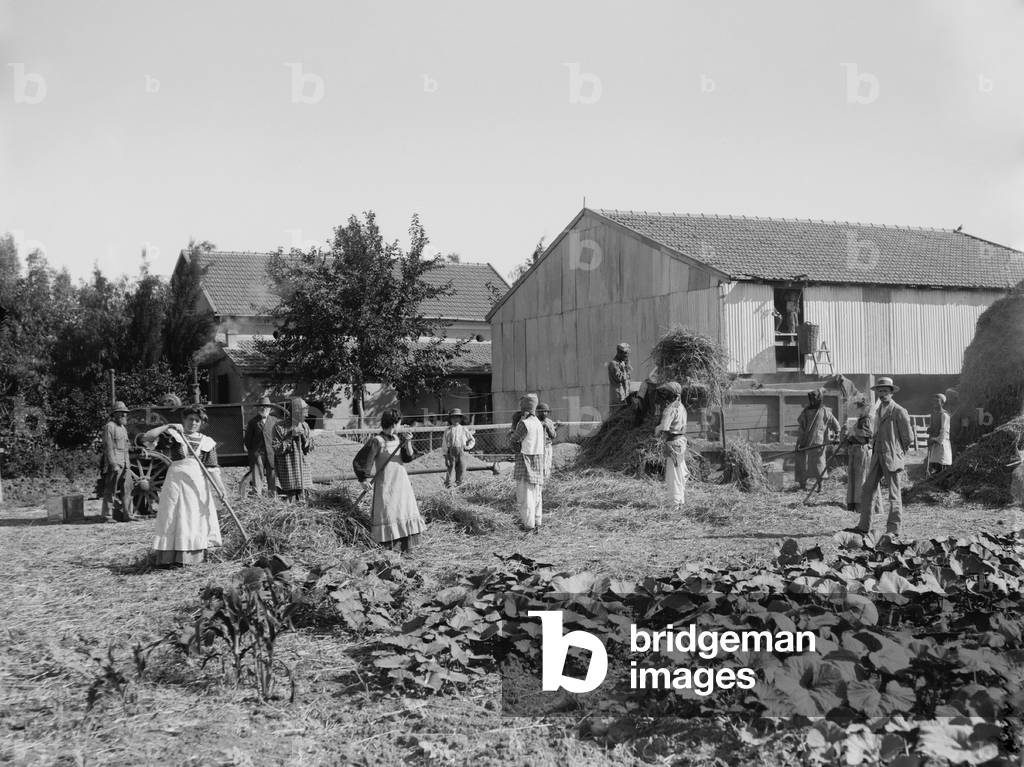
Group portrait of members of a Jewish kibbutz, in Palestine. c. 1920-39

EVB2936816: Group portrait of members of a Jewish kibbutz, in Palestine. c. 1920-39 / Bridgeman Images
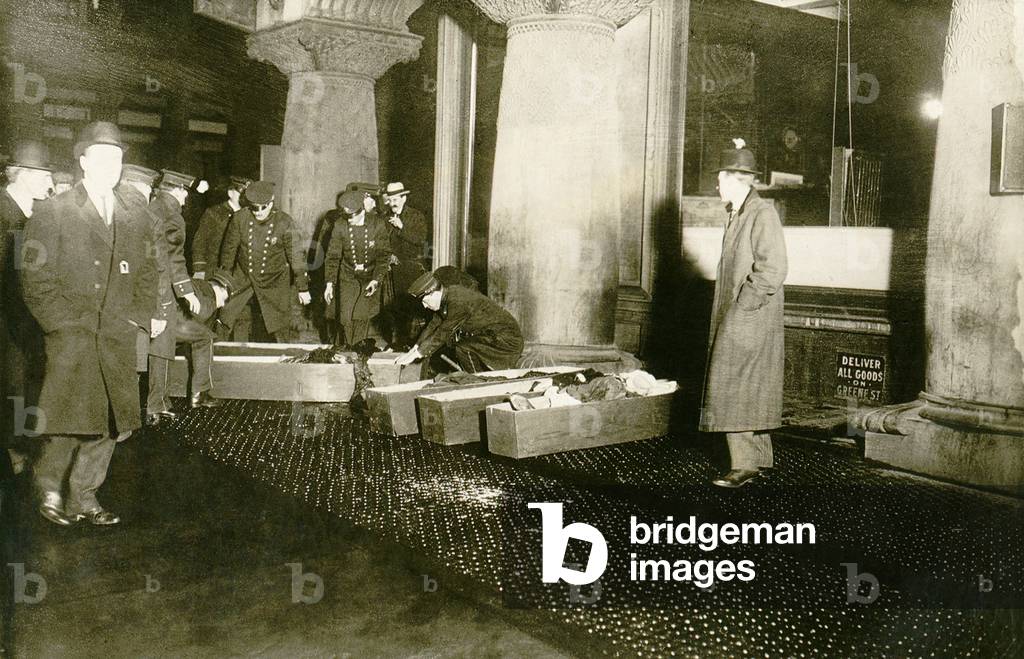
Triangle Shirtwaist fire victims in coffins on the sidewalk. 146 women seamstresses died, mostly immigrants, many jumping from the upper two floors of an eight story building. March 15, 1911

EVB2936860: Triangle Shirtwaist fire victims in coffins on the sidewalk. 146 women seamstresses died, mostly immigrants, many jumping from the upper two floors of an eight story building. March 15, 1911 / Bridgeman Images
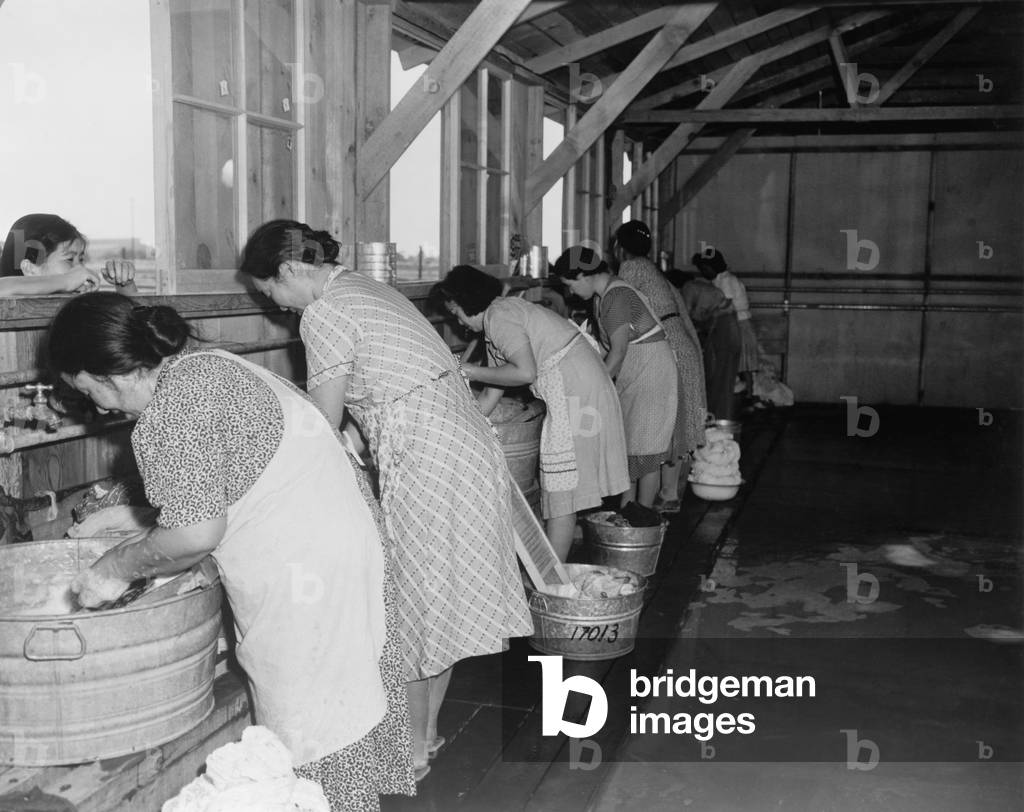
Japanese American women, laundering their families' clothes in metal washtubs during their three month incarceration at Pinedale Assembly Center. 4,823 internees were later sent to permanent internment camps for the duration of World War II. c. April 1942

EVB2936873: Japanese American women, laundering their families' clothes in metal washtubs during their three month incarceration at Pinedale Assembly Center. 4,823 internees were later sent to permanent internment camps for the duration of World War II. c. April 1942 / Bridgeman Images

Five smiling Japanese American women internees at Tule Lake Relocation Center during World War II

EVB2936876: Five smiling Japanese American women internees at Tule Lake Relocation Center during World War II, Russell, Lee (1903-86) / Bridgeman Images
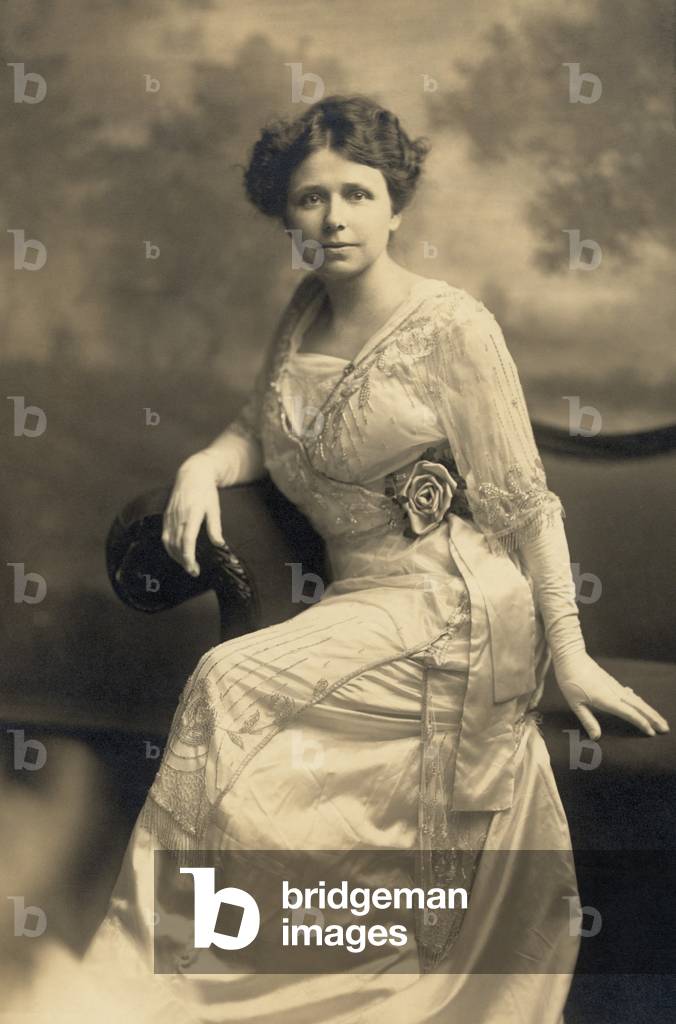
Hattie Caraway (1878-1950) in a 1914 studio portrait when she was the wife of Arkansas Representative Thaddeus Caraway. She was educated, a former school teacher, and the mother of three boys. When Thaddeus died in 1931, she filled his Senate seat for two terms

EVB2936894: Hattie Caraway (1878-1950) in a 1914 studio portrait when she was the wife of Arkansas Representative Thaddeus Caraway. She was educated, a former school teacher, and the mother of three boys. When Thaddeus died in 1931, she filled his Senate seat for two terms / Bridgeman Images
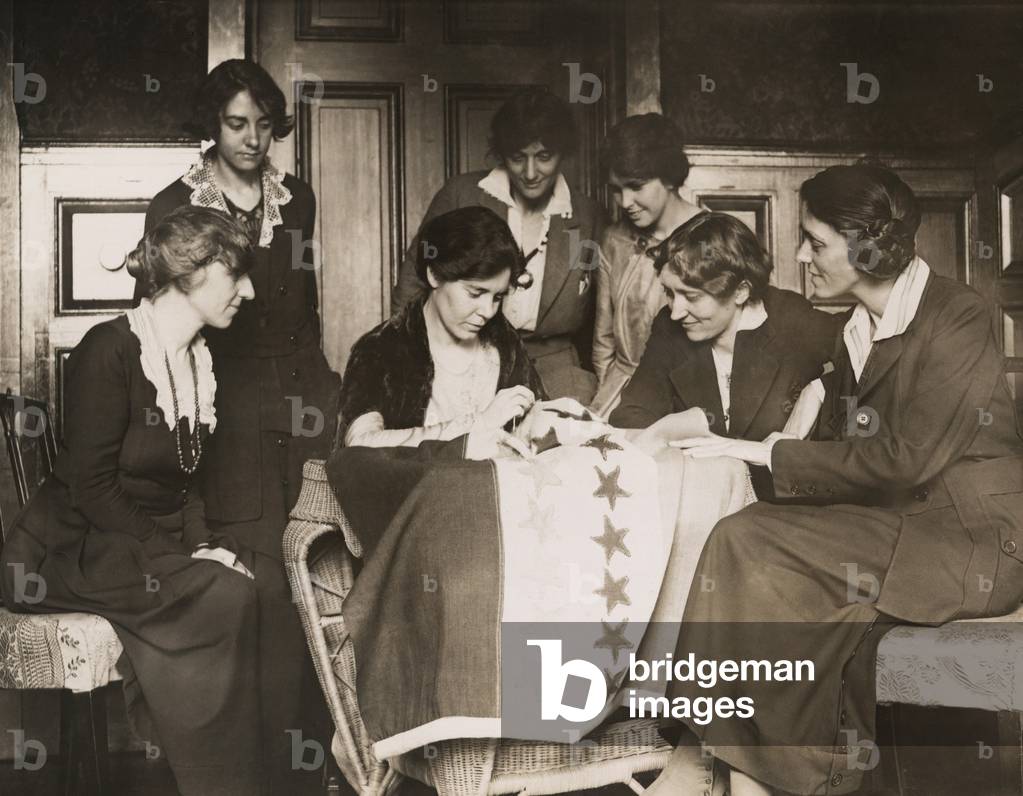
National Woman's Party activists watch Alice Paul sew a star onto the NWP Ratification Flag, representing another state's ratification of the 19th Amendment. Party members, Mabel Vernon is seated far left), and Anita Pollitzer is standing on right. c. 1919

EVB2936974: National Woman's Party activists watch Alice Paul sew a star onto the NWP Ratification Flag, representing another state's ratification of the 19th Amendment. Party members, Mabel Vernon is seated far left), and Anita Pollitzer is standing on right. c. 1919 / Bridgeman Images
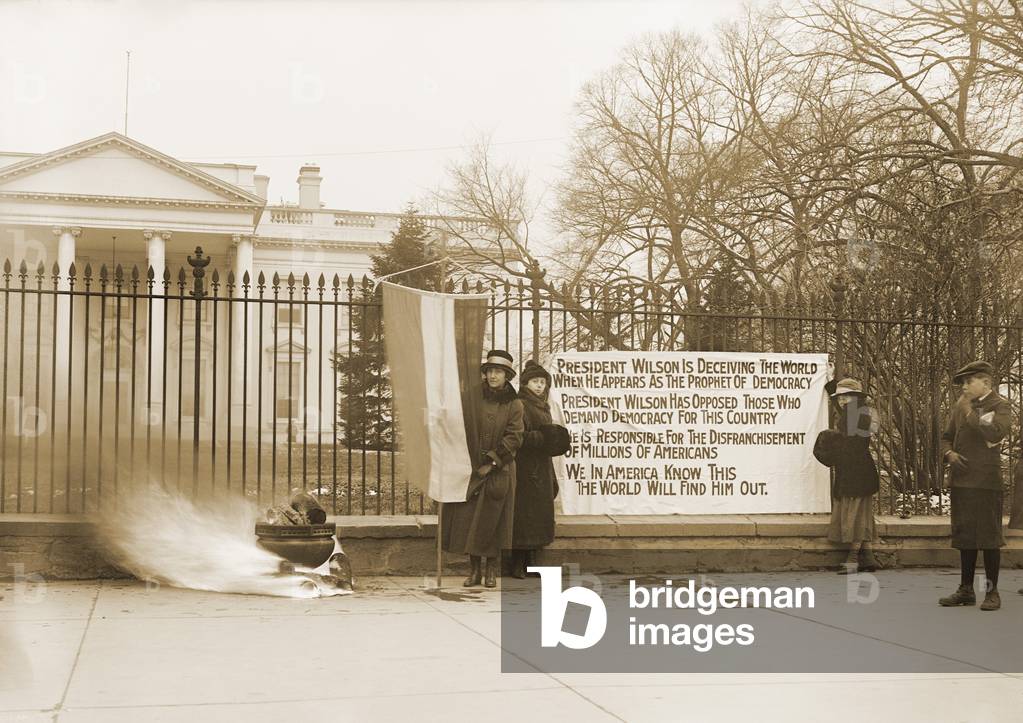
National Women's Party demonstration with a bonfire in front of the White House in 1918. The banner questions Wilson's commitment to democracy for his failure to support women's suffrage

EVB2936977: National Women's Party demonstration with a bonfire in front of the White House in 1918. The banner questions Wilson's commitment to democracy for his failure to support women's suffrage / Bridgeman Images

Italian American mother with five young children in her Providence, Rhode Island home. Photograph by Lewis Hine, November 1912

EVB2936942: Italian American mother with five young children in her Providence, Rhode Island home. Photograph by Lewis Hine, November 1912, Hine, Lewis Wickes (1874-1940) / Bridgeman Images
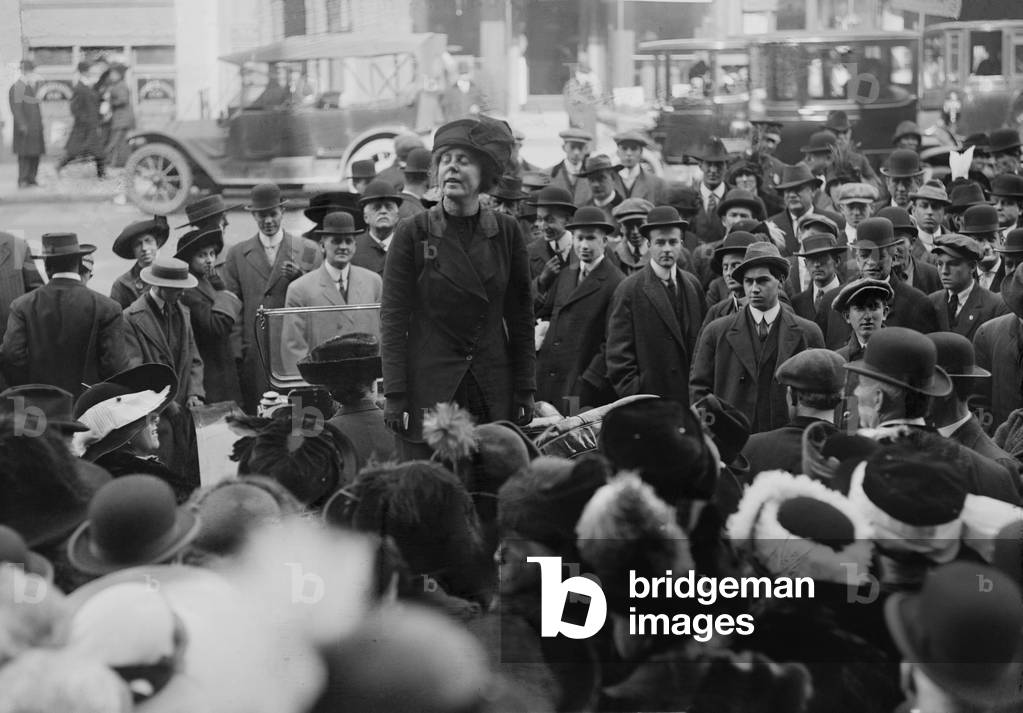
Lucy Burns (1879-1966), American suffragist and women's rights advocate speaking to a crowd of men in New York City. c. 1913

EVB2936954: Lucy Burns (1879-1966), American suffragist and women's rights advocate speaking to a crowd of men in New York City. c. 1913 / Bridgeman Images


Back to top