
Print this page or go back to standard view.

PIX4602554: H - II Transfer Vehicle (HTV) - Close up of the H - II Transfer Vehicle (or HTV) when attached to the International Space Station (ISS) by the robotic arm of the station. The HTV is an uninhabited spaceship of the Japanese Aerospace Exploration Agency. It is used to supply the International Space Station (ISS). Image obtained from the International Space Station on September 17, 2009. A close - up view of the unpiloted English H - II Transfer Vehicle (HTV) in the grasp of the International Space Station's robotic Canadarm2. NASA astronaut Nicole Stott, Canadian Space Agency astronaut Robert Thirsk and European Space Agency astronaut Frank De Winne, all Expedition 20 flight engineers, used the station's robotic arm to grab the cargo craft and attach it to the Earth - facing port of the Harmony node. The attachment was completed at 5:26 (CDT) on Sep 17, 2009 / Bridgeman Images

TEC4602558: Stained glass windows of the Cathedrale de Chartres (Eure and Loire). Built partly from 1145, and rebuilt in twenty-six years after the fire of 1194, it is the monument par excellence of French Gothic art. Its vast nave of the purest ogival style, its porches with admirable mid-12th century sculptures, its shimmering set of stained glass windows from the 12th and 13th centuries make it an exceptional masterpiece and remarkably well preserved. The Cathedrale de Chartres has been listed as a UNESCO World Heritage Site since 1979. Photography 30/06/05. / Bridgeman Images
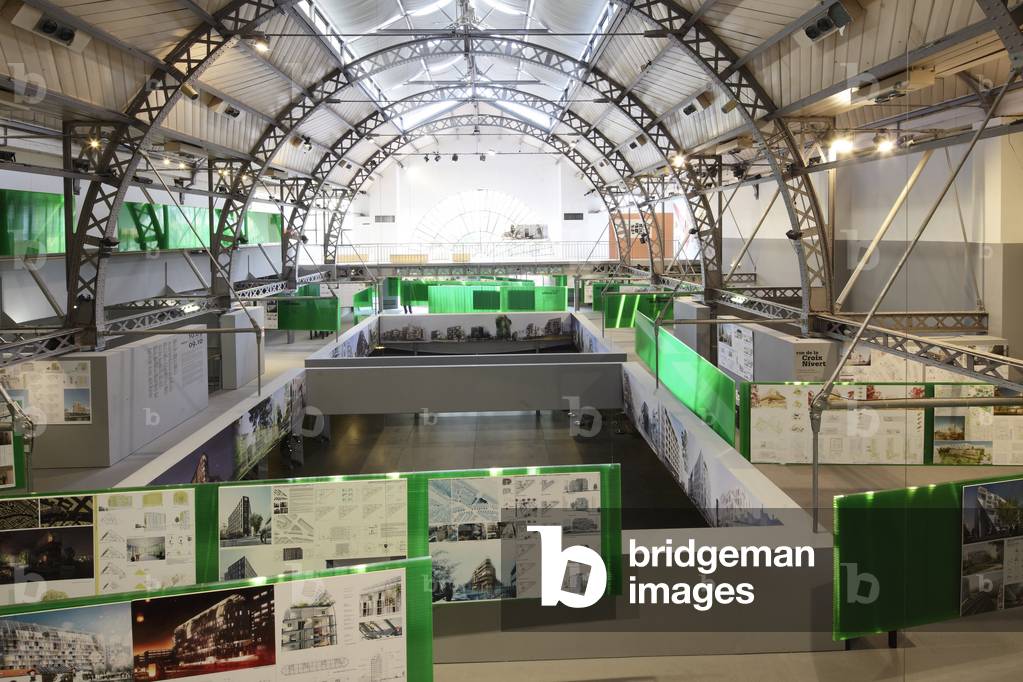
ITR4602313: Le Pavillon de l'Arsenal, 21 boulevard Morland, Paris 75004. Architecture by Bernard Reichen and Philippe Robert, 1988., Reichen, Bernard (b.1943) Robert, Philippe (20th) / Bridgeman Images

JLJ4602354: Portrait of Thaddeus Kosciuszko (1746-1817) general and Polish heros, 18th century (litho), Unknown artist, (18th century) / Bridgeman Images
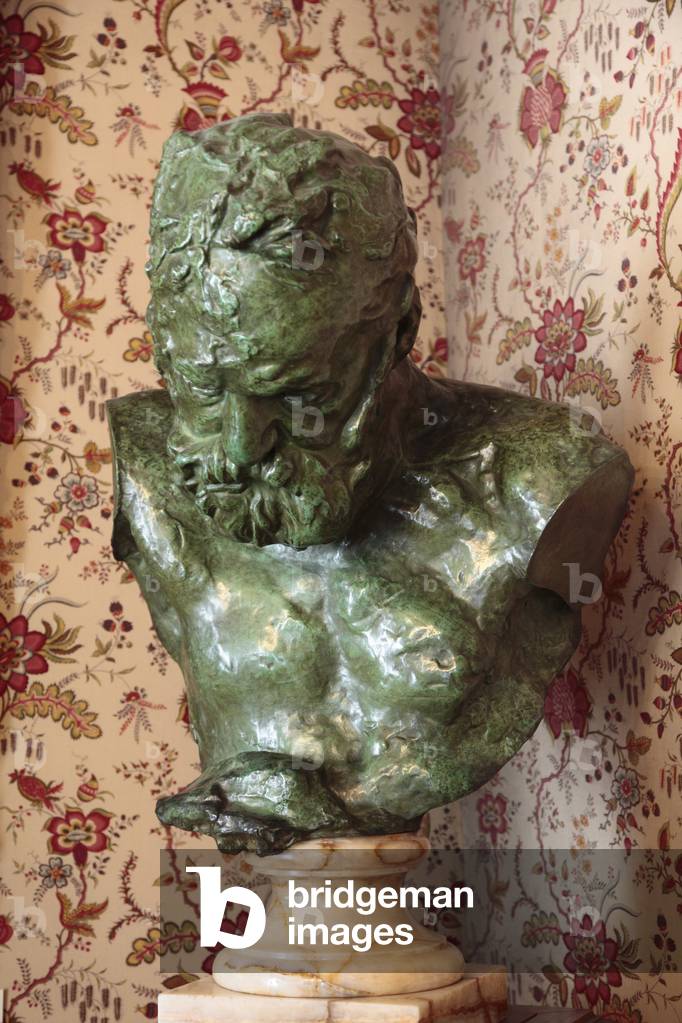
ITR4602370: Victor Hugo's bust in La Maison de Victor Hugo, in the Hotel Rohan-Guemenee (Rohan Guemenee), 6 place des Vosges, Paris 75004. Architecture by Isaac Arnaud, 1605. / Bridgeman Images

PIX4602496: The International Space Station (ISS) 07/2009 - The International Space Station (ISS) 07/2009 - View of the International Space Station from Space Shuttle Endeavour at the end of the STS mission - 127 on 28 July 2009. Backdropped by a blue and white Earth, the International Space Station is seen from Space Shuttle Endeavour as the two spacecraft begin their relative separation. Earlier the STS - 127 and Expedition 20 crews concluded 11 days of cooperative work onboard the shuttle and station. Undocking of the two spacecraft occurred at 12:26 p.m. (CDT) on July 28, 2009 / Bridgeman Images

PIX4602561: H-II Transfer Vehicle (HTV) - The H-II Transfer Vehicle (or HTV) is attached to the International Space Station (ISS) by the robotic arm of the station. The HTV is an uninhabited spaceship of the Japanese Aerospace Exploration Agency. It is used to supply the International Space Station (ISS). Image obtained from the International Space Station on September 17, 2009. Backdropped by Earth's horizon and the blackness of space, the unpiloted English H - II Transfer Vehicle (HTV) approaches the International Space Station. Once the HTV was in range, NASA astronaut Nicole Stott, Canadian Space Agency astronaut Robert Thirsk and European Space Agency astronaut Frank De Winne, all Expedition 20 flight engineers, used the station's robotic arm to grab the cargo craft and attach it to the Earth - facing port of the Harmony node. The attachment was completed at 5:26 (CDT) on Sep 17, 2009. The end effector of the Canadarm2 is visible at bottom right / Bridgeman Images
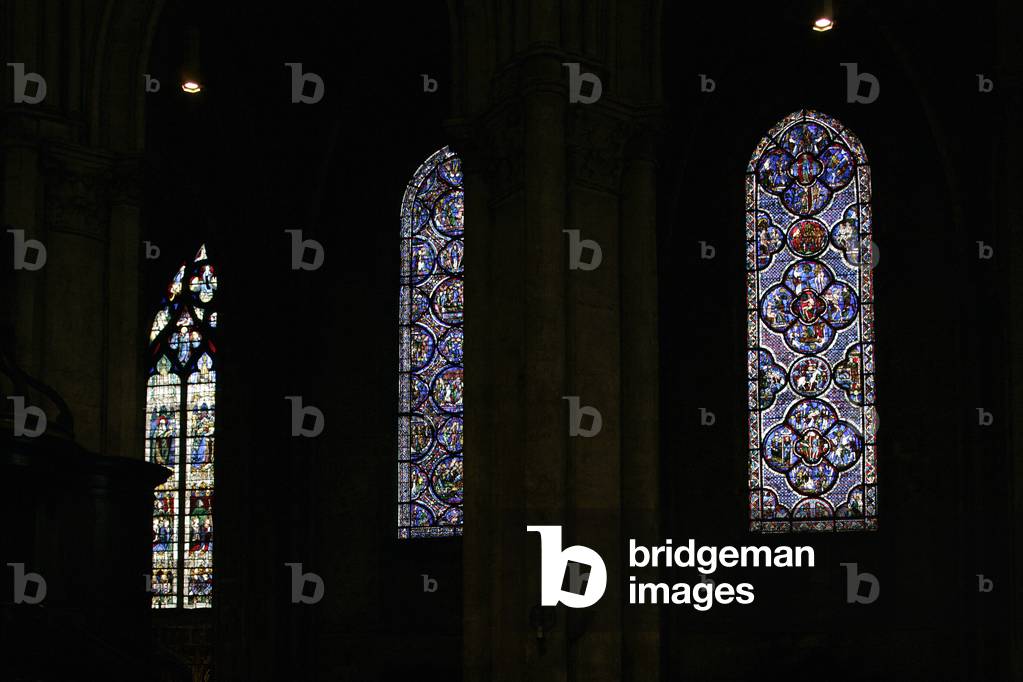
TEC4602580: Stained glass windows of the Cathedrale de Chartres (Eure and Loire). Built partly from 1145, and rebuilt in twenty-six years after the fire of 1194, it is the monument par excellence of French Gothic art. Its vast nave of the purest ogival style, its porches with admirable mid-12th century sculptures, its shimmering set of stained glass windows from the 12th and 13th centuries make it an exceptional masterpiece and remarkably well preserved. The Cathedrale de Chartres has been listed as a UNESCO World Heritage Site since 1979. Photography 30/06/05. / Bridgeman Images

PIX4602582: Sunrise seen from space - Sunrise seen from space - Sunrise seen from the International Space Station on 22 November 2009. The bright sun greets the International Space Station in this Nov. 22 scene from the Russian section of the orbital outpost, photographed by one of the STS - 129 crew members / Bridgeman Images
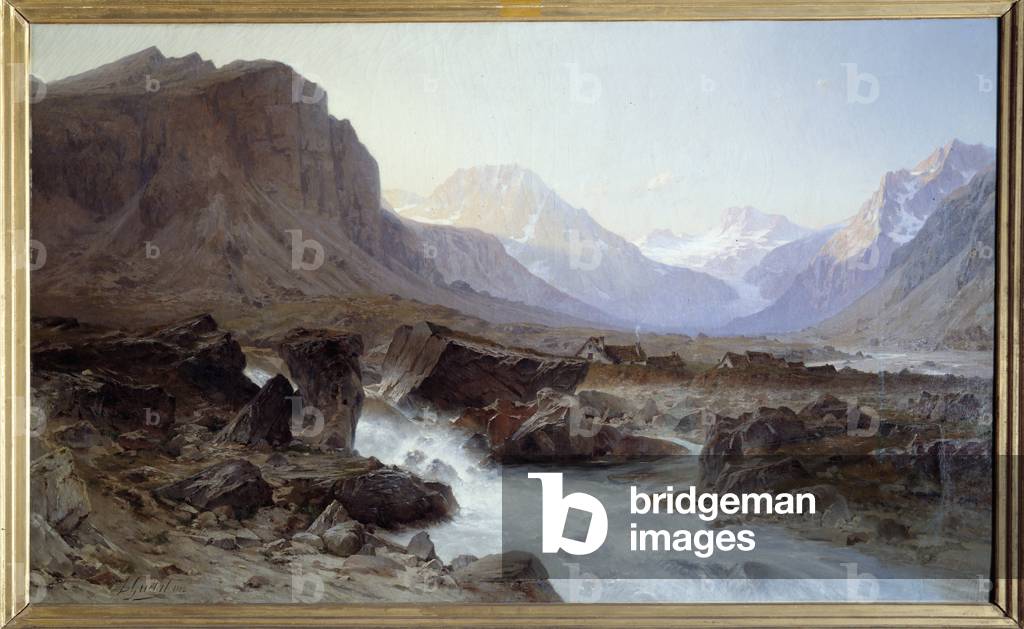
JLJ4601728: La Berarde en Oisans, 1882 (oil on canvas), Guetal, Laurent (1841-1892) / Bridgeman Images
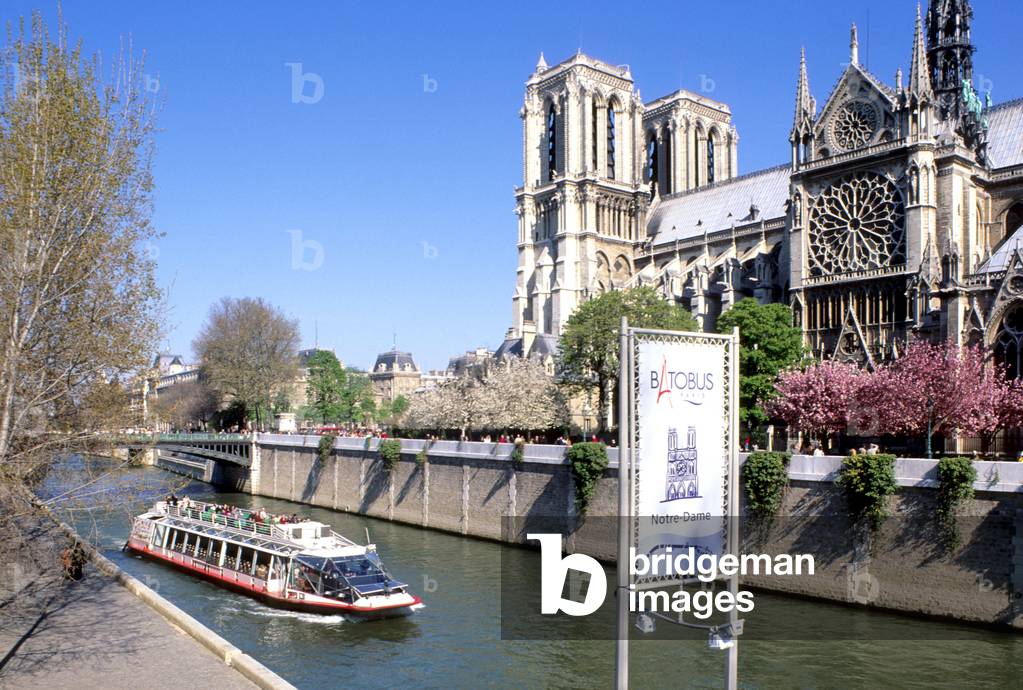
LBY4601788: Batobus in front of the Cathedrale Notre Dame de Paris. From the 4th century, an episcopal ensemble, an atour group of a basilica with exceptional dimensions, settled on the island of La Cite. The construction of the Gothic cathedral began around 1160 and was completed in the 14th century. Partially destroyed during the Revolution, it had to be extensively restored in the 19th century by Eugene Viollet the Duke (1814-1879). / Bridgeman Images

LRI4601858: The oath of Marcus Atilius Regulus (Il giuramento di Marco Attilio Regolo). The Roman consul swore to the Carthaginians that he would return to Carthage if he did not obtain the cessation of fighting in the Roman Senate during the first Punic War. Fresco by Domenico Beccafumi (1486-1551) 1524-1530 Sun. 1,00x1,30 m Siena, Palazzo Casini Casuccini, Beccafumi, Domenico (1484-1551) / Bridgeman Images

PIX4601862: The International Space Station (ISS) 02/2008 - The International Space Station (ISS) 02/2008 - The International Space Station with its new element, the European Columbus Laboratory, seen from the Atlantis shuttle before returning to Earth on 18 February 2008. The International Space Station is seen from Space Shuttle Atlantis as the two spacecraft begin their relative separation. Earlier the STS - 122 and Expedition 16 crews concluded almost nine days of cooperative work onboard the shuttle and station. Undocking of the two spacecraft occurred at 3:24 a.m. (CST) on Feb. 18, 2008 / Bridgeman Images

PIX4601901: The International Space Station (ISS) 02/2008 - The International Space Station (ISS) 02/2008 - Detail of the international space station with its new element, the European Columbus laboratory connects to the Harmony module, seen from the Atlantis shuttle before returning to Earth on 18 February 2008. A close - up view of the Columbus laboratory (top right), the newest addition to the International Space Station, is featured in this image photographed by a STS - 122 crewmember on Space Shuttle Atlantis shortly after the undocking of the two spacecraft. Undocking of the two spacecraft occurred at 3:24 a.m. (CST) on Feb. 18, 2008 / Bridgeman Images
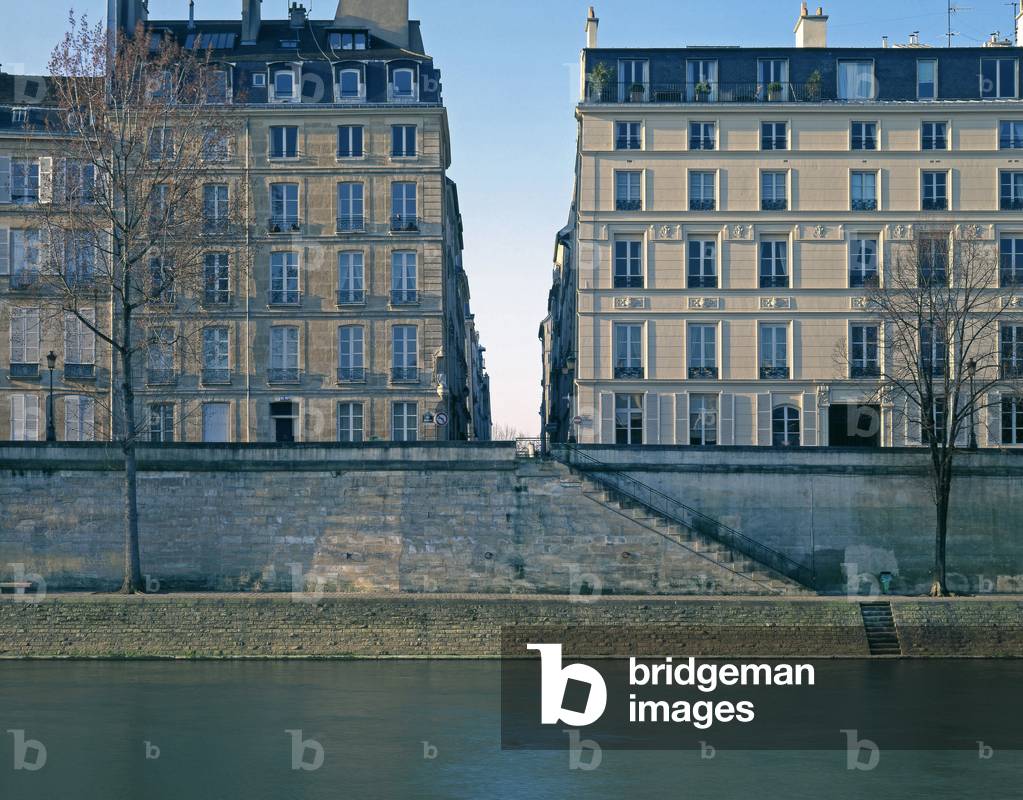
LBY4601927: Le quai de Bourbon in Paris. / Bridgeman Images
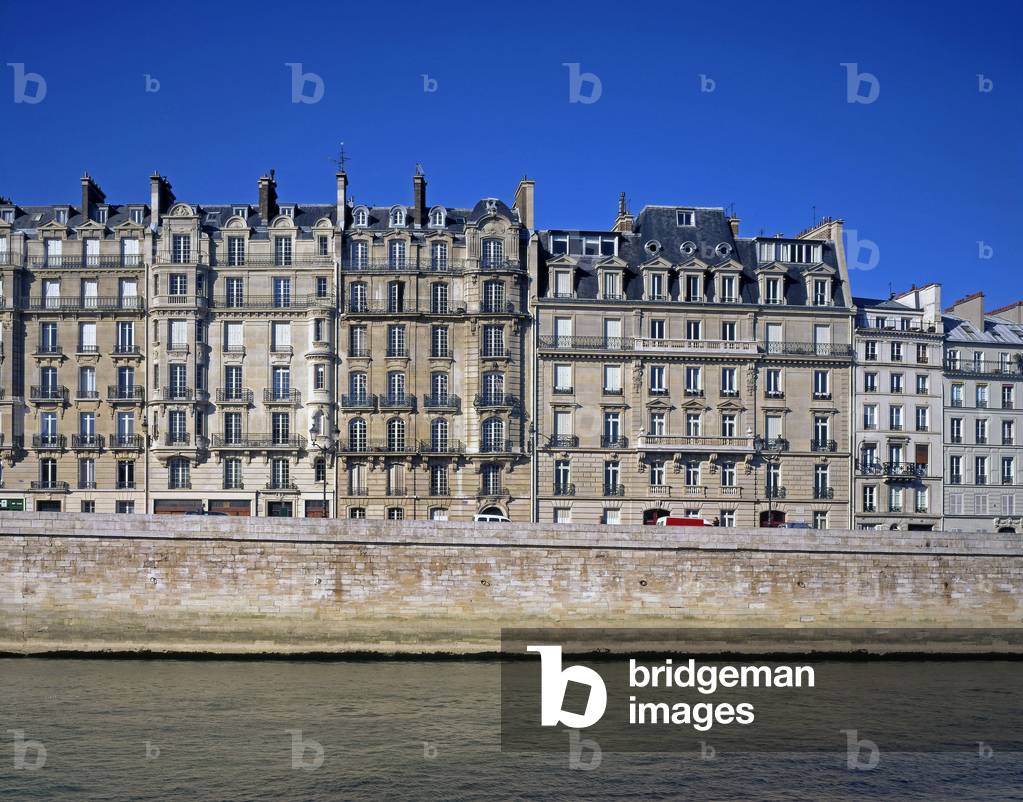
LBY4601954: Le quai aux Fleurs in Paris. / Bridgeman Images

JLJ4601962: La Seine a Marly, 1876 (oil on canvas), Sisley, Alfred (1839-99) / Bridgeman Images

LRI4602621: The exit of the port in Trouville in Normandy Painting by Pierre Bonnard (1867-1947) 1936 Collection privvee, Bonnard, Pierre (1867-1947) / Bridgeman Images

LRI4602688: Place de Clichy, 1912 (oil on canvas), Bonnard, Pierre (1867-1947) / Bridgeman Images

LRI4602831: Paradise. Detail of The Seven Deadly Sins and the Four Last Things (oil on panel, 1475-1480), Bosch, Hieronymus (c.1450-1516) / Bridgeman Images

MDA4602633: Social housing in the urban restructuring programme of the Beaulieu district in Chartres (Eure and Loire). Construction 2004-2006, architect ARCAME. Photography 01/06/09. / Bridgeman Images

PIX4602875: Astronauts in the International Space Station - Astronauts in ISS - Astronaut Stephanie Wilson (left) and astronaut Naoko Yamazaki are working in the Destiny module of the International Space Station (ISS). April 7, 2010. NASA astronaut Stephanie Wilson (left) and Japan Aerospace Exploration Agency astronaut Naoko Yamazaki, both STS - 131 flight engineers, share perhaps their first session at this bank of computers and controls in the Destiny laboratory of the International Space Station. 7 April 2010 / Bridgeman Images

PIX4600547: Meals in Zvezda 08/01 - Meals in Zvezda. Scott Horowitz, weightlessly on the ceiling; others (from left to right): Susan Helms, Frank Culbertson, Yury Usachev, James Voss and Vladimir Dezhurov. Daniel T. Barry and Frederick Sturckow are hidden by Patrick Forrester (profile). ISS STS - 105. 15/08/2001 / Bridgeman Images

PIX4600610: ISS 12/01 - Partial view of the international space station after the observed stowage of the shuttle Endeavour. ISS STS - 108. 15Dec 2001 / Bridgeman Images

PIX4600656: ITS S0 Centre Segment 04/02 - ITS S0 (S - Zero) Central Segment extracted from the cargo compartment of Shuttle Atlantis. ISS STS - 110. 11/O4/2002 / Bridgeman Images

LRI4600689: Fascist propaganda poster for sporting event I littoriali dello sport in Milan, 1935, Bassanesi, (active c.1935) / Bridgeman Images

JLJ4600716: The woman in the mirror, 19th century (oil on canvas), Renoir, Pierre Auguste (1841-1919) / Bridgeman Images

PIX4600785: Crews in Destiny 04/02 - Carl Walz (Expedition 4) plays on the keyboard; crew STS - 110 (clockwise): Rex Walheim, Jerry Ross, Ellen Ochoa, Lee Morin, Stephen Frick and Daniel Bursch (Expedition 4, profile a d.). ISS STS-110. April 2002 / Bridgeman Images

JLJ4600839: Portrait of the Count Duke of Olivares, Gaspard de Guzman (1587-1645), 1643 (bronze), Perez, Juan Melchior (fl.1640-1650) / Bridgeman Images

PIX4600869: Back to Earth of the Soyuz TM capsule - 33 - 05/2002 - Return module of Soyuz TM - 33 - 05/2002 - View of the Soyuz TM capsule - 33 after landing in the Kazakhstan steppes on 5 May 2002. The recovery team is preparing to get astronauts Roberto Vittori, Yuri Gidzenko and Mark Shuttleworth out of the capsule. Russian recovery team members gather around the scorched return module of Soyuz TM - 33, shortly after its landing in the steppes of Kazakhstan and the completion of the Marco Polo mission to the International Space Station (ISS), on May 5, 2002. The recovery team is about to install a scaffolding to help the crew out the module. The Marco Polo mission, with ESA astronaut Roberto Vittori, from Italy, was performed under an agreement between Russia's Rosaviakosmos, the Italian Space Agency (ASI) and ESA. Roberto Vittori was launched into space onboard Soyuz TM - 34 at 12:26 local time on April 25 with Russian mission commander Yuri Gidzenko and South African flight participant Mark Shuttleworth. The spacecraft successfully docked with the ISS two days later. Roberto Vittori spent one week onboard the orbital outpost, performing experiments, and returned to Earth with his crewmates onboard Soyuz TM - 33. Soyuz TM - 33 landed safely some 26 km south - east of the city of Arkalyk in Kazakhstan, at 10:51 local time, concluding a mission that lasted 237 hours and 25 minutes / Bridgeman Images
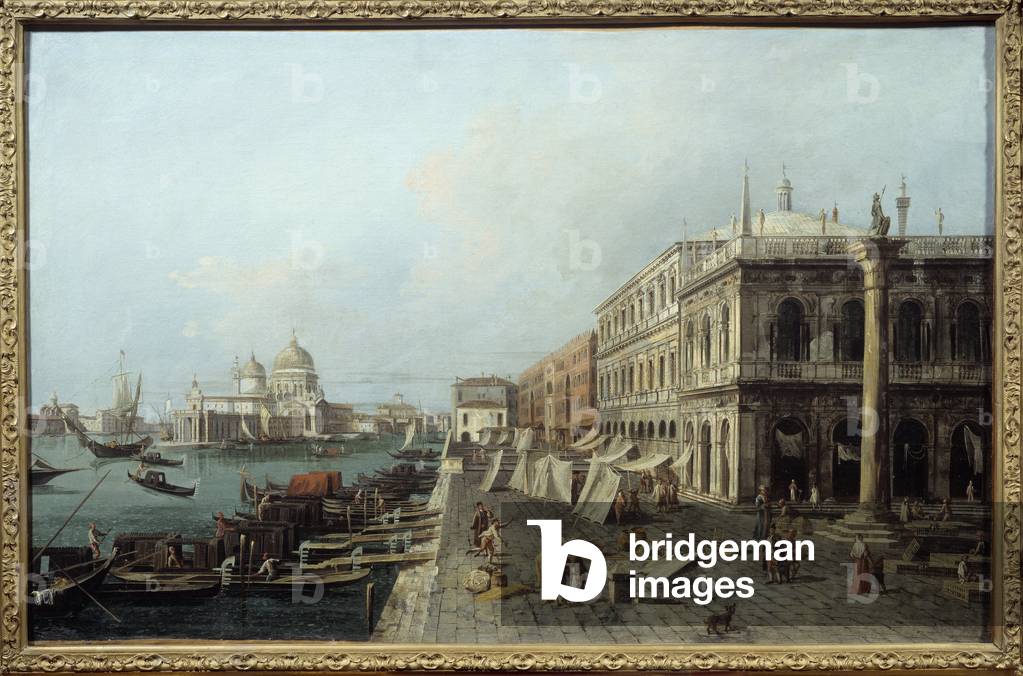
JLJ4600915: View of the mole in front of the Zecca in Venice in the 18th century (oil on canvas), Italian School, (18th century) / Bridgeman Images

TEC4600966: The Tour Saint Jacques and the square of the Tour Saint Jacques in Paris. Construction 1509-1522, architect Jehan de Felin (died 1520). The tower is the only vestige of the Church of Saint-Jacques-de-la-Boucherie. / Bridgeman Images

PIX4600977: ISS STS-112 10/02 - The International Space Station after stowage from Shuttle Atlantis. ISS STS - 112. 16/10/2002 / Bridgeman Images

PIX4600995: V. Korzun in Zvezda 10/02 - V. Korzun in Zvezda 10/02 - Valery Korzun prepares a meal in Zvezda. ISS Expedition 5/STS - 112. 04/10/2002 / Bridgeman Images

TEC4601019: Rue du Tresor and Rue Vieille du Temple in Paris. / Bridgeman Images
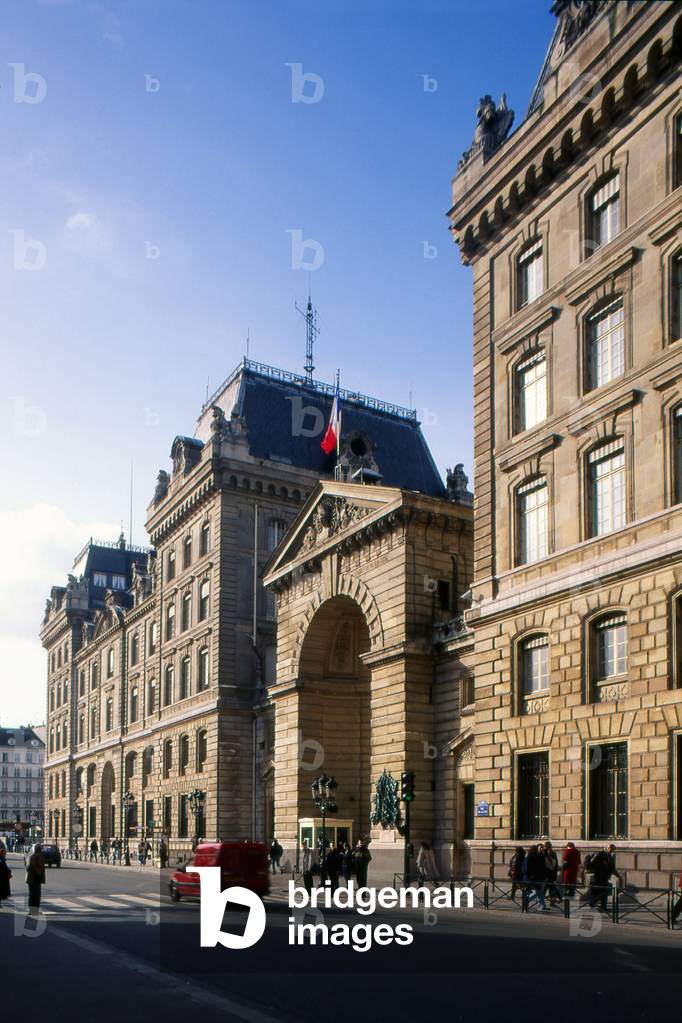
TEC4601036: La Prefecture de Police, Barracks de la Cite, 11 rue des Ursins, Paris 4th arrondissement. Construction 1555. / Bridgeman Images