
Print this page or go back to standard view.
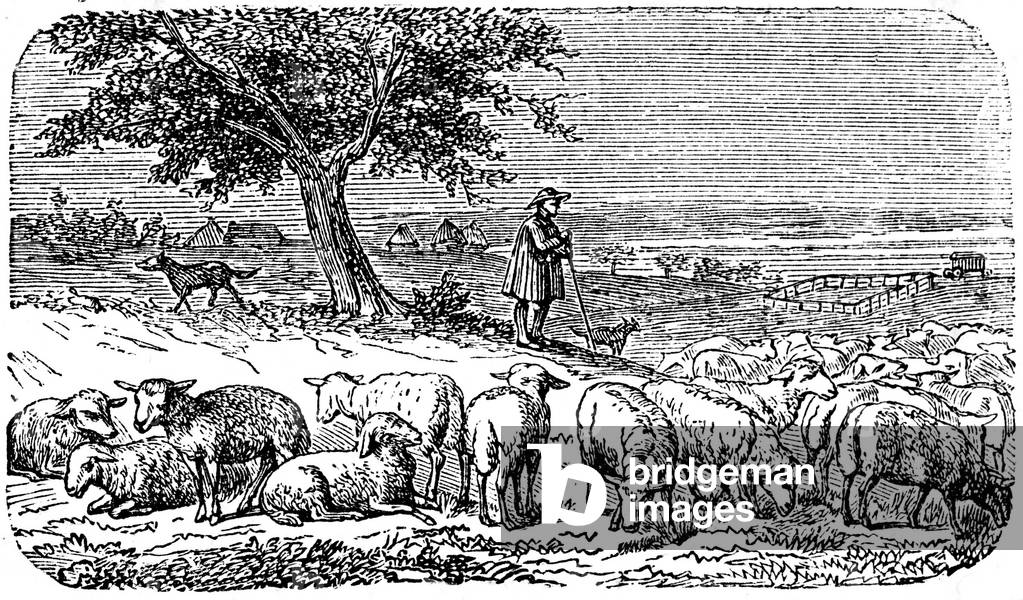
PCT4276431: Shepherd (patre) keeping a herd of sheep (sheep) - Engraving of a school book 1894. / Bridgeman Images
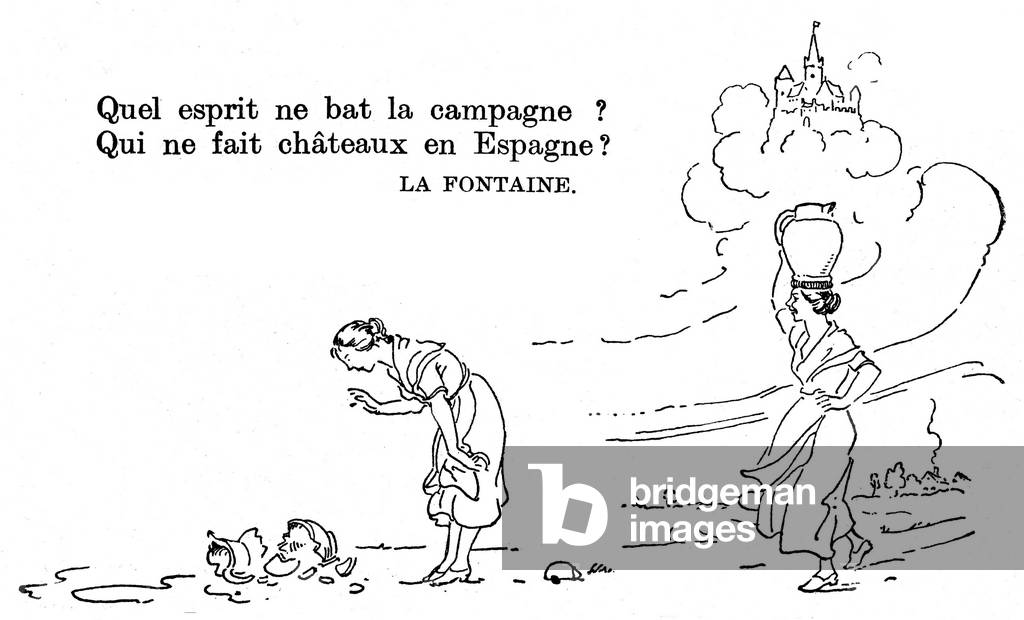
PCT4276452: Illustration by Jacoby 1934 for the fable of La Fontaine “” La laitiere et le pot au lait””. Can illustrate both the song “” Perette and the milk pot”” (Perrette) and the expressions “” spirit that beats the countryside”” and “” build or make castles in Spain””. / Bridgeman Images

PCT4277662: Tarare or van a grain for winding: an apparatus that cleans the grain thanks to superimposed and decalated grids, with a grain measurement: the double decalitre placed on the machine. Museum of Agriculture of Saint Michel de Llotes. Photo by Patrice Cartier., Cartier, Patrice / Bridgeman Images

PCT4277807: One of the six anonymous illustrations (grotesque figure) attributed to Moreau for the first edition of 1772 of Jacques Cazotte's fantastic novel “Le Devil amoureux” (1719-1792). Belzebuth appears in Alvare outside a cloud in the form of a monstrous camel - monster - ghost / Bridgeman Images

PCT4277825: Illustration (grave wood) by Henry Bischoff (1882-1951) for the fantastic novel “Le Devil amoureux” by Jacques Cazotte (1719-1792). Edition Cres 1920. To the great fear of her lover Alvare, the charming Biondetta takes up the appearance of the terrible Belzebuth, with her horrible camel head - monster - demon - apparition, Bischoff, Henry (1882-1951) / Bridgeman Images

PCT4277929: Illustration by Gustave Dore for the novel “” Le Capitaine Fracasse”” by Theophile Gautier (1811-1872). Agile as a cat and thin as a snake, the young Chiquita goes through a window to join Isabelle prisoner., Dore, Gustave (1832-83) / Bridgeman Images

PCT4277943: At the beginning of the 20th century, school curricula were very linked to rural life. This excerpt from a reading book shows a country guard from the French countryside. However, in this lecture of village morality, highlighting the sound “” on” (phoneme), the text is not entirely in line with the image: indeed, if the guard seems to have a sword, he wears a cap and not a tricorn! / Bridgeman Images
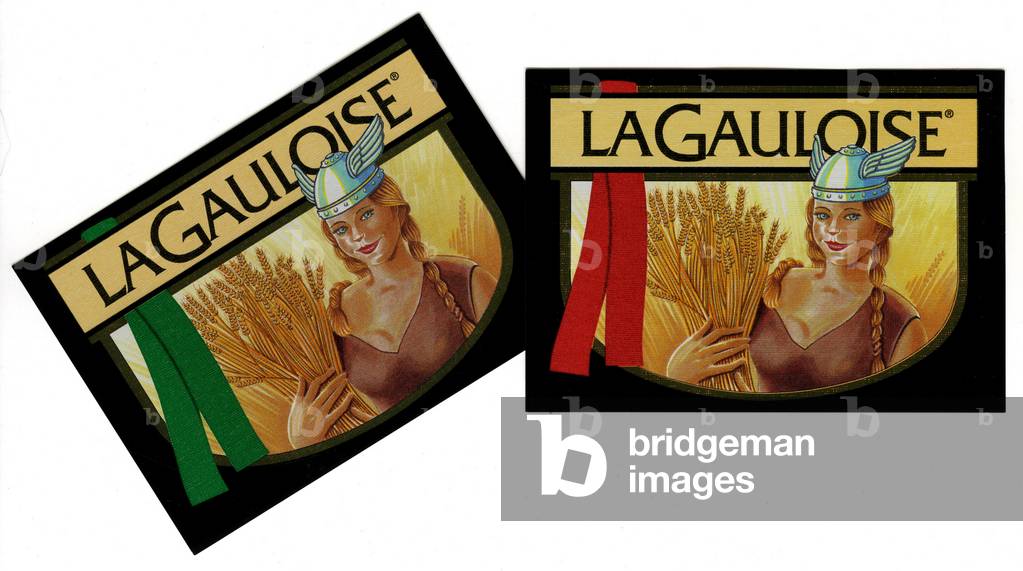
PCT4277410: Two labels of Belgian beer La Gauloise, representing a young woman with braids wearing a helmet with wings holding a wreath of barley (cereale, base of malt). / Bridgeman Images

PCT4277458: Schoolers chatting, surprised by the master (teacher) who heads towards them by waving a cane. School, chatter, punishment. / Bridgeman Images

PCT4277514: Medievale city of Carcassonne: the towers of Porte Narbonnaise and the tower of Treseau (or tour of tresor) restaurees by Viollet Le Duc - Carcassonne, Aude (11) Languedoc/Roussillon - Pays cathare- France. Photography Patrice Cartier, Cartier, Patrice / Bridgeman Images

PCT4277525: Cite medievale de Carcassonne: les lices des ramparts et la tower de la Vade - creneaux - Carcassonne, Aude (11) Languedoc/Roussillon - Pays cathare- France. Photography Patrice Cartier, Cartier, Patrice / Bridgeman Images

PCT4277608: Sheet music for the song Marche Gauloise lyrics and music by Leon Paliard - Choreur patriotique a 3 voix egales with band accompaniment or harmony for the Gauloise harmony of Lyon. / Bridgeman Images

PCT4277615: Cabrespine cave (Aude - 11 - Languedoc/Roussillon) View of the vault and concretions (draperies, stalactites, stalagmites) in the upper part of the gulf open to the public. Photo by Patrice Cartier, Cartier, Patrice / Bridgeman Images
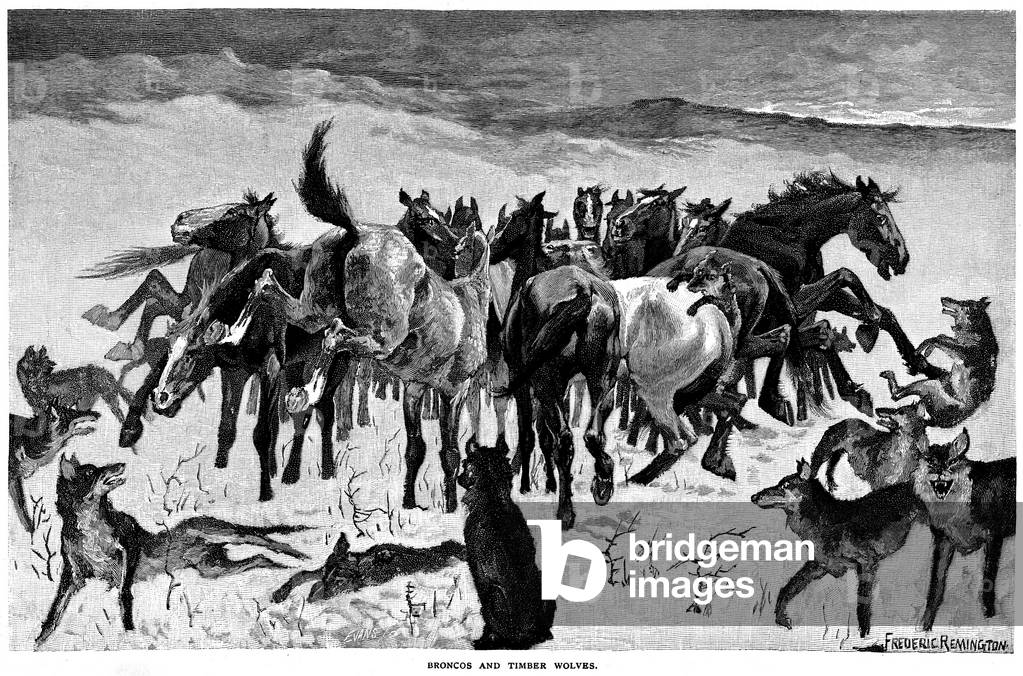
PCT4276474: Wild horses of America. Broncos and timber wolves: a herd of broncos attacked by a pack of wolves, defending themselves by ruades. Engraving by Frederic Remington (1861-1909) in “Century Illustrated Monthly Magazine”, 1888-1889 / Bridgeman Images
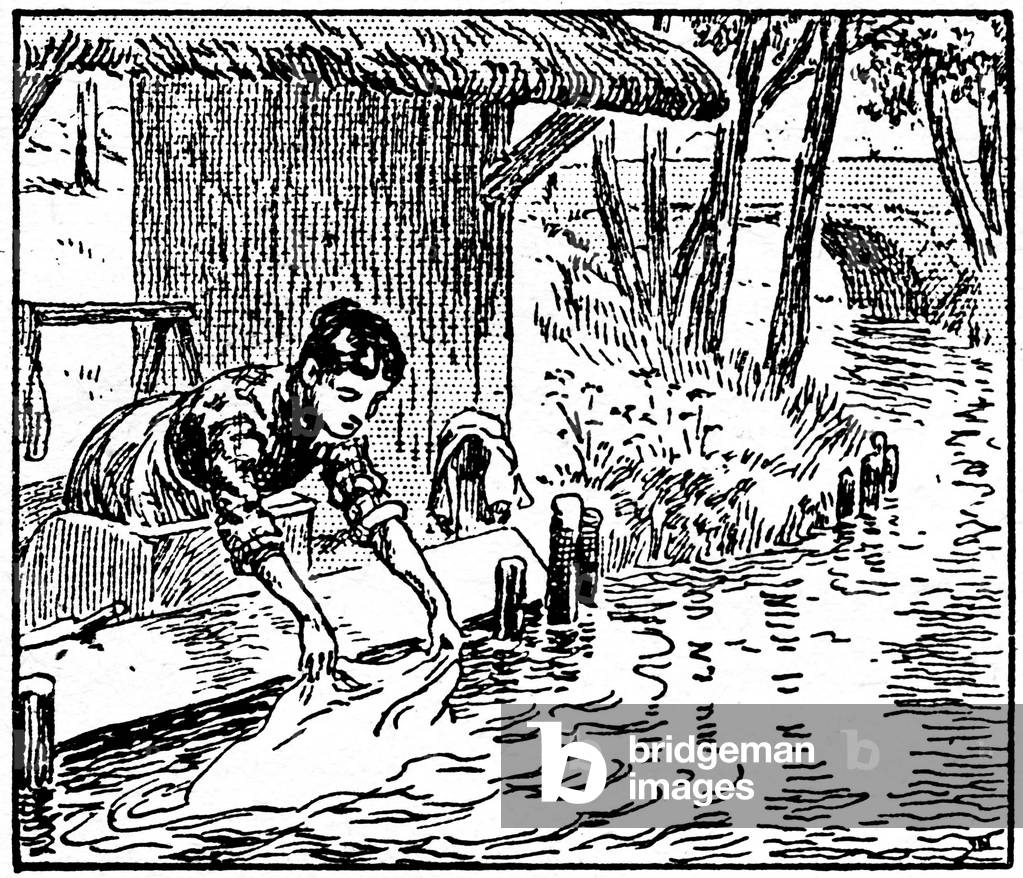
PCT4276545: laundry washing machine in the water of a stream - laundry - laundry - cleanliness - hygiene - Illustration of a 1923 school book - / Bridgeman Images

PCT4276576: Lace siding for women's clothing: Young women wearing light embroidered clothing: shirt - blouse - corset - English embroidery - fancy lingerie - extract from a catalog of La Samaritaine, early 20th century. / Bridgeman Images
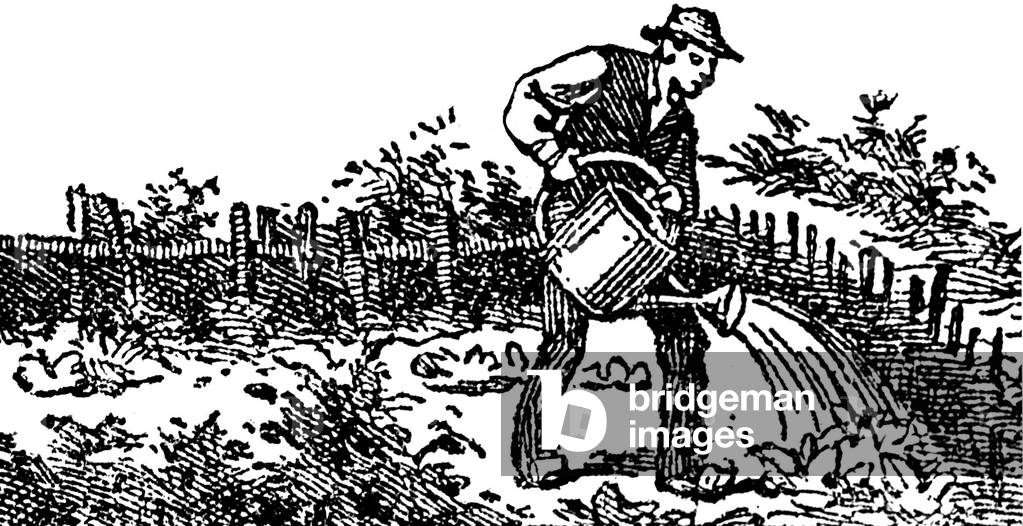
PCT4276588: Gardener watering his garden with a watering can - illustration of a school book early 20th century. / Bridgeman Images

PCT4276639: Weaver working on his Jacquard weave - image of a school book beginning 20th century., Unknown Artist, (20th century) / Bridgeman Images

PCT4276741: Caucasus Jews - Drawing by Pranishnikoff after a photograph by M. Raoult in the “New Universal Geography” by Elysee (Elisee) Reclus (1830-1905), Hachette edition 1881, Volume 6, Russian Asia. / Bridgeman Images

PCT4278035: Drawing by Henriot (1857-1933) in Le Charivari of June 3, 1907, evoking the difficult situation of the winemakers of the Midi of France - “” And income tax? In the Midi, it doesn't touch us: we haven't had one for a long time. / Bridgeman Images

PCT4278118: Soldier - sentinel on duty in front of his barracks standing against his guerite in discussion with an officer - engraving of the newspaper L'Ouvrier 1903 / Bridgeman Images

PCT4278197: Sindbad the sailor (Sinbad) - tale of the thousand and one nights (1001) - book of 1948 telling his adventures (Fortin edition, Wonderful Imaging of childhood collection) - illustration by Albert Robida (1848 - 1926): Sindbad and his companions have failed their boat on the back of a whale that will dive, Robida, Albert (1848-1926) / Bridgeman Images

PCT4278242: Sindbad the sailor (Sinbad) - tale of the thousand and one (1001) nights - illustration of a 1948 book (Fortin edition, collection Wonderful Imaging of Childhood) telling his adventures - illustration by Albert Robida (1848 - 1926) - Fifth voyage: Merchants accompanying Sindbad who wanted to seize an egg of the giant bird called Roc are attacked by the latter -, Robida, Albert (1848-1926) / Bridgeman Images

PCT4276806: A scene from Raymond Bernard's film “The Miserables”” (1933) based on Victor Hugo's novel. Harry Baur in the role of former forcat Jean Valjean. Exploitation photography Pathe Natan Cinema - / Bridgeman Images

PCT4276869: Cook and cook facing kitchen stoves - engraving by Bertall 19th century - / Bridgeman Images

PCT4277051: Carcass (wreck) of a rusty old car transformed into a makeshift shelter in the countryside, surrounded by flowering almond trees and vineyards. Wall (wall - wall) of dry stone (dry stones) and path - walking - promenade - France - Aude - Minervois - Languedoc - Photo Patrice Cartier -, Cartier, Patrice / Bridgeman Images

PCT4278424: Sindbad the sailor (Sinbad) - tale of the thousand and one (1001) nights - illustration by Gustave Dore - Maxwell edition 1865 - Prologue: a poor bearer (Hinbad) presents himself before Sindbad, who has become old and rich. The latter will tell his adventures - see details of this scene: GUT5106 -, Dore, Gustave (1832-83) / Bridgeman Images

PCT4278434: Title page of the volume of “” La Vie Parisienne””, piece and opera (opera-bouffe) by Jacques Offenbach on a libretto by Ludovic Halevy and Henri (Henry) Meilhac - Librairie Illustree 1875 - Illustration by Paul Hadol (1835-1875) - (print), Hadol, Paul (1835-1875) / Bridgeman Images

PCT4278486: Sindbad the sailor (Sinbad) - tale of the thousand and one (1001) nights - Fourth voyage: Sindbad's ship and his companions shipwrecked during a storm - 19th century engraving / Bridgeman Images

PCT4278122: Young woman (peasant) with blond hair - redhead with hairstyle surrounded by a red blue triciolor ribbon - France - homeland - patriot - French republic - Drawing by Job illustrating the book La Cantiniere (by G. Montorgueil, circa 1900) - / Bridgeman Images

PCT4278233: Sindbad the sailor (Sinbad) - tale of the thousand and one (1001) nights - illustration of a book from 1948 (Fortin edition, collection Wonderful Imaging of Childhood) telling his adventures - illustration by Albert Robida (1848 - 1926) - Seventh voyage: An elephant seizes Sindbad with his trunk -, Robida, Albert (1848-1926) / Bridgeman Images

PCT4277060: Characters of Honore de Balzac's Human Comedie (1799-1850): Julie de Chastillonest (then Madame d'Aiglemont), along with her father, watches handsome soldiers in uniform pass. Engraving by Auguste-Hilaire (Auguste Hilaire) Eugene Lampsonius (Eustage Lorray, 1822-1871) for the novel “La femme de thirty ans”” - 30 years. / Bridgeman Images

PCT4277162: Landscape of Normandy with a lake (pond) in the woods (forest) and a boat / Bridgeman Images

PCT4277293: Illustration of “” La premiere annee d'Histoire de France “” by Ernest Lavisse, Librairie Armand Colin 1906 - 2 superimposed engravings: Gallic troupe and Roman armee en marche. The Gauls walked in disorder, the Romans walked in good order. / Bridgeman Images

PCT4277311: Drawing by Albert Robida (1848-1926) on cover of the Comique World n°296 (early 20th century) - New very elegant hitch for small outings in the countryside - Young woman driving a pigs' carriage (pigs) -, Robida, Albert (1848-1926) / Bridgeman Images

PCT4277498: Claude Joseph Rouget of L'Isle (1760-1836), Cartier, Patrice / Bridgeman Images