
Print this page or go back to standard view.

LEG4337210: Horses reaching the current at full speed over the grille of a big car - Vignette illustree, claimed for the 9th International Motor Show and Cycle, Geneva (Switzerland), 1932 / Bridgeman Images
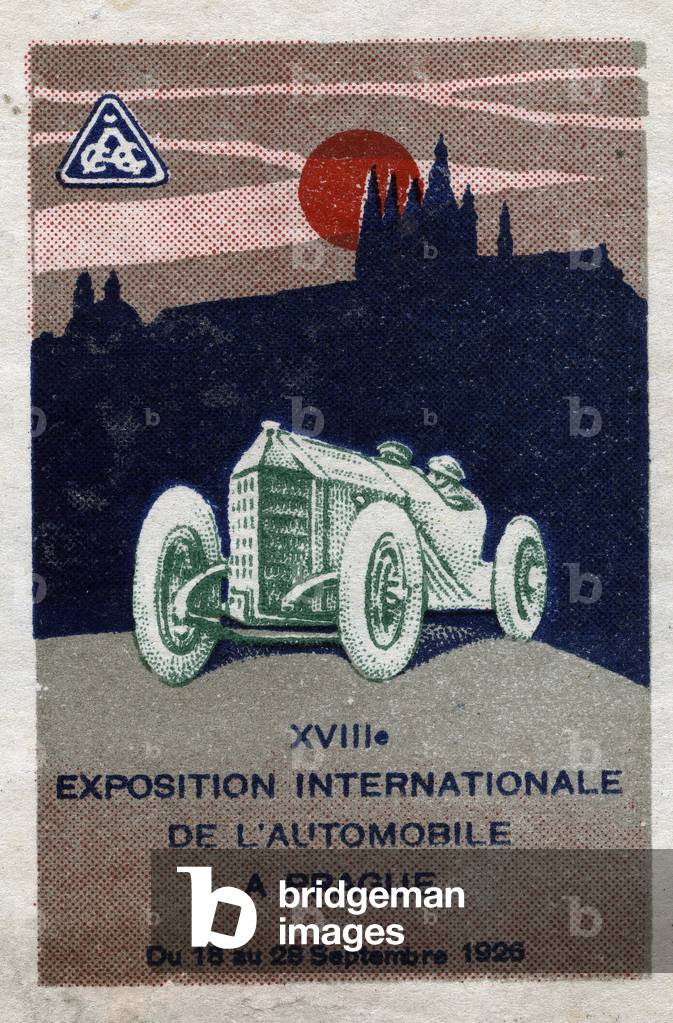
LEG4337284: A car comes out of the shadows of the city of Prague - Vignette illustree, claimed for the 18th International Automobile Exhibition, Prague (Czech Republic), 1926 / Bridgeman Images

PCT4287271: first class drawing room of the liner Paris - Compagnie generale transatlantique - / Bridgeman Images

LEG4337378: View of the city of Kenadsa (Algeria), traditional houses and minaret of the mosque - Vignette illustree, reclaim for Algeria, beautiful France, 20th century / Bridgeman Images

LEG4337417: Face and traditional headdress of an indigenous person from the French colonies of Africa - Vignette illustree, claimed for the national colonial exhibition of Marseille (France), 1922 / Bridgeman Images
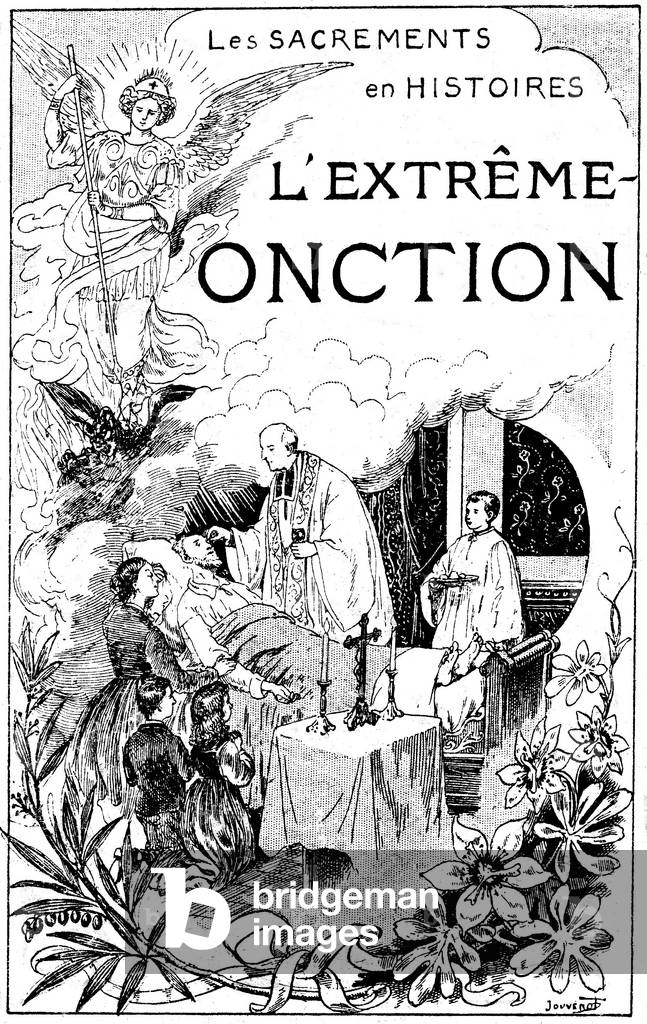
PCT4287385: cover of a religious book at the beginning of the 20th century (engraving), Cartier, Patrice / Bridgeman Images

PCT4287398: Door hammer (knocker) zoomorphic dolphin shape - 19th century imitation of older sculptures - Caunes-Minervois (Aude, Minervois, Languedoc) - Photo Patrice Cartier / Bridgeman Images

PCT4287435: Le Dauphine at the beginning of the 20th century: route du Montgenevre and vallee de la Claree in winter - civil skiers and alpine hunters in skiing and sledding pulled by a mule - Alps, alpine pastures, mountain life - snow - postcard - / Bridgeman Images

PCT4287461: Group of people posing for the photographer in a guinguette at the beginning of the 20th century - popular fete - deguisement - photographic print of the period - / Bridgeman Images

PCT4287474: Thermalism at the beginning of the 20th century: the spa resort of Merano (Italy - Trentino - South Tyrol) called Meran in German - thermal baths - health care - postcard co-orisee sent in 1911 - / Bridgeman Images

PCT4287495: Morocco, beginning of the 20th century: women veiled in a street in Marrakech - photographic print of the period - anonymous photography - / Bridgeman Images

PCT4288005: View of Saint Peter (Saint Peter, St Peter, Martinique) just after the destruction of the city by the eruption of the volcano of Mont Pele or Montagne Pelee on May 8, 1902 - ruins of the cathedral, interior - disaster - burning nuee - / Bridgeman Images

PCT4288033: View of Saint Peter (Saint Pierre, St Pierre, Martinique) just after the destruction of the city by the eruption of the volcano of Mont Pele or Montagne Pelee on May 8, 1902 - ruins of Place Bertin - disaster - burning nuee - / Bridgeman Images

PCT4288447: Musee Cau Ferrat de Sitges (Costa Brava, Catalonia, Spain) - Photo Patrice Cartier - Authorization Museum OK -, Cartier, Patrice / Bridgeman Images

PCT4288539: Ebro Delta Natural Park, province of Tarragona, Catalonia, Spain, elected Biosphere Reserve by Unesco. About 300 species of birds are repertories. Gull and pink flamingos - Photo Patrice Cartier 2015 -, Cartier, Patrice / Bridgeman Images

PCT4288588: Cape Roig Botanical Park - (Costa Brava, Catalonia, Spain) (photo), Cartier, Patrice / Bridgeman Images

PCT4288608: Cadaques: Portlligat (Port Lligat) - In front of the house of the painter Salvador Dali (Casa Dali) you can see this old fishing boat with a cypre forming the mat, without knowing whether the tree has grown through the boat, or whether the latter has been demanted and rebuilt around the trunk - Costa Brava, Catalonia, Spain - photo Patrice Cartier -, Cartier, Patrice / Bridgeman Images

PCT4288620: Across the olive trees, facing the sea, stands the white Cadaques - Costa Brava, Catalonia, Spain - photo Patrice Cartier -, Cartier, Patrice / Bridgeman Images

PCT4288728: Les deux chevres: fable by Jean de la Fontaine illustrated by Gustave Dore - forest, stream, stream -, Dore, Gustave (1832-83) / Bridgeman Images

PCT4294796: Facade of the town hall-school (town hall, school) of a village in France - school group - flags - Photo Patrice Cartier -, Cartier, Patrice / Bridgeman Images

PCT4281167: Rennes-le-Chateau (Rennes le Chateau - Aude - Languedoc - Pays Cathare) - Magdala Tower built by Abbe Beranger Sauniere- Photo Patrice Cartier, Cartier, Patrice / Bridgeman Images

LSE4331216: The departure of the Alert sleds, ship of the polar expedition, drawing by Riou, to illustrate the story of a voyage to the polar sea in 1875-1876, by Captain G.S.Nares. Engraving in Le tour du monde, 1878, directed by Edouard Charton, Paris. Selva Collection., Riou, Edouard (1833-1900) / Bridgeman Images

PCT4281534: Paris: the Seine, bridge with houses, inhabitants, Parisians, scenes of Parisian life in the Middle Ages - architecture - urban habitat - river - illustration by Albert Robida (1848-1926), Robida, Albert (1848-1926) / Bridgeman Images

LSE4331716: Drawing by Kipling representing Taffimai Metallumai in Rudyard Kipling's “Histoires comme ca” (1856 - 1936), Librairie Delagrave, 1934., Kipling, Joseph Rudyard (1865-1936) / Bridgeman Images

PCT4281828: 'L'assiette au beurre' special Vatican (n°242 of November 18, 1905) - The denier of St. Peter (print), Galantara, Gabriele (Rata Langa) (1865-1937) / Bridgeman Images

PCT4282122: Albian Camar, master Aeditue de l'Ile Sonnante et ses oiseaux - illustration by Gustave Dore for complete works by Francois Rabelais - Fifth Book by Pantagruel, Dore, Gustave (1832-83) / Bridgeman Images

LSE4332090: portrait of the author and traveler Edmondo de Amicis (1846-1908), Italian writer, engraving by E.Ronjat, to illustrate the story of Morocco by Edmondo de Amicis, in 1875, published in the tour du monde, under the direction of Edouard Charton, 1879, Paris. Selva Collection., Ronjat, Etienne Antoine Eugene (b.1822) / Bridgeman Images

PCT4282452: Meknes, imperial city of Morocco at the beginning of the 20th century (between 1920 and 1930) - the Medina - general view with a canon of the sultans in the foreground - preparation of the noon gun shot - postcard sent between 1920 and 1930 - photography Schmitt / Bridgeman Images

PCT4282491: Mystification of the forger Vrain-Lucas against the mathematician Michel Chasles (manuscript) / Bridgeman Images

LSE4332204: Children's dances in Marken (Netherlands), engraving after a drawing by E.Ronjat, to illustrate the story of the Neerlande, by Charles de Coster, in 1878, published in the tour du monde, under the direction of Edouard Charton, 1880, Paris. Selva Collection., Ronjat, Etienne Antoine Eugene (b.1822) / Bridgeman Images

PCT4282875: Mirepoix (09, Ariege, Pays Cathare): facade of the central square with wooden joists carved 15th century - Photo Patrice Cartier, Cartier, Patrice / Bridgeman Images

PCT4282905: Excerpt from the almanac Hachette 1916 (“small popular encyclopedia of practical life” during the First World War 1914-1918 - 14-18): comparison of the food needs of the civilian and the soldier - The soldier consumes more than double meat than the civilian (164 kilos per year versus 73 kg, or 450 grams per day versus 200 gr), accompanied by 750 grams of bread per day - this meat is served in sliced cans in the form of so-called “monkey” - food - meat diet - consumption / Bridgeman Images

LSE4332384: The cafe at the convent, engraving by the author, to illustrate his story Les Meteores (Greek monasteres), by M. de Dree, circa 1860, published in the Tour du monde, under the direction of Edouard Charton (1807-1890), 1881, Paris. Selva Collection., French School, (19th century) / Bridgeman Images

PCT4283082: Panel of La Morale by example by Lecerf and Dumoulin (Librairie d'Education Nationale) early 20th century - “” Work ensures well-being and leads to honor””: social duties, fraternity in study - students of the faculty of letters meet workers going to adult classes of the Popular University - A teacher of letters shakes the hand of a worker - hand handle - salute - respect - politeness; two children welcome a lady - The boy greets her by discovering herself (removing her beret) and the girl brings her a chair to sit - Devouement: one child saves from drowning another child falls into the water of a river (from a canal) - danger of lying: illustration of the adage “” shouting wolf”” - young shepherd of sheep (sheep) attacked by a wolf / Bridgeman Images

LSE4332530: The Sova Mavanda (king), surrounded by his men who psalmodify a monotonous song, dancing in front of the major. Engraving by Emile Bayard, to illustrate the story how I've traversed Africa, from the Atlantic Ocean to the Indian Ocean, by Major Serpa Pinto, in 1877-1878, published in the Tour du monde, edited by Edouard Charton (1807-1890), 1881, Paris. Selva Collection., Bayard, Emile Antoine (1837-91) / Bridgeman Images

LSE4332552: The estaminet, a typical place of conviviality and sociability in Brussels. Engraving by J. de la Hoese, to illustrate the story of Belgium by Camille Lemonnier, published in the tour du monde, edited by Edouard Charton (1807-1890), Paris, 1881. Selva Collection., Hoese, Jean de la (1846-1917) / Bridgeman Images