13737 Search Results for sword

LAL297007: The Wonderful Story of Britain: Drake Sails Round the World, Jackson, Peter (1922-2003) / Bridgeman Images

MEP848010: Napoleon the Third, Eperor of France (Napoléon III, empereur des Français), after Franz Xaver Winterhalter, 19th Century, oil on canvas, 131 x 100 cm, French School, (19th century) / Bridgeman Images

ELC848570: Military Glory Scene (Scena di gloria militare), by Giuseppe Marchetti, 18th Century, fresco, Marchetti, Giuseppe (1721-1801) / Bridgeman Images

ELC849275: St. Stephen's Martyrdom, by Jacopo Guarana, 1767, 18th Century, oil on canvas, Guarana, Jacopo (1720-1808) / Bridgeman Images

MEP850325: English Gentleman in Armor (Gentiluomo inglese in armatura), 1970, Jacono, Carlo (1929-2000) / Bridgeman Images

CH1199208: FM29, 2008 (oil and paper collage on canvas), Oehlen, Albert (b.1954) / Bridgeman Images

MEP853149: Polyptych of the Cathedral of Saint Emygdius. Pietà, Madonna and Child, eight saints (Polittico del duomo di Sant'Emidio. Pietà, Madonna col Bambino, otto santi), by Carlo Crivelli, 1473, 15th Century, tempera on board, Crivelli, Carlo (c.1430/35-1495) / Bridgeman Images

MAM713526: Kabuki Actor, 18th-19th century (woodblock print), Toyokuni, Utagawa (1769-1825) / Bridgeman Images

MEB854317: Polyptych, 1385 - 1390 (tempera on panel), Crocifissi, Simone dei (c.1330-99) / Bridgeman Images

DTA3502032: A soldier of the rifle company of the 5th South Carolina Regiment of the Continental Army, 2017 (w/c & gouache on paper) , Troiani, Don (b.1949) / Bridgeman Images

TRK3598056: Virgin with Mark the Evangeliest and Andrew the Apostle, 1527-30, Detail the lunette: Saint Michael, Italy, Cardisco, Marco (Marco Calbrese), (c.1486-1542) / Bridgeman Images

MEP3599742: Giuseppe Garibaldi during the Battle of Varese (Giuseppe Garibaldi durante la battaglia di Varese), by Johann Erdmann Hummel, 19th Century (engraving), Hummel, Johann Erdmann (1769-1852) / Bridgeman Images

FLO4723982: Man circassian (Caucasus, Circassian man in hat, tunic over skirts, carrying a musket, bow in case, curved sword and powder horn - Handcoloured woodcut from “” Moeurs, Uses et Costumes de tous les Peuples du Monde, Asie,”” by Auguste Wahlen, pseudonym of Jean Francois Nicolas Loumyer (1801-1875), Librairie Historique Artistique, Brussels, 1845 / Bridgeman Images

FLO4572822: Prince Grand Dignity of the Empire, Napoleonic era. Handcoloured lithograph by Leopold Massard from Le Bibliophile Jacob aka Paul Lacroix's Costumes Historique de la France (Historical Costumes of France), Administration de Librairie, Paris, 1852., Massard, Leopold (1812-1889) / Bridgeman Images

FLO4623304: Soldiers and weapons from the Bayeux Tapestry. Men in plate and chainmail armour armed with mace, lance, sword and shield. Handcoloured copperplate engraving by Verico after Giuseppe Bramati from Giulio Ferrario's Ancient and Modern Costumes of all the Peoples of the World, 1844. / Bridgeman Images

MEB2627847: Portrait of Luigi I Gonzaga, c.1550-1580 (oil on board), Ghisoni, Fermo di Stefano (c.1505-1575) (workshop of) / Bridgeman Images

FLO4673872: Pepin II, the Younger, King of Aquitaine, 823. Handcoloured copperplate drawn and engraved by Leopold Massard from “” French Costumes from KingClovis to Our Days,”” Massard, Mifliez, Paris, 1834., Massard, Leopold (1812-1889) / Bridgeman Images

FLO4643582: The knight Johann Graf von Werttheim (died 1407) in armor under his coat of arms surrounds his wives - Chromolithography, drawing by Jakob Heinrich von Hefner-Alteneck (1811-1903), for his book “Costumes, crafts and instruments from the Middle Ages to the end of the 18th century”, published by Heinrich Keller, Frankfurt, 1883 / Bridgeman Images

FLO4632135: English actor Prague as Henri de Navarre in Henri IV by Saint-Hilaire and Michel Delaporte, Cirque Olympique, 1846. Handcoloured lithograph after an illustration by Alexandre Lacauchie from Victor Dollet's Galerie Dramatique: Costumes des Theatres de Paris, Paris, 1846. / Bridgeman Images

FLO4677187: Costume d'un jeune ecuyer, 14th century - Costume of a young squire, 14th century - He wears a yellow tabard, green stockings and silver spurs - He carries the sword and cape of his knight - From a fresco by Spinello Aretino in the Campo Santo cemetery, Pisa - Handcoloured illustration drawn and lithographed by Paul Mercuri with text by Camille Bonnard from “” Historical Costumes from the 12th to 15th Centuries,” Levy Fils, Paris, 1861, Mercuri, Paolo (1804-84) / Bridgeman Images

FLO4706751: A goth warrior, in helmet and armor, coat and fur panties, entirely weapon: swords, spears, bow and arrows. The Goths were born for war, using all the weapons from the javelin to the club, sometimes fighting on foot but favouring fighting on horseback. Their pleasure was the looting and maintenance of their weapons. The Swabian is described with his distinctive hat, wearing a metal chest and legs, weapon of his sword, with a fur coat on his shoulders. The Swabians were made up of an alliance of different German and Lombard peoples. They distinguished themselves from other German peoples by their headdresses, they tied their hair in bun to their heads. Hand-coloured copper engraving, in “Images historiques des costumes des principaux peuples de l'Antiquite et du Middle Ages” by Robert Von Spalart, published in 1796. / Bridgeman Images

EVB2950088: General Douglas MacArthur (center), being received by high Romanian officers in Bucharest, Romania, 1932 / Bridgeman Images

UTD2875635: Knights as sculptures of a fountain in the old city of Magdeburg, Germany 1930s (b/w photo) / Bridgeman Images

XRA1643166: Les Trois Mousquetaires La Vengeance De Milady Vengeance of The Three Musketeers De Bernardborderie Avec Gerard Barray Dans Le Role De D'Artagnan En Avril 1961 Neg B17942 (D'Apres Alexandre Dumas Pere) (b/w photo) / Bridgeman Images

KDC437892: 'Flowers for sabreurs' (L to R) Lev Kuznetsov (Bronze Medal), Rudolf Karpati (Gold) and Jersy Pawlowski (Silver) at the award ceremony at the 1956 Melbourne Olympics (b/w photo), Australian Photographer, (20th century) / Bridgeman Images

MPX5122788: Cadets on parade at the army school in Armagh, 4th September 1929 (b/w photo) / Bridgeman Images

KWE345536: Albert I, Third king of the Belgians, 1915 (b/w photo), Belgian Photographer, (20th century) / Bridgeman Images
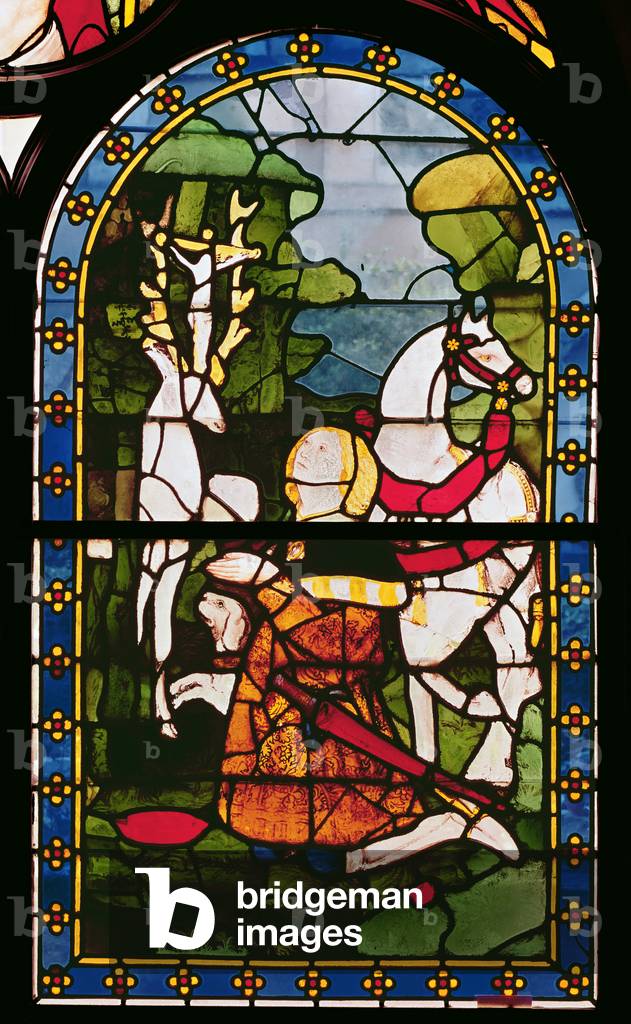
XIR89180: The Conversion of St. Eustace, from the Church of Saint-Pierre du Chatel (stained glass), French School, (16th century) / Bridgeman Images

TRK3071551: King Alfonso IX be knighted by Alfonso VIII (1155-1214) (engraving) / Bridgeman Images

LAL297613: Decisive Battles: Revenge for Bruce (Battle of Bannockburn), Doughty, C.L. (1913-85) / Bridgeman Images

BAL246802: Dress at the Byzantine Court, 800-1000, from 'Trachten der Voelker', 1864 (colour litho), Kretschmer, Albert (1825-91) / Bridgeman Images

XJF276015: The Victories of Charles V, 1527 (engraving), Italian School, (16th century) / Bridgeman Images

LLP729229: Chinese Rebels (engraving), English School, (19th century) / Bridgeman Images

LLM957938: Brocard of Charpignie, knight - soldier, 1200-1220 (engraving), Jacquemin, Raphael (1821-81) / Bridgeman Images

HSP198114: A Young Briton (oil on canvas), Elsley, Arthur John (1861-1952) / Bridgeman Images

HGP444128: St Michael the Archangel, detail of the rood screen, St Helen's Church, Ranworth, Norfolk, UK (tempera on wood), English School, (15th century) / Bridgeman Images
