13737 Search Results for sword

XEE4155575: Les Merovingiens - Merovingian dynasty - Pharamond or Faramund (- Chlodio (Clodius, Clodion, Cloio or Chlogio) (Clodion le Chevelu) (ca. 390 - ca. 450) - Merovech (Merovee or Merowig, ca. 412-457) and Clovis (ca. 466-511” - engraving from “Usi e Costumi di Tutti i Popoli dell'Universo. Ovvero Storia del governo, delle leggi, della milizia, della religione di tutte le nazioni dai piu remoti tempi fino ai giorni nostri” 1856, Anonymous / Bridgeman Images

GNG5281774: Gurdwara Sisganj, Old DelhiThe Khanda (Punjabi: kha ) is one of most important symbols of SikhismIt is a collection of four weapons commonly used by Sikhs at the time of Guru Gobind SinghIn the centre of the insignia is the two-edged sword which symbolises the creative power of GodOne edge of the Sword symbolises divine justice, the other symbolises freedom, and authority governed by moral and spiritual valuesOn the left is the Sword of Spiritual Sovereignty (Piri); On the right is the Sword of Political Sovereignty (Miri) There must always be a balance between the two, and this balance is emphasised by the chakra circle insideIt is the symbol of oneness, unicity of Justice, humanity and immortalityAlmost all Sikh warriors used to wear it in the eighteenth century, and nihangs still do today, Delhi, India / Bridgeman Images

XIR178357: Portrait of General Charles Victor Emmanuel Leclerc (1772-1802) (oil on canvas), Kinson, Francois Josephe (1771-1839) / Bridgeman Images
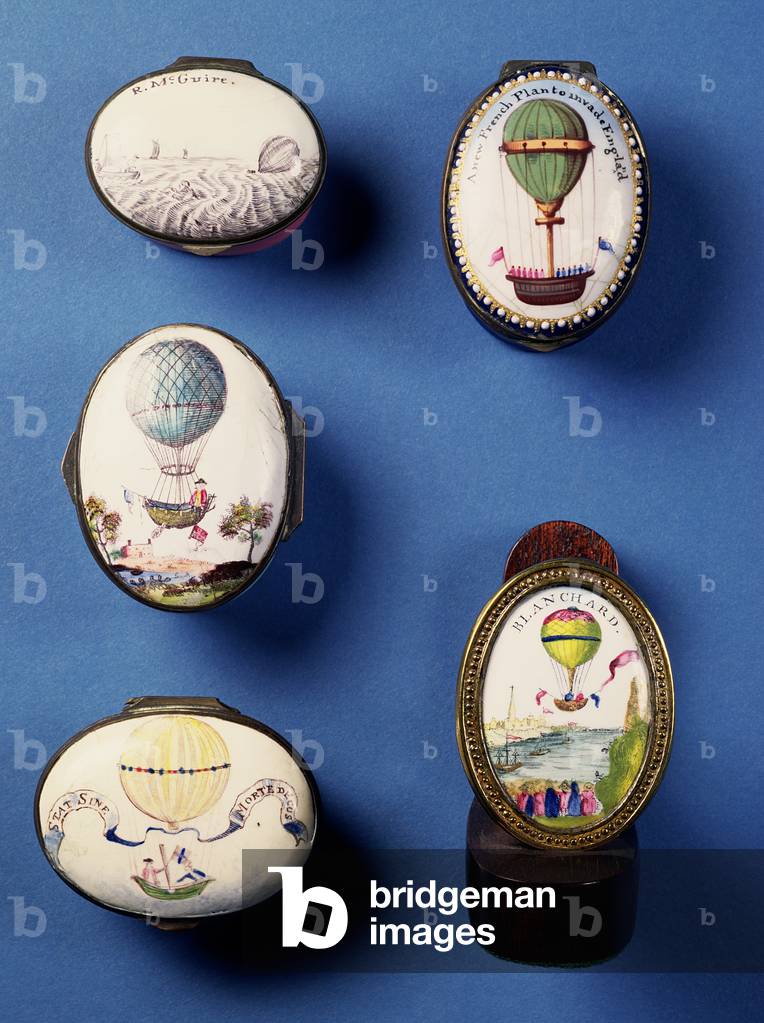
BNM59765: English enamel patch boxes, depicting hot-air balloons; gilt metal sword/cloak peg portraying Blanchard's balloon crossing the English Channel, late 18th century, . / Bridgeman Images

XCF268672: John Bull Triumphant, published by William Humphrey, 4th January 1780 (coloured lithograph), Gillray, James (1757-1815) / Bridgeman Images

XZL41983: Fr 95 fol.173v The Battle of Bedigran, from 'The Story of Merlin', c.1280-90 (vellum), French School, (13th century) / Bridgeman Images

KWE141816: Portrait of William the Conqueror (engraving), English School, (19th century) / Bridgeman Images

CHT184336: Renee Bordereau, called Langevin (1770-1828) (engraving) (b/w photo), French School, (18th century) / Bridgeman Images

XYC290779: The Day of Judgement, pl.9, from 'The Grave, A Poem' by William Blake (1757-1827), engraved by Luigi Schiavonetti (1765-1810), 1808 (etching), Blake, William (1757-1827) (after) / Bridgeman Images

CH402284: The Harem Guard (oil on canvas), Deutsch, Ludwig (1855-1935) / Bridgeman Images

STC398622: How Sir Launcelot slew the knight Sir Peris de Forest Savage that did distress ladies, damosels and gentlewomwen, illustration from 'The romance of King Arthur and his knights of the Round Table' by Alfred W. Pollard, 1910 (colour litho), Rackham, Arthur (1867-1939) / Bridgeman Images

XPH312403: Frederick William II of Prussia, c.1770, Tischbein, Johann Jacob (1725-91) / Bridgeman Images

XJF957011: Richard Neville, 16th Earl of Warwick (1420-71) (engraving), English School, (19th century) / Bridgeman Images

LRI4629141: Saint Paul, early 20th century (print) / Bridgeman Images

XCF290966: Tom Jones and the Centinel, 1799 (litho), English School, (18th century) / Bridgeman Images

STC373385: Battle of Malplaquet, September 11th 1709: Chevalier St. George wounded (litho) During the War of the Spanish Succession;, English School, (19th century) / Bridgeman Images

STC400573: Colin Campbell leading the forlorn hope at San Sebastian, illustration from 'Battles of the Nineteenth Century' by Archibald Forbes, G.A. Henty and Major Arthur Griffiths (colour litho), Wollen, William Barnes (1857-1936) (after) / Bridgeman Images

XEE4157590: Portrait of Bertrand Duguesclin (Du Guesclin) (1320-1380), Breton knight and French military commander. illustration from “” Le Plutarque Français”” by Edmond Mennechet, 1836 (colour engraving)., French School, (19th century) / Bridgeman Images

LAL299937: The Story of Pear Blossom, Blasco, Jesus (1919-95) / Bridgeman Images

XLA3750305: Tom Jones / Bridgeman Images

LAL453467: Battle of Cheironeia, Howat, Andrew (20th Century) / Bridgeman Images

TRK697461: France. Army of the 18th century. Musketeer of the Infantry of Louis XIV blowing the fuse of the musket. Colored engraving. / Bridgeman Images

LLW402800: James II, c.1873 (stained glass), English School, (19th century) / Bridgeman Images

KWE348152: Coat of arms of the family of Joan of Arc, 1878 (litho), English School, (19th century) / Bridgeman Images

XJF268602: Field Marshall Earl Harcourt (litho), American School, (19th century) / Bridgeman Images

LAL957312: The French Revolution inspired Eugene Delacroix to paint Liberty guiding the French people (colour litho), Brauner, Luis Arcas (1934-89) / Bridgeman Images

FLO4674156: Sergeant at arms, royal guard, mac-bearer, 13th century. When guarding the king, he wore a full suit of plate armour over chainmail, and a cabasset or helmet with veil. He holds the mace and wears a sword. Handcoloured copperplate drawn and engraved by Leopold Massard from “” French Costumes from KingClovis to Our Days,”” Massard, Mifliez, Paris, 1834., Massard, Leopold (1812-1889) / Bridgeman Images

FAF137590: A Gallic Warrior from Talamone, 3rd century BC, and the Suicide of Ajax from Populonia, 5th century BC (b/w photo), . / Bridgeman Images

STC133667: Costume design for The Flemish Bridegroom, from Sleeping Beauty, 1921 (colour litho), Bakst, Leon (1866-1924) / Bridgeman Images

GUL174559: MS Ferguson 17 plate between ff. 143-114 Devil (vellum), French School, (18th century) / Bridgeman Images

XIR661435: Honour to Polytechnique and Saint-Cyr, front cover illustration from 'Le Petit Journal', supplement illustre, 26th April 1914 (lithograph), French School, (20th century) / Bridgeman Images

LMG876156: Maquette for the Statue of Alfred the Great, c.1901 (painted plaster) (see also 876154-5), Thornycroft, William Hamo (1850-1925) / Bridgeman Images

LLM979152: Young Roland (coloured engraving), German School, (19th century) / Bridgeman Images

LLL733139: The Shah at the Paris Exhibition (chromolitho), American School, (19th century) / Bridgeman Images

GRL1630095: St Michael slaying Satan as a dragon, detail from Polyptych with Saints, 1358, Veneziano, Paolo (fl.1333-62) / Bridgeman Images

KWE468261: King Richard II knighting the kings of Connaught, Ulster, Thomond and Leinster in 1394, 'The History of Ireland' by Thomas Wright, published c.1854 (engraving), Warren, Henry (1794-1879) (after) / Bridgeman Images
