42070 Search Results for medieval or gothic or late medieval

BEN87654: The Story of Noah: the Exodus from the Ark, the Drunkenness of Noah and his Sacrifice to God, one of ten relief panels from the Gates of Paradise (East doors), 1425-52 (gilt bronze) (see also 87652-53 & 87655-67), Ghiberti, Lorenzo (1378-1455) / Bridgeman Images

XLE3750862: Graf Kraft von Toggenburg / Bridgeman Images

CIN423079: Sultan Hussain Nizam Shah I of Ahmadnagar on horseback (w/c on paper), Indian School, (16th century) / Bridgeman Images

PCT4262401: Harvest scene: a man and a woman pick grapes from a vines high on espalier. The man wears a hood., Cartier, Patrice / Bridgeman Images

HGP379354: Ruined church (photo) / Bridgeman Images
![Lichfield - Drinking Horn: pen and sepia drawing, nd [1748-1817] (drawing)](https://images-cdn.bridgemanimages.com/api/1.0/image/600wm.WSL.72010950.7055475/5897848.jpg?old-wm)
WSL5897848: Lichfield - Drinking Horn: pen and sepia drawing, nd [1748-1817] (drawing), Carter, John (1748-1817) / Bridgeman Images

XLF3787627: Vanished Civilizations: Moorish council in Granada / Bridgeman Images

XCL499489: The Troubadour, 1868-1873 (oil on fabric) , Daumier, Honore (1808-79) / Bridgeman Images

CHT868459: Drawing from 'Dictionnaire raisonné de l'architecture française du XIe au XVIe siècle', 1861 (engraving), French School, (19th century) / Bridgeman Images

XIR181871: Marriage of Frederick I (c.1123-90) Barbarossa and Beatrice I (1145-84) of Burgundy in 1156 (fresco), Tiepolo, Giovanni Battista (Giambattista) (1696-1770) / Bridgeman Images

XIR83890: The Coronation of Emperor Charlemagne by Pope Leo III (c.750-816) at St. Peters, Rome in 800, Grandes Chroniques de France, 1375-79 (vellum), French School, (14th century) / Bridgeman Images

LLM1093364: Battle of Taillebourg, France, 1242 (chromolitho), Delacroix, Ferdinand Victor Eugene (1798-1863) / Bridgeman Images
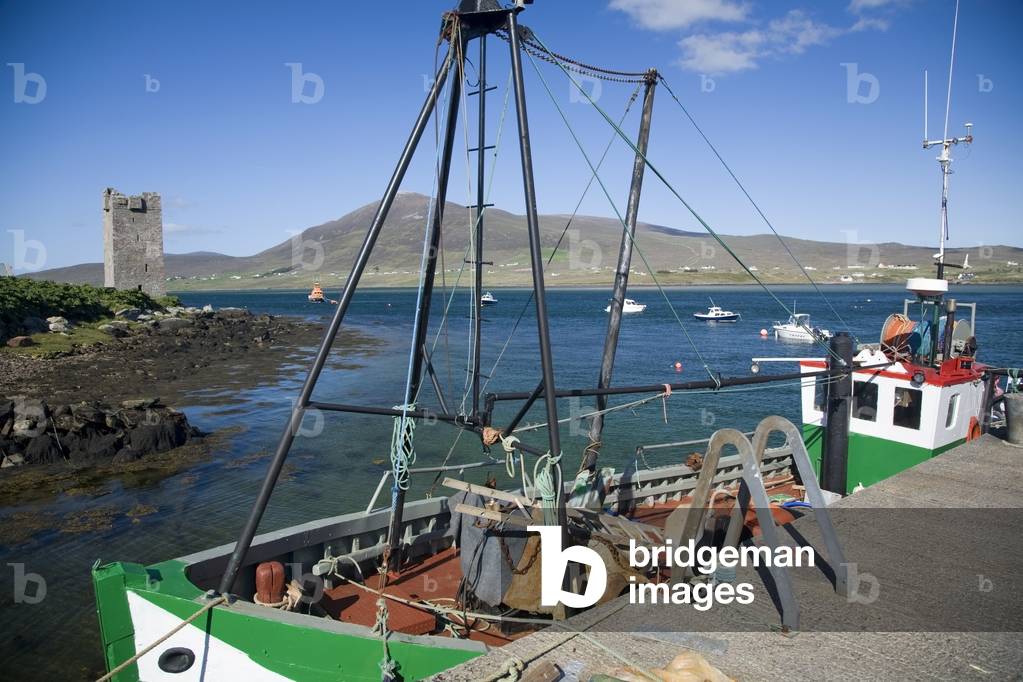
DPS3254540: Achill Island, Co Mayo, Ireland; 15Th Century Carrickkildavnet Castle Used By Grace O'Malley (photo) / Bridgeman Images

DPS3249494: Dungarvan Castle(King John's Castle), Dungarvan, Co Waterford, Ireland (photo) / Bridgeman Images

DPS3503453: Clonfert Cathedral, Clonfert, Co Galway, Ireland, Detail Of Doorway In Hiberno-Romanesque Style (photo) / Bridgeman Images

MEP1267096: Way to Calvary (Andata al Calvario), by Giotto, 1303-1305, 14th century (fresco), Giotto (Giotto di Bondone) (c.1266-1337) / Bridgeman Images

YOU4420131: View of the castle of Beynac overlooking the village of Beynac and Cazenac, Chateau fort built from the 12th century by the barons of Beynac, taken by Richard Coeur de Lion in 1189, remained essentially in the hands of the English until the French victory of Castillon in 1453, ending the Hundred Years' War. Medieval military architecture., Beynac and Cazenac, Sarlat la Caneda, Dordogne, New Aquitaine, France. / Bridgeman Images

FLO4720953: Greek merchant of the middle ages in long black wool robes and bonnet within a decorative border. Engraved on wood by Gerard Seguin and E.F. Huyot after the original illustration by Vecellio from Cesare Vecellio's “” Costumes anciens et modernes,”” Firmin Didot Freres Fils, Paris, 1859. Vecellio was a cousin to Titian and his original collection published in 1590 provided a panorama of medieval costume. / Bridgeman Images

FLO4702909: Medieval weapons: Dull swords or kolben for the Kolbenturnier 302, pike 303, halberd 304, partisan 305, wooden battle hammer 306, iron battle hammer 307, lance with crooked spike 308, various swords 309-312, and daggers 313,314. Handcoloured copperplate engraving from Robert von Spalart's Historical Picture of the Costumes of the Principal People of Antiquity and of the Middle Ages. / Bridgeman Images

AUZ3924298: Staro-Nova Synagogue/ Alt-Neu synagogue - Old-New Synagogue Prague with the Jewish community centre / Bridgeman Images

TRK5667333: Triptych with Adoration of the Shepherds, ca.1515, by Jan de Beer (ca.1475-ca.1528)., Beer, Jan de (c.1490-c.1536) / Bridgeman Images

DPS3254544: Achill Island, Co Mayo, Ireland; 15Th Century Carrickkildavnet Castle Used By Grace O'Malley (photo) / Bridgeman Images

GRL2655182: Madonna with Infant Jesus, Antelami, Benedetto (c.1150-c.1230) (school of) / Bridgeman Images

STC328789: Sir Galahad meets Sir Melyas, illustration from 'The Story of the Grail and the Passing of Arthur', c.1910 (litho), Pyle, Howard (1853-1911) / Bridgeman Images

XIR169990: Vianden through a Spider's Web (pencil, Indian ink, sepia and watercolour on paper), Hugo, Victor (1802-85) / Bridgeman Images

DPS3249471: Rockfleet Castle, Clew Bay, Co Mayo, Ireland (photo) / Bridgeman Images
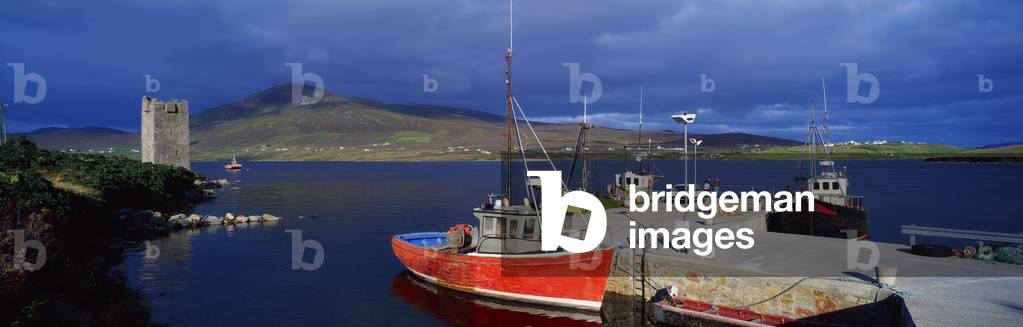
DPS3503922: Harbour, With Grainuaille's Castle, Achill Island Co Mayo, Ireland (photo) / Bridgeman Images

TRK832154: Christopher Columbus at La Rabida. Engraving., Spanish School, (19th century) / Bridgeman Images

XJL212006: Ms Fr. Fv VI #1 Two pages depicting Rose and Garlic, from 'The Book of Simple Medicines' by Mattheus Platearius (d.c.1161) c.1470 (vellum), Testard, Robinet (fl.1470-1523) / Bridgeman Images

MEP1267080: Wedding at Cana (Nozze di Cana), by Giotto, 1303-1305, 14th century (fresco), Giotto (Giotto di Bondone) (c.1266-1337) / Bridgeman Images

LAL337502: The Story of the Crusades, Escott, Dan (1928-87) / Bridgeman Images

WSL5897217: Draycott in the Moors Church: sepia drawing, 1841 (drawing), Buckler, John Chessell (1793-1894) / Bridgeman Images

CH1196955: Yusuf Being Rescued from the Pit, c.1492-3 (illuminated manuscript on paper), Persian School, (15th century) / Bridgeman Images

PCT4262333: Josue and Caleb returned from Canaan , carrying a huge bunch of grapes., Cartier, Patrice / Bridgeman Images

GIA4752354: The Liberal Arts: the Trivium and the Quadrivium - in “” Margarita Philosophica”” by Gregor Reisch (1467-1525). Bale, 1517. In medieval teaching, quadrivium referred to the four mathematical arts: arithmetic, music, geometry and astronomy. Quadrivium is distinguished from Trivium, which includes grammar, rhetoric and logic (dialectic). These two branches of knowledge constituted the seven liberal arts, a concept derived from Greek philosophy., Reisch, Gregor (d.1525) / Bridgeman Images

XOS5389800: Adoration of the Magi, 1470-75 ( tempera on wood), Botticelli, Sandro (Alessandro di Mariano di Vanni Filipepi) (1444/5-1510) / Bridgeman Images
