8188 Search Results for abstract

ELC2627902: Oedipus and Antigone, 1928 (oil on canvas), Savinio, Alberto (Chirico, Andrea de) (1891-1952) / Bridgeman Images

LIS2653170: Allegory, 1938 (oil on canvas), Sausmarez, Maurice de (1915-69) / Bridgeman Images

WAK3663540: Tibia Graft, 1949 (oil & pencil on paper), Hepworth, Barbara (1903-75) / Bridgeman Images

LAG3848960: Scene from Richard Wagner, Lauterwasser, Siegfried / Bridgeman Images

FER6439495: Woman and Child in Ladderback Chair, 1952 (bronze), Moore, Henry Spencer (1898-1986) / Bridgeman Images

SAP621901: Blue Mosque, Sultan Ahmed Mosque, Sultanahmet Camii, Nave - Dome, Ceiling / Bridgeman Images

CVL500168: Scroll, 1978 (oil on canvas), Guston, Philip (1913-80) / Bridgeman Images

SAP621892: Blue Mosque, Sultan Ahmed Mosque, Sultanahmet Camii, Nave - Dome, Ceiling / Bridgeman Images

SAP621891: Blue Mosque, Sultan Ahmed Mosque, Sultanahmet Camii, Nave - Dome, Ceiling / Bridgeman Images

JEF3084497: Sofa, 1930-40 (wood and metal frame with cotton fabric upholstry), English School, (20th century) / Bridgeman Images

STM620766: Cubi XIV, 1963 (stainless steel), Smith, David (1906-1965) / Bridgeman Images

CVL499838: Reconstruction, 1959 (encaustic & collage on canvas) , Johns, Jasper (b.1930) / Bridgeman Images

SAP621895: Blue Mosque, Sultan Ahmed Mosque, Sultanahmet Camii, Nave - Dome, Ceiling / Bridgeman Images

SAP621887: Blue Mosque, Sultan Ahmed Mosque, Sultanahmet Camii, Nave - Carpet, Chandeliers and Muezzin Mahfili / Bridgeman Images

SAP621900: Blue Mosque, Sultan Ahmed Mosque, Sultanahmet Camii, Nave - Dome, Ceiling / Bridgeman Images

CVL500346: Reliquary Guardian Figure, Kota, probably 1800s (wood, metal) , Gabonese / Bridgeman Images

FIA5404602: Untitled, c.1916 (watercolour and ink on paper), Kandinsky, Wassily (1866-1944) / Bridgeman Images
![Remnants of Supernova of Vails - detail - Pencil Nebula (NGC 2376) - Remnants from a star that exploded thousands of years ago created a celestial abstract portrait, as captured in this image of the Pencil Nebula. Officially known as NGC 2736, the Pencil Nebula is part of the huge Vela supernova remnant, located in the southern constellation Vela. Discovered by Sir John Herschel in the 1840s, the nebula's linear appearance triggered its popular name. The nebula's shape suggests that it is part of the supernova shock wave that recently encountered a region of dense gas. It is this interaction that causes the nebula to glow, appearing like a rippled sheet. In this snapshot, astronomers are looking along the edge of the undulating sheet of gas. This view shows large, wispy filamentary structures, smaller bright knots of gas, and patches of diffuse gas. The Hubble Heritage Team used the Advanced Camera for Surveys in October 2002 to observe the nebula. The region of the Pencil Nebula captured in this image is about three fourths of a light - year across. The Vela supernova remnant is 114 light - years (35 parsecs) across. The remnant is about 815 light - years (250 parsecs) away from our solar system. The nebula's luminous appearance comes from dense gas regions that have been struck by the supernova shock wave. As the shock wave travels through space [from right to left in the image], it rams into interstellar material. Initially the gas is heated to millions of degrees, but then subsequently cools down, emitting the optical light visible in the image. The colors of the various regions in the nebula yield clues about this cooling process. Some regions are still so hot that the emission is dominated by ionized oxygen atoms, which glow blue in the picture. Other regions have cooled more and are seen emitting red in the image (cooler hydrogen atoms). In this situation, color shows the temperature of the gas. The nebula is visible in this image because it is glowing](https://images-cdn.bridgemanimages.com/api/1.0/image/600wm.PIX.89958540.7055475/4582819.jpg?old-wm)
PIX4582819: Remnants of Supernova of Vails - detail - Pencil Nebula (NGC 2376) - Remnants from a star that exploded thousands of years ago created a celestial abstract portrait, as captured in this image of the Pencil Nebula. Officially known as NGC 2736, the Pencil Nebula is part of the huge Vela supernova remnant, located in the southern constellation Vela. Discovered by Sir John Herschel in the 1840s, the nebula's linear appearance triggered its popular name. The nebula's shape suggests that it is part of the supernova shock wave that recently encountered a region of dense gas. It is this interaction that causes the nebula to glow, appearing like a rippled sheet. In this snapshot, astronomers are looking along the edge of the undulating sheet of gas. This view shows large, wispy filamentary structures, smaller bright knots of gas, and patches of diffuse gas. The Hubble Heritage Team used the Advanced Camera for Surveys in October 2002 to observe the nebula. The region of the Pencil Nebula captured in this image is about three fourths of a light - year across. The Vela supernova remnant is 114 light - years (35 parsecs) across. The remnant is about 815 light - years (250 parsecs) away from our solar system. The nebula's luminous appearance comes from dense gas regions that have been struck by the supernova shock wave. As the shock wave travels through space [from right to left in the image], it rams into interstellar material. Initially the gas is heated to millions of degrees, but then subsequently cools down, emitting the optical light visible in the image. The colors of the various regions in the nebula yield clues about this cooling process. Some regions are still so hot that the emission is dominated by ionized oxygen atoms, which glow blue in the picture. Other regions have cooled more and are seen emitting red in the image (cooler hydrogen atoms). In this situation, color shows the temperature of the gas. The nebula is visible in this image because it is glowing / Bridgeman Images

CVL500333: Enticing, 2004 (graphite, resin & oil on coated paper) , Cook, Christopher (b.1959) / Bridgeman Images

CVL500252: Paul III, 1996 (oil on canvas) , Close, Chuck (b.1940) / Bridgeman Images

MAN5673825: Lavington Common, 1938 (oil on canvas), Hitchens, Ivon (1893-1979) / Bridgeman Images

MAM712799: The Puritan, 1899 (bronze), Saint-Gaudens, Augustus (1848-1907) / Bridgeman Images

FIA5405654: Binding, 1932 (oil on canvas), Kandinsky, Wassily (1866-1944) / Bridgeman Images

FIA5405819: Radiation And Rotation, 1924 (oil on paper), Klee, Paul (1879-1940) / Bridgeman Images

UEA420593: Planetary Folklore Participants No. 1, 1969 (mixed media), Vasarely, Victor (1906-97) / Bridgeman Images

MNX5052678: Seneschal Lane, Douglas, Isle of Man, 1932-34 (b/w photo), Frowde, John James (1868-1946) / Bridgeman Images

UEA420555: Wassily Chair, 1925 (replica 1969) (chrome & leather), Breuer, Marcel (1902-81) / Bridgeman Images

UEA420594: Tlinco, 1956 (ink on paper), Vasarely, Victor (1906-97) / Bridgeman Images

UEA420553: Isokon Long Chair, 1936 (laminated birch & upholstered plywood), Breuer, Marcel (1902-81) / Bridgeman Images

UEA420610: Thonet Bentwood Chair (modern example) (wood), Thonet, Michael (1796-1871) / Bridgeman Images

UEA419950: Untitled, 1973 (oil on canvas), Orhon, Mubin (1924-81) / Bridgeman Images

XOS3432868: Improvisation 27 (Garden of Love II), 1912 (oil on canvas), Kandinsky, Wassily (1866-1944) / Bridgeman Images

UEA419948: Paris Beggar, 1959 (acrylic on canvas), Orhon, Mubin (1924-81) / Bridgeman Images

UEA420577: Composition, 1921 (gouache & glue on paper), Moholy-Nagy, Laszlo (1895-1946) / Bridgeman Images

UEA419949: Homage to Delacroix, 1963 (oil on canvas), Orhon, Mubin (1924-81) / Bridgeman Images
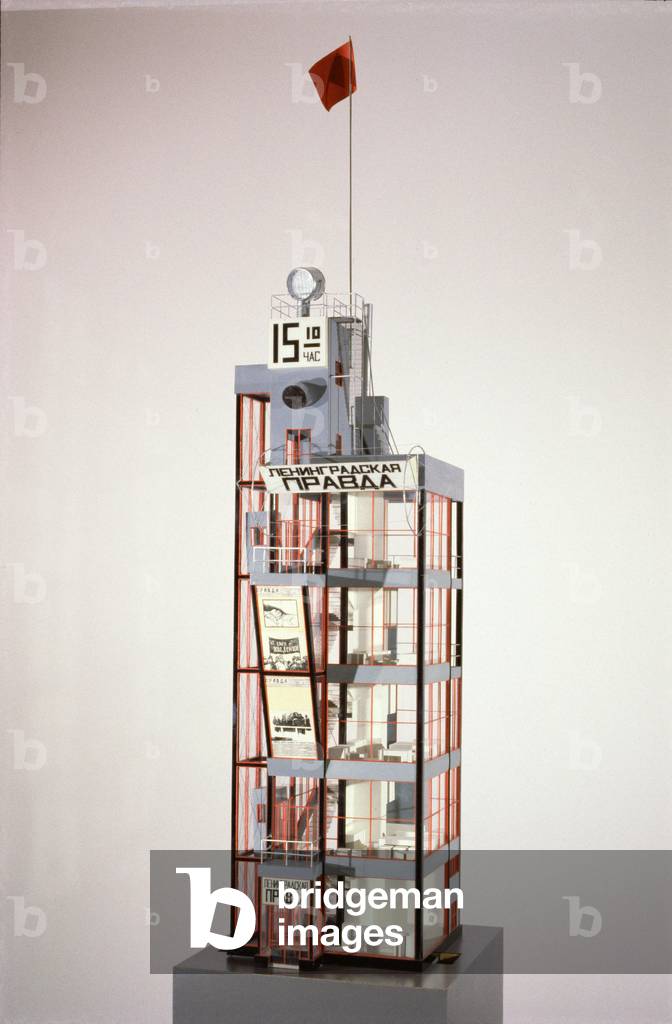
UEA420596: Pravda Tower, 1924, reconstruction by Michael Gold and Edward Jones, 1970 (balsa wood, PMMA, aluminium, brass, steel, paper & fibre), Vesnin, Alexander (1883-1959), Leonid (1880-1933) and Victor (1882-1950) / Bridgeman Images
