Search options

Orientation
Colour

Display options

View

Print

To print search results, use print friendly version of this page.

785161 Search Results

21 June 1791 - Jean-Baptiste Drouet with Jean-Chrisosthome Guillaume heading towards Varennes to find traces of King Louis XVI , 1865-66 (engraving)

XEE4151171: 21 June 1791 - Jean-Baptiste Drouet with Jean-Chrisosthome Guillaume heading towards Varennes to find traces of King Louis XVI , 1865-66 (engraving), Anonymous / Bridgeman Images
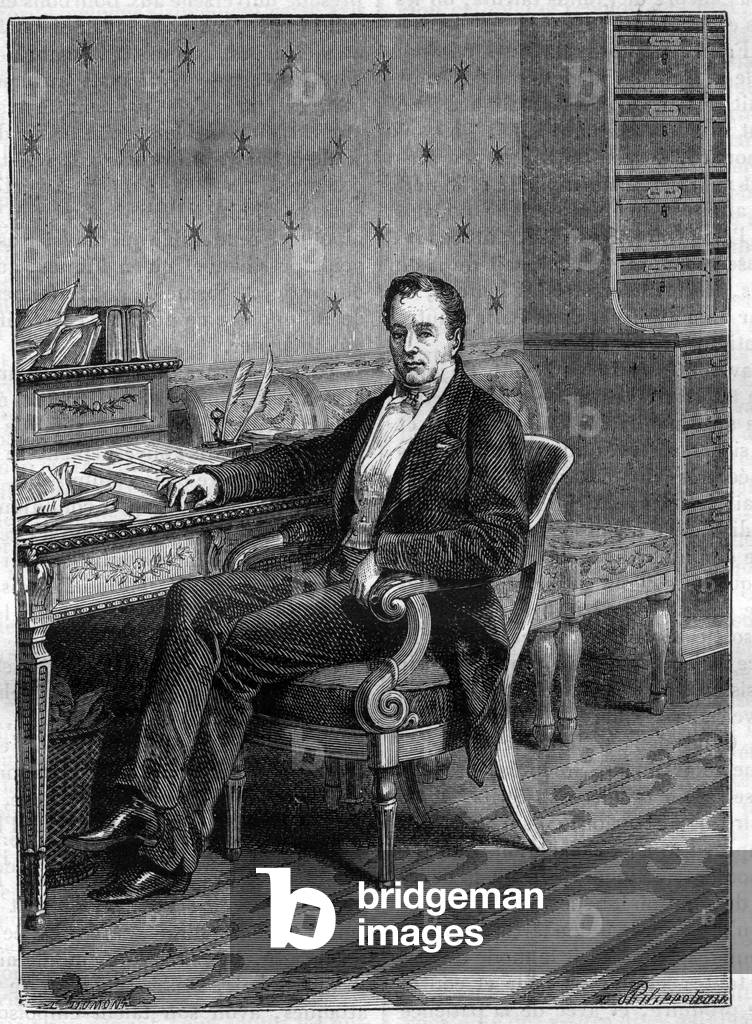
Portrait of Pierre Paul Royer-Collard (Royer Collard, 1763-1845), French statesman and philosopher - in “” Histoire de l'empire faisant suite à l'histoire du consulate”” by Adolphe Thiers -1879 - private collection

XEE4151210: Portrait of Pierre Paul Royer-Collard (Royer Collard, 1763-1845), French statesman and philosopher - in “” Histoire de l'empire faisant suite à l'histoire du consulate”” by Adolphe Thiers -1879 - private collection, French School, (19th century) / Bridgeman Images

The pillory of the halles in the 18th century, built on the old cemetery of the Innocents - Engraving in “The physical, civil and moral history of Paris: from the earliest historical times to the present day” by Jacques Antoine Dulaure, 1853

XEE4151242: The pillory of the halles in the 18th century, built on the old cemetery of the Innocents - Engraving in “The physical, civil and moral history of Paris: from the earliest historical times to the present day” by Jacques Antoine Dulaure, 1853, French School, (19th century) / Bridgeman Images

Telegraph of Dr. Hugues, 1861. Engraving in “” Le Monde Illustré”” n°212 of 4 May 1861.

XEE4151941: Telegraph of Dr. Hugues, 1861. Engraving in “” Le Monde Illustré”” n°212 of 4 May 1861., French School, (19th century) / Bridgeman Images
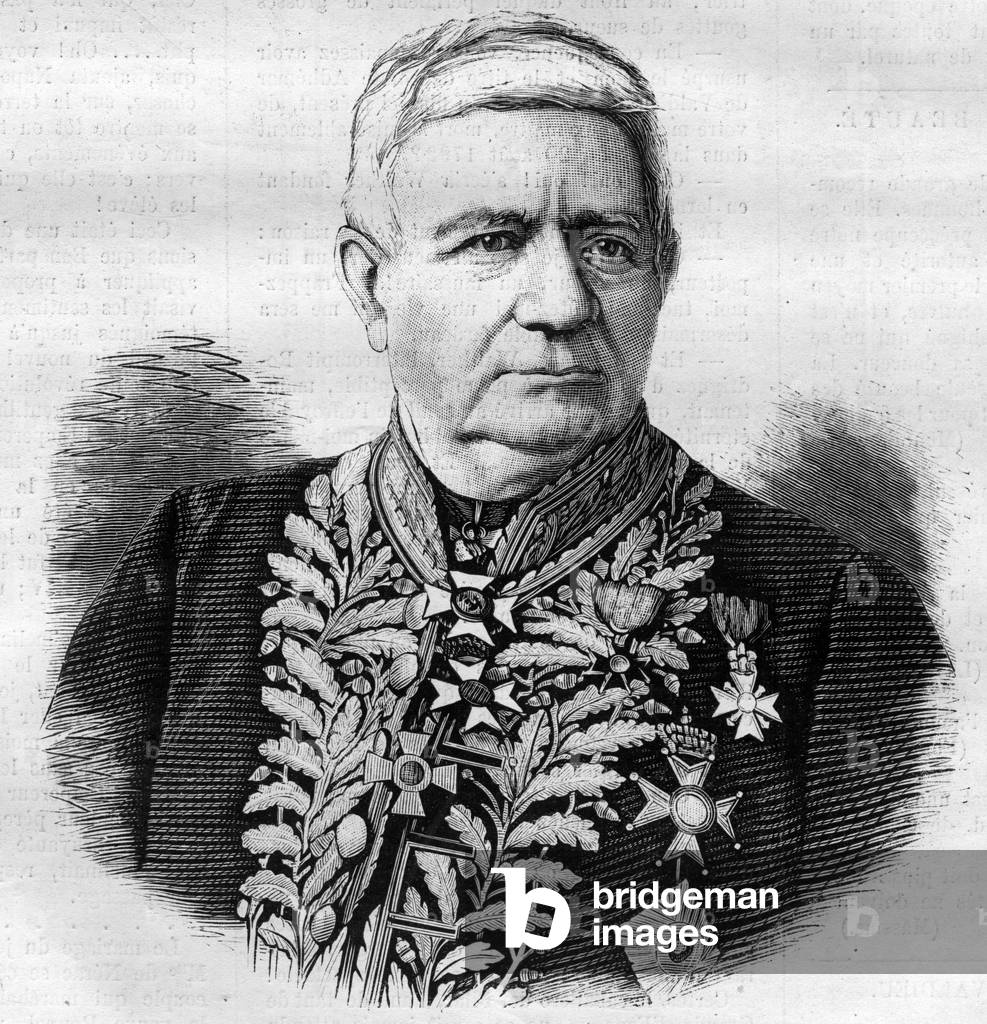
Portrait of Charles Joseph Pascal de Luesemans (1808 -1882) Belgian politician - engraving of 1882

XEE4151979: Portrait of Charles Joseph Pascal de Luesemans (1808 -1882) Belgian politician - engraving of 1882, Unknown Artist, (19th century) / Bridgeman Images

Portrait of Antoine Arnauld dit le Grand Arnauld (1612-1694), French priest, theologian, philosopher and mathematician, member of the Jansenists (Portrait of Antoine Arnauld French Roman Catholic theologian, philosopher, and mathematician, one of the leading intellectuals of the Jansenist group of Port-Royal

XEE4152017: Portrait of Antoine Arnauld dit le Grand Arnauld (1612-1694), French priest, theologian, philosopher and mathematician, member of the Jansenists (Portrait of Antoine Arnauld French Roman Catholic theologian, philosopher, and mathematician, one of the leading intellectuals of the Jansenist group of Port-Royal, Unknown Artist, (19th century) / Bridgeman Images

ANNE DACIER (nee Lefebre) French Greek scholar and translator - portrait of Anne Lefebvre dit Madame Dacier (Mme Dacier), French scholar (1647-1720).

XEE4152047: ANNE DACIER (nee Lefebre) French Greek scholar and translator - portrait of Anne Lefebvre dit Madame Dacier (Mme Dacier), French scholar (1647-1720)., Unknown Artist, (19th century) / Bridgeman Images

World known of the ancients - Plate extracted from “Universal Atlas of Ancient and Modern Geography for the Use of Residential Schools” by Vuillemin - ca. 1845

XEE4152149: World known of the ancients - Plate extracted from “Universal Atlas of Ancient and Modern Geography for the Use of Residential Schools” by Vuillemin - ca. 1845, French School, (19th century) / Bridgeman Images
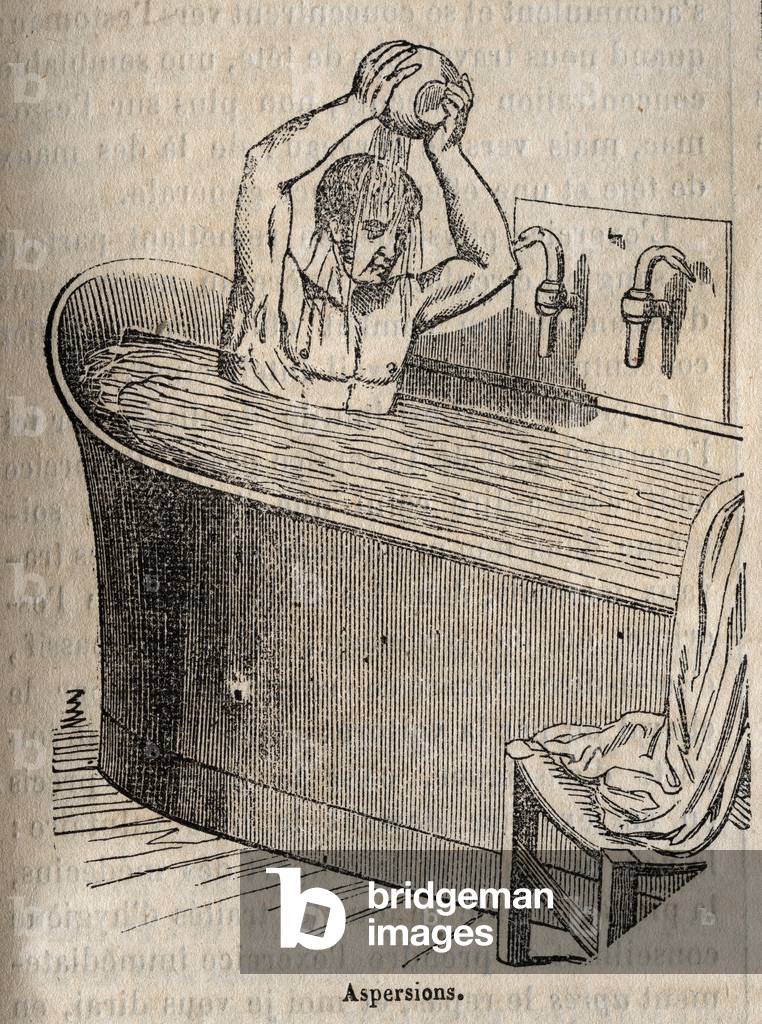
Les gestures du bain - Hygiene au 19th century - man in a bathtub - engraving in “La Sante Universelle - Guide Medical des Familles” 1852

XEE4151309: Les gestures du bain - Hygiene au 19th century - man in a bathtub - engraving in “La Sante Universelle - Guide Medical des Familles” 1852, French School, (19th century) / Bridgeman Images

Rage - treatment of bites made by an enrage animal - washing with large water - engraving in “La Sante Universelle - Guide Medical des Familles” 1852

XEE4151328: Rage - treatment of bites made by an enrage animal - washing with large water - engraving in “La Sante Universelle - Guide Medical des Familles” 1852, Unknown Artist, (19th century) / Bridgeman Images

French Revolution: Closure of the room of Jacobins on the night of 27 to 28 July 1794 (engraving)

XEE4151342: French Revolution: Closure of the room of Jacobins on the night of 27 to 28 July 1794 (engraving), Unknown Artist / Bridgeman Images

Atlant defeated by Bradamante - engraving of 1851 from “” Furious Roland”” (Orlando furioso) (16th century) by Ludovico Ariosto, known as Ariosto - Edition translated from Italian by the Count of Tressan and published by Gustave Harvard 1851

XEE4151378: Atlant defeated by Bradamante - engraving of 1851 from “” Furious Roland”” (Orlando furioso) (16th century) by Ludovico Ariosto, known as Ariosto - Edition translated from Italian by the Count of Tressan and published by Gustave Harvard 1851, Unknown Artist, (19th century) / Bridgeman Images

Hypalca Arreted by Rodomont - 1851 engraving from “” Furious Roland”” (Orlando furioso) (16th century) by Ludovico Ariosto, known as Ariosto - Edition translated from Italian by the Count of Tressan and published by Gustave Harvard 1851

XEE4151479: Hypalca Arreted by Rodomont - 1851 engraving from “” Furious Roland”” (Orlando furioso) (16th century) by Ludovico Ariosto, known as Ariosto - Edition translated from Italian by the Count of Tressan and published by Gustave Harvard 1851, Unknown Artist, (19th century) / Bridgeman Images

Revenge of Marphise (Marfisa) - engraving of 1851 from “” Furious Roland”” (Orlando furioso) (16th century) by Ludovico Ariosto, known as the Ariosto - Edition translated from Italian by the Count of Tressan and published by Gustave Harvard 1851

XEE4151504: Revenge of Marphise (Marfisa) - engraving of 1851 from “” Furious Roland”” (Orlando furioso) (16th century) by Ludovico Ariosto, known as the Ariosto - Edition translated from Italian by the Count of Tressan and published by Gustave Harvard 1851, Unknown Artist, (19th century) / Bridgeman Images

Rue Saint Martin (Abbaye Saint Martin) in Tournay (Tournai) in Belgium in 1882

XEE4152227: Rue Saint Martin (Abbaye Saint Martin) in Tournay (Tournai) in Belgium in 1882, Unknown Artist, (19th century) / Bridgeman Images

The cat, 1900 (engraving)

XEE4152266: The cat, 1900 (engraving), French School, (20th century) / Bridgeman Images

The young sewer, 1900 (engraving)

XEE4152329: The young sewer, 1900 (engraving), French School, (20th century) / Bridgeman Images

Jacques Babinet (1794 - 1872), French physicist and astronomer at the solemn meeting of the five Academies in 1840 - Engraving in “Sciences brought to the reach of all - physics and chemistry” by Alexis Clerc - End of 19th century. Private collection.

XEE4152368: Jacques Babinet (1794 - 1872), French physicist and astronomer at the solemn meeting of the five Academies in 1840 - Engraving in “Sciences brought to the reach of all - physics and chemistry” by Alexis Clerc - End of 19th century. Private collection., French School, (19th century) / Bridgeman Images
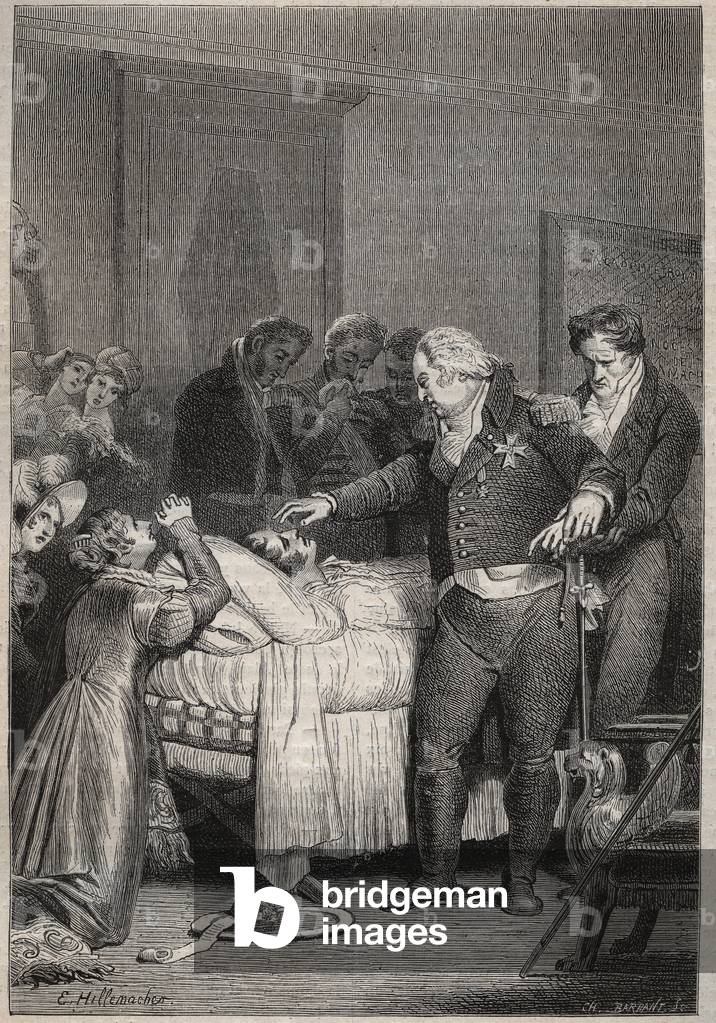
Louis XVIII at the deathbed of the Duke of Berry - Les derniers moments du Duke de Berry on 13 February 1820 (1778 - 1820) à l'opera de Paris surrounds by Louis XVIII et de la famille royale - engraving in “Histoire de France racontee à mes petits enfants”” by Guizot

XEE4152393: Louis XVIII at the deathbed of the Duke of Berry - Les derniers moments du Duke de Berry on 13 February 1820 (1778 - 1820) à l'opera de Paris surrounds by Louis XVIII et de la famille royale - engraving in “Histoire de France racontee à mes petits enfants”” by Guizot, Unknown Artist, (19th century) / Bridgeman Images

Le crieur des numos winners - Petity metier de Paris - byEdme Bouchardon

XEE4152459: Le crieur des numos winners - Petity metier de Paris - byEdme Bouchardon, Bouchardon, Edmé (1698-1762) / Bridgeman Images
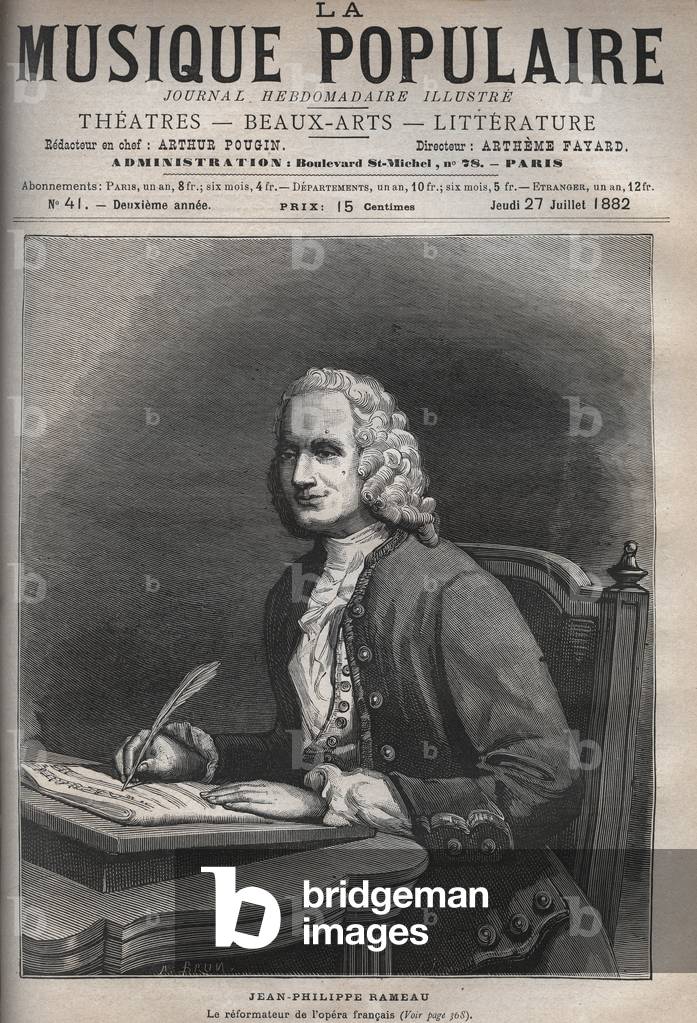
Portrait of Jean Philippe Rameau (1683-1764) - Portrait of Jean-Philippe (Jean Philippe) Rameau (1683-1764), French composer - engraving in “La musique populaire””” illustrious weekly newspaper - 1882

XEE4151755: Portrait of Jean Philippe Rameau (1683-1764) - Portrait of Jean-Philippe (Jean Philippe) Rameau (1683-1764), French composer - engraving in “La musique populaire””” illustrious weekly newspaper - 1882, Unknown Artist, (19th century) / Bridgeman Images

Portrait of Franz Liszt (1811-1886), Hungarian composer, pianist and conductor (Franz Liszt, Hungarian composer, pianist and conductor) engraving in “” Popular Music””” illustrious weekly newspaper - 1882

XEE4151799: Portrait of Franz Liszt (1811-1886), Hungarian composer, pianist and conductor (Franz Liszt, Hungarian composer, pianist and conductor) engraving in “” Popular Music””” illustrious weekly newspaper - 1882, Unknown Artist, (19th century) / Bridgeman Images

Portrait of Charles Joseph Eugene de Mazenod (1782-1861), eveque of Marseille. Portrait of Engraving in “” The Illustrous World”” n°216 of June 1, 1861.

XEE4151827: Portrait of Charles Joseph Eugene de Mazenod (1782-1861), eveque of Marseille. Portrait of Engraving in “” The Illustrous World”” n°216 of June 1, 1861., French School, (19th century) / Bridgeman Images
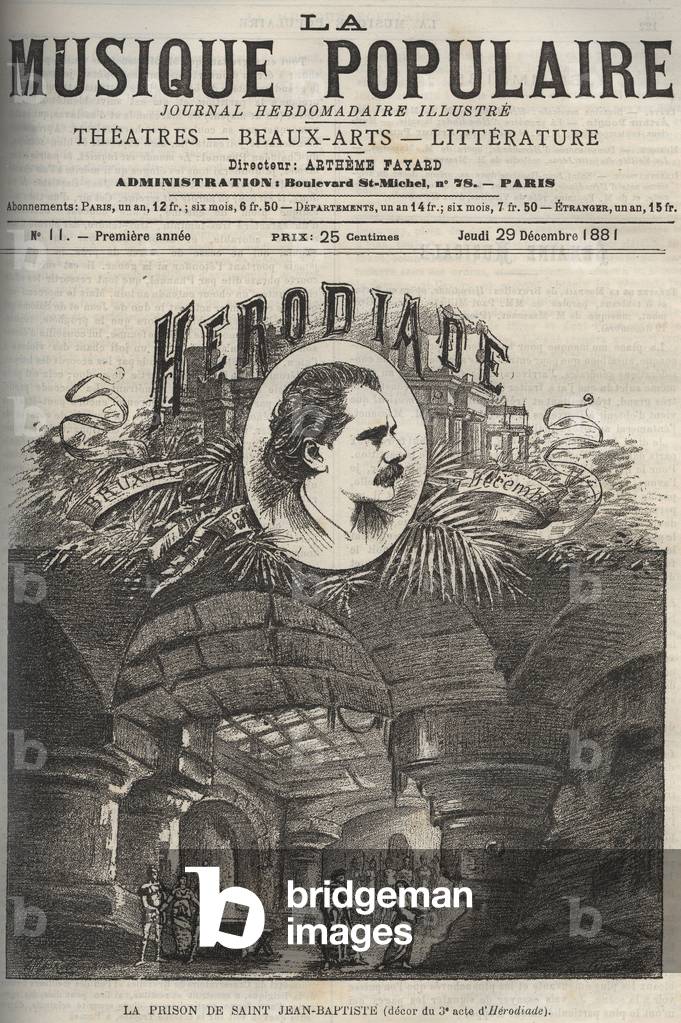
The prison of Saint John the Baptist - decor of the 3rd act of “Herodiade”, opera in four acts and seven paintings by Jules Massenet, on a libretto by Paul Milliet and Henri Gremont - engraving in “La musique populaire”” illustrated weekly newspaper - 1882

XEE4151855: The prison of Saint John the Baptist - decor of the 3rd act of “Herodiade”, opera in four acts and seven paintings by Jules Massenet, on a libretto by Paul Milliet and Henri Gremont - engraving in “La musique populaire”” illustrated weekly newspaper - 1882, Unknown Artist, (19th century) / Bridgeman Images

L'église Saint Gervais Saint Protais (Saint-Gervais-Saint-Protais) (facade of Clement II Metezeau) Paris (4th arr) Engraving in “” Histoire physique, civile et morale de Paris: depuis les premiers temps historiques à nos jours” by Jacques Antoine Dulaure, 1853

XEE4151266: L'église Saint Gervais Saint Protais (Saint-Gervais-Saint-Protais) (facade of Clement II Metezeau) Paris (4th arr) Engraving in “” Histoire physique, civile et morale de Paris: depuis les premiers temps historiques à nos jours” by Jacques Antoine Dulaure, 1853, French School, (19th century) / Bridgeman Images

Clodion, The Hairy Retreats Across the Bridge after his Defeat by Aetius, 1825 (engraving)

XEE4151284: Clodion, The Hairy Retreats Across the Bridge after his Defeat by Aetius, 1825 (engraving), Tardieu, Ambroise (1788-1841) / Bridgeman Images

Charles VIII enters Rome in 1494 to be declared Emperor of the Orient, 1825 (engraving)

XEE4151294: Charles VIII enters Rome in 1494 to be declared Emperor of the Orient, 1825 (engraving), Tardieu, Ambroise (1788-1841) / Bridgeman Images

Joseph Claude Anthelme Recamier (1774-1852), French surgeon - engraving in “La Sante Universelle - Guide Medical des Familles”” 1852

XEE4151319: Joseph Claude Anthelme Recamier (1774-1852), French surgeon - engraving in “La Sante Universelle - Guide Medical des Familles”” 1852, Unknown Artist, (19th century) / Bridgeman Images

Passage of the Pyrenees by the Moors - engraving of 1851 from “” Furious Roland”” (Orlando furioso) (16th century) by Ludovico Ariosto, known as the Ariosta - Edition translated from Italian by the Count of Tressan and published by Gustave Harvard 1851

XEE4151369: Passage of the Pyrenees by the Moors - engraving of 1851 from “” Furious Roland”” (Orlando furioso) (16th century) by Ludovico Ariosto, known as the Ariosta - Edition translated from Italian by the Count of Tressan and published by Gustave Harvard 1851, Unknown Artist, (19th century) / Bridgeman Images

Astolphe makes homicide women flee - 1851 engraving from “” Furious Roland”” (Orlando furioso) (16th century) by Ludovico Ariosto, known as the Ariosta - Edition translated from Italian by the Count of Tressan and published by Gustave Harvard 1851

XEE4151467: Astolphe makes homicide women flee - 1851 engraving from “” Furious Roland”” (Orlando furioso) (16th century) by Ludovico Ariosto, known as the Ariosta - Edition translated from Italian by the Count of Tressan and published by Gustave Harvard 1851, Unknown Artist, (19th century) / Bridgeman Images
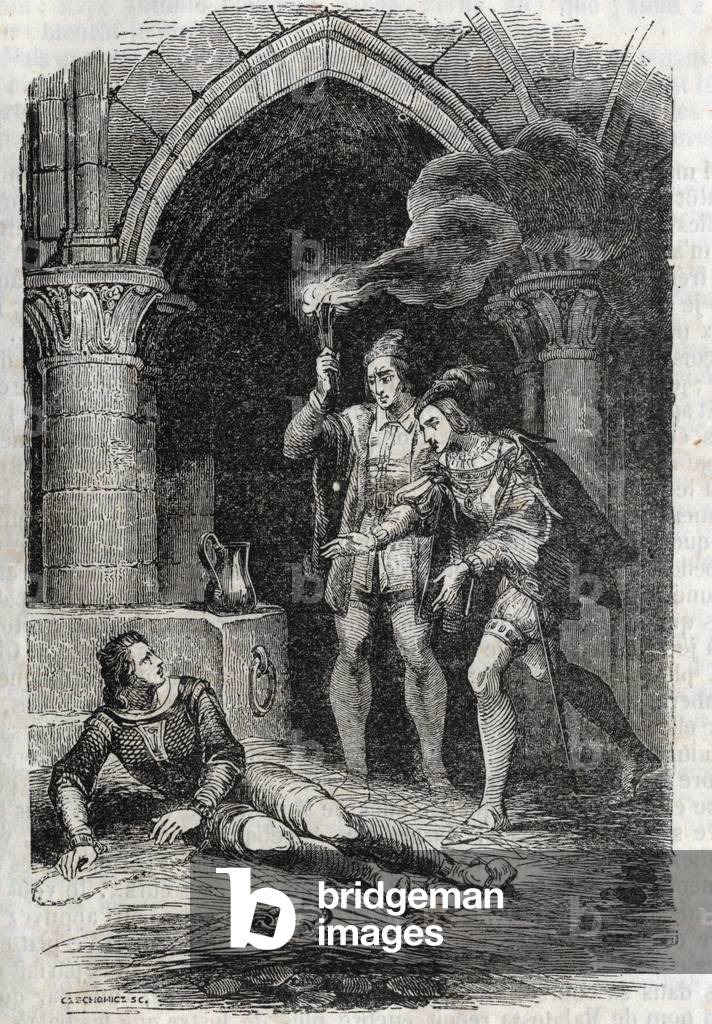
Leon (Leone) delivre Roger (Ruggero, Ruggiero) - engraving of 1851 from “” Roland furieux”” (Orlando furioso) (16th century) by Ludovico Ariosto, known as the Ariosta - Edition translated from Italian by the Count of Tressan and published by Gustave Harvard 1851

XEE4151531: Leon (Leone) delivre Roger (Ruggero, Ruggiero) - engraving of 1851 from “” Roland furieux”” (Orlando furioso) (16th century) by Ludovico Ariosto, known as the Ariosta - Edition translated from Italian by the Count of Tressan and published by Gustave Harvard 1851, Unknown Artist, (19th century) / Bridgeman Images

The new bridge in Paris in 1950 - anonymous painting

XEE4150468: The new bridge in Paris in 1950 - anonymous painting, Anonymous / Bridgeman Images

Accident medicine - on the most effective relief to be given to the drowned people, 1852 (engraving)

XEE4151311: Accident medicine - on the most effective relief to be given to the drowned people, 1852 (engraving), Unknown Artist, (19th century) / Bridgeman Images

The art of losing weight and getting overweight: one man walks while another is transported in a carriage - engraving in “La Sante Universelle - Guide Medical des Familles”” 1852

XEE4151337: The art of losing weight and getting overweight: one man walks while another is transported in a carriage - engraving in “La Sante Universelle - Guide Medical des Familles”” 1852, Unknown Artist, (19th century) / Bridgeman Images
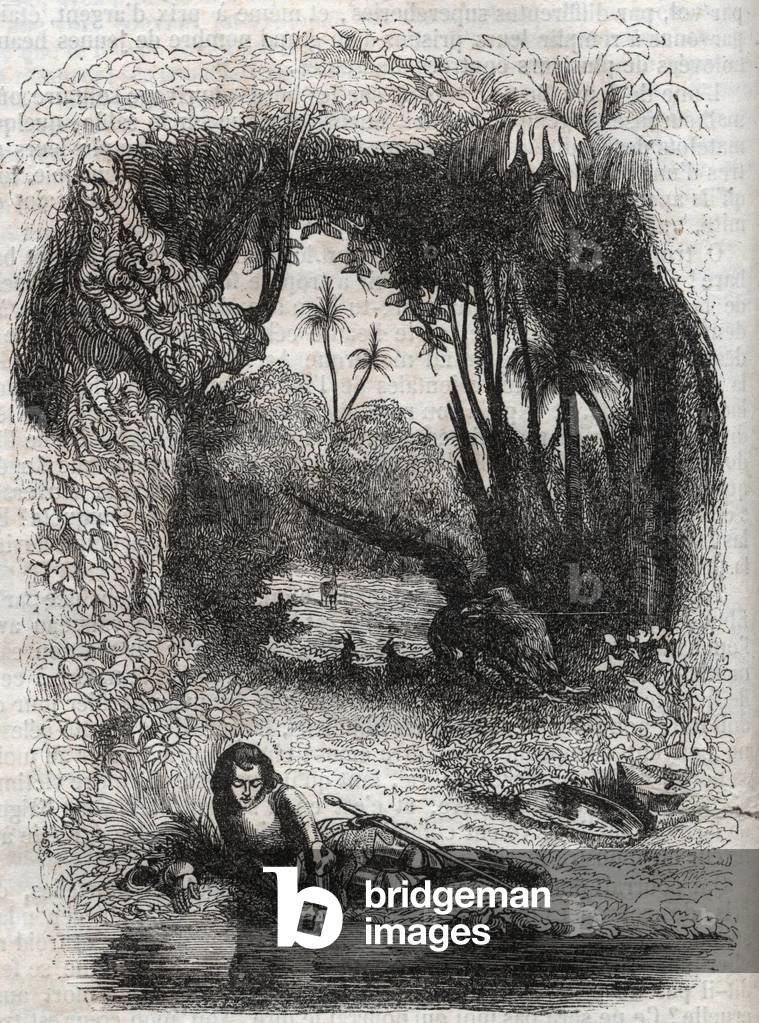
Ruggiero on the island of Alcina, - 1851 engraving from the poem Orlando furioso (1516) by Ludovico Ariosto, - Edition translated from Italian by the Count of Tressan and published by Gustave Harvard 1851

XEE4151381: Ruggiero on the island of Alcina, - 1851 engraving from the poem Orlando furioso (1516) by Ludovico Ariosto, - Edition translated from Italian by the Count of Tressan and published by Gustave Harvard 1851, Unknown Artist, (19th century) / Bridgeman Images
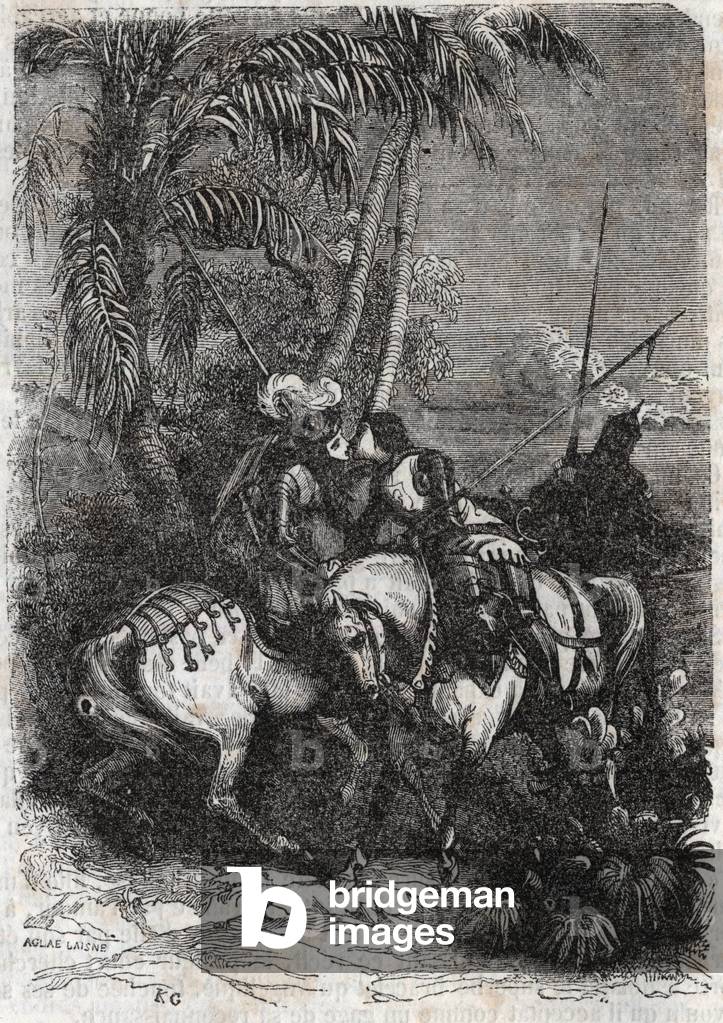
Meeting of Marphise (Marfisa), Astolphe (Astolfo) and Sansonnet (Sansonetto) - engraving of 1851 from “” Roland furieux” (Orlando furioso) (16th century) by Ludovico Ariosto, known as the Ariosta - Edition translated from Italian by the Count of Tressan and published by Gustave Harvard 1851

XEE4151460: Meeting of Marphise (Marfisa), Astolphe (Astolfo) and Sansonnet (Sansonetto) - engraving of 1851 from “” Roland furieux” (Orlando furioso) (16th century) by Ludovico Ariosto, known as the Ariosta - Edition translated from Italian by the Count of Tressan and published by Gustave Harvard 1851, Unknown Artist, (19th century) / Bridgeman Images


Back to top