Search options

Orientation
Colour

Display options

View

Print

To print search results, use print friendly version of this page.

2497525 Search Results

Hunters of San Francisco Bay, 19th century. Both wear topknots and earrings, one in a loincloth preparing to fire an arrow, the other with arrows in a quiver made from an animal skin. After Louis Choris' “” Cholovonis a la chasse”” from “” Picturesque Journey Around the World,”” 1822. Handcoloured lithograph from James Cowles Prichard's Natural History of Man, Balliere, London, 1855.

FLO4688590: Hunters of San Francisco Bay, 19th century. Both wear topknots and earrings, one in a loincloth preparing to fire an arrow, the other with arrows in a quiver made from an animal skin. After Louis Choris' “” Cholovonis a la chasse”” from “” Picturesque Journey Around the World,”” 1822. Handcoloured lithograph from James Cowles Prichard's Natural History of Man, Balliere, London, 1855. / Bridgeman Images

H'co-a-h'co-a-h'cotes-min, Rabbit Skin Leggings, Flathead warrior of the Nez Perce. Handcoloured lithograph by J. Harris after a painting by George Catlin from James Cowles Prichard's Natural History of Man, Balliere, London, 1855.

FLO4688628: H'co-a-h'co-a-h'cotes-min, Rabbit Skin Leggings, Flathead warrior of the Nez Perce. Handcoloured lithograph by J. Harris after a painting by George Catlin from James Cowles Prichard's Natural History of Man, Balliere, London, 1855. / Bridgeman Images

Huntsman in hunting pink (scarlet) jacket, breeches and boots holding a brassy hunting horn. Handcoloured copperplate engraving from William Henry Pyne's The World in Miniature: England, Scotland and Ireland, Ackermann, 1827.

FLO4688645: Huntsman in hunting pink (scarlet) jacket, breeches and boots holding a brassy hunting horn. Handcoloured copperplate engraving from William Henry Pyne's The World in Miniature: England, Scotland and Ireland, Ackermann, 1827. / Bridgeman Images

Chelsea Pensioner and Greenwich Pensioner. Army veteran in the redcoat uniform of the Chelsea Hospital holding a pipe, and Navy veteran in the blue uniform of Greenwich Hospital with pegleg holding a tankard. Handcoloured copperplate engraving from William Henry Pyne's The World in Miniature: England, Scotland and Ireland, Ackermann, 1827.

FLO4688662: Chelsea Pensioner and Greenwich Pensioner. Army veteran in the redcoat uniform of the Chelsea Hospital holding a pipe, and Navy veteran in the blue uniform of Greenwich Hospital with pegleg holding a tankard. Handcoloured copperplate engraving from William Henry Pyne's The World in Miniature: England, Scotland and Ireland, Ackermann, 1827. / Bridgeman Images

Isabelle d'Angouleme - Isabella of Angouleme, queen consort of King John of England. Steel engraving by B. Eyles after a portrait by A. Bouvier from Mary Howitt's Biographical Sketches of The Queens of England, Virtue, London, 1868.

FLO4688729: Isabelle d'Angouleme - Isabella of Angouleme, queen consort of King John of England. Steel engraving by B. Eyles after a portrait by A. Bouvier from Mary Howitt's Biographical Sketches of The Queens of England, Virtue, London, 1868. / Bridgeman Images

Eleanor of Castile, queen consort of King Edward I of England. Steel engraving by W.H. Egleton after a portrait by J.W. Wright from Mary Howitt's Biographical Sketches of The Queens of England, Virtue, London, 1868.

FLO4688743: Eleanor of Castile, queen consort of King Edward I of England. Steel engraving by W.H. Egleton after a portrait by J.W. Wright from Mary Howitt's Biographical Sketches of The Queens of England, Virtue, London, 1868. / Bridgeman Images

Yellow bramble rose, Rosa lutea, from Robert Tyas' “Queen of Flowers, or Memoirs of the Rose,” London, 1840. Unsigned handcoloured lithograph, but probably by James Andrews. Little is known about the artist James Andrews (1801 ~ 1876) apart from his work. This gifted artist taught flower-painting to young ladies and published a treatise “” Lessons in Flower Painting”” in 1835. Blunt calls him “” an illustrator of sentimental flower books,””” but admits that he was “” very talented.”” His signature JA can be found in many botanical gift books for publisher Robert Tyas from “” The Sentiment of Flowers”” (1836) to “” Flowers from Foreign Lands”” (1853).

FLO4688892: Yellow bramble rose, Rosa lutea, from Robert Tyas' “Queen of Flowers, or Memoirs of the Rose,” London, 1840. Unsigned handcoloured lithograph, but probably by James Andrews. Little is known about the artist James Andrews (1801 ~ 1876) apart from his work. This gifted artist taught flower-painting to young ladies and published a treatise “” Lessons in Flower Painting”” in 1835. Blunt calls him “” an illustrator of sentimental flower books,””” but admits that he was “” very talented.”” His signature JA can be found in many botanical gift books for publisher Robert Tyas from “” The Sentiment of Flowers”” (1836) to “” Flowers from Foreign Lands”” (1853). / Bridgeman Images
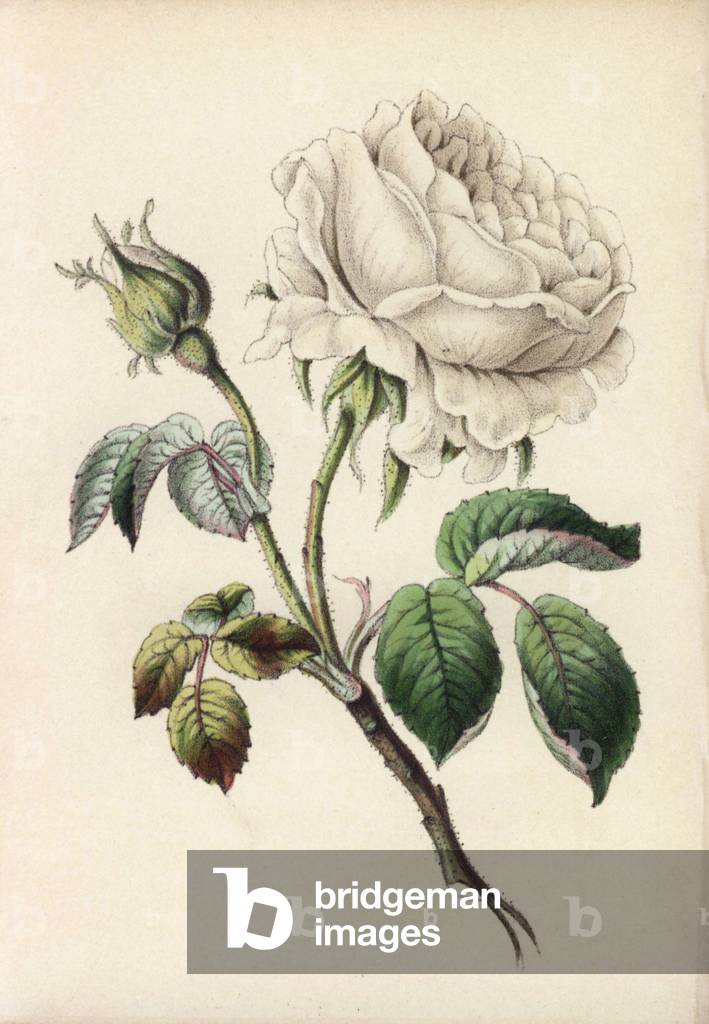
Double white rose, Rosa alba, from Robert Tyas' “” Queen of Flowers, or Memoirs of the Rose,”” London, 1840. Unsigned handcoloured lithograph, but probably by James Andrews. Little is known about the artist James Andrews (1801 ~ 1876) apart from his work. This gifted artist taught flower-painting to young ladies and published a treatise “” Lessons in Flower Painting”” in 1835. Blunt calls him “” an illustrator of sentimental flower books,””” but admits that he was “” very talented.”” His signature JA can be found in many botanical gift books for publisher Robert Tyas from “” The Sentiment of Flowers”” (1836) to “” Flowers from Foreign Lands”” (1853).

FLO4688896: Double white rose, Rosa alba, from Robert Tyas' “” Queen of Flowers, or Memoirs of the Rose,”” London, 1840. Unsigned handcoloured lithograph, but probably by James Andrews. Little is known about the artist James Andrews (1801 ~ 1876) apart from his work. This gifted artist taught flower-painting to young ladies and published a treatise “” Lessons in Flower Painting”” in 1835. Blunt calls him “” an illustrator of sentimental flower books,””” but admits that he was “” very talented.”” His signature JA can be found in many botanical gift books for publisher Robert Tyas from “” The Sentiment of Flowers”” (1836) to “” Flowers from Foreign Lands”” (1853). / Bridgeman Images
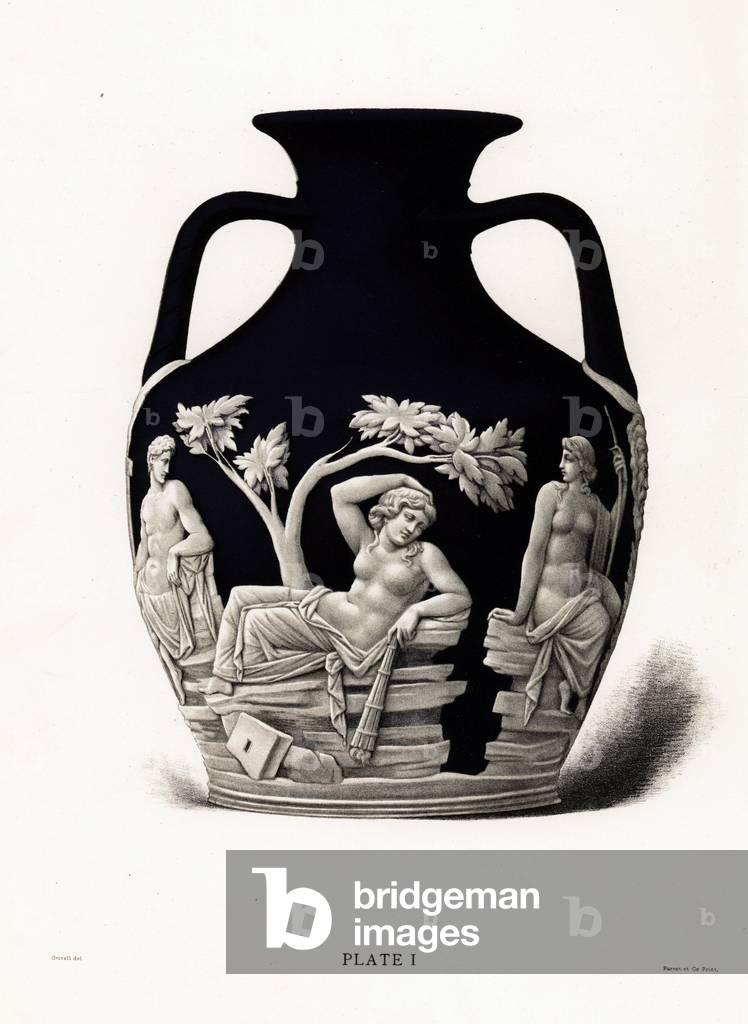
The Portland Vase or Barberini Vase. Chromolithograph drawn by Grivell and lithographed by Parrot et Co. from Frederick Rathone's Old Wedgwood, the Decorative or Artistic Ceramic Work Produced by Josiah Wedgwood, Quaritch, London, 1898.

FLO4688915: The Portland Vase or Barberini Vase. Chromolithograph drawn by Grivell and lithographed by Parrot et Co. from Frederick Rathone's Old Wedgwood, the Decorative or Artistic Ceramic Work Produced by Josiah Wedgwood, Quaritch, London, 1898. / Bridgeman Images

Etruscan civilization: silver dragon fibule from the necropolis of Banditella, Marsigliana d'Albegna, Italy, 675-650 BC (Etruscan art: silver fibula, 675-650 BC) Dim 15.5 cm Florence museo archeologico inv 20982

LRI4688995: Etruscan civilization: silver dragon fibule from the necropolis of Banditella, Marsigliana d'Albegna, Italy, 675-650 BC (Etruscan art: silver fibula, 675-650 BC) Dim 15.5 cm Florence museo archeologico inv 20982, Etruscan, (7th century BC) / Bridgeman Images

Little silver vase with snakes, 675-650 BC

LRI4689046: Little silver vase with snakes, 675-650 BC, Etruscan, (7th century BC) / Bridgeman Images

Golden brooch, 480 BC

LRI4689053: Golden brooch, 480 BC, Etruscan, (5th century BC) / Bridgeman Images

Basalt vase for a lamp. Chromolithograph by W. Griggs from Frederick Rathone's Old Wedgwood, the Decorative or Artistic Ceramic Work Produced by Josiah Wedgwood, Quaritch, London, 1898.

FLO4689079: Basalt vase for a lamp. Chromolithograph by W. Griggs from Frederick Rathone's Old Wedgwood, the Decorative or Artistic Ceramic Work Produced by Josiah Wedgwood, Quaritch, London, 1898. / Bridgeman Images

Terracotta crater, 5th century BC

LRI4689087: Terracotta crater, 5th century BC, Etruscan, (5th century BC) / Bridgeman Images

Funerary bed made with three tuff blocks, 6th century BC

LRI4689123: Funerary bed made with three tuff blocks, 6th century BC, Etruscan, (6th century BC) / Bridgeman Images

Portrait medallions of King Louis XVI of France (blue), Marie Antoinette (blue), Duke of Bridgewater (black), Edmund Burke (pink) and William Pitt (blue). Chromolithograph by W. Griggs from Frederick Rathone's Old Wedgwood, the Decorative or Artistic Ceramic Work Produced by Josiah Wedgwood, Quaritch, London, 1898.

FLO4689189: Portrait medallions of King Louis XVI of France (blue), Marie Antoinette (blue), Duke of Bridgewater (black), Edmund Burke (pink) and William Pitt (blue). Chromolithograph by W. Griggs from Frederick Rathone's Old Wedgwood, the Decorative or Artistic Ceramic Work Produced by Josiah Wedgwood, Quaritch, London, 1898. / Bridgeman Images

Etruscan civilization: terracotta amphora from a tomb of Poggio Sala, Italy 4th century BC Dim 48 cm (clay amphora) 4th century BC Florence, Museo Archeologico, inv 4461

LRI4689252: Etruscan civilization: terracotta amphora from a tomb of Poggio Sala, Italy 4th century BC Dim 48 cm (clay amphora) 4th century BC Florence, Museo Archeologico, inv 4461, Etruscan, (4th century BC) / Bridgeman Images

Column krater,  570-560 BC

LRI4689295: Column krater, 570-560 BC, Etruscan, (6th century BC) / Bridgeman Images

Coffee pot showing the infant academy, Chocolate pot with acanthus foliage, and Coffee pot with women and children. Chromolithograph drawn by Grivell and lithographed by Parrot et Co. from Frederick Rathone's Old Wedgwood, the Decorative or Artistic Ceramic Work Produced by Josiah Wedgwood, Quaritch, London, 1898.

FLO4689315: Coffee pot showing the infant academy, Chocolate pot with acanthus foliage, and Coffee pot with women and children. Chromolithograph drawn by Grivell and lithographed by Parrot et Co. from Frederick Rathone's Old Wedgwood, the Decorative or Artistic Ceramic Work Produced by Josiah Wedgwood, Quaritch, London, 1898. / Bridgeman Images

Etruscan civilization: “” Bronze sieve of Beazley VI style”” From the necropolis of San Cerbone, tomb 13, Populonia, Italy - 5th century BC (Etruscan art: bronze strainer, 5th century BC) Florence Museo Archeologico, inv 11816

LRI4689335: Etruscan civilization: “” Bronze sieve of Beazley VI style”” From the necropolis of San Cerbone, tomb 13, Populonia, Italy - 5th century BC (Etruscan art: bronze strainer, 5th century BC) Florence Museo Archeologico, inv 11816, Etruscan, (5th century BC) / Bridgeman Images

Etruscan civilization: oinochoe de bucchero noir - From Chiusi, necropole de Fonte Rotella Dim 41,5 cm 6th century BC (Etruscan art: bucchero oenochoe) 6th century BC Florence, Museo Archeologico, inv 3190 - Etruscan art: black bucchero otelinochoe from Chiusi necropolis of Rote La. 41.5 cm. 6th century BC. Museum of Archaeology, inv 3190, Florence, Italy

LRI4689342: Etruscan civilization: oinochoe de bucchero noir - From Chiusi, necropole de Fonte Rotella Dim 41,5 cm 6th century BC (Etruscan art: bucchero oenochoe) 6th century BC Florence, Museo Archeologico, inv 3190 - Etruscan art: black bucchero otelinochoe from Chiusi necropolis of Rote La. 41.5 cm. 6th century BC. Museum of Archaeology, inv 3190, Florence, Italy, Etruscan, (6th century BC) / Bridgeman Images

Victorian women, in a botanical greenhouse with exotic plants - Engraving by Gabry, from The Book of Perfumes by Eugene Rimmel (1820-1887), England, 1865 - Victorian women in a botanical hothouse - Woodcut engraving by Lambert from Eugene Rimmel's The Book of Perfumes, London, Chapman and Hall, 1865

FLO4689446: Victorian women, in a botanical greenhouse with exotic plants - Engraving by Gabry, from The Book of Perfumes by Eugene Rimmel (1820-1887), England, 1865 - Victorian women in a botanical hothouse - Woodcut engraving by Lambert from Eugene Rimmel's The Book of Perfumes, London, Chapman and Hall, 1865 / Bridgeman Images

Bronze leg shaped unguentarium, 7th century BC

LRI4689539: Bronze leg shaped unguentarium, 7th century BC, Etruscan, (7th century BC) / Bridgeman Images

Leg with the stem, bucchero, 6th century BC

LRI4689543: Leg with the stem, bucchero, 6th century BC, Etruscan, (6th century BC) / Bridgeman Images
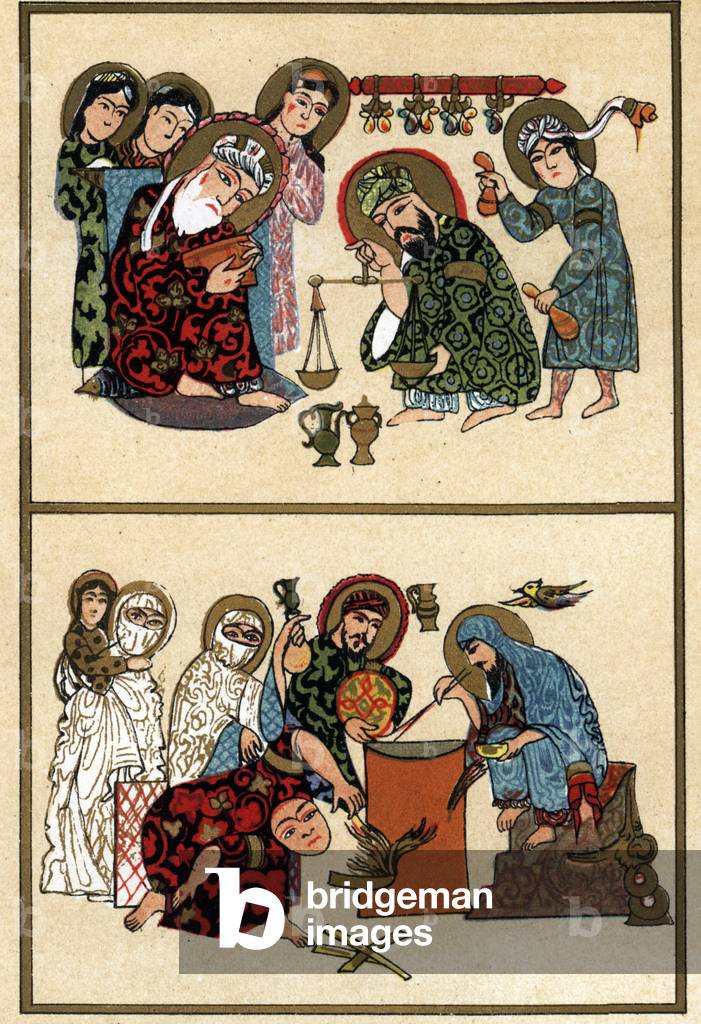
Dispensary and laboratory of an Arab perfumer chemist of the 12th century - Chromolithography of a Persian manuscript of the 12th century, from Le Livre des Parfums by Eugene Rimmel (1820-1887), France, 1870 - Dispensary and laboratory of an Arab perfumer chemist of the 12th century, From a Persian manuscript of the era - Chromolithograph from Eugene Rimmel's Le Livre des Parfums, Paris, 1870

FLO4689559: Dispensary and laboratory of an Arab perfumer chemist of the 12th century - Chromolithography of a Persian manuscript of the 12th century, from Le Livre des Parfums by Eugene Rimmel (1820-1887), France, 1870 - Dispensary and laboratory of an Arab perfumer chemist of the 12th century, From a Persian manuscript of the era - Chromolithograph from Eugene Rimmel's Le Livre des Parfums, Paris, 1870 / Bridgeman Images
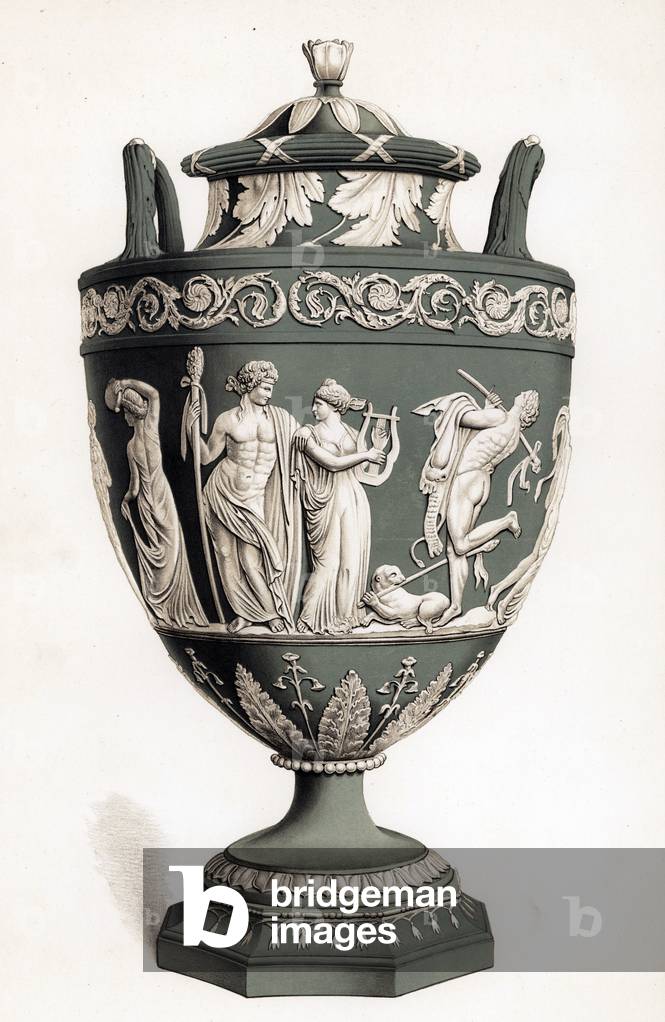
The Borghese Vase or the Campana Vase, decorated with foliage and reliefs of classical mythology. Chromolithograph by W. Griggs from Frederick Rathone's Old Wedgwood, the Decorative or Artistic Ceramic Work Produced by Josiah Wedgwood, Quaritch, London, 1898.

FLO4689145: The Borghese Vase or the Campana Vase, decorated with foliage and reliefs of classical mythology. Chromolithograph by W. Griggs from Frederick Rathone's Old Wedgwood, the Decorative or Artistic Ceramic Work Produced by Josiah Wedgwood, Quaritch, London, 1898. / Bridgeman Images

Etruscan civilization: decoree brown earth cup from Grosseto, Patigliano, Italy - 7th century BC (Etruscan art: cup decorated with statuettes, 7th century BC) Florence Museo Archeologico, inv 89852

LRI4689155: Etruscan civilization: decoree brown earth cup from Grosseto, Patigliano, Italy - 7th century BC (Etruscan art: cup decorated with statuettes, 7th century BC) Florence Museo Archeologico, inv 89852, Etruscan, (7th century BC) / Bridgeman Images

Etruscan civilization: small cup with handle from Tarquinia, Selciatello di Sopra, Italy - 8th century BC (Etruscan art: Capeduncola, 8th century BC) Dim 7 x diam 10,2 cm Florence, Museo Archeologico, inv 83652

LRI4689161: Etruscan civilization: small cup with handle from Tarquinia, Selciatello di Sopra, Italy - 8th century BC (Etruscan art: Capeduncola, 8th century BC) Dim 7 x diam 10,2 cm Florence, Museo Archeologico, inv 83652, Etruscan, (8th century BC) / Bridgeman Images

Etruscan civilization: terracotta fusaioli from Tomb 1 of San Cerbone, Populonia - 7th century BC (Etruscan art: spindle whorls, 7th century BC) Florence, Museo Archeologico, inv 163016-163028, 163044-163046

LRI4689063: Etruscan civilization: terracotta fusaioli from Tomb 1 of San Cerbone, Populonia - 7th century BC (Etruscan art: spindle whorls, 7th century BC) Florence, Museo Archeologico, inv 163016-163028, 163044-163046, Etruscan, (7th century BC) / Bridgeman Images

Etruscan civilization: “” the deity of war Laran”” Bronze sculpture, 450-440 BC Dim 33 cm (the etruscan god of war Laran, bronze sculpture) 450-440 BC Florence, Museo Archeologico, inv 586 - Etruscan civilization: Bronze statuette of Laran, god of war, 450-440 BC. 33 cm. Museum of Archaeology, inv 586, Florence, Italy

LRI4689267: Etruscan civilization: “” the deity of war Laran”” Bronze sculpture, 450-440 BC Dim 33 cm (the etruscan god of war Laran, bronze sculpture) 450-440 BC Florence, Museo Archeologico, inv 586 - Etruscan civilization: Bronze statuette of Laran, god of war, 450-440 BC. 33 cm. Museum of Archaeology, inv 586, Florence, Italy, Etruscan, (5th century BC) / Bridgeman Images

Frankfurt Rosier - Eau forte de Bessin, based on an illustration by Pierre Joseph Redoute (1759-1840), from Les Roses, 1817 - Frankfort rose or Empress Josephine rose, Rosa francofurtana (Rosa turbinata) - Handcoloured stipple copperplate engraving by Bessin after an illustration by Pierre-Joseph Redoute from “” Les Roses,” Firmin Dimot, Paris, 1817

FLO4689398: Frankfurt Rosier - Eau forte de Bessin, based on an illustration by Pierre Joseph Redoute (1759-1840), from Les Roses, 1817 - Frankfort rose or Empress Josephine rose, Rosa francofurtana (Rosa turbinata) - Handcoloured stipple copperplate engraving by Bessin after an illustration by Pierre-Joseph Redoute from “” Les Roses,” Firmin Dimot, Paris, 1817, Redouté, Pierre Joseph (1759-1840) / Bridgeman Images

Etruscan civilization: carved terracotta pediment - From the tomb Montagnola a Quinto Fiorentino, Italy - 470-460 BC (Etruscan art: terracotta pediment, 470-460 BC) Arezzo, Museo Archeologico G Clinio Mecenate

LRI4689403: Etruscan civilization: carved terracotta pediment - From the tomb Montagnola a Quinto Fiorentino, Italy - 470-460 BC (Etruscan art: terracotta pediment, 470-460 BC) Arezzo, Museo Archeologico G Clinio Mecenate, Etruscan, (5th century BC) / Bridgeman Images

Etruscan civilization: female bronze statuette from Brolio. 550 BC. Florence, Museo Archeologico, inv. 561

LRI4689433: Etruscan civilization: female bronze statuette from Brolio. 550 BC. Florence, Museo Archeologico, inv. 561, Etruscan, (6th century BC) / Bridgeman Images

The Green Parrot and Mascarin of the Reunion. Engraving by Madame Thorel after a drawing by Edouard Travies, published in Les Oeuvres completes de Buffon, by Richard, published in Paris, by Pourrat Freres, 1839.

FLO4689442: The Green Parrot and Mascarin of the Reunion. Engraving by Madame Thorel after a drawing by Edouard Travies, published in Les Oeuvres completes de Buffon, by Richard, published in Paris, by Pourrat Freres, 1839. / Bridgeman Images

Etruscan civilization: ciborium lid in bucchero from Cerveteri Italy Dim 19.5 cm diam 8th century BC (Etruscan art: bucchero ciborium lid) 8th century BC Florence, Museo Archeologico, inv 11817

LRI4689351: Etruscan civilization: ciborium lid in bucchero from Cerveteri Italy Dim 19.5 cm diam 8th century BC (Etruscan art: bucchero ciborium lid) 8th century BC Florence, Museo Archeologico, inv 11817, Etruscan, (8th century BC) / Bridgeman Images

Mandrill, Mandrillus sphinx. Vulnerable. Simia mormon Alstroem. Handcoloured copperplate engraving by Johann Sebastian Leitner from Johann Christian Daniel Schreber's Animal Illustrations after Nature, or Schreber's Fantastic Animals, Erlangen, Germany, 1775.

FLO4692220: Mandrill, Mandrillus sphinx. Vulnerable. Simia mormon Alstroem. Handcoloured copperplate engraving by Johann Sebastian Leitner from Johann Christian Daniel Schreber's Animal Illustrations after Nature, or Schreber's Fantastic Animals, Erlangen, Germany, 1775. / Bridgeman Images


Back to top