2497525 Search Results

FLO4676045: Costume d'un senateur venitien (Italy), 15th century - Venetian senator, 15th century - He wears a black toque, a velvet simar trimmed with fur on the sleeves, and black velvet stole - From a miniature painting by Piero della Francesca - Handcoloured illustration drawn and lithographed by Paul Mercuri with text by Camille Bonnard from “” Historical Costumes from the 12th to 15th Centuries,” Levy Fils, Paris, 1861, Mercuri, Paolo (1804-84) / Bridgeman Images

FLO4676049: Costume d'une dame de suite d'Alienor (Eleonore) du Portugal (1434-1467) (dame d'honneur ou dame de compagnie) - Lady in Waiting to Eleanor of Portugal, Holy Roman Empress - She wears her hair tied in gold, a white blouse, blue corset and sleeves open at the shoulder, white taffeta dress, and pink cape bordered with green - From a fresco by Pinturicchio and Raphael in Siena - Handcoloured illustration drawn and lithographed by Paul Mercuri with text by Camille Bonnard from “” Historical Costumes from the 12th to 15th Centuries,”” Levy Fils, Paris, 1861, Mercuri, Paolo (1804-84) / Bridgeman Images
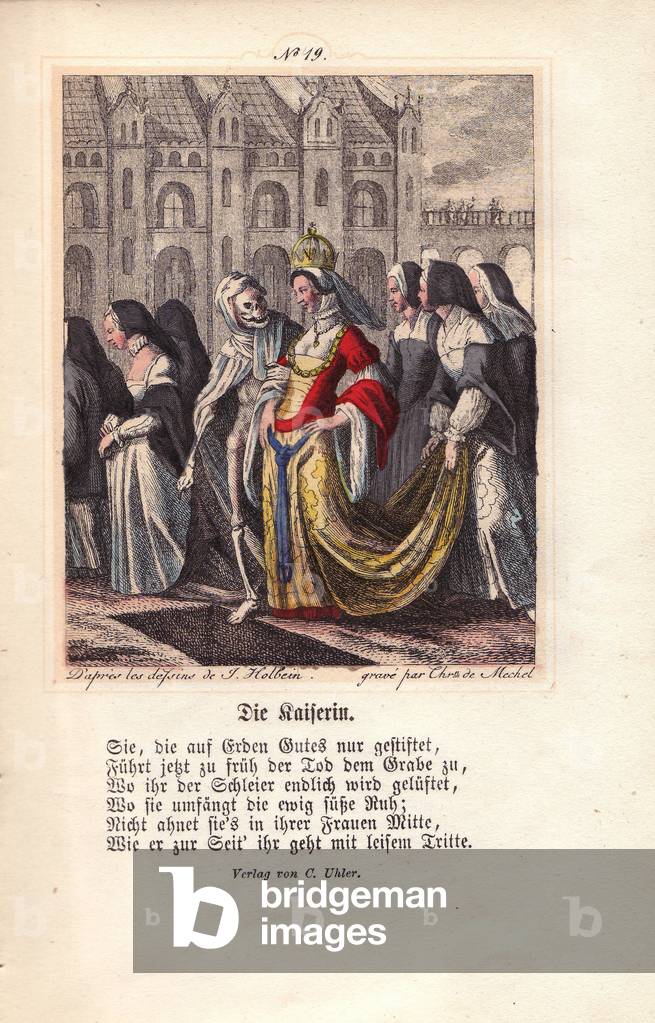
FLO4675614: The imperress. Sumptuously clothed and accompanied by her bridesmaids, the Impress is intercepted in her march by Death incarnated in the character of an old ratatinee, who shows an open tomb, and seems to say, “For this you will end up going there”. Hand-coloured engraving by Christian Von Mechel (or Chretien de Mechel, 1737-1817) in “The Triumph of Death”” based on original drawings by Hans Holbein the Young (1497-1543), 1860. / Bridgeman Images

FLO4675633: The young couple. She is accompanied by her husband, who seeks to depart her attention from Death, who dances insidiously in front of them while playing the drum. Hand-coloured engraving by Christian Von Mechel (or Chretien de Mechel, 1737-1817) in “The Triumph of Death”” based on original drawings by Hans Holbein the Young (1497-1543), 1860. / Bridgeman Images

FLO4675694: The merchant. After escaping from the perils of the sea, he reached the shore on which his goods were waiting. The merchant, while contemplating his wealth, is finally surprised by death. One of his companions raised his hands of despair. Hand-coloured engraving by Christian Von Mechel (or Chretien de Mechel, 1737-1817) in “The Triumph of Death”” based on original drawings by Hans Holbein the Young (1497-1543), 1860. / Bridgeman Images
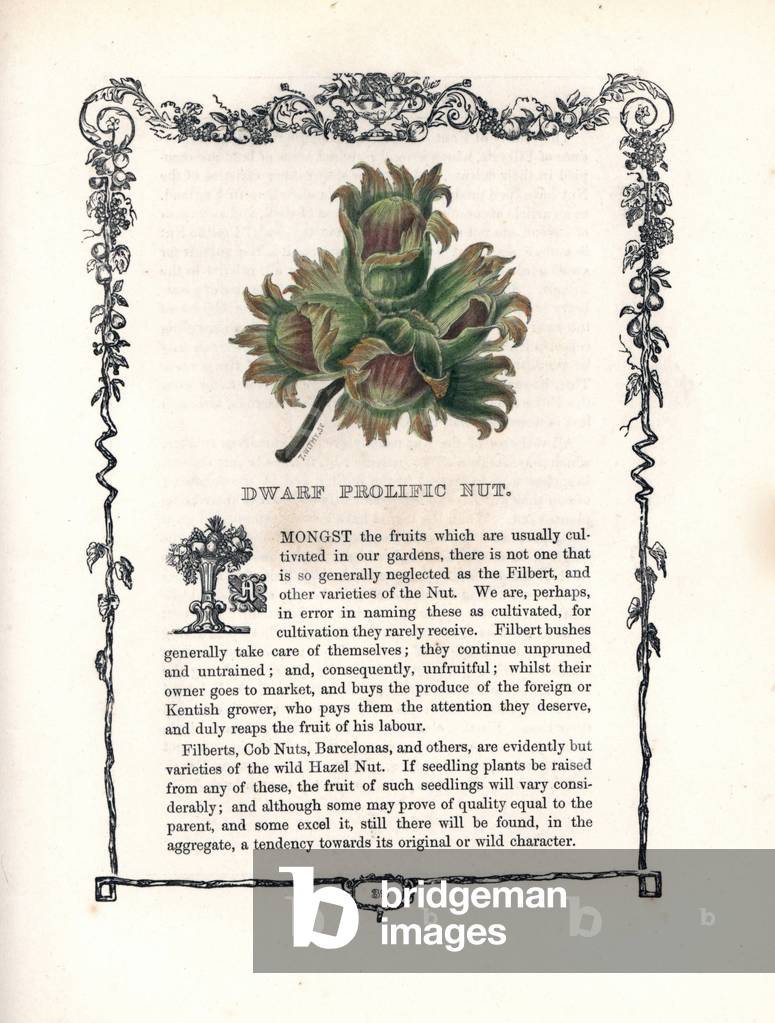
FLO4675481: Dwarf prolific hazelnut. Lithograph by Benjamin Maund (1790-1863) published in The Fruitist, London, England, 1850. Dwarf Prolific Nut, Corylus avellana, within a Della Robbia ornamental frame with text below. Handcoloured glyphograph engraved by T. Withy from Benjamin Maund's “” The Fruitist,”” London, 1850, Groombridge and Sons. / Bridgeman Images

FLO4675836: Design for a dagger sheath designed by Holbein. The characters are a king, a queen and a warrior, involuntarily accompany Death in the dance. The king's despair, the downfall of the queen accompanied by her little dog, the terror of the soldier who hears the drum of death, are portrayed with veracity and spirit of equality. Hand-coloured engraving by Christian Von Mechel (or Chretien de Mechel, 1737-1817) in “The Triumph of Death”” based on original drawings by Hans Holbein the Young (1497-1543), 1860. / Bridgeman Images
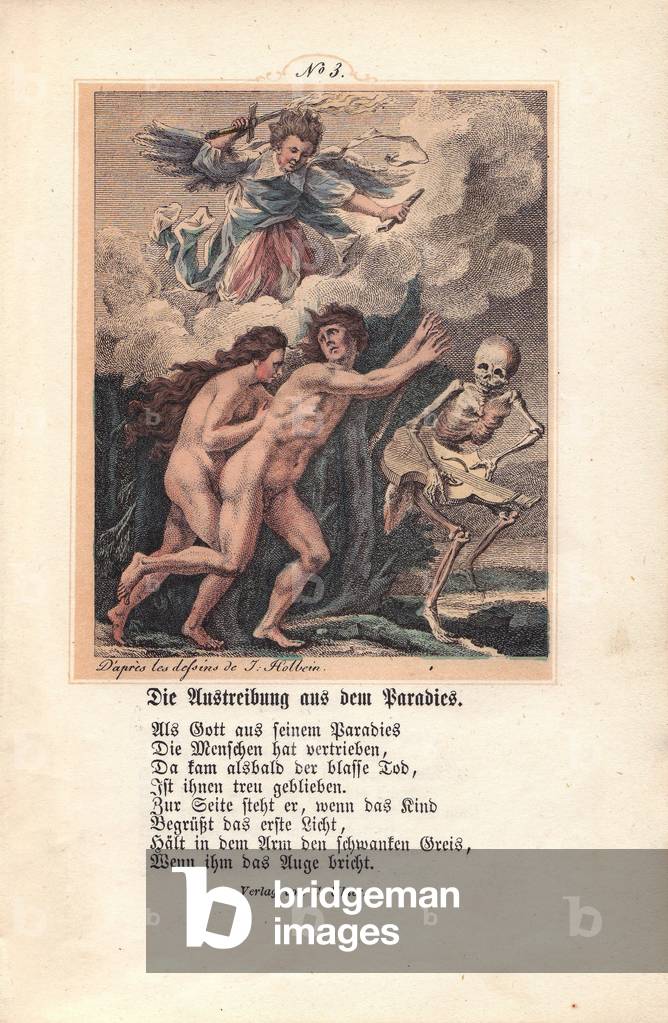
FLO4675675: Expulsion from heaven. Adam and Eve are preceded by death, which plays on an old man, or a beggar's lyre, as if she wanted to show her joy in the victory he obtained over man. Hand-coloured engraving by Christian Von Mechel (or Chretien de Mechel, 1737-1817) in “The Triumph of Death”” based on original drawings by Hans Holbein the Young (1497-1543), 1860. / Bridgeman Images

FLO4676017: Tribunal des marchands, 15th century - Merchant tribunal, Italy, 15th century - The magistrates are seated at top, scribes or notaries stand in the pit, and merchants outside the barrier - From a miniature painting by Sano di Pietro in the “” Statutes of Merchants,””” Siena library - Handcoloured illustration drawn and lithographed by Paul Mercuri with text by Camille Bonnard from “” Historical Costumes from the 12th to 15th Centuries,”” Levy Fils, Paris, 1861, Mercuri, Paolo (1804-84) / Bridgeman Images
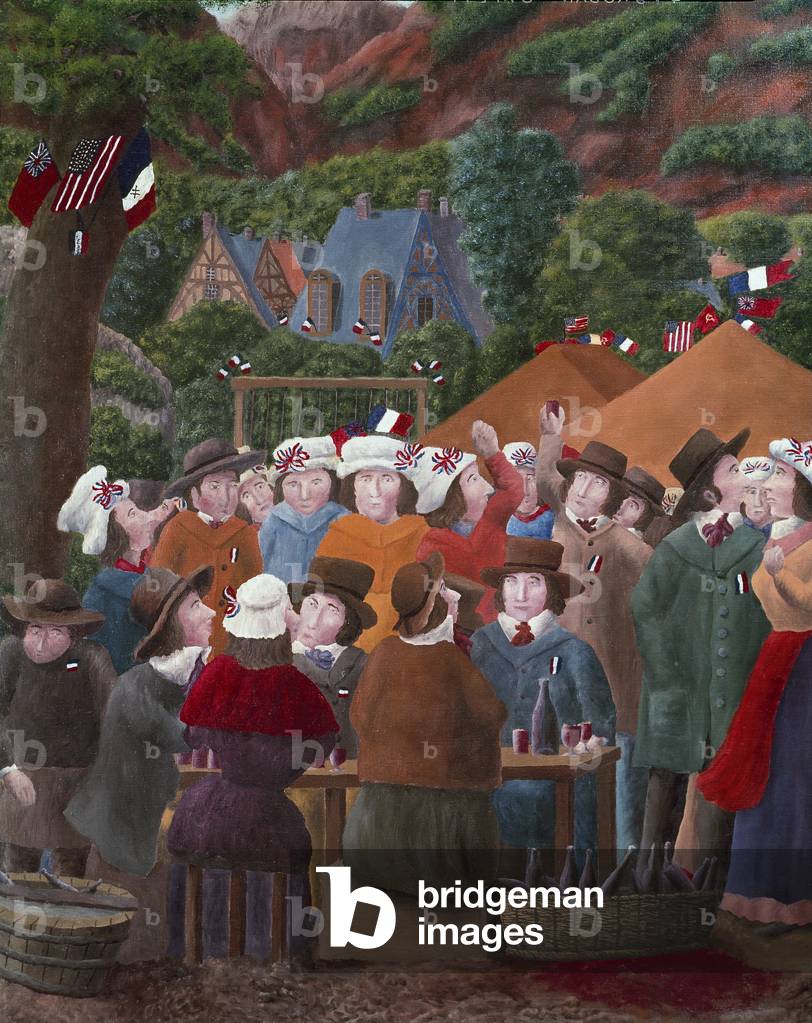
LRI4675913: Liberation party, detail. Festival in an Alsatian village of the liberation of France in 1945 under the flags of the USSR with folk dance, 20th century (painting), Bauchant, Andre (1873-1958) / Bridgeman Images

FLO4675939: Boniface, Duke of Tuscany - Boniface III, Margrave of Tuscany (c 985-1052) - He wears a gold hat decorated with precious stones, green chlamys bordered in gold, blue tunic, red stockings with gold bands and shoes - The throne is yellow with cushions and footrest - Illustration taken from a manuscript of Donizo's “” Vita Mathildis” - Handcoloured” - Handcoloured illustration drawn and lithographed by Paul Mercuri with text by Camille Bonnard from “” Historical Costumes from the 12th to 15th Centuries,”” Levy Fils, Paris, 1860, Mercuri, Paolo (1804-84) / Bridgeman Images

FLO4675957: Costume d'une femme de la noblesse italian, 14th century - Costume of an Italian noblewoman, 14th century - She wears a veil, a blue dress trimmed with fur and edged with gold, over a pink dress - From a painting in the Academy of Fine Arts, Siena - Handcoloured illustration drawn and lithographed by Paul Mercuri with text by Camille Bonnard from “” Historical Costumes from the 12th to 15th Centuries,”” Levy Fils, Paris, 1861, Mercuri, Paolo (1804-84) / Bridgeman Images

FLO4675962: Uniforms of Italian soldiers, 14th century - The wear tunics in Siena brown with coats of arms of Saint Mark (gold lion on red field), over suits of armour - The soldier with the banner of the church (two keys on a red field) wears a white helmet decorated with silver - From a fresco by Spinello Aretino in the Palazzo Pubblico, Siena, depicting Pope Alexander III presenting the Doge of Venice with a sword to fight Frederick Barbarossa - Handcoloured illustration drawn and lithographed by Paul Mercuri with text by Camille Bonnard from “” Historical Costumes from the 12th to 15th Centuries,”” Levy Fils, Paris, 1861, Mercuri, Paolo (1804-84) / Bridgeman Images

FLO4675979: Vestment of an Italian cardinal, 14th century - From a painting of the Last Judgment by Ambrogio Lorenzetti in the Academy of Fine Arts, Siena - He wears a red hat, large red cape with hood, white surplice, blue cassock and red shoes - Handcoloured illustration drawn and lithographed by Paul Mercuri with text by Camille Bonnard from “” Historical Costumes from the 12th to 15th Centuries,”” Levy Fils, Paris, 1861, Mercuri, Paolo (1804-84) / Bridgeman Images
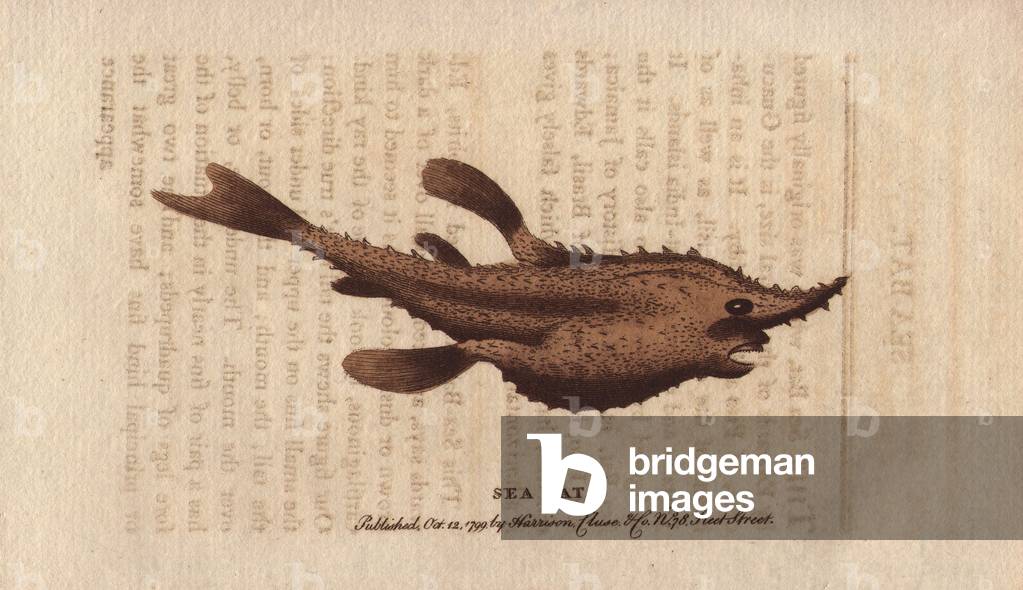
FLO4687408: Sea bat fish (Halieutea sp), carnivorous, bad swimmer, but endowed with large and flexible pectoral fins that mimic legs and allow it to walk on the bottom of the sea, a pointed snout and skin topped with tubers rough to the touch / Bridgeman Images

FLO4687485: Virginia or American opossum (Didelphis virginiana), North American marsupial. Illustration copy of “” The True Representation”” account for the philosophical transactions of the Royal Society by Thomas Pennant (1726-1798). Lithographie in The Naturalist Pocket Magazine or Cabinet complete des Curiosites et Beautes de la Nature, published between 1798 and 1802, by Harrison, London, England. / Bridgeman Images

LBY4687534: Musee de Bonnafanten in Maastricht in the Netherlands (Netherlands). Architecture Aldo Rossi, 1995. Photography 1995, Rossi, Aldo (1931-1997) / Bridgeman Images

FLO4687546: Galeopitheque or colugo (Cynocephalus volans), a small mammal of the Philippines, has a membrane allowing it to glide. Lithographie in The Naturalist Pocket Magazine or Cabinet complete des Curiosites et Beautes de la Nature, published between 1798 and 1802, by Harrison, London, England. / Bridgeman Images
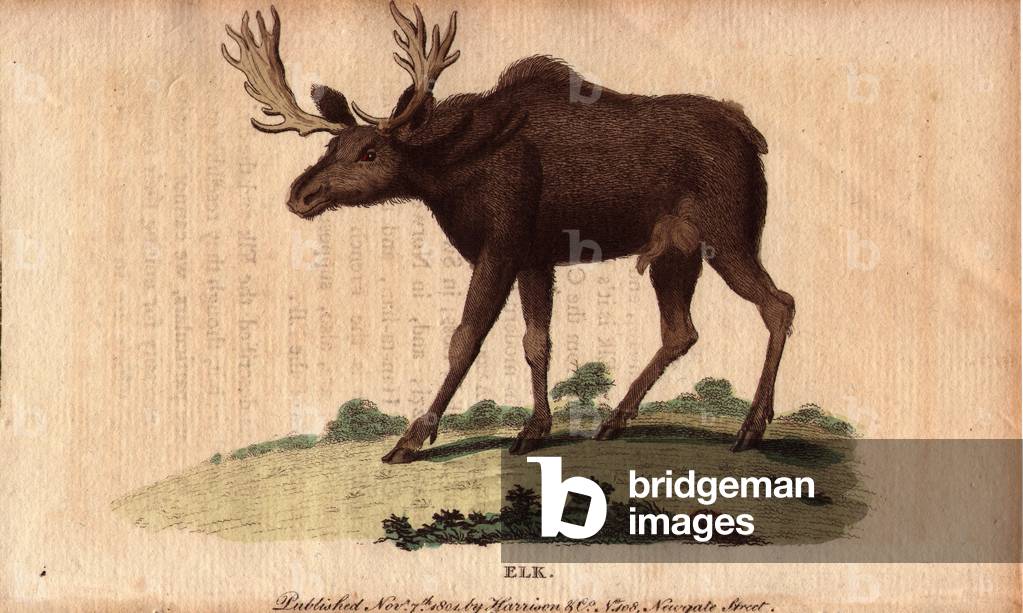
FLO4687557: Elk (Cervus canadensis), herbivorous mammal, family of cervids, is hunted for its lean and very proteinous meat. Lithographie in The Naturalist Pocket Magazine or Cabinet complete des Curiosites et Beautes de la Nature, published between 1798 and 1802, by Harrison, London, England. / Bridgeman Images

LBY4687597: Musee de Bonnafanten in Maastricht in the Netherlands (Netherlands). Architecture Aldo Rossi, 1995. Photography 1995, Rossi, Aldo (1931-1997) / Bridgeman Images

FLO4687483: Lithographie in The Naturalist Pocket Magazine or Cabinet complete des Curiosites et Beautes de la Nature, published between 1798 and 1802, by Harrison, London, England. / Bridgeman Images

FLO4687513: The black rhinoceros (Diceros bicornis), a herbivorous bi-horned mammal, lives in Africa, the only species of the genus Diceros. Animal hunting by the Khoisan tribes of South Africa for the consumption of its flesh, but also for its horns and leather. Illustration by Thomas Pennant (1726-1798). Lithographie in The Naturalist Pocket Magazine or Cabinet complete des Curiosites et Beautes de la Nature, published between 1798 and 1802, by Harrison, London, England. / Bridgeman Images

FLO4687839: Apricot (apricot tree). Lithograph after the illustration of Augusta Withers (1793-1877), published in the “Pomology Magazine” (1828-1830) by John Lindley (1795-1865). Royal apricot, Prunus armeniaca, raised in the Royal Garden of the Luxembourg. Illustration by Mrs. Withers. Handcoloured copperplate engraved by S. Watts from J. Lindley's “” Pomological Magazine,” London, 1828. / Bridgeman Images

LBY4687525: Musee de Bonnafanten in Maastricht in the Netherlands (Netherlands). Architecture Aldo Rossi, 1995. Photography 1995, Rossi, Aldo (1931-1997) / Bridgeman Images

LBY4687853: The Great Bird in Love designed in 1996 photo taken in 1996 (photo), Tinguely, Jean (1925-1991) & Saint-Phalle, Niki de (1930-2002) / Bridgeman Images

LBY4687544: Musee de Bonnafanten in Maastricht in the Netherlands (Netherlands). Architecture Aldo Rossi, 1995. Photography 1995, Rossi, Aldo (1931-1997) / Bridgeman Images

LRI4687893: Contrast Shape. 1913 (Oil on Cardboard), Leger, Fernand (1881-1955) / Bridgeman Images
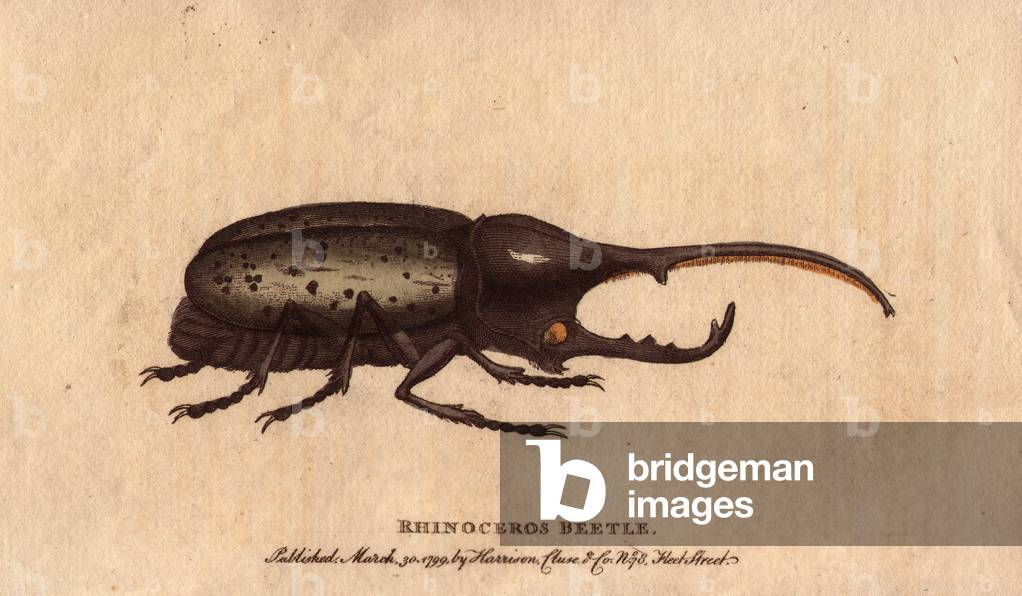
FLO4687621: Scarabee rhinoceros (Dynastes hercules), insect, specimen reported from Guadeloupe. Lithographie in The Naturalist Pocket Magazine or Cabinet complete des Curiosites et Beautes de la Nature, published between 1798 and 1802, by Harrison, London, England. / Bridgeman Images

FLO4687728: Sea cow (Trichechus manati), a herbivorous mammal of shallow coastal waters of the Atlantic Tropical Zone. Illustration by Thomas Pennant (1726-1798), based on the specimen of the Leverian Museum. Lithographie in The Naturalist Pocket Magazine or Cabinet complete des Curiosites et Beautes de la Nature, published between 1798 and 1802, by Harrison, London, England. / Bridgeman Images

FLO4687811: Apricot Hemskirke (common apricot variety). Lithograph after the illustration of Augusta Withers (1793-1877), published in the “Pomology Magazine” (1828-1830) by John Lindley (1795-1865). Hemskirke apricot variety, Prunus armeniaca, origin unknown. Illustration by Mrs. Withers. Handcoloured copperplate engraved by S. Watts from J. Lindley's “” Pomological Magazine,” London, 1828-1930. / Bridgeman Images

FLO4687837: Washington plum (plum tree grows). Lithograph after the illustration of Augusta Withers (1793-1877), published in the “Pomology Magazine” (1828-1830) by John Lindley (1795-1865). Washington plum, Prunus domestica, from New York. Illustration by Mrs. Withers. Handcoloured copperplate engraved by S. Watts from J. Lindley's “” Pomological Magazine,” London, 1828-1930. / Bridgeman Images

FLO4687899: Fishing bellegarde or galade (variety of common fishing). Lithograph after the illustration of Augusta Withers (1793-1877), published in the “Pomology Magazine” (1828-1830) by John Lindley (1795-1865). Bellegarde or galande peach, Prunus persica. Illustration by Mrs. Withers. Handcoloured copperplate engraved by S. Watts from J. Lindley's “” Pomological Magazine,” London, 1828-1930. / Bridgeman Images

FLO4687953: Apple Harvey doree (apple variety). Lithograph after the illustration of Augusta Withers (1793-1877), published in the “Pomology Magazine” (1828-1830) by John Lindley (1795-1865). Golden Harvey apple, Malus domestica. Illustration by Mrs. Withers. Handcoloured copperplate engraved by S. Watts from J. Lindley's “” Pomological Magazine,” London, 1828-1930. / Bridgeman Images

FLO4688078: House of Marcus Lucretius, Reg IX, Ins 3, 5, 24, Pompeii. View of the courtyard with impluvium, tablinum with mosaic floor, and garden with statues of satyrs and cupids. Chromolithograph and illustration by G. Autoriello from Antonio Niccoliniõs Pompeii: Views and Restorations (Pompeii: Essaies et Restorations), published by Autoriello & De Luca, Naples, 1898. Antonio was grandson of the architect Antonio Niccolini Sr. / Bridgeman Images

LRI4688306: Protiro of the cathedral , end 13th-beginning 14th century, Italian School, (13th century) / Bridgeman Images

LBY4688326: Musee Guggenheim in Bilbao, Spain. End of construction 1997, architect Frank Gehry. Photography 1997., Gehry, Frank (1929-2025) / Bridgeman Images
