2490891 Search Results

LMX368557: Feather Cut, 2005 (oil on board), Lomax, Cathy / Bridgeman Images

LMX368563: The Inevitable End of a Love Goddess (Jayne 4), 2008 (oil on canvas), Lomax, Cathy / Bridgeman Images

XDR336024: Desire directed by Frank Borzage, 1936, German Photographer, (20th Century) / Bridgeman Images

AQS336657: Buchaneer pacification; published by E H Fletcher, New York, c.1856 (litho), American School, (19th century) / Bridgeman Images
![[Take away dat white brat], c.1867, (litho)](https://images-cdn.bridgemanimages.com/api/1.0/image/600wm.AQS.0299330.7055475/336741.jpg?old-wm)
AQS336741: [Take away dat white brat], c.1867, (litho), American School, (19th century) / Bridgeman Images

AQS336762: A dialogue, between two well known characters, published by H.R. Robinson, New York, 1837 (litho), American School, (19th century) / Bridgeman Images

TES344395: Green Flowers, 2008 (oil on linen), MacGregor, Tessa / Bridgeman Images

AQS336807: William Frederick Cody, Buffalo Bill (1846-1917), American soldier and performer (albumen print), Pirou, Eugene (fl.1884-1925) / Bridgeman Images

CHT336969: Costume design for 'Cantique des Cantiques', 1938 (gouache on paper), Colin, Paul (1892-1985) / Bridgeman Images

LAL337007: Diver with foot caught in a clam, English School, (20th century) / Bridgeman Images

LAL337013: James Bruce rushing for what he thought was the Blue Nile, English School, (20th century) / Bridgeman Images

LAL337037: William Tell, Salinas, Alberto (1932-2004) / Bridgeman Images

LAL337073: The defence of Madrid during the Spanish civil war, McBride, Angus (1931-2007) / Bridgeman Images

LAL337157: Spanish soldiers in the Netherlands, Embleton, Ron (1930-88) / Bridgeman Images

LAL337175: Steamboat on the Missouri river, Embleton, Ron (1930-88) / Bridgeman Images

LAL337223: Allesandro Manzoni, The Bethrothed, English School, (20th century) / Bridgeman Images

RUS368747: The Coming of Spring, 1911 (tempera on canvas), Armfield, Maxwell Ashby (1882-1972) / Bridgeman Images

PNP368911: Tsar Nicholas II wearing the uniform of the Royal Scots Greys, 1894 (b/w photo), English Photographer, (19th century) / Bridgeman Images

PNP368923: The Tsar receiving a deputation of workers at Tsarskoe Selo after the riots of January 1905 (litho), English School, (20th century) / Bridgeman Images

PNP368983: KGB sleeve badge for uniformed staff (textile), Russian School, (20th century) / Bridgeman Images
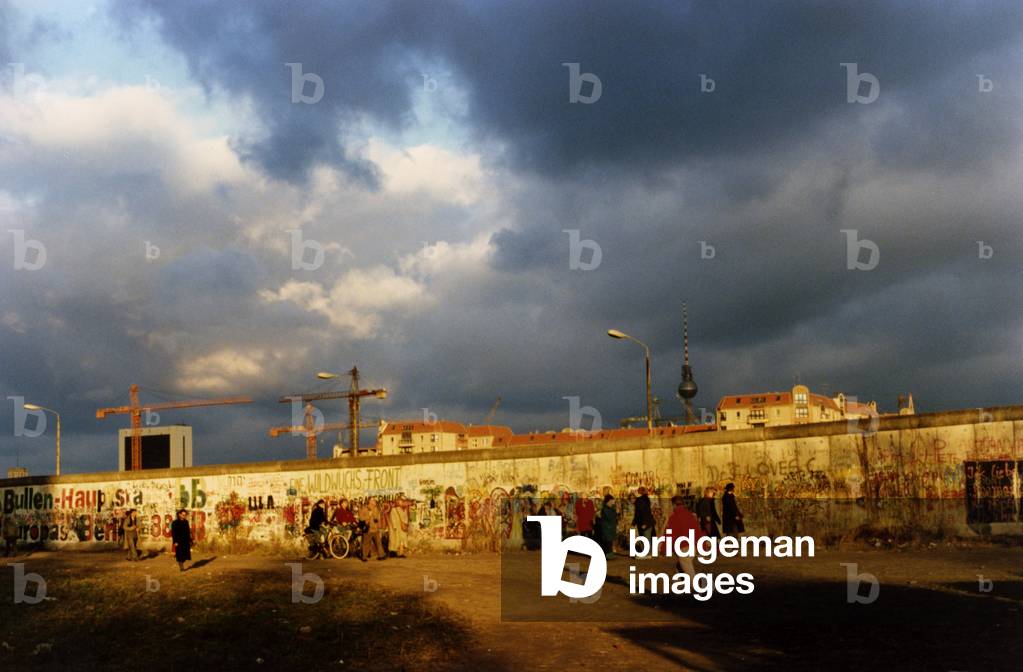
SZT368998: View of the Berlin Wall after the border had been opened in November 1989 (photo) / Bridgeman Images

IMA344633: Rug (wool & cotton), Tibetan School (19th century) / Bridgeman Images

IMA344636: Rug (wool & cotton), Tibetan School (19th century) / Bridgeman Images

IMA344657: Nashville Alley with Wall, 1910 (graphite on paper), Baumann, Gustave (1881-1971) / Bridgeman Images

IMA344664: Estes Park, Colorado, c.1930 (tempera & graphite on paper), Baumann, Gustave (1881-1971) / Bridgeman Images

IMA344685: Study for the Rug Weaver, c.1912 (w/c over graphite on paper), Baumann, Gustave (1881-1971) / Bridgeman Images

IMA344691: Fishing Hut on the North Shore, 1907 (gouache over graphite on paper), Baumann, Gustave (1881-1971) / Bridgeman Images

ANA344716: Shadow of Sledger, 2008 (oil on canvas), Macara, Andrew / Bridgeman Images

BJA344764: Westminster Dog Show, 2005 (oil on canvas), Jacklin, Bill (b.1943) / Bridgeman Images

OSL345264: The Carcase, c. 1929 (linocut), Power, Cyril Edward (1874-1951) / Bridgeman Images

OSL345291: Elmers Mill, Woolpit, c.1925 (linocut), Power, Cyril Edward (1874-1951) / Bridgeman Images

JGR345351: A Family Photograph, 2009 (oil on canvas), Groneberg, Jan (1943-2014) / Bridgeman Images

JGR345357: Woman with one of her Wings injured, 2009 (oil on canvas), Groneberg, Jan (1943-2014) / Bridgeman Images

JGR345363: Rising up to where we came from, 2009 (oil on canvas), Groneberg, Jan (1943-2014) / Bridgeman Images

JIL345393: Jug and Nectarines, 2009 (oil on linen over panel), Gillick, James / Bridgeman Images

LAL337253: Wells Fargo agent buying gold, McBride, Angus (1931-2007) / Bridgeman Images
