2491125 Search Results

ETE4128759: Ile de France, Essonne (91), Longpont sur Orge (Longpont-sur-Orge): choir of the church of the benedictine abbey founded in the 11th century - postcard late 19th-beginning 20th century / Bridgeman Images

ETE4128843: Normandy, Calvados (14), Ouistreham: view of the street of Luc sur Mer in Riva Bella (Riva-Bella) - Postcard late 19th-beginning 20th century / Bridgeman Images

ETE4129004: Monte Carlo (Monte-Carlo): View of the city taken from Monaco - Postcard end 19th-20th century / Bridgeman Images

ETE4129221: Norfolk (Virginia), USA, 1928: Loading pursuit aircraft aboard carrier USS Saratoga before joining the West Coast and Pacific fleet - Norfolk (Virginia), USA, 1928: Airplane carrier USS Saratoga tucks speedy pursuit planes in giant hold / Bridgeman Images

ETE4129280: Ocean Atlantique, late 1920's: The American cargo ship S.S Republic during the rescue of the crew of the fishing vessel “” Gander Deal”” in the middle of the storm - Atlantic Ocean, end 1920s: SS Republic going to the rescue of men on board fishing schooner “” Gander Deal”” caught in a sea storm / Bridgeman Images

ETE4129431: New York City (USA), July 2, 1917: Portrait of Kingdon Gould Sr (1887-1945) (grandson of Jay Gould) and his fiancee Annunziata Camilla Maria Lucci (1890-1961) leaving the presbytery of the Cathedrale Saint Patrick where they settled the details of their next wedding - New York City, USA, 2nd July 1917: portrait of Kingdon Gould Sr. (1887-1945) and his fiancee Annunziata Camilla Maria Lucci (1890-1961), pictures leaving St Patrick's rectory after making arrangements for their marriage / Bridgeman Images

ETE4129440: Illinois (USA), 1920's: portrait of young athlete Jessie “” Jay” Purves, who is a student at the university, practicing fourteen sports - Illinois (USA), 1920s: Portrait of Jessie “” Jay”” Purves, a University student and a member of 14 championship teams / Bridgeman Images

XEE4101010: Jamaican rum label. Black workers recuding sugar cane are watched by a white man., Unknown Artist / Bridgeman Images
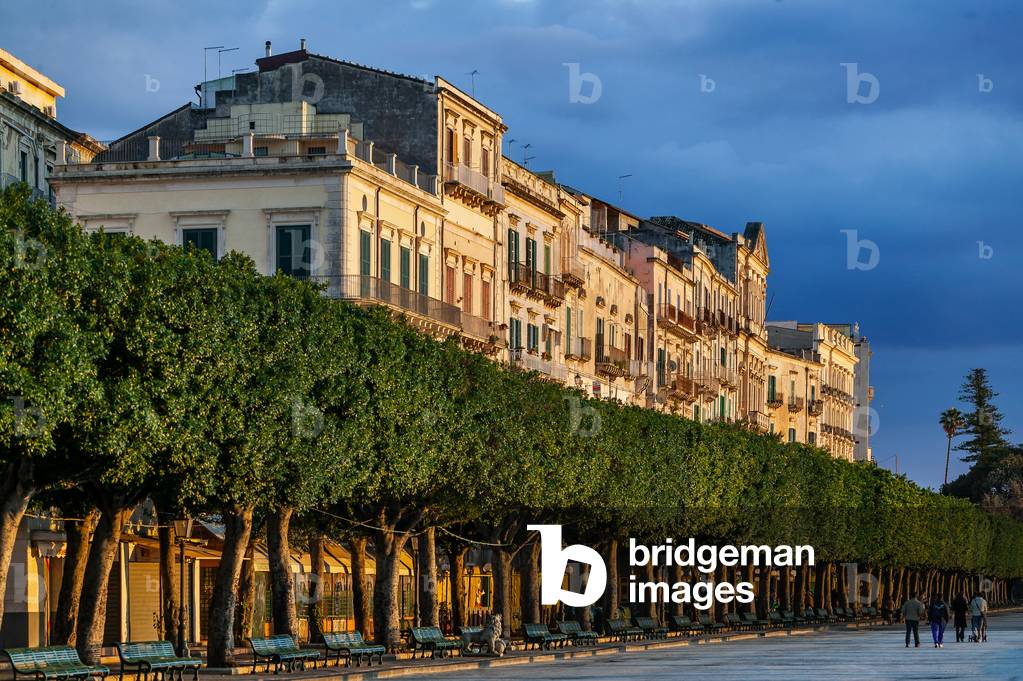
GRL3961197: View of the Vittorio Emanuele II Forum, Island of Ortigia, Syracuse, Sicily, Italy (photo) / Bridgeman Images
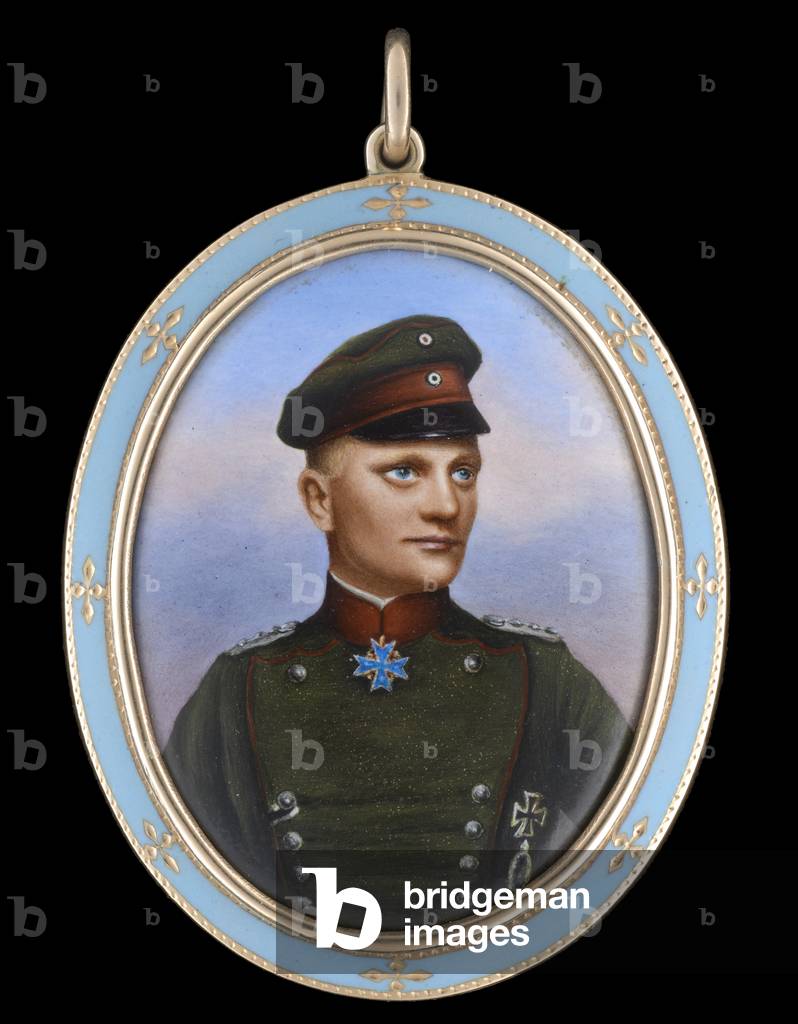
MOU3962598: Portrait enamel of Rittmeister Manfred Albrecht, Freiherr von Richthofen, 'The Red Baron', 1917 (enamel), German School, (20th century) / Bridgeman Images

MOU3962620: Portrait miniature of a young Gentleman, wearing armour with brass rivands, white lawn collar, his brown hair worn loose to his shoulders, 1649 (w/c on vellum), Cooper, Samuel (1609-72) / Bridgeman Images

XLF3793996: Salzburg view from the mountains of Capucins, 1802 (engraving) / Bridgeman Images

XEE4108024: The life of St. Francis of Assisi. early 20th century (chromo), Unknown Artist, (20th century) / Bridgeman Images

LRI4001670: Annunciation, 1296 (mosaic), Torriti, Jacopo (fl.1287-92) / Bridgeman Images

XEE4113847: 1947 National Lottery Ticket. / Bridgeman Images

GRL3900268: View of the town from the Porta Nuova Tower, at the centre, the Cathedral dedicated to the Assumption of the Virgin Mary, Palermo, Sicily, Italy (photo) / Bridgeman Images

XEE4118188: Cadie (cart) of races in a supermarket. / Bridgeman Images

XEE4118197: Still life with medicaments: platelets of gellules. / Bridgeman Images

XEE4118209: Coffee beans. / Bridgeman Images

XLF3784926: Müller travelling to Czechoslovakia / Bridgeman Images

XLF3785199: House of Commons in London, 1742 - interior / Bridgeman Images

XLF3785205: Rob Roy by Sir Walter Scott. / Bridgeman Images

XLF3785212: Rob Roy by Walter Scott / Bridgeman Images

XLF3785251: Li Hongzhang / Bridgeman Images

XLF3785285: Tungusic hunters catching reindeer, 1928 / Bridgeman Images

IL3785335: Very carefully she cut the soft white beard (from the story Snow White and Rose-Red), illustration from A Staircase of Stories published by Thomas Nelson & Sons Ltd 1940's (colour litho), Jackson, Albert Edward (1873-1952) / Bridgeman Images

XLF3785494: Rob Roy by Sir Walter Scott. / Bridgeman Images

XLF3785570: Russian traditional dress - illustration by N. Vinogradova. / Bridgeman Images

XLF3785580: Alexander Suvorov - portrait / Bridgeman Images

XLF3785617: Alexandra of Denmark, Downey, William & Daniel (fl.1855-1940) / Bridgeman Images

XLF3785669: Naryshkine house near Anichkov Bridge / Bridgeman Images

XLF3785683: Edward VII at the time of his marriage / Bridgeman Images

XLF3785773: Joan of Arc as prisoner of the English, Boutet de Monvel, Louis Maurice (1851-1913) / Bridgeman Images

XLF3785864: Hudibras by William Hogarth, Hogarth, William (1697-1764) / Bridgeman Images

XLF3785967: 'The Hermit forces Robert le Diable to declare his identity', French School, (19th century) / Bridgeman Images

XLF3786005: 'The Hermit forces Robert le Diable to declare his identity', French School, (19th century) / Bridgeman Images
